 The essential
6 × Entre Amis red
6 bottles — Graves red 2022
The best price of the cellar: €12 per bottle delivered.
The everyday red: generous and straight to the point.
I want it
Fermentation curve
During harvest, every fermenting vat is monitored daily. The simplest and most telling tool is the fermentation curve: the density of the must, measured day after day and plotted on a graph. We explained it in one of the estate's posts, using a vat from our Bouché terroir. This section takes up that example to show how to read a curve.
Bouché is a Château Cazebonne parcel co-planted with Sémillon, Sauvignon and Sauvignon gris. Every year, it produces the Argile ocre cuvée. Its white grapes follow the path of white winemaking, and their fermentation makes a good textbook case.
To put it simply, density measures the weight of a litre of must compared with a litre of water, noted as 1000. The Bouché batch was harvested at a density of 1100: the must is 10% heavier than water. The difference comes from the sugar dissolved in the grape juice. The more sugar, the higher the density, and the more alcohol the wine can contain. At 1100, the potential is about 13% alcohol after fermentation.
During alcoholic fermentation, yeasts turn sugar into alcohol and carbon dioxide. The sugar, which makes the must heavier, gradually disappears, while alcohol, lighter than water, builds up. Density therefore falls day after day and eventually drops below 1000. On the Bouché vat, the morning reading on the day of the post was 995.4. At around 993 to 994, there is no sugar left in the vat: the wine is dry.
A curve that falls steadily towards these values shows a fermentation going well. That was the case here.
We watch this curve very closely. A curve that flattens before reaching the 993 to 994 zone shows that fermentation is slowing down, or even stopping, while sugar remains. This must be avoided at all costs: a medium that is still sweet can be colonised by undesirable bacteria or yeasts, which produce volatile acidity, in other words the taste of vinegar. Hence the importance of measuring every day and acting quickly.
This vigilance matters all the more in low-intervention winemaking, where the aim is to let the yeasts work while keeping an eye on every vat.
First vat almost dry: a good milestone reached in the Cazebonne cellar.
The example of monitoring fermentation of Argile ocre, from the Bouché parcel, illustrates the reading of a curve. This white wine notably blends sémillon.
Our suggestions
-5%on your 1st order with code BIENVENUE
The essential6 bottles — Graves red 2022
The best price of the cellar: €12 per bottle delivered.
The everyday red: generous and straight to the point.
I want it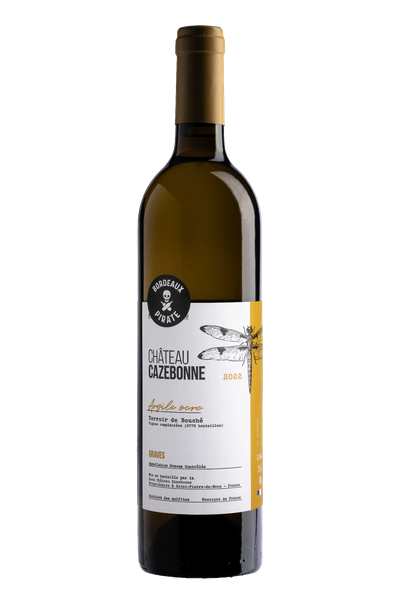 Our recommendation
6 bottles — AOC Graves 2022
€24 per bottle.
I want it Go further
12 bottles — the whole range
12 bottles, the whole range tasted: the best discovery-to-price ratio.
The complete tour of the estate, in a single case.
I want itThe cellar, forgotten grape varieties and our cuvées, twice a month. 5% off your first order with the code BIENVENUE.