 The essential
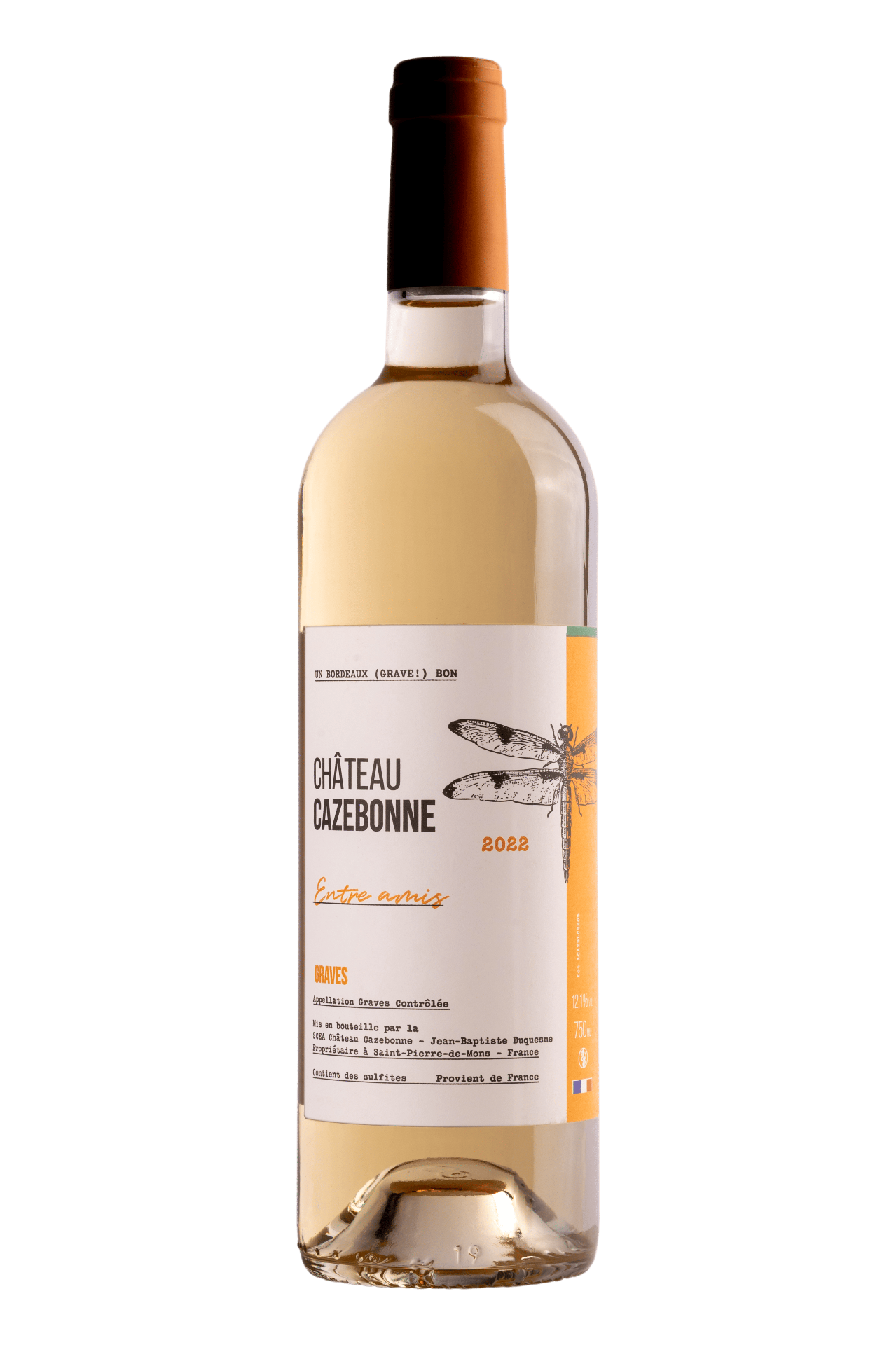
Entre Amis white 2024
Graves white 2024
Crisp and saline: the easy aperitif, at a gentle price.
The estate's thirst-quenching white, open it without thinking.
I want itWhite winemaking differs fundamentally from red winemaking, not only in the choice of grape varieties but above all in the methods used. The aim is to preserve the freshness, delicate aromas, and pale colour characteristic of these wines. The juice, quickly separated from the solid parts, ferments without prolonged skin contact, unlike the process for red wines.
White winemaking relies on the gentle extraction of must and its fermentation without significant skin contact (maceration). All grape varieties—whether black, pink, or white—can produce white wine, provided the juice is separated from the skins at the very start of the process. After harvest, gentle pressing is essential to extract the juice without crushing the pips, which could impart bitterness and astringency. This "virgin must" is then settled (débourbage) to remove solids and impurities before fermentation begins. This process yields pure, refined wines that fully express the grape's intrinsic aromatic nuances.
Unlike red wines where maceration (skin contact) is a key stage, white winemaking aims to minimise this contact to prevent colour pick-up and the extraction of undesirable tannins. The must is promptly transferred to vats or barrels for fermentation. This juice ferments away from the skins and other solid grape matter, gradually shedding its gross lees and impurities. In regions such as Sauternes, the quest for fine, sweet wines requires allowing grape ripeness to reach its peak, often with the help of noble rot.
Rigorous temperature control is a cornerstone of white winemaking. Low fermentation temperatures, generally between 16°C and 20°C, are favoured to preserve volatile fruity and floral aromas. If the temperature rises too high, it risks causing a significant loss of the wine's volatile compounds and alcohol, diminishing its quality. Conversely, if it is too low, fermentation may stall. To avoid these issues, temperature control systems are employed—whether space heaters in the winery or cooling coils in the tanks—to maintain steady and complete fermentation kinetics.
Malolactic fermentation (MLF) is an optional yet decisive step for the aromatic profile and texture of a white wine. It involves the conversion of sharp malic acid into softer lactic acid by bacteria. While it can bring aromatic complexity (buttery, nutty notes) and a rounder mouthfeel, it can also mask fresh fruitiness if not carefully managed. The winemaker decides whether to allow it based on the desired wine style. At Château Cazebonne, we systematically carry out MLF on our white wines to craft wines with substantial ageing potential and greater aromatic complexity than purely fruity, high-acid styles.
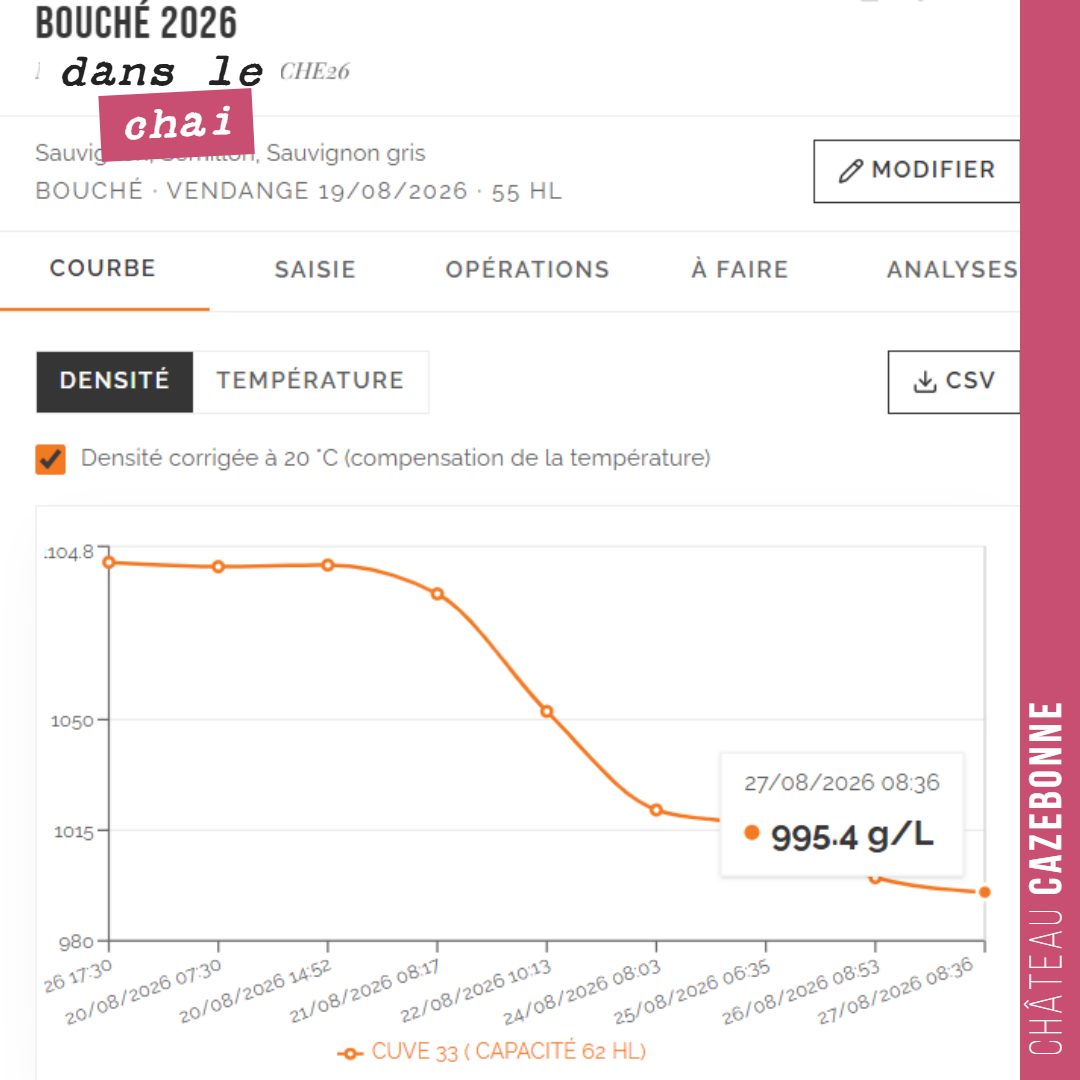
The end of alcoholic fermentation, or "fermenting to dryness", is the culmination of converting must sugars into alcohol. It is vital that this fermentation runs to completion to achieve a stable, dry wine. A premature stuck fermentation would leave residual sugars, making the wine sweet and potentially unstable. Monitoring residual sugar levels via density measurements ensures that yeasts have consumed virtually all sugars. To learn how to use a refractometer to precisely monitor sugar levels and grape ripeness, consult our detailed guide. In more northerly regions or during cooler vintages, where grapes do not develop sufficient sugar, the wine may turn out too light and sharp, demanding particular vigilance.
At Cazebonne, the vinification of our white wines is guided by the pursuit of complexity and ageing potential. We favour harvesting at full ripeness, which ensures aromatic richness and a solid foundation for fermentation. Once the grapes are harvested and pressed, we systematically perform malolactic fermentation on our white wines. This choice, although unusual for certain white wines, is essential for developing deep aromatic profiles and a silky texture, promoting graceful bottle evolution. This approach allows us to craft whites with character, capable of pairing with a wide array of dishes and standing the test of time, far removed from the simplistic, purely fresh-fruit-driven profiles sometimes found in Bordeaux. Our Graves white wines thus tell a story of terroir and craftsmanship.
The work of rediscovering and championing historic Bordeaux grape varieties, which you can explore in our book « Bordeaux, une histoire de cépages », lies at the heart of our philosophy at Château Cazebonne. It is thanks to the support of wine lovers who embrace our wines that we can pursue this mission. Test your knowledge with our wine quizzes, and discover the unique expression of our terroir by visiting our online boutique. To better understand the differences between wine styles, explore red winemaking and its specific characteristics.
Sources
Our suggestions
-5%on your 1st order with code BIENVENUE
The essentialGraves white 2024
Crisp and saline: the easy aperitif, at a gentle price.
The estate's thirst-quenching white, open it without thinking.
I want it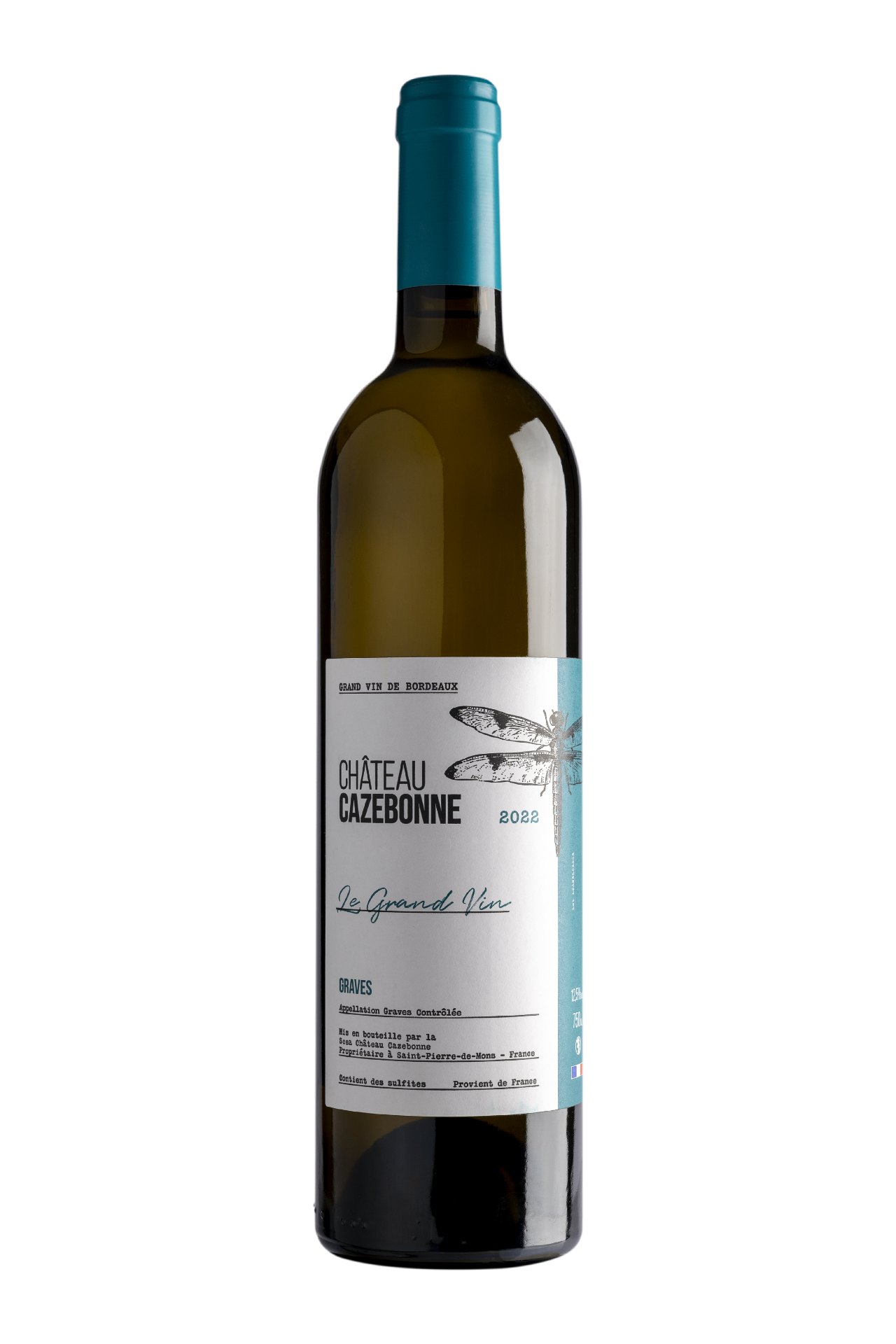 Our recommendation92/100 RVF
Graves white 2022, 92/100 RVF
Rated 92/100 by La Revue du vin de France: old-vine Sémillon.
The great Graves white: taut and deep.
I want it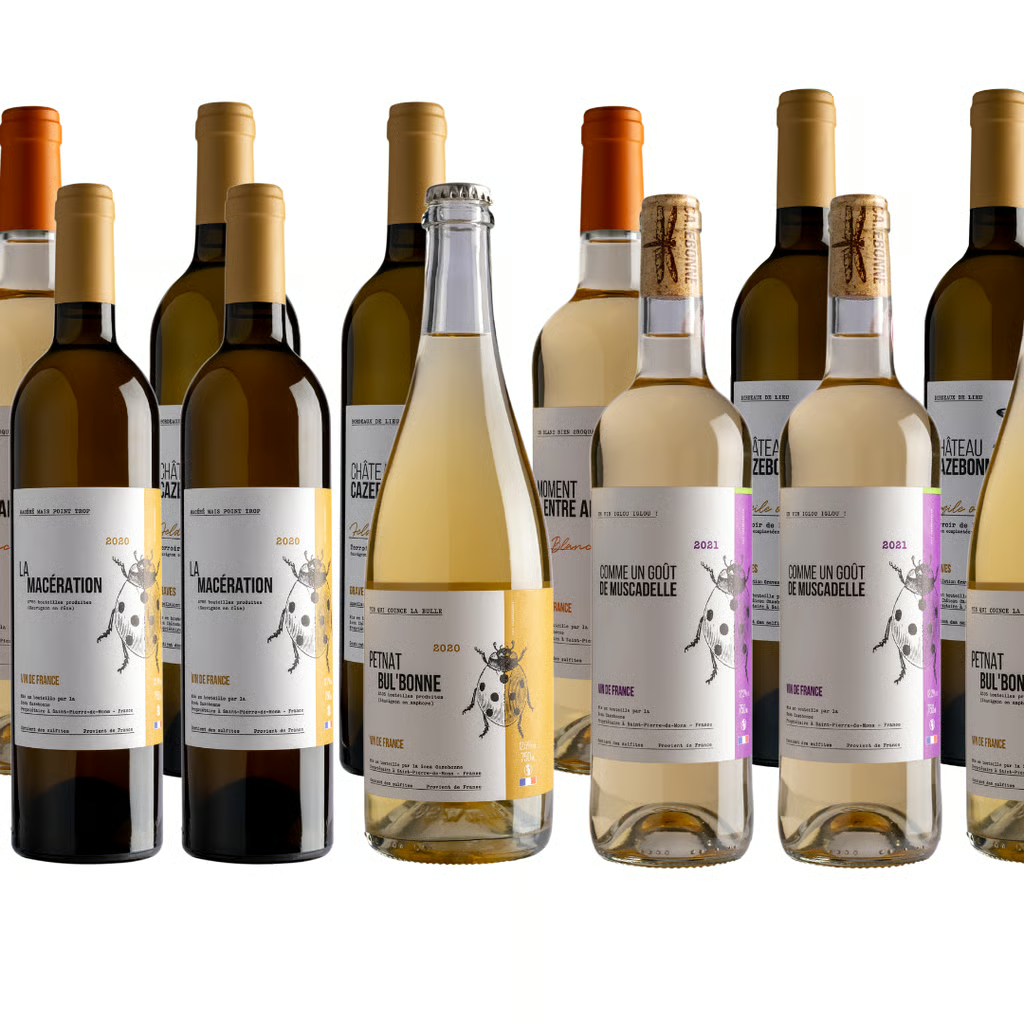 Go further
12 bottles — plot selection
All our organic whites together: the complete plot-by-plot flight.
To explore Sémillon in all its forms.
I want itThe cellar, forgotten grape varieties and our cuvées, twice a month. 5% off your first order with the code BIENVENUE.