17 May 2020
Ever more life in our vineyards……It is the finest craftsman of our soils.
By Jean-Baptiste Duquesne

Earthworm
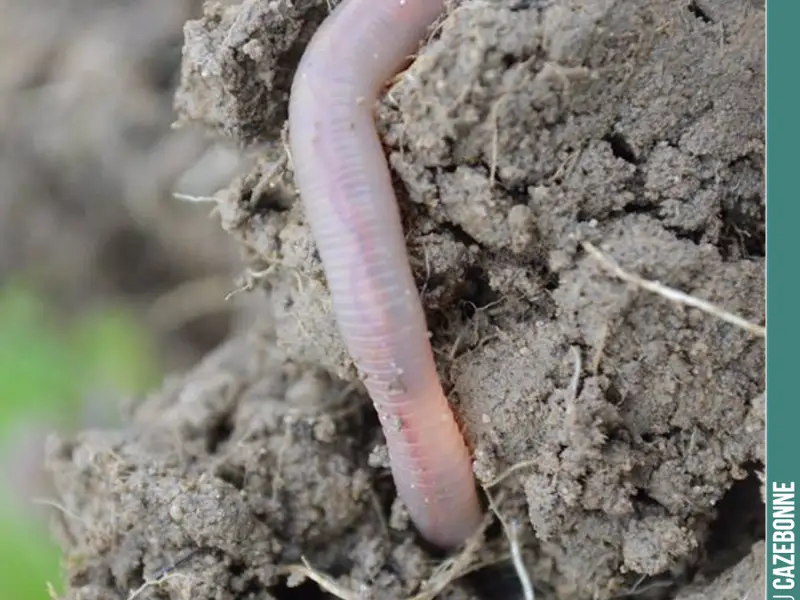
At Château Cazebonne, we consider earthworms to be true artisans of our soils, tireless workers whose natural ingenuity is fundamental to the health of our vines. These humble creatures, though often invisible, orchestrate a subterranean symphony essential to the vitality of our vineyard ecosystem. They are the guarantors of living soils, with an aerated and fertile structure, an indispensable foundation for the flourishing of our grape varieties. Our living soils are the cornerstone of our biodynamic approach.
Earthworms, also known by their Latin name Lumbricus terrestris or more broadly Lumbricidae (annelid family), are segmented invertebrates that live in the soil. Their size generally varies from a few centimetres to over thirty centimetres for some species, with colours ranging from pale pink to reddish-brown. Their bodies are ringed, cylindrical, and slightly flattened ventrally, with no eyes or true limbs. The clitellum, a thicker and lighter-coloured band in many species, is a distinctive sign in adults and plays a crucial role in their reproduction.
The life cycle of the earthworm is intimately linked to soil conditions. They are most active in spring and autumn, when soil moisture and temperature are optimal. During periods of drought or intense frost, they burrow deeper into the ground to protect themselves and can enter diapause. Reproduction is hermaphroditic, but generally requires two individuals for the exchange of gametes. The eggs are deposited in a cocoon which will hatch several weeks later. At Cazebonne, their increased presence is a key indicator of the biodiversity and good biological health of our terroir.
The role of earthworms is multifaceted and crucial. By digging their burrows, they aerate the earth at depth, thereby facilitating the circulation of water and air. This mechanical action allows the vine roots to anchor themselves solidly and explore the soil at greater depths, even better than the action of a tractor. They also contribute to rainwater infiltration and moisture retention, which are invaluable assets in the face of current climate challenges. But their contribution does not stop there: by ingesting organic matter on the surface (dead leaves, pruning residues) and returning it in the form of castings (wormcasts), they continuously transform, fragment, and mix the soil, making it richer in nutrients that are directly assimilable by the vine. They act as the digestive system of our earth, promoting the formation of stable humus, a veritable reservoir of fertility. The agroecology we practice directly encourages their activity.
This incredible subterranean bioengineering action can be found in the deep, balanced soils that nourish our vines. In practical terms, on the plots of Château Cazebonne, we observe an intense earthworm activity, visible by the presence of numerous wormcasts on the soil surface, particularly after rainfall. These signs are, for us, reliable indicators of a truly living soil, largely undisturbed by mechanical tilling and rich in organic matter. The constant presence of earthworms is a fundamental element of our commitment to pesticide-free vineyards and an environmentally friendly viticulture, contributing to the quality and unique character of our wines. The 'soil your undies' test is also a simple and effective way of measuring their activity and, by extension, the vitality of our soils.
This meticulous work of preservation and rebirth, inspired by the wine-making history of our region and detailed in the book "Bordeaux, une histoire de cépages", is only possible thanks to the invaluable support of all the wine lovers who have embraced our wines. It is thanks to your loyalty that we can breathe new life into these genetic treasures, and build a future for Bordeaux viticulture that is rich in its past and resolutely focused on respecting nature. To go further in understanding these grape varieties that have shaped the history of Bordeaux, we invite you to download the digital version of the book "Bordeaux, une histoire de cépages", an enlightening work on the richness of our region's wine-making heritage. If you are curious to test your knowledge, do not hesitate to take part in our oenological quizzes. And to discover the fruits of this labour and the unique character of our cuvées born from this approach, you can find them directly on our online shop.
Sources
17 May 2020
By Jean-Baptiste Duquesne
10 March 2020
By Jean-Baptiste Duquesne
01 November 2019
By Jean-Baptiste Duquesne
The cellar, forgotten grape varieties and our cuvées, twice a month. 5% off your first order with the code BIENVENUE.