
 The essential
6 × Entre Amis red
6 bottles — Graves red 2022
The best price of the cellar: €12 per bottle delivered.
The everyday red: generous and straight to the point.
I want itTying
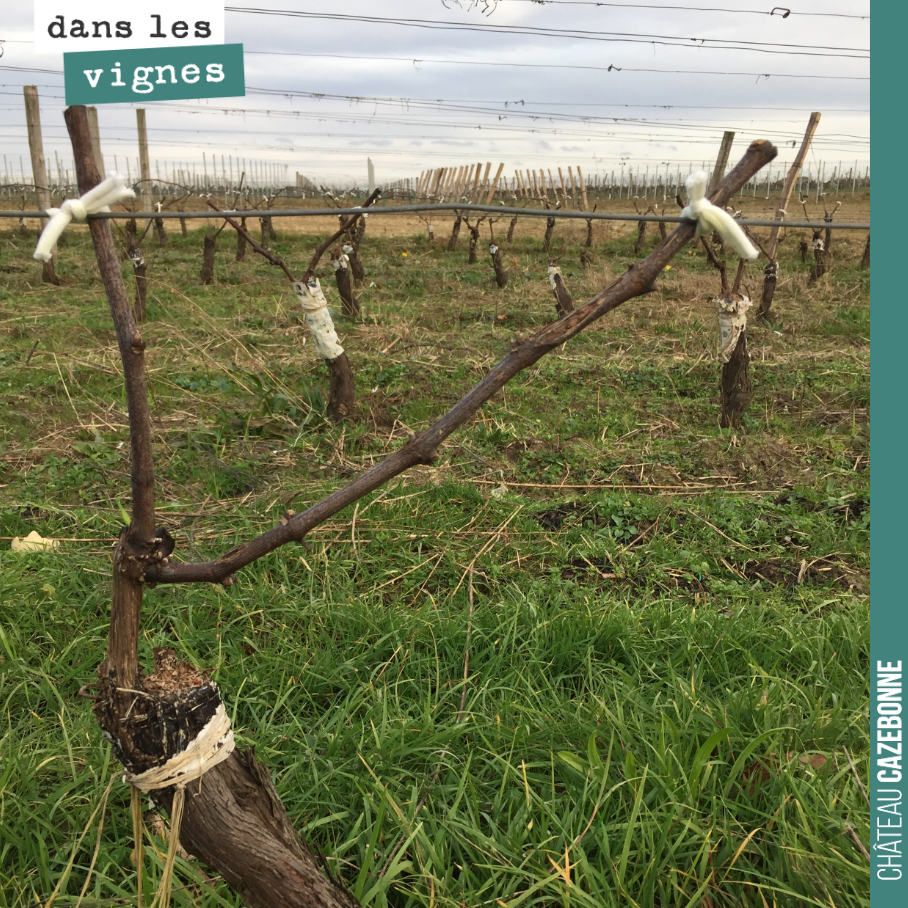
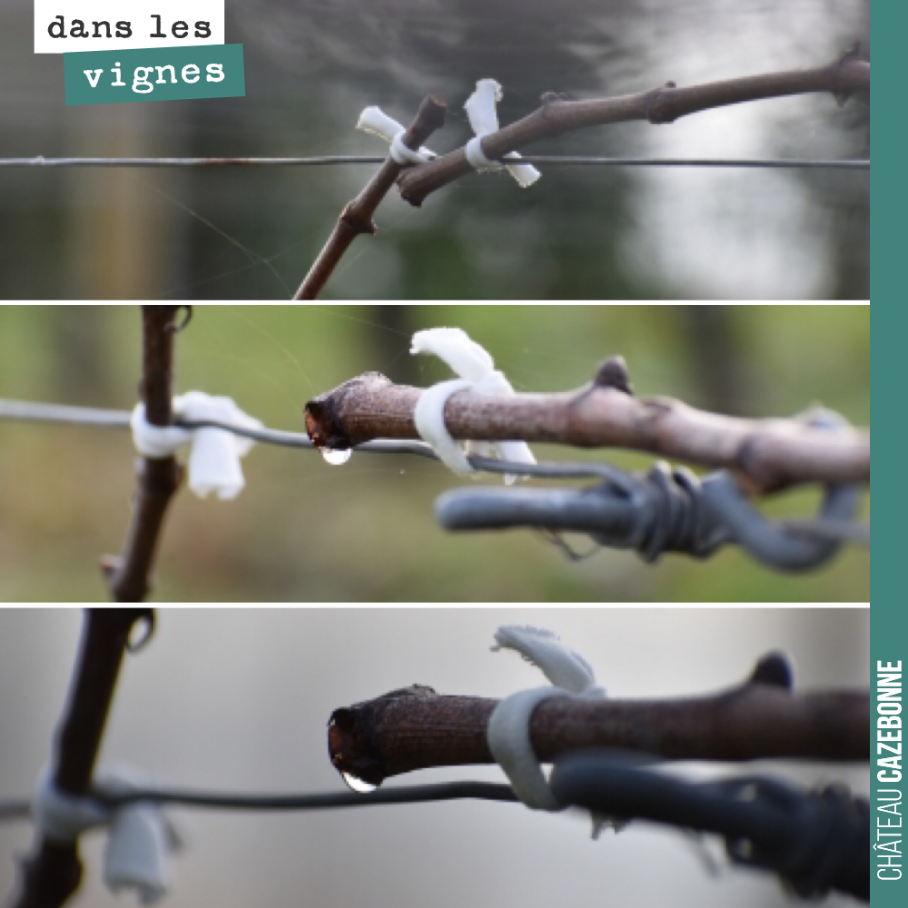
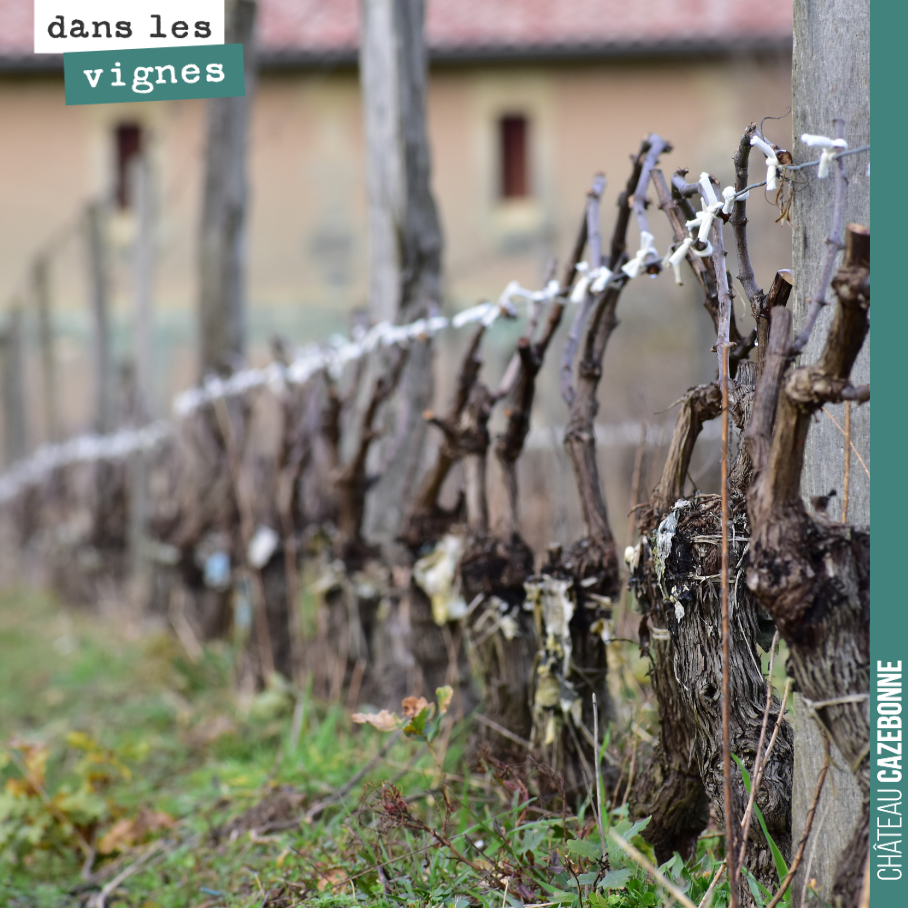
Vineyard work is a symphony of precise movements, and among them, tying holds an essential place. After winter pruning, which defines the vine's future architecture, comes the meticulous stage where the winegrower skilfully attaches and ties the pruned canes to the wires stretched along the rows. It is not merely about fastening them; it is a delicate art aimed at training the vine optimally, harmoniously distributing the load of fruit and leaves along the cane. Each tie, often made with biodegradable materials, is designed to ensure proper sap circulation, prevent branches from tangling, and provide ideal sun exposure.
This action, repeated on thousands of vines, contributes directly to the future quality of the grapes. By guiding the growth of new shoots, tying helps aerate the canopy, thereby preventing the development of fungal diseases, which are so dreaded in Bordeaux vineyards. It also ensures better light penetration, essential for photosynthesis and berry ripening. A well-executed tying is the guarantee of a healthier harvest and even ripening of the bunches, determining factors for the aromatic balance and concentration of the future wines.
Vine tying is the manual or mechanical operation of attaching the vine canes to the trellising wires after pruning. This vital action makes it possible to control the plant's growth, keep it upright, and optimise its exposure to light. It is not only a physical constraint but a true orientation given to the vine for its future development.
Tying has several essential goals. Agronomically, it aims to structure the vine, standardise the distribution of the future crop, and facilitate subsequent work such as leaf thinning or the harvest. Oenologically, good exposure of the bunches to the sun promotes even ripening and better synthesis of aromatic compounds, directly influencing the richness and complexity of the future wines. It also contributes to better aeration of the foliage, reducing the pressure of diseases like mildew or powdery mildew.
Tying is generally carried out in spring, after winter pruning and just before the budburst and flowering of the vine. It is a key moment when the sap rises into the canes, making them more supple and less brittle. It is crucial to intervene at the right time to avoid damaging the plant or compromising its fruiting.
By hand, the winegrower selects the fruit-bearing canes and delicately ties them to the trellising wires. The tie must be loose enough not to strangle the growing wood, but firm enough to hold it in place against the wind. Specific techniques exist depending on the trellising method (Guyot, Cordon de Royat, etc.). The precision of the movement is paramount to guide the vine without injuring it.
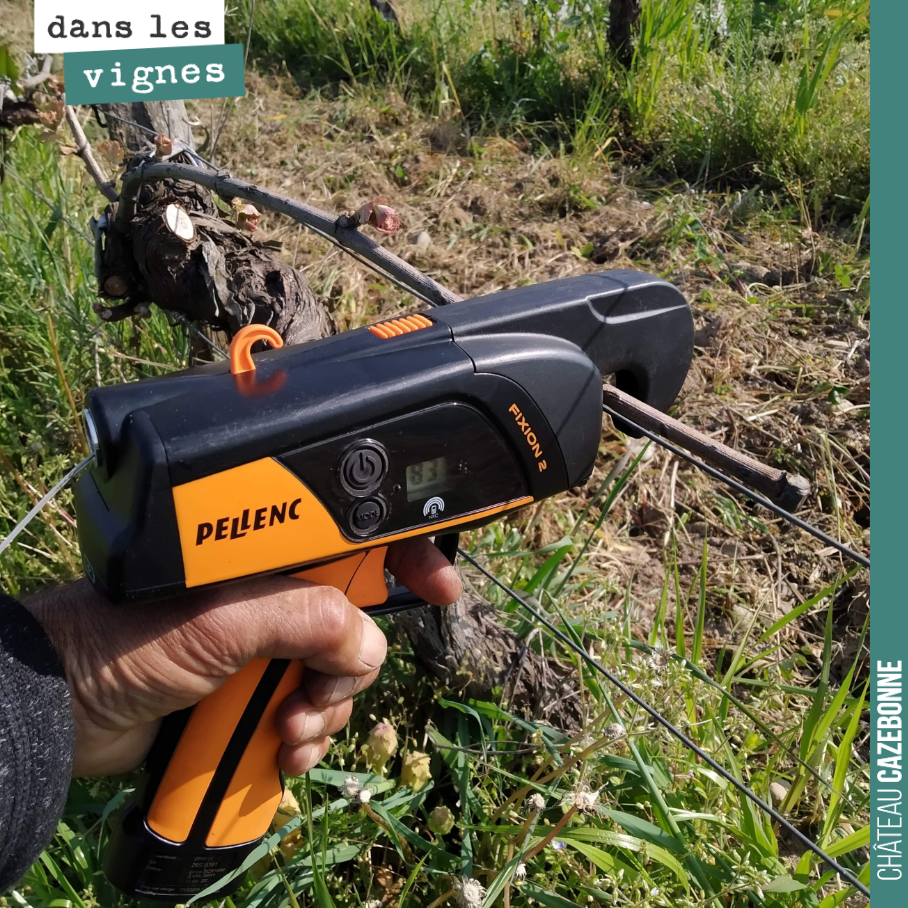
Historically, willow or straw strands, or even raffia, were used. Today, electric tying machines or biodegradable ties made of paper or compostable materials are commonly used. The choice of material and tool depends on the vineyard's surface area, available workforce, and specific cultural practices of each estate. Secateurs are often the complementary tool to prepare the canes.
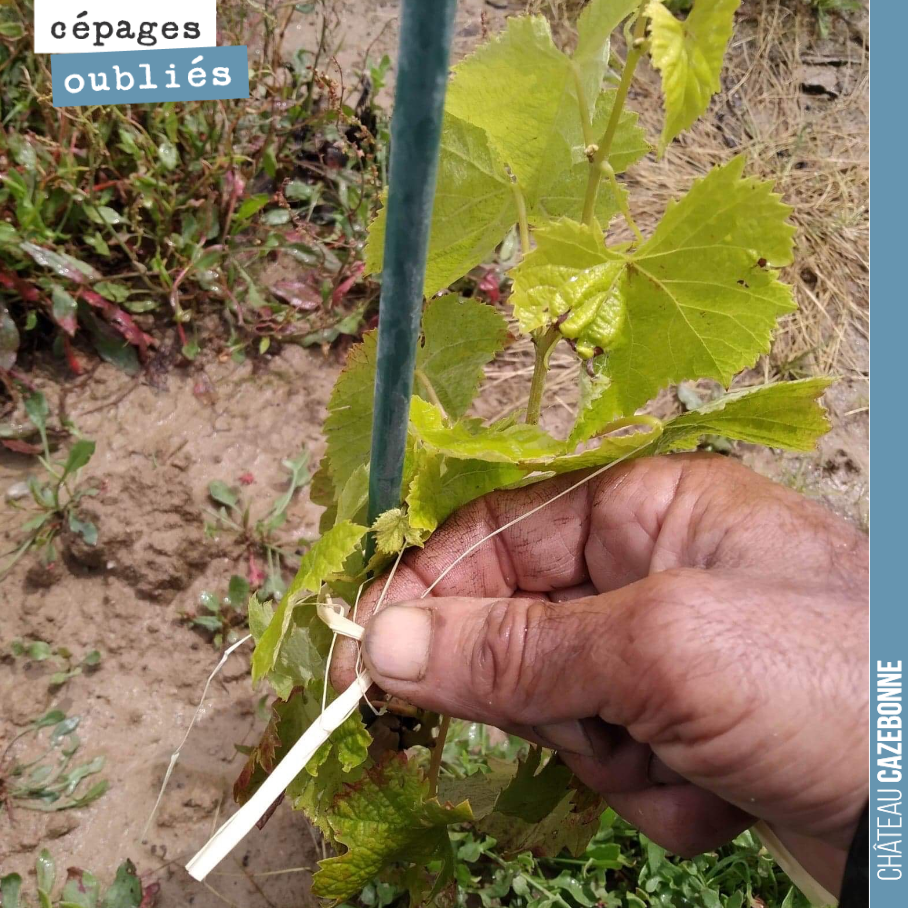
At Château Cazebonne, this attention to every detail of the vegetative cycle takes on a special dimension. We favour gentle and respectful methods for the vine, promoting the longevity of our old vines and the expression of our terroir. The lifting of the vine is essential to guide its development, just like the practice of trimming the vine. We are committed to preserving and enhancing historic Bordeaux grape varieties, those sometimes forgotten varieties, whose history and characteristics are brilliantly documented in the book "Bordeaux, une histoire de cépages" by Jean-Baptiste Duquesne, published by Éditions BBD. This long-term work of research and replanting is made possible thanks to the invaluable support of many enlightened enthusiasts who, by adopting our wines, allow us to breathe new life into this unique viticultural heritage and continue to explore new expressions of our terroir.
To discover the fruit of this passionate work and the ancestral actions of our winegrowers, we invite you to download the digital version of the book "Bordeaux, une histoire de cépages" to deepen your knowledge of these grape varieties that have XXXXXXXXXX shaped the identity of our vineyard, to test your knowledge with our oenological quizzes, and to find our cuvées on our online shop.
Sources
Our suggestions
-5%on your 1st order with code BIENVENUE
The essential6 bottles — Graves red 2022
The best price of the cellar: €12 per bottle delivered.
The everyday red: generous and straight to the point.
I want it Our recommendation92/100 RVF
6 bottles — Graves red 2022, 92/100 RVF
Rated 92/100 by La Revue du vin de France: a solid 10-year ageing potential.
Our Graves for ageing, the finest gateway to the estate.
I want it Go further
12 bottles — the whole range
12 bottles, the whole range tasted: the best discovery-to-price ratio.
The complete tour of the estate, in a single case.
I want it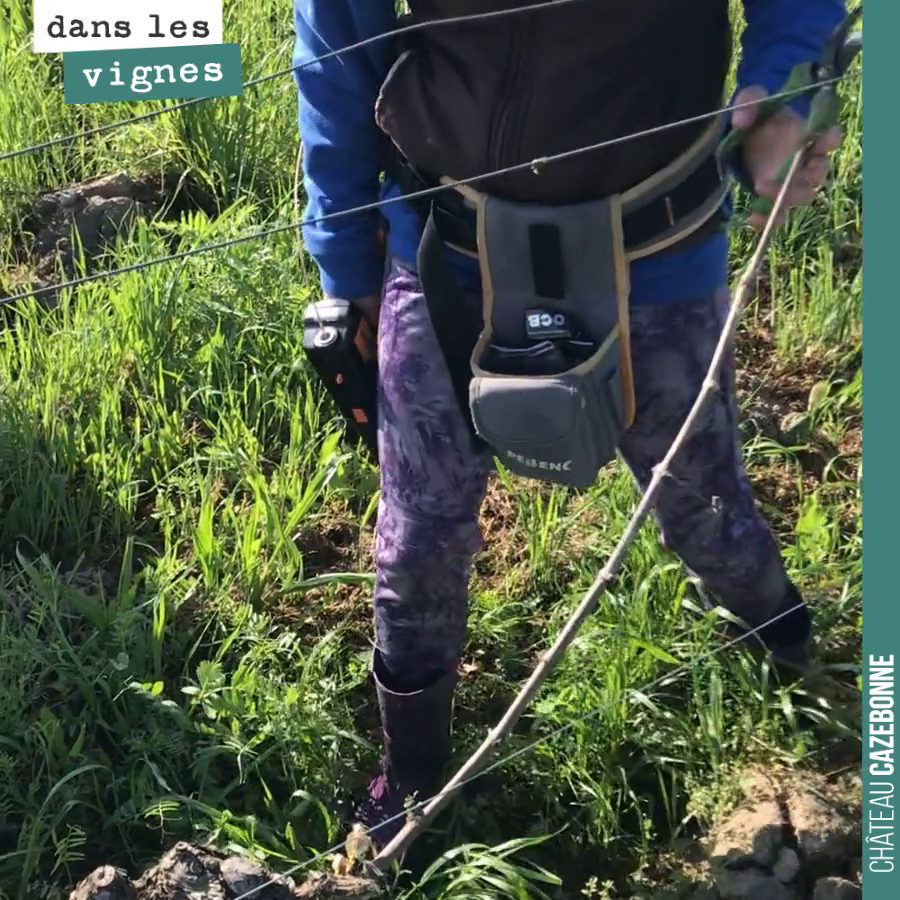
27 April 2022
15 June 2019
15 April 2019
18 February 2019
17 February 2019
14 February 2019
The cellar, forgotten grape varieties and our cuvées, twice a month. 5% off your first order with the code BIENVENUE.