
23 January 2021
Do you know Pardotte
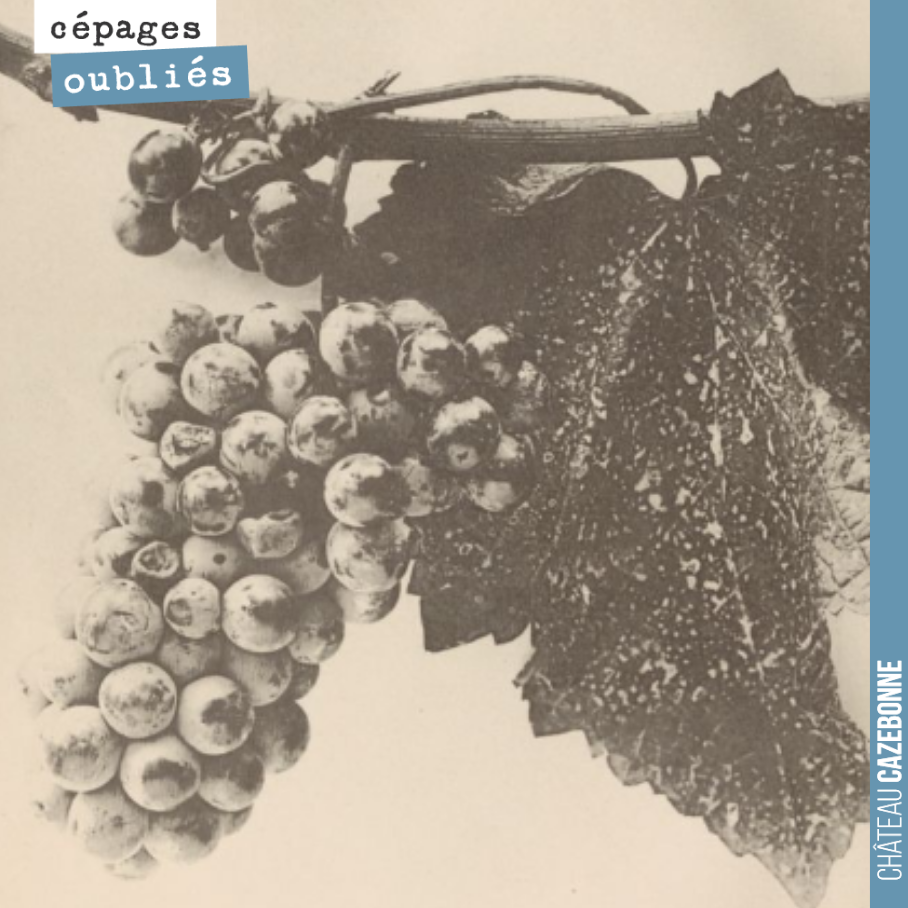
La Parde makes its appearance as early as 1736 in the writings of Abbé Bellet. Its presence is confirmed in our vineyards by Jean-Baptiste de Secondat, in 1785, even if he classified this grape variety as poor. It was also present in Bazas (Grande Parde and Petite Parde), in the inventories of Dupré de Saint-Maur (1784). Count Odart did not hold it in high regard either, but mentioned it. Féret mentioned it in 1878, under the name Pignon, as an ordinary grape variety. In 1932, G. Bord confirmed its presence in Bordeaux vineyards as a secondary grape variety.
This grape variety has therefore had many identities. While it was indeed called Pardotte around Cadillac and Langon, it could also be called Parde or Petite Parde (in Blanquefort and Graves), Sauvignon Rouge (in Saint-Macaire) or Gros Machouquet (in Ambès and Montferrand), although under this last name, Jean Bisson pointed out in 1957 that it was almost certainly Castets.
The variety was authorised in 1935 as a secondary grape variety in the Bordeaux appellation decrees.
This grape variety was widespread throughout Gironde, and Bisson pointed out that it could account for up to a quarter of red plantings in Graves, the Réolais, Bas-Médoc, Premières Côtes, and perhaps Bourgeais-Blayais.
It is a vigorous variety, highly productive and resistant to coulure. It must be pruned short to achieve a healthy, ripe harvest. It buds at the same time as Cabernet Franc and flowers a week after Merlot.
This variety, with a late second-period ripening (just before Cabernet Sauvignon), struggled somewhat to reach full ripeness, particularly when the vine carried too heavy a crop. The grape variety is relatively resistant to downy mildew, but more susceptible to powdery mildew.
It is worth noting that until recently, Château Haut-Bailly still preserved a few old Pardotte vines in one parcel. The variety has been replanted by Liber Pater, as well as Château Cazebonne.
This grape variety produces light-bodied, lightly coloured wines capable of gaining finesse with age. In the past, it was certainly used to lighten the wines of Bas-Médoc, which were otherwise too full-bodied and harsh.
The genetic parentage of this grape variety remains unknown.
Our suggestions
Treat yourself
-5%on your 1st order with code BIENVENUE
 The essential92/100 RVF
Comme en 1900 red 2022
Vin de France — heritage grapes, 92/100 RVF
The pre-phylloxera Bordeaux blend, revived at the estate.
Castets, Mancin, Pardotte: the Bordeaux before Bordeaux.
I want it Our recommendation
La Dame Noire 2023
IGP Atlantique — rare grape variety
A forgotten grape brought back: dense colour, wild fruit.
For the curious about lost grape varieties.
I want it Go further
Discovery case, 12 bottles
12 bottles — the whole range
12 bottles, the whole range tasted: the best discovery-to-price ratio.
The complete tour of the estate, in a single case.
I want it