
 The essential92/100 RVF
Comme en 1900 red 2022
Vin de France — heritage grapes, 92/100 RVF
The pre-phylloxera Bordeaux blend, revived at the estate.
Castets, Mancin, Pardotte: the Bordeaux before Bordeaux.
I want itBequignol
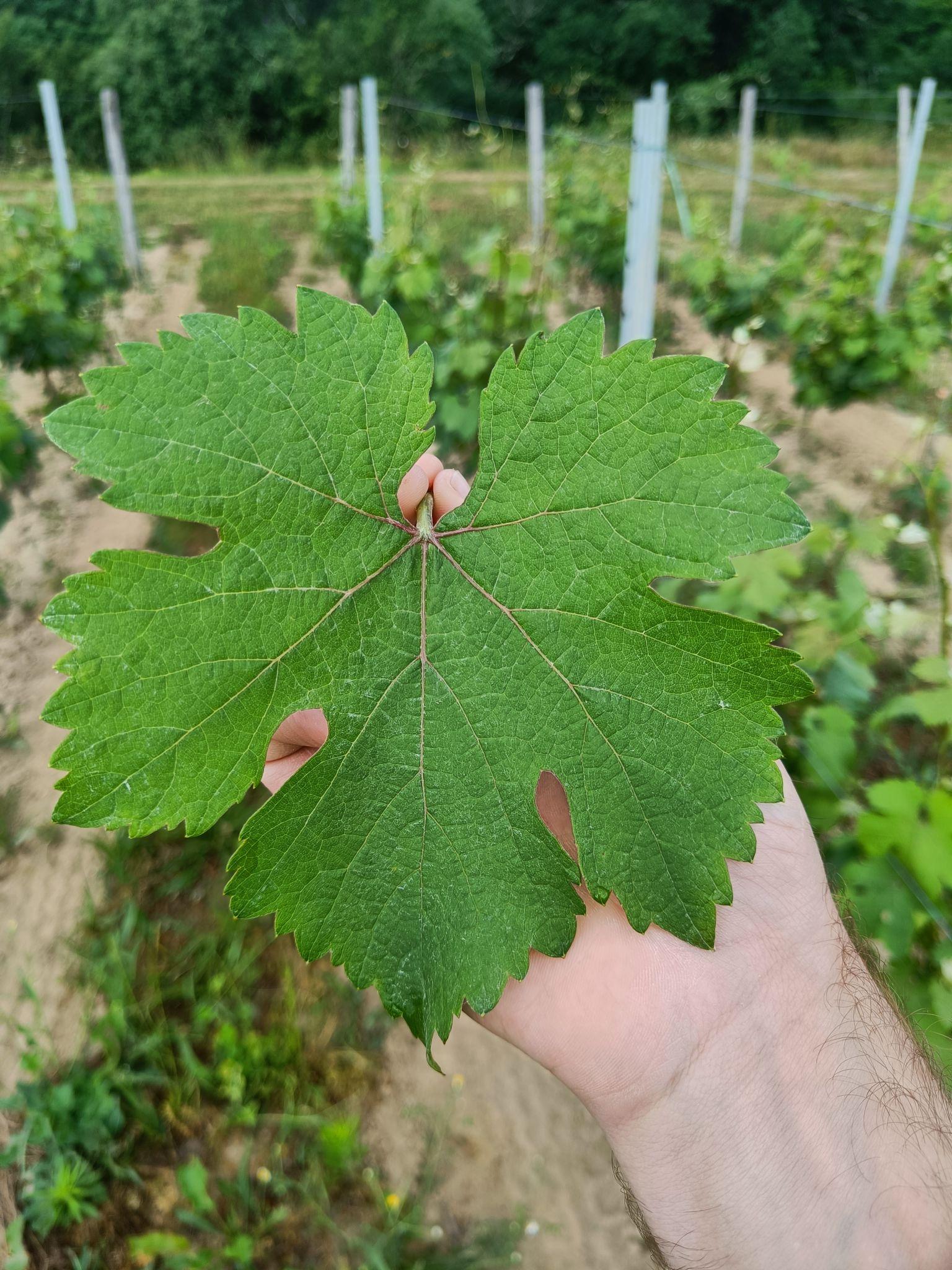
Béquignol represents an ampelographic treasure of South-West France, an ancestral grape variety that marked the winemaking history of Bordeaux before gradually disappearing from the vineyard plots in favour of more "modern" varieties. At Château Cazebonne, we have made it our mission to revive this genetic heritage, and Béquignol is one of those forgotten gems that we are bringing back to light.
This grape variety, whose budburst occurs about 7 days after that of Chasselas, and which reaches its full maturity during the second epoch (about two and a half weeks after Chasselas), has had its path disrupted by history. Once prized for its aptitudes, Béquignol was unfortunately abandoned after the devastating phylloxera crisis. The reconstructions of the vineyard, dictated by the need for mass production and ease of cultivation, favoured more productive grape varieties, relegating Béquignol to a memory.
The history of Béquignol is intrinsically linked to that of the South-West vineyards. Although it enjoyed a fine period of prosperity, particularly before phylloxera when the Gironde boasted a great diversity of grape varieties, its decline began with the post-crisis restructuring. Unlike other grape varieties such as Carménère, which was undoubtedly a blending grape thanks to a certain mouthfeel and great aromatic complexity, Béquignol did not enjoy the same recognition in the ampelographic writings of the 19th century such as those of Viala and Vermorel. It nonetheless remains a precious witness to the rich Bordeaux ampelography of yesteryear. It shares with other forgotten grape varieties the destiny of having been supplanted by more easily cultivated or more productive varieties, but its return to the forefront is part of the movement for the renewal and diversity of Bordeaux wines today. Indeed, winegrowers like those at Cazebonne are committed to replanting these forgotten grape varieties to restore part of its original identity to the Bordeaux vineyard.
Recent studies have shown that before the phylloxera crisis, Béquignol was one of the most widespread grape varieties in South-West France, extending from the Pyrenees to Bordeaux and the Charente. Its documented presence in many plots before the decimation of the 19th century testifies to its importance and adaptation to local terroirs. DNA profiling has revealed that it is a descendant of Folle blanche for the Béquignol blanc grape variety, and that its genetic family is closely linked to other historical grape varieties of the region. It is found, for example, as a likely parent or grandparent of Saint-Macaire. Its abandonment was a direct consequence of post-phylloxera reconstruction choices, which favoured immediate productivity to the detriment of diversity.
From an agronomic standpoint, Béquignol is a grape variety that requires specific attention in the vineyard, notably due to its susceptibility to mites. However, this requirement is largely offset by its fine natural resistance to grey rot, a significant asset in the humid Bordeaux climate. These specificities require precise and meticulous vine management, but the efforts are amply rewarded by the singularity and quality of the wines it can produce. Its historical presence in the Bordeaux vineyards testifies to its ability to flourish on our terroirs, offering an uncommon hardiness and adaptation.
From an oenological perspective, Béquignol excels in the production of wines of great finesse. Characterised by a delicate fruity expression, they offer a beautiful lightness and silky tannins, providing an enjoyable and immediate drinkability. For Béquignol to fully express its qualitative potential, rigorous yield management is essential. The resulting wines reveal aromas of great subtlety and an unexpected freshness, offering a distinct profile from the usual register of contemporary Bordeaux wines.
| Characteristic | Description |
|---|---|
| Budburst | Early, 7 days after Chasselas. |
| Flowering | Early to medium. |
| Veraison | Early (first half of the cycle). |
| Maturity | Second epoch (2 and a half weeks after Chasselas). |
| Vigour | Medium to high. |
| Growth habit | Erect. |
| Downy mildew susceptibility | Quite susceptible. |
| Powdery mildew susceptibility | Moderately susceptible. |
| Botrytis (grey rot) susceptibility | Very low (good natural resistance). | Black rot susceptibility | Moderately susceptible. |
| Mite susceptibility | Susceptible. |
| Aromatic profile | Delicate fruity expression, red fruit and floral notes, great finesse. |
| Winemaking potential | Light, fruity wines, silky tannins, beautiful freshness. Requires rigorous yield management. |
At Château Cazebonne, our commitment to grape varieties like Béquignol is at the heart of our pioneering approach. We strive to restore the prestige of these varieties that constituted the richness and complexity of the Bordeaux wines of yesteryear, a time when the Gironde boasted, before phylloxera, no fewer than 48 grape varieties. This heritage reconstruction work, unique of its kind in the Bordeaux region, motivated by the desire to rediscover forgotten tastes and expertise, is only made possible by the invaluable support of the many wine enthusiasts who have embraced our wines and share our passion for this renaissance. By replanting these disappeared grape varieties in Bordeaux, we actively contribute to enriching the regional winemaking heritage and offering unprecedented tasting experiences. To deepen your knowledge of this fascinating history, we invite you to receive the digital version of the book "Bordeaux, a history of grape varieties" by clicking on the link dedicated to our book on ancient grape varieties. You can also test your knowledge and refine your palate with our oenological quizzes, before discovering and purchasing our wines, true reflections of this rediscovered heritage, on our online shop.
Sources
Our suggestions
-5%on your 1st order with code BIENVENUE
The essential92/100 RVFVin de France — heritage grapes, 92/100 RVF
The pre-phylloxera Bordeaux blend, revived at the estate.
Castets, Mancin, Pardotte: the Bordeaux before Bordeaux.
I want it Our recommendation
IGP Atlantique — rare grape variety
A forgotten grape brought back: dense colour, wild fruit.
For the curious about lost grape varieties.
I want it Go further
12 bottles — the whole range
12 bottles, the whole range tasted: the best discovery-to-price ratio.
The complete tour of the estate, in a single case.
I want it
11 August 2020
12 February 2019
03 September 2018
13 July 2018
13 July 2018
The cellar, forgotten grape varieties and our cuvées, twice a month. 5% off your first order with the code BIENVENUE.