
 The essential92/100 RVF
Comme en 1900 red 2022
Vin de France — heritage grapes, 92/100 RVF
The pre-phylloxera Bordeaux blend, revived at the estate.
Castets, Mancin, Pardotte: the Bordeaux before Bordeaux.
I want itGros Verdot
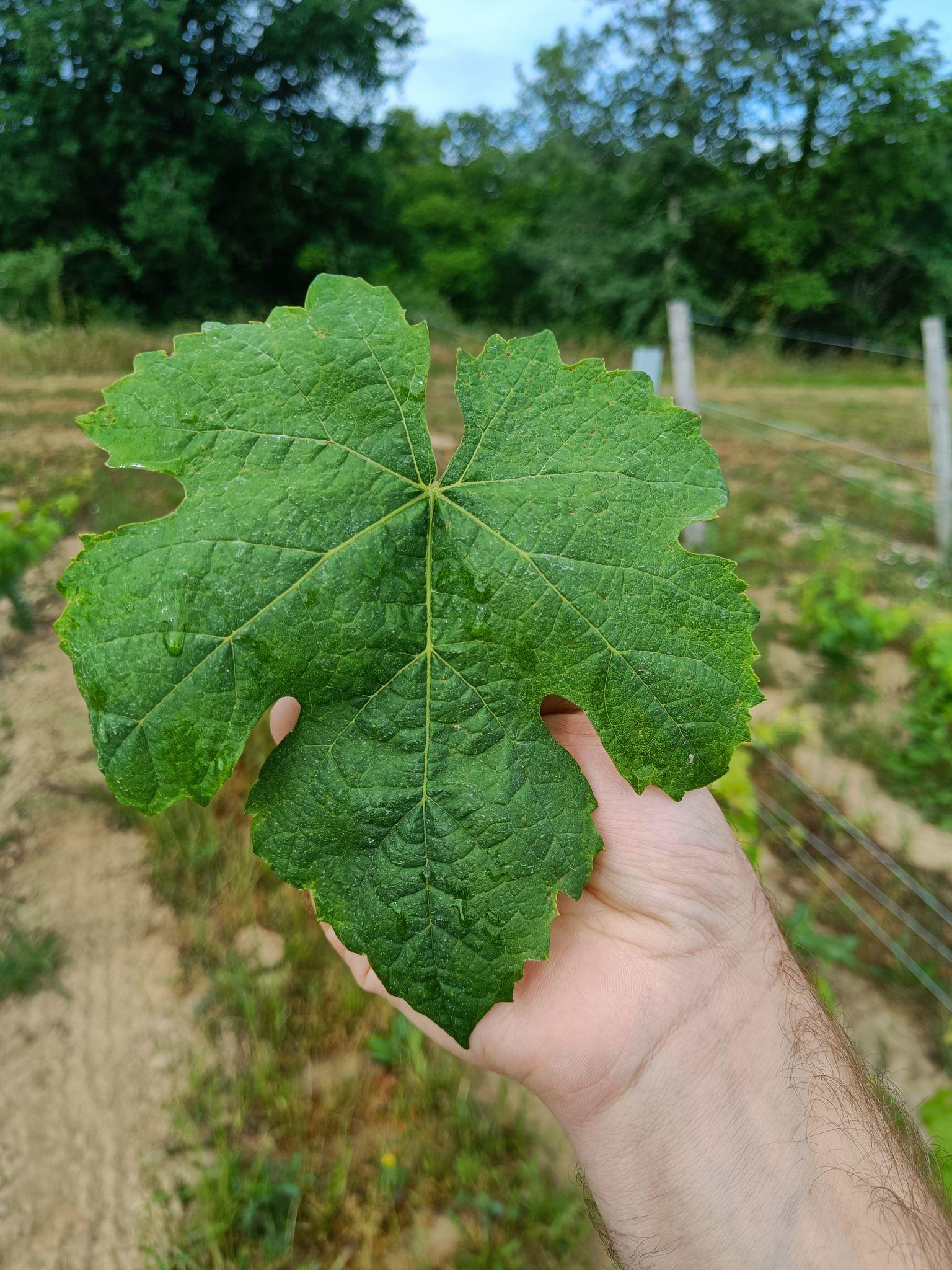
Gros Verdot is a grape variety whose history is intrinsically linked to that of the Bordeaux vineyard, although it was long eclipsed by its cousin, Petit Verdot. Its presence is attested as early as the 18th century, as revealed by the Abbé Bellet in 1736, who already distinguished between Petit and Grand Verdot. Fifty years later, Dupré de Saint-Maur's survey in Libourne confirmed this duality, proving its deep roots in the Gironde wine landscape. Eminent ampelographers such as A. Jullien in 1832 and Comte Odart in 1844 also documented the existence of these two varieties. However, from the mid-19th century onwards, a trend towards simplification took hold, with authors like M. Bouchereau (1843) and Auguste Petit-Lafitte (1868) using the generic term "Verdot", thereby blurring the specificities of Gros Verdot.
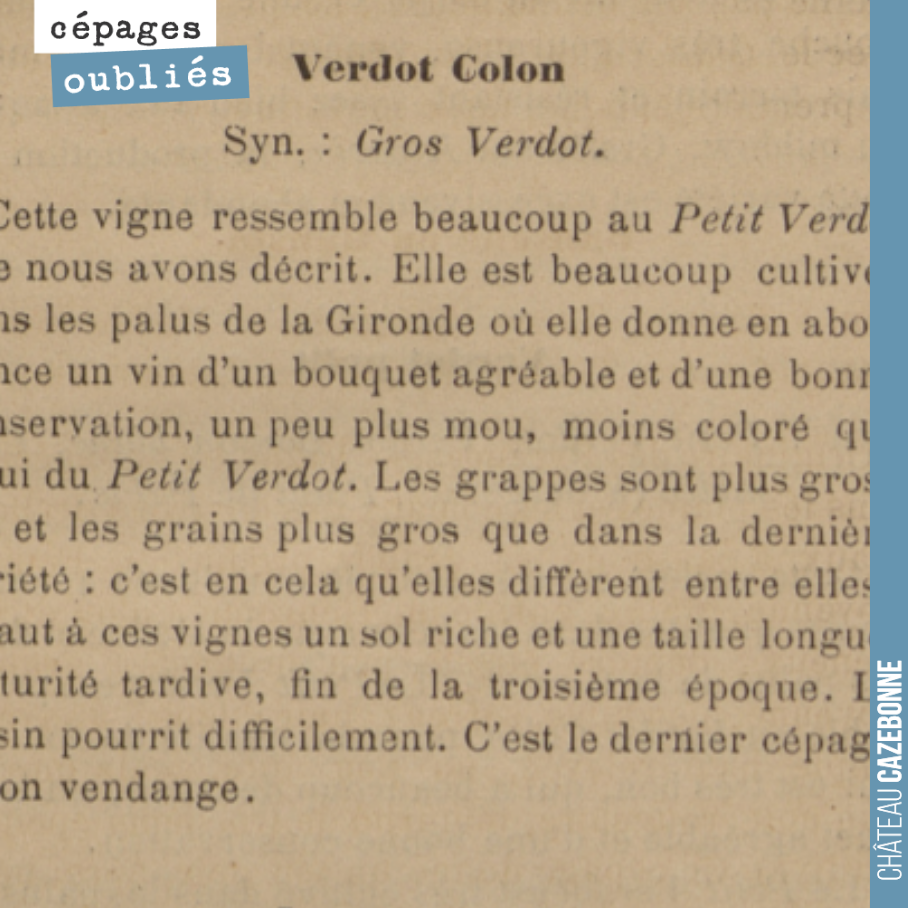
The 20th century marked a turning point for this grape variety. When the Appellation d'Origine Contrôlée (AOC) decrees were established in 1935, Gros Verdot was relegated to the rank of a secondary grape variety, a decision that would lead to its exclusion from the authorised grape varieties in French AOCs from 1953 onwards. This relegation, as Jean-Baptiste Duquesne highlights in his book, deprived the Bordeaux region of a part of its genetic identity. Historically, Gros Verdot, sometimes called Verdot Colon, was even the subject of rivalries; as early as the 17th century, Bordeaux winegrowers sought to ban its planting in the palus (marshes), where it competed with Petit Verdot, which was considered more noble. Its genetic origin remains a mystery, but it is plausible, like Petit Verdot, that it descends from Pyrenean wild vines, an ancestral viticultural heritage.
| Characteristic | Description |
|---|---|
| Leaf | Large, 5-lobed, very deep and closed petiolar sinus, thick, blistered and rough blade. |
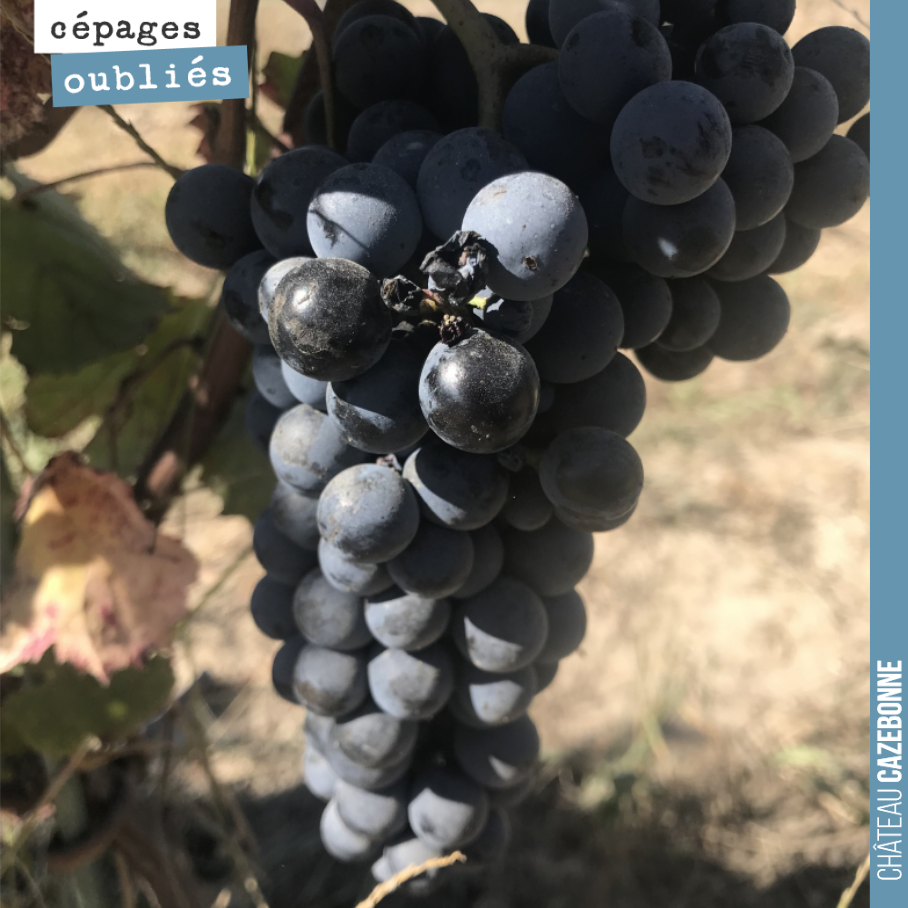
| Bunch | Medium to small, conical, loose. |
| Berry | Small, spherical, thick skin, juicy pulp. |
| Budburst | Moderately late, with a greenish and pubescent terminal bud. |
| Ripening | Late (third epoch), requiring warm soils and favourable exposures. |
| Vigour | High, with an erect growth habit. The canes are long, sinuous, mahogany-coloured, and purplish at the nodes. |
| Susceptibilities | Susceptible to powdery mildew. Moderately susceptible to downy mildew and black rot. Not very susceptible to botrytis. Prone to coulure. |
| Oenological properties | Deeply coloured wine, rich in tannins, structured, with good acidity and ageing potential. Spicy, floral and red fruit aromas. |
Gros Verdot is a highly vigorous grape variety with an erect growth habit. It is distinguished by moderately late budburst and very late ripening, of the third epoch, making it suitable for producing wines intended for long cellaring (source 6). The Verdots bud and flower fairly late, but ripen very late. It is particularly valued for its resistance to rot, allowing for slow and progressive ripening. It features long, supple, mahogany-coloured shoots. Gros Verdot is susceptible to powdery mildew and, although to a lesser extent, to downy mildew and black rot (source 6). It can be prone to coulure and produces less than Petit Verdot, requiring long pruning.
Despite its exclusion from French AOCs, Gros Verdot has strong oenological potential. It produces deeply coloured, structured wines with lovely acidity and excellent ageing potential. Its aromatic profile is characterised by spicy, floral and red fruit notes. It is a grape variety that, when well-vinified, can bring complexity and depth to blends.
Wines made from Gros Verdot are generally intense in colour. On the nose, they develop aromas of ripe red fruits, spices (pepper, clove) and often floral nuances (violet). On the palate, they are characterised by a beautiful tannic structure, refreshing acidity and a lingering finish. They can offer lovely complexity after a few years of cellaring.
At Château Cazebonne, we are committed to restoring the former glory of these forgotten grape varieties that had disappeared from the Bordeaux landscape. We firmly believe in Gros Verdot's potential to bring unique richness and identity to our wines. This grape variety is part of our approach to preserving local genetic heritage and our desire to produce yesteryear's grape varieties adapted to today's climate challenges. It illustrates our approach to biodiversity and experimentation with resistant grape varieties, in order to create the New Bordeaux.
Gros Verdot, although banned from French vineyards, has found a new lease of life, particularly in the United States, where it is authorised to produce wines under the Meritage label. It is a striking example of ancient grape varieties that deserve a second chance. To learn more about the fascinating history of these Bordeaux grape varieties, and to discover other adaptable grape varieties, such as The Fer Servadou grape variety, we invite you to explore our Bordeaux ampelography. To find out more about The Pardotte grape variety, as well as The Gros Cabernet grape variety, do not hesitate to consult our dedicated articles.
This work of memory and perseverance, in particular the replanting of Gros Verdot, is made possible thanks to the support of the many enthusiasts who have adopted our wines and share our passion. To explore the culmination of this approach and deepen your knowledge, Jean-Baptiste Duquesne has set down the fruit of his research in "Bordeaux, une histoire de cépages", a book that you can download to receive the digital version, or test your knowledge with our oenological quizzes, before coming to discover our cuvées made from these rediscovered grape varieties in Our online shop.
Sources
Our suggestions
-5%on your 1st order with code BIENVENUE
The essential92/100 RVFVin de France — heritage grapes, 92/100 RVF
The pre-phylloxera Bordeaux blend, revived at the estate.
Castets, Mancin, Pardotte: the Bordeaux before Bordeaux.
I want it Our recommendation
IGP Atlantique — rare grape variety
A forgotten grape brought back: dense colour, wild fruit.
For the curious about lost grape varieties.
I want it Go further
12 bottles — the whole range
12 bottles, the whole range tasted: the best discovery-to-price ratio.
The complete tour of the estate, in a single case.
I want it
09 June 2023
25 September 2022

25 July 2019
11 February 2019
The cellar, forgotten grape varieties and our cuvées, twice a month. 5% off your first order with the code BIENVENUE.