13 September 2025
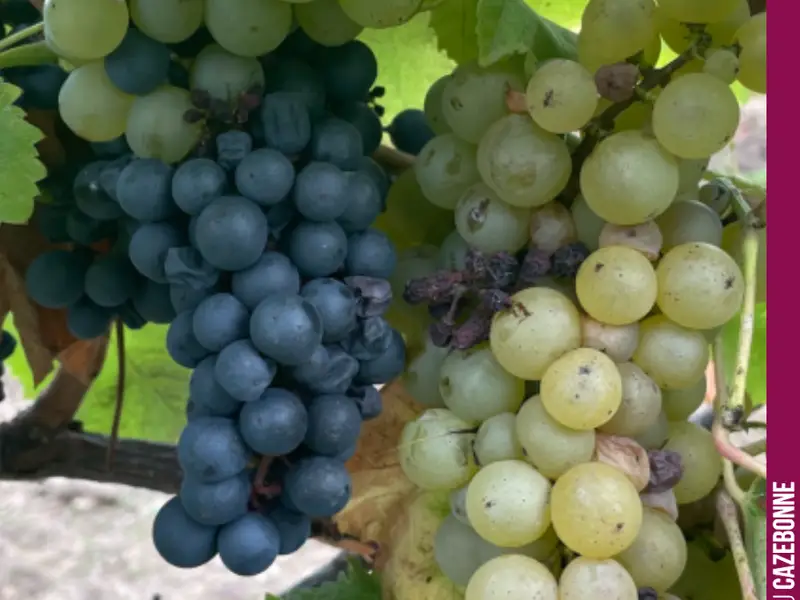
Castets and Sémillon on the same vine……How is this possible.
By Jean-Baptiste Duquesne

Castets
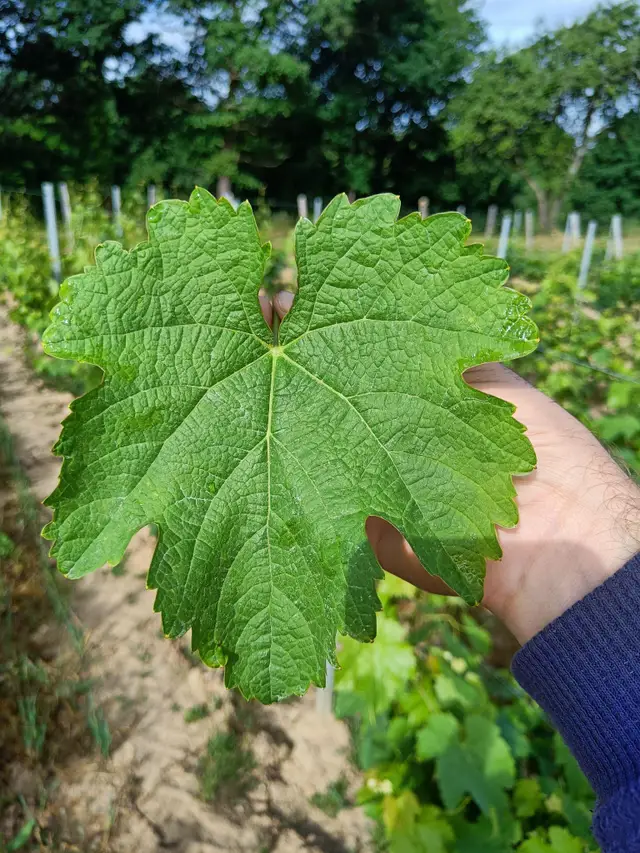
Castets is a rare red grape variety, native to the Bordeaux region, which has had a turbulent history. In the 19th century, it was already well established in the cantons of Saint-Macaire and Cadillac, sometimes also called Nicouleau. Its exact origin is open to debate: was it discovered in the woods of Saint-Macaire or brought back from the Pyrenees? Regardless, it was popularised by Mr Castets from 1875 onwards, giving it the name we know today. Genetic analyses by INRA have revealed that Castets is the result of a natural cross between Camaraou and Gros Cabernet, two historic Bordeaux grape varieties. It is also found in Rioja under the name Maturana Tinta.
This grape variety survived the phylloxera crisis, with some winegrowers notably grafting it onto resistant rootstocks. At the end of the 19th century, Castets aroused significant enthusiasm due to its supposed resistance (initially exaggerated) to downy mildew, its good resistance to coulure, and its late budburst which protected it from spring frosts. It withstands drought and humidity well, a valuable asset in the Bordeaux terroir. However, once ripe, its fragility and propensity for grey rot often prompted it to be harvested before full maturity, yielding wines with little colour and low alcohol. The winegrowers who plant it today still praise its qualities, notably its relatively early ripening (just after Merlot) and its beautiful aromatics. For another viticultural discovery, the Syrah grape variety (in Bordeaux) also deserves our attention. You can also discover the Pardotte grape variety, or explore the Fer Servadou grape variety. If you are passionate about the history of ancient grape varieties, the Mérille grape variety is also worth rediscovering.
| Characteristic | Description |
|---|---|
| Budburst | Late, escaping spring frosts. |
| Flowering | Unspecified, but late budburst. |
| Veraison | Unspecified. |
| Ripening | Early, just after Merlot (2nd epoch). |
| Vigour | Vigorous. |
| Growth habit | Unspecified. |
| Downy mildew sensitivity | Average resistance. |
| Powdery mildew sensitivity | Sensitive. |
| Botrytis sensitivity | Very sensitive to grey rot at maturity. |
| Black rot sensitivity | Unspecified. |
| Aromatic profile | Very beautiful aromatics. |
| Winemaking potential | Pure wines with finesse, can lack acidity in Graves. Blends well with Malbec and Cabernet-Sauvignon. |
In our post of 31 January 2021, "A look back at our first harvest of forgotten grape varieties", Nicolas Jamin of Vigne Vivante, who assists us with vinification, described the Castets picked from our young vines: "2 to 3 bunches per vine at most, the bunches are small and compact, the berries are very small". At the 2020 harvest, the grapes were highly concentrated and overripe, so these results may not reflect the grape variety's true potential.
The vinification results were nevertheless "very encouraging": ripe notes of chocolate and liquorice, a dense, elegant tannic structure and a lovely acidity that balances the warmth and high concentration. In that vintage, it was the variety that seemed to hold the greatest potential for rich, dense wines. While it may not be the best fit for the style of wine we strive to make at Cazebonne, Nicolas Jamin sees it as "a variety with tremendous quality potential" that Bordeaux winegrowers who enjoy wines with substance and concentration should look into. He gave a similar account of the vinification of Saint-Macaire in our post of 1 February 2021.
Today, Castets is once again authorised in the Bordeaux and Bordeaux Supérieur appellations, marking its return to its native lands. Château Cazebonne is committed to restoring the prestige of this historic grape variety. This rehabilitation work is made possible thanks to the support of wine lovers who have adopted our wines and back our approach to rediscovering the original flavours of Bordeaux. To explore the archives and the details of this history, do not hesitate to download our book "Bordeaux, une histoire de cépages". To test your knowledge, take part in our oenological quizzes, and of course, to discover our cuvées made from these rediscovered grape varieties, we invite you to visit our online shop.
Sources
13 September 2025
By Jean-Baptiste Duquesne
02 August 2023
By Jean-Baptiste Duquesne
26 August 2022
By Jean-Baptiste Duquesne
The cellar, forgotten grape varieties and our cuvées, twice a month. 5% off your first order with the code BIENVENUE.