08 October 2022
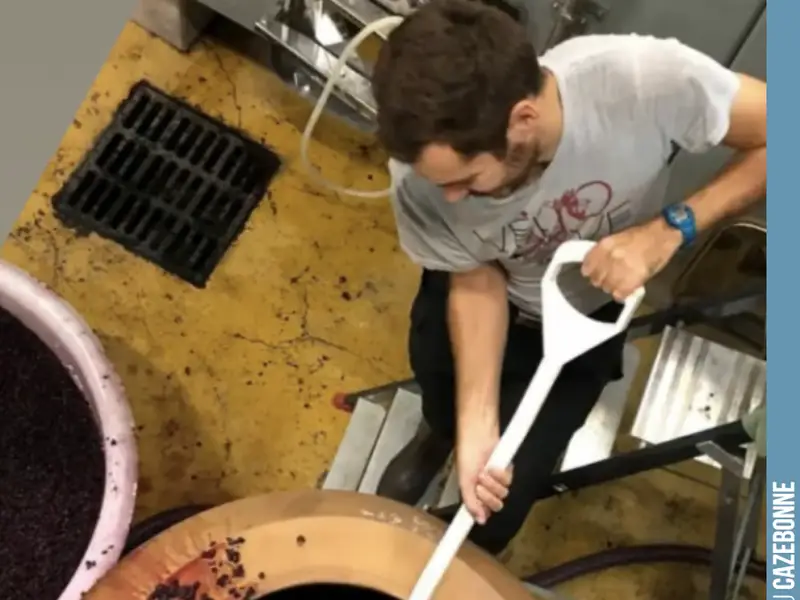
Clément is devatting the Bouchalès, which has now finished fermentation……7.5 hl of a little marvel that will be used in the blend for the cuvée Comme en 1900.
By Jean-Baptiste Duquesne

Bouchalès
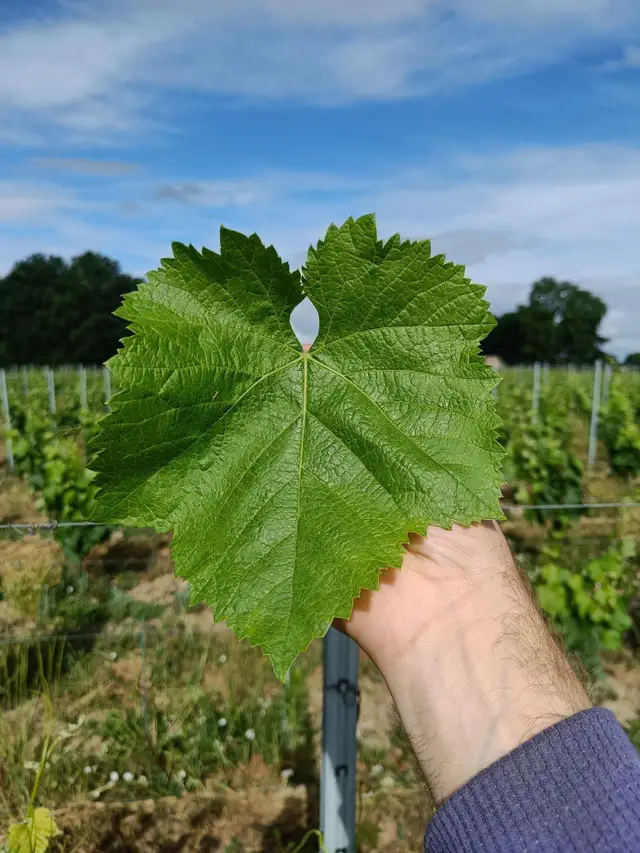
At the heart of our pioneering approach to rehabilitating forgotten Bordeaux grape varieties, Bouchalès proves to be an emblematic figure. Originally from the Garonne valley, this grape variety left its mark on Bordeaux's winemaking history under various local names such as Prolongeau, Gros de Judith, and Grappu. Its mention in numerous ancient writings, such as Féret in 1878, attests to its significant presence on the slopes of the Right Bank of the Garonne. In 1832, Jullien listed it among the black grape varieties grown in the Langon region. Before its gradual decline following the phylloxera crisis, it accounted for as much as 25% of the red vineyards in the current Premières Côtes around 1850. It was rarely grafted onto American rootstocks emerging from the crisis. Viala and Vermorel, in their Ampélographie (1901-1910), describe it as a rustic and vigorous grape variety.
The oenological profile of Bouchalès is particularly fascinating and fully justifies its reintroduction. It has the unique ability to produce wines with a low alcohol content, characterised by remarkable freshness and pronounced acidity. These qualities make it a first-rate blending grape, contributing to well-balanced wines of great finesse and singular elegance. We have notably blended it with Castets, another ancient grape variety, to bring acidity and red fruit notes to a characterful wine. It is precisely this distinction, this ability to enhance the terroir and offer wines with a strong personality, that we aspire to rediscover and share by cultivating it once more. The book "Bordeaux, une histoire de cépages" by Jean-Baptiste Duquesne also highlights this forgotten organoleptic richness.
| Characteristic | Description |
|---|---|
| Budburst | Late, about 1 day after Chasselas. |
| Ripening | Late 2nd epoch, about 3.5 to 4 weeks after Chasselas. |
| Vigour | Very vigorous. Catches up quickly after budburst. |
| Growth habit | Upright. |
| Downy mildew susceptibility | Low susceptibility. |
| Powdery mildew susceptibility | Low susceptibility. |
| Grey rot susceptibility | Vulnerable to grey rot, low susceptibility to noble rot. |
| Black rot susceptibility | Vulnerable to black rot. |
| Aromatic profile | Often associated with red fruit wines, generous, complex, with good freshness. |
| Winemaking potential | Produces fresh wines with low alcohol content and pronounced acidity. Excellent blending variety, particularly for adding freshness and structure. It has been described as promising for fruity and generous wines. |
Bouchalès stands out for its particular phenology. Its budburst occurs about a day after that of Chasselas, and it reaches maturity in the second epoch, which is about three and a half to four weeks after this same reference grape variety. Very vigorous, it was once prized for its productivity, an essential quality at a time when yield was often a priority. However, its cultivation required a certain expertise: although not very susceptible to downy and powdery mildew, Bouchalès is on the other hand more vulnerable to black rot and grey rot. Although it was once ill-advised for winegrowers because it did not ripen well, our initial vinifications tend to disprove this idea, as the grape variety has excellent organoleptic capabilities, especially when harvested at perfect maturity.
At Château Cazebonne, we are proud to reintroduce Bouchalès into the Bordeaux wine landscape, thus continuing our commitment to reviving the specificities that modernity had relegated to oblivion. To deepen your knowledge of this fascinating history, as well as all the forgotten grape varieties, we invite you to download the book "Bordeaux, une histoire de cépages" and test your knowledge of oenology with our oenological quizzes. You can also discover our unique Bouchalès-based cuvées in our online shop.
Sources
08 October 2022
By Jean-Baptiste Duquesne
22 September 2022
By Jean-Baptiste Duquesne
17 September 2022
By Jean-Baptiste Duquesne
The cellar, forgotten grape varieties and our cuvées, twice a month. 5% off your first order with the code BIENVENUE.