The essential
6 × Entre Amis red
6 bottles — Graves red 2022
The best price of the cellar: €12 per bottle delivered.
The everyday red: generous and straight to the point.
I want itMole cricket
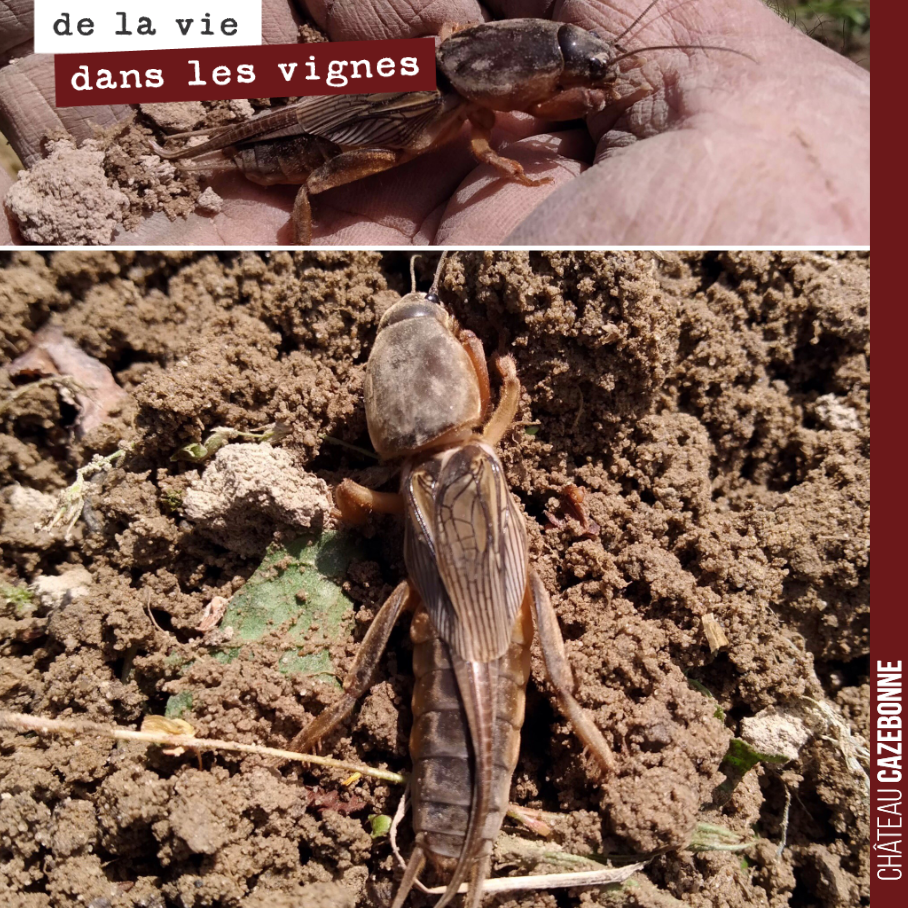
At Château Cazebonne, we pay close attention to every inhabitant of our viticultural ecosystem, no matter how discreet. The mole cricket, known scientifically as Gryllotalpa gryllotalpa, is one of these fascinating guests. This insect stands out for its incredible ability to shape the subsoil, playing a crucial role in the health of our vines.
Physically, the mole cricket is easily recognisable. Generally measuring between 3 and 5 centimetres, its robust body is yellowish-brown to dark brown in colour, with a velvety texture. What makes it unique are its overdeveloped, broad and serrated front legs, reminiscent of those of a mole, perfectly adapted for excavating. Its short elytra and hind wings, often folded like a fan, allow it to fly short distances, although it prefers to move underground. The mole cricket emits a characteristic song, a low buzzing sound, perceptible mainly in the late evening during the breeding season, from April to July.
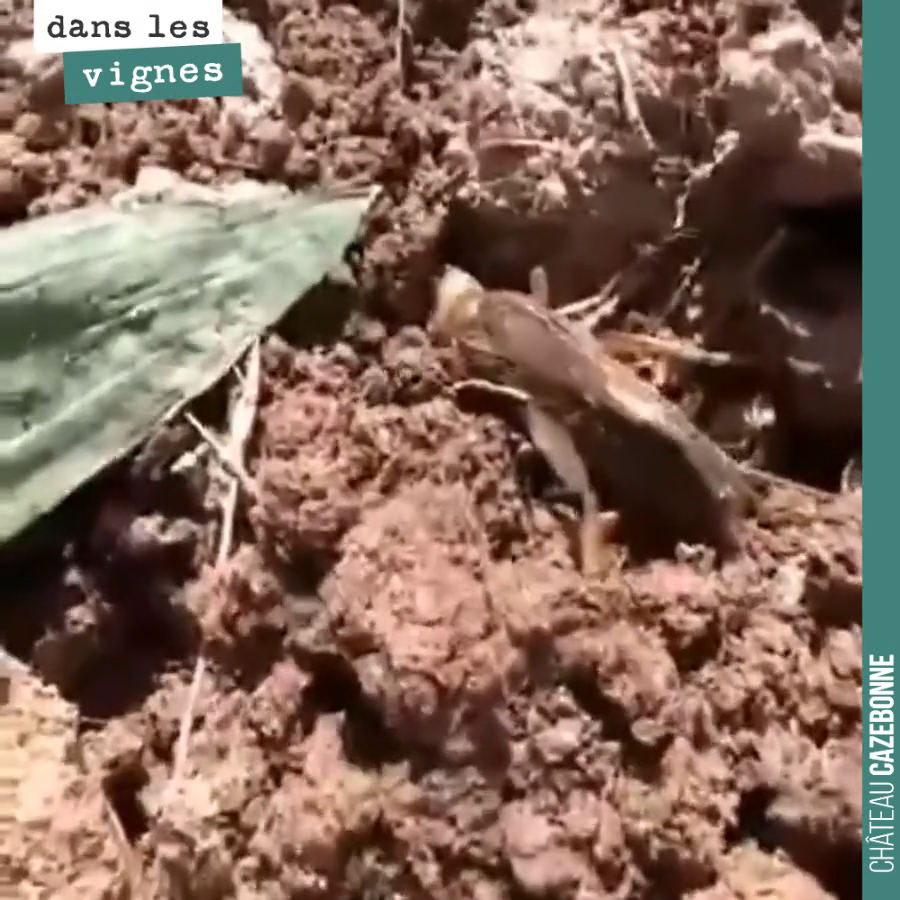
The mole cricket's life cycle spans one to three years. Adults mate in spring and the female lays her eggs in specially constructed underground nests. The nymphs hatch in summer and undergo several moults before reaching adulthood. The mole cricket spends most of its life buried, active from spring to autumn, and overwinters deep in the soil. In our Cazebonne vineyards, it is particularly fond of loose soils, rich in organic matter, where moisture is constant, typical of areas near waterways or plots well-enriched with humus. Their presence is an excellent indicator of the biodiversity and vitality of our terroirs.
Its ecological role is manifold. By digging a complex network of galleries, the mole cricket acts as a true "soil engineer". It ensures deep aeration, promoting drainage and the penetration of water and nutrients down to the roots of the vines. Its omnivorous diet, composed mainly of insect larvae, worms and small invertebrates, contributes to the natural regulation of pest populations. It occasionally consumes roots, but this damage is generally marginal and largely offset by the benefits it brings to the structure and fertility of the soil, especially in balanced and respectful viticultural environments like ours. The mole cricket's activity is therefore mainly beneficial for the vine, as it improves the circulation of air and water, essential elements for healthy and deep root development.
At Château Cazebonne, the sighting of the mole cricket is a concrete testament to our sustainable approach. Its sensitivity to pesticides makes it a valuable sentinel for the quality of our environment. By observing it thrive in our plots, we are reassured in our choices not to use aggressive treatments and to favour natural balances. This philosophy, aligned with the principles of agroecological viticulture that we practise, allows us to cultivate robust and resilient vines, offering high-quality grapes while preserving a rich ecosystem. Our preservation work is also a way of perpetuating the historic grape varieties of Bordeaux, threatened by time and intensive agricultural practices, a commitment shared by our community of wine enthusiasts.
We are proud to contribute to the renaissance of the forgotten grape varieties of Bordeaux and to see our work praised by the rich biodiversity of our plots. This bold project is only made possible by the support of enthusiasts who have chosen our wines and our vision of authentic and sustainable viticulture. For a complete immersion into our world, do not hesitate to download the digital version of the book "Bordeaux, une histoire de cépages", which traces the history and challenges of our terroir, to test your knowledge with our oenological quizzes, or to discover the expression of our terroirs and our philosophy directly by exploring our online shop.
Sources
Our suggestions
-5%on your 1st order with code BIENVENUE
The essential6 bottles — Graves red 2022
The best price of the cellar: €12 per bottle delivered.
The everyday red: generous and straight to the point.
I want it Our recommendation92/100 RVF
6 bottles — Graves red 2022, 92/100 RVF
Rated 92/100 by La Revue du vin de France: a solid 10-year ageing potential.
Our Graves for ageing, the finest gateway to the estate.
I want it Go further
12 bottles — the whole range
12 bottles, the whole range tasted: the best discovery-to-price ratio.
The complete tour of the estate, in a single case.
I want itThe cellar, forgotten grape varieties and our cuvées, twice a month. 5% off your first order with the code BIENVENUE.