
 The essential
6 × Entre Amis red
6 bottles — Graves red 2022
The best price of the cellar: €12 per bottle delivered.
The everyday red: generous and straight to the point.
I want itCover crops
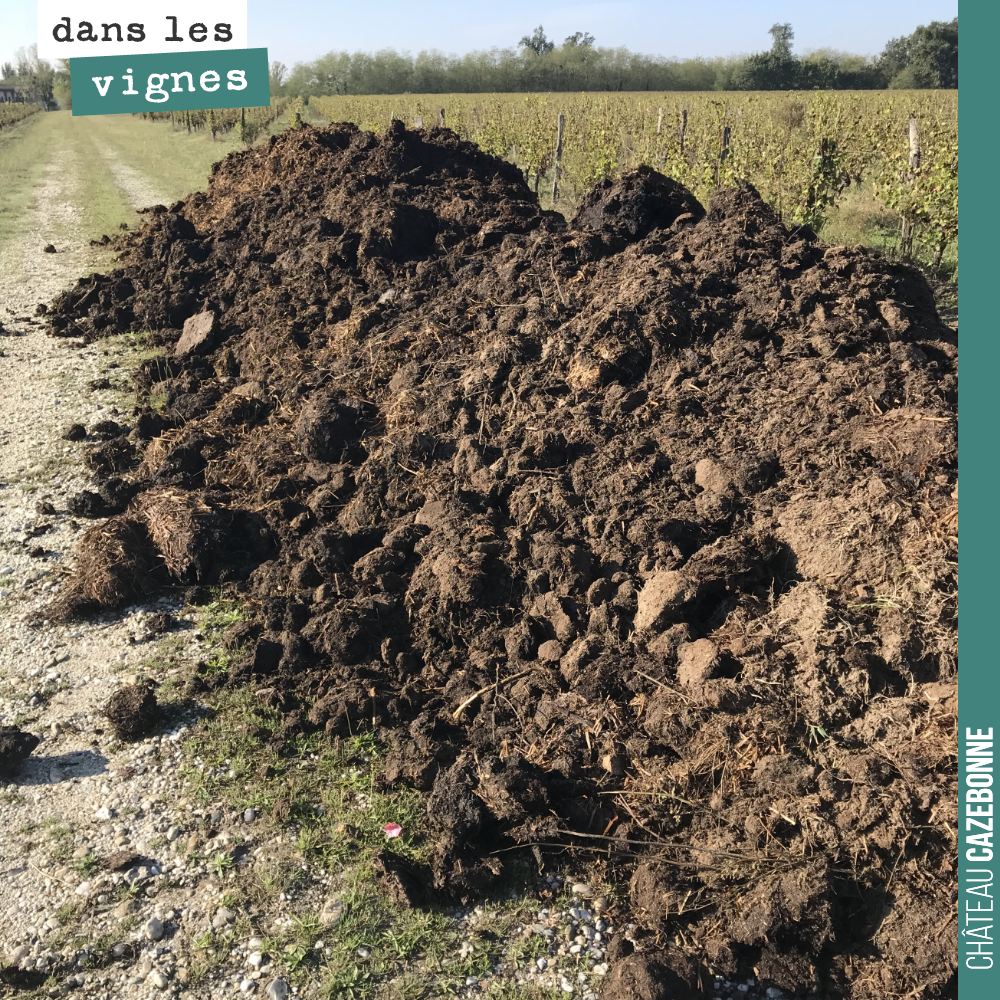
Modern agriculture, often synonymous with intensification and monoculture, has unfortunately resulted in the depletion of our soils' precious organic matter. This "fuel of life", essential to the fertility and resilience of the land, has gradually degraded, leading to a decline in microbial biodiversity and increased vulnerability to climatic hazards. At Château Cazebonne, we are deeply committed to a soil regeneration approach, convinced that soil health is the pillar of an authentic, high-quality wine.
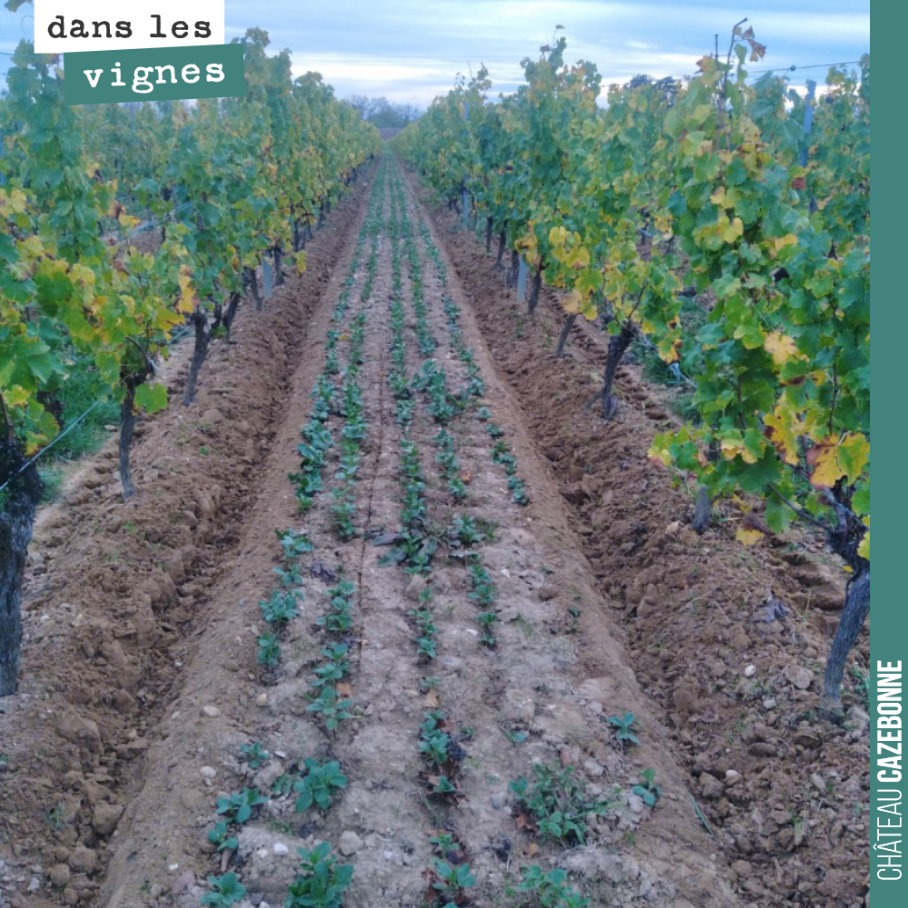
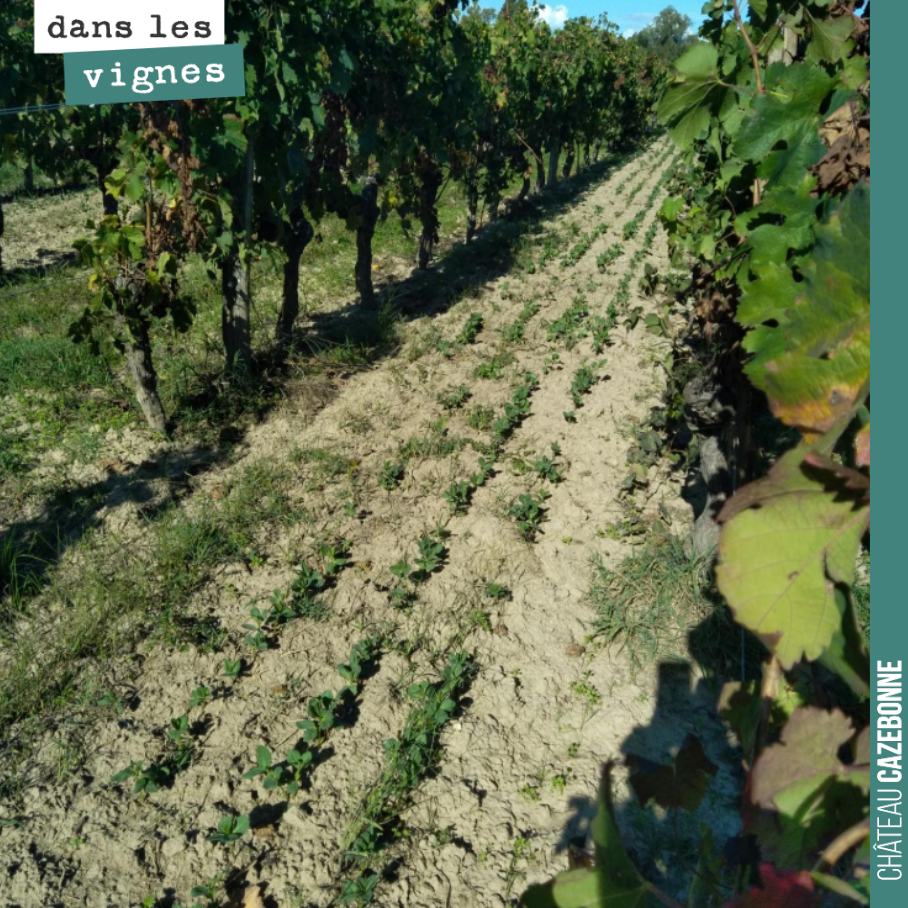
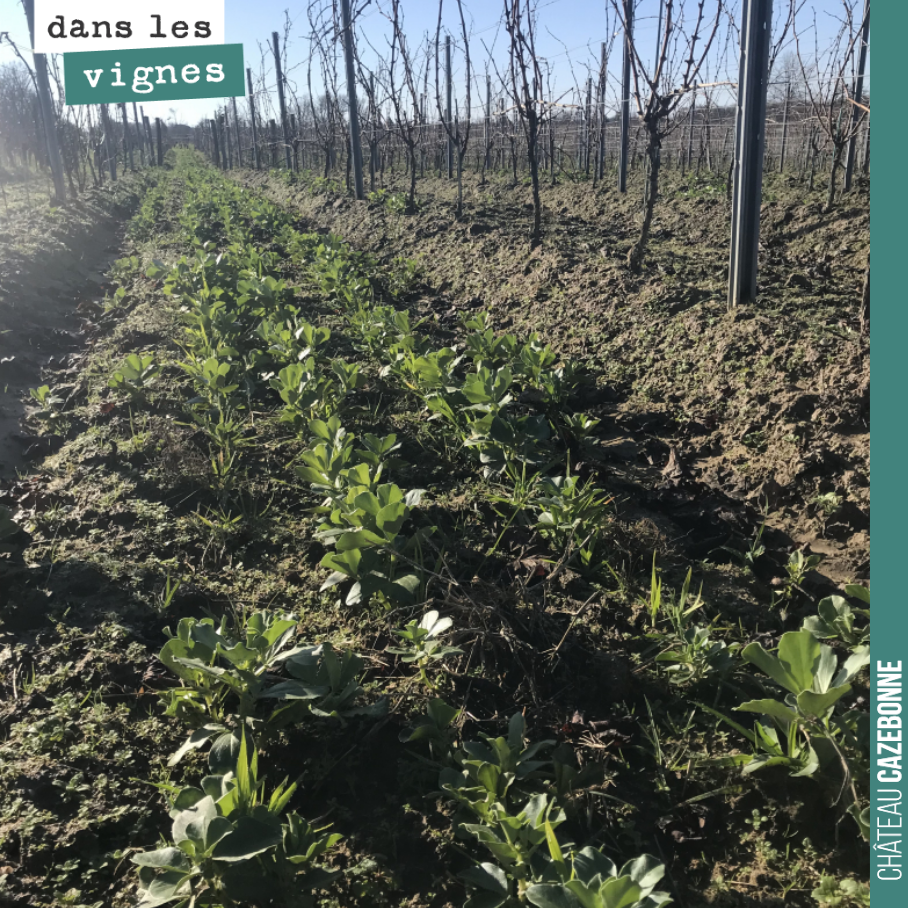
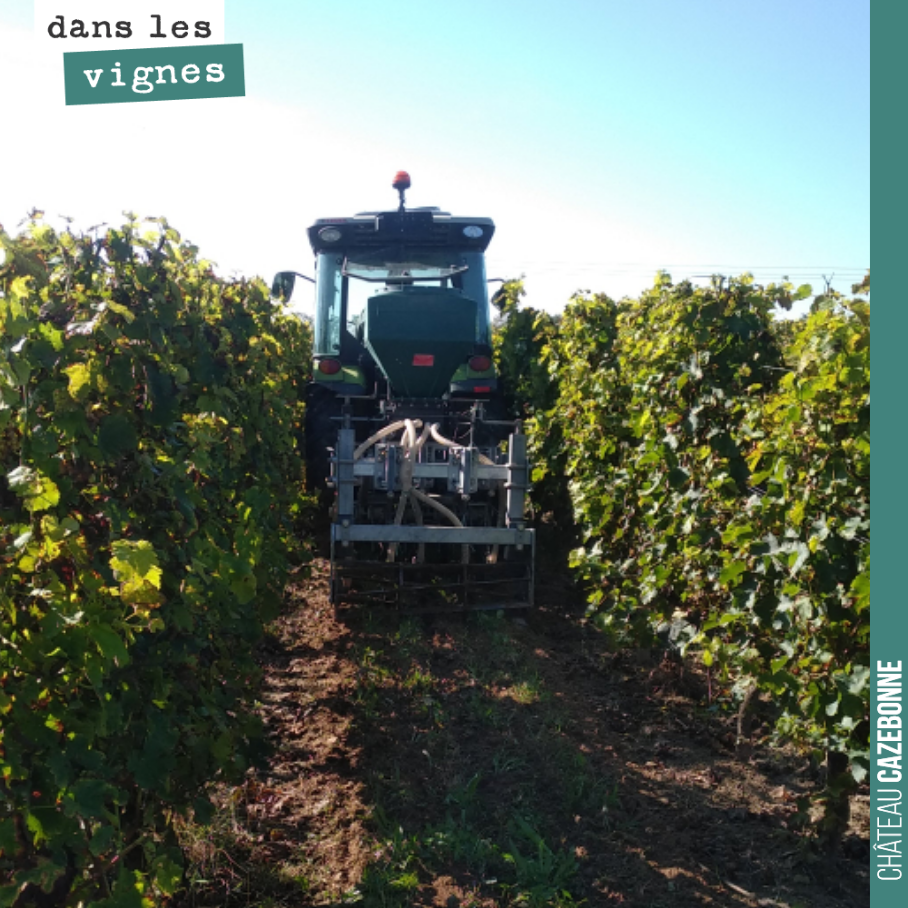
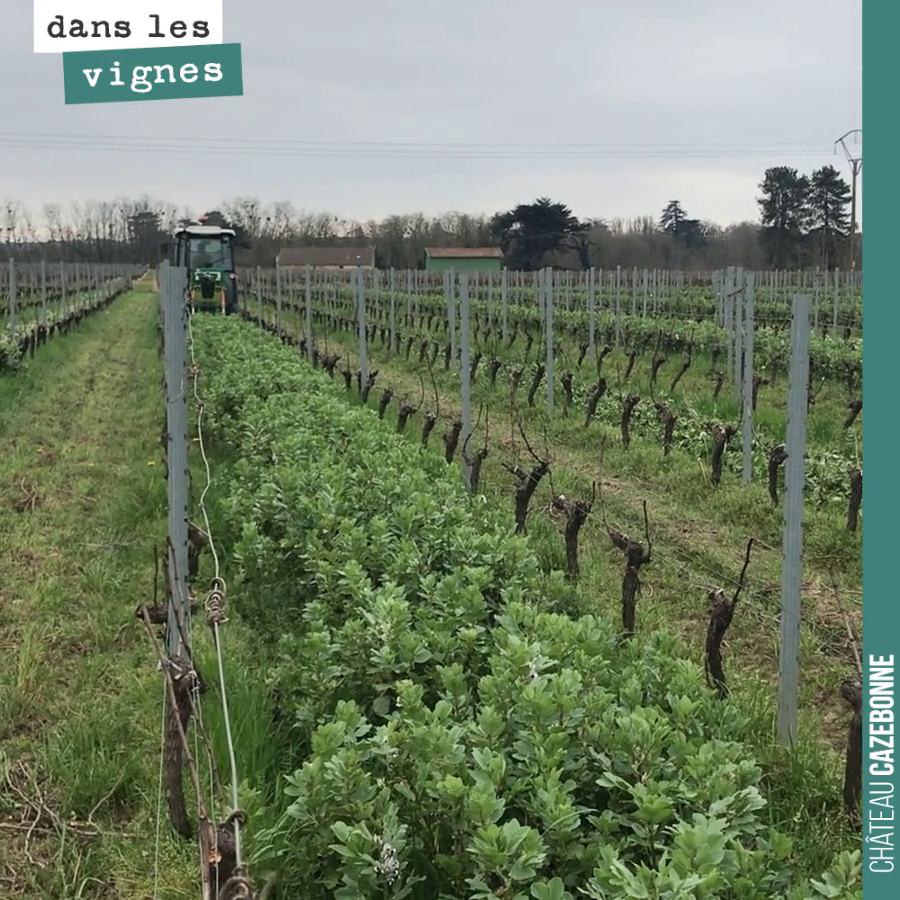
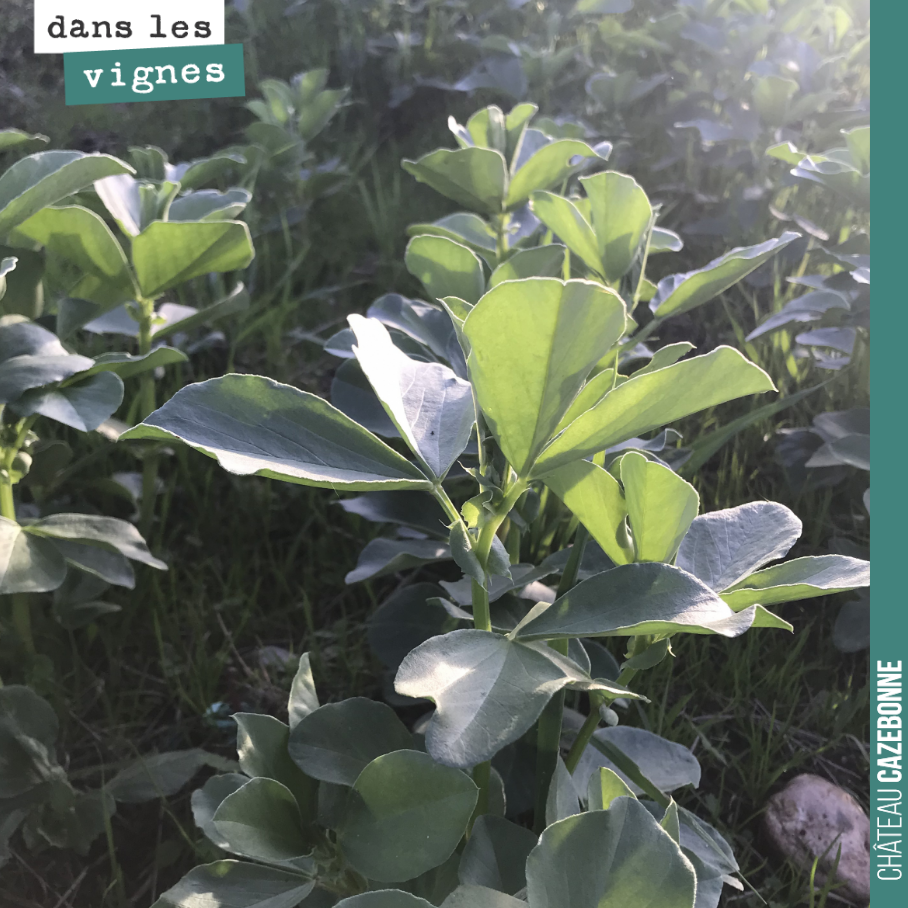
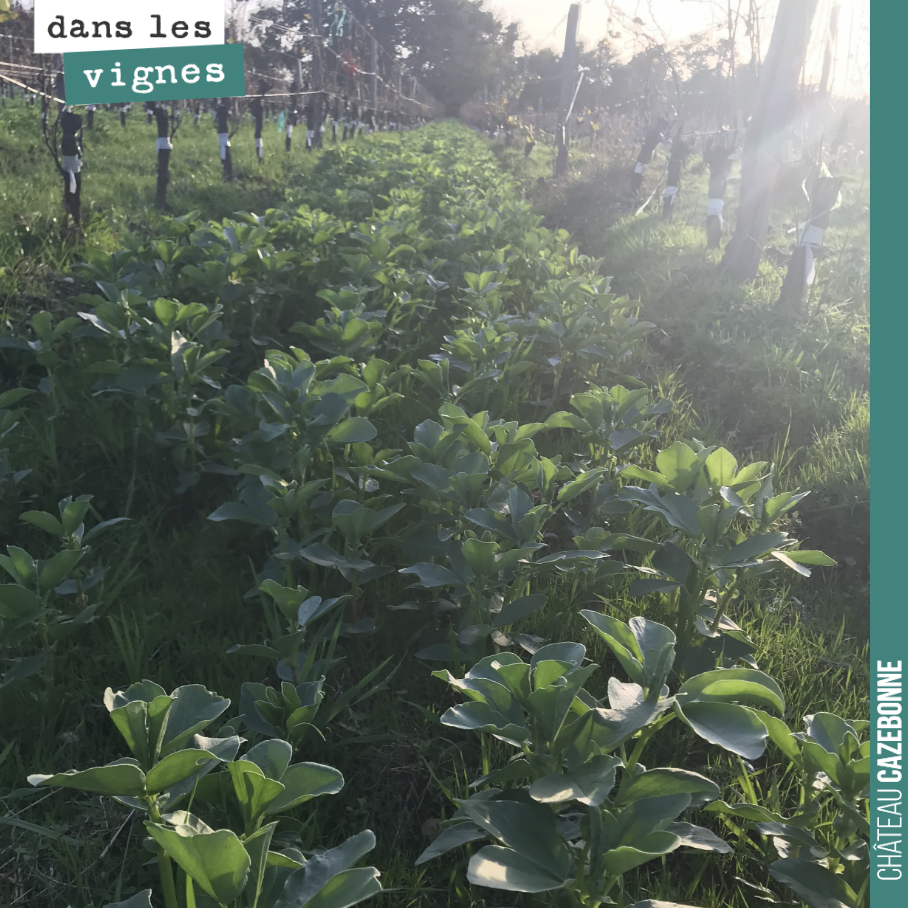
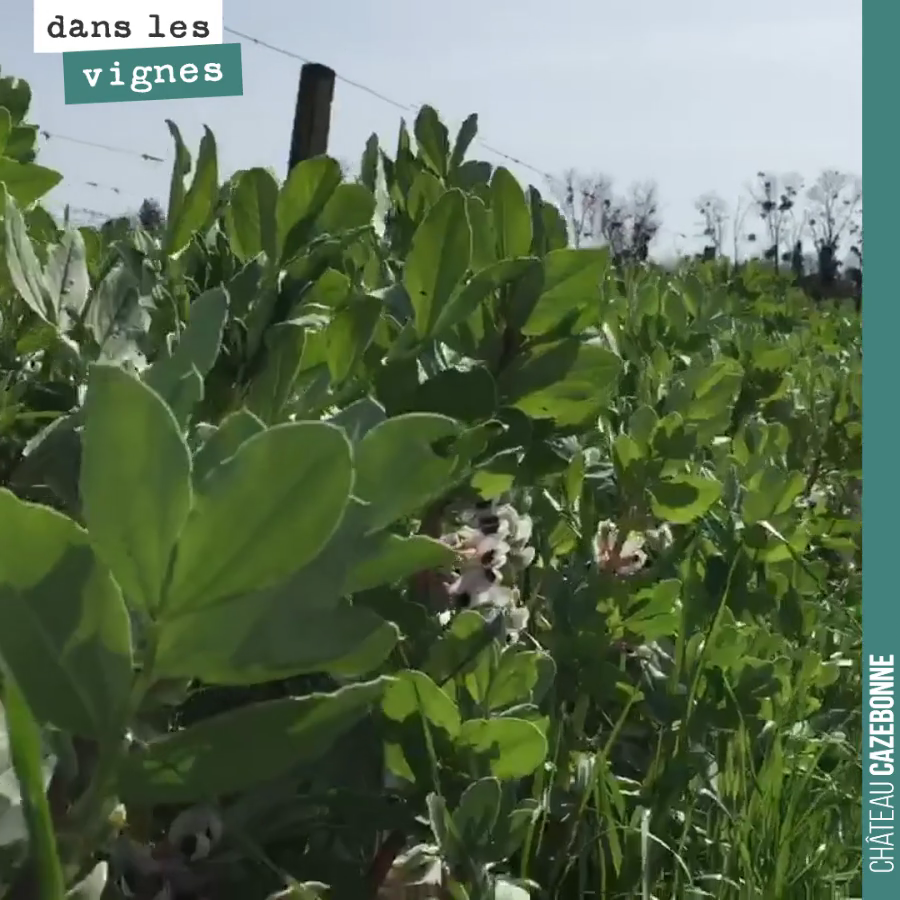
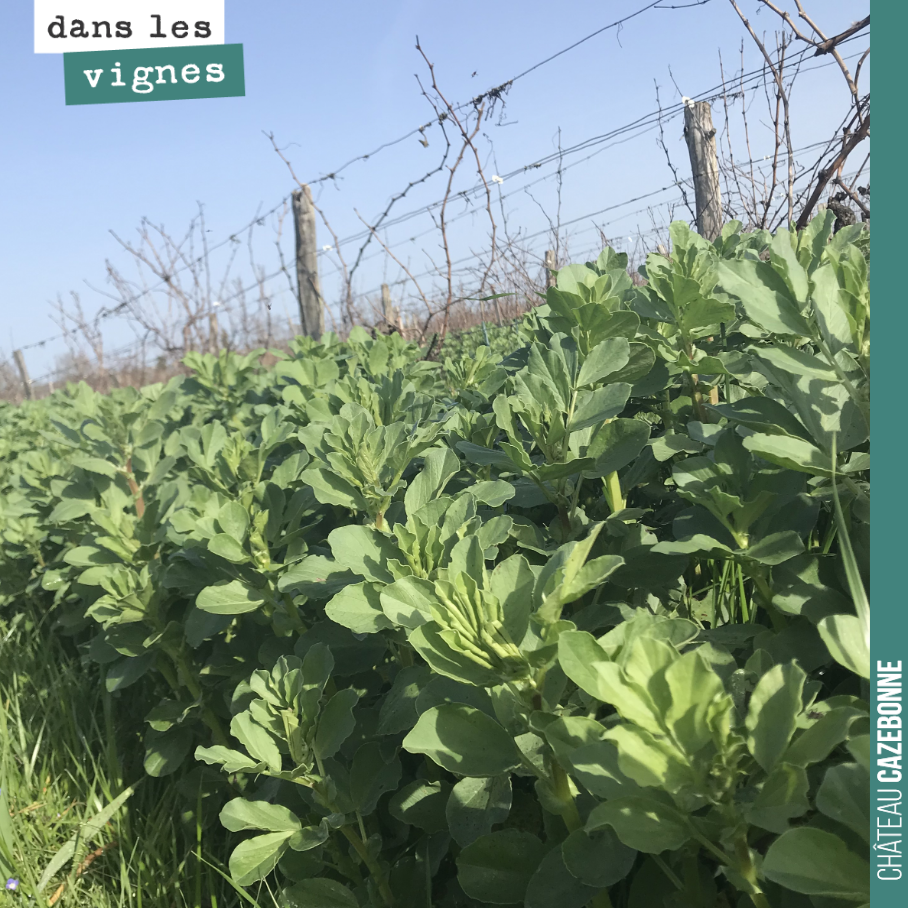
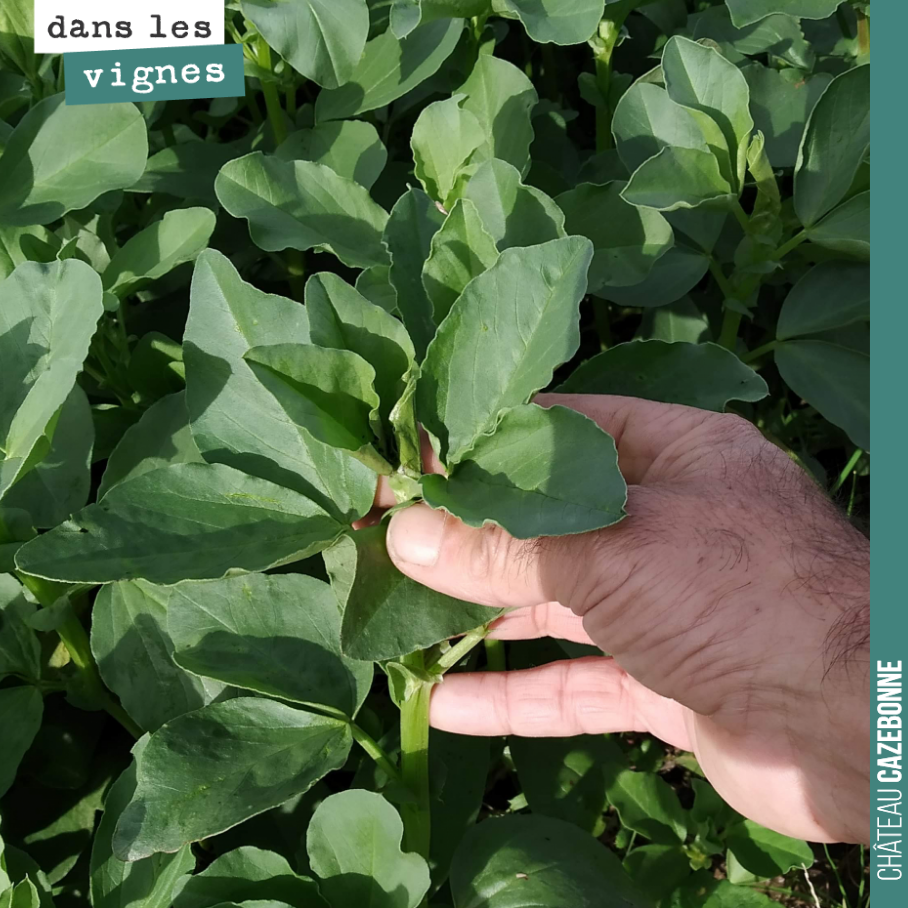
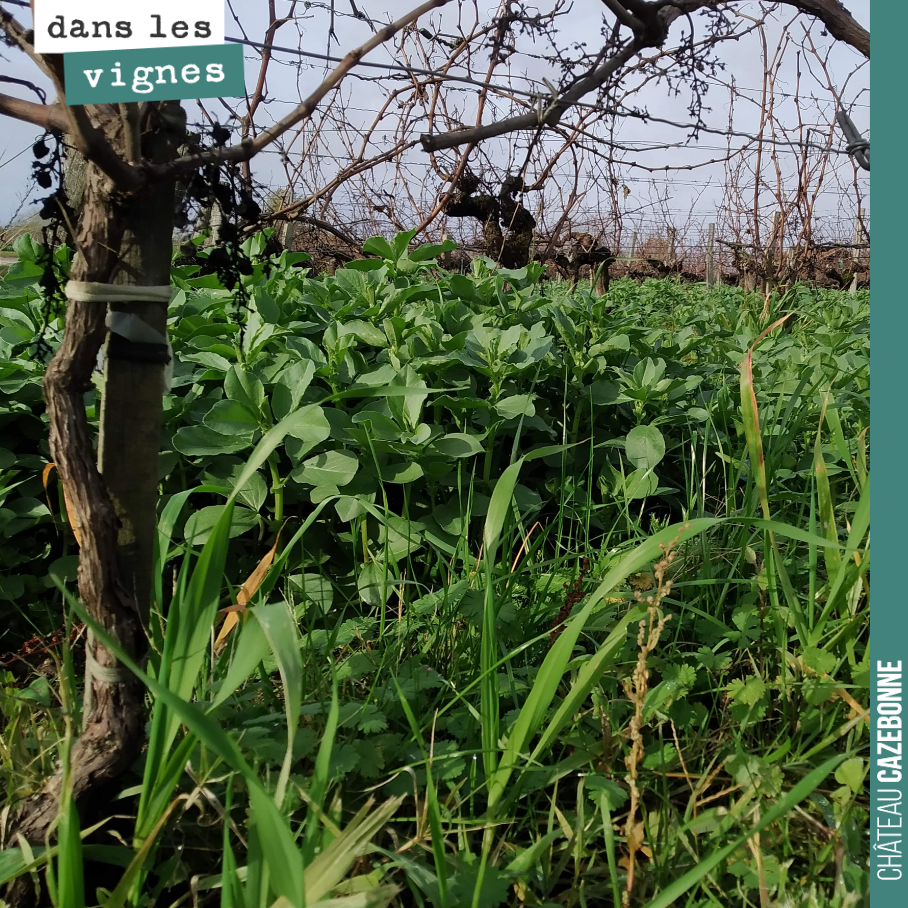
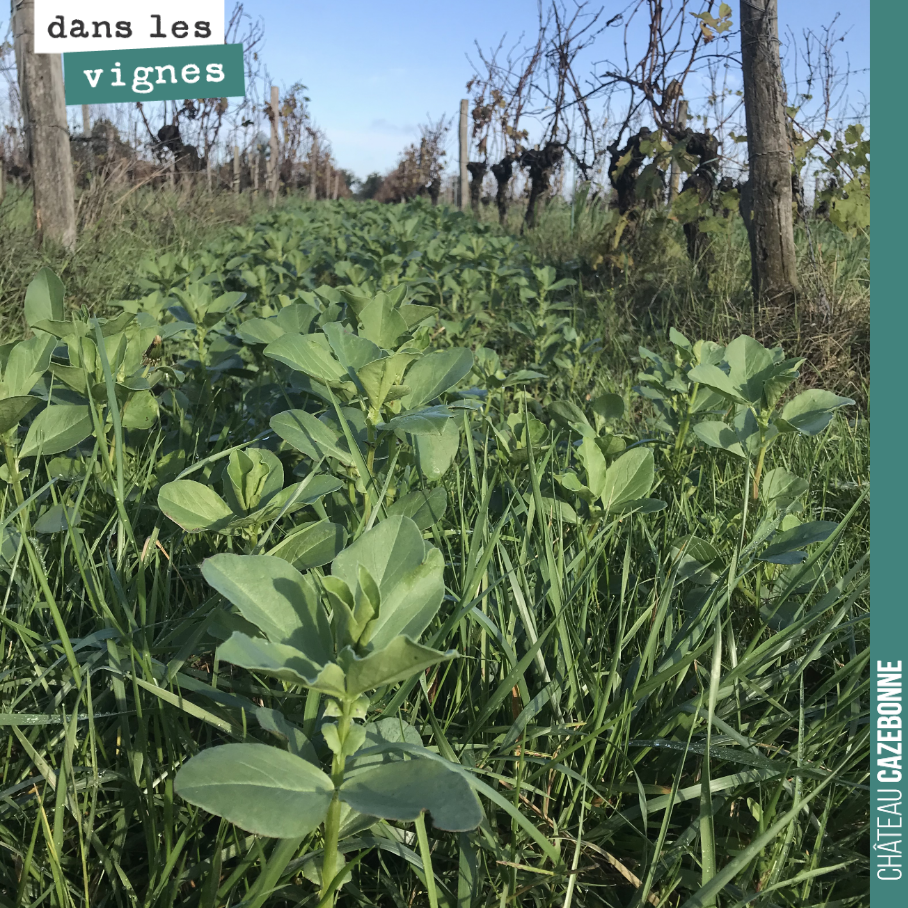
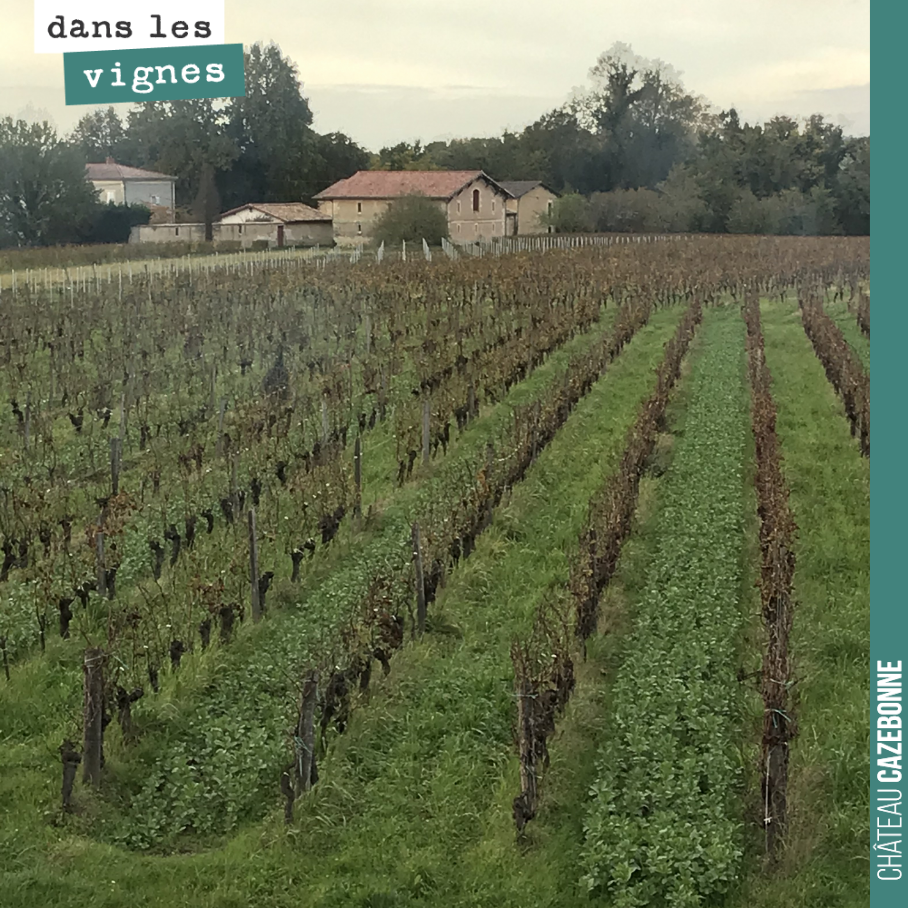
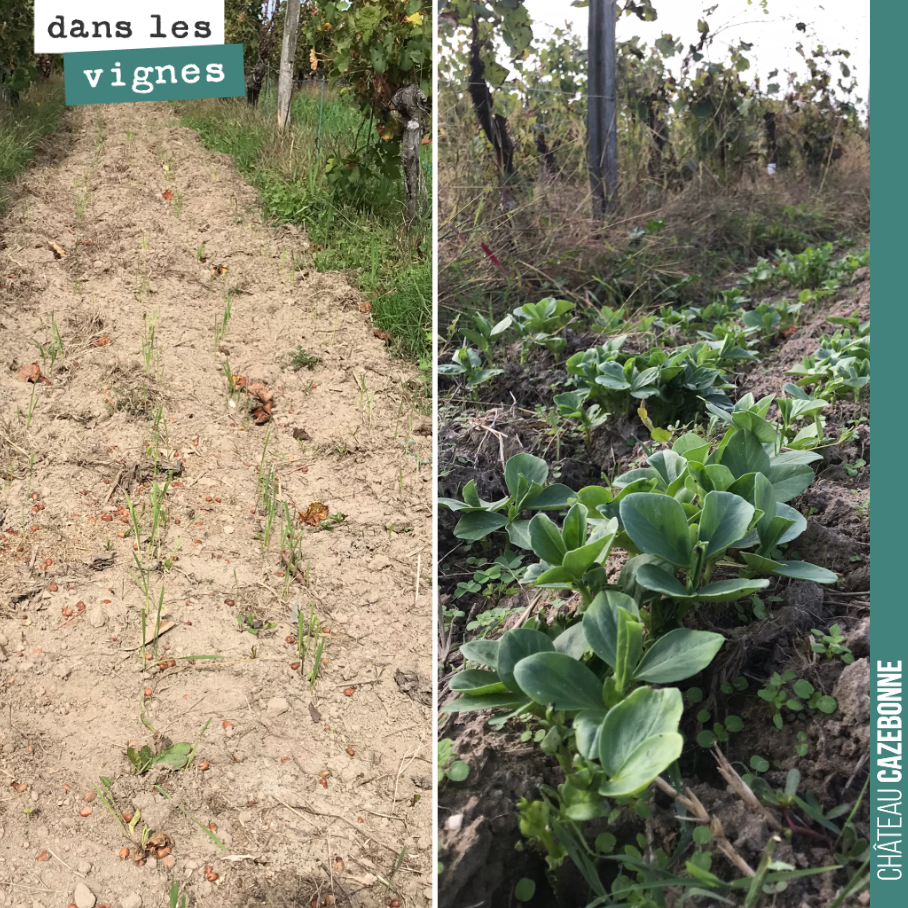
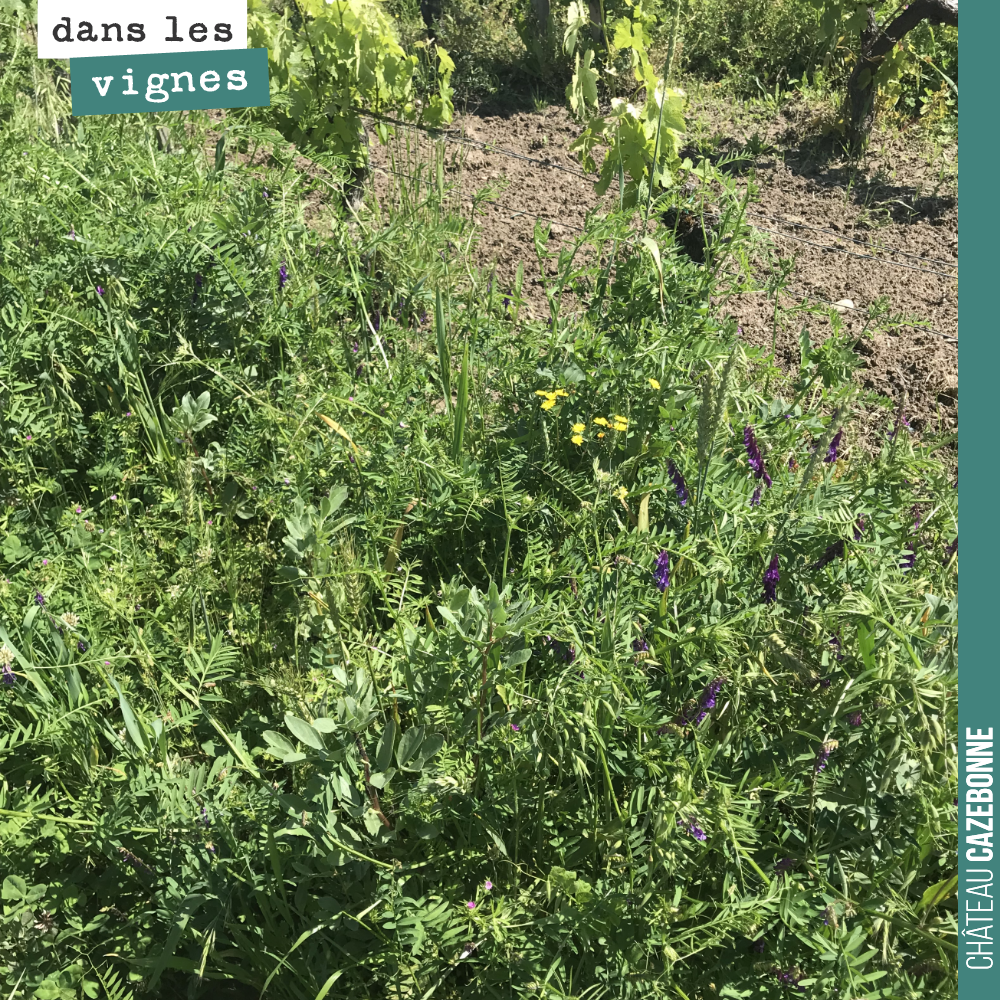
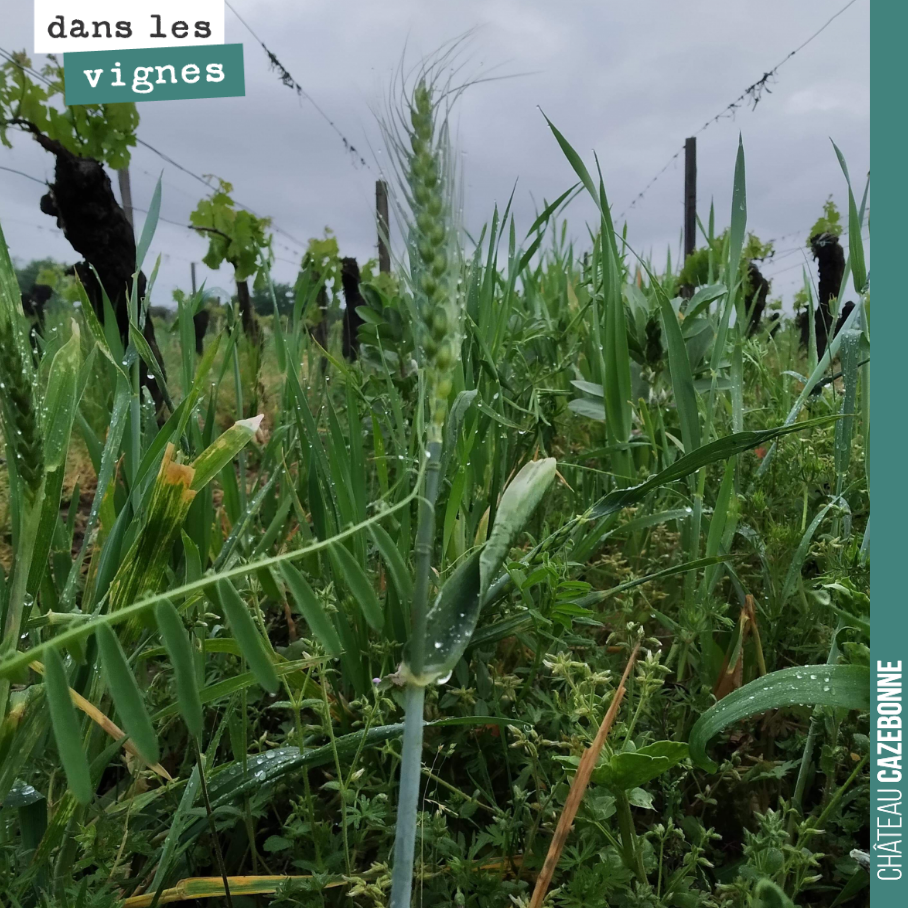
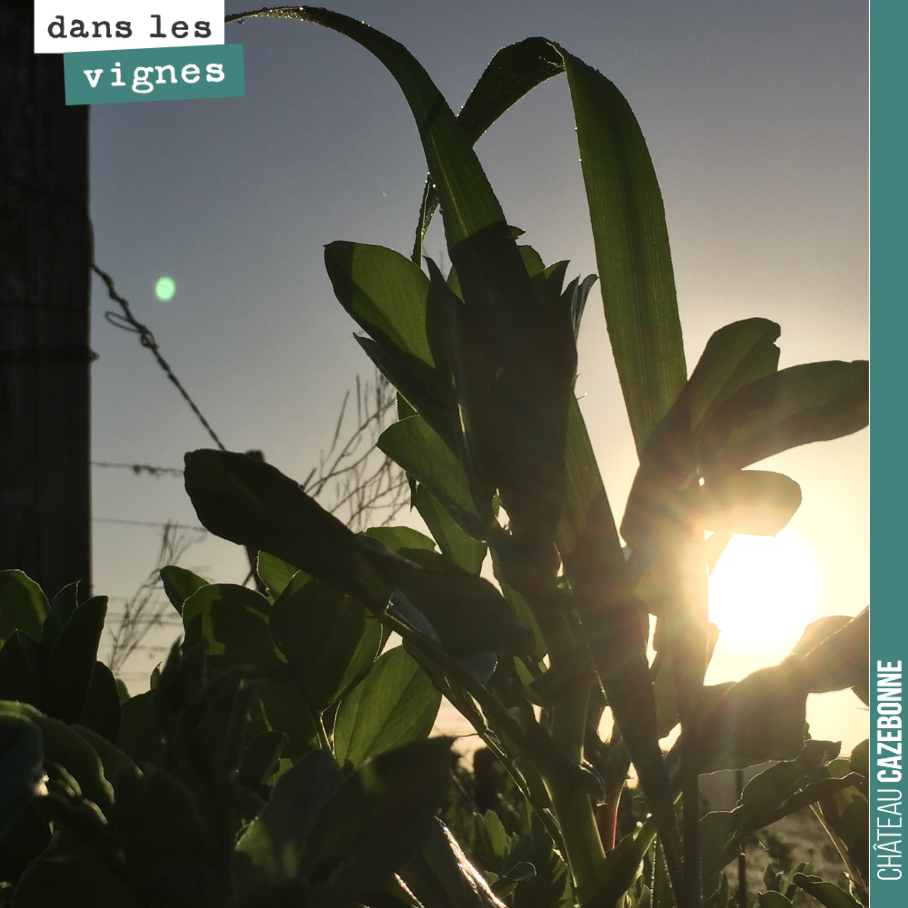
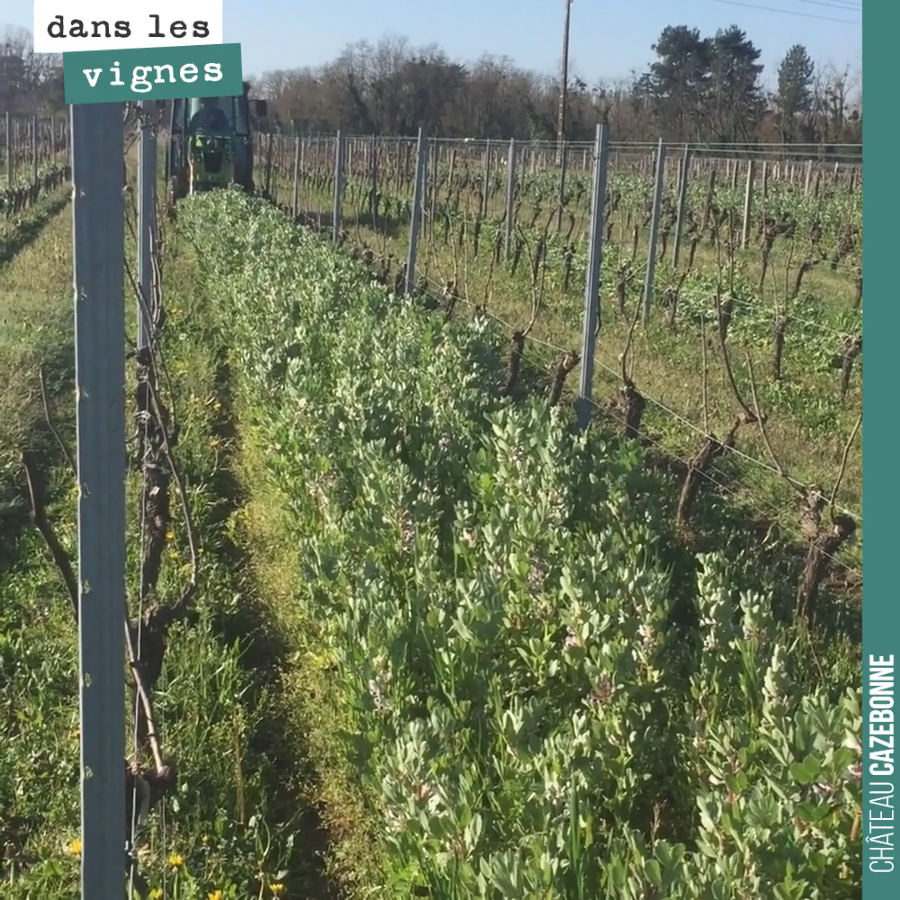
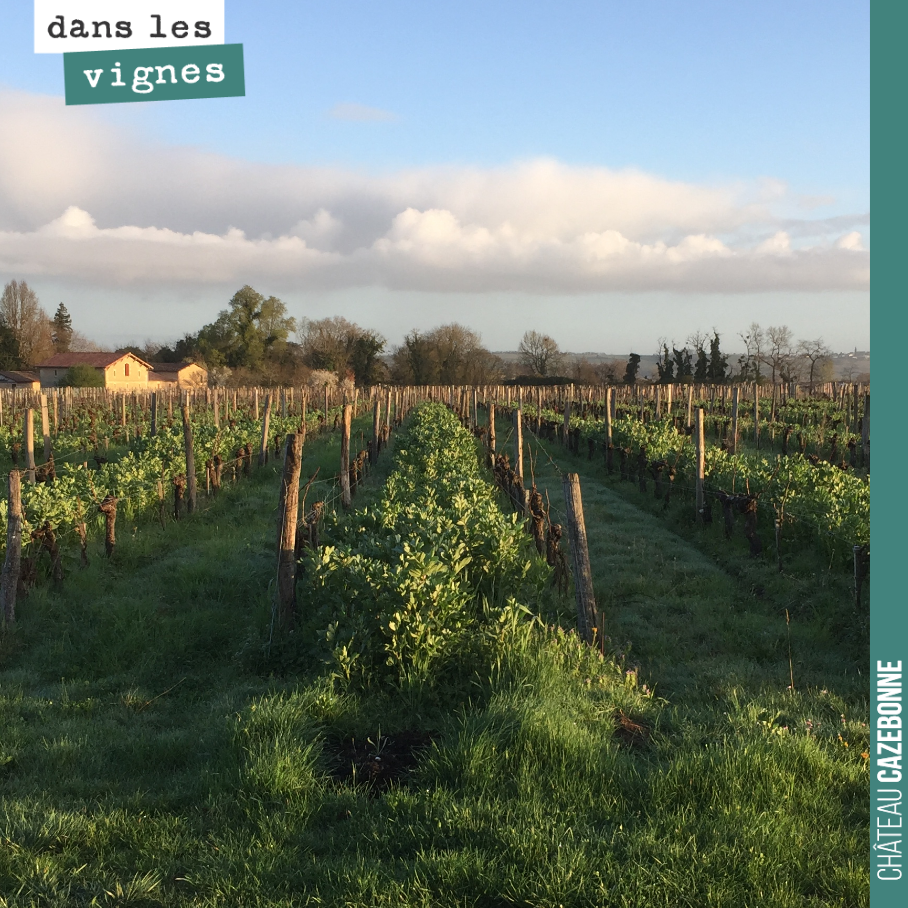
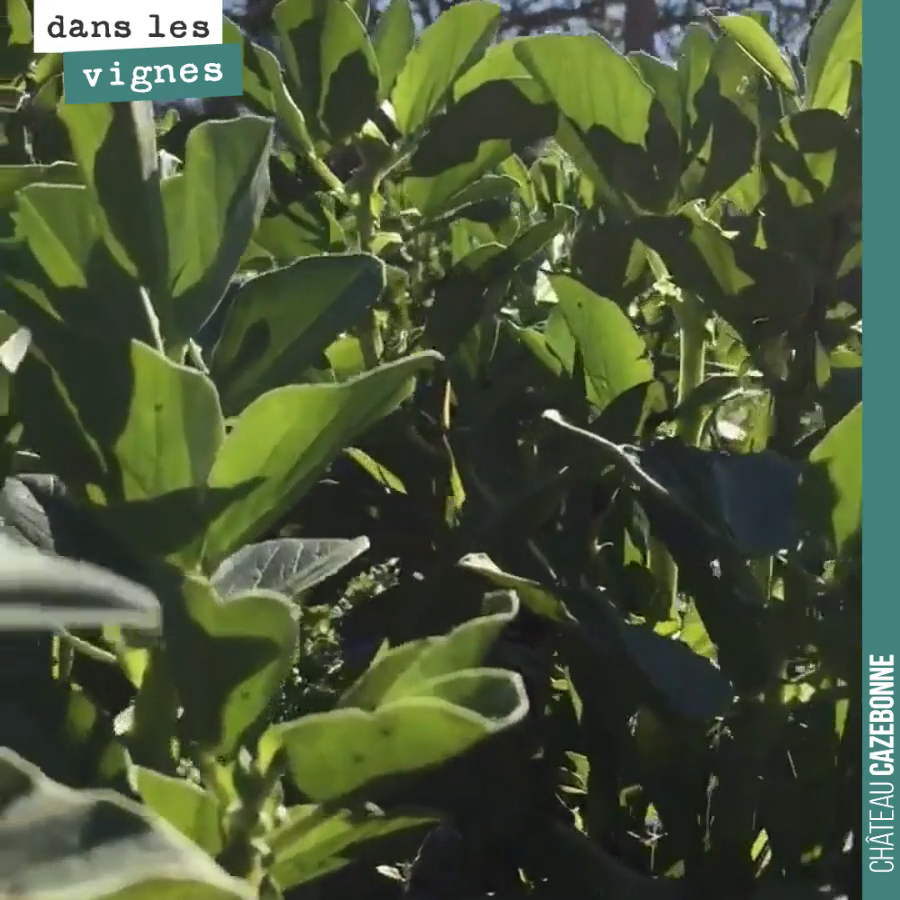
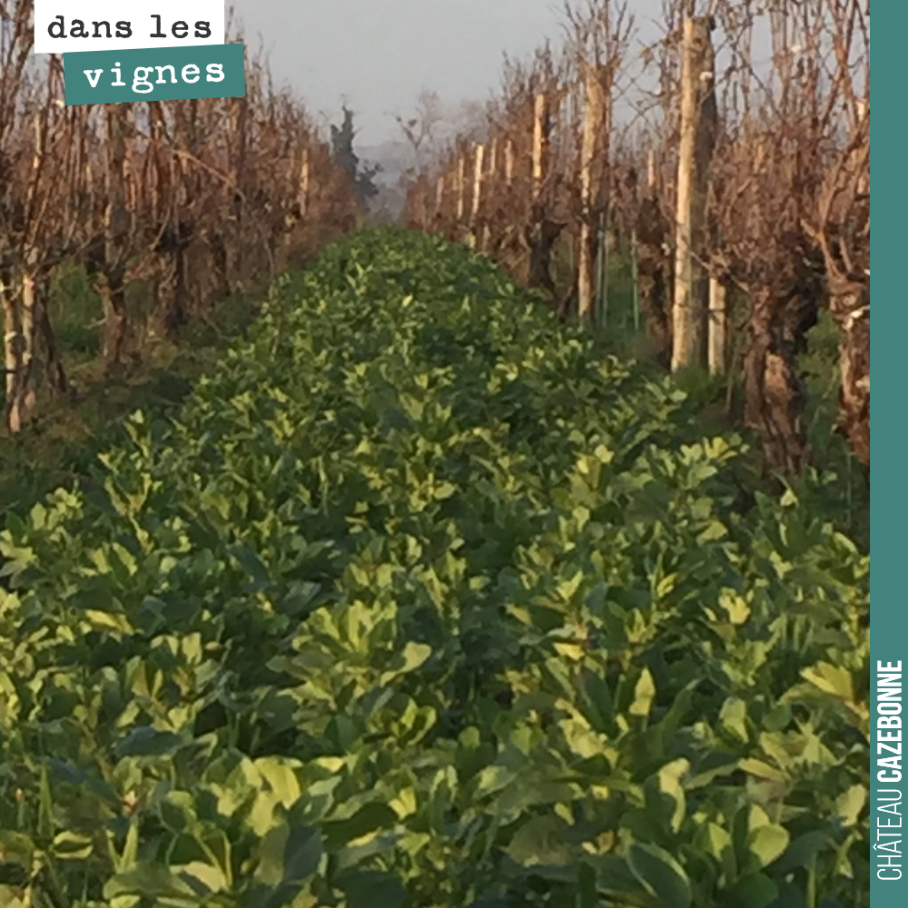
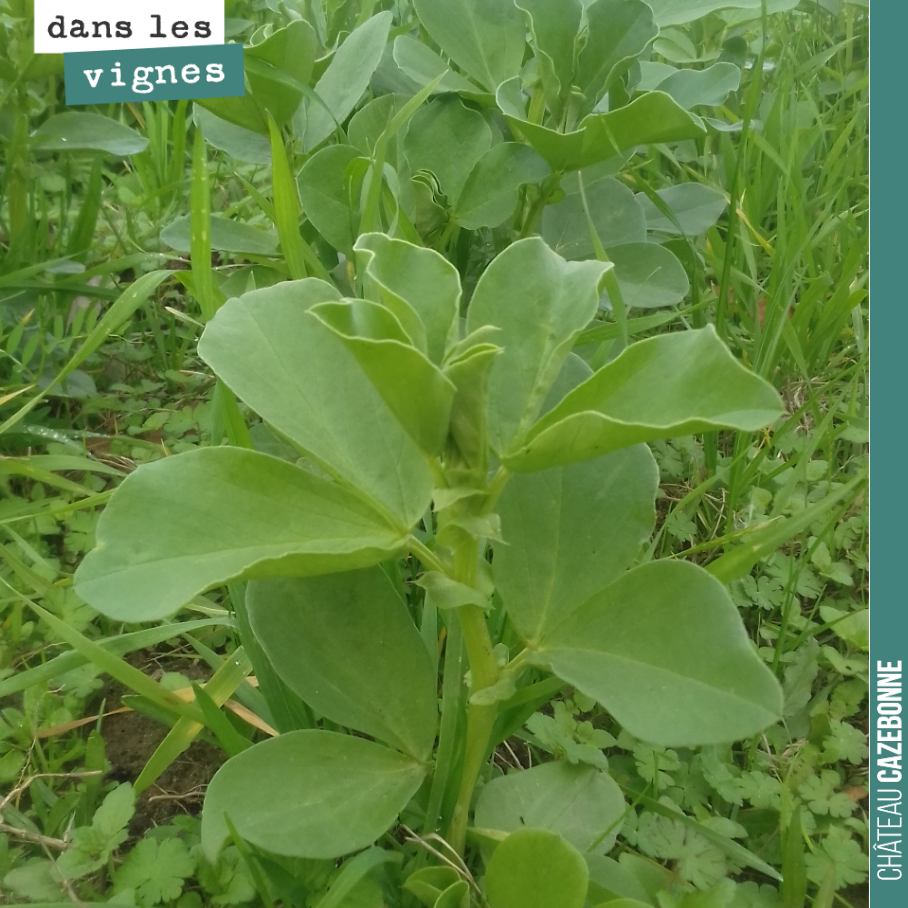
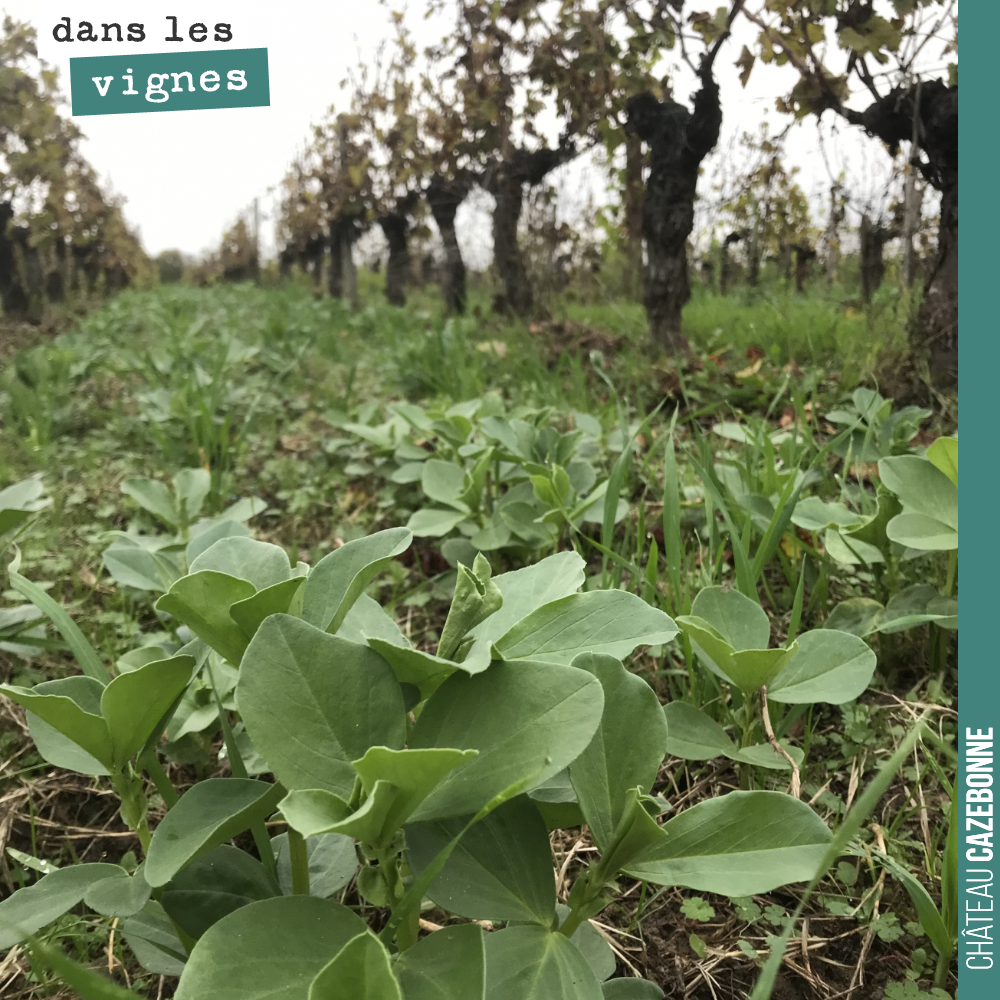
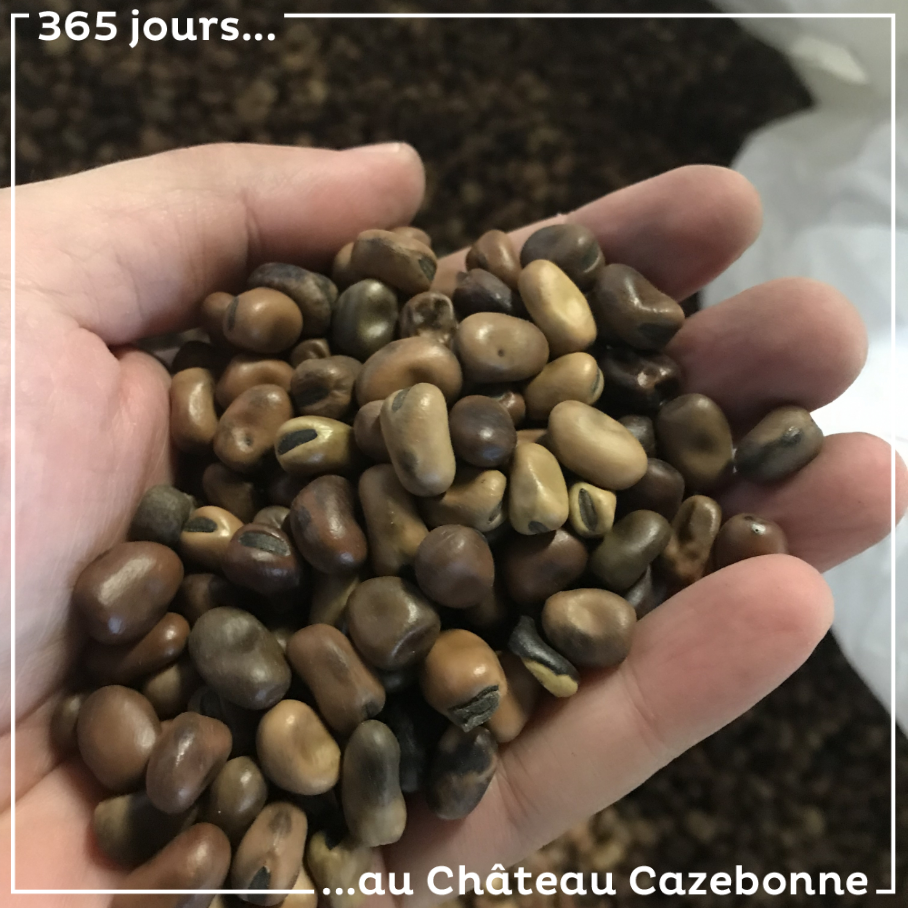
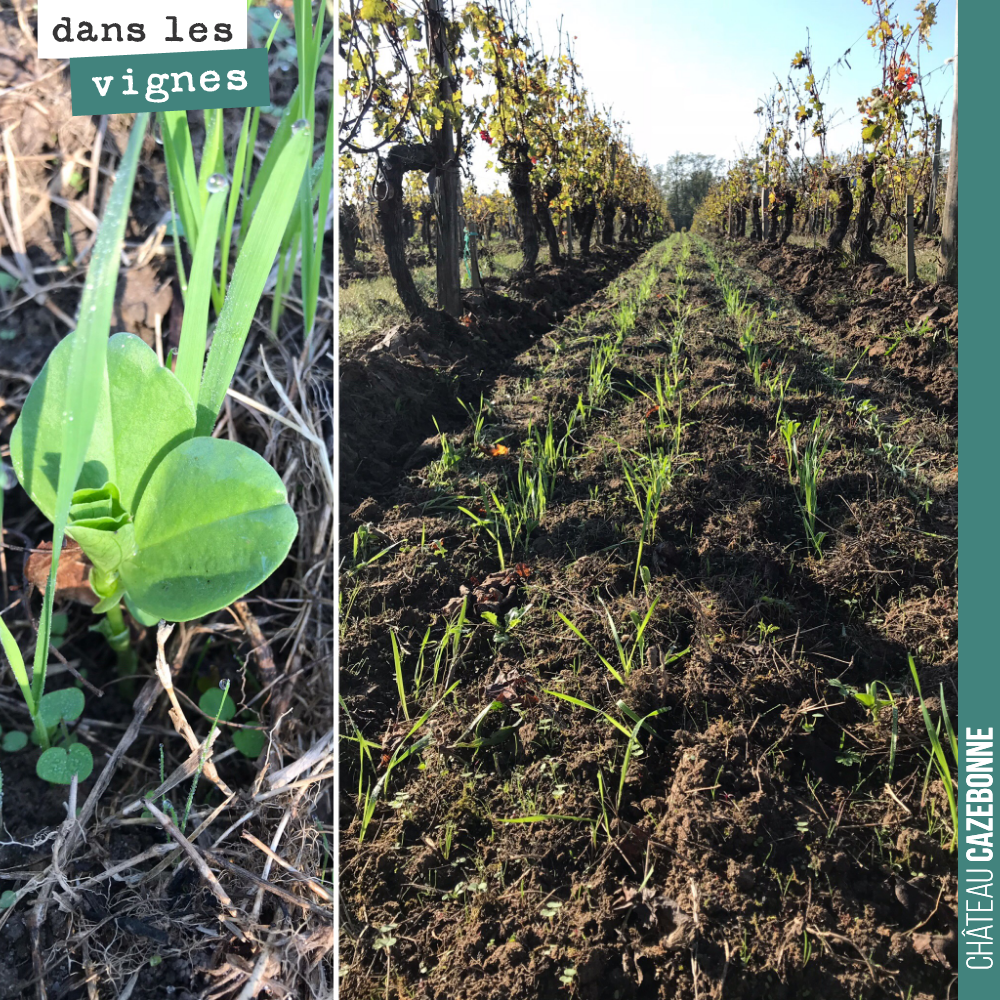
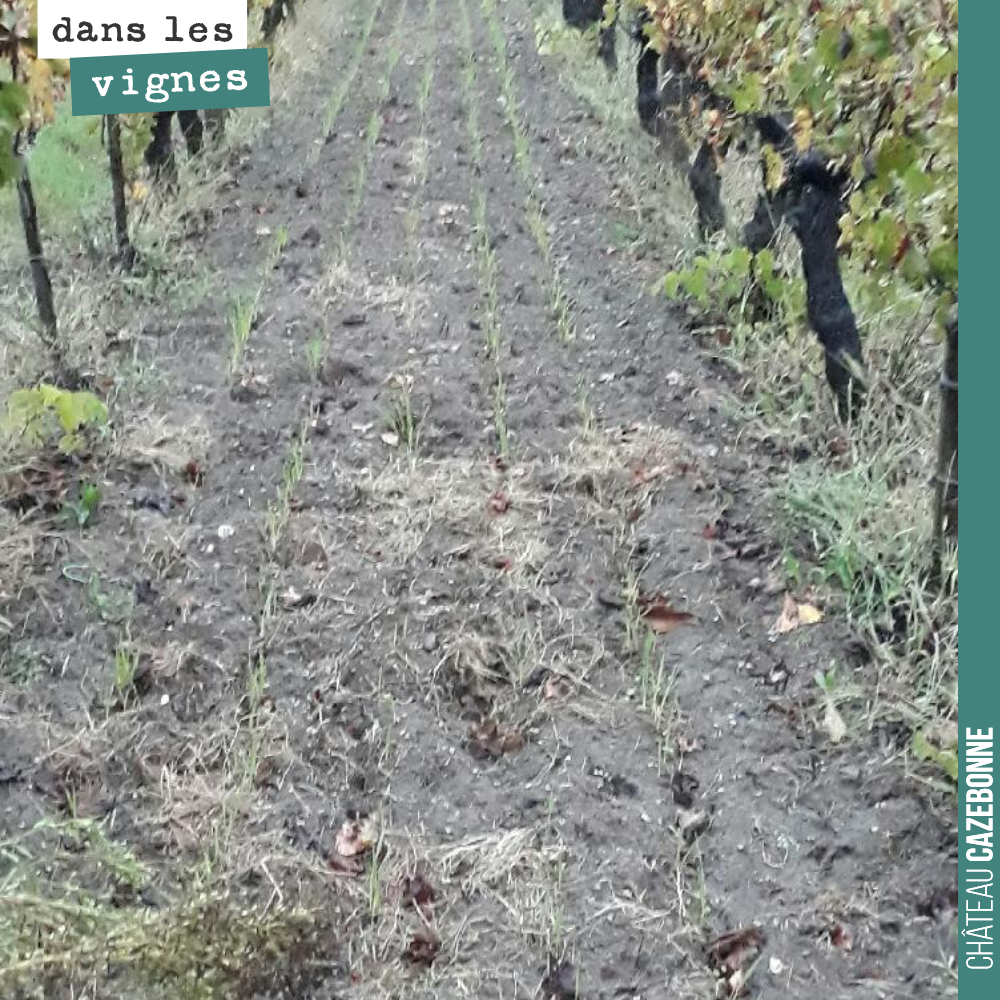
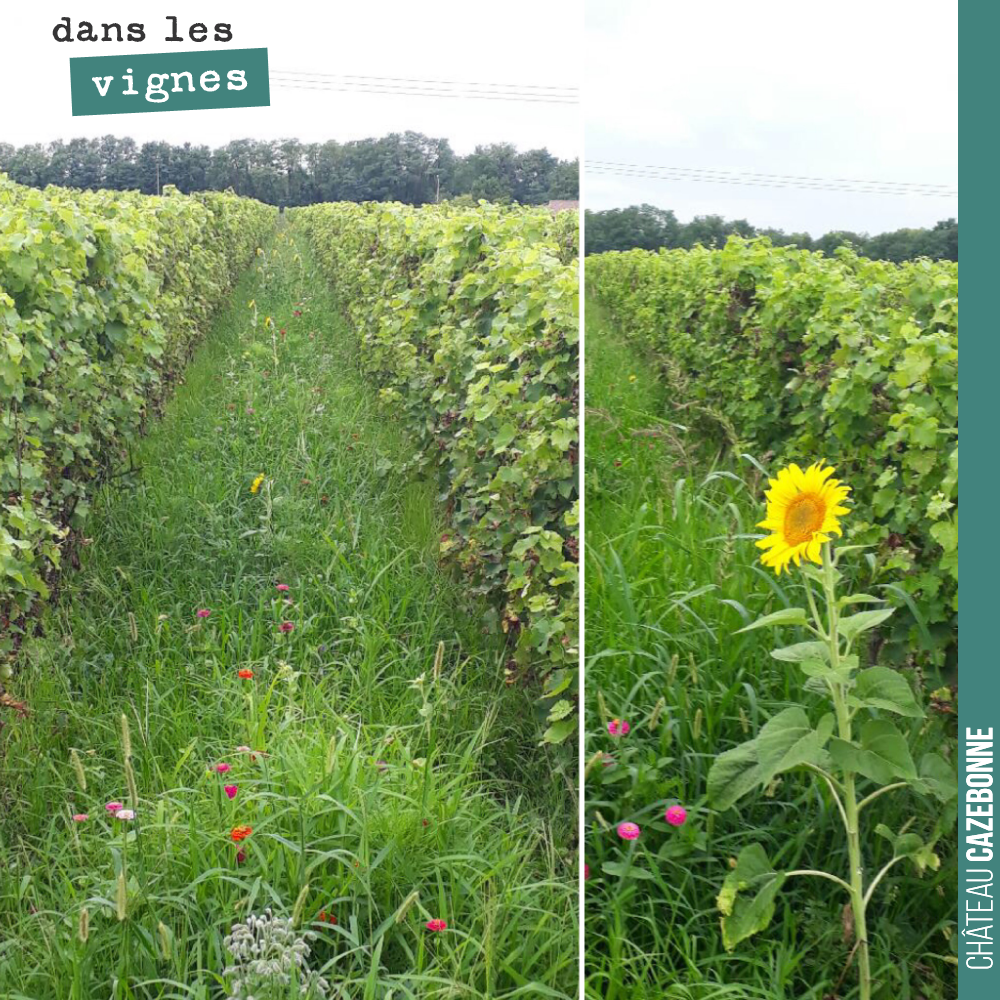
At the heart of our virtuous practices, cover crops hold a prominent place. True allies to the winegrower, these plants sown between the vine rows are not intended to be harvested. Their role is far more fundamental: to enrich and protect the earth. By forming a dense vegetative carpet, they limit soil erosion, particularly during heavy rainfall, and reduce nutrient leaching. This natural shield also mitigates soil temperature variations, offering a more stable environment for the vine's roots.
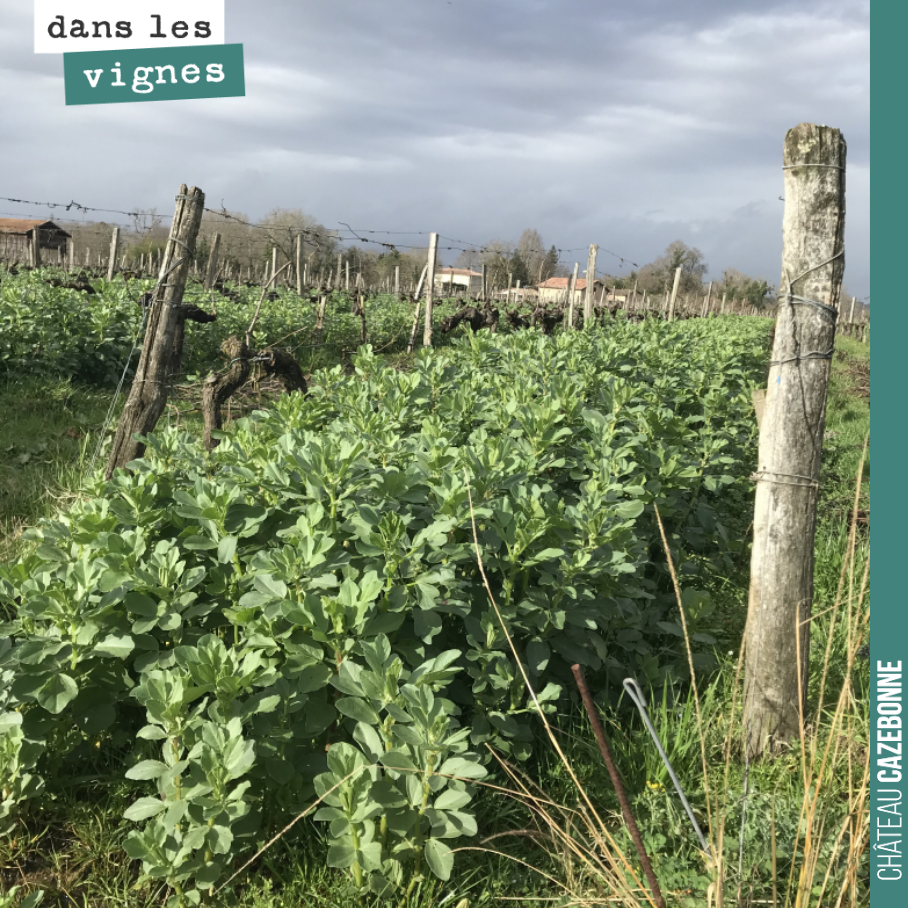
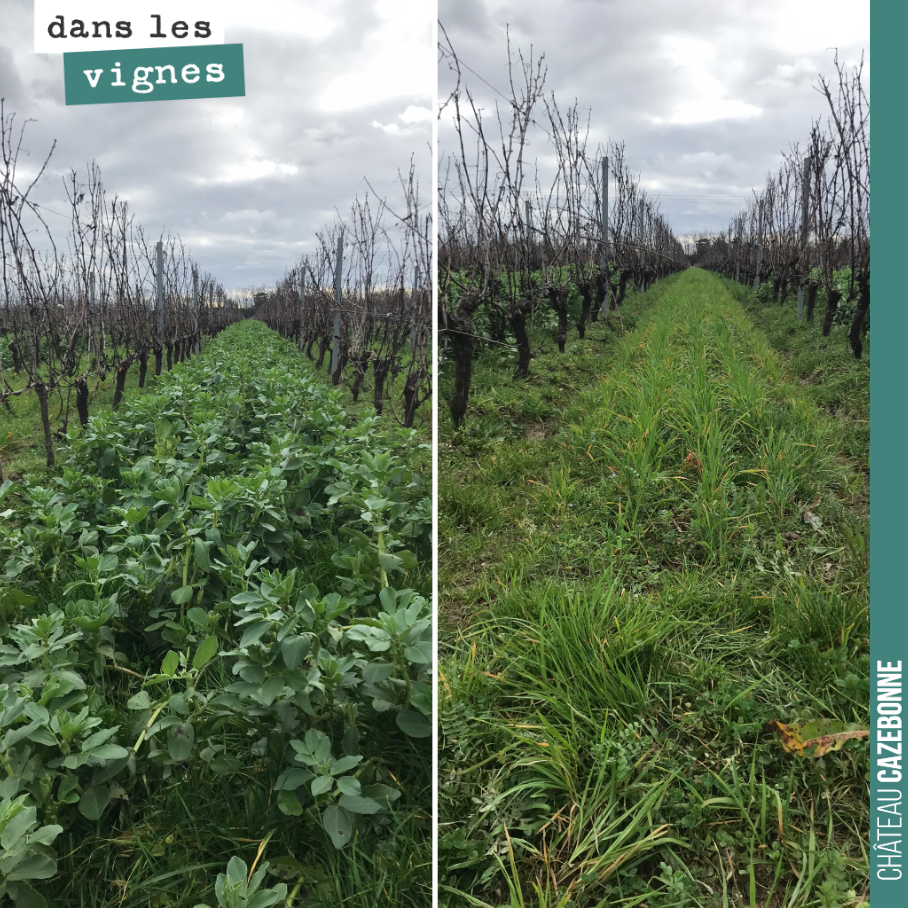
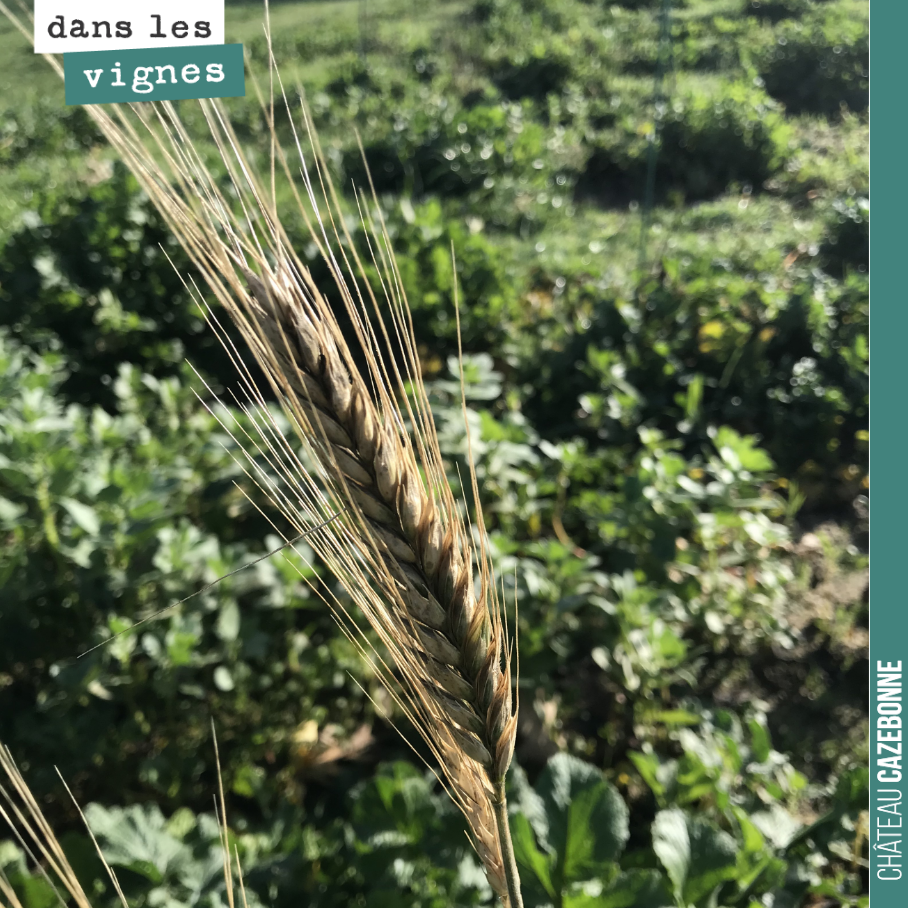
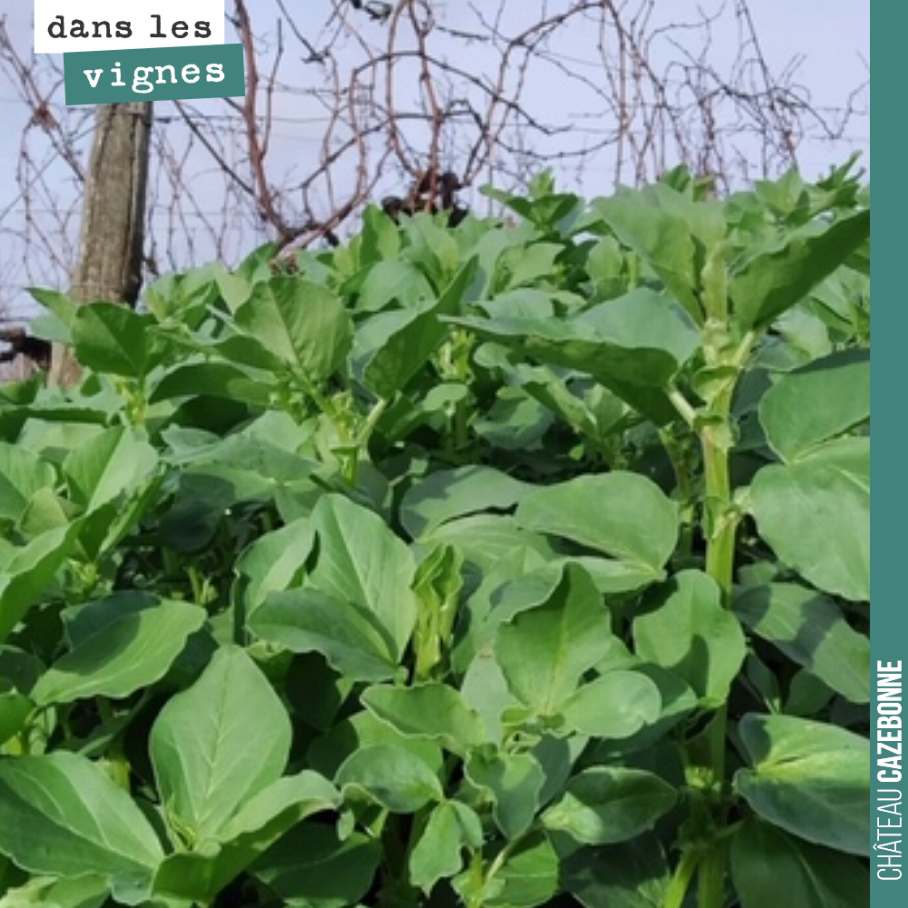
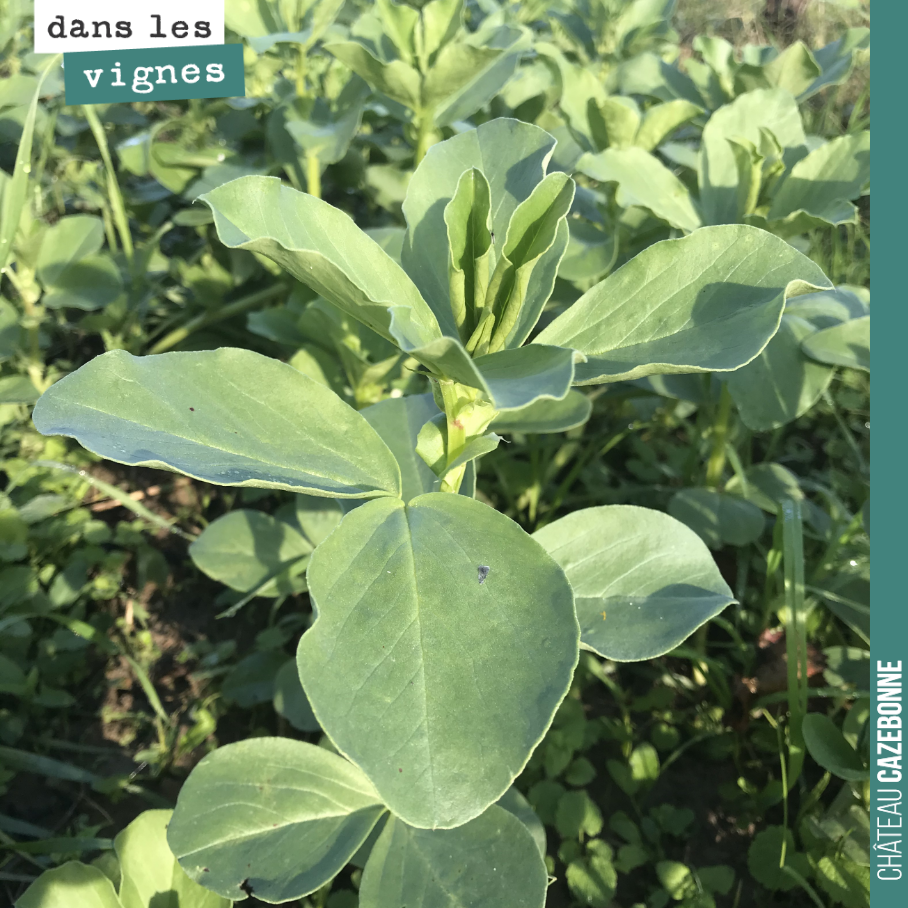
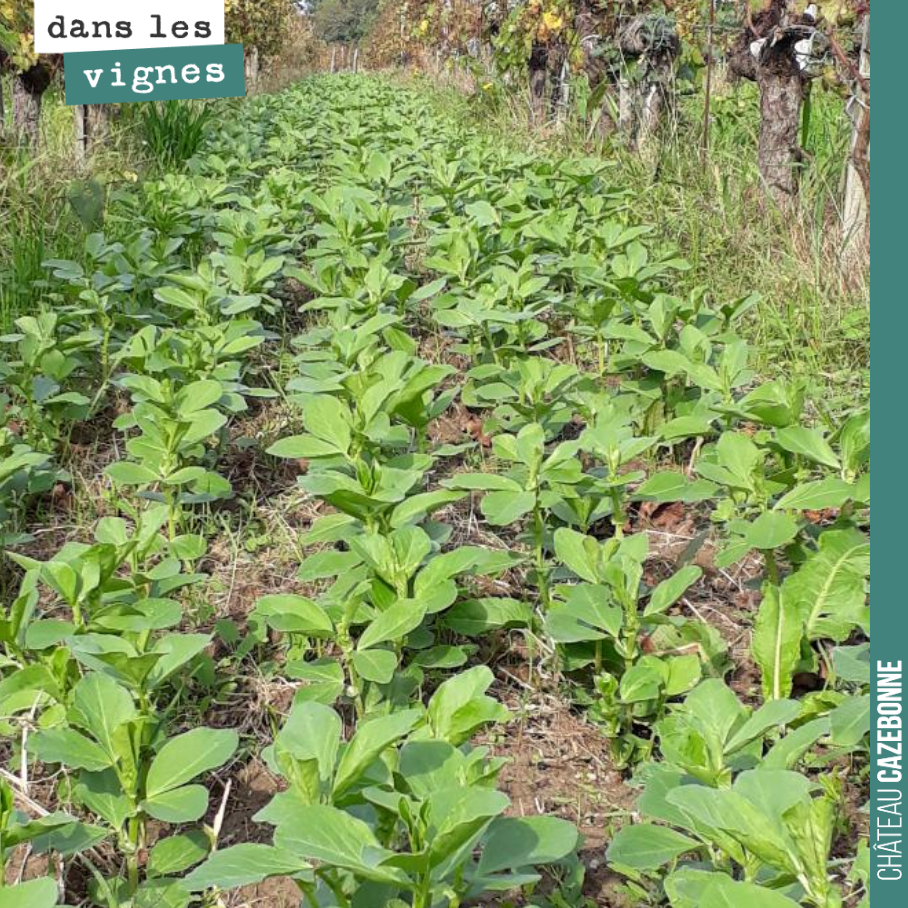
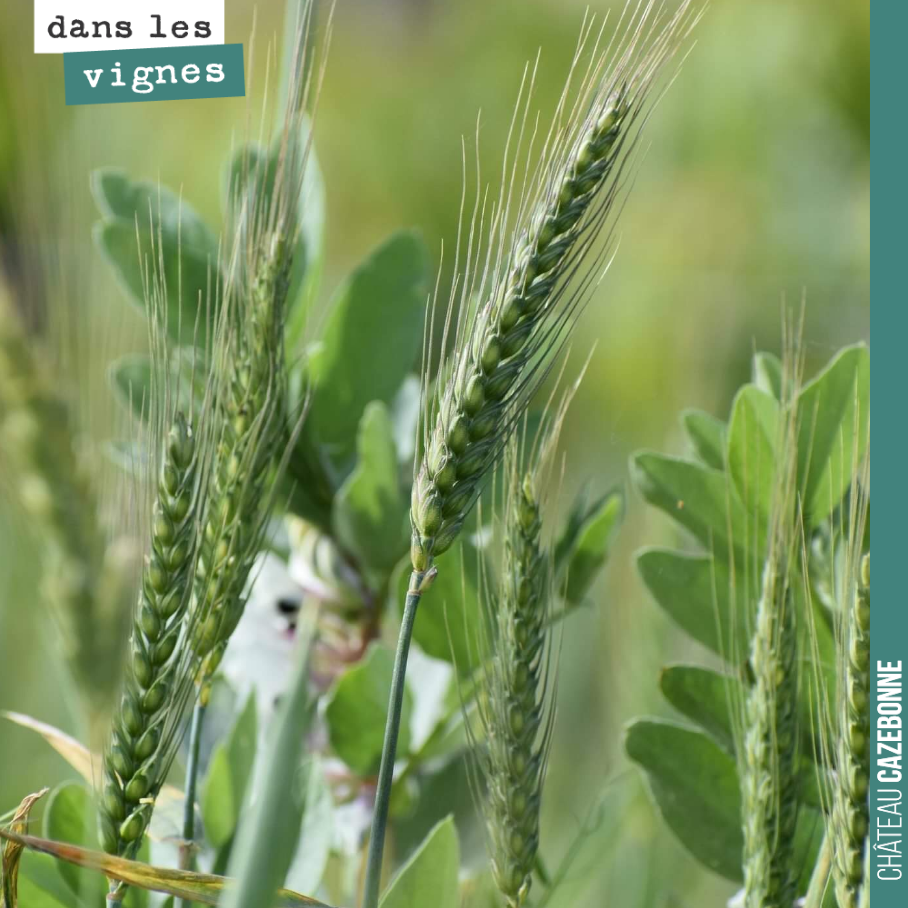
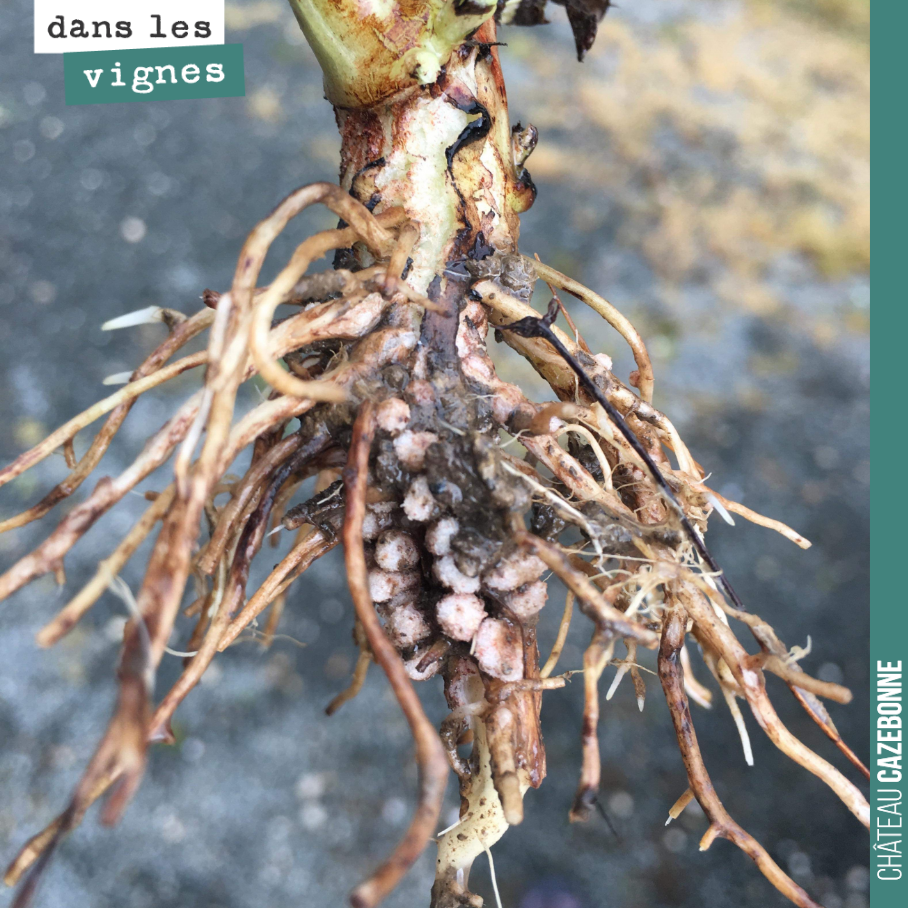
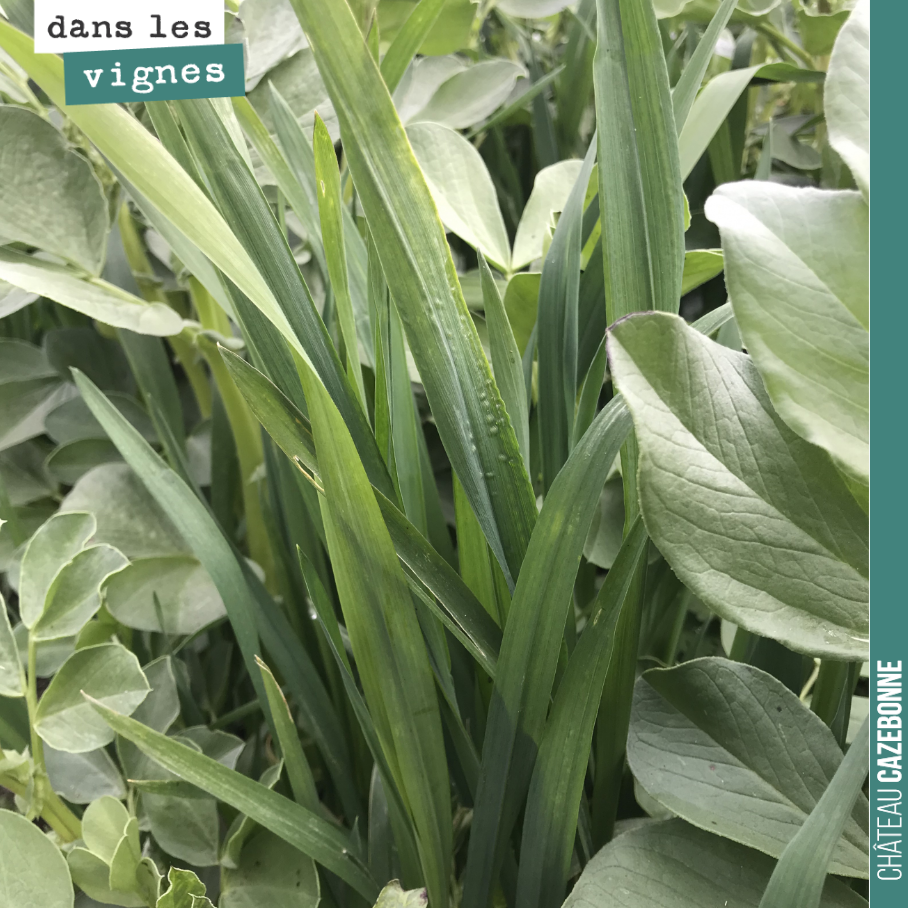
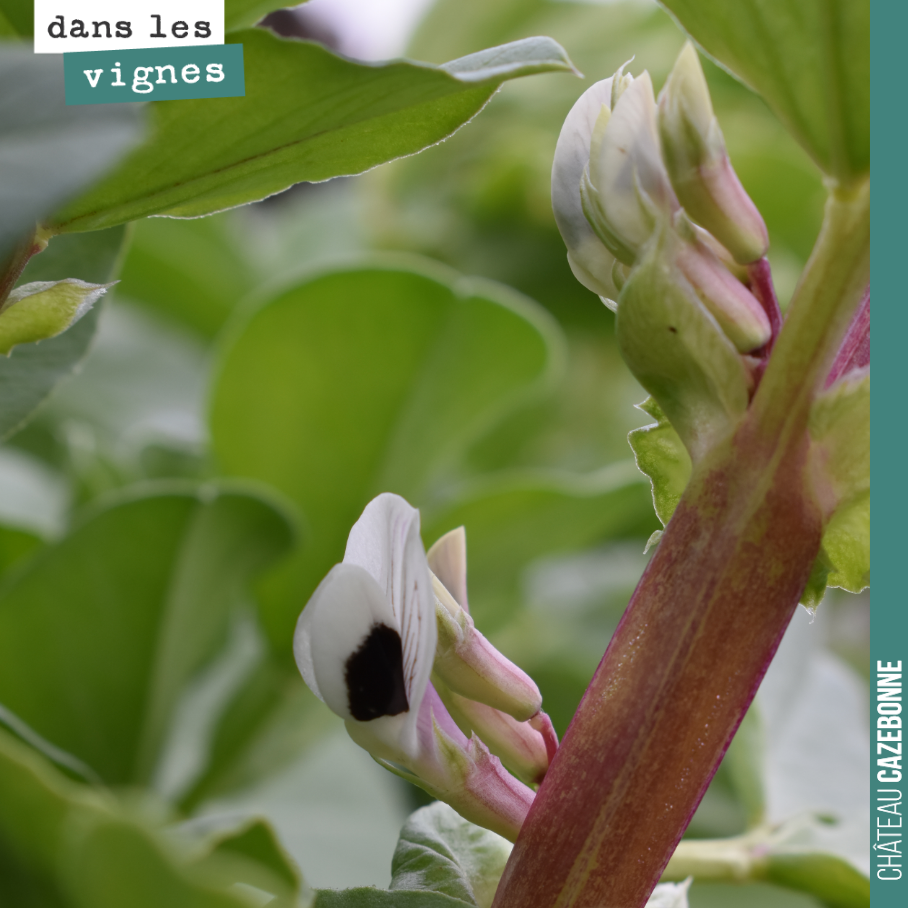
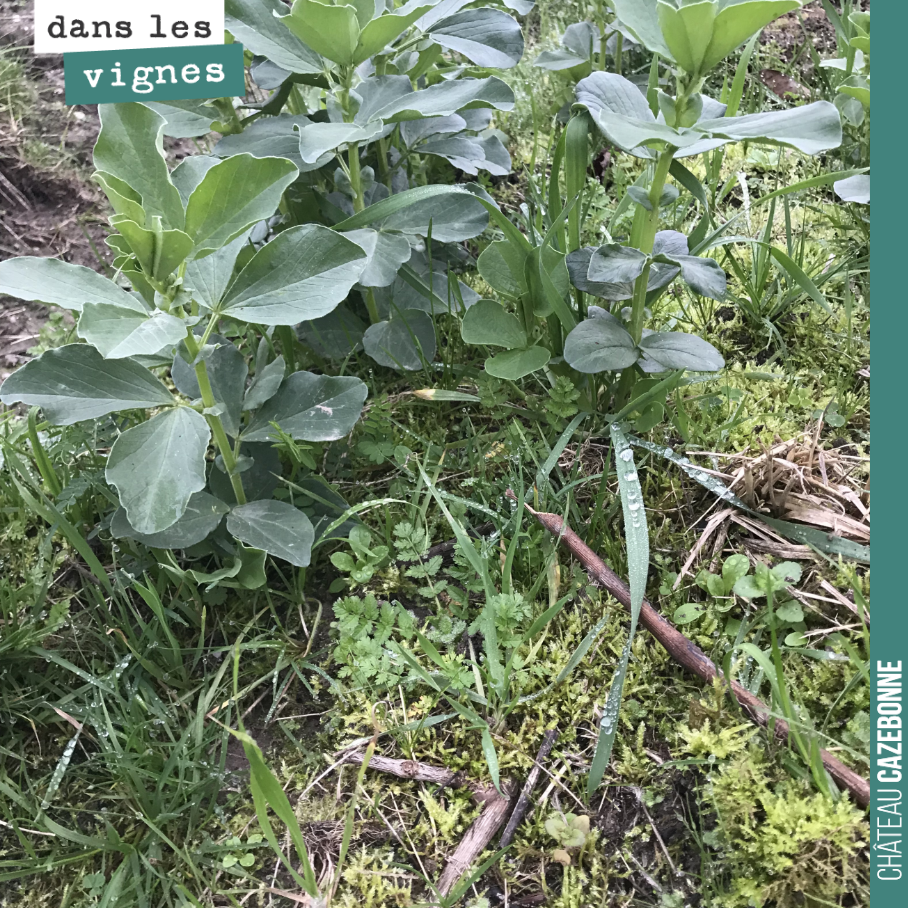
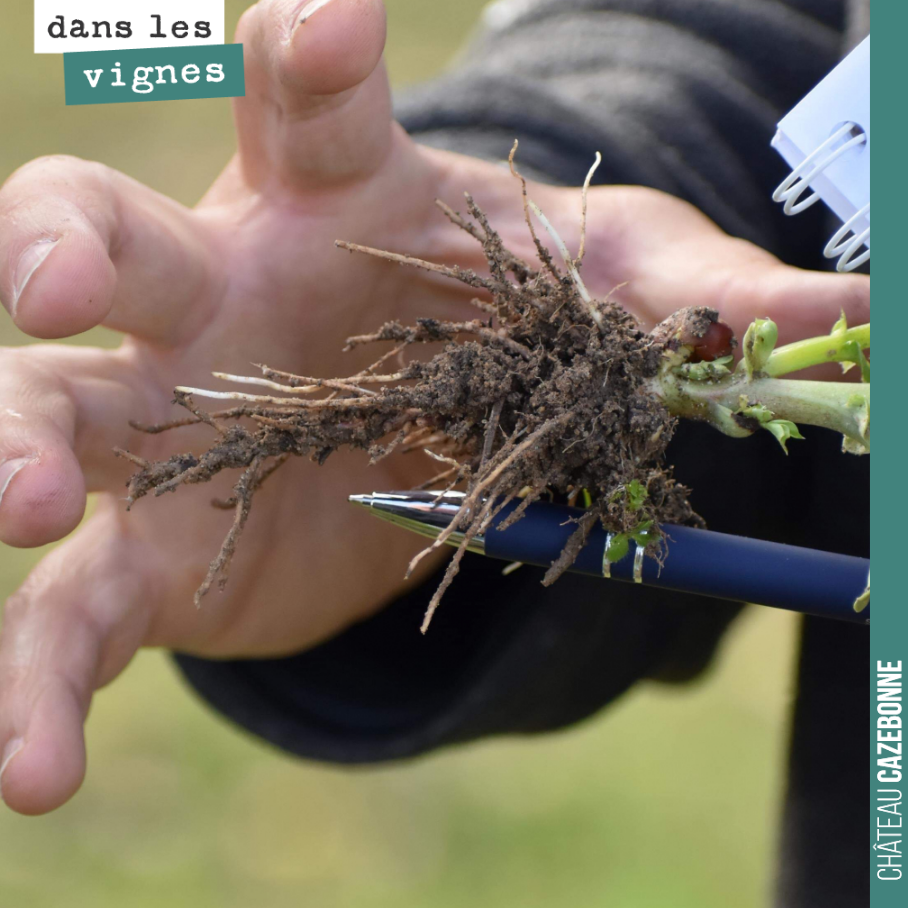
Moreover, cover crops act as genuine soil engineers. Their roots, by exploring the different layers of earth, naturally loosen the structure, thereby improving water infiltration and air circulation. As they decompose, they incorporate vital organic matter, nourishing the microbial fauna essential for an optimal ecological balance. This organic matter enriches the soil with nitrogen and carbon, key elements for vine growth. Far from being mere weeds, these intercrops are carefully selected for their specific virtues: some fix atmospheric nitrogen (legumes), others develop a deep root system to decompact the soil (crucifers), or produce significant biomass (grasses). We are observing a renewed vitality in our plots, better disease resistance, and a truer expression of our terroir in our wines.
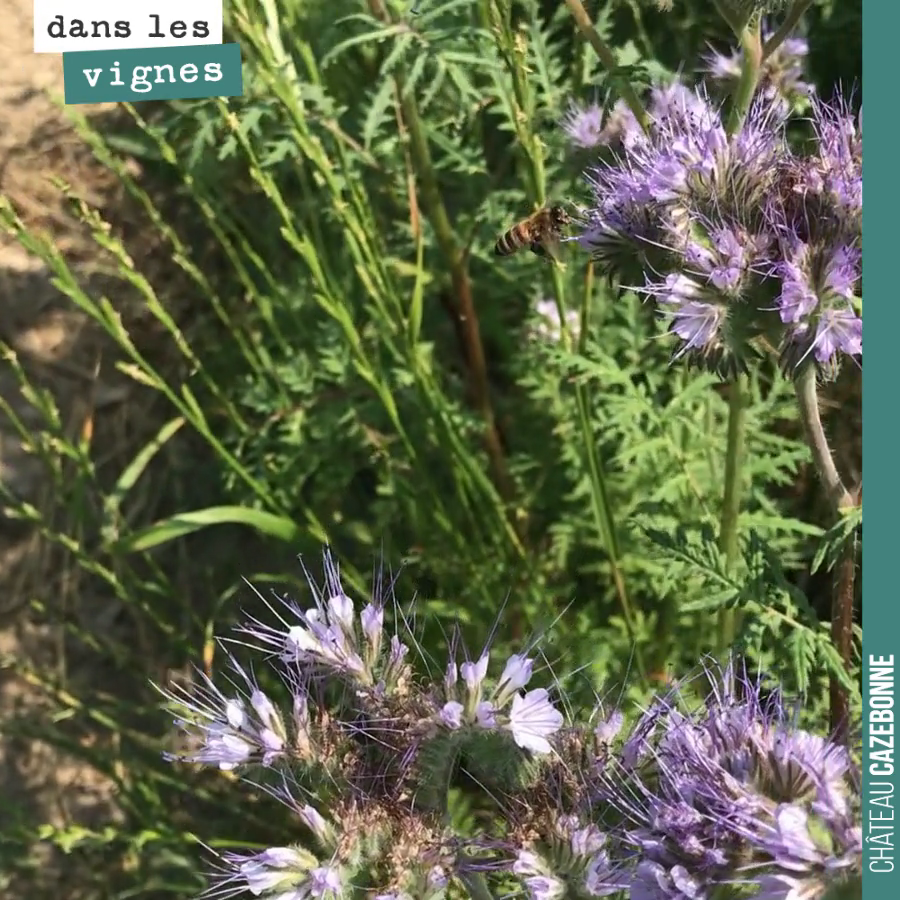
The use of cover crops encourages the return of beneficial biodiversity to the vineyard. They provide a refuge and food source for pollinating and auxiliary insects, contributing to a natural balance that reduces the need for phytosanitary interventions. The soil's microbial life, stimulated by the constant supply of organic matter, actively participates in the transformation of nutrients, making them more easily assimilated by the vine. It is a virtuous circle that strengthens the vigour of our vines and the aromatic complexity of our grapes. The vineyard is transformed into a highly healthy ecosystem, better able to withstand external pressures and produce grapes of exceptional quality, a faithful reflection of its terroir.
This holistic approach to viticulture also allows us to breathe new life into forgotten grape varieties. In Bordeaux, we are passionately replanting these ancestral varieties that had disappeared from the Bordeaux wine landscape, such as Castets or Mancin. A meticulous endeavour, the fruit of in-depth research and a profound conviction in the richness of the local genetic heritage, often detailed in "Bordeaux, une histoire de cépages". This ambitious project is only possible thanks to the unwavering support of the many enthusiasts who adopt our wines and share our vision of respectful and innovative viticulture. By choosing our cuvées, you are participating directly in the safeguarding of this lost biodiversity and the construction of a vineyard for the future.
To discover the fruits of our labour and support our commitment, we invite you to visit the Cazebonne shop. And to deepen your knowledge of the fascinating history of Bordeaux grape varieties, you can receive the digital version of the book "Bordeaux, une histoire de cépages", published by Éditions BBD and written by Jean-Baptiste Duquesne.
Cover crops, also known as catch crops or green manures, are plants intentionally grown between the vine rows or on other agricultural plots. Unlike main crops, their objective is not to be harvested, but to improve and protect the soil. They are an essential component of agroecology in viticulture, aimed at restoring soil health and fertility.
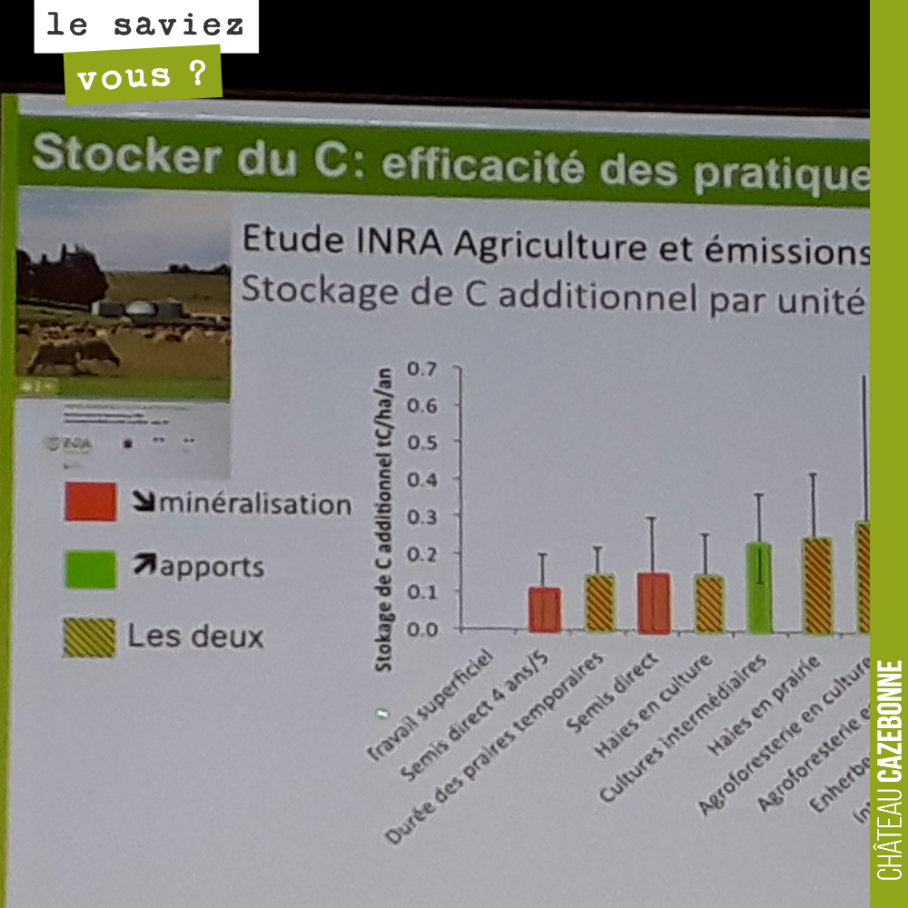
The primary objective of cover crops is to improve the structure and organic matter of the soil. Their roots penetrate deep down, naturally decompacting the earth and promoting better water infiltration and aeration. As they decompose, they enrich the soil with nitrogen, carbon, and other nutrients, thereby nourishing the soil's microflora and microfauna.
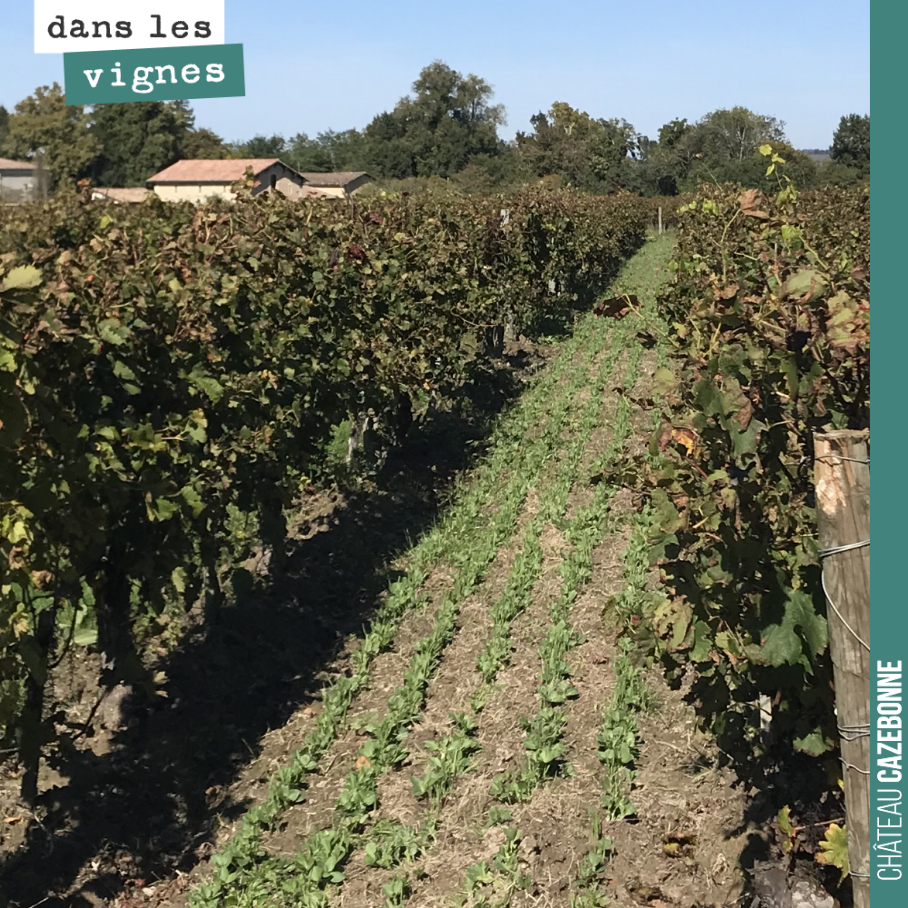
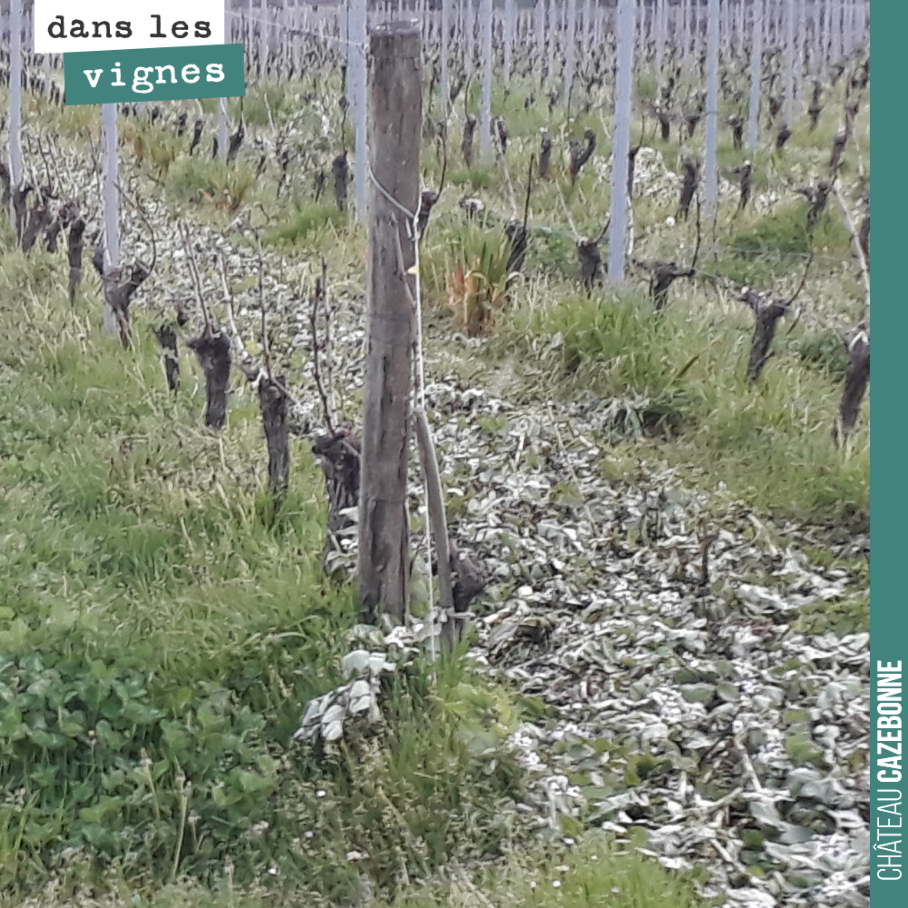
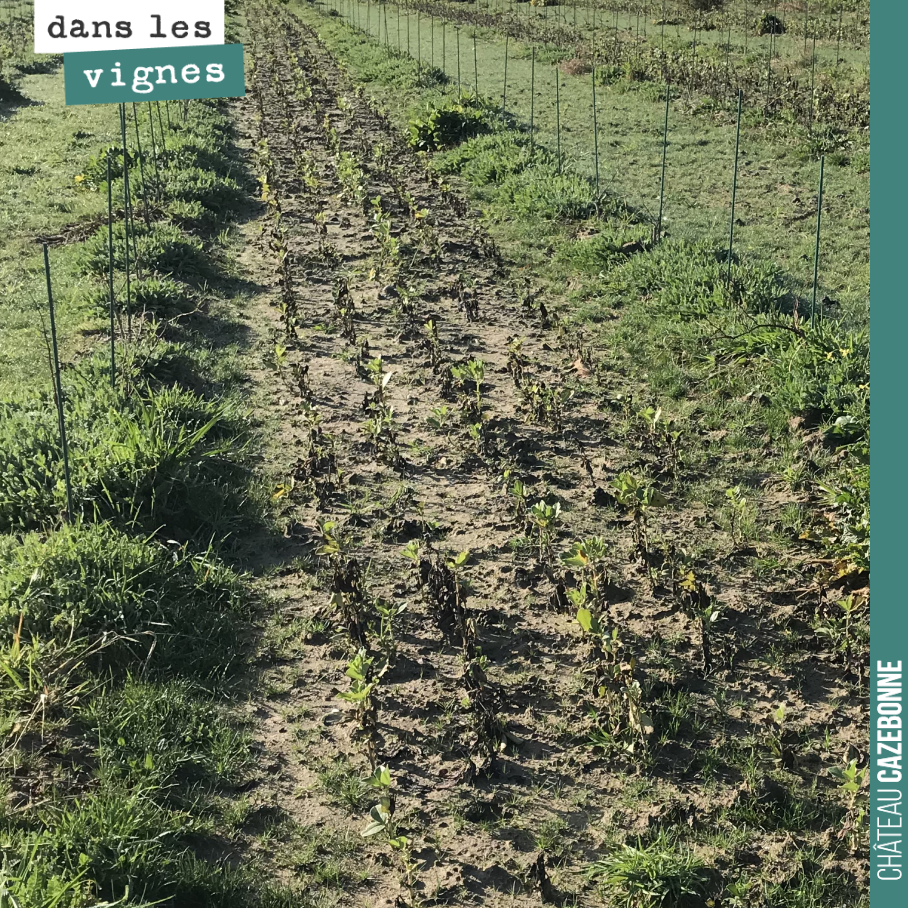
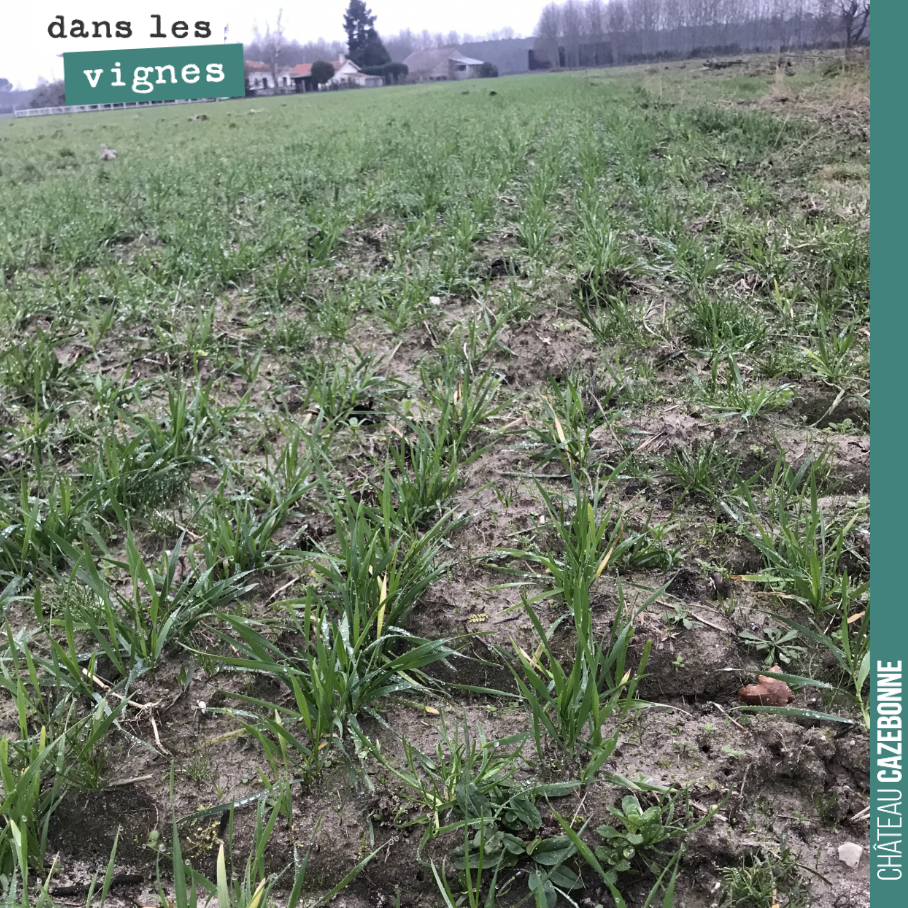
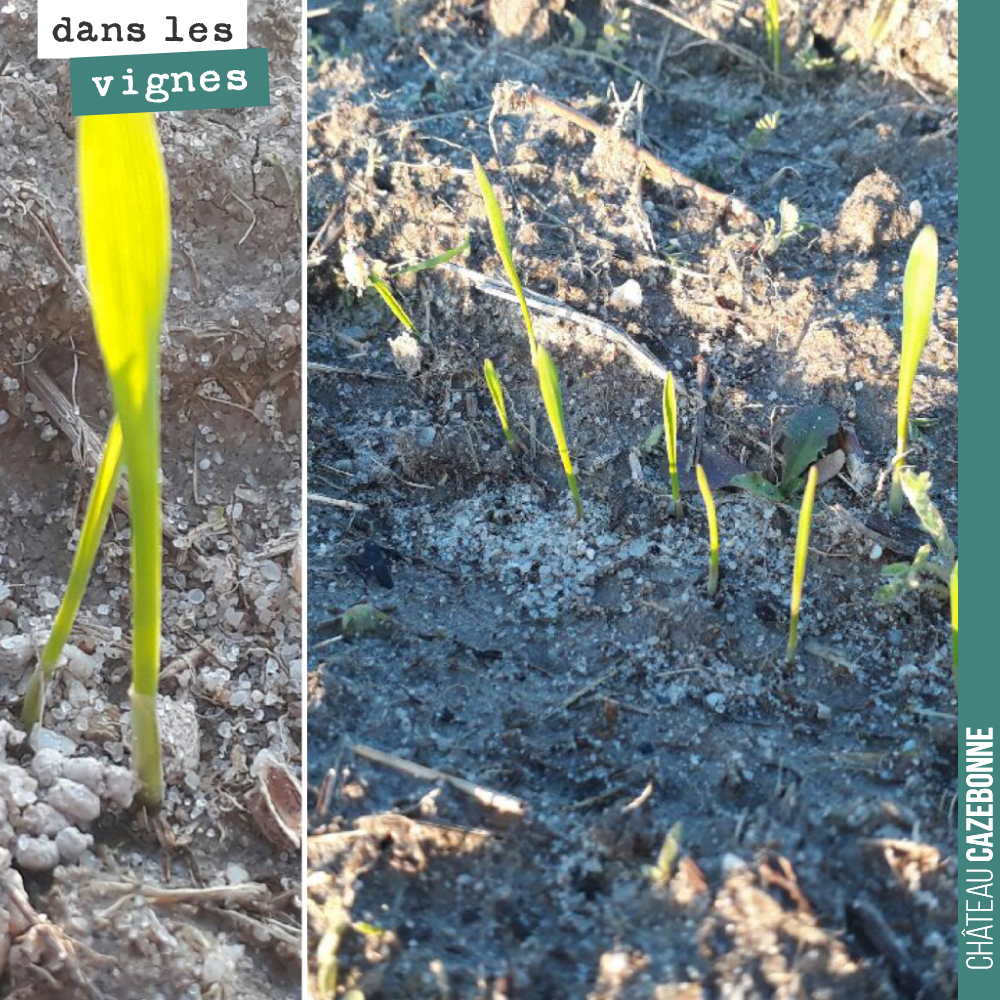
The sowing of cover crops is generally carried out in autumn, after the harvest, or sometimes in spring. The aim is to let them grow during the periods when the vine is less active. The exact moment of their destruction (by mowing, rolling, or light incorporation) depends on the chosen species and the targeted objectives, but generally occurs before the vines' budburst to avoid water or nutrient competition. At Château Cazebonne, we adapt this schedule according to the specific climatic conditions of our terroir and the needs of each plot.
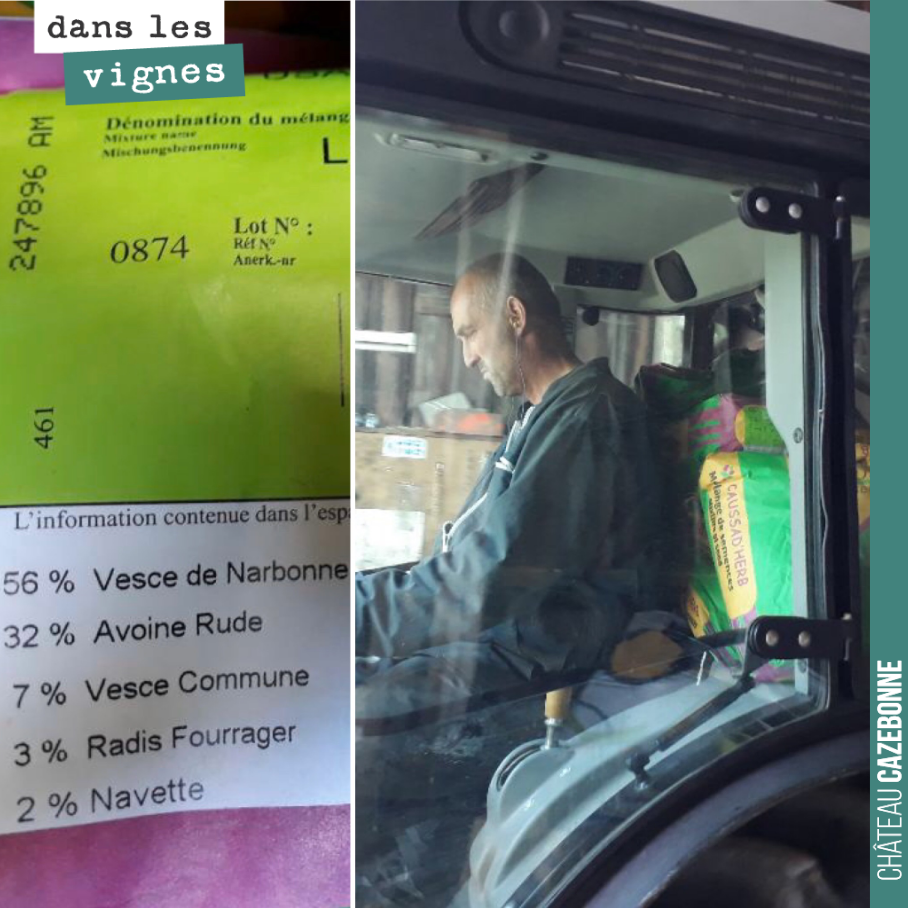
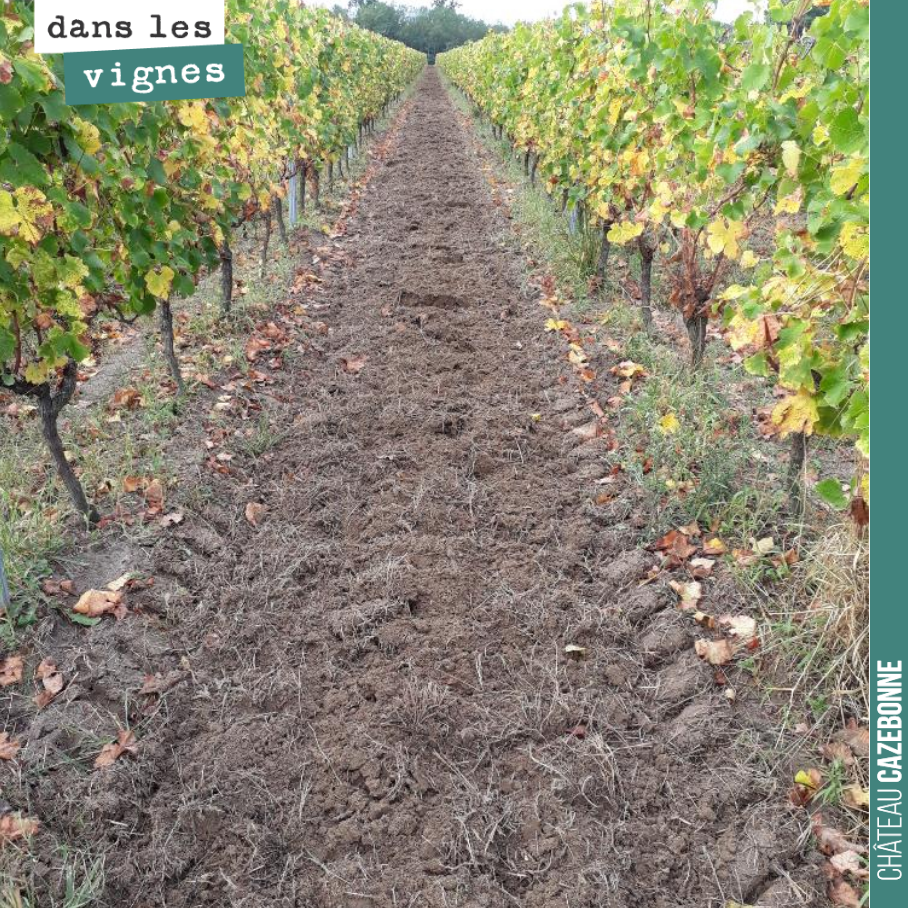
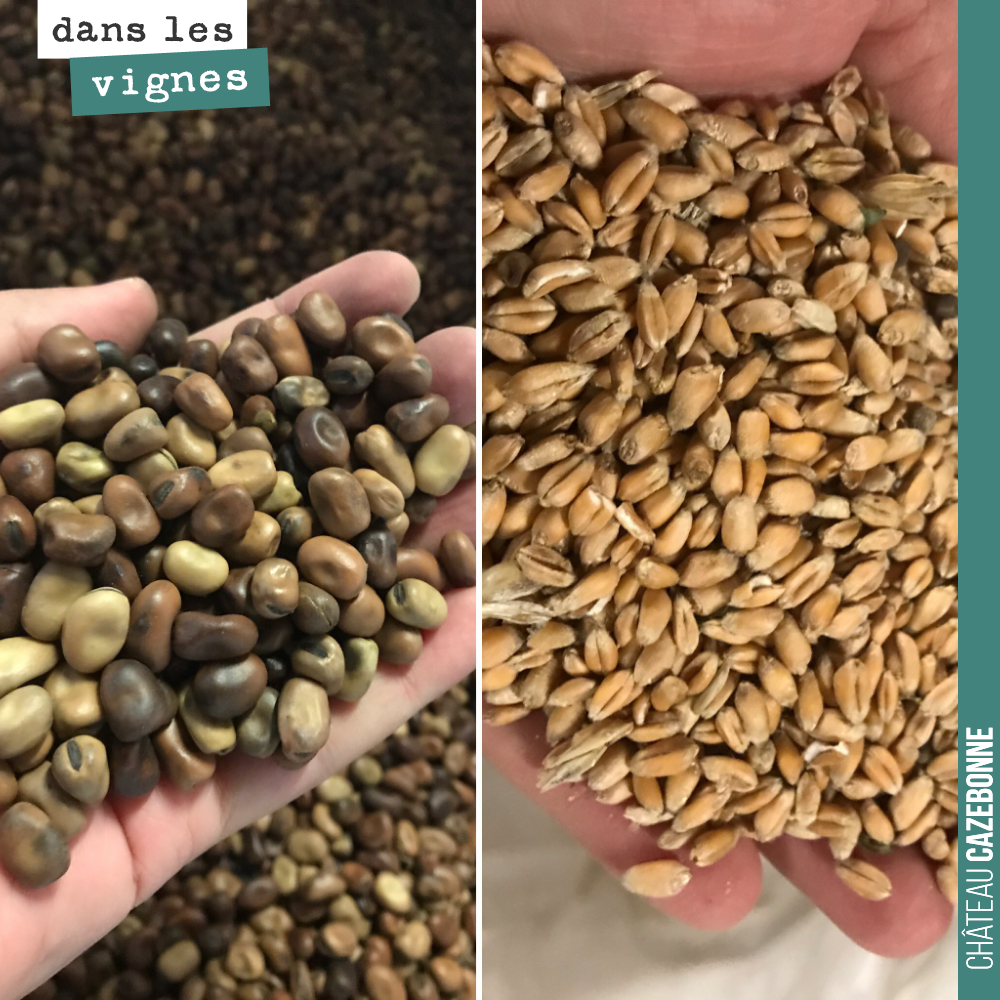
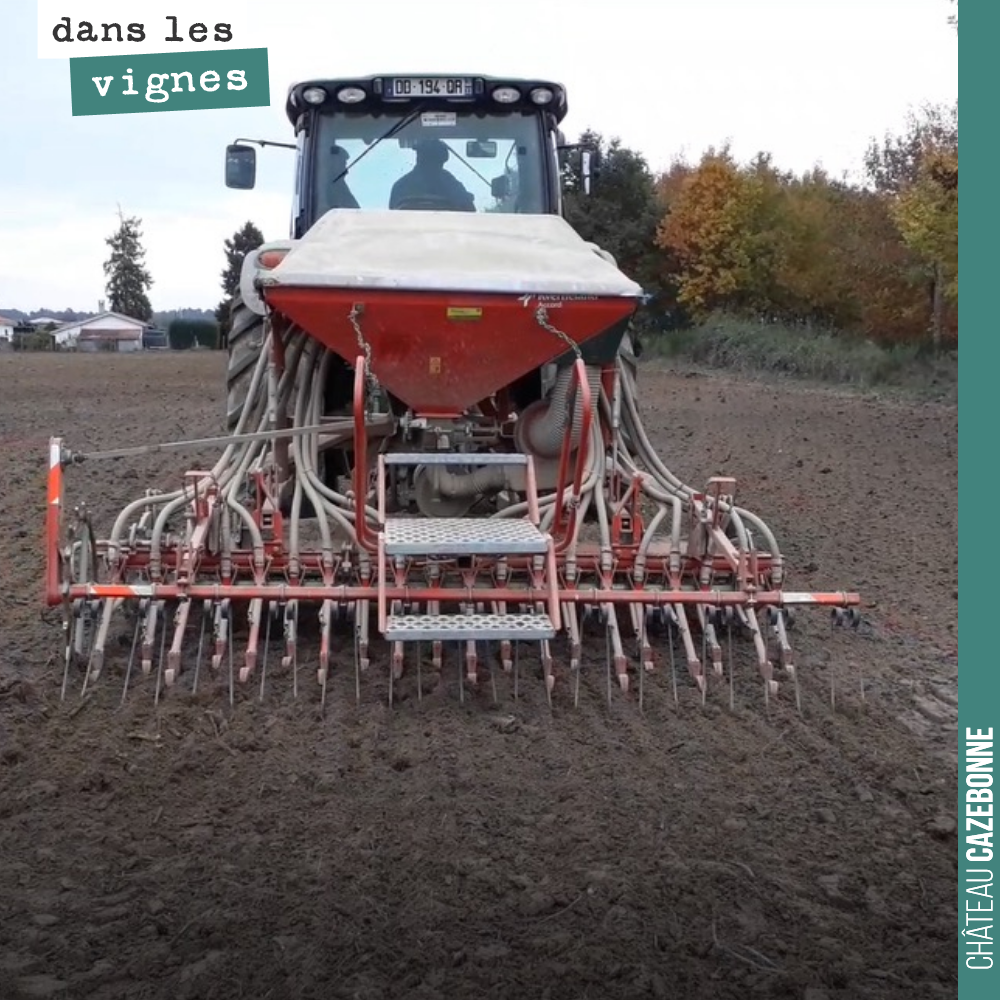
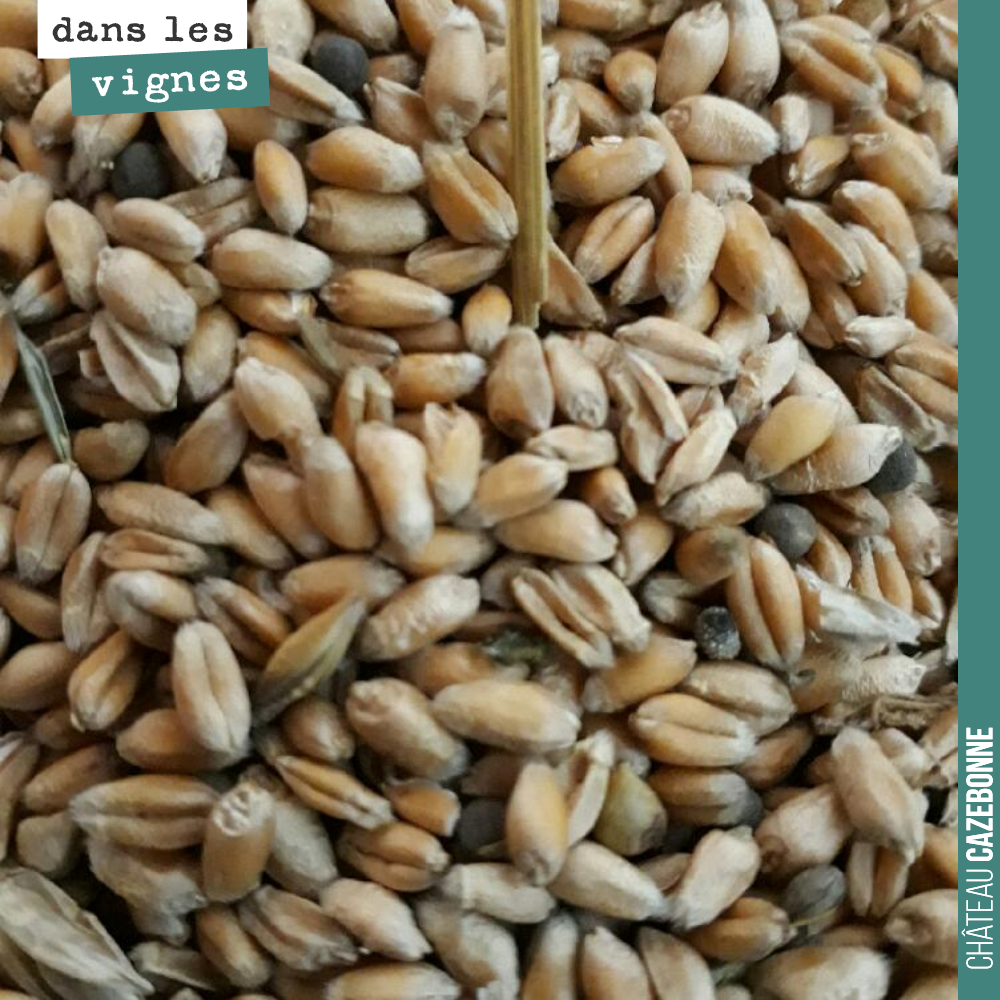
The integration of cover crops takes place in several stages. Firstly, the choice of species is crucial and must be adapted to the objectives (nitrogen supply, decompaction, erosion control) and the specificities of the soil. Next comes the sowing, often carried out with a suitable seed drill allowing the seeds to be evenly distributed between the rows. Plant growth is then monitored. Finally, the destruction of the cover crops is planned, either by regular mowing to manage grass cover in the vineyard, or by a single mulching followed by shallow integration into the soil to release the nutrients.
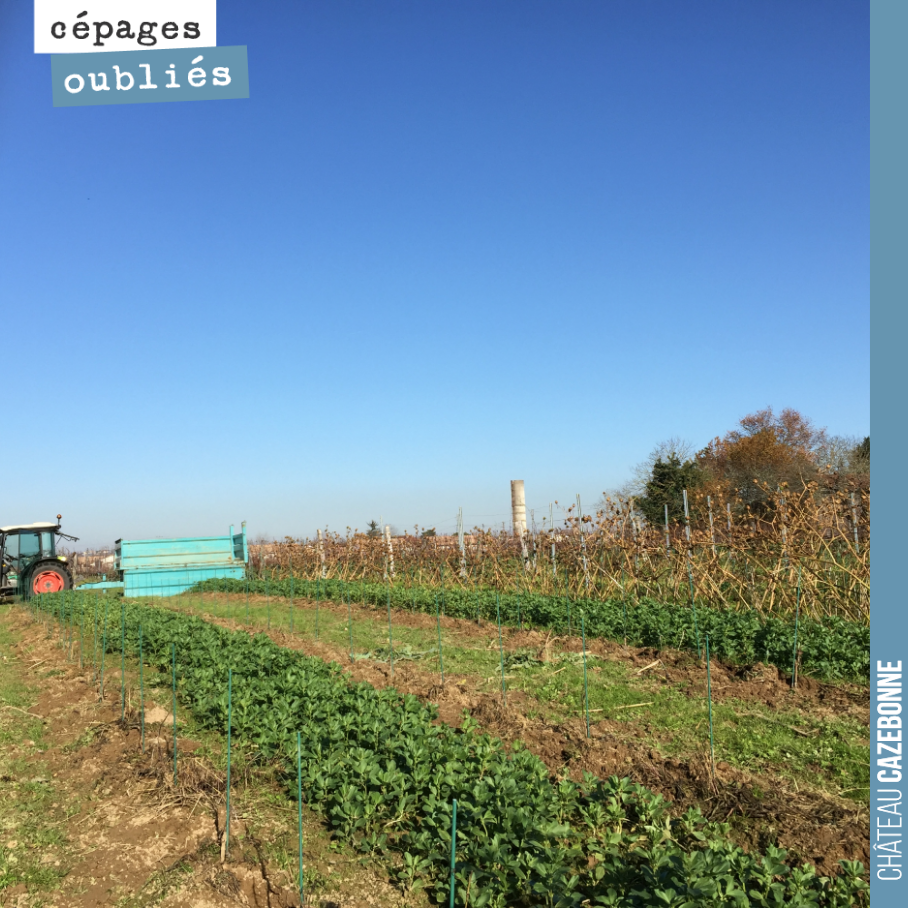
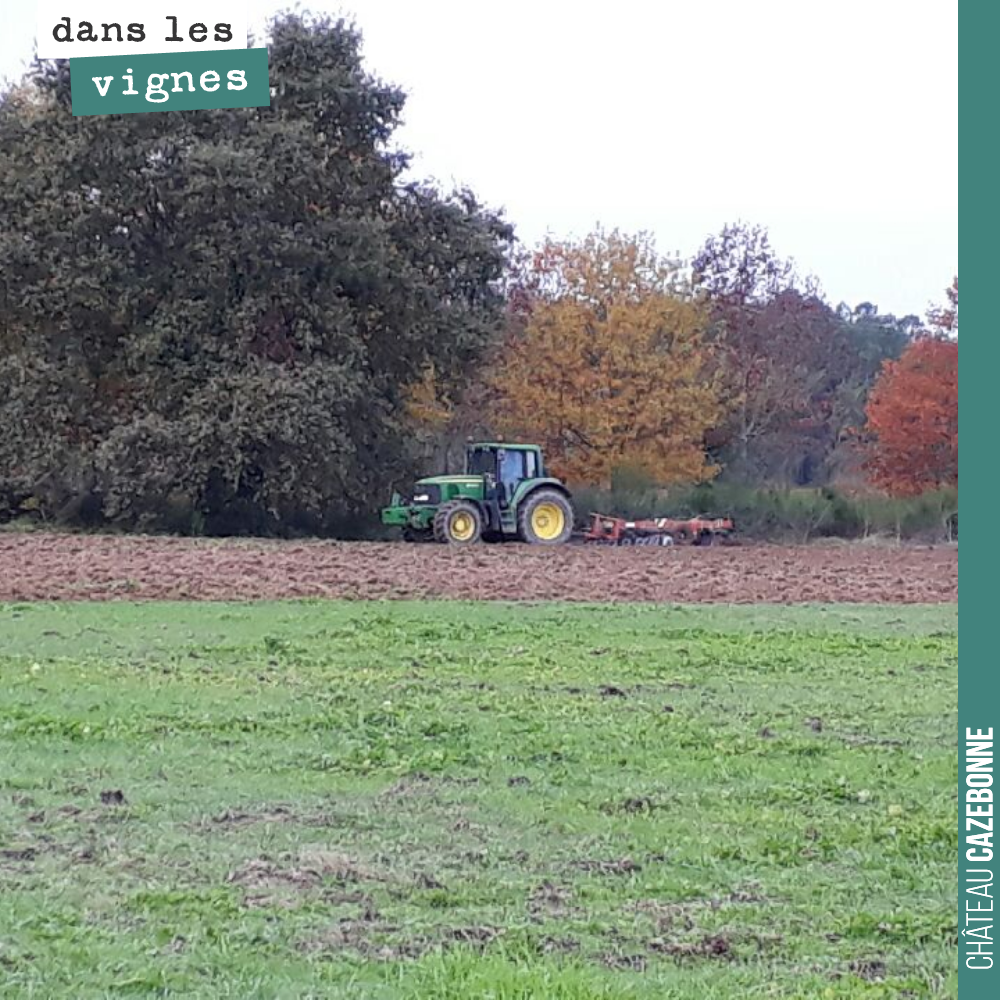
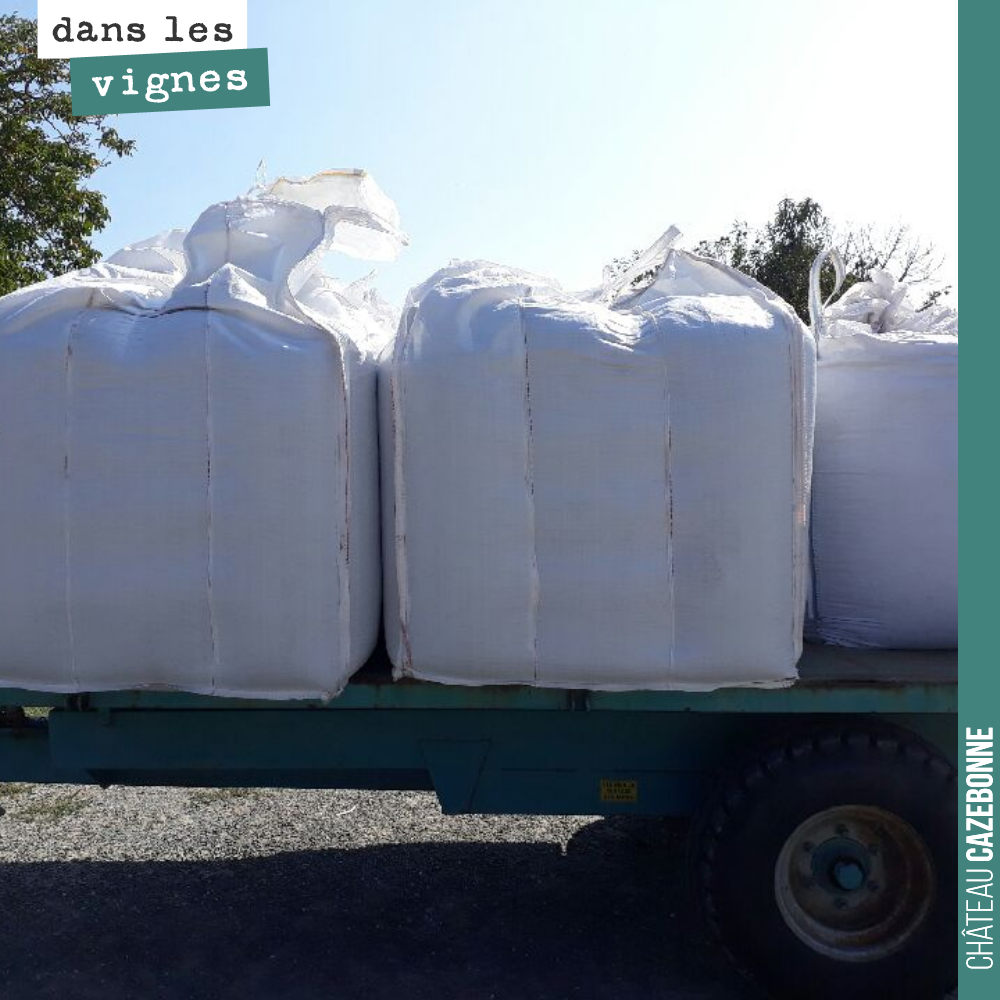
Various types of equipment are used for the implementation and maintenance of cover crops. Specific seed drills allow precise sowing between the rows. Mowing tools (grass mulchers, brushcutters) are used to manage the biomass. For incorporation into the soil, shallow tillage tools such as disc harrows or vibro-cultivators can be mobilised, although an increasing number of winegrowers favour no-till farming to preserve microbial life.
In the context of organic and biodynamic viticulture, cover crops are an essential component. They advantageously replace chemical weedkillers and synthetic fertilisers, offering a natural and sustainable solution. In conventional approaches, their use is a benevolent alternative to intensive practices, making it possible to reduce the use of phytosanitary products. The compromise often lies in managing the competitive demand for water and nutrients between the cover crops and the vine, which can be optimised by a judicious choice of species and destruction dates.
At Château Cazebonne, cover crops are at the heart of our philosophy. We choose seed mixtures adapted to each plot, including legumes for nitrogen fixation, grasses for soil structure, and crucifers for their deep root system. This practice strengthens biodiversity within our vineyard, contributing to the health of our soils and the authentic expression of our terroir. They are one of the many commitments that make us dedicated winegrowers, for wines that reflect our respect for nature. To assess the quality of our commitment and the vitality of our soils, we regularly carry out the "soil your undies" test for living soils.
This holistic approach to viticulture also allows us to breathe new life into forgotten grape varieties. In Bordeaux, we are passionately replanting these ancestral varieties that had disappeared from the Bordeaux wine landscape, such as Castets or Mancin. A meticulous endeavour, the fruit of in-depth research and a profound conviction in the richness of the local genetic heritage, often detailed in our book "Bordeaux, une histoire de cépages", which you can download from our website. This ambitious project is only possible thanks to the unwavering support of the many enthusiasts who adopt our wines and share our vision of respectful and innovative viticulture. By choosing our cuvées, you are participating directly in the safeguarding of this lost biodiversity and the construction of a vineyard for the future. To test your knowledge on grape varieties and wine, feel free to discover our oenological quizzes. And to discover the fruits of our labour and support our commitment, we invite you to visit our online shop.
Our suggestions
-5%on your 1st order with code BIENVENUE
The essential6 bottles — Graves red 2022
The best price of the cellar: €12 per bottle delivered.
The everyday red: generous and straight to the point.
I want it Our recommendation92/100 RVF
6 bottles — Graves red 2022, 92/100 RVF
Rated 92/100 by La Revue du vin de France: a solid 10-year ageing potential.
Our Graves for ageing, the finest gateway to the estate.
I want it Go further
12 bottles — the whole range
12 bottles, the whole range tasted: the best discovery-to-price ratio.
The complete tour of the estate, in a single case.
I want it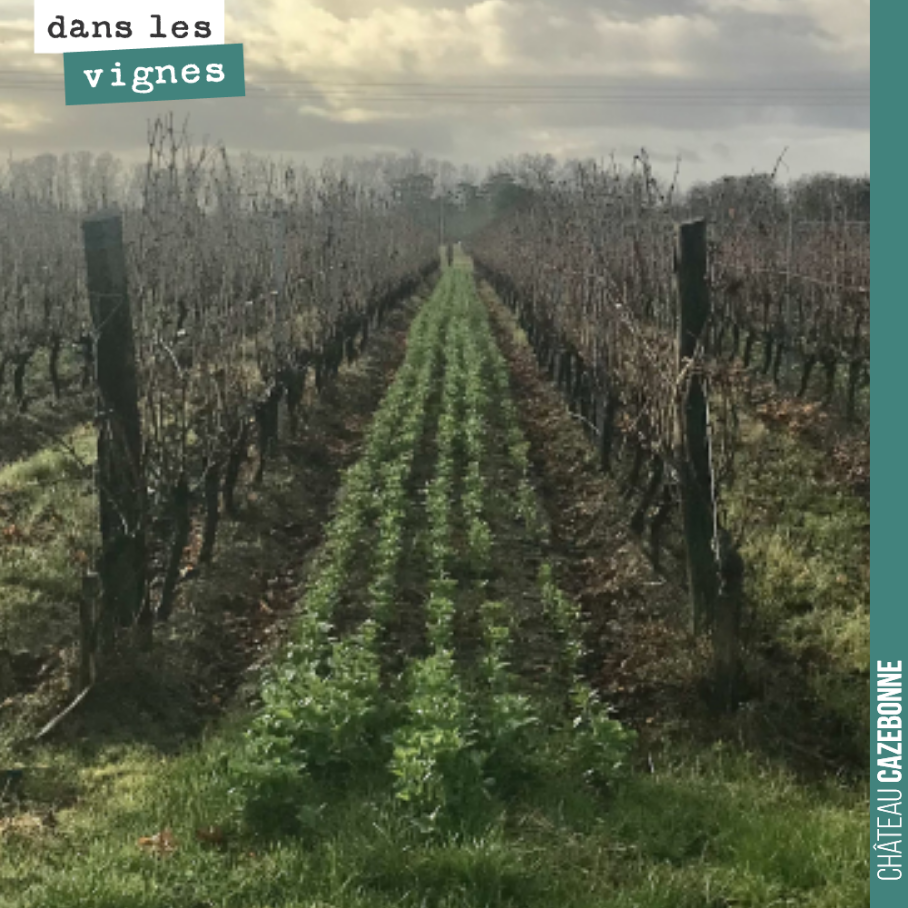
17 December 2022
09 November 2022
25 October 2022
30 January 2022
24 September 2021
05 March 2021
08 February 2021
29 January 2021
10 November 2020
08 November 2020
22 October 2020
26 March 2020
24 March 2020
15 February 2020
02 January 2020
01 January 2020
28 December 2019
09 December 2019
07 December 2019
29 November 2019
19 November 2019
18 November 2019
16 November 2019
31 October 2019
16 October 2019
08 October 2019
27 September 2019
08 July 2019
03 June 2019
14 May 2019
29 April 2019
17 April 2019
09 April 2019
22 March 2019
16 March 2019
04 March 2019
03 March 2019

01 March 2019
23 February 2019
21 February 2019
20 February 2019

11 February 2019
19 January 2019
02 January 2019
30 December 2018

20 December 2018

18 December 2018
03 December 2018
02 December 2018

29 November 2018
19 November 2018
18 November 2018

16 November 2018
15 November 2018
10 November 2018
05 November 2018
05 November 2018
29 October 2018
29 October 2018
15 October 2018
26 September 2018
07 September 2018
19 August 2018
The cellar, forgotten grape varieties and our cuvées, twice a month. 5% off your first order with the code BIENVENUE.