02 July 2018
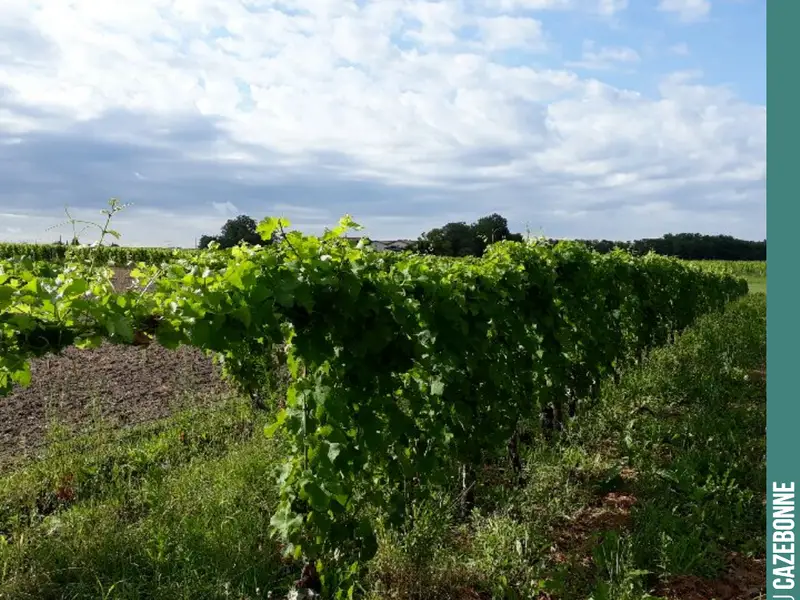
Rather than trimming shoots, that is to say cutting all the shoots that grow above the row (a task usually done mechanically), what if we tried ‘cabanage’……It involves braiding the shoots to prevent.
By Jean-Baptiste Duquesne

Trimming
Vine trimming is a crucial step in the vegetative cycle, generally taking place during the months of July and August. While winter pruning lays the foundations for the future harvest, trimming refines the vine's silhouette and optimises the plant's energy. As a liana, the vine is naturally exuberant and its growth can be very rapid. Without intervention, it would develop dense foliage and a multitude of vine shoots, to the detriment of grape quality.
The main objective of trimming is to limit the vegetative extension of the vine. By removing the tips of the young shoots, the winegrower redirects the sap towards the forming bunches. This concentration of resources is essential to encourage better ripening of the berries, allowing for an optimal accumulation of sugars, aromas, and polyphenols. Trimming also contributes to better aeration of the canopy, thereby reducing the risk of fungal diseases and optimising the bunches' exposure to the sun. It is a balancing act between the need for sufficient foliage for photosynthesis and the control of vigour for fruit quality.
Beyond simple maintenance, trimming pursues specific agronomic and oenological objectives. It allows to:
Trimming generally takes place after flowering and fruit set, when shoot growth accelerates. In Bordeaux, this most often occurs between May and August, or even early September, depending on the vine's vigour and climatic conditions. Several passes may be necessary, particularly on the most vigorous plots. It is essential not to trim too early, in order to preserve a sufficient leaf area for photosynthesis, nor too late, so as not to stimulate a restart of vegetation just before the harvest.
At Château Cazebonne, we attach particular importance to this practice, as we do to all the manual work that shapes our wines. Our commitment to the revival of historic Bordeaux grape varieties, those sometimes forgotten varieties such as Cabernelle or Castets, as highlighted in "Bordeaux, une histoire de cépages" by Jean-Baptiste Duquesne published by Éditions BBD, requires special care at every stage of the vine's life. Every vine, regardless of its age or rarity, benefits from the attention and expertise of our teams, thus ensuring the longevity of this living heritage.
This meticulous work, which aims to restore the ampelographic richness of Bordeaux to its former glory, is possible thanks to the precious support of many wine lovers who, by adopting our wines, allow us to pursue this exciting adventure. To deepen your knowledge of the fascinating history of Bordeaux grape varieties and understand the importance of this approach, we invite you to download the digital version of the book "Bordeaux, une histoire de cépages". To test your knowledge, take part in our oenological quizzes, and if you wish to discover the fruit of this hard work and passion, you can find our wines for sale on our online shop.
Sources
The cellar, forgotten grape varieties and our cuvées, twice a month. 5% off your first order with the code BIENVENUE.