28 March 2023
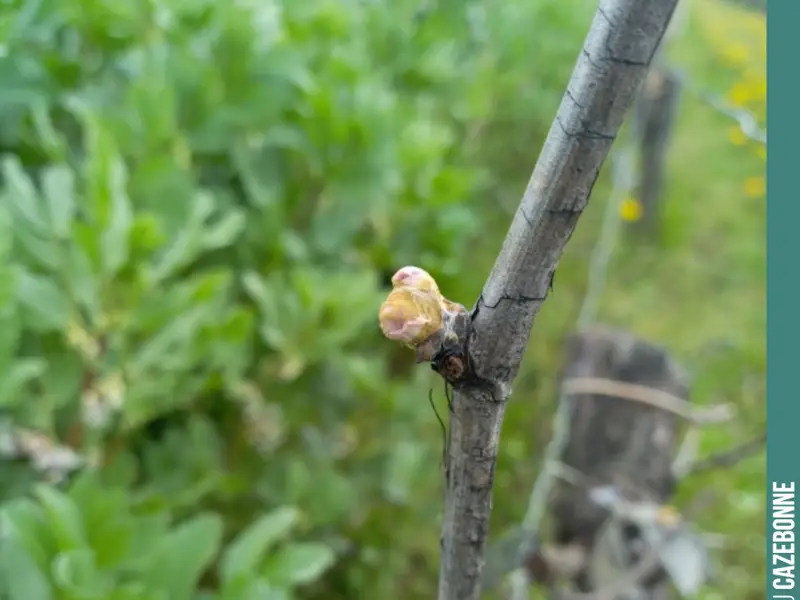
This year, we are not ahead of schedule……The earliest grape varieties are starting to emerge from the wool (here on young Merlot vines).
By Jean-Baptiste Duquesne

Budburst
Budburst is the first visible stage in the vine’s annual vegetative cycle, marking the end of winter dormancy and the onset of growth. This phenomenon occurs when the bud, swollen with sap, expands as spring temperatures rise, before opening to reveal tiny rudimentary leaves. It signals that the vine is reactivating for a new growing season.
After winter, the vine progressively accumulates energy reserves through root activity. As soil and ambient temperatures rise, raw sap rises from the roots to the canes under root pressure, a phenomenon known as the "bleeding of the vine". This flow of sap hydrates the vine buds, which already contain miniature versions of all the future shoot's structures: leaves, tendrils, and inflorescences (grapevine inflorescence). The swelling of the bud and the splitting of the protective scales to reveal the woolly down and young leaves mark true budburst.
The timing of budburst depends heavily on several factors, notably grape variety, the climatic conditions of the year, and the reserves accumulated by the vine during the previous growing season. Generally, it occurs once average daily temperatures exceed 10°C for several consecutive days. In the Bordeaux region, this typically takes place between late March and mid-April, heralding the start of the growing season that will lead to flowering and ultimately harvest.
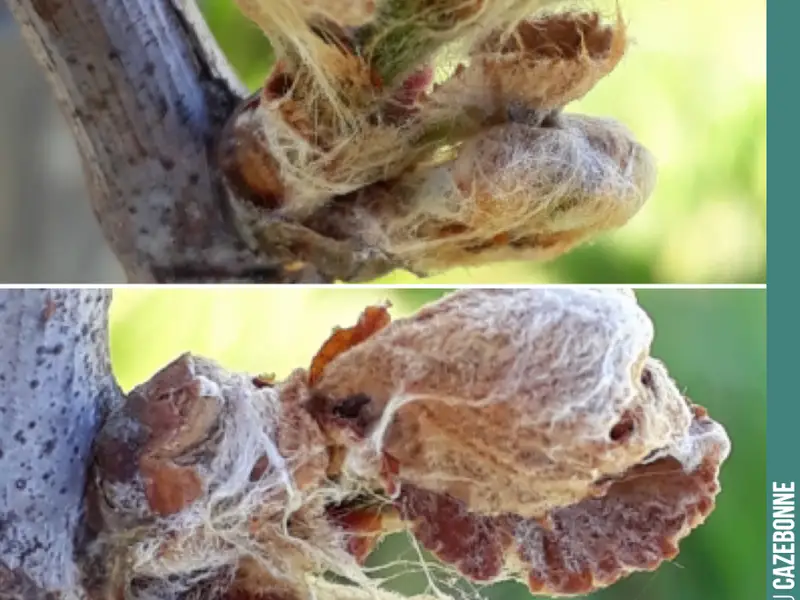
To the trained eye of the winegrower, several signs herald and confirm budburst. The first is bud swelling, as the small dormant buds expand. Next comes the emergence of the "down", a woolly substance that protects the young leaves. Finally, the first leaves, still tiny and curled, begin to unfurl, initially pale green and gradually darkening. These observations are crucial for assessing vine vigour and anticipating subsequent growth stages.
At Château Cazebonne, budburst is a period of intense observation. We closely monitor the awakening of each of our vines, particularly those of the forgotten Bordeaux grape varieties we strive to preserve. The earliness or lateness of budburst in these heritage varieties provides valuable insight into their adaptation to our terroir and climate change. Meticulous monitoring helps us make informed decisions to protect the vines and optimise their development.
Early budburst, while a sign of vitality, can expose fragile young shoots to the risk of spring frosts. Conversely, late budburst can shorten the vegetative cycle and potentially compromise grape ripeness. Understanding the budburst characteristics of each grape variety is therefore vital for vineyard management, particularly for viticultural decisions and mitigating climate risks. As Jean-Baptiste Duquesne highlights in his book "Bordeaux, une histoire de cépages", varietal adaptation is key to vineyard resilience in the face of weather uncertainties.
Budburst is a milestone event, not only for the vine, but also for wine lovers who enthusiastically discover the approach of an estate like Château Cazebonne, committed to preserving Bordeaux grape varieties that had almost disappeared. This meticulous work is made possible by the unwavering support of wine enthusiasts. To deepen your knowledge of this fascinating history and download the book "Bordeaux, une histoire de cépages", you can visit our dedicated page, test your wine knowledge with our quizzes, and discover our unique cuvées by visiting our online boutique.
Sources
28 March 2023
By Jean-Baptiste Duquesne
14 April 2021
By Jean-Baptiste Duquesne
16 April 2020
By Jean-Baptiste Duquesne
The cellar, forgotten grape varieties and our cuvées, twice a month. 5% off your first order with the code BIENVENUE.