
 The essential
6 × Entre Amis red
6 bottles — Graves red 2022
The best price of the cellar: €12 per bottle delivered.
The everyday red: generous and straight to the point.
I want itInflorescence
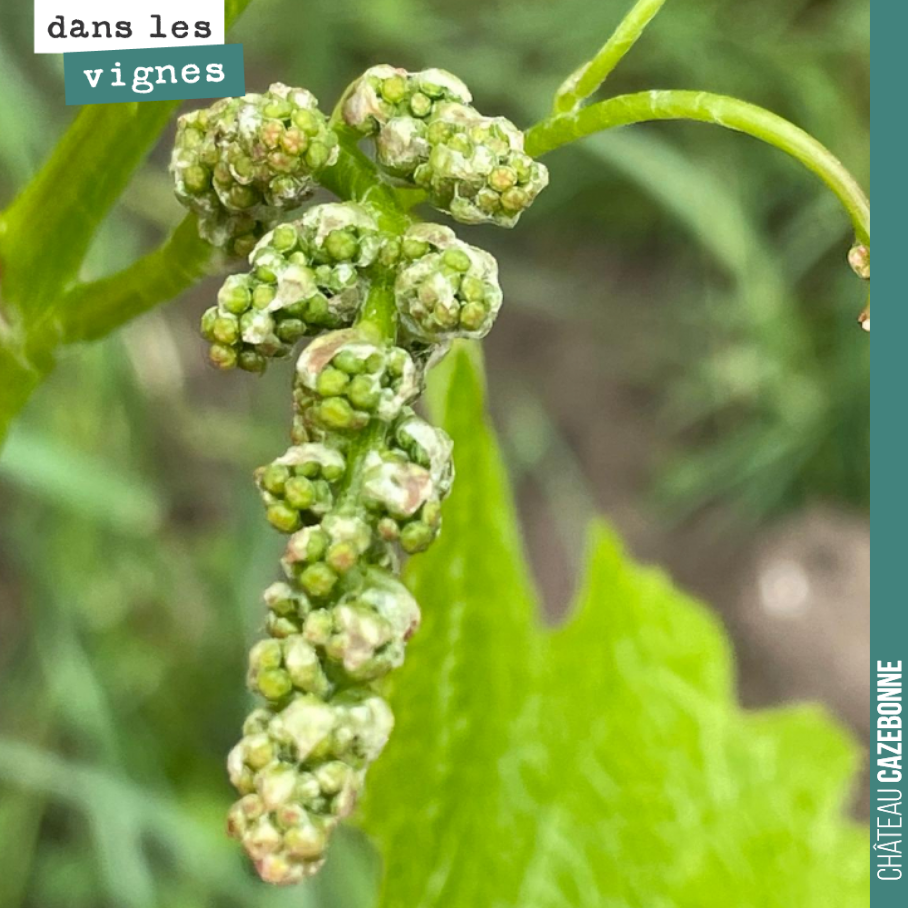
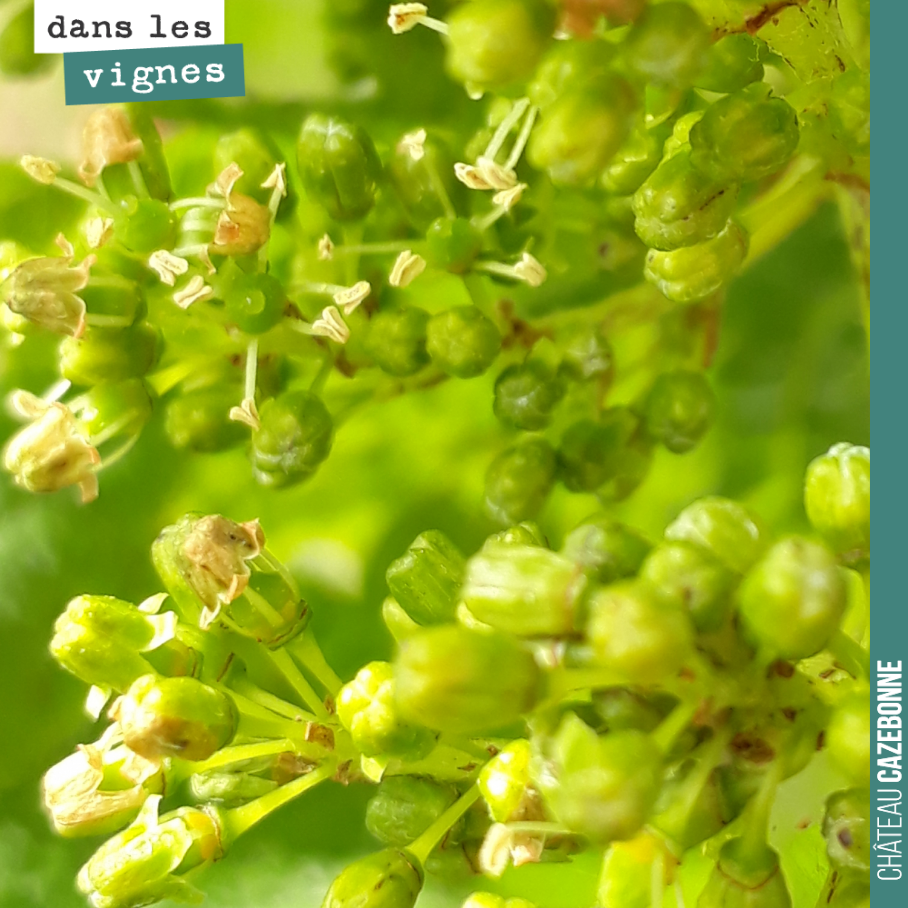
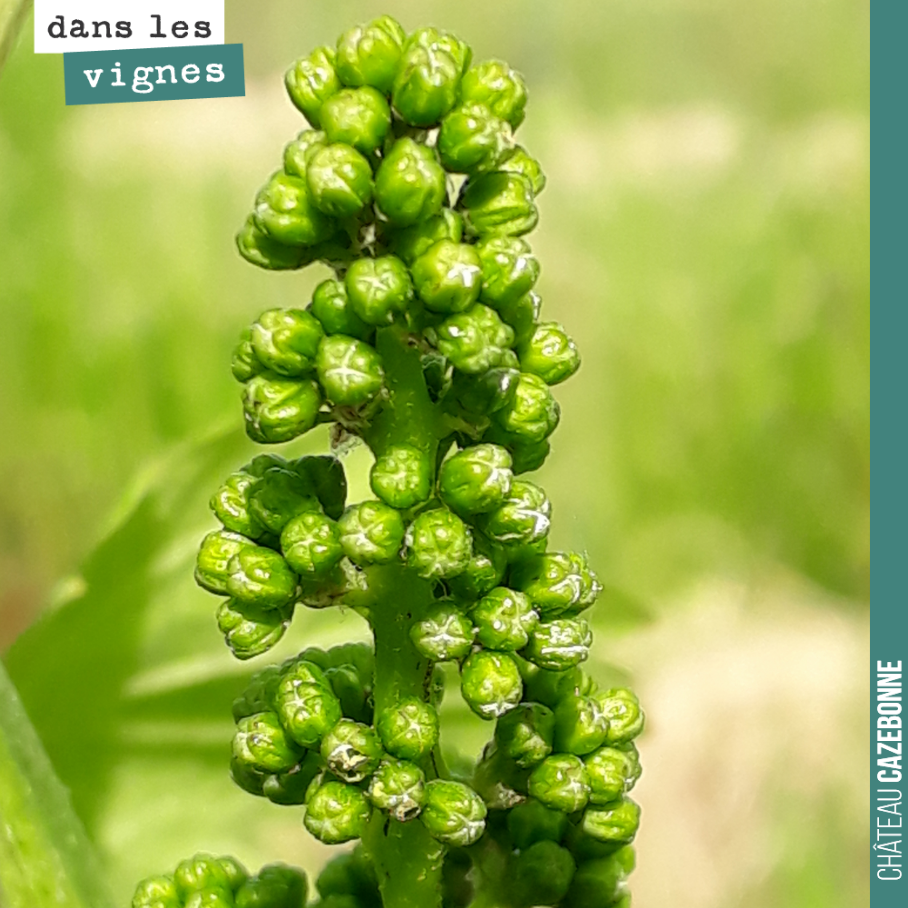
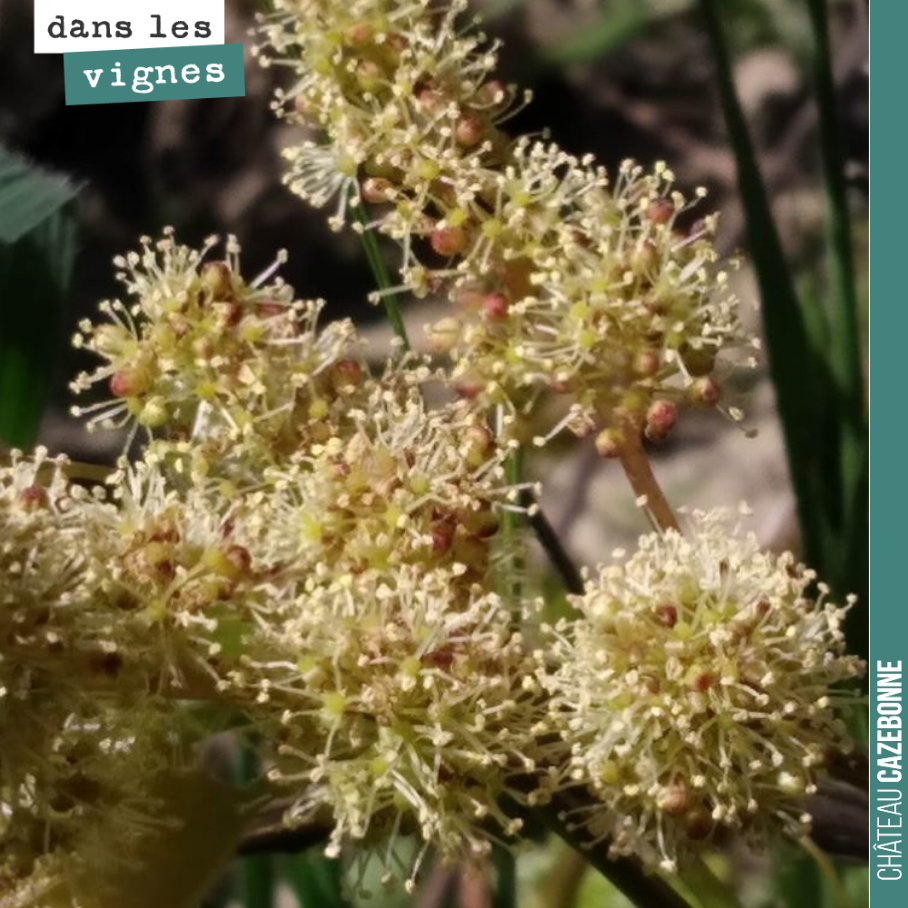
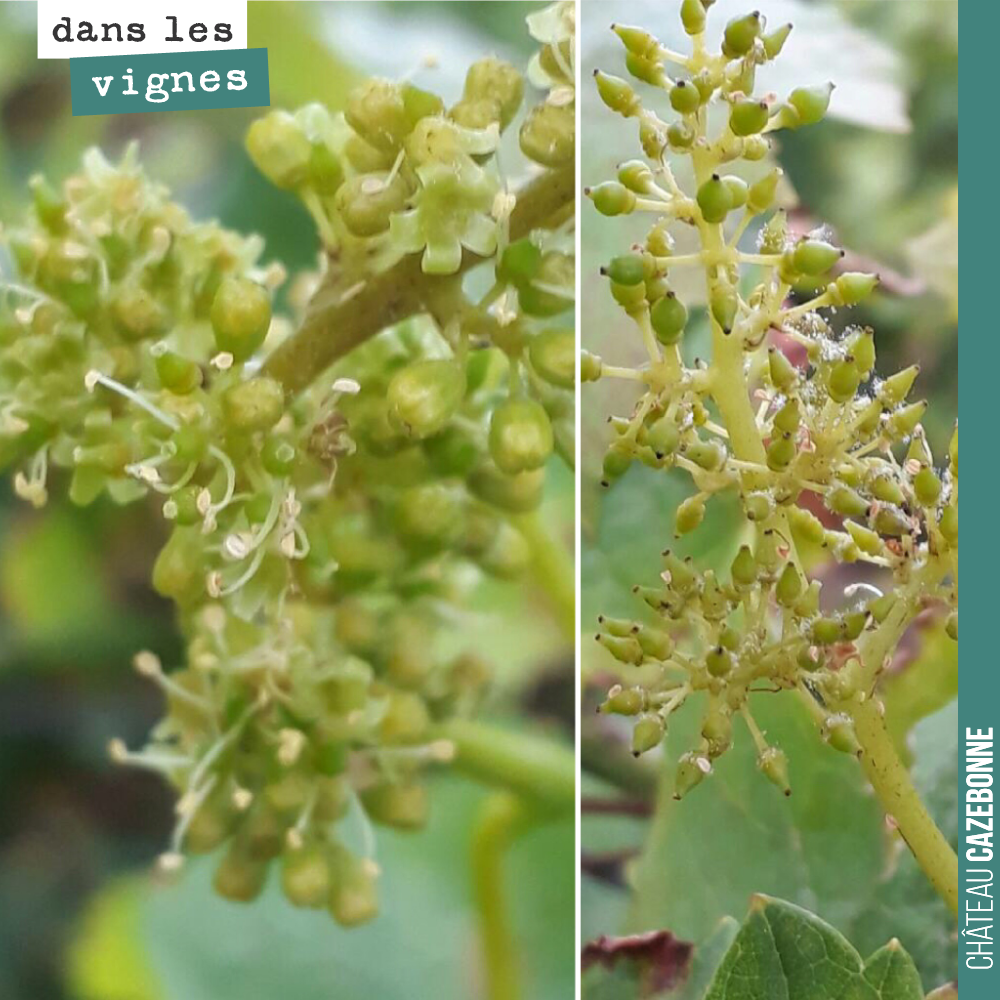
At the heart of the vine's vegetative cycle, the inflorescence represents a key moment, a true floral prelude to the birth of future grapes and, by extension, to the crafting of our wines at Château Cazebonne. The inflorescence is simply the cluster of delicate flowers that develop on each vine, structured in an elongated and branched shape, evoking a miniature bunch even before its final formation. Borne on a shoot or peduncle, it is the harbinger of the abundance to come.
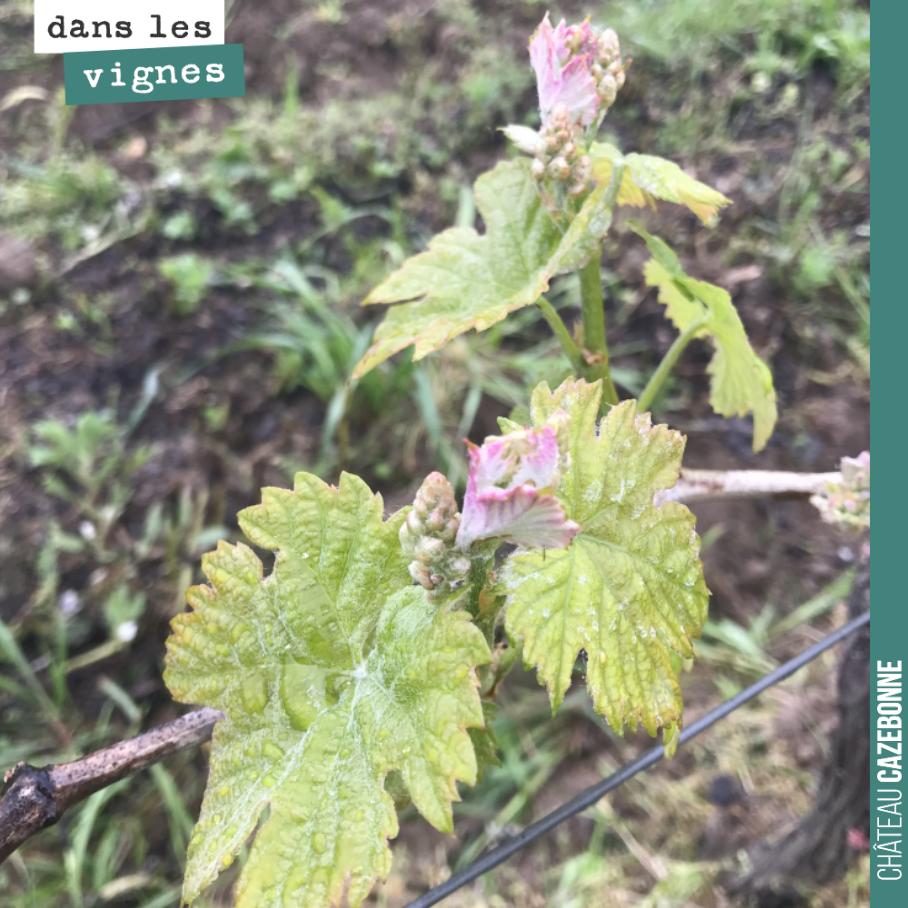
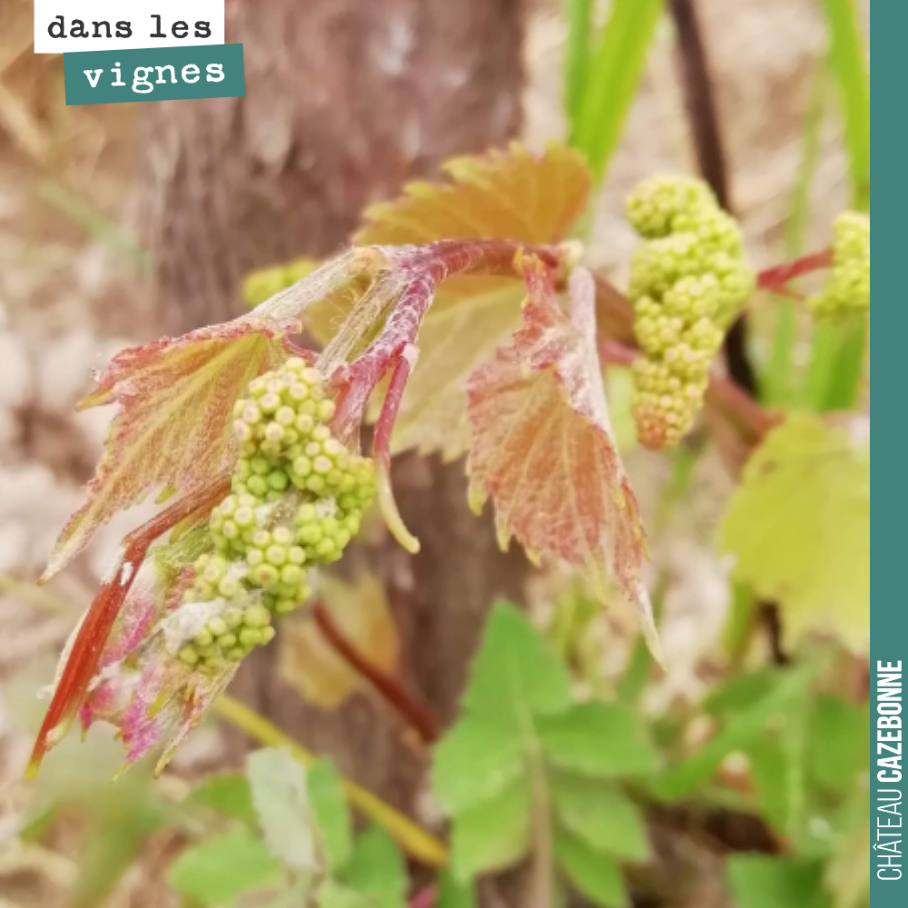
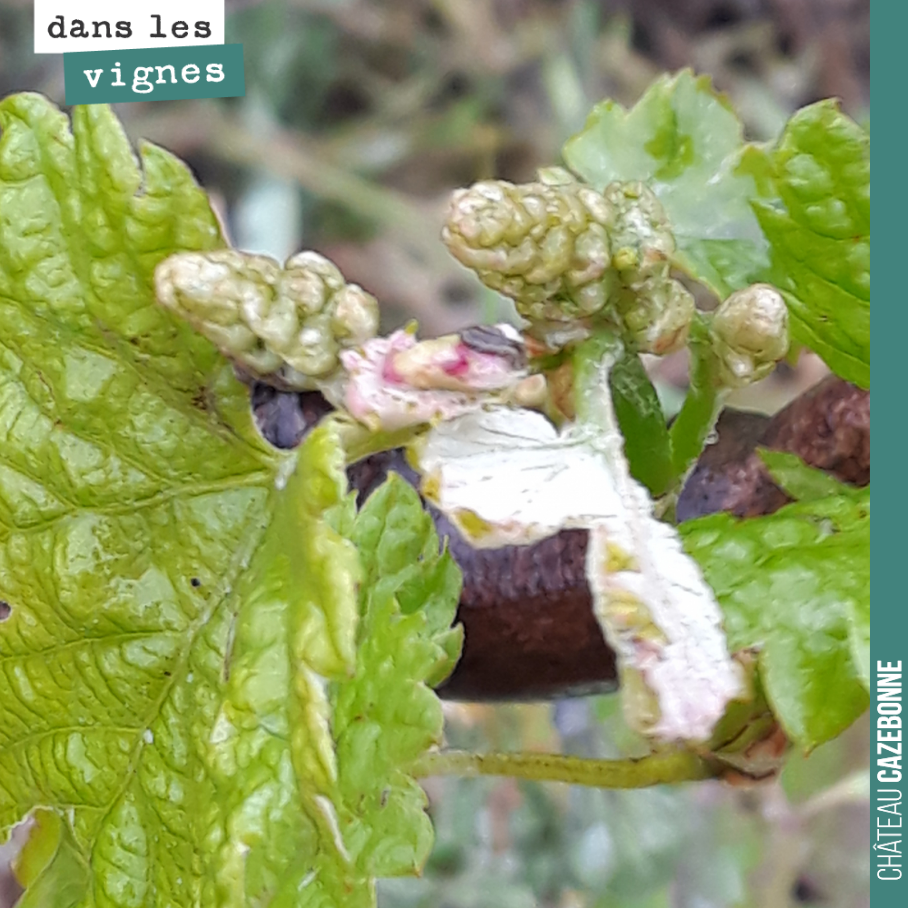
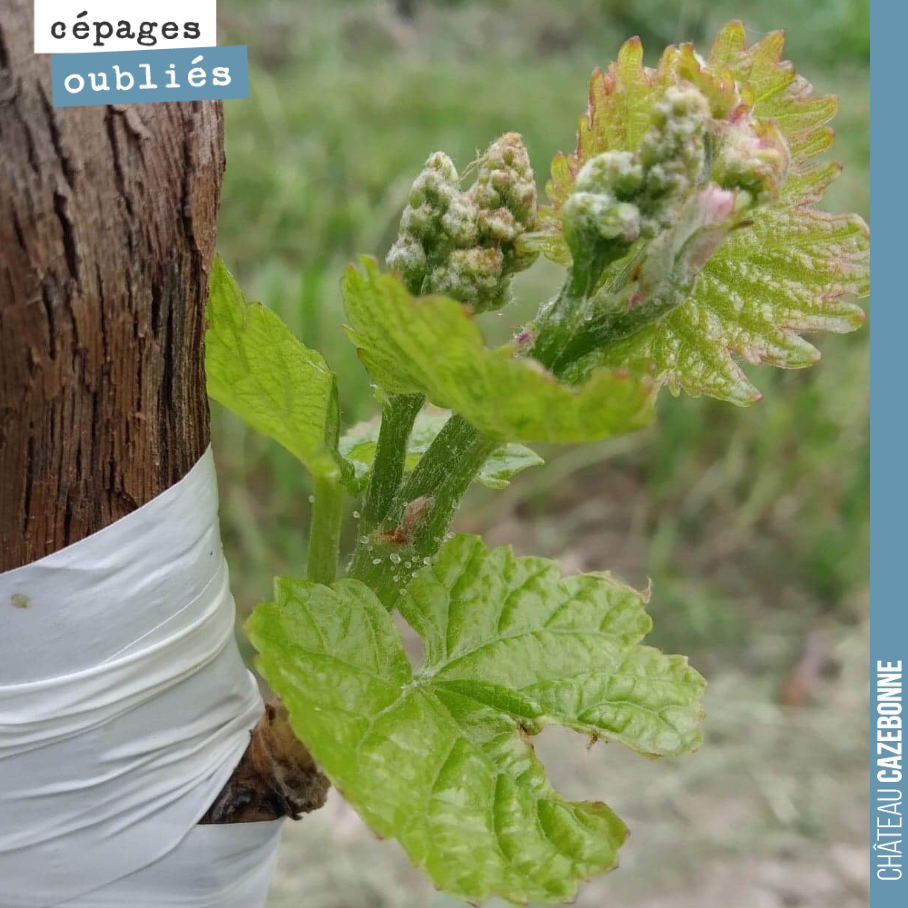
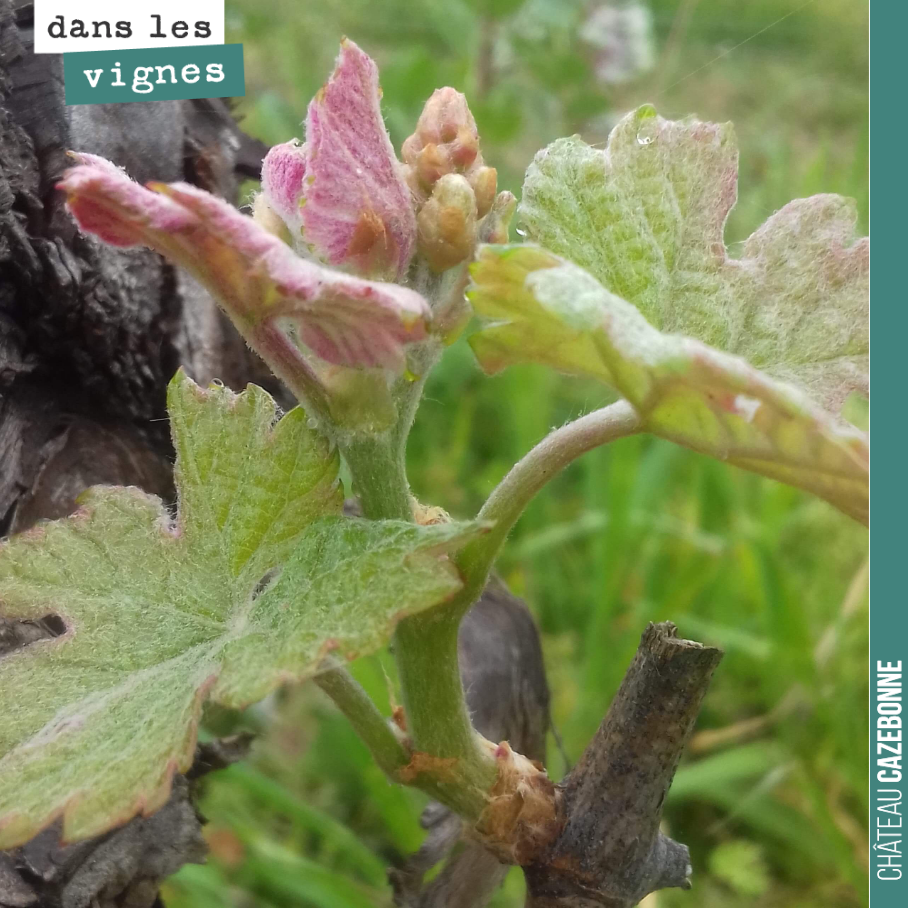
These flowers, often discreet in their size and nuances – white, yellowish or delicately pink – appear in early spring. Their blooming coincides with the awakening of the vine, as it emerges from its winter dormancy and the sap rises with force. They develop in harmony with the buds and young leaves, announcing the plant's renewed vitality. This phenomenon, known as budburst, is a delicate spectacle that captivates us every year, much like the daffodil heralding spring.
Pollination is a crucial stage for the inflorescence. Although the vine is largely self-fertile, the wind and the intervention of pollinating insects, especially bees, promote better fertilisation, thus guaranteeing the development of the berries. After this delicate stage, each fertilised flower begins its transformation, evolving to give birth to the bunches of grapes we cherish so much. It is from this metamorphosis that the sun-drenched berries will be born, which will subsequently ripen until the harvest. The success of this phase is essential for the quantity and quality of the future crop.
The complexity of the inflorescence varies depending on the species and grape varieties. Some, like many traditional grape varieties, can produce simple inflorescences, yielding a single bunch per shoot, while others boast multiple inflorescences, thereby increasing the plant's fruiting potential. This botanical diversity is a testament to the richness of the global and Bordeaux wine heritage. Jean-Baptiste Duquesne, in his book "Bordeaux, une histoire de cépages", highlights this varietal richness that has shaped the Bordeaux vineyards over the centuries.
At Château Cazebonne, we pay close attention to each stage of this cycle. To observe the inflorescence is to anticipate the quality of the future harvest. It is also to understand the history of the vine, this history that we strive to preserve and enrich by replanting ancient grape varieties that had left their mark on Bordeaux's winemaking history, but which, little by little, had been forgotten. This rediscovery work, supported by our many passionate enthusiasts who have adopted our wines, is an essential part of our wines' identity and allows these flavours of yesteryear to reclaim their place in the Bordeaux landscape.
To learn more about our cuvées and the history of Bordeaux grape varieties, we invite you to visit the Cazebonne shop. You can also deepen your knowledge by receiving the digital version of the book "Bordeaux, une histoire de cépages" by Jean-Baptiste Duquesne, published by Éditions BBD.
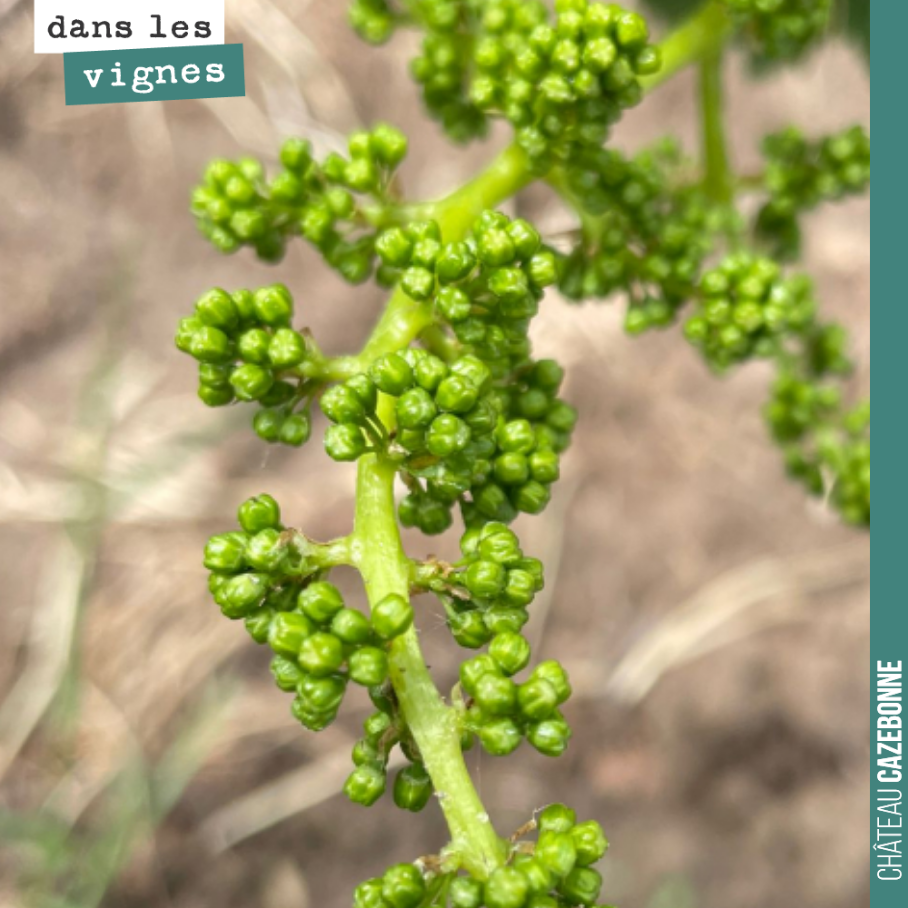
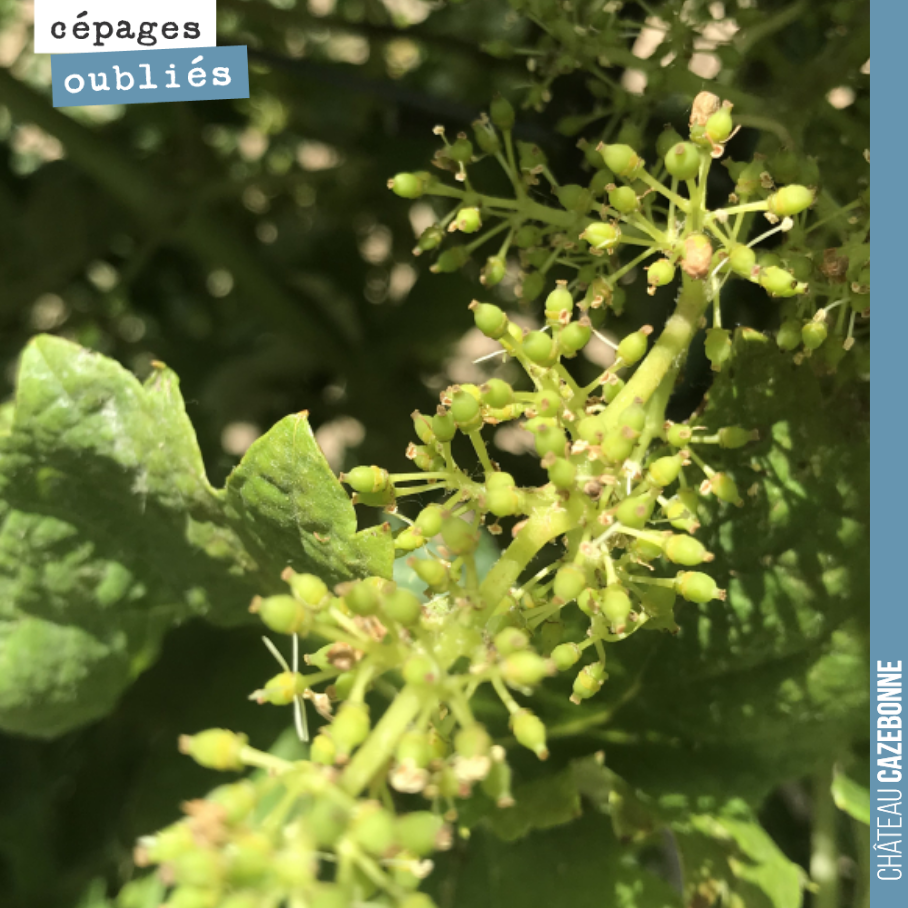
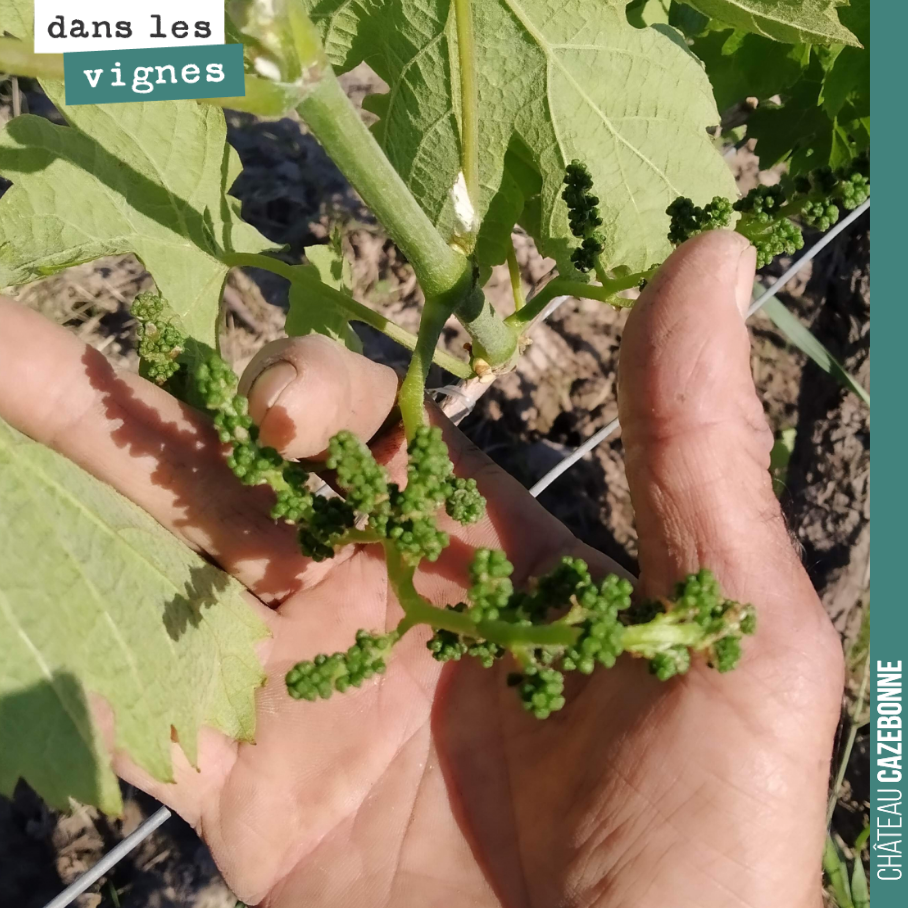
The inflorescence refers to the cluster of precursor flowers of the future bunch of grapes, already bearing the organisation that will influence the final shape of the fruit. It presents itself in the form of a panicle, a miniature bunch of bunches, which develops on the newly formed shoots of the vine. Although somewhat unspectacular compared to other blooms, its presence is paramount as it represents the plant's fruiting potential. Without it, there is no bunch of grapes and, therefore, no wine.
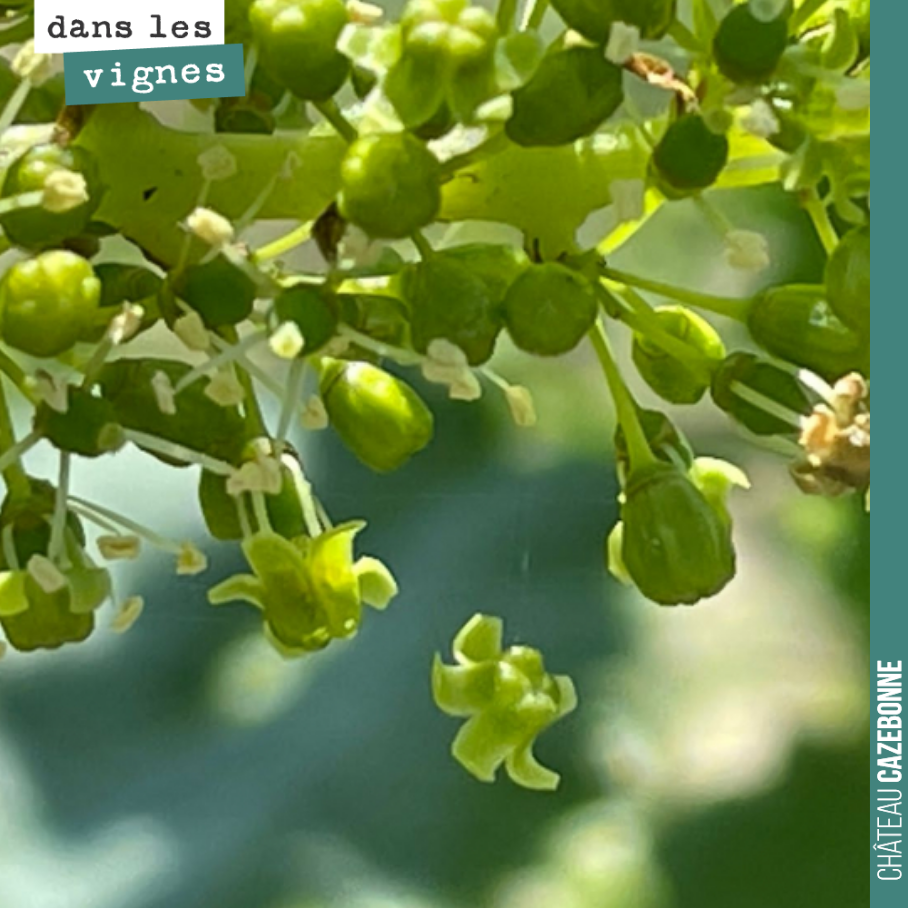
The process of the inflorescence unfolds in several delicate stages. After budburst, the inflorescences appear, generally between late April and early June in the northern hemisphere, depending on the grape variety and weather conditions. Each vine flower (called a "vine flower" or "floral bud") is hermaphroditic in most cultivated grape varieties, meaning it possesses both male (stamens) and female (pistil) organs. Flowering itself is the blooming of these flowers, the period during which pollination occurs. Predominantly self-fertile, the vine ensures its fertilisation through the wind, which disperses the pollen, as well as through the activity of insects, such as bees and bumblebees.
The appearance and healthy development of the inflorescence are highly dependent on environmental factors. Mild and sunny weather is conducive to a homogeneous and rapid flowering, guaranteeing a successful fruit set (the transformation of fertilised flowers into berries). Conversely, cold, rainy, or windy conditions during this period can lead to phenomena such as coulure or millerandage: the dropping of unfertilised young berries (the development of small, seedless berries, or highly heterogeneous sizes within the same bunch), significantly reducing future yields. Late spring frost is also a major risk for early inflorescences.
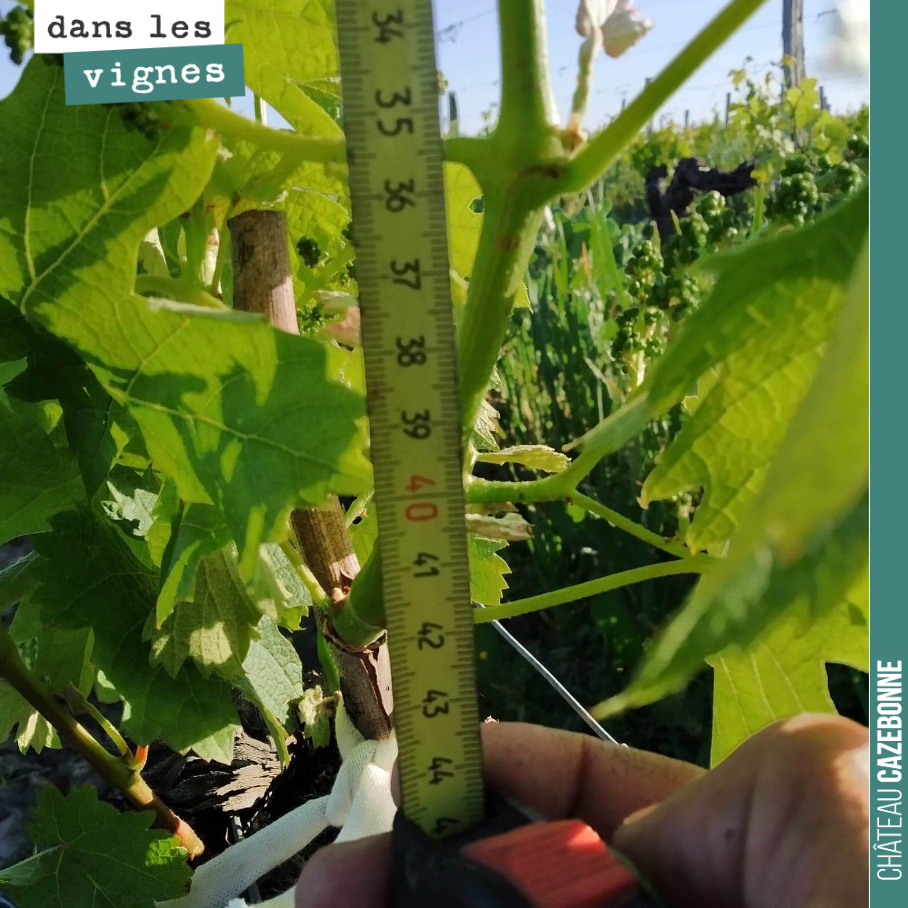
In the vineyard, the appearance of inflorescences is a time of intense observation for the winegrower. They manifest as small, downy green structures present in the axils of the leaves, typically on the 3rd, 4th, and 5th nodes of the shoot. Their number and size per vine provide an initial estimate of the harvest potential. A well-furnished inflorescence guarantees a dense future bunch, while a more modest inflorescence could indicate a looser bunch or a less abundant harvest. This monitoring is integrated into the vineyard work throughout the year.
At Château Cazebonne, we carefully monitor the development of the inflorescences, a crucial stage for our ancient grape varieties and the quality of our wines. We encourage good biodiversity, which is essential for attracting insects into the vineyards as they are pollinators. Our biodynamic practices aim to strengthen the vine's vitality and its resistance to climatic hazards, thereby ensuring the harmonious development of the inflorescence and, consequently, a beautiful fruit set. The vigour of the vine plants is a determining factor for the promise of the harvest.
It is common to confuse the inflorescence with flowering, but they are two distinct stages. The inflorescence is the structure bearing the future flowers, the cluster of floral buds that have not yet opened. Flowering, on the other hand, is the moment when these flowers open, revealing their stamens and pistil, and when pollination and fertilisation take place. It is the spectacular blooming of thousands of small, discreet flowers that release their fragrance into the air.
After flowering, each fertilised flower begins its transformation into a small berry: this is the fruit set. The berries will then grow and progress towards veraison, the moment when they begin to change colour and accumulate sugars and aromas. The fruit set is therefore the realisation of the potential of the inflorescence and flowering, marking the beginning of the future grape bunch's development.
At Château Cazebonne, we are proud to perpetuate ancestral expertise and to replant grape varieties that had disappeared from the Bordeaux vineyards, an undertaking made possible by the support of our wine enthusiasts. To find out more about our approach and bunch closure, you can download our book "Bordeaux, une histoire de cépages" or test your knowledge of grape varieties and viticulture with our oenological quizzes. And of course, to discover the fruit of our passion, please feel free to visit where you will find our wines.
Our suggestions
-5%on your 1st order with code BIENVENUE
The essential6 bottles — Graves red 2022
The best price of the cellar: €12 per bottle delivered.
The everyday red: generous and straight to the point.
I want it Our recommendation92/100 RVF
6 bottles — Graves red 2022, 92/100 RVF
Rated 92/100 by La Revue du vin de France: a solid 10-year ageing potential.
Our Graves for ageing, the finest gateway to the estate.
I want it Go further
12 bottles — the whole range
12 bottles, the whole range tasted: the best discovery-to-price ratio.
The complete tour of the estate, in a single case.
I want it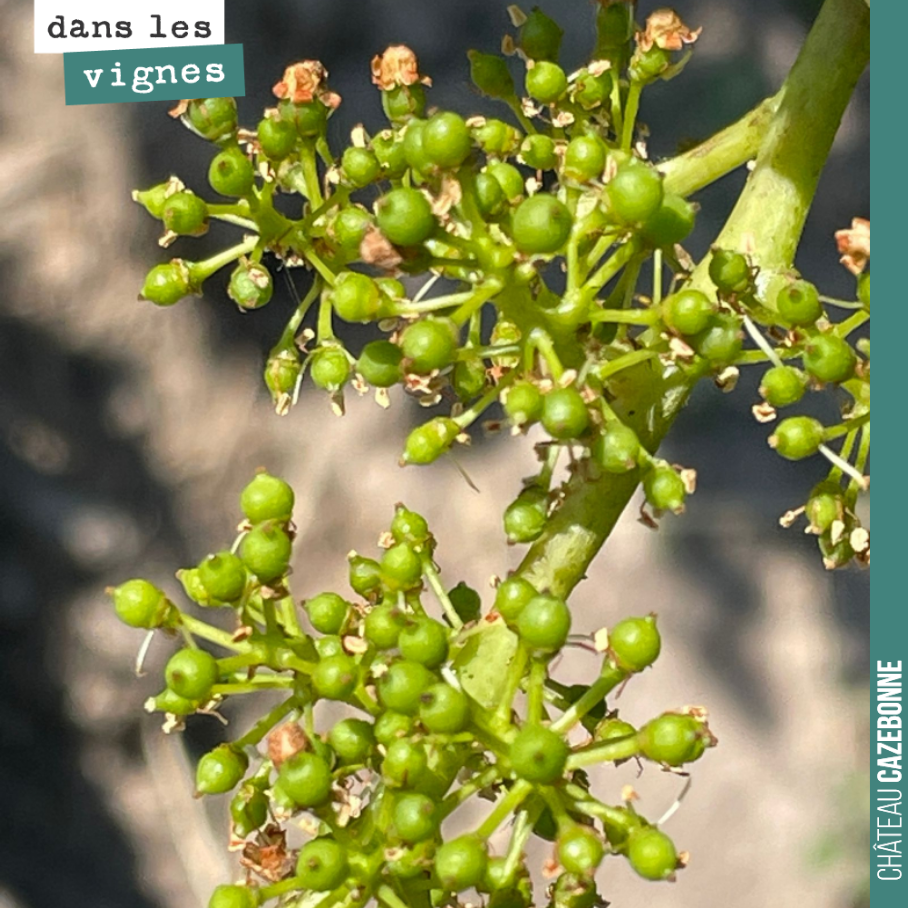
03 June 2023
02 June 2023
11 May 2023
06 May 2023
28 April 2023
18 April 2023
20 June 2021
02 May 2021
16 May 2020
11 May 2020
26 April 2020
25 June 2019
17 May 2019
15 May 2019
13 May 2019

07 April 2019
05 April 2019
19 August 2018
The cellar, forgotten grape varieties and our cuvées, twice a month. 5% off your first order with the code BIENVENUE.