
 The essential92/100 RVF
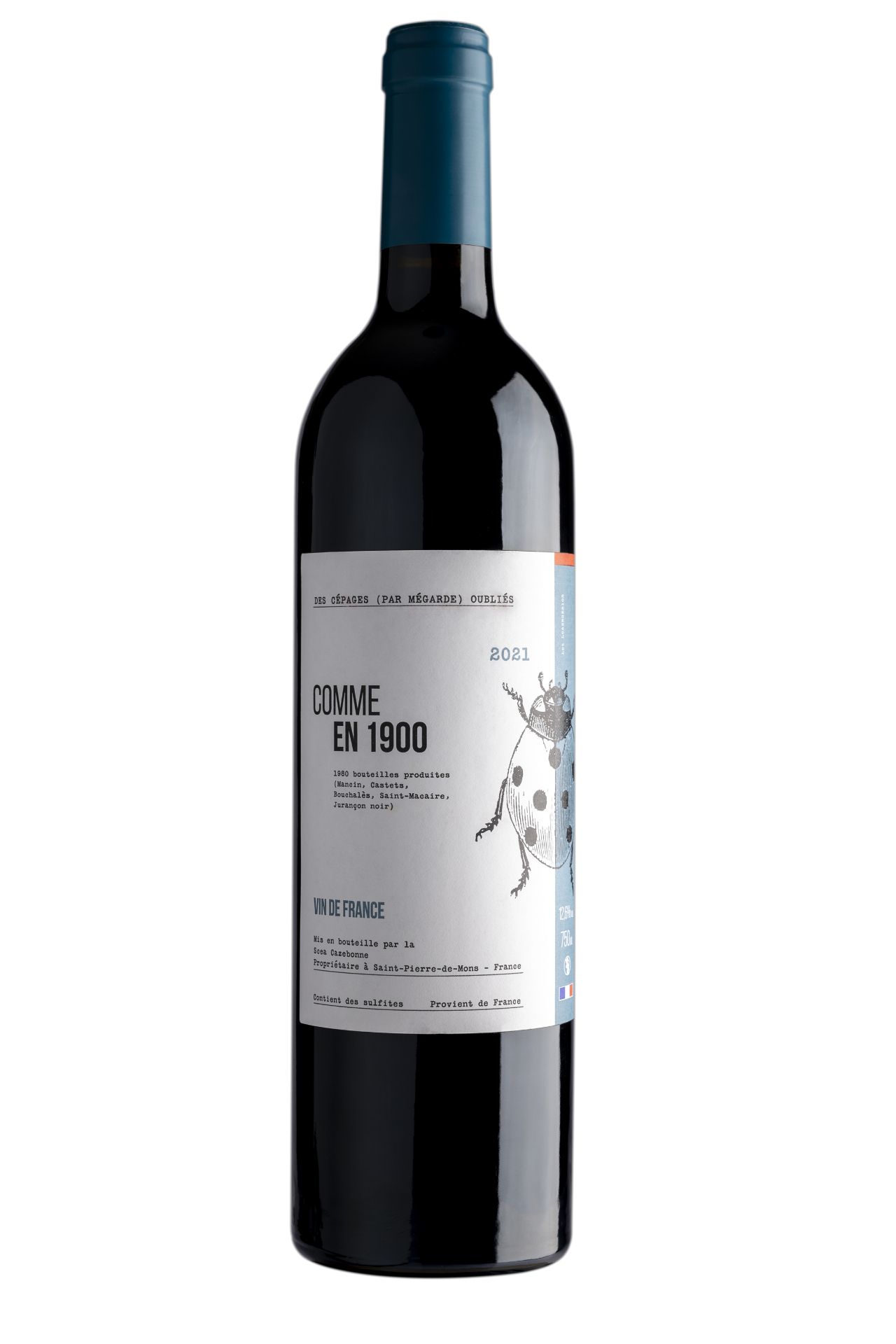
Comme en 1900 red 2022
Vin de France — heritage grapes, 92/100 RVF
The pre-phylloxera Bordeaux blend, revived at the estate.
Castets, Mancin, Pardotte: the Bordeaux before Bordeaux.
I want itCépages
Faced with a changing climate, the Bordeaux vineyard is encountering numerous challenges: rising alcohol levels, declining acidity, vines suffering during heatwaves and falling yields.
These challenges require us to respond by adapting our vineyards and our practices, both in the vineyard and in the cellar.
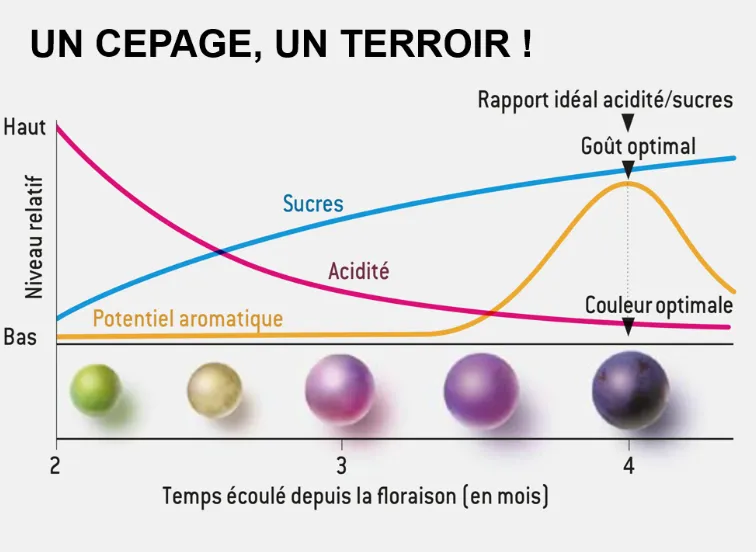
After véraison, the grape berry enters a phase in which several forms of ripeness develop in parallel: technological ripeness (sugars and acidity), phenolic ripeness (skins and tannins) and aromatic ripeness. Climate change tends to disrupt the synchronisation of these processes.
The rapid accumulation of sugars, often intensified by berry dehydration, frequently outpaces the development of the other compounds.
At the same time, high temperatures accelerate the degradation of malic acid, causing acidity to fall and pH to rise before the skins and pips have reached full phenolic ripeness.
This imbalance can result in grapes with high potential alcohol but insufficiently refined tannins or unbalanced aromatic profiles.
The search for grape varieties suited to Bordeaux therefore focuses on those capable of maintaining a balance between these different forms of ripeness, allowing slow development, preserving freshness and achieving full ripeness at moderate alcohol levels, while limiting the need for winemaking interventions.
In the end, every wine-growing region empirically selected grape varieties that, at harvest time, could combine a reasonable potential alcohol level (13%), retained acidity and fully ripe skins and pips. This is surely what makes a grape variety suited to its terroir.
The grape varieties planted in Bordeaux and the ways in which its vineyards were managed were never fixed — at least not until the 1960s.
The introduction of the Appellations d'Origine Contrôlée (AOC) led to a simplification of the region's varietal composition and made the system more rigid. The INAO has since introduced a little more flexibility through the VIFA scheme (Varieties of Interest for Adaptation).
Yet the initiative remains tentative. Applications must be made by winegrowers' associations, which are required to submit a formal proposal identifying grape varieties intended to help their appellation adapt.
The conservatism of our appellations means that few Bordeaux AOCs have yet used this scheme. The Bordeaux and Bordeaux Supérieur AOCs began the process in 2021, authorising the planting of:
— red varieties: Arinarnoa, Castets, Marselan, Touriga Nacional and the disease-resistant Vidoc;
— white varieties: Alvarinho and Liliorila, along with the disease-resistant Floréal, Sauvignac and Souvignier Gris.
Before the 1950s, Bordeaux vineyards contained at least 60 grape varieties. Some of them were still widely planted during the 1950s and 1960s.
This genetic reservoir is a major asset as Bordeaux prepares for the future.
At Château Cazebonne, we are working to restore Bordeaux's forgotten grape varieties. For ten years, we have been replanting and studying varieties such as Bouchalès, Castets, Saint-Macaire and Jurançon Noir.
For several years, we have also been developing a conservatory of Bordeaux grape varieties that will eventually include more than 70 varieties of Vitis vinifera.
Our first years of experience show that some varieties offer valuable solutions: later budbreak, lower susceptibility to downy mildew, lower alcohol levels, preserved acidity and strong organoleptic qualities.
Bordeaux's blending culture is a genuine advantage, allowing us to evolve the varietal composition of our vineyards gradually. Let us make the most of it!
Much work remains to plant all these varieties and observe how they respond to the different vintage conditions we will encounter in the years ahead.
We are convinced that our ampelographic heritage can help us evolve the varietal composition of our vineyards in response to climate change.
Sources
Our suggestions
-5%on your 1st order with code BIENVENUE
The essential92/100 RVFVin de France — heritage grapes, 92/100 RVF
The pre-phylloxera Bordeaux blend, revived at the estate.
Castets, Mancin, Pardotte: the Bordeaux before Bordeaux.
I want it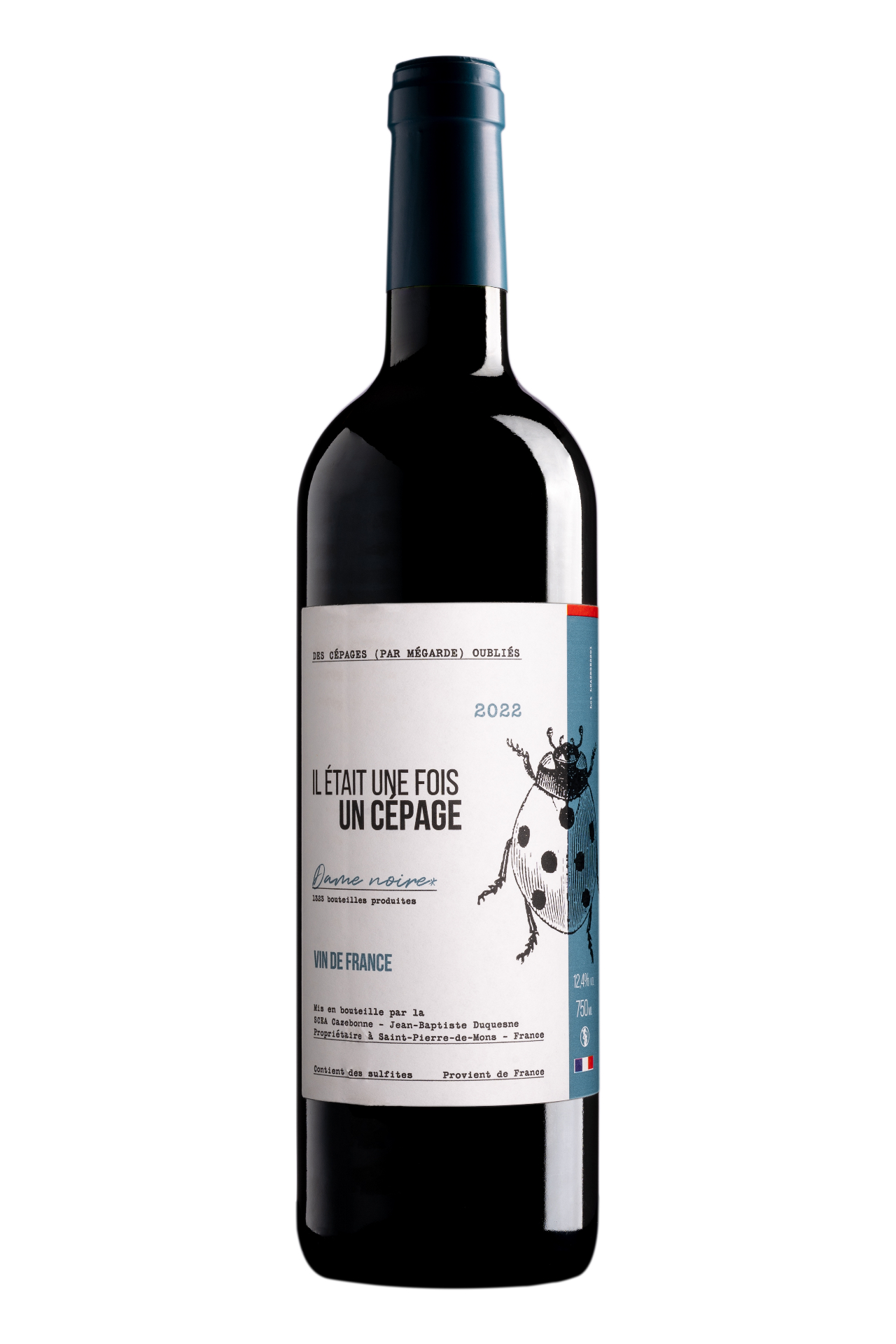 Our recommendation
IGP Atlantique — rare grape variety
A forgotten grape brought back: dense colour, wild fruit.
For the curious about lost grape varieties.
I want it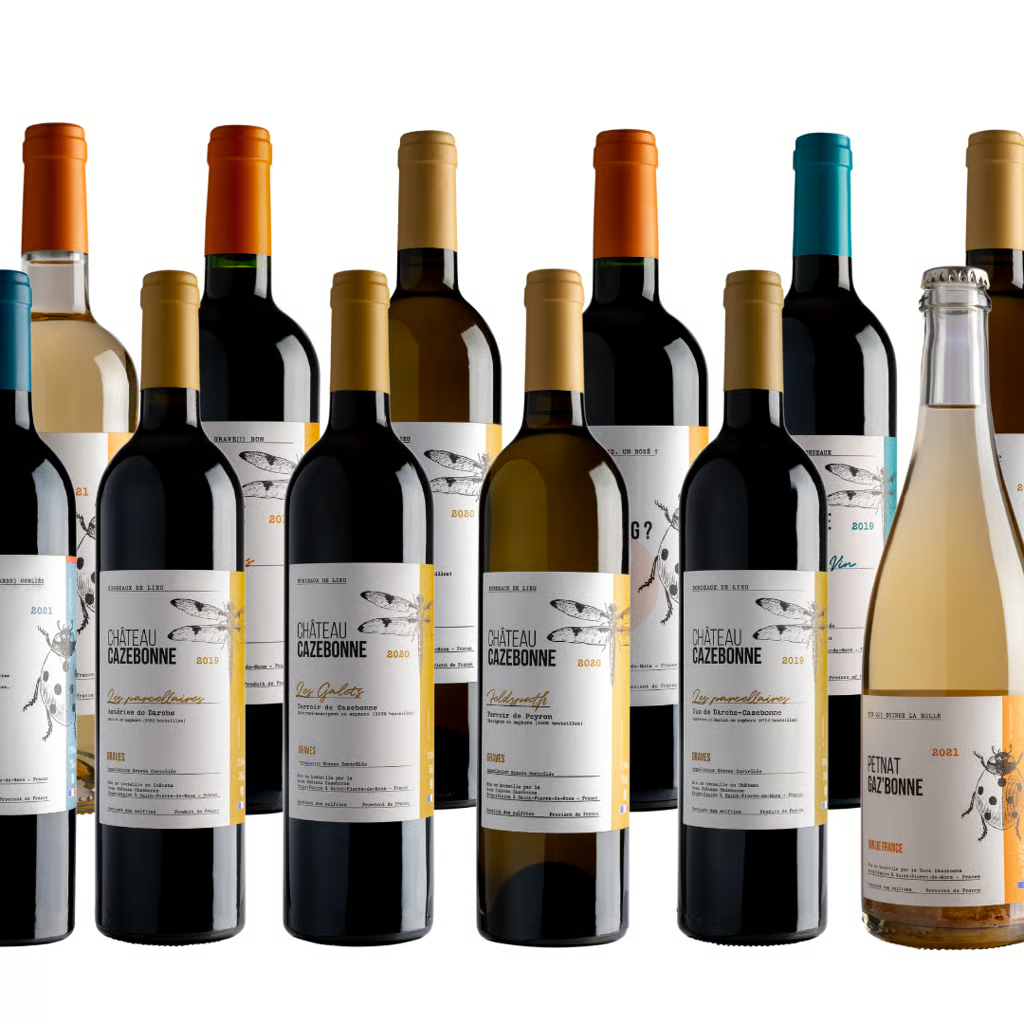 Go further
12 bottles — the whole range
12 bottles, the whole range tasted: the best discovery-to-price ratio.
The complete tour of the estate, in a single case.
I want it