 The essential
6 × Entre Amis red
6 bottles — Graves red 2022
The best price of the cellar: €12 per bottle delivered.
The everyday red: generous and straight to the point.
I want it
Saint-Pierre-de-Mons
Château Cazebonne lies in Saint-Pierre-de-Mons, in the south of Graves, east of Langon. The archives gathered by the estate show that this hillside has long been planted with vines and that its wines were recognised well before appellations were created. This section, part of our pages on wine terroirs, brings these testimonies together, from Messire de Castelnau around 1700 to a monograph published in 1942. It draws on two of the estate's posts: Great terroirs were not born yesterday and a 1942 text on our terroirs.
When he took over the estate, Jean-Baptiste Duquesne had found only a few traces of a Messire de Castelnau, owner around 1700. Meeting Loïc Mansencal, a historian passionate about local history, made it possible to learn more. Well before 1700, the property belonged to the de Castelnau family, lawyers, mayors of Langon and notables of Guyenne. Pierre de Castelnau (1676-1740) lived in the family house at Cazebonne and died there. His descendants, including François de Castelnau (1706-1766), carried the Cazebonne name down the generations.
In the 17th century, the lands of Peyron belonged to Gabriel Nicolas de La Reynie (1625-1709), the first Lieutenant General of Police of Paris, appointed by Louis XIV. A land survey from 1697 records it. On the Bouché and Darche side, the documents show parcels entirely planted with vines, a sign of the recognised quality of these historic terroirs.
Going back further still, the estate's post reports that, according to the will of Jean de Grely, 41,739 tonneaux were loaded at Langon in 1312 for export. It is tempting, and plausible, to imagine that wines from Cazebonne and Peyron were part of that cargo, although no document allows us to say so for certain.
In 1942, L. Dulac wrote a short monograph on the Saint-Pierre-de-Mons vineyard, with a map on which Cazebonne is marked. He quotes O'Reilly, author of an Essai sur l'histoire de l'arrondissement de Bazas published in 1840:
"Saint-Pierre de Mons produces highly esteemed wines; the upper part is entirely planted with vines."
For Dulac, these few words written a century earlier were a true mark of nobility.
Dulac describes "the magnificent Tertiary silica-clay or limestone soils overlooking the river" that "have always produced this white wine that is our pride". He claims he could trace the vineyard back to the 17th century, and contrasts this long history with other communes that became famous "through well-crafted advertising", where once there were only pine forests.
He recalls the great vintages that old brokers knew: 1893, 1895, 1904, 1906 and 1914. Sales slips of the time show prices of 800 to 1,500 francs per tonneau. In 1942, he adds, the commune's white vineyard was planted exclusively with Sémillon, Sauvignon and Muscadelle. Harvesting was done with the greatest care, there were no palus vineyards, and yields of 5 to 6 barriques per hectare showed that quality was sought rather than quantity. He concludes:
"I hope that justice will be done to this little corner of the Gironde vineyard, whose potential is tangible and whose hopes remain undaunted."
These documents are not a classification. They describe a hillside planted for a long time, silica-clay and limestone soils overlooking the Garonne, and a reputation built on white wines. These historic parcels are where we work today, under organic and biodynamic farming, and where we are replanting all the grape varieties that once grew here: our way of reconnecting with history. To understand the soils themselves, see our section on clay-limestone terroirs.
The history of the Saint-Pierre-de-Mons terroir, rich in old vines such as the Bouché plot, is embodied in Argile ocre.
Our suggestions
-5%on your 1st order with code BIENVENUE
The essential6 bottles — Graves red 2022
The best price of the cellar: €12 per bottle delivered.
The everyday red: generous and straight to the point.
I want it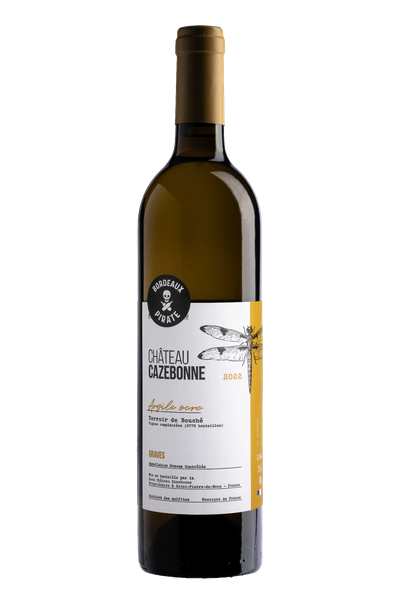 Our recommendation
6 bottles — AOC Graves 2022
€24 per bottle.
I want it Go further
12 bottles — the whole range
12 bottles, the whole range tasted: the best discovery-to-price ratio.
The complete tour of the estate, in a single case.
I want itThe cellar, forgotten grape varieties and our cuvées, twice a month. 5% off your first order with the code BIENVENUE.