
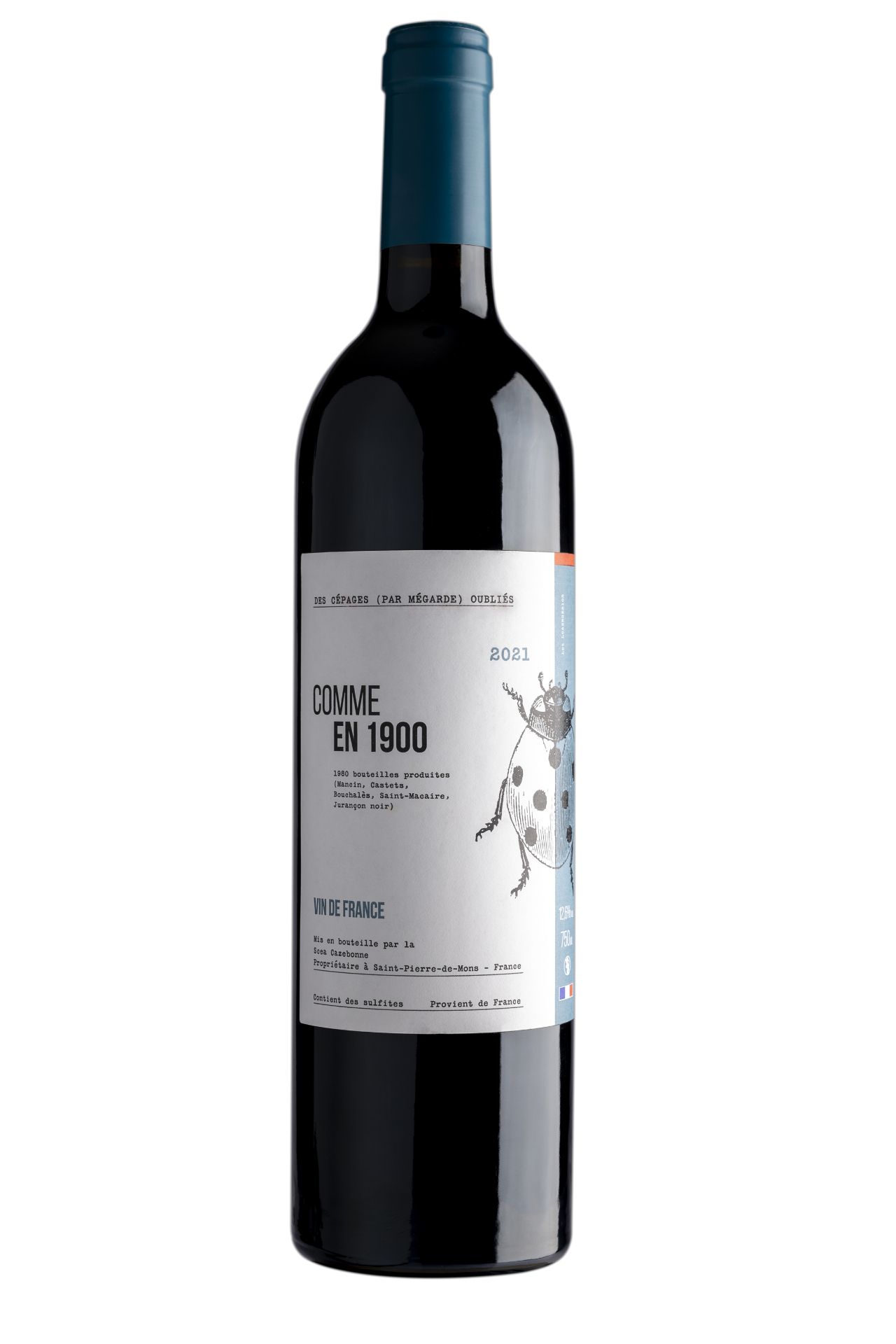
 The essential92/100 RVF
Comme en 1900 red 2022
Vin de France — heritage grapes, 92/100 RVF
The pre-phylloxera Bordeaux blend, revived at the estate.
Castets, Mancin, Pardotte: the Bordeaux before Bordeaux.
I want itThe forgotten grape varieties of Bordeaux
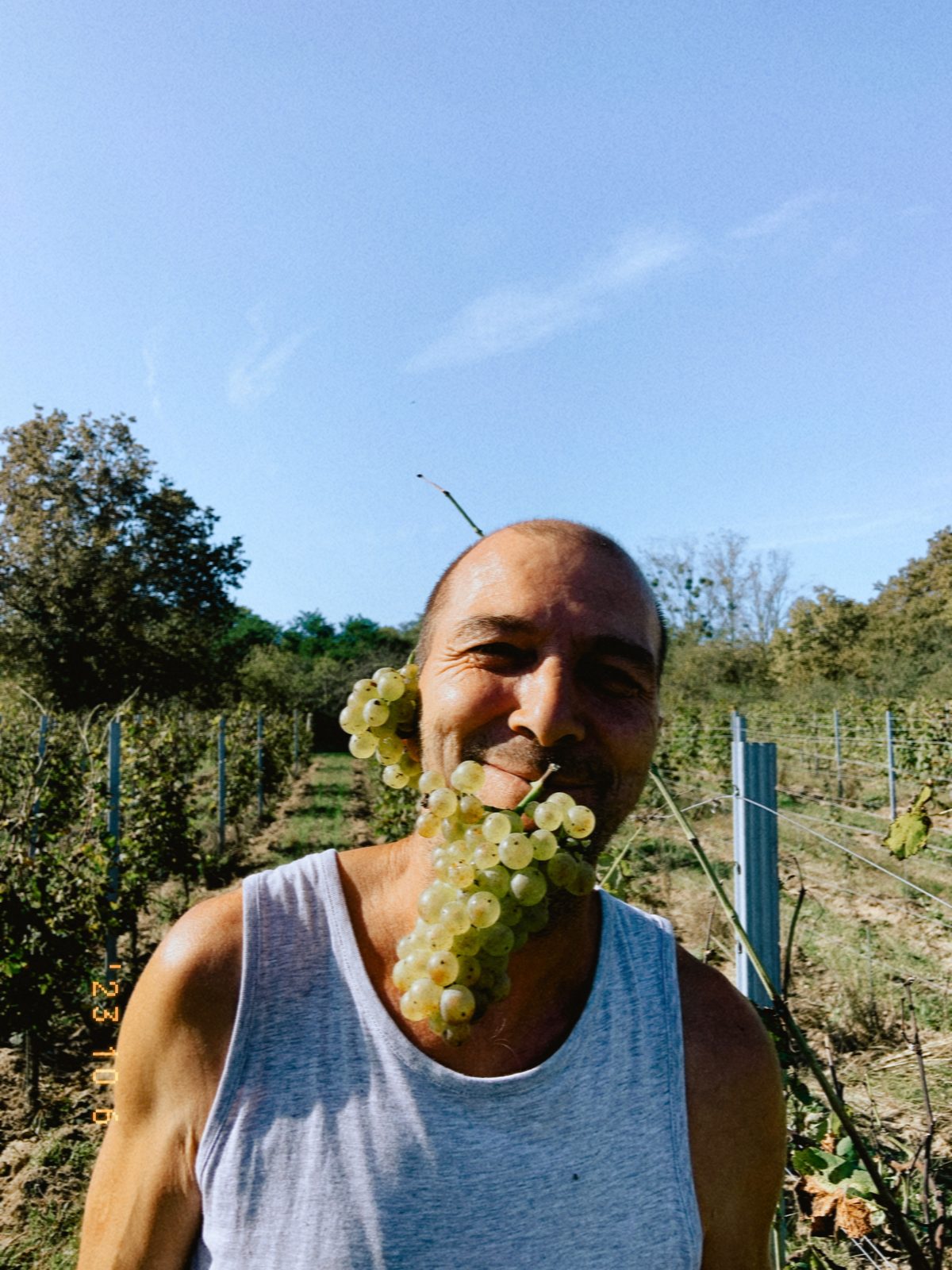
The Bordeaux vineyard, once characterised by an incredible diversity of grape varieties, has seen a drastic simplification of its grape composition over the centuries. Several major factors have contributed to this evolution. The phylloxera epidemic at the end of the 19th century forced replanting on rootstocks, offering an opportunity to re-evaluate varietal choices. Subsequently, the pursuit of homogeneity and the focus on a few "great" grape varieties, deemed more suitable for producing age-worthy wines, marginalised many others. Jean-Baptiste Duquesne highlights that this standardisation also led to the elimination of grape varieties offering "simpler fruit" profiles, useful for wines to be drunk young and for conquering new markets. The laws of 1919 and 1927, regulating appellations of origin, also had a significant impact, as mentioned by Georges Bord in his essay on the variations in Bordeaux's grape composition. To understand these dynamics, it is interesting to look into the reasons that led to the simplification of grape varieties and the work of the Bordeaux grape variety conservatory.
Among Bordeaux's lost treasures are several white grape varieties once cultivated. Sauvignonasse, also known as Sauvignon à gros grains or Blanc Doux, was formerly present and is one of the varieties currently being rediscovered. Grapes like Béquignol blanc, Meslier Saint François, or Ondenc also left their mark on local viticultural history before gradually disappearing from the vineyards. These old varieties, often more fragile or less productive, did not withstand natural selection and the choices made by winemakers who favoured more robust or profitable varieties. Conservation efforts today allow us to explore their aromatic potential and their adaptability to current climate challenges. Discover more about these forgotten white grape varieties.
The list of forgotten red grape varieties is just as rich. Jean-Baptiste Duquesne mentions Béquignol and Fer, often associated and cultivated without distinction, or Mérille, Petit Péjac, and Penouille, varieties replanted out of curiosity to assess their potential. Carménère, although "neglected" and long confused with Cabernet Franc, was a prized blending grape in the 18th and 19th centuries for its aromatic complexity and exceptional ageing potential, despite low yields. Saint-Macaire, Castets, or Bouchalès are other examples of red grape varieties that formed a significant part of Bordeaux's grape composition before giving way to current stars like Merlot and Cabernet Sauvignon. Today, some winemakers, including Château Cazebonne, are embarking on the ambitious project of replanting these forgotten grape varieties and rediscovering Bordeaux's neglected red varieties.
At Château Cazebonne, we are proud to contribute to the revival of these grape varieties that had disappeared from our Bordeaux lands. This work of rediscovery and replanting is made possible thanks to the support of wine lovers who embrace our cuvées.
Sources
Our suggestions
-5%on your 1st order with code BIENVENUE
The essential92/100 RVFVin de France — heritage grapes, 92/100 RVF
The pre-phylloxera Bordeaux blend, revived at the estate.
Castets, Mancin, Pardotte: the Bordeaux before Bordeaux.
I want it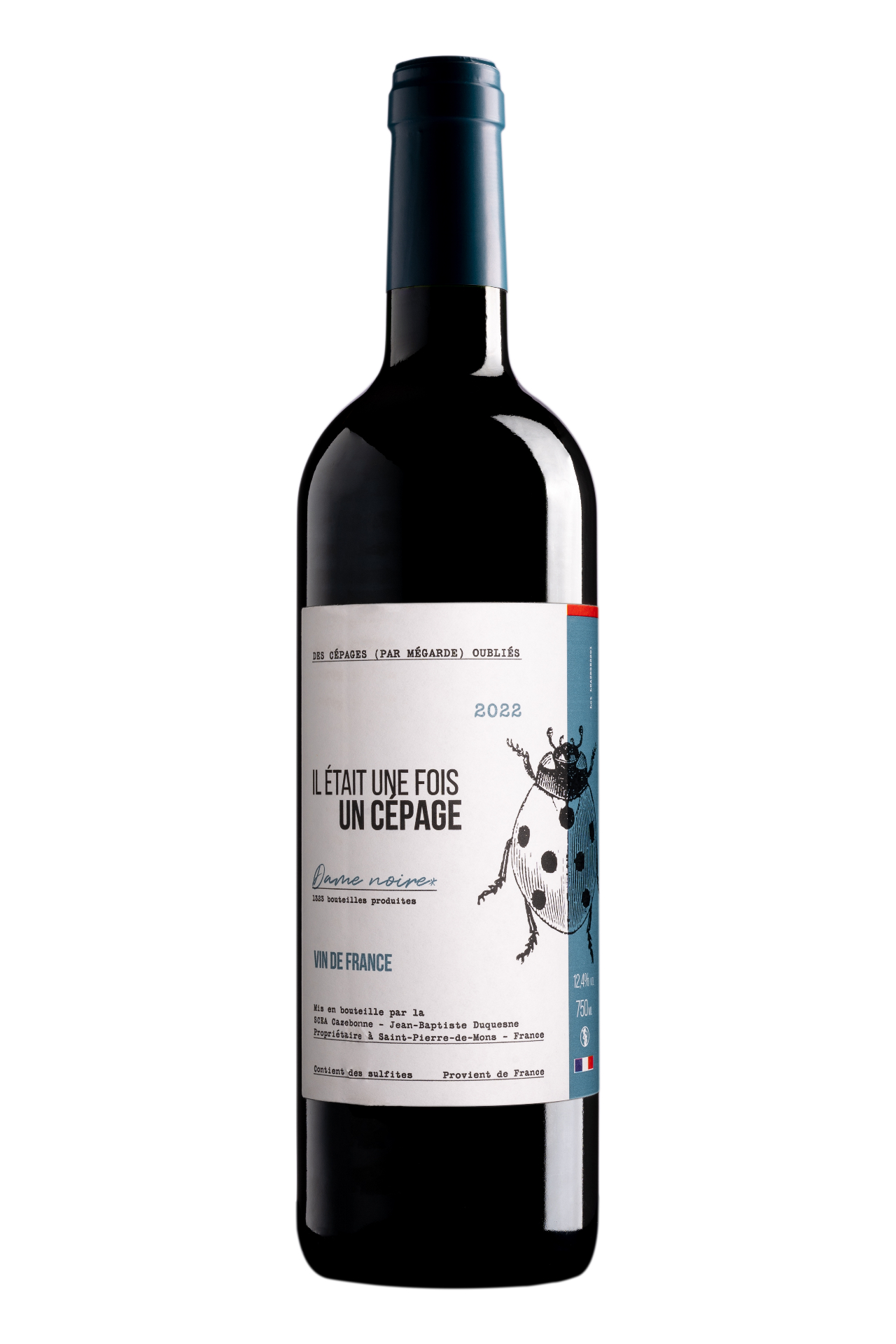 Our recommendation
IGP Atlantique — rare grape variety
A forgotten grape brought back: dense colour, wild fruit.
For the curious about lost grape varieties.
I want it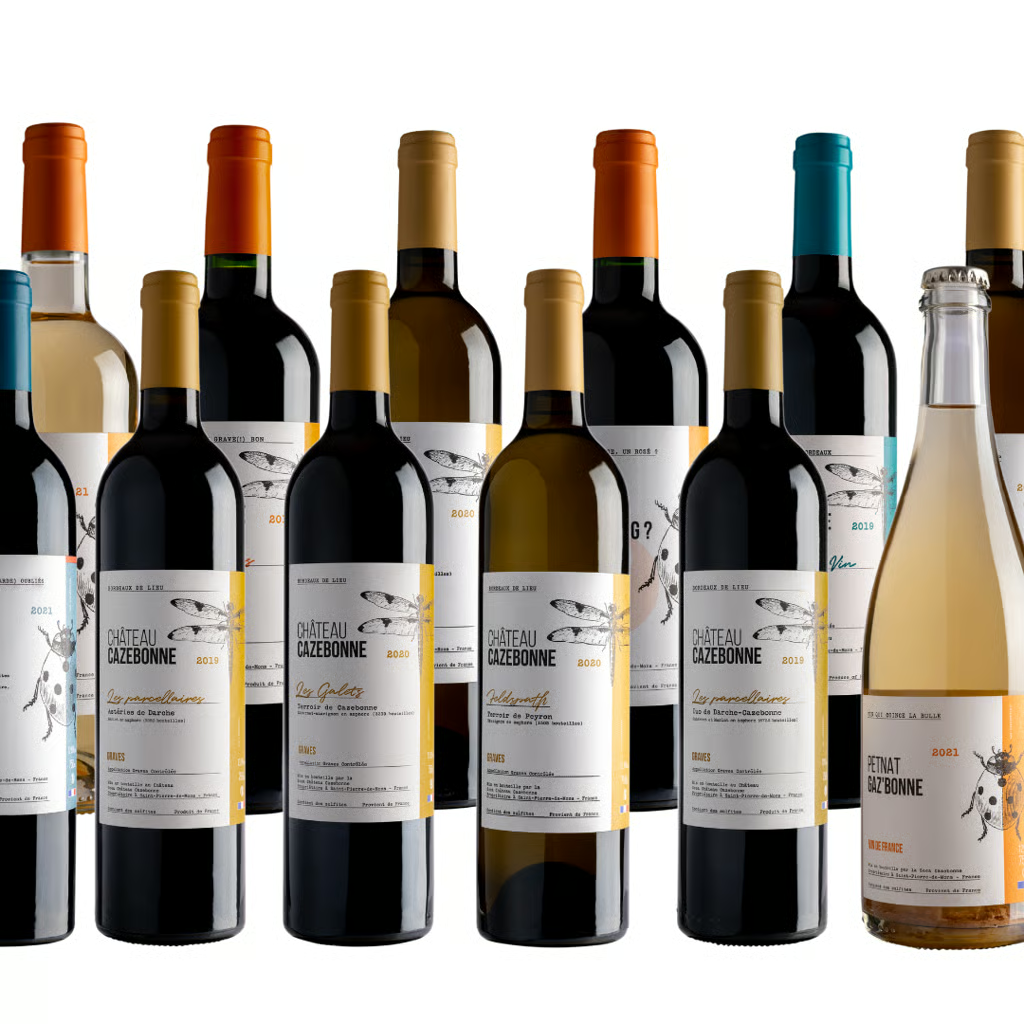 Go further
12 bottles — the whole range
12 bottles, the whole range tasted: the best discovery-to-price ratio.
The complete tour of the estate, in a single case.
I want it