The essential
6 × Entre Amis red
6 bottles — Graves red 2022
The best price of the cellar: €12 per bottle delivered.
The everyday red: generous and straight to the point.
I want itBumblebees
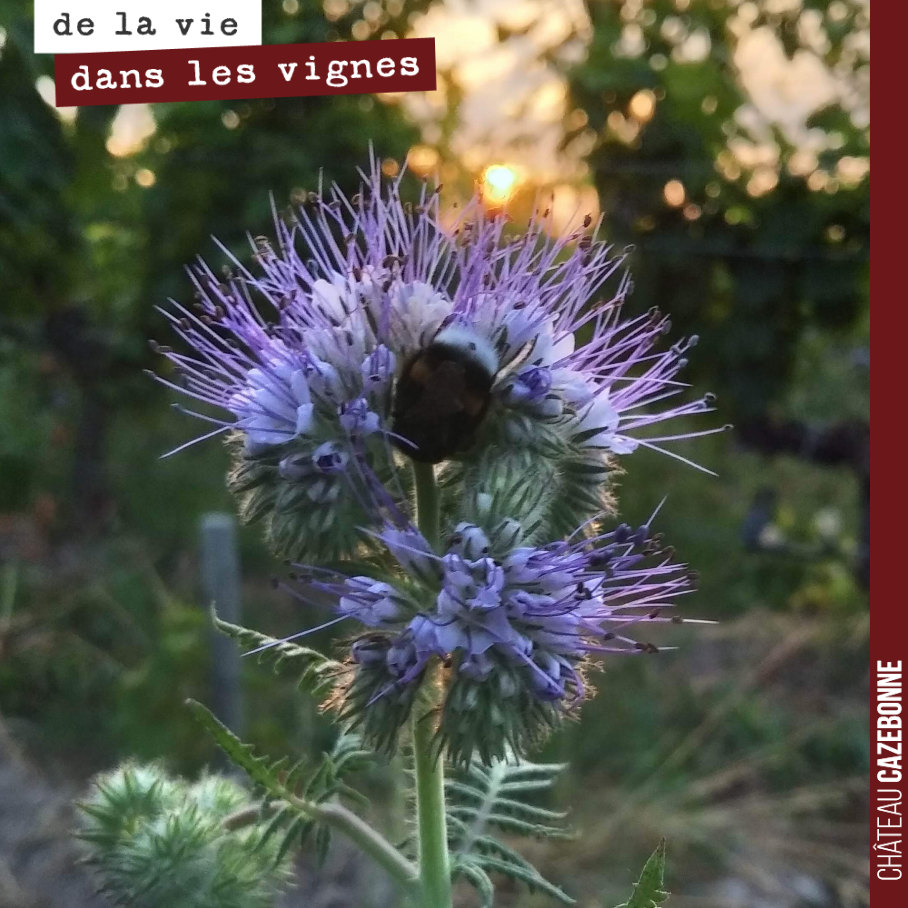
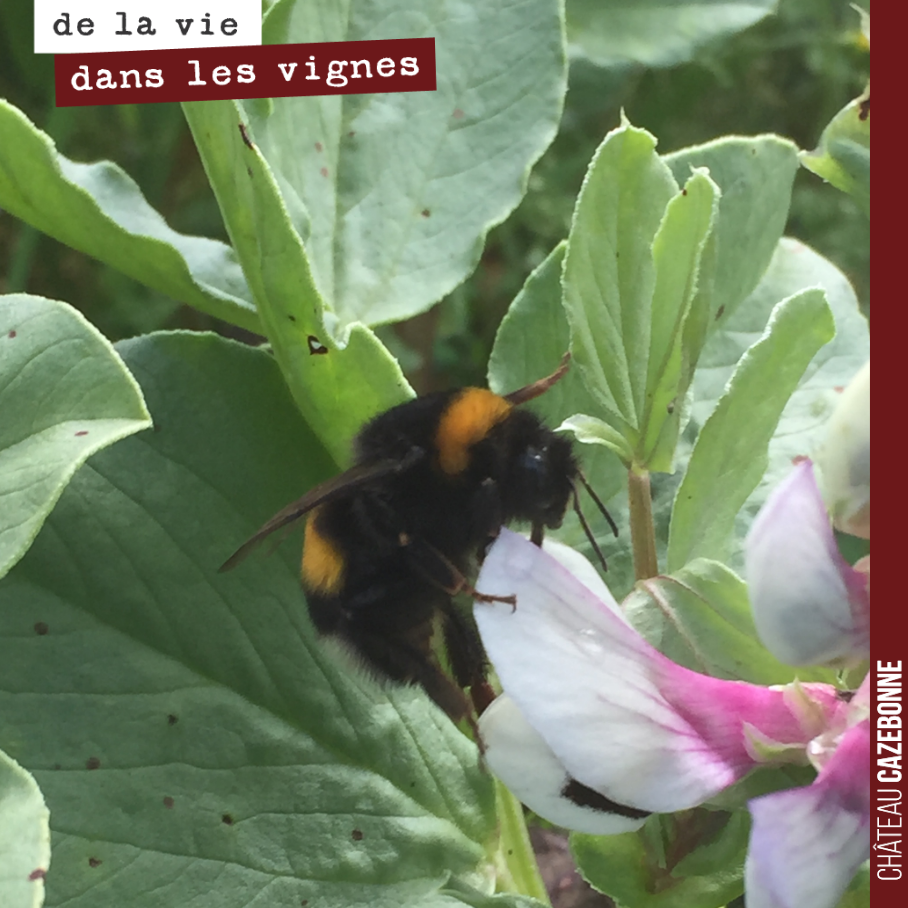
At the heart of the Château Cazebonne vineyard ecosystem, bumblebees (genus Bombus) embody one of the pillars of biodiversity. These pollinating insects, recognisable by their stocky, furry bodies, are far from being mere visitors. They are fundamental players in the life of our vines and the surrounding meadows, drawing nectar from vine flowers or the nectar-bearing flora that emerges in spring, such as the dandelion. Their often tireless activity is a valuable indicator of the environmental health of our plots and our commitment to sustainable viticulture.
The world of bumblebees is rich and diverse. Several species coexist in our Bordeaux vineyards, each with its own rhythms and characteristics. Whether it is the buff-tailed bumblebee (Bombus terrestris), the common carder bee (Bombus pascuorum) or other varieties such as the red-tailed bumblebee (Bombus lapidarius), all contribute significantly to pollination. Some are most active under the generous Gironde sun, while others prefer the calm of dusk or the cooler morning temperatures. This diversity ensures continuous pollination, essential not only for the vine crops themselves (even though the wind plays an important role for the latter), but above all for the multiplication of companion plants that enrich soil biodiversity and provide refuges and resources for a multitude of other species.
The lifecycle of bumblebees begins in spring, when the fertilised queen emerges from hibernation. She founds a new colony in an underground or surface nest, often in old rodent burrows, near food sources such as our nectar-bearing sowings. The first workers then hatch and take over the search for nectar and pollen. Their activity is in full swing during spring and summer, ensuring effective pollination thanks to their furry bodies that easily capture pollen, even in cool or windy weather. Indeed, they are better pollinators than bees for certain flowers. Their presence in the vineyard promotes biodiversity by encouraging the flowering of numerous plant species and contributing to the natural balance of the ecosystem. Their interaction with the vine is mostly neutral or beneficial as they participate in the pollination of flowers of spontaneous or cultivated flora. At Château Cazebonne, we observe their activity from the first fine days in the grassed plots, but also near the hedges and groves that we are developing to support these auxiliary insects.
At Château Cazebonne, we consider bumblebees to be precious partners, much more than mere insects. Their presence is a tangible sign of our environmentally respectful approach, a philosophy intrinsically linked to the richness and authenticity of our Bordeaux terroirs, as Jean-Baptiste Duquesne explains so well in his book "Bordeaux, une histoire de cépages". These pollinators are generally harmless to humans and cause no direct damage to crops. On the other hand, they play an irreplaceable role in the complexity of the vineyard ecosystem, promoting floral diversity and actively participating in maintaining the natural balance of our plots. It is important to distinguish them from other insects such as the hornet, whose impact on the ecosystem can be very different, or the mason bee, which also has a role to play.
This is why we do everything we can to protect them and encourage their flourishing. This involves planting green manure seeds to promote the growth of nectar-bearing flowers, thus creating natural "bumblebee hotels", but also adopting gentle cultivation practices that avoid the use of chemical pesticides and favour an organic approach to the vineyard. This commitment to sustainable and regenerative viticulture is at the heart of our identity, guaranteeing the longevity of our viticultural heritage and the unique typicality of our wines.
Our commitment to biodiversity is not limited to the protection of bumblebees. At Château Cazebonne, we have undertaken the passionate work of rehabilitating forgotten Bordeaux grape varieties, varieties that had almost disappeared from our viticultural landscapes. This return to our roots and this rediscovered heritage are made possible thanks to the unwavering support of the many wine enthusiasts who have adopted our wines and share our vision of a viticulture that is respectful, sustainable, and intrinsically linked to the richness of its ecosystem.
Château Cazebonne is actively committed to the longevity of the Bordeaux vineyard by replanting ancient grape varieties and enhancing its rich ecosystem, an approach you can better understand by downloading the digital version of our book "Bordeaux, une histoire de cépages". To test your knowledge about our terroir and these initiatives, feel free to take part in our oenological quizzes, before discovering our wines which are the expression of this passionate work, available at the Cazebonne shop.
Sources
Our suggestions
-5%on your 1st order with code BIENVENUE
The essential6 bottles — Graves red 2022
The best price of the cellar: €12 per bottle delivered.
The everyday red: generous and straight to the point.
I want it Our recommendation92/100 RVF
6 bottles — Graves red 2022, 92/100 RVF
Rated 92/100 by La Revue du vin de France: a solid 10-year ageing potential.
Our Graves for ageing, the finest gateway to the estate.
I want it Go further
12 bottles — the whole range
12 bottles, the whole range tasted: the best discovery-to-price ratio.
The complete tour of the estate, in a single case.
I want itThe cellar, forgotten grape varieties and our cuvées, twice a month. 5% off your first order with the code BIENVENUE.