
 The essential
6 × Entre Amis red
6 bottles — Graves red 2022
The best price of the cellar: €12 per bottle delivered.
The everyday red: generous and straight to the point.
I want itLadybug
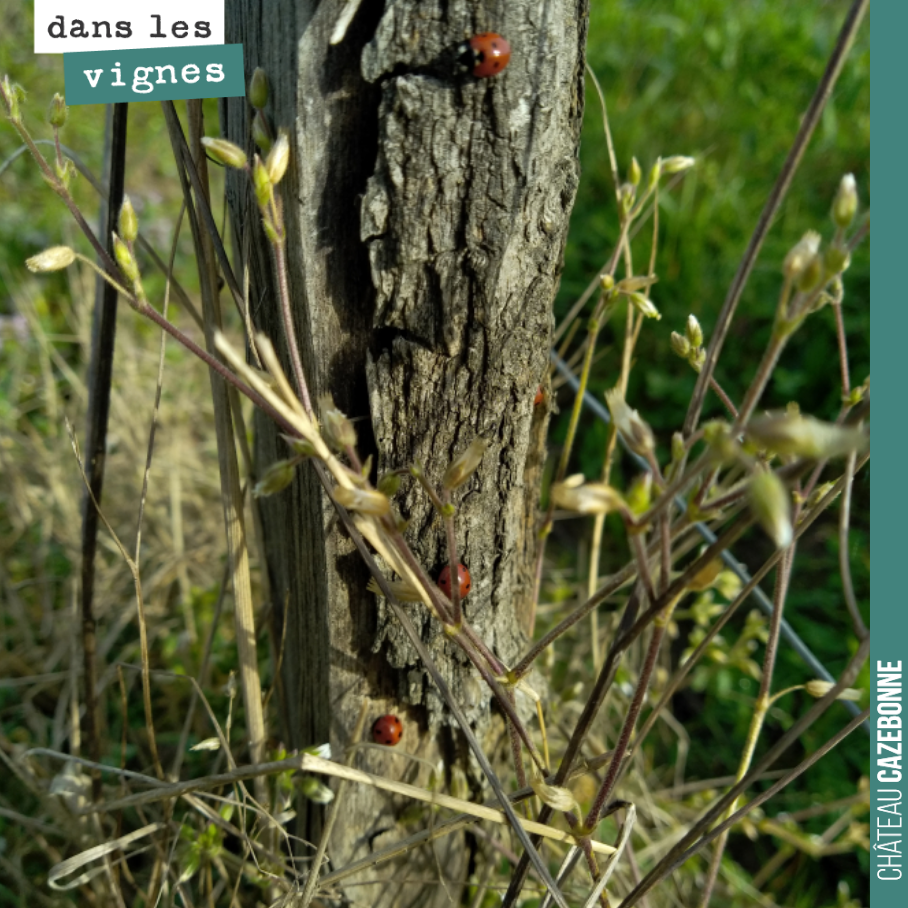
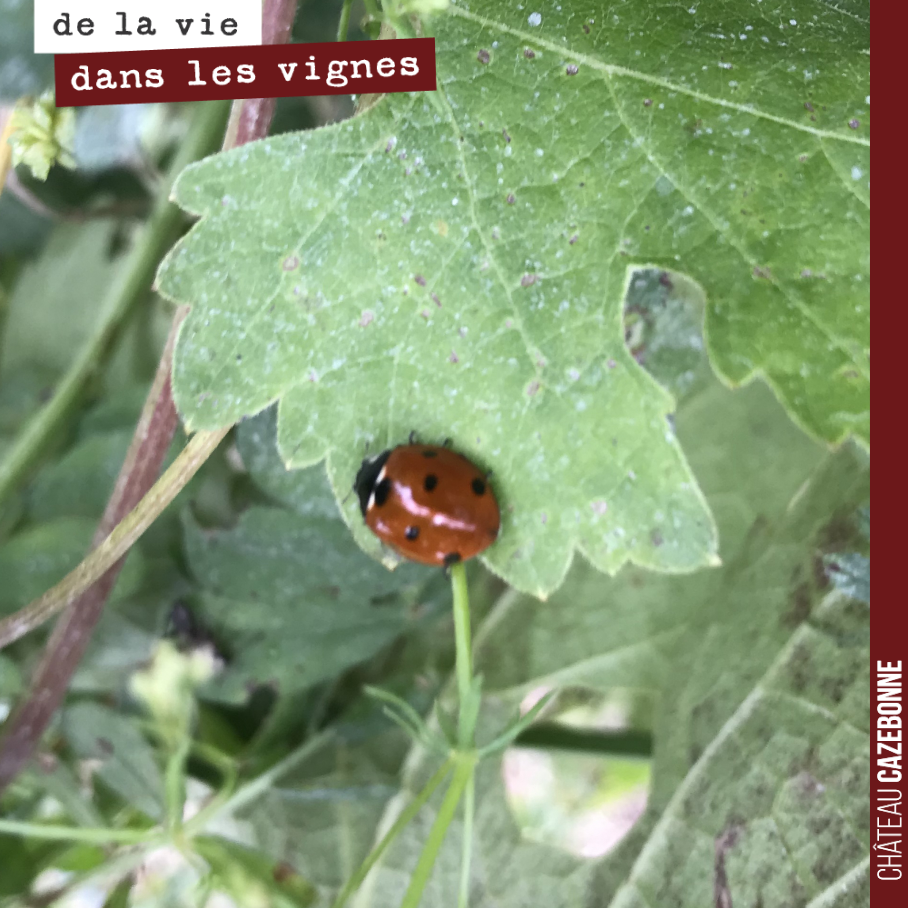
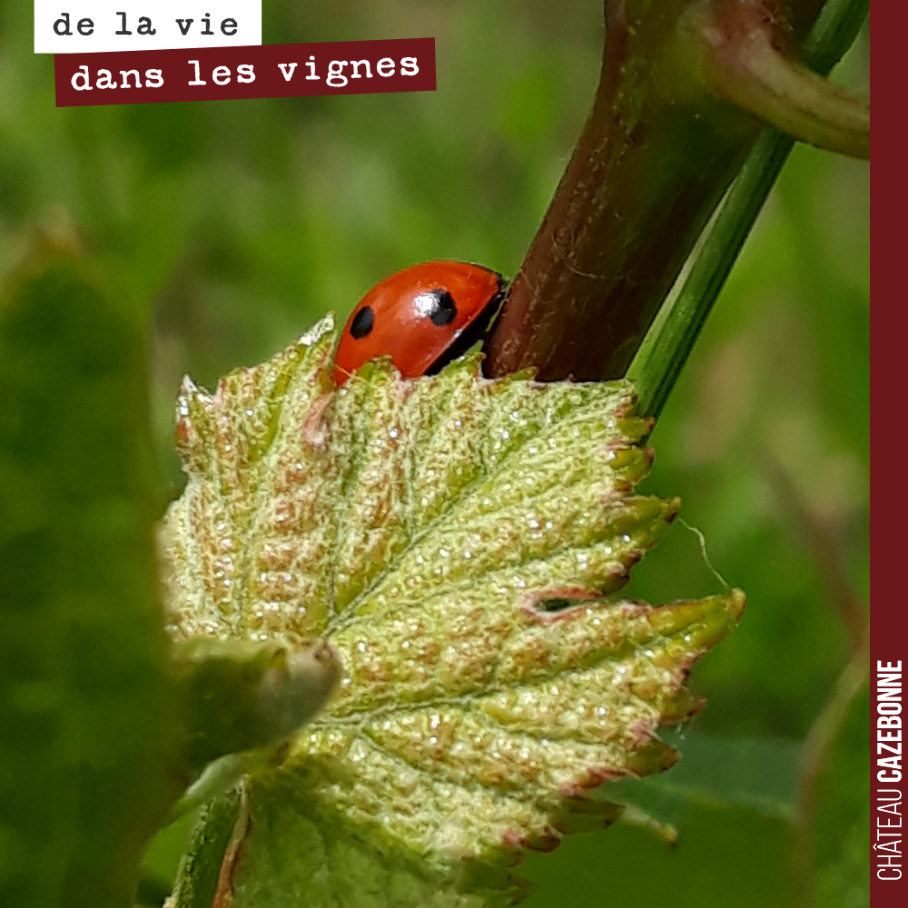
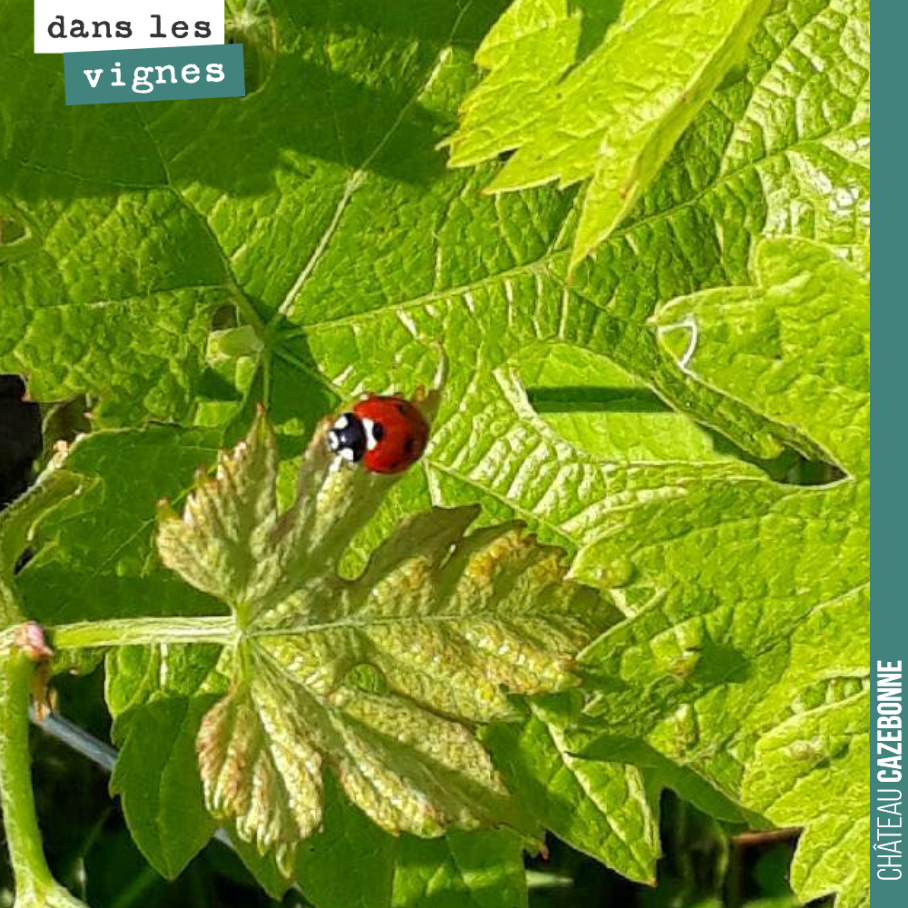
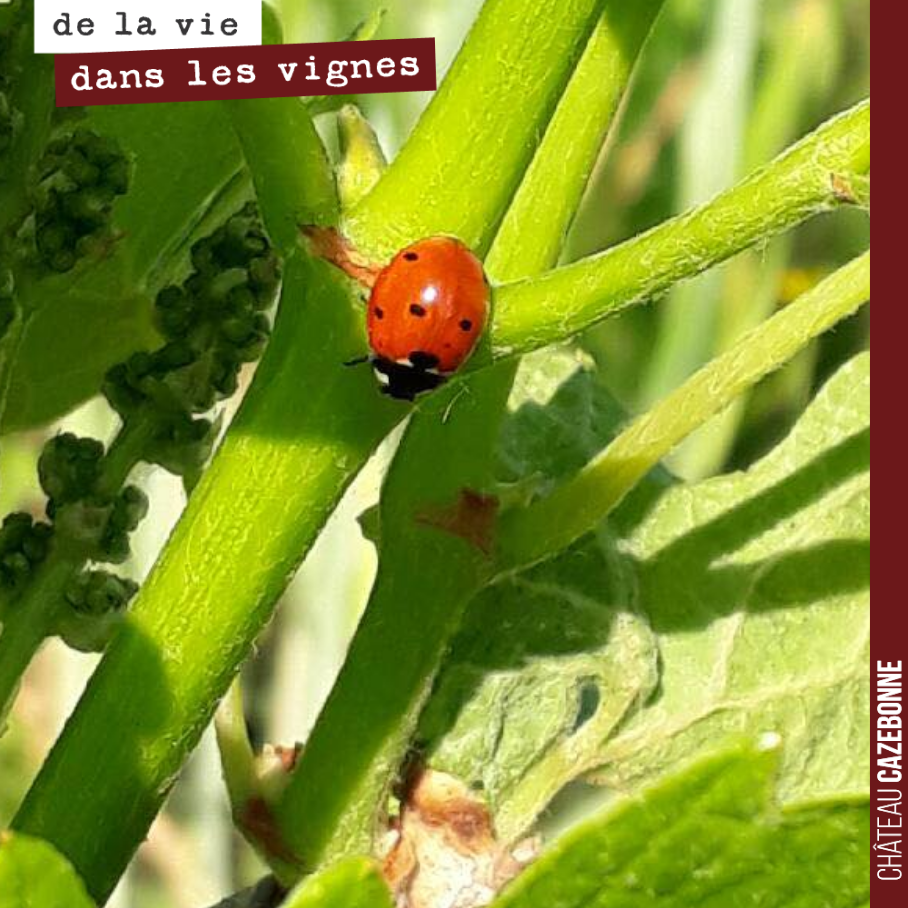
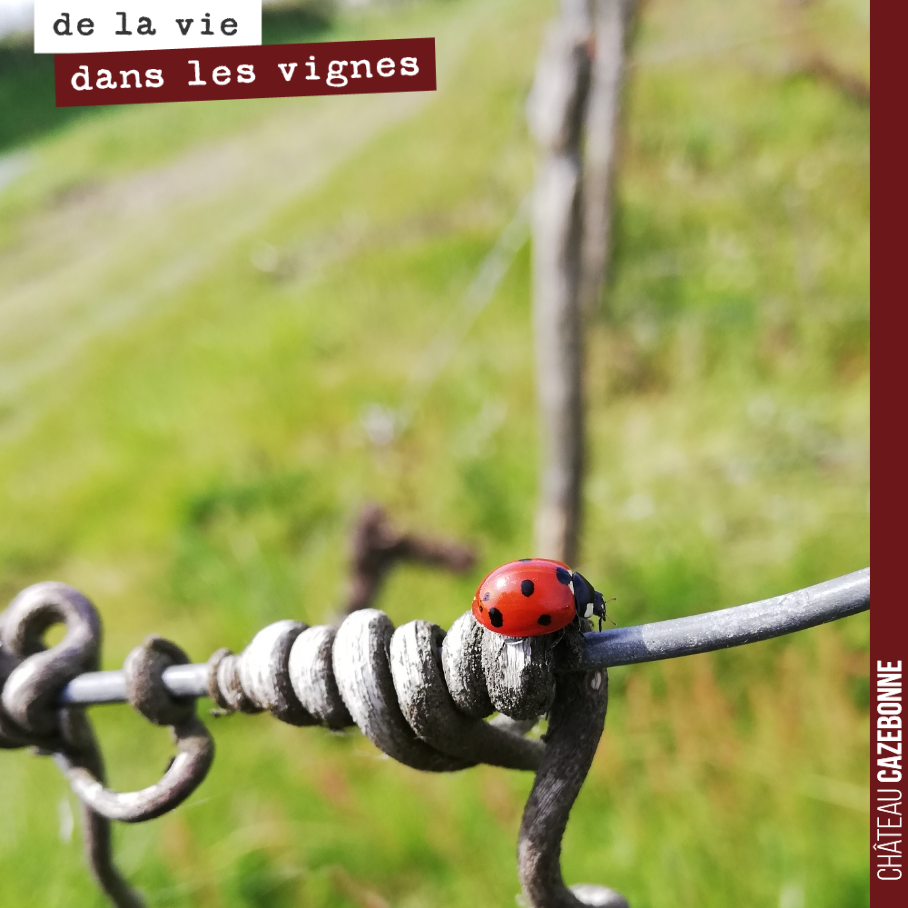
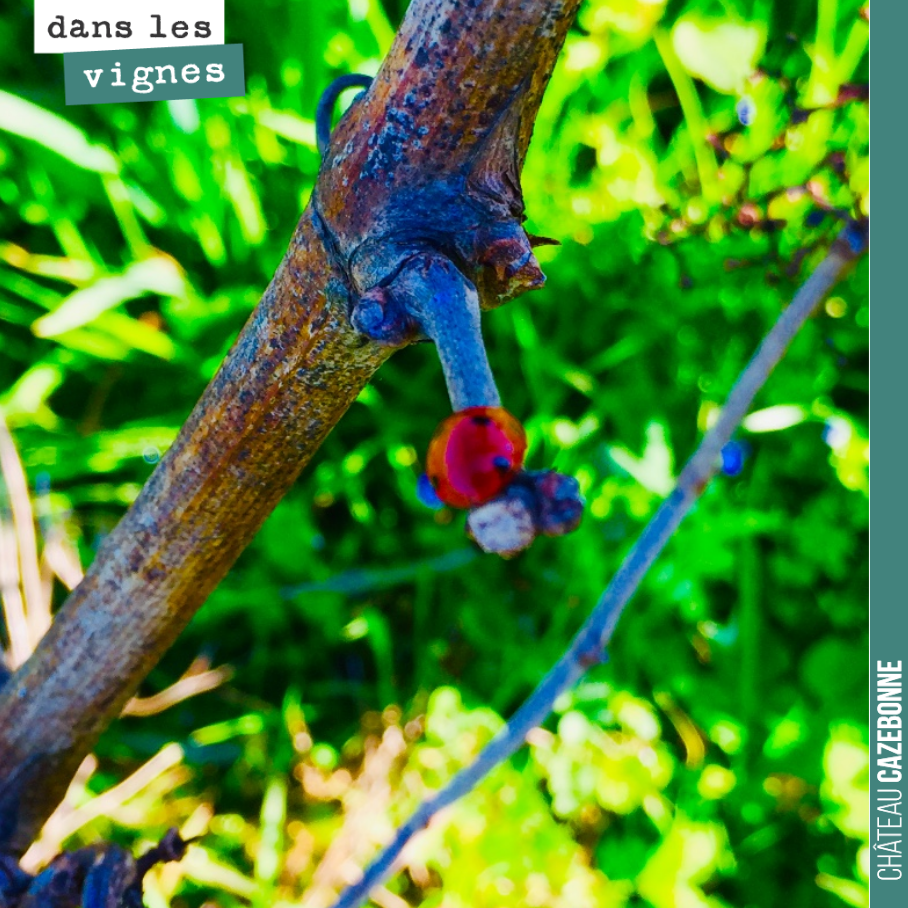
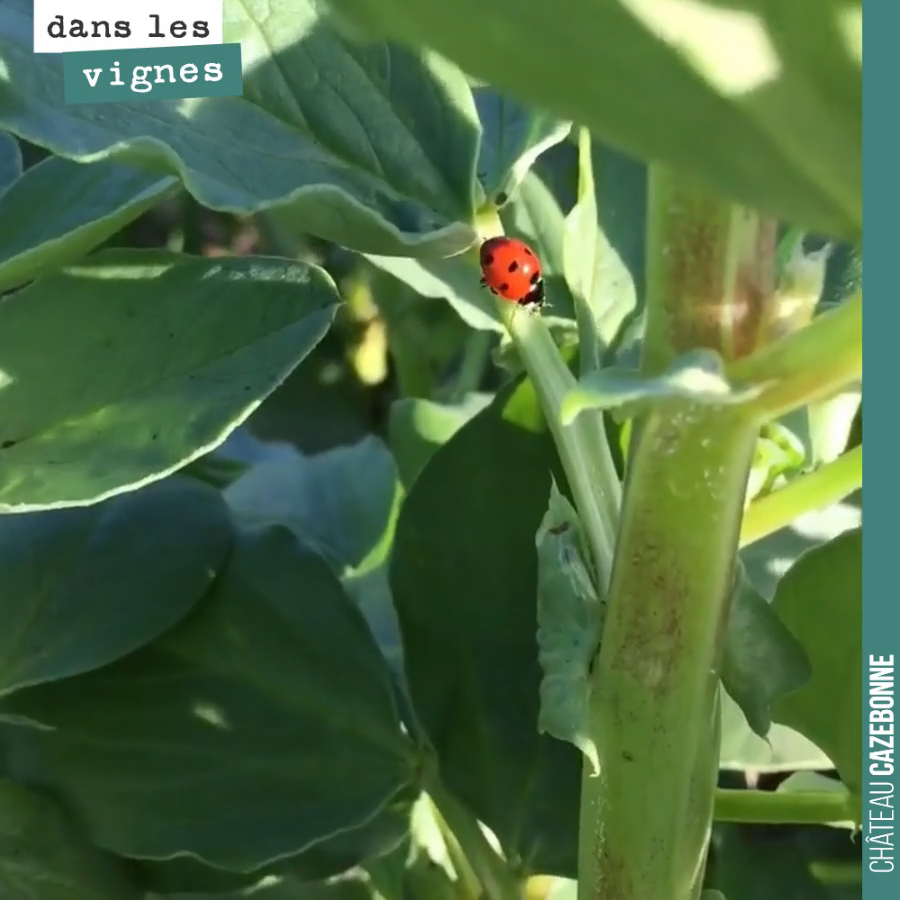
Vineyards are living territories, where every element, from the soil to the top of the vines, interacts in an incessant ballet. Among the silent but oh-so-essential actors of this ecosystem, the ladybird holds a prominent place. Rightly nicknamed the "bête à bon Dieu" (God's creature), this brightly coloured little creature is much more than just a beauty; it is a natural sentinel, a precious ally in our quest for respectful viticulture, reflecting the balance dear to Château Cazebonne.
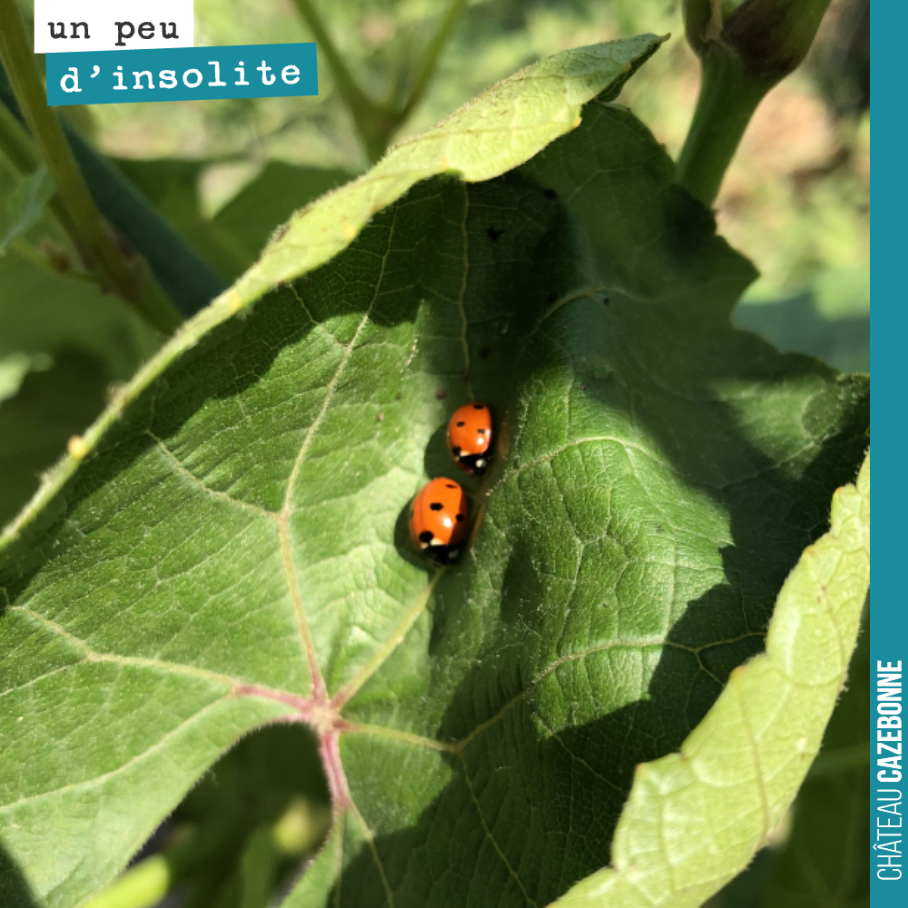
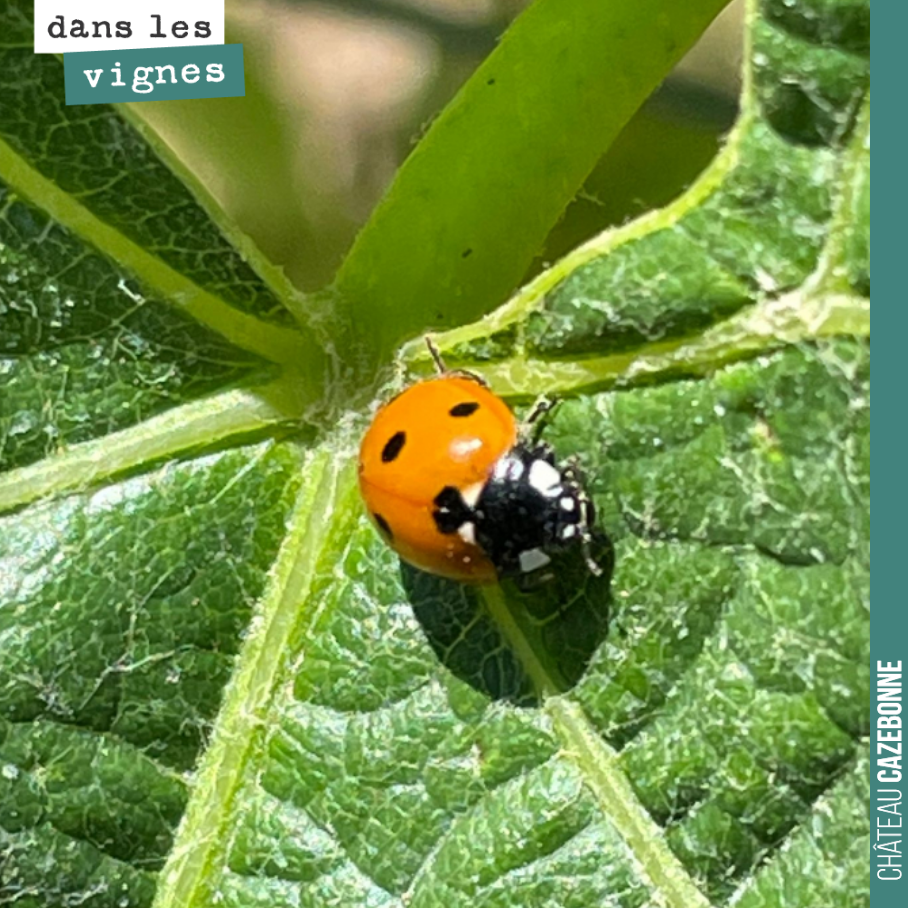
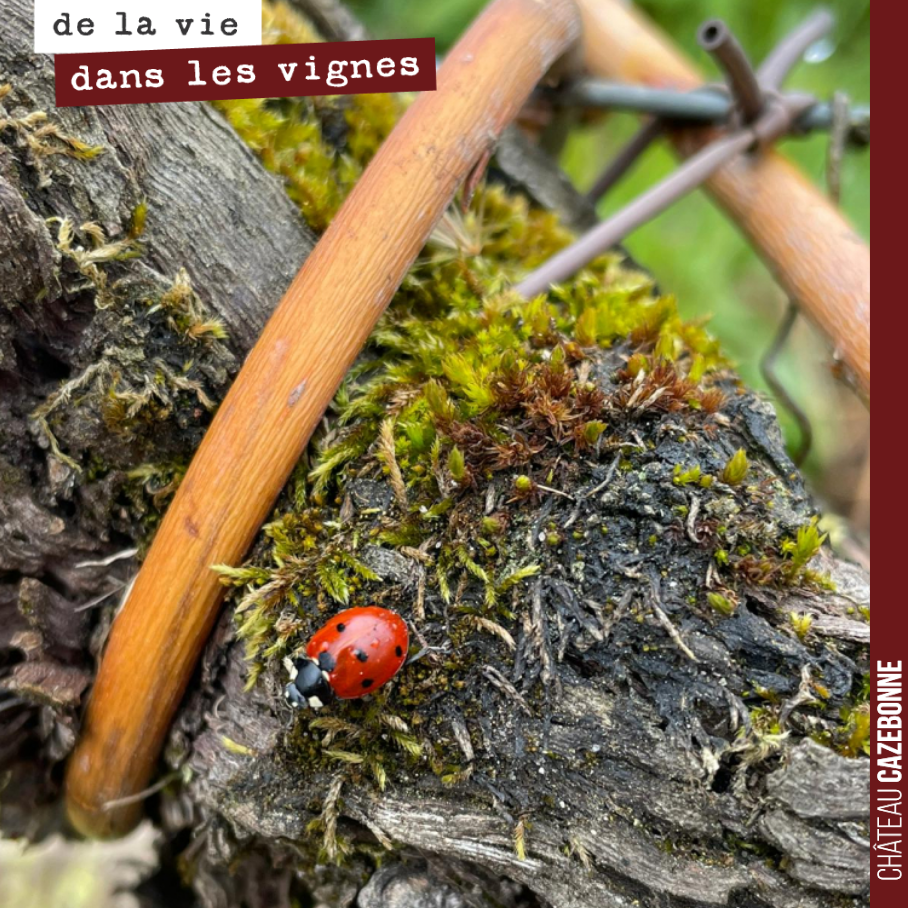
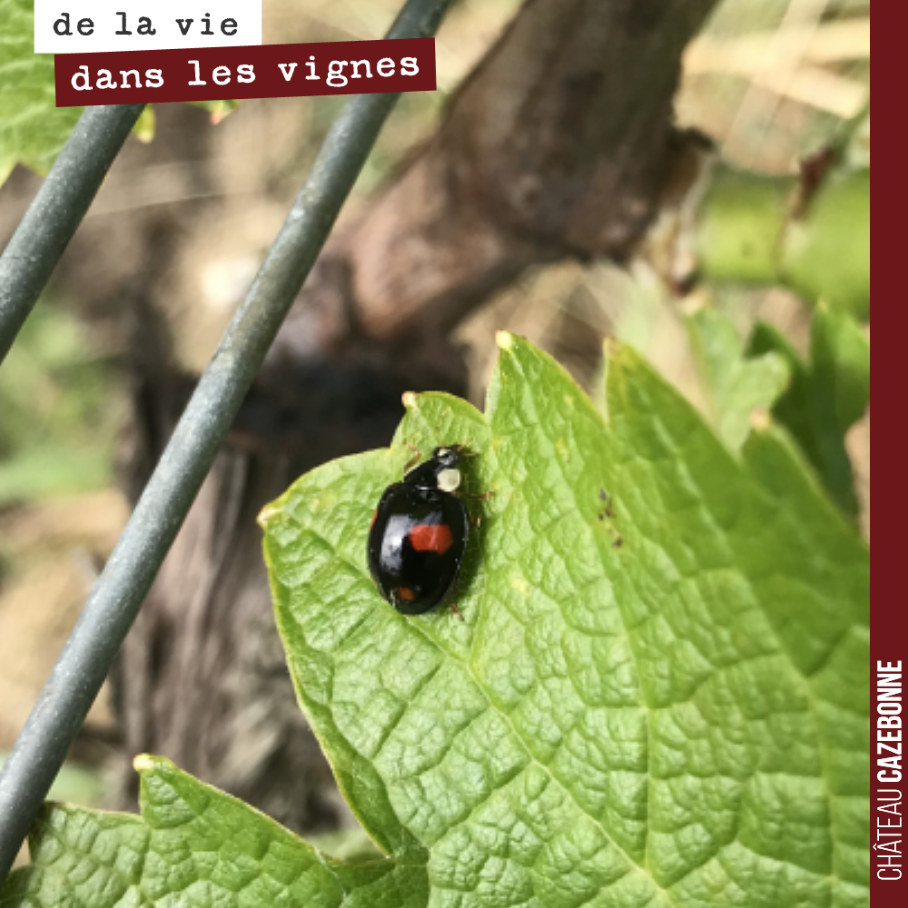
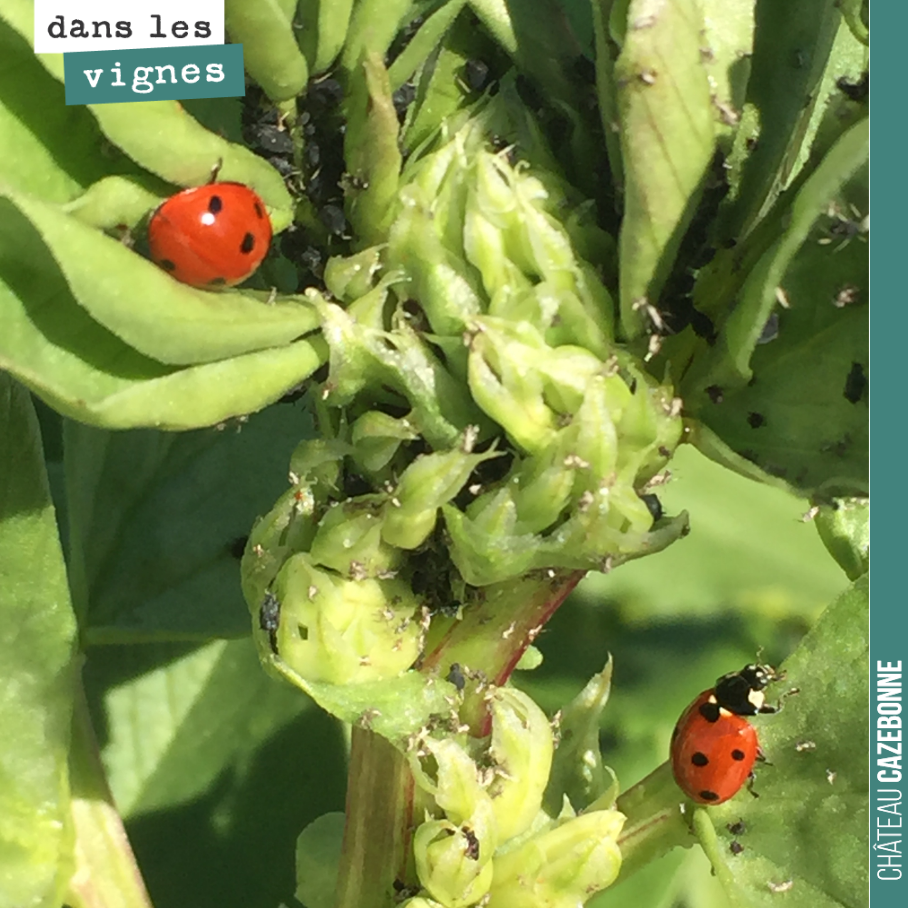
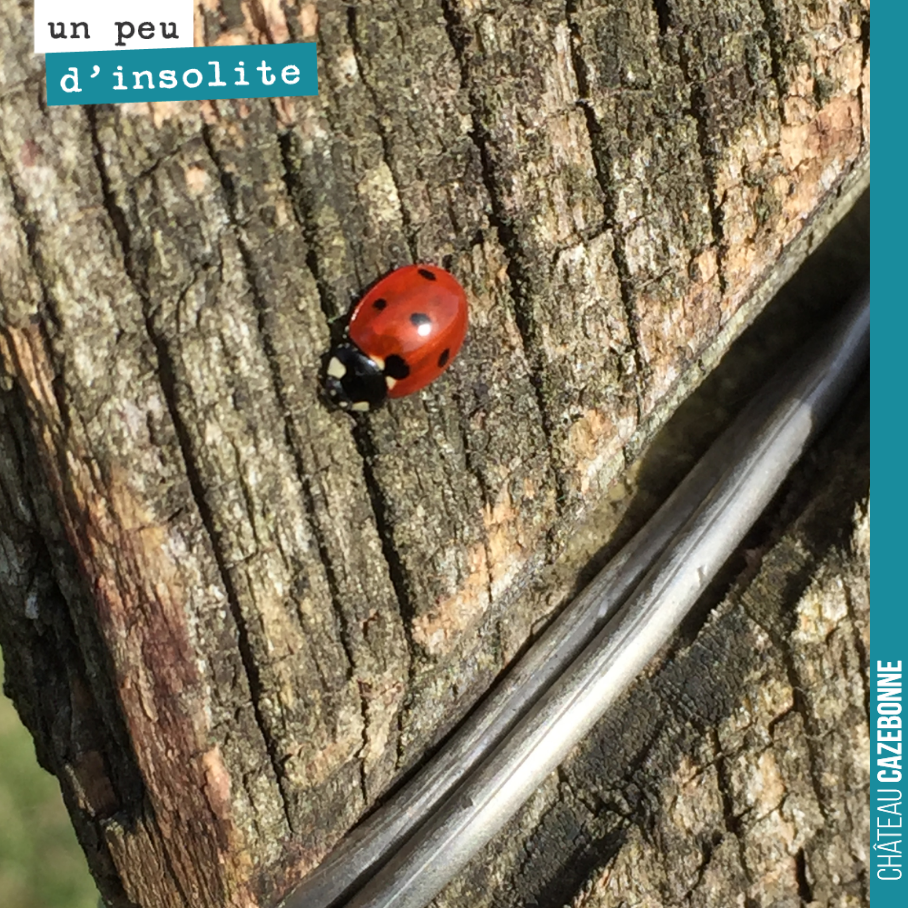
The ladybird, known scientifically as Coccinella septempunctata (seven-spot ladybird) or other species of the Coccinellidae genus, is easily recognisable. It is a hemispherical beetle, characterised by an oval and convex body, generally measuring between 4 and 7 millimetres. Its shiny shell boasts bright colours, ranging from red to orange, dotted with distinct black spots, often numbering seven for the most common species. Some species can be yellow with black spots, black with red spots, or even spotless, testifying to the great biodiversity of ladybirds.
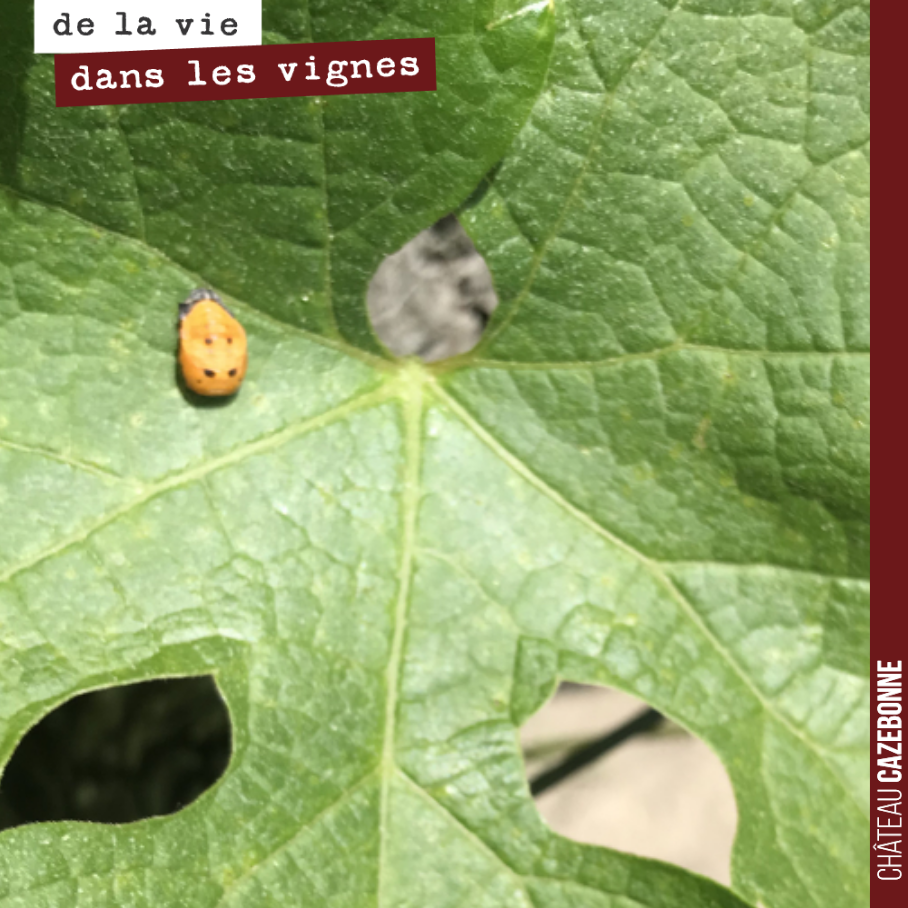
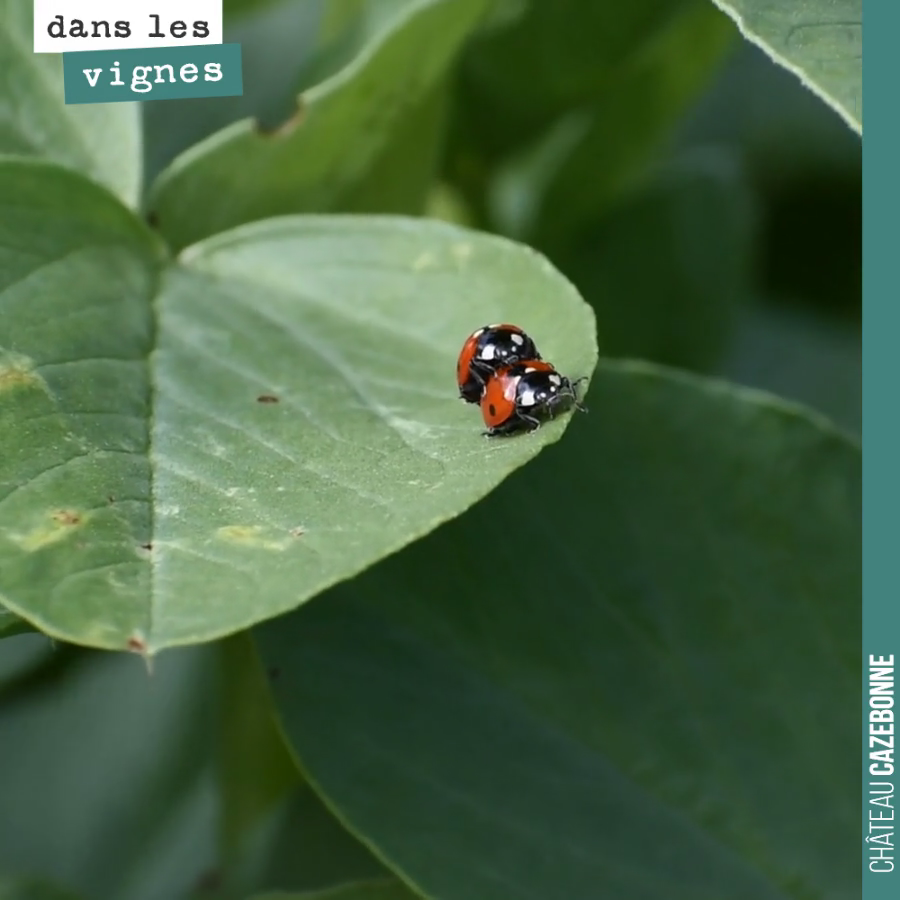
The life cycle of the ladybird takes place in several stages, closely linked to the seasons of the vineyard. In spring, adults emerge from hibernation, mate and lay their elongated yellow eggs on the underside of leaves, often near aphid colonies. The larvae, looking like small grey-black crocodiles with yellow or orange spots, hatch and immediately begin their feast of aphids. After several moults, they transform into pupae, then into adults, with the cycle potentially repeating several times during the summer, ensuring a continuous presence of these beneficial predators on our plots.
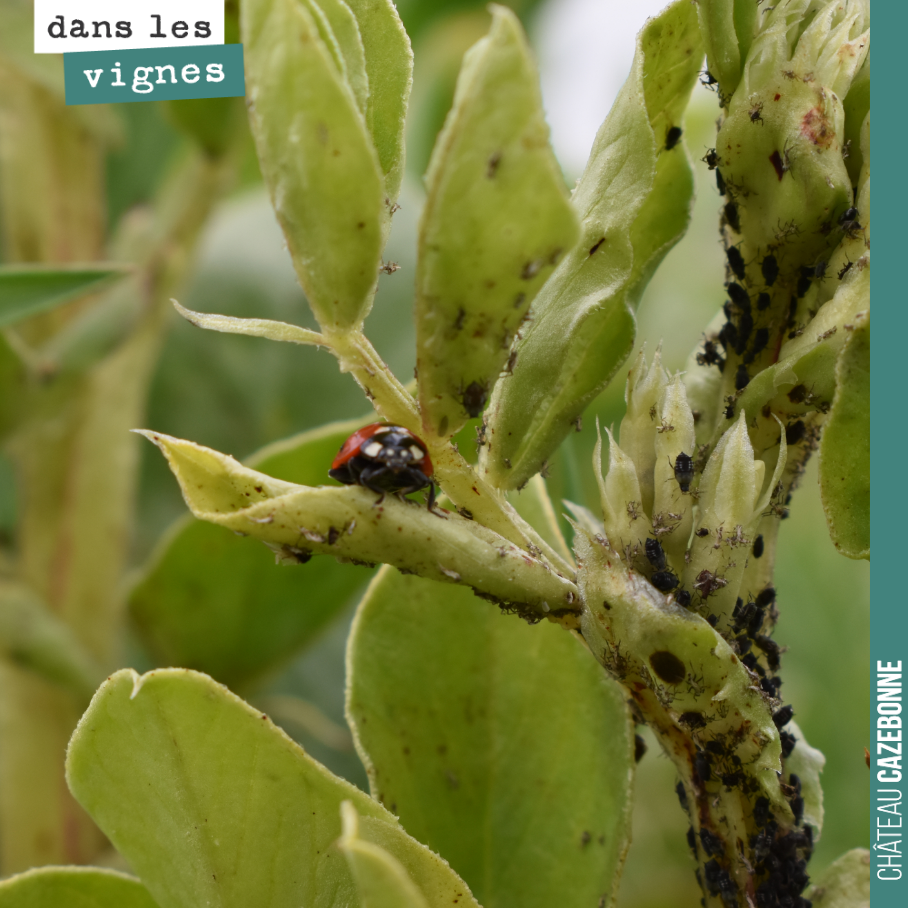
At Château Cazebonne, we observe with fascination the presence of these small beetles in our living soils. Their role is crucial: ladybirds are formidable predators of aphids, those small insects that feed on plant sap and can cause considerable damage to leaves, young shoots, and developing bunches. By devouring aphids and other pests such as mites, they naturally protect our vines. This biological protection limits the need for external interventions, helping to maintain the delicate balance of our Bordeaux terroir. This biological control is a pillar of our approach, where we favour solutions offered by nature itself, a philosophy that Jean-Baptiste Duquesne beautifully evokes in his book "Bordeaux, une histoire de cépages" published by Éditions BBD, detailing how the vine has always been able to adapt and coexist with diverse fauna, with ladybirds being a shining example.
The presence of these auxiliaries is an indicator of the good environmental health of our plots, signifying an ecosystem rich and balanced enough to welcome and feed them. By encouraging these ladybird populations, through landscaping or by avoiding the use of chemicals that could harm them, we strengthen the natural resilience of our vineyard. Initiatives such as planting melliferous seeds or conserving natural grassed areas favour their habitat and reproduction.
At Château Cazebonne, our approach goes beyond the simple protection of our vines. It is part of a broader vision of restoring and preserving Bordeaux's viticultural heritage. We are committed to replanting forgotten grape varieties, those that had deserted the Bordeaux landscapes following health crises or trends, in order to rediscover a unique aromatic richness and genetic diversity. This long-term, fascinating and essential work is made possible thanks to the invaluable commitment and support of all the enthusiasts who have chosen to accompany us on this adventure by adopting our wines.
To further your exploration of this viticultural richness and our commitment, please feel free to download the digital version of "Bordeaux, une histoire de cépages", to test your knowledge of vineyards with our oenological quizzes, or to directly discover the soul of our terroirs through our cuvées, available on our online wine shop.
Sources
Our suggestions
-5%on your 1st order with code BIENVENUE
The essential6 bottles — Graves red 2022
The best price of the cellar: €12 per bottle delivered.
The everyday red: generous and straight to the point.
I want it Our recommendation92/100 RVF
6 bottles — Graves red 2022, 92/100 RVF
Rated 92/100 by La Revue du vin de France: a solid 10-year ageing potential.
Our Graves for ageing, the finest gateway to the estate.
I want it Go further
12 bottles — the whole range
12 bottles, the whole range tasted: the best discovery-to-price ratio.
The complete tour of the estate, in a single case.
I want it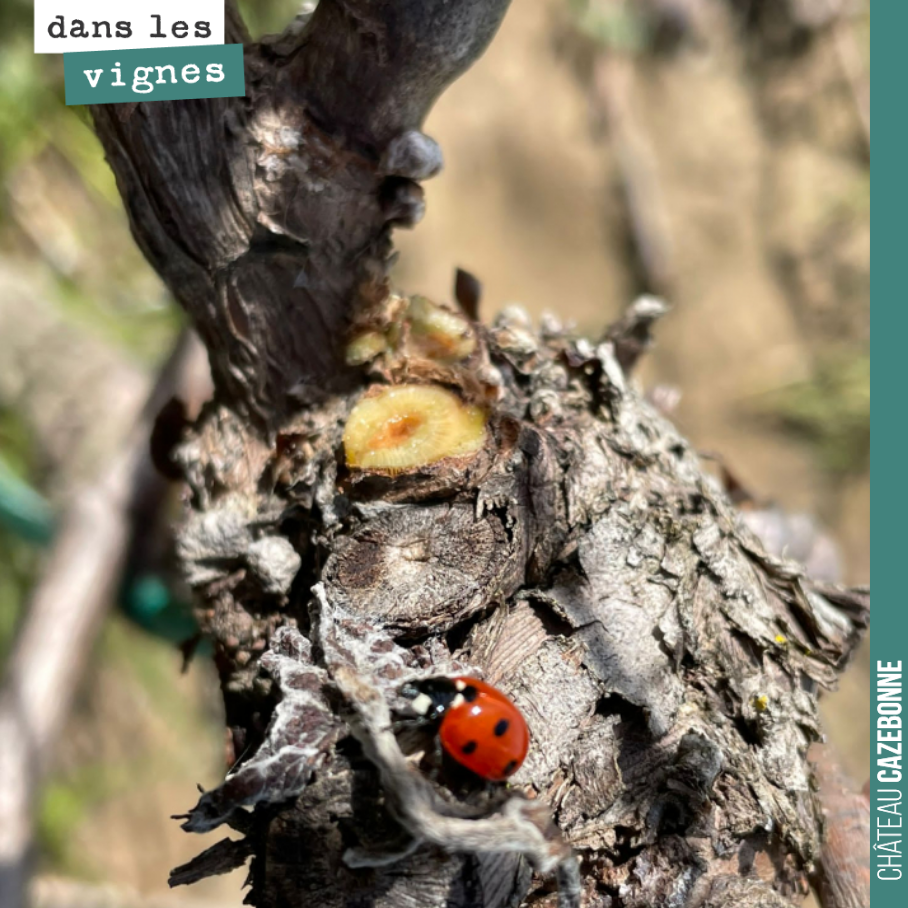
17 March 2023
19 July 2022
02 June 2022
17 April 2022
04 March 2022

07 January 2022
22 June 2021
08 May 2021
06 August 2020
22 June 2020
26 May 2020
19 May 2020
17 May 2020
03 April 2020
29 February 2020
07 March 2019
03 March 2019
02 March 2019
28 February 2019
16 February 2019
28 December 2018
The cellar, forgotten grape varieties and our cuvées, twice a month. 5% off your first order with the code BIENVENUE.