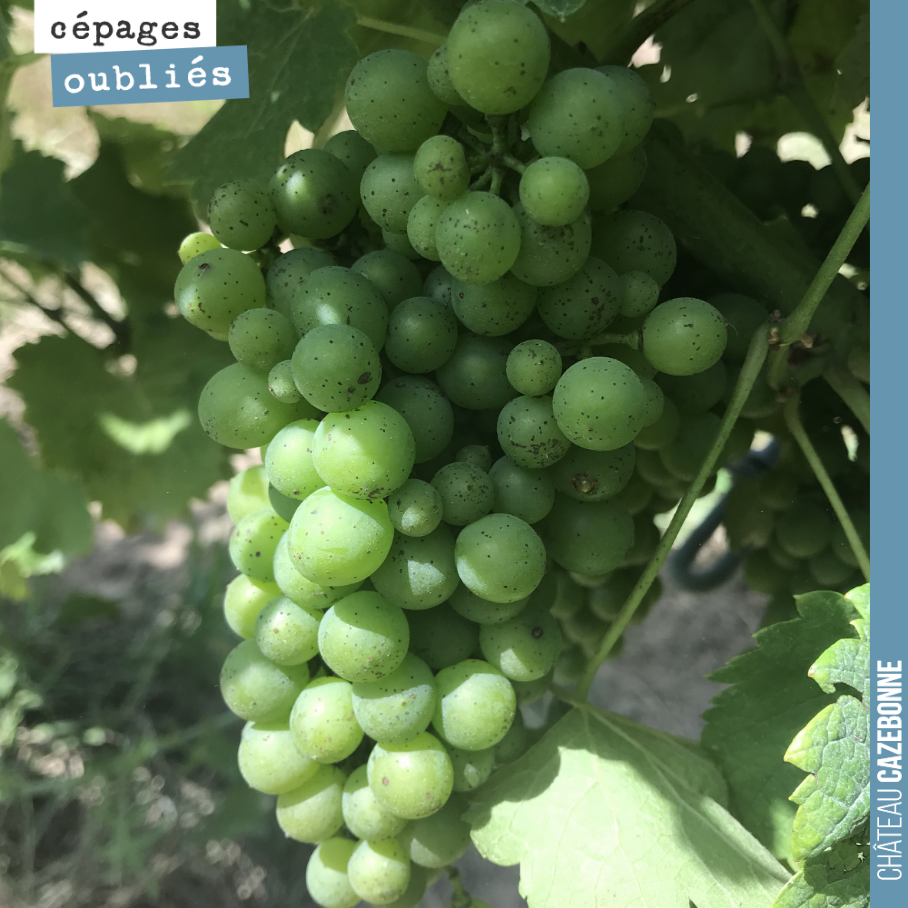
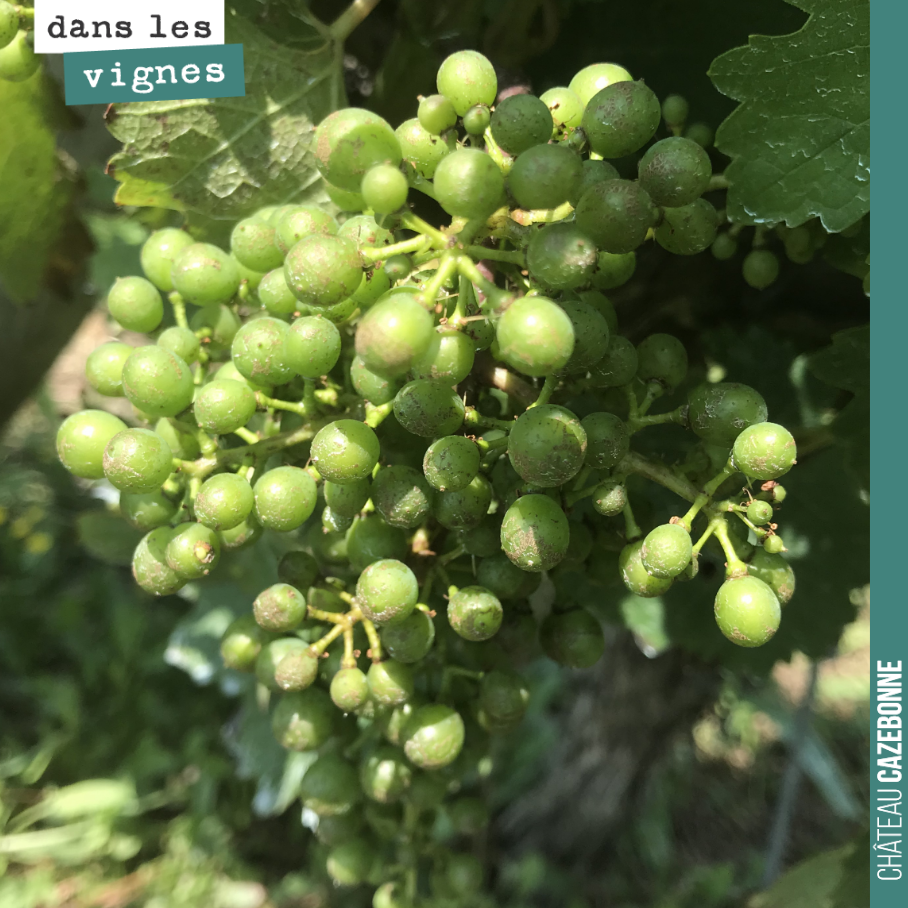
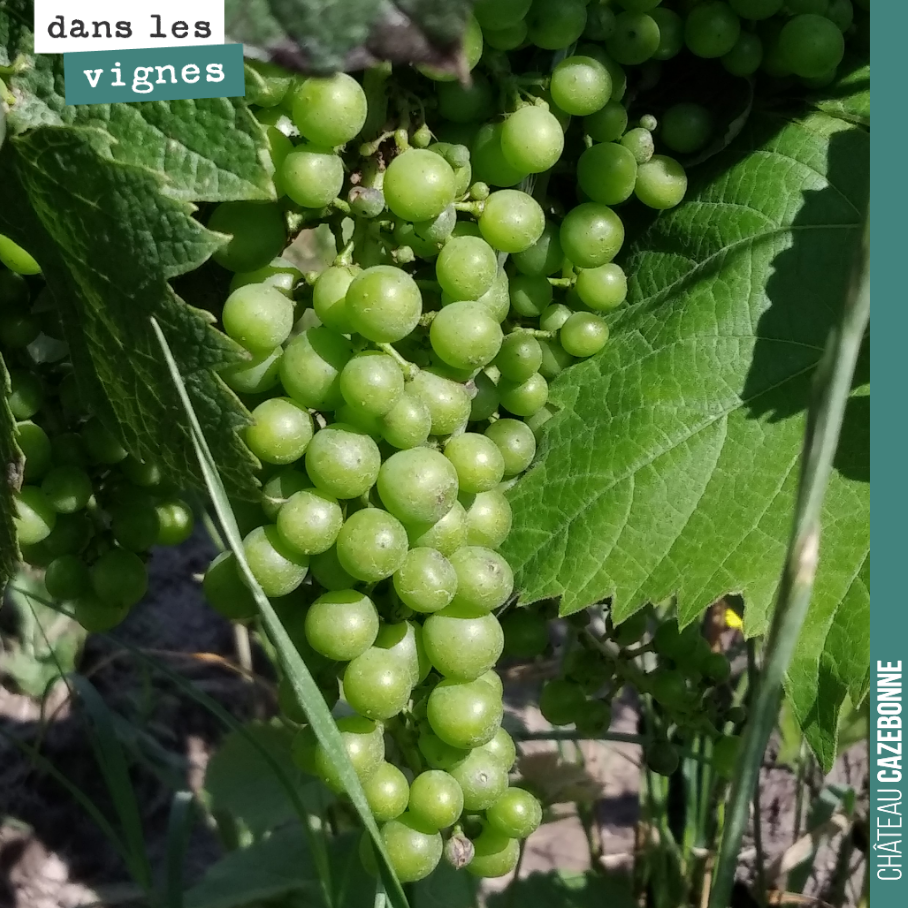
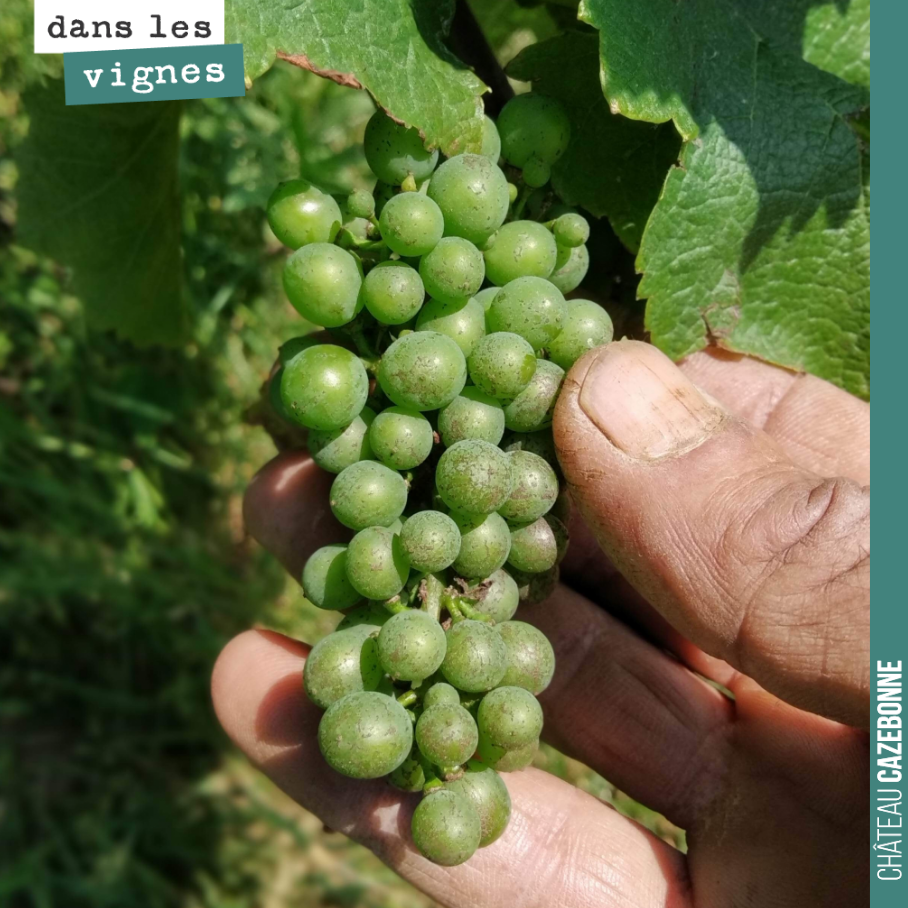
At Château Cazebonne, we are approaching a crucial stage in the vine's vegetative cycle: bunch closure (bunch compaction). This phenomenon marks a point of no return in the development of the berries and directly influences the future quality of the vintage.
Bunch closure occurs when the growing berries become so large that they touch each other, forming a compact cluster. At this stage, the bunch is almost sealed, creating a specific microclimate within it. This microclimate can be beneficial by protecting the berries from external damage, but it can also foster the development of fungal diseases if weather conditions are humid.
Why is it so important?
Several factors make bunch closure a decisive moment:
- Increased protection: The berries are less vulnerable to pests such as leafhoppers or small birds.
- Homogeneous development: Good sun exposure prior to this stage ensures more uniform ripening of the berries, which is essential for wine balance.
- Disease management: This is the last opportune moment to apply preventive treatments against downy mildew and powdery mildew right into the heart of the bunch. Once closed, spray penetration becomes extremely difficult.
Our practices at Château Cazebonne
At Cazebonne, we closely monitor the development of our parcels. Before bunch closure, we carry out meticulous green harvesting (bunch thinning) and leaf plucking (canopy management). Although labour-intensive, these operations are fundamental:
- Green harvesting: We remove excess or undersized bunches to channel the vine's resources into the remaining clusters. This guarantees superior fruit quality.
- Leaf plucking: By removing selective leaves around the grape bunches, we improve aeration and sun exposure. This practice reduces ambient humidity and lowers disease pressure, while promoting the synthesis of aromatic compounds in the grapes.
These practices are complemented by ongoing observation and, where necessary, adjustments to our vineyard management methods. For instance, trellising helps to better expose the bunches and manage vine vigour. We also pay particular attention to the tying and orientation of shoots to optimise photosynthesis and airflow.
Bunch closure is therefore much more than just a developmental stage: it reflects all the hard work accomplished beforehand, particularly spur pruning, and holds the promise of the aromas and structure of future Château Cazebonne wines. It is this meticulous care that enables us to craft Le Grand Vin de Cazebonne. Speaking of our wines' identity, do not miss our article on bottle labelling, which gives each vintage its final visual identity. To delve deeper into the origins of our expertise, explore the history of the vine.