
 The essential
6 × Entre Amis red
6 bottles — Graves red 2022
The best price of the cellar: €12 per bottle delivered.
The everyday red: generous and straight to the point.
I want itHilling up
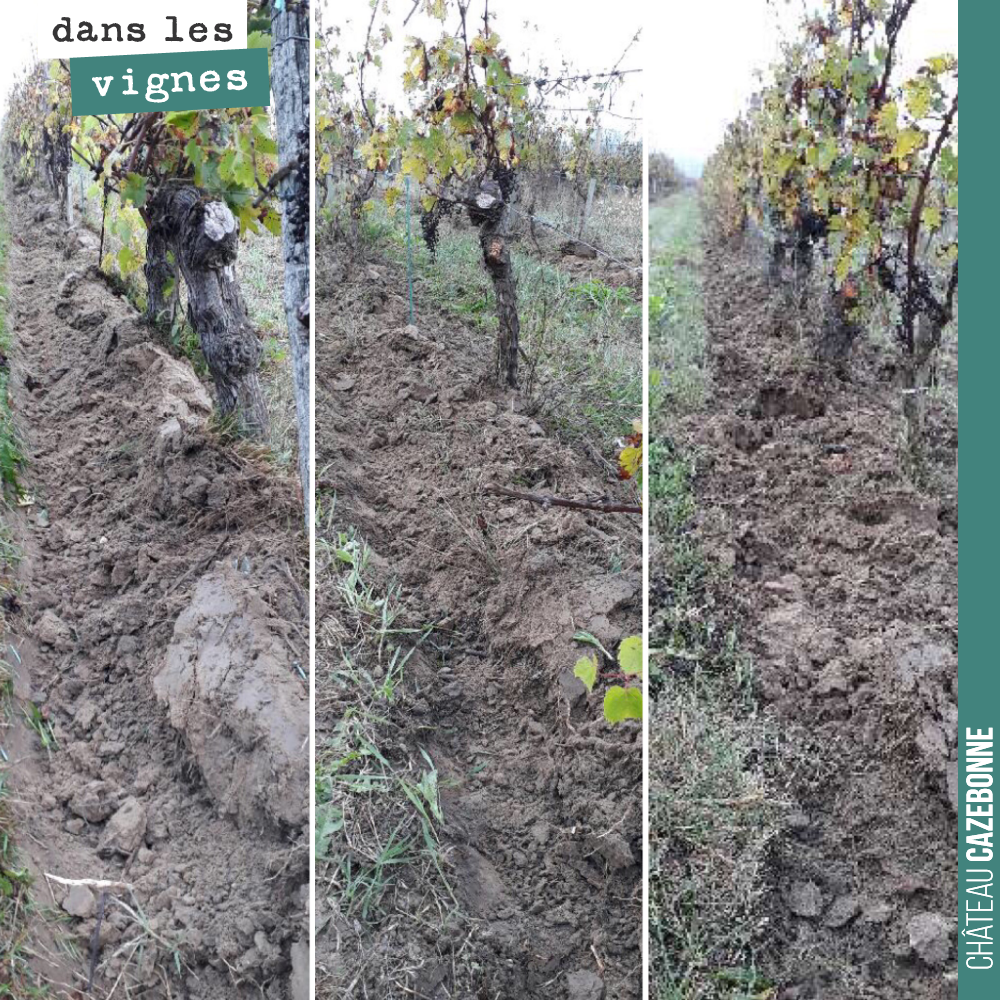
Earthing up the vines is an ancestral and fundamental viticultural practice, meticulously executed before the arrival of the winter frost. This technique involves drawing earth up to the base of each vine, thus forming a protective mound. This mound acts as a natural cloak, preserving the shallow roots and the graft union from the sometimes formidable winter frosts, particularly in our Bordeaux region. But its role is much broader: it also protects the base of the vine from excessive moisture and sudden temperature variations, which are significant stress factors for the plant. It is an act of anticipation, a way of ensuring the tranquillity of the precious plant during its vegetative dormancy period, thus guaranteeing it the best conditions for a serene spring and a promising future harvest.
Beyond this immediate protective function, earthing up also prepares for the unearthing work that will take place a few months later, in the spring. By removing the accumulated earth, the winegrower exposes the base of the vine, allowing for highly effective mechanical or manual cleaning. This spring operation is crucial: it eliminates the weeds that could have developed during the winter, thus limiting competition for water and nutrients as soon as vegetation restarts. Fewer undesirable weeds also mean better aeration and a significant reduction in the risk of fungal diseases, as the soil remains drier around the vine. Earthing up and unearthing are therefore a duo of complementary actions, guaranteeing the health and vigour of the vine, and directly conditioning the quality of future vintages.
At Château Cazebonne, we attach particular importance to these traditional practices, while integrating them into a unique preservation approach. Our commitment to replanting the historic grape varieties of Bordeaux, these sometimes-forgotten varieties whose history is so well depicted in the book "Bordeaux, une histoire de cépages" by Jean-Baptiste Duquesne at Éditions BBD, is intrinsically linked to this profound respect for the plant. This ambitious and fascinating work, a true return to the roots of our viticultural heritage, would not be possible without the unwavering support of a community of enlightened enthusiasts. Your appreciation of our wines allows us to continue this adventure and bring back to life these grape varieties that enrich the typicity of Bordeaux wines.
If you wish to discover the fruit of this labour and passion, you can find our cuvées for sale in the Cazebonne boutique.
To deepen your knowledge of the fascinating history of Bordeaux grape varieties and understand the importance of this approach, we also invite you to receive the digital version of the book "Bordeaux, une histoire de cépages", directly by e-mail by visiting our website.
Earthing up the vines, also known as mounding or hilling up, is an agronomic operation that involves piling earth around the vine stock. It aims to create a mound of earth at the graft union and shallow roots, parts that are particularly sensitive to the cold. This mound of earth acts as a thermal insulator, thus protecting the plant from sometimes intense sub-zero temperatures, which are detrimental to its survival and future fruiting. It is a passive protection method, gentle and respectful of the plant.
The main objective of earthing up is to protect the vine against winter frost. By forming a protective layer, the mound of earth maintains a higher temperature around the vine, averting the risk of destruction to the dormant buds and the graft union. The latter is crucial, as its deterioration would result in the death of the vine. Beyond frost, earthing up also limits thermal shocks and protects against stagnant moisture, factors that can weaken the vine before its spring bud break.
Earthing up is generally carried out after the harvest and once the vine has lost its leaves, signalling its entry into vegetative dormancy, often between late autumn and early winter. The ground must not be frozen to allow for effective work without harming the soil structure and roots. The climatic conditions of the vintage and the upcoming weather forecasts influence the precise timing of this operation.
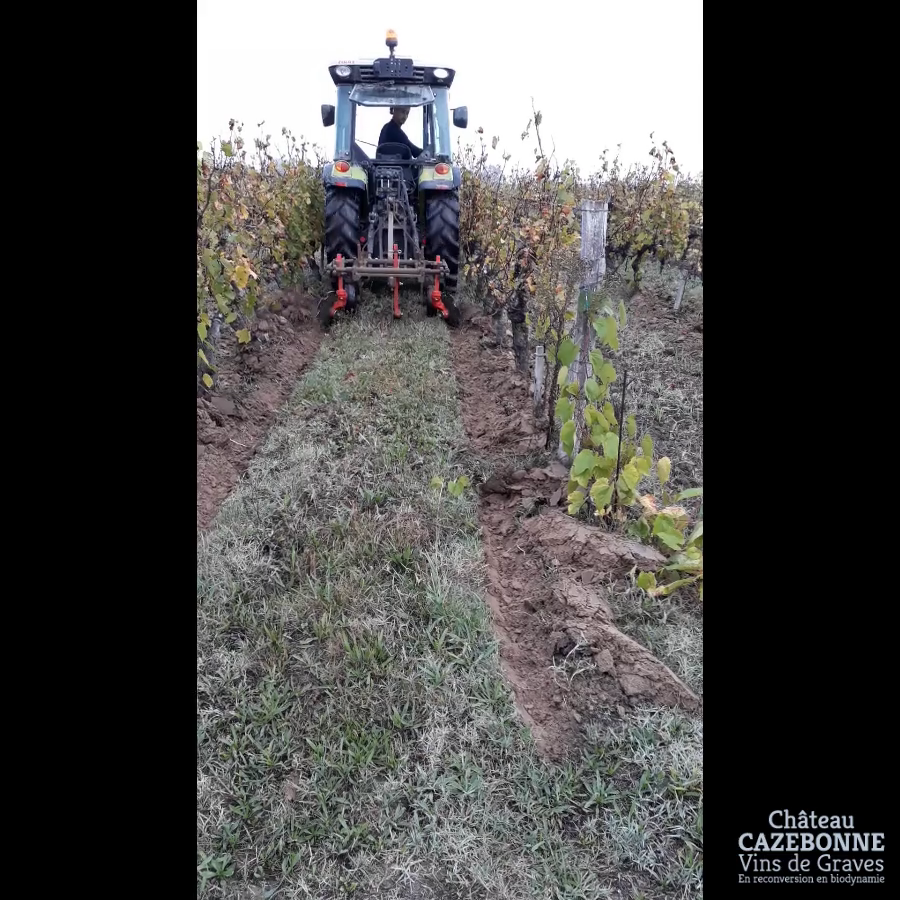
The practice of earthing up involves gathering earth towards the vine stock. This operation can be performed manually, with a pickaxe or hoe, or mechanically using an inter-vine plough equipped with discs. The earth is thus drawn up on either side of the vines, forming a mound approximately 15 to 25 centimetres high.
For mechanical earthing up, the most common tools are the disc ridger or the ridging plough. This equipment, hitched to a tractor, allows several vines to be worked at once, thus optimising time and effort. For small parcels or hard-to-reach plots, manual tools remain the preferred solution. The equipment must be adapted to the terrain and vine spacing for precise, non-damaging work.
Earthing up is a practice that naturally integrates into sustainable or organic viticulture. It is an ecological solution for winter protection, limiting the use of inputs. However, climate change and the emergence of new, more frost-resistant grape varieties can, in some regions, question its systematic necessity or, on the contrary, make it more crucial in the event of unforeseen late frost episodes.
At Château Cazebonne, earthing up is one of the fundamental practices of our respectful approach to the vine. Integrated into our agronomic practices, it is carried out with the utmost care, mostly mechanically in the most homogeneous parcels, but also manually where precision is required. This traditional practice, combined with our efforts to replant lost Bordeaux grape varieties, reflects our commitment to sustainable and authentic viticulture, deeply rooted in its terroir.
Earthing up the vines is much more than a simple agricultural task; it is a commitment to respecting the vine and the sustainability of our vineyard, a heritage we strive to preserve and pass on. If you are passionate about the viticultural history of Bordeaux and the challenges of resilience, we invite you to obtain the digital version of our "Bordeaux, une histoire de cépages", to test your knowledge with our oenological quizzes, and to support this unique work by exploring our online boutique to discover our cuvées. Your support is essential to allow us to bring these oenological treasures of the Gironde back to life.
After the rigours of winter, another essential operation is unearthing the vines. This action consists of removing the earth accumulated at the base of the vines during earthing up. It prepares the vine for a new vegetative cycle by exposing the collar of the plant, thus promoting the warming of the soil and facilitating spring maintenance work, such as the removal of unwanted shoots. Unearthing is the indispensable complement to earthing up to ensure the vigour and health of the vine throughout the year. Another winter protection method is strawing, where straw or other insulating materials are used to cover the vines.
Sources
Our suggestions
-5%on your 1st order with code BIENVENUE
The essential6 bottles — Graves red 2022
The best price of the cellar: €12 per bottle delivered.
The everyday red: generous and straight to the point.
I want it Our recommendation92/100 RVF
6 bottles — Graves red 2022, 92/100 RVF
Rated 92/100 by La Revue du vin de France: a solid 10-year ageing potential.
Our Graves for ageing, the finest gateway to the estate.
I want it Go further
12 bottles — the whole range
12 bottles, the whole range tasted: the best discovery-to-price ratio.
The complete tour of the estate, in a single case.
I want it
06 July 2022
31 July 2021
19 October 2018
18 October 2018
The cellar, forgotten grape varieties and our cuvées, twice a month. 5% off your first order with the code BIENVENUE.