
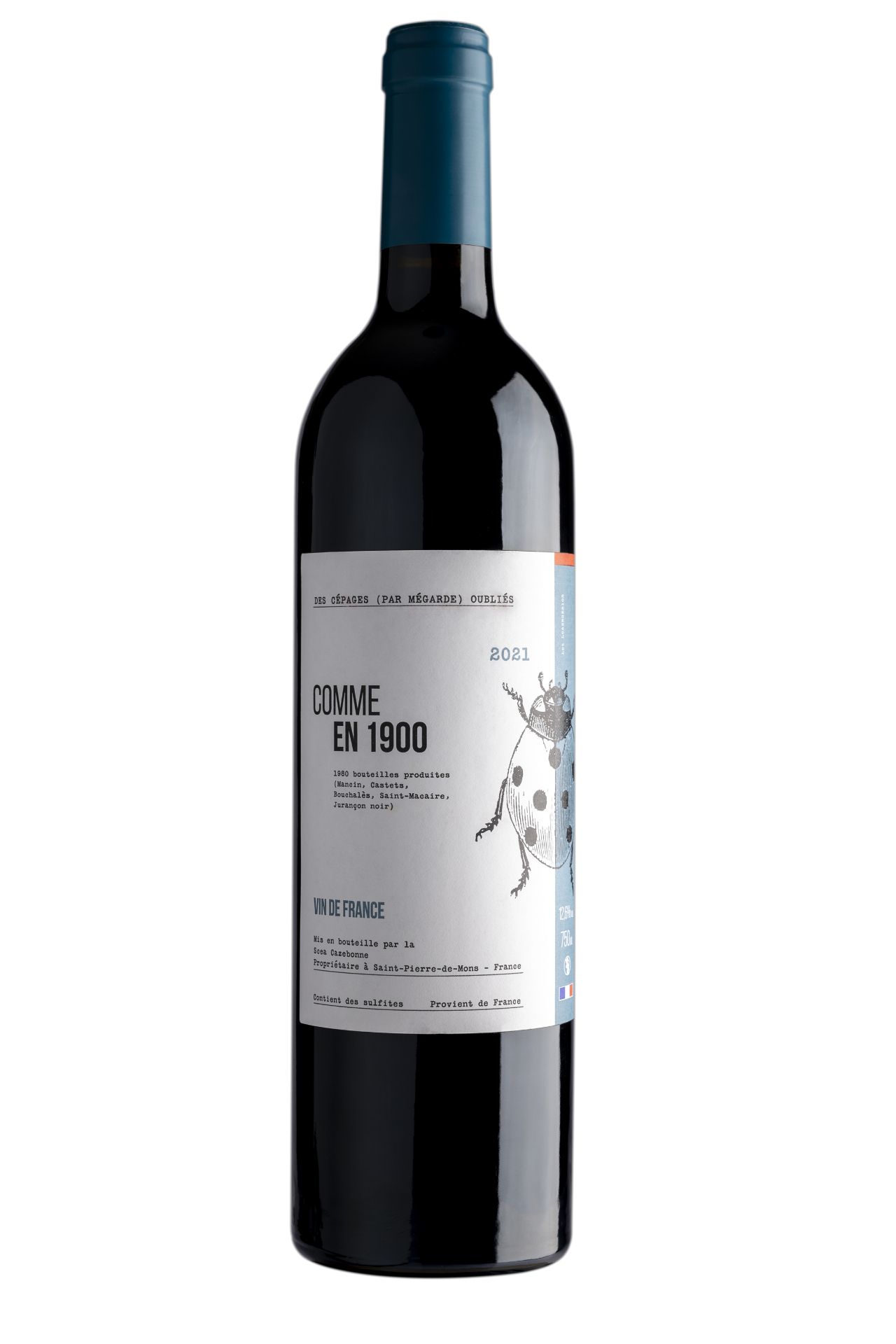
 The essential92/100 RVF
Comme en 1900 red 2022
Vin de France — heritage grapes, 92/100 RVF
The pre-phylloxera Bordeaux blend, revived at the estate.
Castets, Mancin, Pardotte: the Bordeaux before Bordeaux.
I want itEstate archives
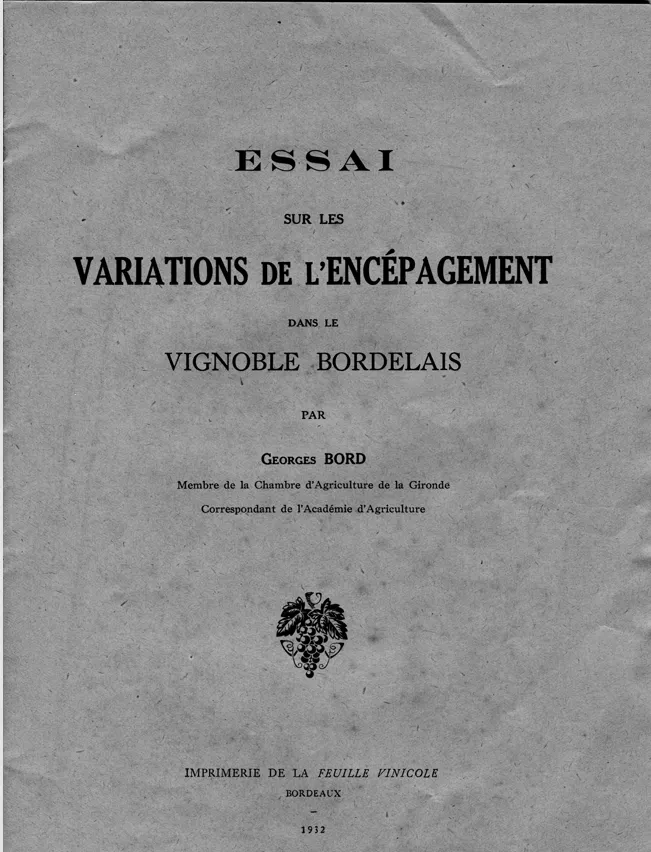
In July 1932, the publication of the Essai sur les variations de l'encépagement dans le vignoble bordelais by Georges Bord, a prominent member of the Gironde Chamber of Agriculture, marked a crucial milestone in Bordeaux viticultural history. This work emerged at a pivotal moment. While the law of 6 May 1919 had introduced the principle of appellations of origin, it was the Capus Law of 22 July 1927 that reinforced this legal framework. Henceforth, to qualify "local, loyal, and constant practices" (usages locaux, loyaux et constants), courts were required not only to consider the nature and exposure of the soil, but also compulsorily to take into account the grape varieties (encépagement) planted in the parcels.
Faced with this new requirement, the Gironde Chamber of Agriculture was tasked with formalising these practices. Two fundamental questions needed to be resolved: are there grape varieties inherently native to the Gironde? and which varieties are genuinely suitable for producing "Bordeaux wine"? Georges Bord's work was, by his own admission, explicitly intended to "facilitate the answer". His study thus served as the foundation for the agricultural chamber in drafting the future AOC specifications for Bordeaux, which were introduced from 1936 onwards.
To ground his analysis, Georges Bord undertook a vast historical survey spanning two centuries. He drew upon diverse early documents: the 1736 manuscript by the Abbé Bellet, which listed around thirty grape varieties such as Balouzat, Verdot, and Sémillon; the correspondence of the royal intendant Dupré de Saint-Maur; the remarkable ampelographic collection of the Bouchereau brothers at Carbonnieux (which held up to 1,200 varieties before being destroyed); and finally, the 1929 edition of Bordeaux et ses vins, the reference guide published by Éditions Féret.
From this meticulous investigation, he identified a selection of grape varieties that he deemed worthy of appellation d'origine contrôlée status. This list included the classics: Cabernet Sauvignon, Cabernet Franc, Merlot, Malbec (Cot), Petit and Grand Verdot, Carmenère, Sémillon, Sauvignon Blanc, and Muscadelle. To these varieties were added a few grapes he considered "more recently introduced", such as Ugni Blanc, Colombard, and Cavalié (Len de l'El).
The list of grape varieties validated by Georges Bord and the Chamber of Agriculture had a direct, profound impact on the subsequent appellation decrees, primarily from 1936 onwards. The varieties he marginalised or excluded gradually disappeared from the appellation specifications, effectively forfeiting the right to be replanted for several decades. His Essai thus became a foundational—yet often overlooked—text that shaped the authorised varietal palette of the Bordeaux vineyard for nearly a century, profoundly influencing its identity and production. The author himself, M. Bord, emphasised that this study served as "the basis for discussion regarding appellation specifications" (Bord, 1932).
While instrumental, Georges Bord's study displays certain limitations inherent to his era and methodology. It relied predominantly on 19th-century viticultural literature, thereby favouring the great estates of the Médoc and Sauternes. This documentary bias resulted in overlooking a substantial proportion of the peasant vineyard, which cultivated a rich diversity of "yesteryear varieties" such as Boucherès, Mancin, and Pardotte, as recorded by ampelographers like M. Bouchereau (Bouchereau, 1843). These grape varieties, widely present in the field, were discarded in favour of varieties deemed more "noble" by the prominent wine trade (négoce)—an implicit criterion of prestige that often superseded the agronomical or organoleptic qualities of peasant varieties. Furthermore, his work was carried out in the aftermath of the phylloxera and powdery mildew crises, at a time when vineyard reconstruction had already reduced varietal diversity.
Georges Bord's work provided an essential historical foundation for establishing the Bordeaux AOC regulations. However, this focus on the Grands Crus left a considerable ampelographic heritage in the shadows. It is precisely from this forgotten wealth—the peasant grape varieties cultivated by thousands of winegrowers around 1850—that Château Cazebonne draws its inspiration. Today, we are committed to rediscovering and replanting this lost diversity, working to revive Bordeaux's forgotten grape varieties to build a more resilient and authentic viticulture.
At Château Cazebonne, we are dedicated to bringing this history back to life by replanting the grape varieties that had vanished from Bordeaux—an endeavour made possible thanks to the support of wine lovers who enjoy our wines. To learn more about this unique philosophy, please feel free to download our book on the history of Bordeaux grape varieties, which is part of Le Privilège des vins de Bordeaux. You can also test your wine knowledge with our oenology quizzes, or simply discover the fruits of our labour by visiting our online shop.
Sources
Our suggestions
-5%on your 1st order with code BIENVENUE
The essential92/100 RVFVin de France — heritage grapes, 92/100 RVF
The pre-phylloxera Bordeaux blend, revived at the estate.
Castets, Mancin, Pardotte: the Bordeaux before Bordeaux.
I want it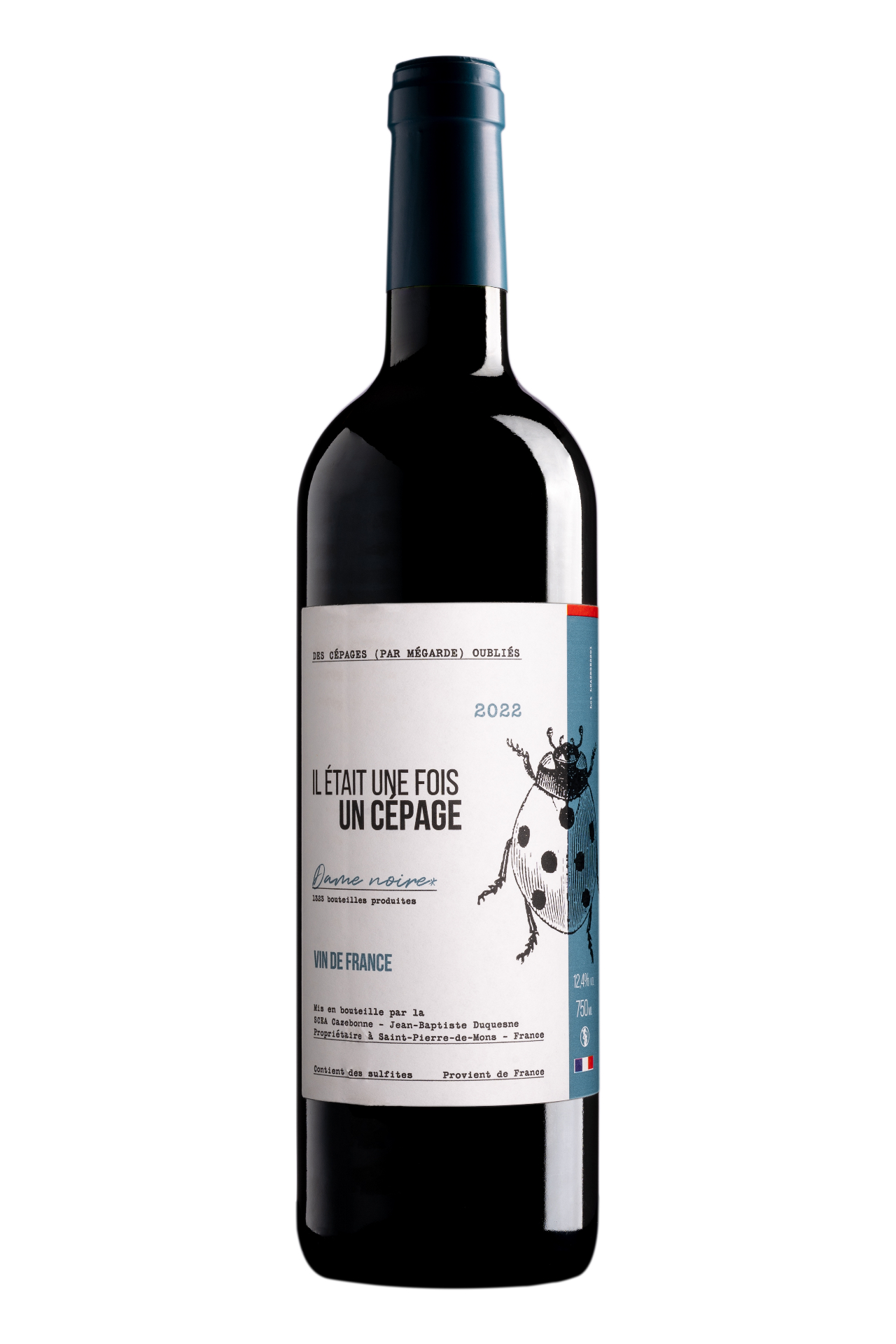 Our recommendation
IGP Atlantique — rare grape variety
A forgotten grape brought back: dense colour, wild fruit.
For the curious about lost grape varieties.
I want it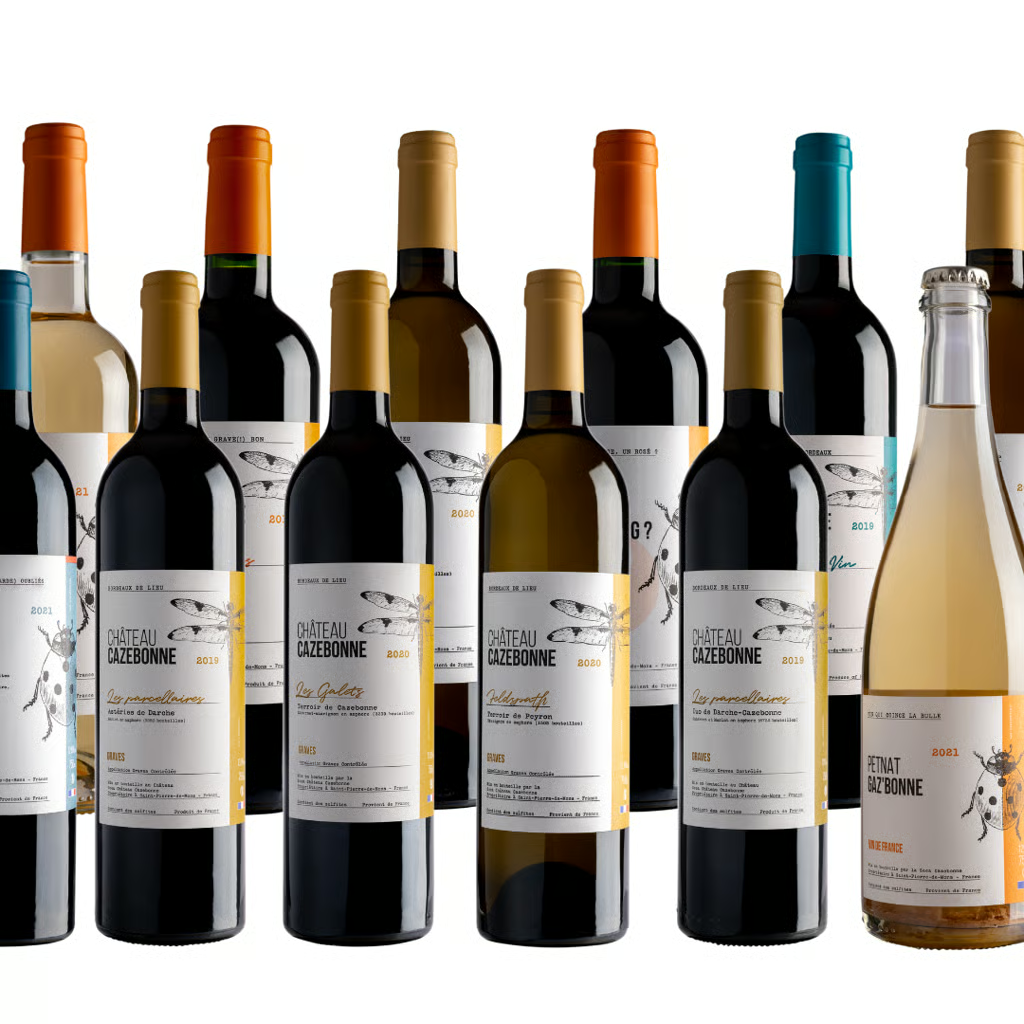 Go further
12 bottles — the whole range
12 bottles, the whole range tasted: the best discovery-to-price ratio.
The complete tour of the estate, in a single case.
I want it