21 June 2020
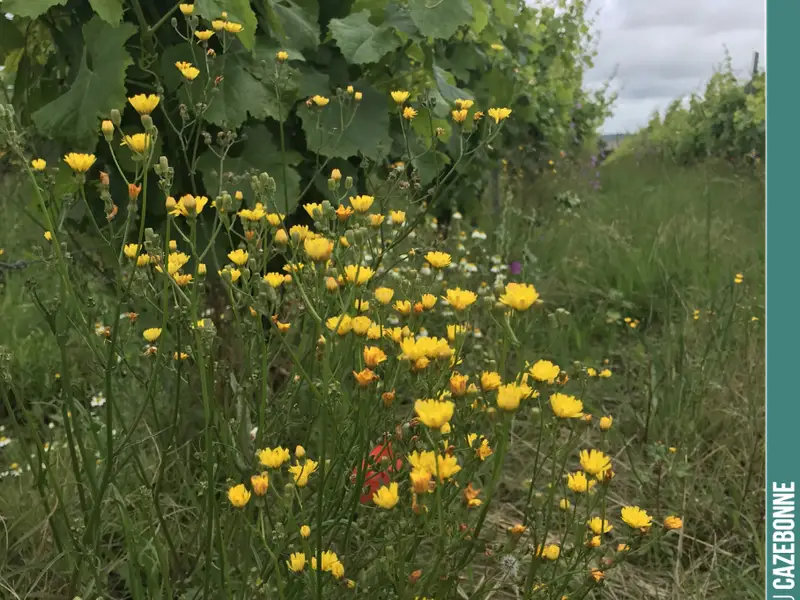
Poppies and buttercups thrive in organic vineyards.
By Jean-Baptiste Duquesne

Poppies
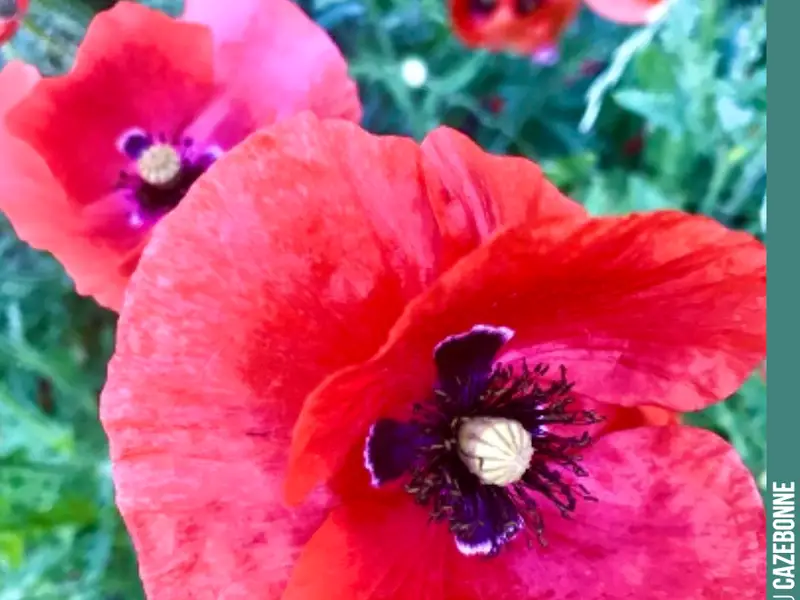
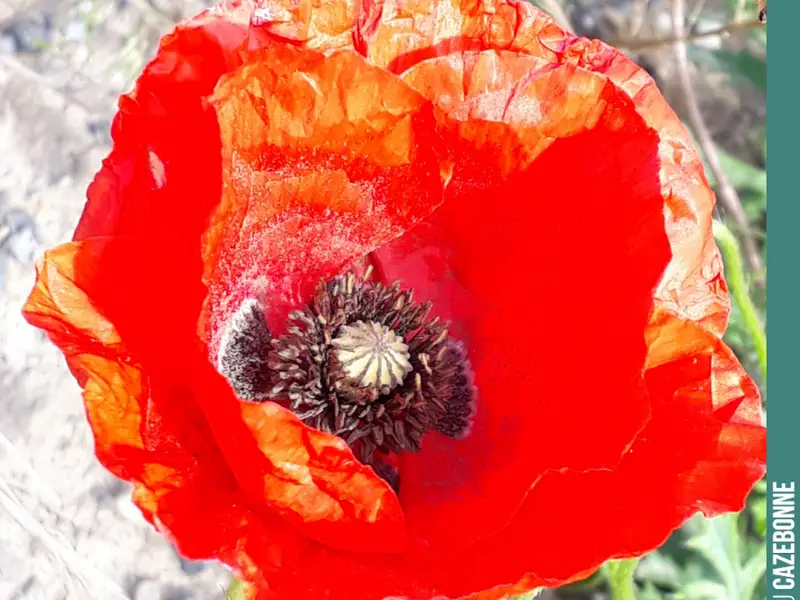
The poppy, scientifically known as Papaver rhoeas, is an iconic flower of our countryside. Recognisable by its fine, silky petals of an intense scarlet red, often marked with a black spot at the base, it grows on slender hairy stems that can reach 30 to 60 centimetres in height. Each flower is delicate and ephemeral, its beauty often residing in its sudden appearance and rapid disappearance.
The life cycle of the poppy is paced by the vineyard seasons. An annual plant, it germinates in spring, generally flowering between May and July, transforming the inter-rows of our vines into scarlet seas. This flowering coincides with a period of intense activity in the vine itself, just after bud burst and before fruit set, offering a vibrant spectacle before giving way to its seed-filled capsules.
At Château Cazebonne, we observe poppies mainly in the rows of our vines where grass cover is managed without deep ploughing. They thrive in well-drained and relatively undisturbed soils. Their presence is particularly notable on plots with clay-limestone or gravelly soils, where competition from other plant species is moderate. They are a visible part of our biodiversity.
The ecological role of poppies is multifaceted. They act as valuable indicators of healthy, well-aerated soil. Their flowering attracts a variety of pollinating insects, essential to the balance of the ecosystem. These insects, such as bees and bumblebees, contribute not only to the pollination of surrounding wildflowers, but also to the presence of beneficial vineyard insects. Furthermore, the root system of poppies helps structure the soil, preventing erosion and improving its porosity. They are an integral part of our vineyard flora, contributing to the overall balance.
Far from being harmful, poppies are neutral, or even beneficial to the vine. Their presence in the rows is a testament to environmentally friendly practices, without the excessive use of herbicides. They do not significantly compete with the vine for water or nutrients in our latitudes, and their decomposition after flowering enriches the soil with organic matter. They perfectly align with our agroecological approach to viticulture.
In practical terms, at Château Cazebonne, the appearance of poppies is a source of satisfaction. It confirms the effectiveness of our biodynamic and organic farming methods. Each spring, their bright red colour reminds us that our soils are alive and balanced, reflecting our commitment to preserving and enriching the biodiversity of our estate. We let them grow naturally, observing these floral sentinels as guarantors of our terroirs' vitality, much like the lost Bordeaux grape varieties we strive to reintroduce.
This meticulous work to revive the Bordeaux viticultural heritage, by replanting grape varieties like Castets, Mancin or Saint-Macaire, is part of a constant quest for excellence and authenticity. It is made possible by the support of wine lovers who discover and praise the unique flavours of our wines. To delve deeper into these topics, we invite you to download the digital version of the book "Bordeaux, une histoire de cépages", written by Jean-Baptiste Duquesne, to test your knowledge with our oenological quizzes, or to discover a piece of this passion by visiting our online shop.
Sources
21 June 2020
By Jean-Baptiste Duquesne
04 June 2020
By Jean-Baptiste Duquesne
31 May 2020
By Jean-Baptiste Duquesne
The cellar, forgotten grape varieties and our cuvées, twice a month. 5% off your first order with the code BIENVENUE.