The essential
6 × Entre Amis red
6 bottles — Graves red 2022
The best price of the cellar: €12 per bottle delivered.
The everyday red: generous and straight to the point.
I want itDatura
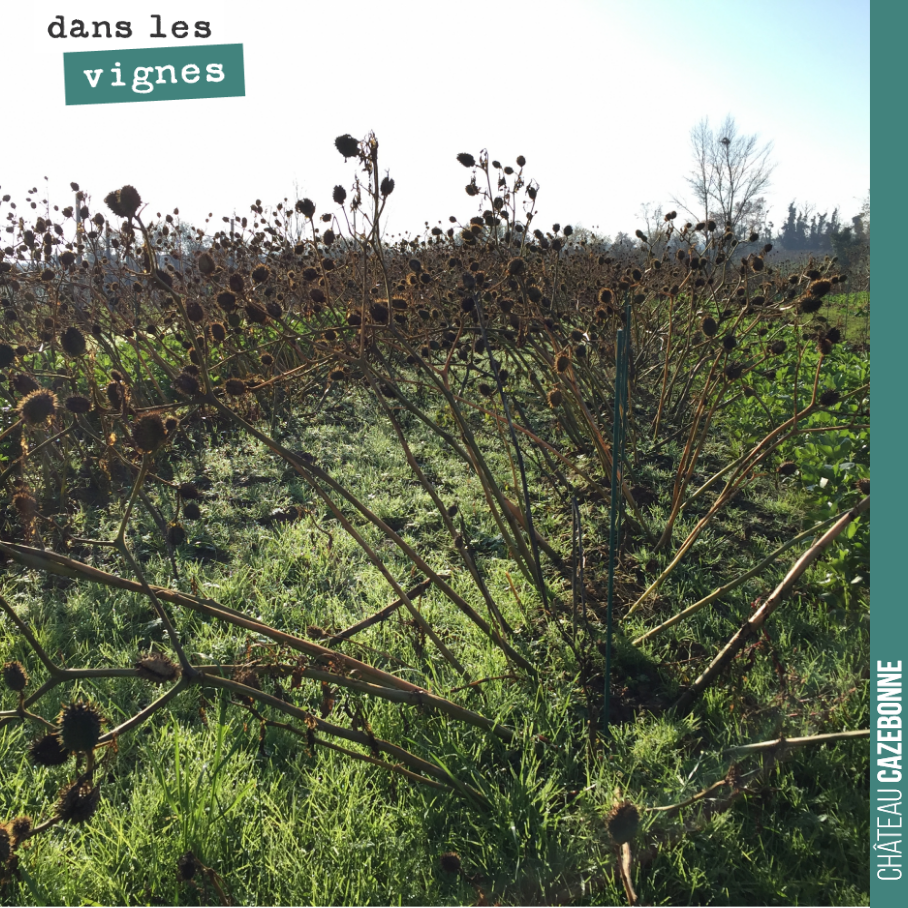
At the heart of our Château Cazebonne vineyards, we cultivate a rich and varied biodiversity, essential to the vitality of our soils and the unique expression of our terroirs. While most plants are valuable allies, some, like datura, require special attention. Fortunately rare directly within our parcels, it can sometimes appear on the periphery, particularly near neighbouring crops such as maize fields, where it finds favourable conditions for its development.
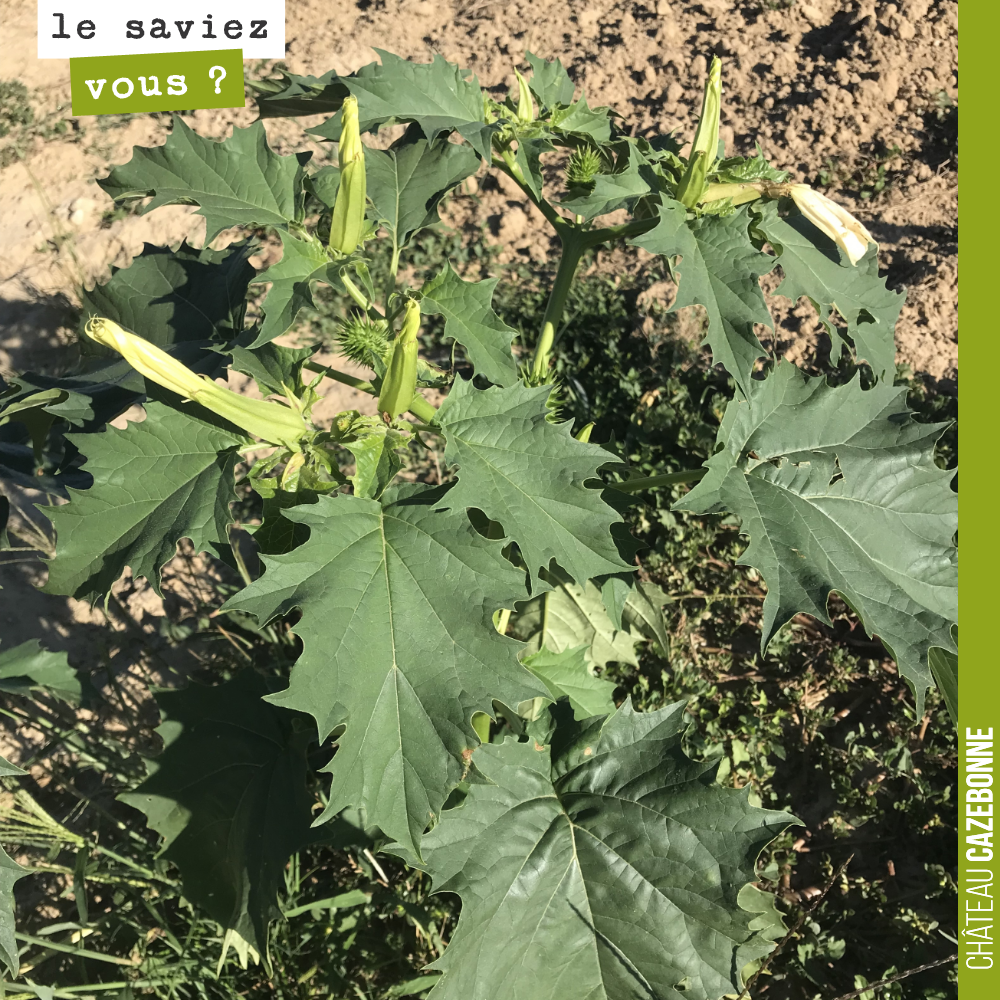
Datura, or "devil's weed", is a plant of the Datura genus, belonging to the Solanaceae family. It is distinguished by its deep green leaves and spectacular trumpet-shaped flowers, which can display a variety of hues, from pure white to pale yellow, as well as delicate purples. Its appearance, at times elegant, at times enigmatic, leaves no one indifferent. However, behind this beauty lies a more complex reality.
It is important to emphasise that datura is a toxic plant. It contains powerful alkaloids, such as atropine and scopolamine, which can, if ingested, cause intense hallucinogenic effects and severe disorders of the central nervous system. All parts of the plant – seeds, leaves and flowers – concentrate these substances. Although sometimes used in strictly supervised medical research, handling it without precaution is strongly discouraged and its presence in accessible environments, particularly for children or animals, requires heightened vigilance.
Our philosophy at Château Cazebonne is to maintain a natural balance. Datura, due to its toxic nature, is not among the plants we seek to encourage in our parcels. However, its isolated presence is also an indicator of the vitality of our environment. It reminds us of the importance of constant observation and adapting our practices whilst respecting life in all its forms. This attention to the flora contributes to the singularity of our wines, reflecting a healthy terroir and a respectful viticultural approach.
Known by several vernacular names, such as "thornapple" due to its spiky fruits, or "stramonium" (from the Greek strychnos manikos, fruit that drives one mad), datura is an herbaceous annual plant. It can reach an impressive size, sometimes up to 1.5 metres in height, and its broad leaves are toothed and asymmetrical at the base. Its imposing, nocturnal flowers bloom from summer until the first frosts, exuding an often intense fragrance. After flowering, it produces prickly capsules containing numerous black seeds.
In our Bordeaux vineyards, datura mainly develops from late spring to autumn. It is particularly visible during the warm months, when its flowers open. Although it is not directly cultivated, its presence is monitored, especially in areas of spontaneous grass cover or along the edges of the parcels. At Château Cazebonne, we note that it prefers well-drained and often disturbed soils, such as field margins or recently worked areas. It is rarer in the middle of the vine rows, where plant competition and the passage of machinery are more intense.
Although toxic, datura plays an ecological role in its environment. Its large flowers attract certain nocturnal pollinating insects, such as hawk moths, thus contributing to the local fauna. Furthermore, like any spontaneous plant, it participates in soil cover, limiting erosion and providing organic matter when it decomposes. For the vine, datura is considered a weed. Its toxicity means it is not likely to be consumed by wildlife that might graze in the vineyards, but its rapid growth and size can, if unmanaged, compete with young vine plants for resources (water, light, nutrients). However, thanks to our agronomic practices that promote controlled biodiversity, we maintain a balance without resorting to aggressive interventions.
In practical terms at Cazebonne, the sustainable viticulture we practise drives us to observe and understand all forms of life. Datura is systematically identified and, if necessary, managed without impacting the wider ecosystem. Its toxicity is not an issue for the wine, as it is never found within the bunches and is not liable to be incorporated during the harvest. We primarily consider it an indicator of the rich, spontaneous biodiversity of our terroirs, which we strive to preserve.
And it is thanks to this commitment and the support of many enthusiasts who have adopted our wines that Château Cazebonne can continue its work of replanting the historic grape varieties of Bordeaux, forgotten varieties that are now reclaiming their place in our vineyards. Discover the unique expression of our terroirs and our rediscovered grape varieties by visiting the Cazebonne shop. To find out more about the ancestral grape varieties of Bordeaux and our commitment, we also invite you to download the digital version of the book "Bordeaux, une histoire de cépages", published by Éditions BBD and written by Jean-Baptiste Duquesne. Finally, test your knowledge of wine and viticulture with our oenological quizzes, a fun way to learn.
Sources
Our suggestions
-5%on your 1st order with code BIENVENUE
The essential6 bottles — Graves red 2022
The best price of the cellar: €12 per bottle delivered.
The everyday red: generous and straight to the point.
I want it Our recommendation92/100 RVF
6 bottles — Graves red 2022, 92/100 RVF
Rated 92/100 by La Revue du vin de France: a solid 10-year ageing potential.
Our Graves for ageing, the finest gateway to the estate.
I want it Go further
12 bottles — the whole range
12 bottles, the whole range tasted: the best discovery-to-price ratio.
The complete tour of the estate, in a single case.
I want itThe cellar, forgotten grape varieties and our cuvées, twice a month. 5% off your first order with the code BIENVENUE.