The essential
6 × Entre Amis red
6 bottles — Graves red 2022
The best price of the cellar: €12 per bottle delivered.
The everyday red: generous and straight to the point.
I want itPreparation 502
Biodynamic viticulture, as practised at Château Cazebonne, is a holistic approach that considers the vineyard as a living and interdependent ecosystem. Based on the principles of Rudolf Steiner, it aims to strengthen the health and vitality of the soil and the vine using natural methods.
At the heart of this practice is the idea that every element – soil, plant, animal, human and even cosmic influences – plays an essential role. The objective is to create an overall harmony that translates into wines fully expressing their terroir, with heightened complexity and authenticity. This involves meticulous soil management to ensure living soils, the promotion of biodiversity, and the application of specific preparations.
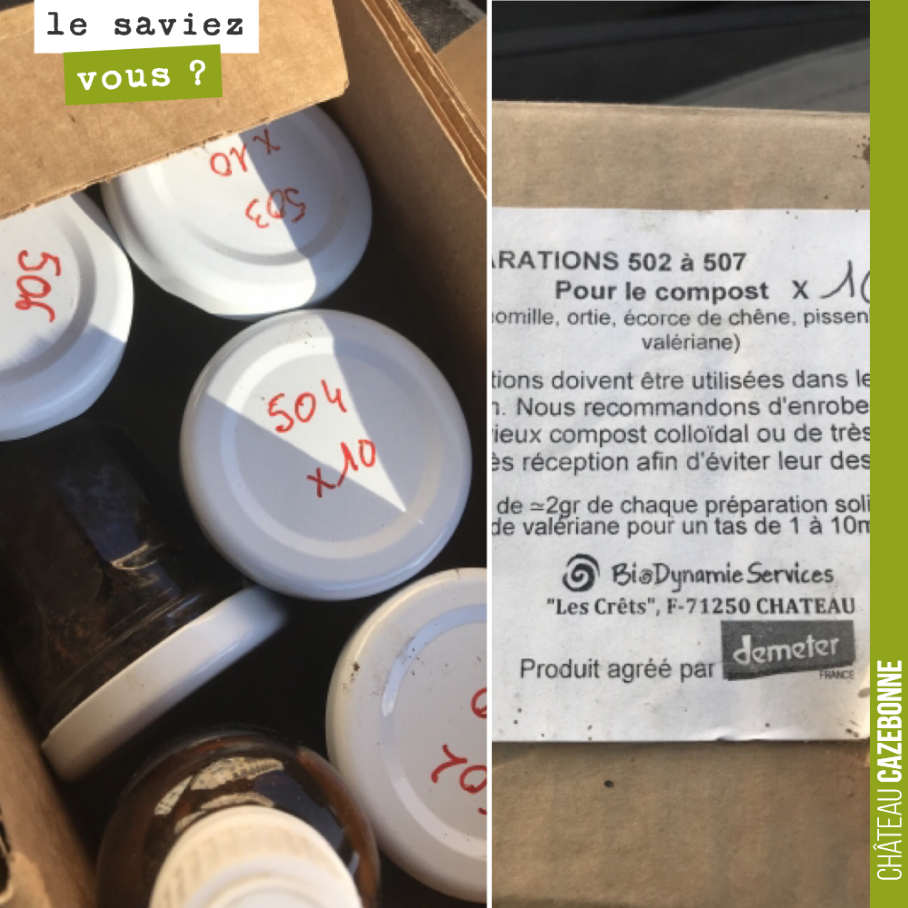
At Château Cazebonne, we use a series of biodynamic preparations, each playing a precise role in the balance of the vineyard. These preparations are derived from natural substances – mineral, plant or animal – dynamised and applied at key moments in the vine's vegetative cycle. Among the best-known are Preparation 500 (horn manure), which promotes soil life and root growth, and Preparation 501 (horn silica), which stimulates photosynthesis and the aromatic quality of the grapes.
Other essential preparations include valerian (Preparation 507) for warmth and flowering processes, oak bark (Preparation 504) to combat fungal diseases, and various herbal teas (biodynamic tisanes) that serve to strengthen the vine. Each preparation is designed to provide a specific impulse, guiding natural processes towards optimal balance.
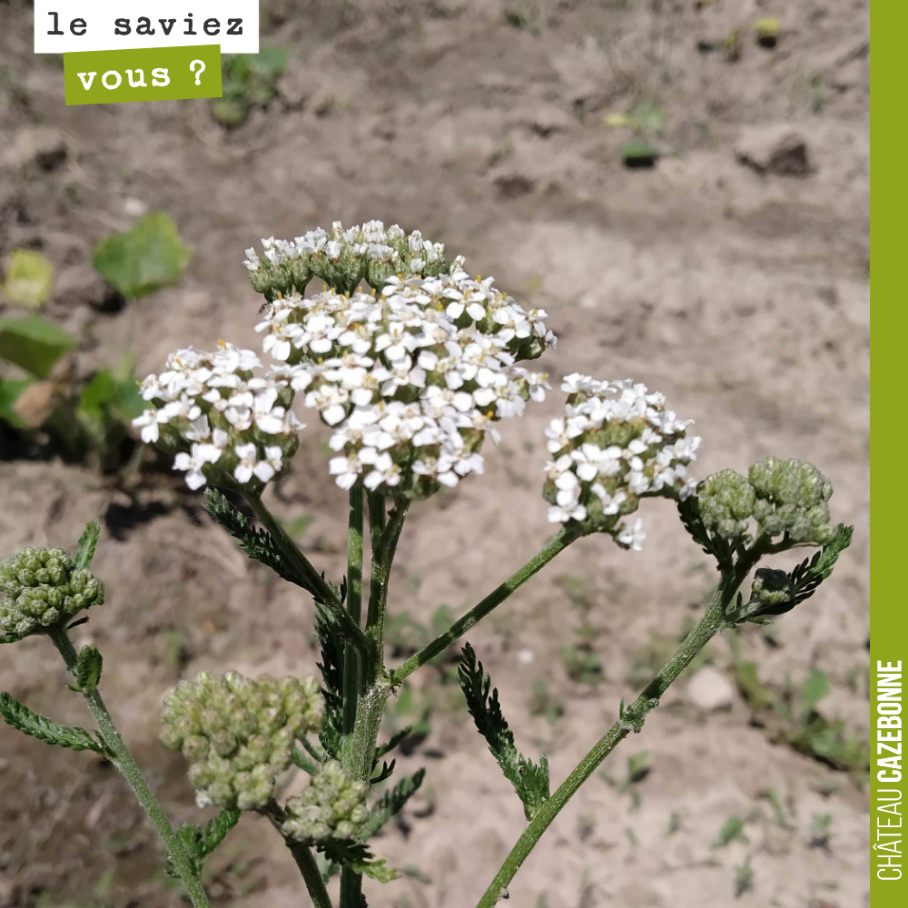
At Château Cazebonne, biodynamic practice relies on a set of specific preparations, each playing a key role in the vitality of our soils and the health of our vines. Among them, Preparation 502, made from yarrow flowers (Achillea Millefolium), holds an essential place. This plant, chosen for its intrinsic virtues, is much more than a simple ingredient: it embodies one of the keystones of the balance and richness of our biodynamic composts.
Yarrow, recognisable by its finely divided leaves and clusters of small white flowers, has been renowned for millennia for its medicinal properties. In the context of biodynamics, it is valued for its richness in sulphur and potassium, two essential nutrients for life and the transformation of organic matter. Its role in the compost is to activate and harmonise decomposition processes, thus promoting the formation of rich, structured and balanced humus. This vital compost, nourished by 502, then becomes the source of lasting fertility for our vines, strengthening their capacity to absorb nutrients and naturally resist stress.
The making of Preparation 502 is a meticulous ritual. The yarrow flowers, carefully harvested at a precise moment in their cycle, are stuffed into a dried stag's bladder, then buried in the soil during the winter months. This burying phase is crucial: it allows telluric forces and cosmic influences to permeate the organic matter, giving the preparation a unique vibrational quality. In the spring, the preparation is unearthed and integrated into the compost, acting as an energetic catalyst.
The application of Preparation 502 aligns with our philosophy of living viticulture, where respecting natural rhythms and promoting biodiversity are paramount. It actively contributes to the overall balance of the vineyard by strengthening the microbial biodiversity of the soil and stimulating organic life. This care given to every detail, this alchemy between the plant, animal and mineral kingdoms, is the signature of our biodynamic commitment and is reflected in the depth and authenticity of our wines.
This commitment allows us not only to produce Demeter and Bio certified wines since 2020, but also to support our core mission: replanting the forgotten grape varieties in Bordeaux that have marked the region's viticultural history. As Jean-Baptiste Duquesne highlights in his book "Bordeaux, une histoire de cépages", the reintroduction of these ancient varieties is crucial for the diversity and resilience of our vineyard in the face of climate challenges and Bordeaux soils. This work of preserving our ampelographic heritage is made possible by the support of the many wine enthusiasts who have embraced our wines and share our vision.
At Château Cazebonne, we are committed to replanting the region's forgotten grape varieties in Bordeaux. This safeguarding work is made possible thanks to the support of the wine enthusiasts who discover our cuvées. To deepen your knowledge of the history of Bordeaux grape varieties, we invite you to download the digital version of the book "Bordeaux, une histoire de cépages" by Jean-Baptiste Duquesne, and your oenological knowledge with our quizzes. You can find the diversity of our biodynamic wines for sale at the Cazebonne boutique.
Sources
Our suggestions
-5%on your 1st order with code BIENVENUE
The essential6 bottles — Graves red 2022
The best price of the cellar: €12 per bottle delivered.
The everyday red: generous and straight to the point.
I want it Our recommendation92/100 RVF
6 bottles — Graves red 2022, 92/100 RVF
Rated 92/100 by La Revue du vin de France: a solid 10-year ageing potential.
Our Graves for ageing, the finest gateway to the estate.
I want it Go further
12 bottles — the whole range
12 bottles, the whole range tasted: the best discovery-to-price ratio.
The complete tour of the estate, in a single case.
I want itThe cellar, forgotten grape varieties and our cuvées, twice a month. 5% off your first order with the code BIENVENUE.