The essential
6 × Entre Amis red
6 bottles — Graves red 2022
The best price of the cellar: €12 per bottle delivered.
The everyday red: generous and straight to the point.
I want itDaisies
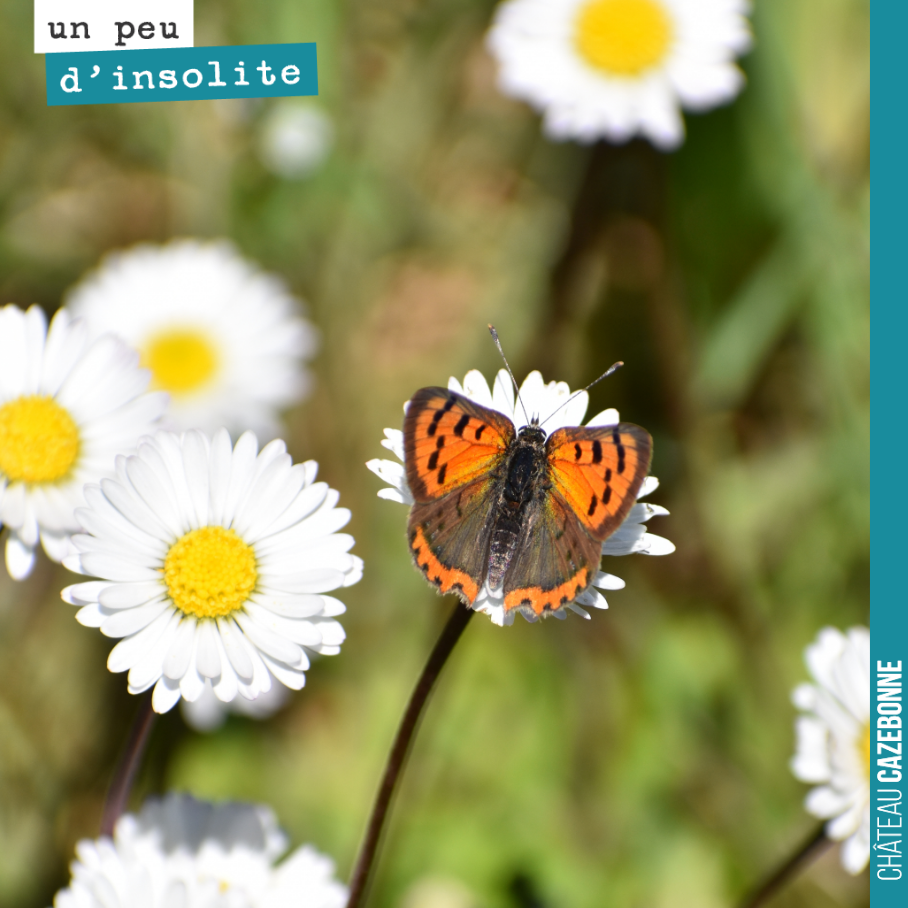
At the heart of our Bordeaux vines cultivated using organic farming, the daisy (Bellis perennis) is much more than a simple little ornamental flower. This perennial herbaceous plant from the Asteraceae family, colloquially called the daisy because of its early flowering, is a discreet but essential sentinel of the vitality of our terroirs. Native to Europe and western Asia, it is distinguished by its green, spatulate and toothed leaves, forming a basal rosette right on the ground. Its solitary and perfect flowers bloom like little suns, generally white at the tips and yellow in the centre, sometimes tinged with pink or red, offering a delicate spectacle from March to October. It reaches a modest height, between 5 and 20 centimetres, but its impact on the viticultural ecosystem is far from insignificant.
The presence of the daisy in our vine rows is a valuable indicator. It thrives in well-aerated soils that are relatively rich in nutrients, signs of healthy earth. Its early flowering, from the first fine days, attracts diverse auxiliary fauna, notably pollinators and beneficial insects that participate in the natural balance of the vine. Its roots also play an important role in improving soil structure, contributing to its aeration and permeability, which are crucial elements for the healthy growth of our vines. At Château Cazebonne, we carefully observe these plant markers, as they inform us about the state of our soils and reassure us in our environmentally friendly practices. As Jean-Baptiste Duquesne points out in his book "Bordeaux, une histoire de cépages", the interaction between soil and plant is the cornerstone of an exceptional terroir.
The daisy is a meadow plant whose annual life cycle is marked by almost uninterrupted flowering from March to October, or even later depending on the climate. Its Latin name, Bellis perennis, reflects its permanence well. At Cazebonne, it is a regular guest between our rows, contributing to the spontaneous grass cover that we encourage. This generous flowering is a true indicator of the state of our soils, as it prefers rich and well-drained land. Its resilience to trampling and varying conditions allows it to flourish in environments where microbial life is active, such as our living soils, cultivated using organic and biodynamic farming. It is in the plots where the earth is well-structured and nourished that it manifests itself most brilliantly.
Beyond its role as an indicator, the daisy makes a significant contribution to the biodiversity of our vineyards. By attracting a multitude of pollinators from the beginning of spring, it ensures the presence of auxiliary fauna that also benefits the vine. The bees and other foraging insects that visit it participate in the ecosystem's balance. Its dense root system helps to secure the soil, preventing erosion and promoting water infiltration. In our global approach to agroecology in viticulture, the daisy is a modest, but essential, component of this balance. It forms a protective plant carpet that regulates soil temperature and limits the development of more competitive weeds. Among other equally beneficial plants, yarrow contributes to this complex ecosystem. Other blooms, such as chamomile or the daffodil, also participate in floral diversity, just like the tassel hyacinth.
By cultivating biodiversity in our vineyards, we reaffirm our commitment to sustainable and authentic viticulture. This philosophy is also reflected in our approach to replanting the historic grape varieties of Bordeaux, varieties such as Castets, Mancin, or Saint-Macaire, which had almost completely disappeared from the Bordeaux viticultural landscape. This meticulous work of preservation and rehabilitation, which pays tribute to the centuries-old richness of our heritage, is only possible thanks to the invaluable support of all wine lovers who have embraced and appreciated the unique flavours of our cuvées. Their loyalty allows us to continue writing a new chapter in Bordeaux's wine history, where diversity and authenticity take pride of place.
Discover the unique expression of our terroirs and our rediscovered grape varieties by visiting the Cazebonne shop.
To find out more about the ancestral grape varieties of Bordeaux and our commitment, we also invite you to receive the digital version of the book "Bordeaux, une histoire de cépages", published by Éditions BBD and written by Jean-Baptiste Duquesne.
This work to restore biodiversity and preserve old grape varieties, which we carry out with passion at Château Cazebonne, is made possible by the commitment of all wine lovers who discover our wines, have fun with our oenological quizzes, learn more through the book "Bordeaux, une histoire de cépages" and support our approach by visiting our online shop.
Sources
Our suggestions
-5%on your 1st order with code BIENVENUE
The essential6 bottles — Graves red 2022
The best price of the cellar: €12 per bottle delivered.
The everyday red: generous and straight to the point.
I want it Our recommendation92/100 RVF
6 bottles — Graves red 2022, 92/100 RVF
Rated 92/100 by La Revue du vin de France: a solid 10-year ageing potential.
Our Graves for ageing, the finest gateway to the estate.
I want it Go further
12 bottles — the whole range
12 bottles, the whole range tasted: the best discovery-to-price ratio.
The complete tour of the estate, in a single case.
I want itThe cellar, forgotten grape varieties and our cuvées, twice a month. 5% off your first order with the code BIENVENUE.