The essential
6 × Entre Amis red
6 bottles — Graves red 2022
The best price of the cellar: €12 per bottle delivered.
The everyday red: generous and straight to the point.
I want itSalad Burnet
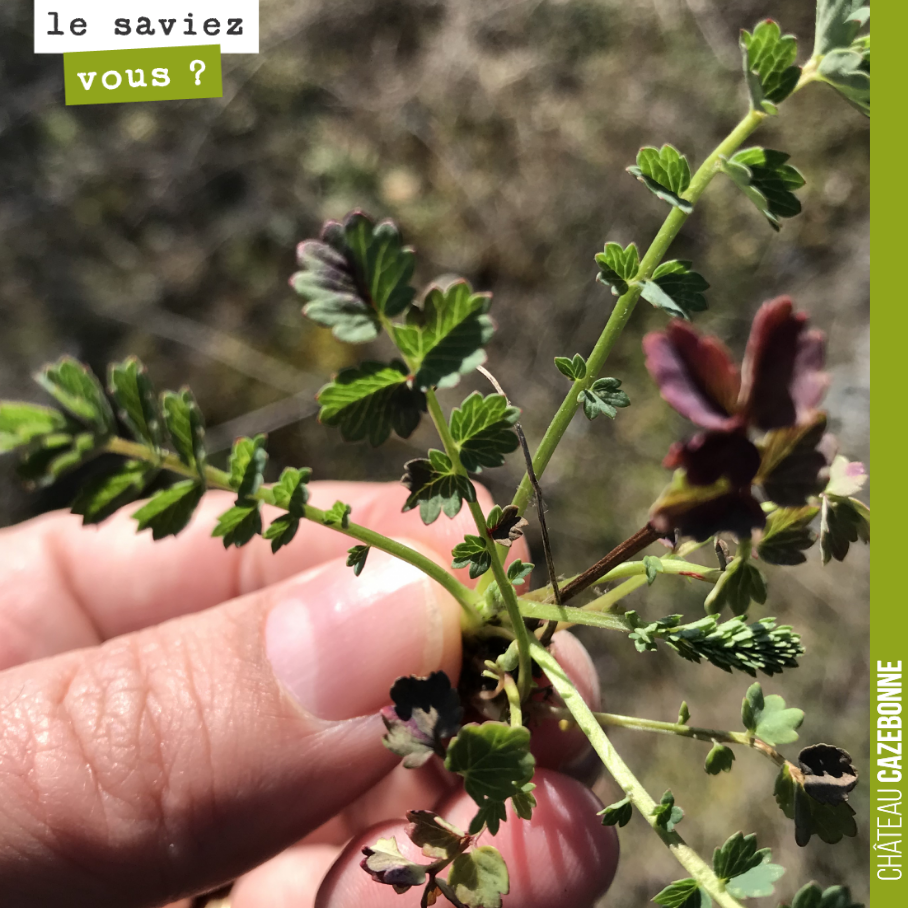
At the heart of our organically farmed vineyard, we carefully observe the floral richness that populates our rows. Among these species, Salad burnet (genus Sanguisorba), discreet yet essential, proves to be a valuable indicator of our terroirs' good health. Belonging to the vast Rosaceae family, these perennial plants are characterised by elegant, deep green leaves and flower heads with hues ranging from carmine red to pure white, as well as delicate pinks. Far removed from its Latin etymology, "pipinella", which evokes the goat-like odour of some of its cousins, the Salad burnet in our vines offers a fresh and delicate presence.
Salad burnet, also known as Great burnet (Sanguisorba officinalis) or Official burnet, is a perennial herbaceous plant that stands out in our plots. Ranging in height from 30 centimetres to nearly a metre, it features pinnately compound leaves with toothed leaflets. Its flowers, clustered in compact purple to burgundy spheres, appear on fine, branching stems, creating an airy silhouette and colourful touches within the grass cover.
In our vineyards, Salad burnet generally blooms from May to September, pacing the seasons with its prolonged flowering. This period coincides with key moments in the life of the vine, where its presence contributes to the overall balance. It flourishes particularly well in the rich, well-drained soils found on the gravel crests of Cazebonne, often exposed to the sun. It is frequently observed in the grassed rows, where it actively participates in soil life.
Native to Eurasia and North Africa, Salad burnet plays a significant ecological role by attracting various beneficial insects, which are essential for the natural balance of the vineyard ecosystem. Its deep, branching roots help to loosen the earth, thereby improving aeration and its ability to retain water. Furthermore, its dense foliage protects the soil from erosion and maintains a welcome moisture at the surface, promoting microbial activity, which is essential for living and healthy soils. Its flowers provide a food source for numerous pollinating insects, and its presence creates a favourable habitat for natural pest predators, such as ladybirds and hoverflies.
Far from competing with our young vines, Salad burnet represents a precious ally. Its ability to structure the soil without hindering the vine's development makes it an ideal component of our managed grass cover strategy. It also contributes to the richness of the vineyard's flora, a key element in fostering biodiversity. Salad burnet is also known for its medicinal and culinary properties, with its young leaves bringing a pleasant, slightly nutty and refreshing flavour to certain salads or soups. This aspect highlights the interdependence between the different components of our ecosystem.
At Château Cazebonne, this philosophy of respecting and enhancing plant biodiversity is combined with our passion for the history and viticultural richness of Bordeaux. Just as Salad burnet is part of our ecosystem's balance, we are committed to reviving ancestral Bordeaux grape varieties, such as Castets, Mancin, and Saint-Macaire. These varieties, forgotten for decades, are the reflection of a unique gustatory heritage and diversity that we are dedicated to restoring. Alongside our Salad burnet, we also have the pleasure of growing Star of Bethlehem and Red dead-nettle, other remarkable varieties. This long-term work of rehabilitation and replanting is only made possible by the invaluable support of all wine lovers who, through their appreciation for the singular flavours of our cuvées, allow us to continue writing this new chapter in Bordeaux's wine history.
To better understand our approach, we invite you to download the digital version of the book "Bordeaux, une histoire de cépages" to learn more about its rich history. You can also test your knowledge of the Bordeaux wine world with our oenological quizzes, a fun way to discover the specificities of our terroir. Finally, if you wish to taste the fruits of our labour, do not hesitate to discover our wines online, which bear witness to our commitment to authentic and nature-respecting wine.
Sources
Our suggestions
-5%on your 1st order with code BIENVENUE
The essential6 bottles — Graves red 2022
The best price of the cellar: €12 per bottle delivered.
The everyday red: generous and straight to the point.
I want it Our recommendation92/100 RVF
6 bottles — Graves red 2022, 92/100 RVF
Rated 92/100 by La Revue du vin de France: a solid 10-year ageing potential.
Our Graves for ageing, the finest gateway to the estate.
I want it Go further
12 bottles — the whole range
12 bottles, the whole range tasted: the best discovery-to-price ratio.
The complete tour of the estate, in a single case.
I want itThe cellar, forgotten grape varieties and our cuvées, twice a month. 5% off your first order with the code BIENVENUE.