
 The essential
6 × Entre Amis red
6 bottles — Graves red 2022
The best price of the cellar: €12 per bottle delivered.
The everyday red: generous and straight to the point.
I want itPump-over
In the quest for winemaking excellence, every gesture counts. Pumping over, an ancestral yet highly relevant technique, perfectly illustrates this balance between tradition and technical skill. It is a key operation during fermentation with a twofold objective: extracting the precious compounds contained in the grape skins and aerating the must to support the work of the yeast.
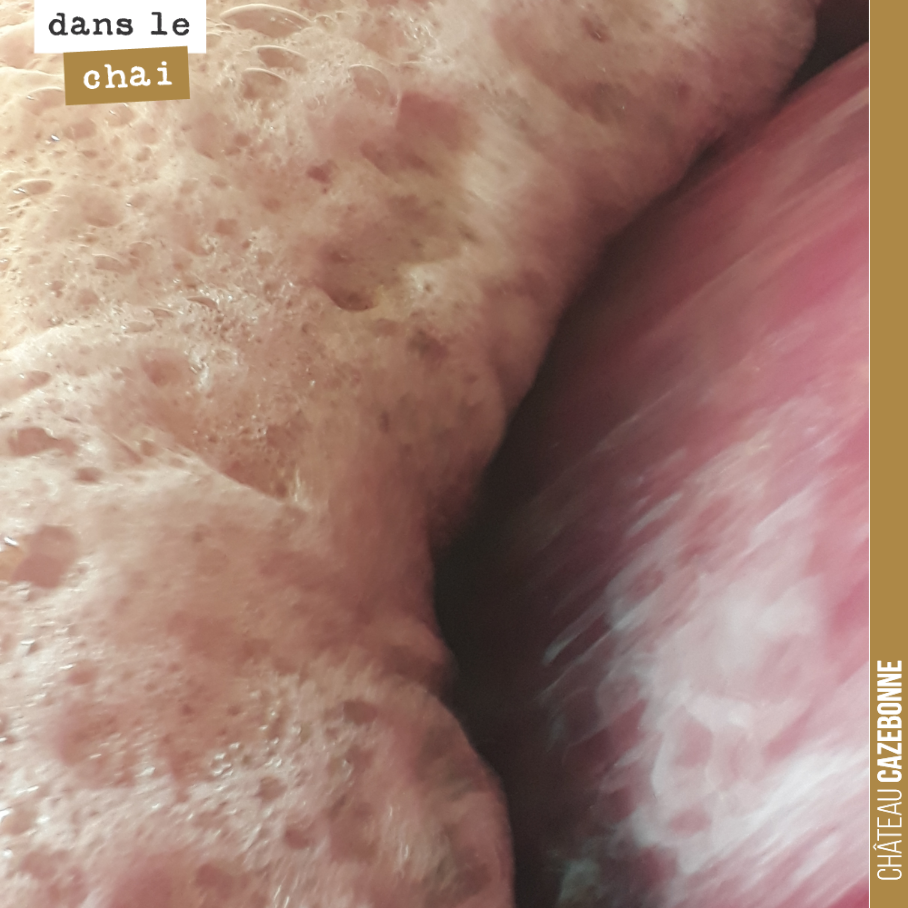
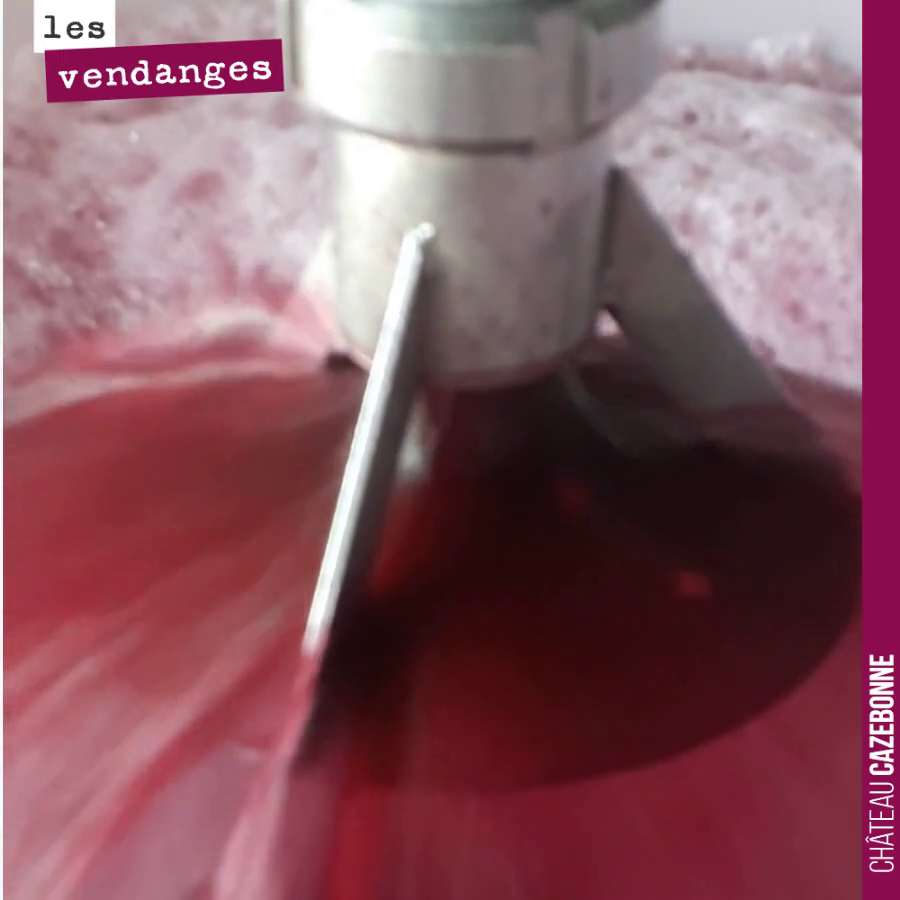
Pumping over is an oenological technique that consists of pumping the fermenting juice (the must) from the bottom of the vat to reintroduce it over the top of the "cap" – the solid layer formed by the grape skins, pips, and other solid matter. This action submerges the cap, thereby promoting continuous contact between the liquid and the solid elements. This contact is crucial for the extraction of phenolic compounds: anthocyanins, which are responsible for the deep colour of red wines, and tannins, which provide structure, longevity, and aromatic complexity. Beyond extraction, pumping over ensures essential aeration. Oxygen is vital for the yeasts that convert sugars into alcohol. A controlled supply of oxygen prevents stuck fermentations and contributes to the healthy development of yeasts, avoiding the production of unpleasant flavours. The intensity and frequency of pump-overs are adjusted according to the progress of the fermentation and the desired wine profile, as described by Pierre Galet in his book "Cépages et Vignobles de France", highlighting the importance of mastering this practice.
Pumping over is mainly carried out during the alcoholic fermentation phase of the must, for red wines and sometimes certain macerated rosé wines. It generally begins shortly after the crushed berries are vatted and continues throughout active fermentation. The precise timing and duration are determined by extraction objectives and the state of fermentation. At the start of fermentation, gentle pump-overs help to hydrate the cap and initiate extraction. At peak fermentation intensity, more vigorous pump-overs may be necessary to maintain yeast activity and optimise the extraction of compounds.
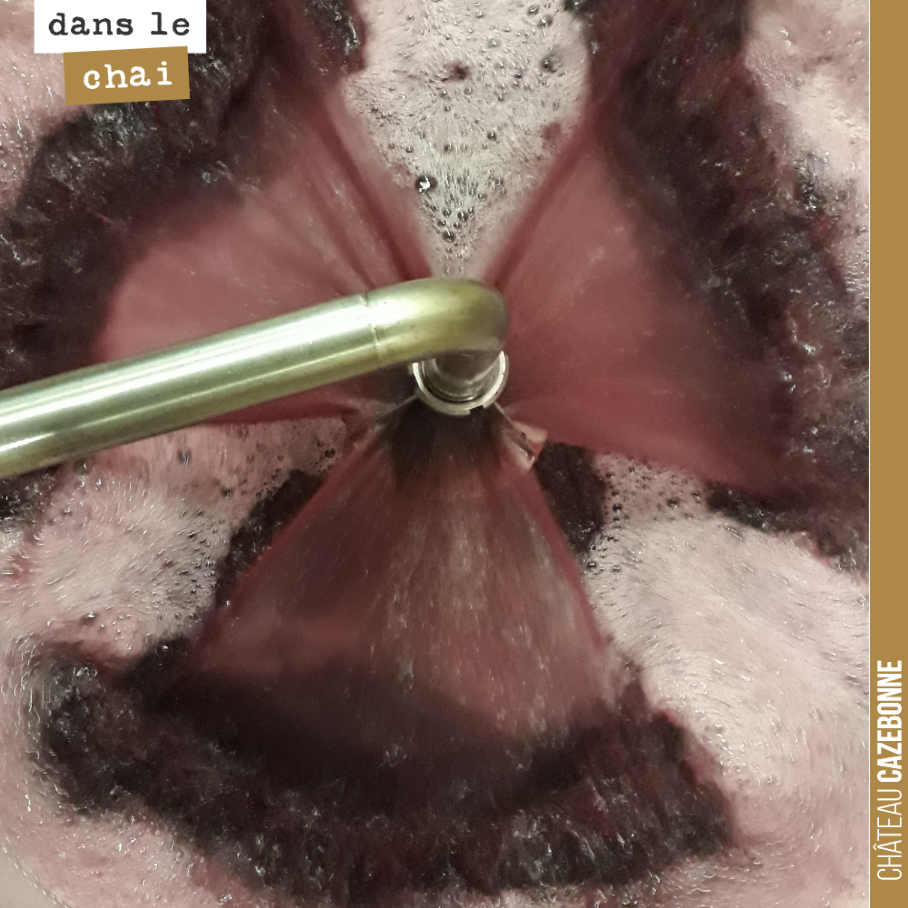
Pump-overs involve drawing off, via a pump, the must located at the bottom of the vat. This must is then sent back over the top of the cap, either by simple sprinkling ("showering") or by total submersion. There are different variants, including "open pumping over" which exposes the must to the air for maximum aeration, and "closed pumping over" which minimises oxygen contact, preferred for gentle extractions or to avoid excessive aeration at the end of fermentation. The choice of technique depends on the grape variety, the quality of the harvest, and the desired style of wine, as is often discussed during oenology workshops or when exploring winemaking practices. Note that other operations, such as racking, will follow pumping over to refine the wine.
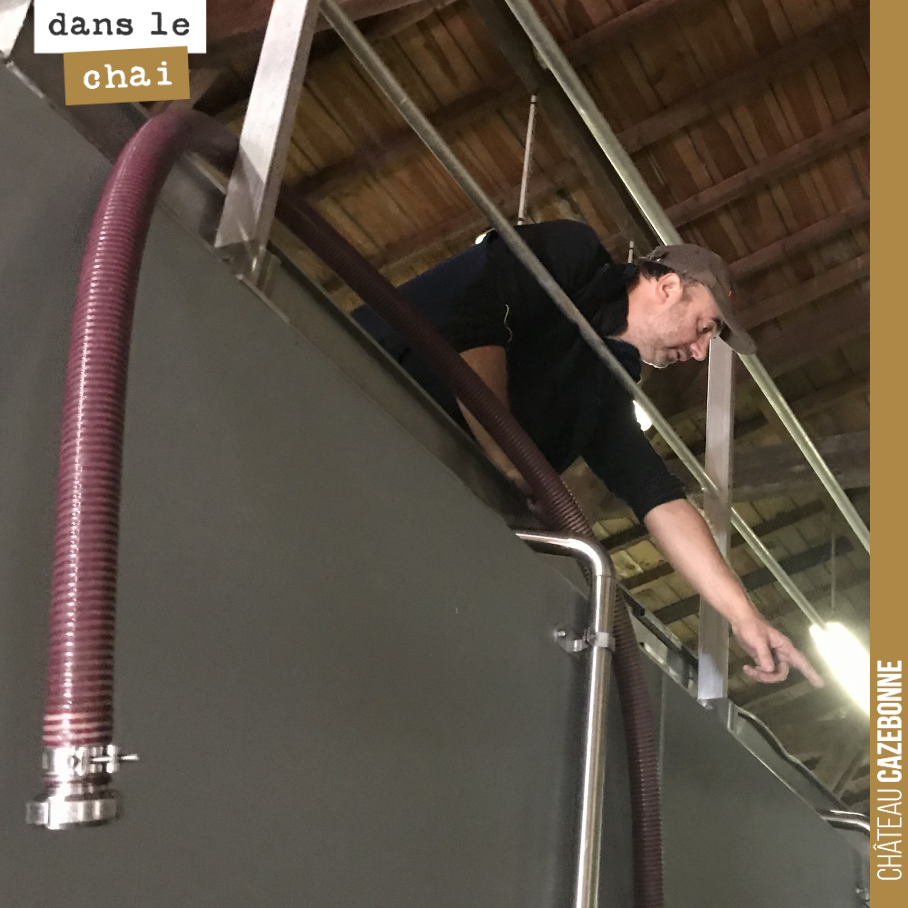
The main equipment for pumping over includes a pump with adequate capacity to move the required volume of must, and hoses for transfer. Sprinklers or spray booms are used to distribute the must evenly over the cap. For very large volumes or more mechanised approaches, automatic pumping over systems can be found, or in some cellars, vats equipped with integrated pistons or sprayers to facilitate the operation. The maintenance of this cellar equipment is crucial to ensure the cleanliness and efficiency of operations.
At Château Cazebonne, we approach each stage of winemaking, including pumping over, with a deep respect for the terroir and the grape varieties. Our expertise allows us to precisely adapt these technical gestures to reveal the quintessence of each vintage. This involves meticulous observation of each vat and constant adaptation. For example, for our red wines, rich in Cabernet Sauvignon and Merlot, pumping over is essential to structure and colour the wine while preserving aromatic expression. We favour gentle and regular pump-overs, promoting progressive extraction and measured aeration, in order to obtain wines of great finesse, characteristic of our identity in the red wines of the Graves. This meticulous work is part of our broader commitment to preserving and promoting Bordeaux's winemaking heritage, in harmony with our biodynamic approach.
Our approach goes beyond the simple production of quality wines. We are actively invested in preserving Bordeaux's winemaking heritage, notably by replanting ancient grape varieties that had almost disappeared from the region. These forgotten varieties, whose richness is so well explored in "Bordeaux, une histoire de cépages" by Jean-Baptiste Duquesne, published by Éditions BBD, represent an essential part of the identity and diversity of our terroir. This work of returning to our roots, exploring the past to build the future, is made possible thanks to the unwavering support of all the wine lovers who choose our wines. Every bottle you taste helps to write a new chapter in Bordeaux's winemaking history, a history shaped by diversity and authenticity. Discover our cuvées and support our approach by visiting our online shop. To learn more about the fascinating history of Bordeaux grape varieties, we invite you to receive the digital version of the book "Bordeaux, une histoire de cépages", and to test your knowledge with our oenological quizzes.
Sources
Our suggestions
-5%on your 1st order with code BIENVENUE
The essential6 bottles — Graves red 2022
The best price of the cellar: €12 per bottle delivered.
The everyday red: generous and straight to the point.
I want it Our recommendation92/100 RVF
6 bottles — Graves red 2022, 92/100 RVF
Rated 92/100 by La Revue du vin de France: a solid 10-year ageing potential.
Our Graves for ageing, the finest gateway to the estate.
I want it Go further
12 bottles — the whole range
12 bottles, the whole range tasted: the best discovery-to-price ratio.
The complete tour of the estate, in a single case.
I want it
19 September 2022
08 October 2020
03 October 2020
15 September 2020
13 September 2020
04 September 2020
The cellar, forgotten grape varieties and our cuvées, twice a month. 5% off your first order with the code BIENVENUE.