
 The essential
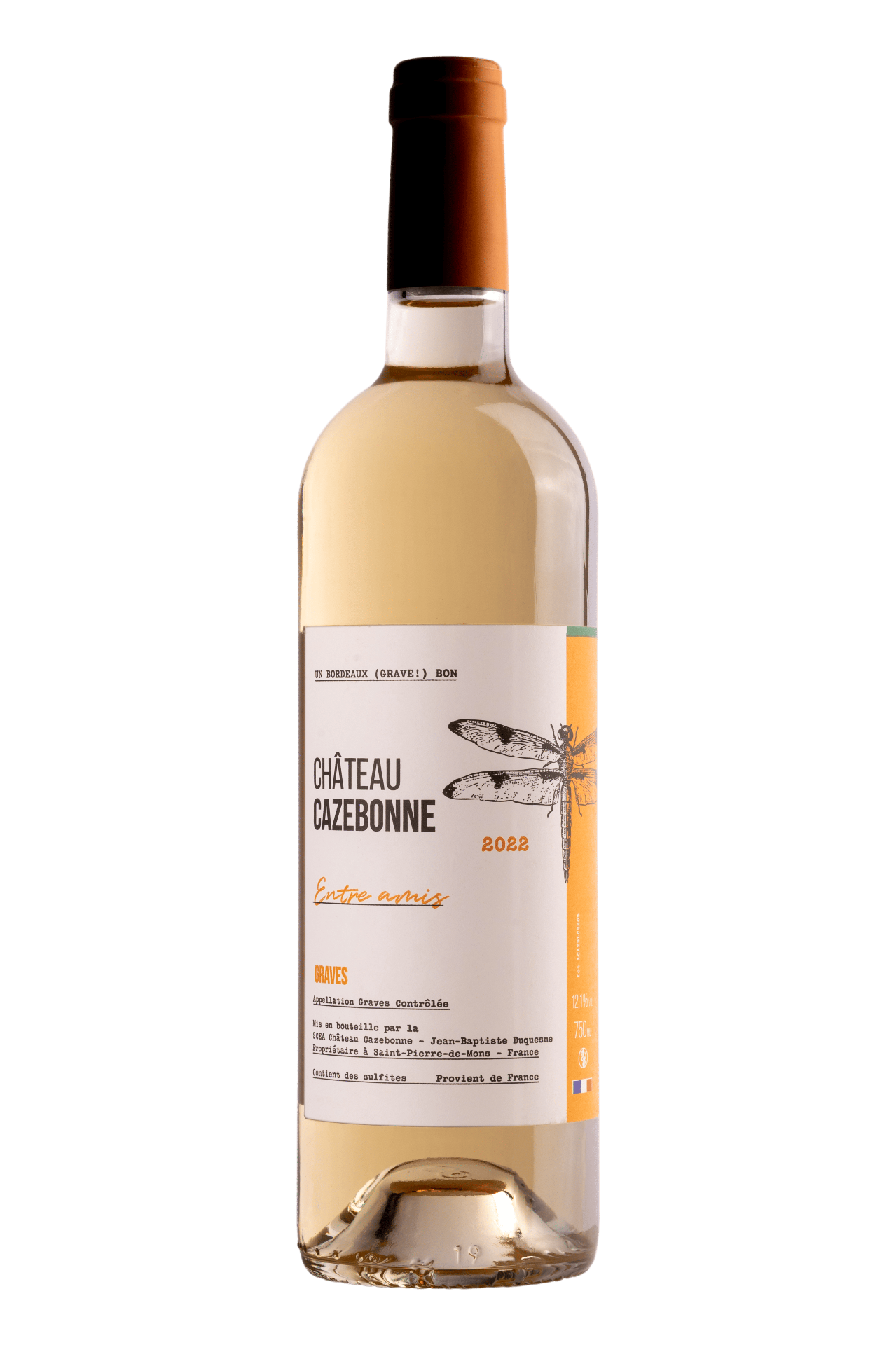
Entre Amis white 2024
Graves white 2024
Crisp and saline: the easy aperitif, at a gentle price.
The estate's thirst-quenching white, open it without thinking.
I want itBlanc Verdet
At the heart of our approach to rehabilitating the forgotten grape varieties of Bordeaux lies the fascinating Blanc Verdet grape variety. Its history, rich and sometimes enigmatic, sheds light on the past diversity of our vineyard. As early as 1736, Abbé Bellet mentioned it in a precious list, testifying to its ancestral presence. Also known under the names Verdet or Petit Blanc Verdet, its preference for "fonds maigres" (poor soils), as indicated in the inventories of Bordeaux and Cadillac, highlights its adaptation to specific terroirs, already heralding its singularity. This grape variety is a perfect example of the extinct grape varieties of Bordeaux that we seek to rediscover and promote.
Over the centuries, Blanc Verdet has continued to leave its mark on viticultural history. W. Franck, in 1824, mentioned "Verdot" among the white grape varieties of the Gironde department, probably alluding to Blanc Verdet, a hypothesis widely shared by G. Bord in 1932. Later, Jullien in 1832, then Count Odart in 1844, confirmed its place in the "bons crus" (good growths), notably in the Graves. Féret, in his famous work, classified it as a secondary white grape variety, confirming its presence, albeit more discreetly.
Its mention by Jullien in 1832 is particularly enlightening when he cites "verdelette" among the grape varieties that make up the excellent white wines of Graves and Pontac. Everything suggests that he was referring to Blanc Verdet, highlighting its past importance in prestigious appellations, particularly in Sauternes and the Graves where it was once widely grown. Furthermore, Bordeaux ampelography reveals many historical curiosities, as is also the case with the Jurançon blanc grape variety, or with the Monbadon grape variety.
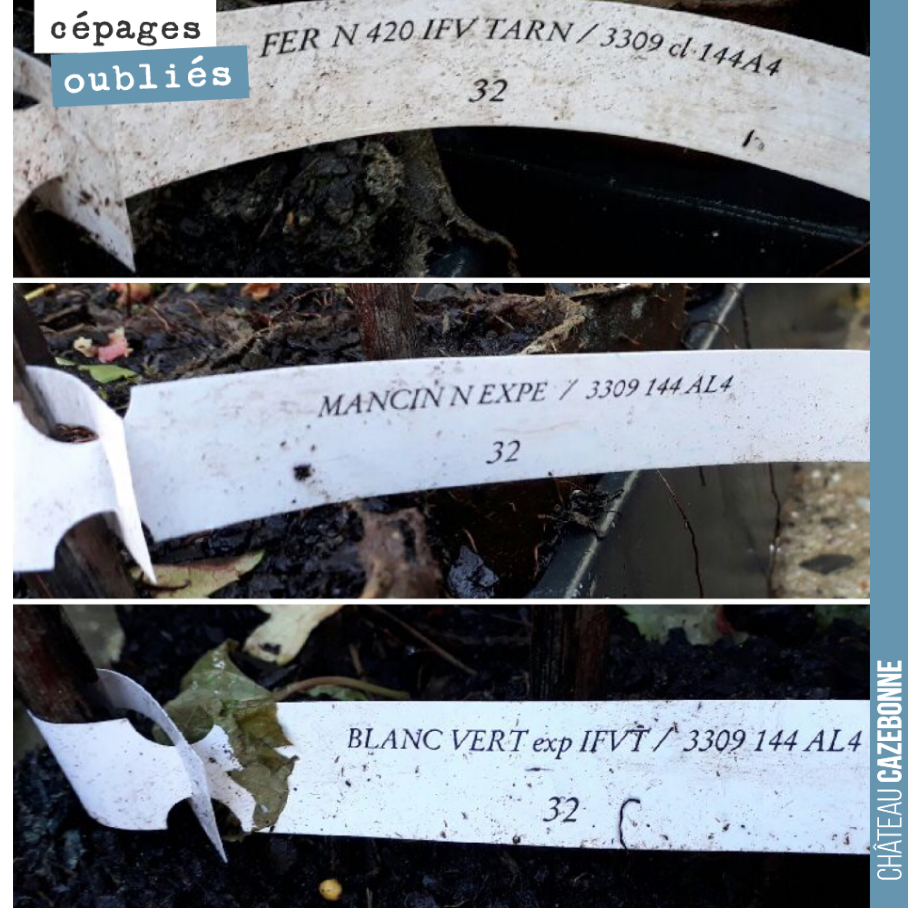
We decided to replant Blanc Vert without being at all certain of its relationship to Blanc Verdet.
Blanc Vert is a second-epoch grape variety, budding late and whose bunches retain their green hue until the harvest, hence its name. Harvested late, often at the same time as Blanc Auba, it only reveals its potential under optimal heat conditions. Its susceptibility to diseases and its propensity for botrytis before full maturity made it a demanding grape variety, naturally abandoned after phylloxera, which almost caused it to disappear after 1878. Yet, it is precisely this capricious character that intrigues us and motivates us to rediscover it on our Graves soils. This painstaking but fascinating work is made possible thanks to the invaluable support of the many enthusiasts who have adopted our wines and share our passion for the rediscovery of Bordeaux's viticultural heritage, just like the research we are conducting on the Prueras grape variety. We are also exploring grape varieties such as Lauzet, a discreet Pyrenean grape variety, cousin to the Bordeaux varieties, to enrich our knowledge and our diversity.
| Characteristic | Description |
|---|---|
| Budburst | Late |
| Maturity | Third epoch |
| Vigour | Rustic and vigorous |
| Powdery mildew susceptibility | Medium |
| Botrytis susceptibility | Relatively resistant, not very susceptible to noble rot |
| Winemaking potential | Wines with balanced acidity and low alcohol content, with discreet aromas. Suitable for warm and low-humidity terroirs. |
The work of Château Cazebonne, undertaken with other winegrowers who are replanting forgotten grape varieties, is to strive for the sustainability of the Bordeaux vineyard by reintroducing historical varieties like Blanc Verdet. It is partly thanks to the book " Bordeaux, une histoire de cépages " by Jean-Baptiste Duquesne that this knowledge is being revived. To test your own knowledge of the history and characteristics of grape varieties, do not hesitate to participate in our oenological quizzes. And to discover the realisation of this passion in our bottles, we invite you to come and explore the Cazebonne shop where each wine tells a part of our history and our commitment. Also, explore the fascinating history of the Baroque grape variety, or the opportunity represented by Bouysselet: the freshness of the South-West, an avenue for Bordeaux?
Sources
Our suggestions
-5%on your 1st order with code BIENVENUE
The essentialGraves white 2024
Crisp and saline: the easy aperitif, at a gentle price.
The estate's thirst-quenching white, open it without thinking.
I want it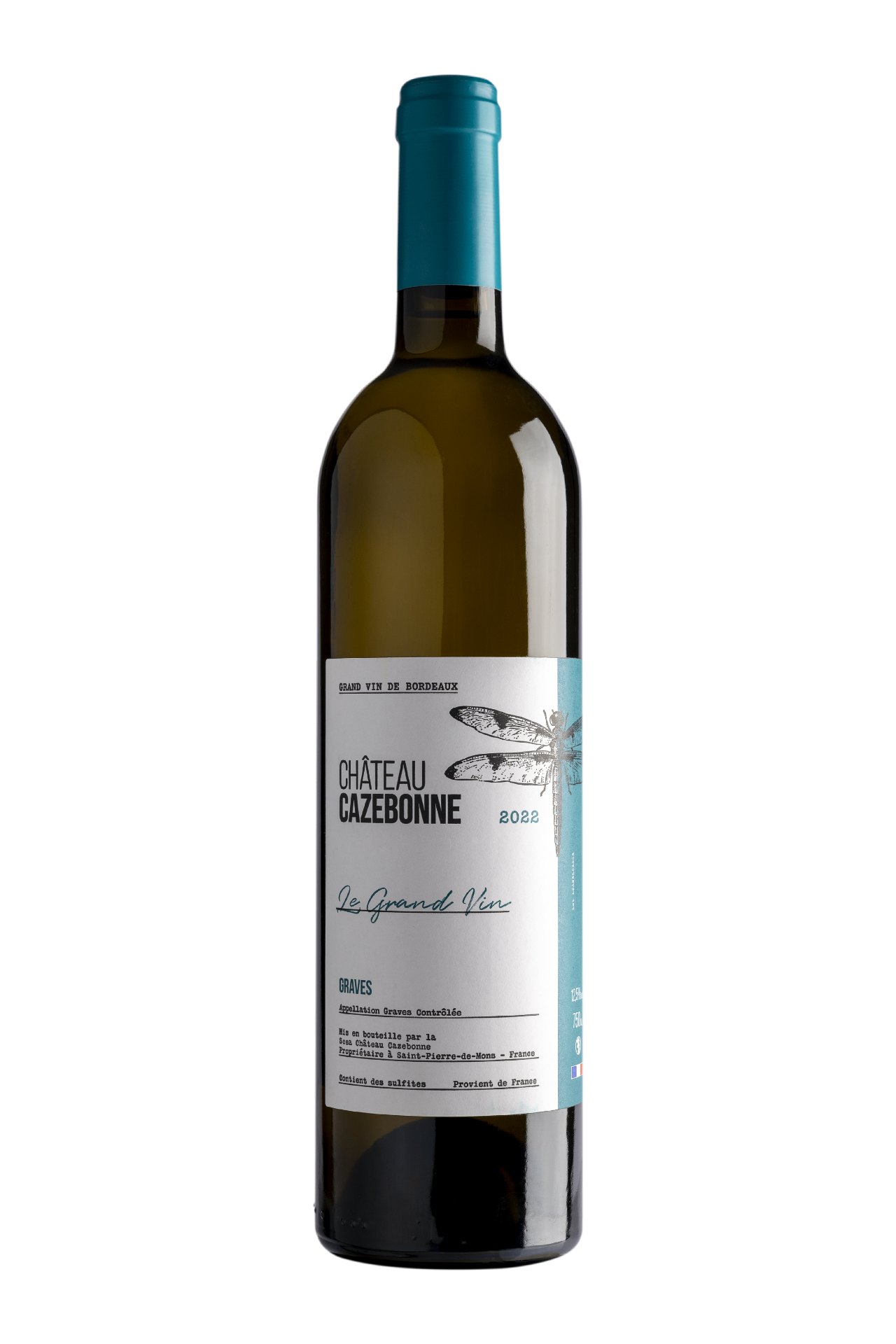 Our recommendation92/100 RVF
Graves white 2022, 92/100 RVF
Rated 92/100 by La Revue du vin de France: old-vine Sémillon.
The great Graves white: taut and deep.
I want it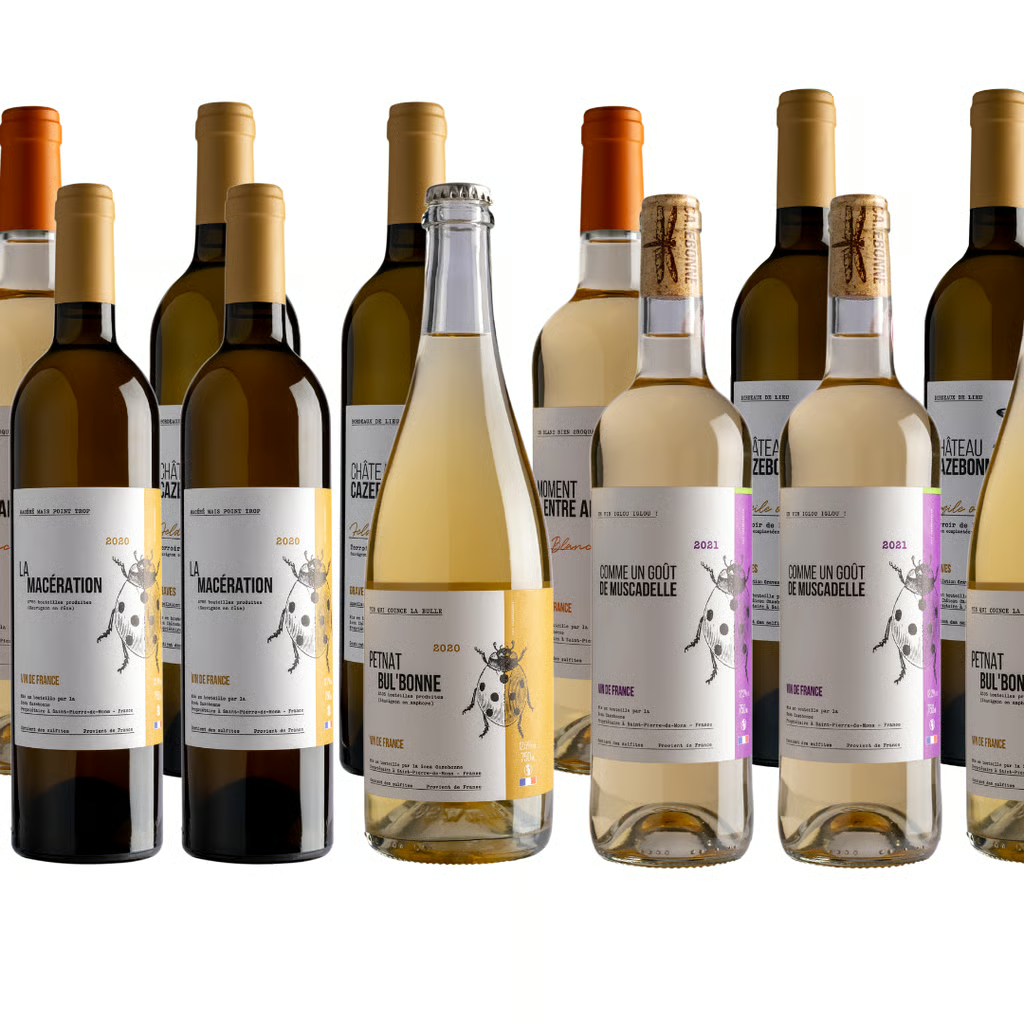 Go further
12 bottles — plot selection
All our organic whites together: the complete plot-by-plot flight.
To explore Sémillon in all its forms.
I want it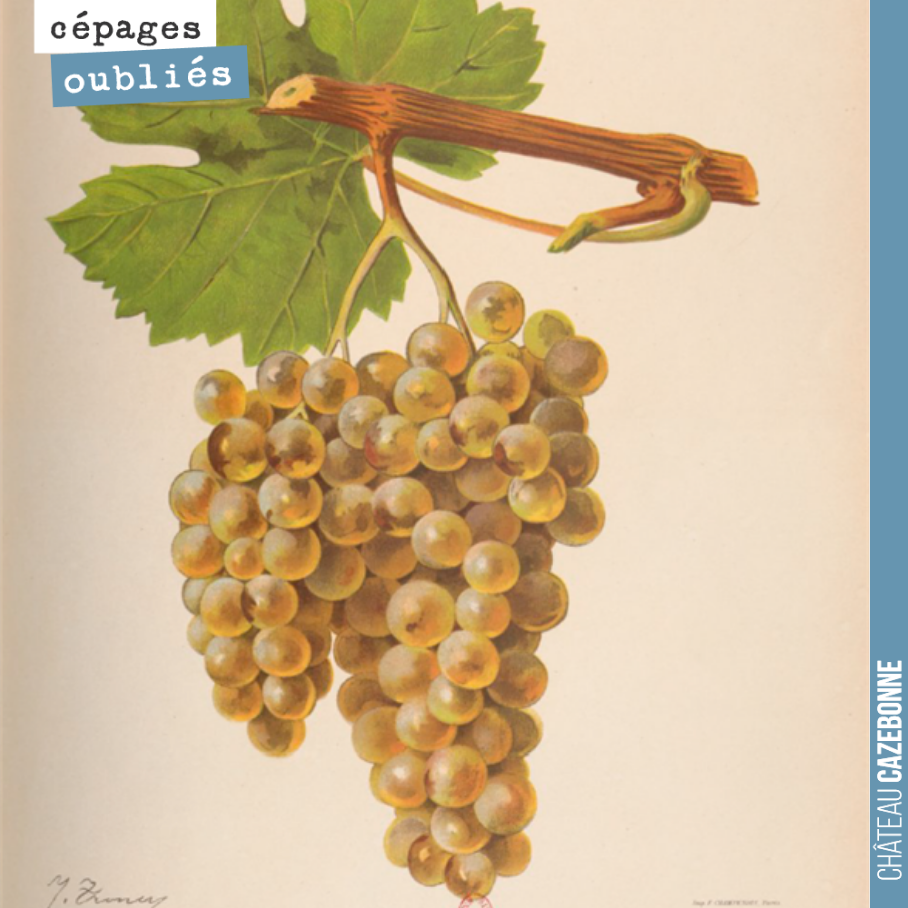
17 January 2021
26 July 2019
The cellar, forgotten grape varieties and our cuvées, twice a month. 5% off your first order with the code BIENVENUE.