
 The essential92/100 RVF
Comme en 1900 red 2022
Vin de France — heritage grapes, 92/100 RVF
The pre-phylloxera Bordeaux blend, revived at the estate.
Castets, Mancin, Pardotte: the Bordeaux before Bordeaux.
I want itPruéras
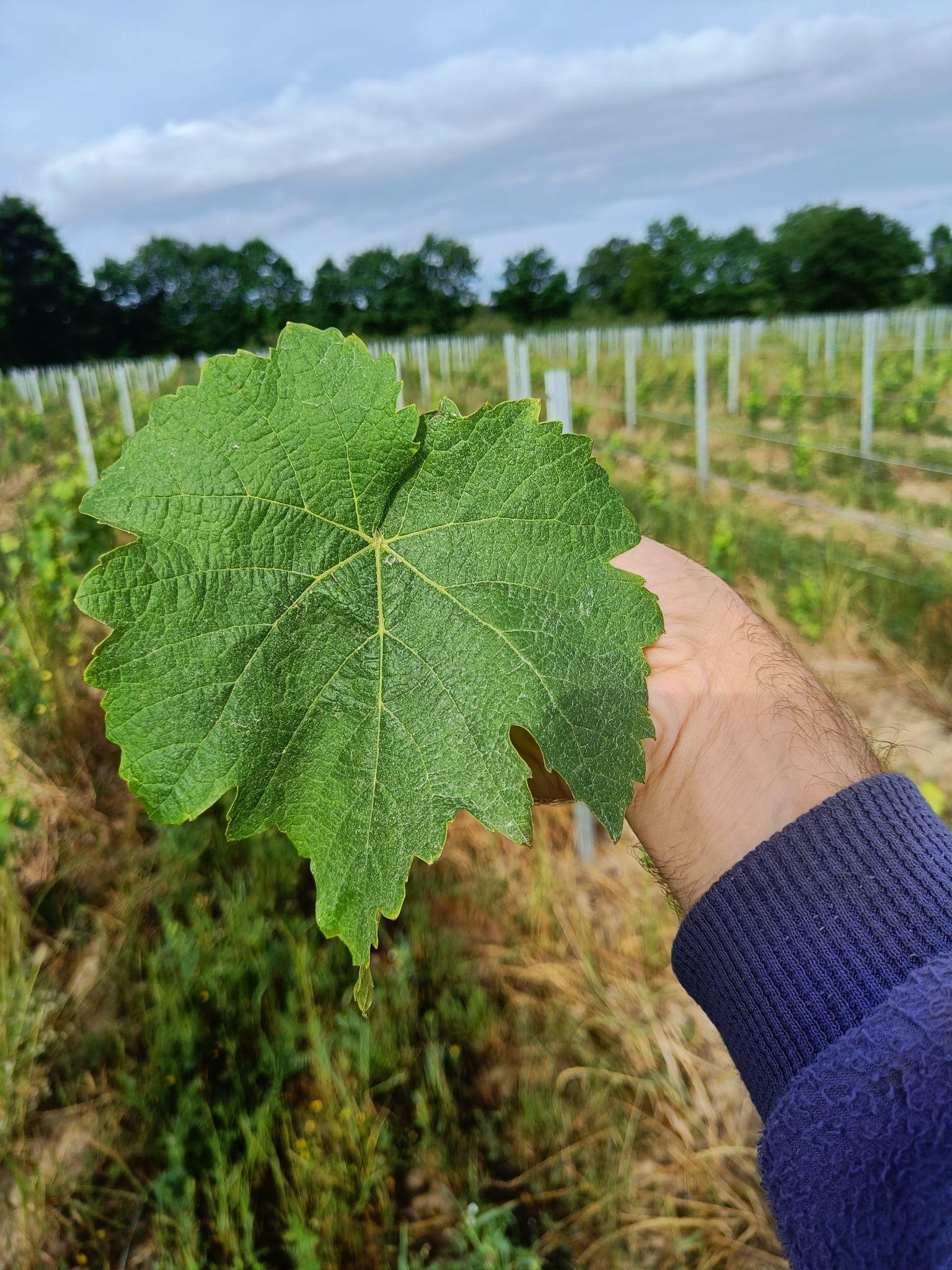
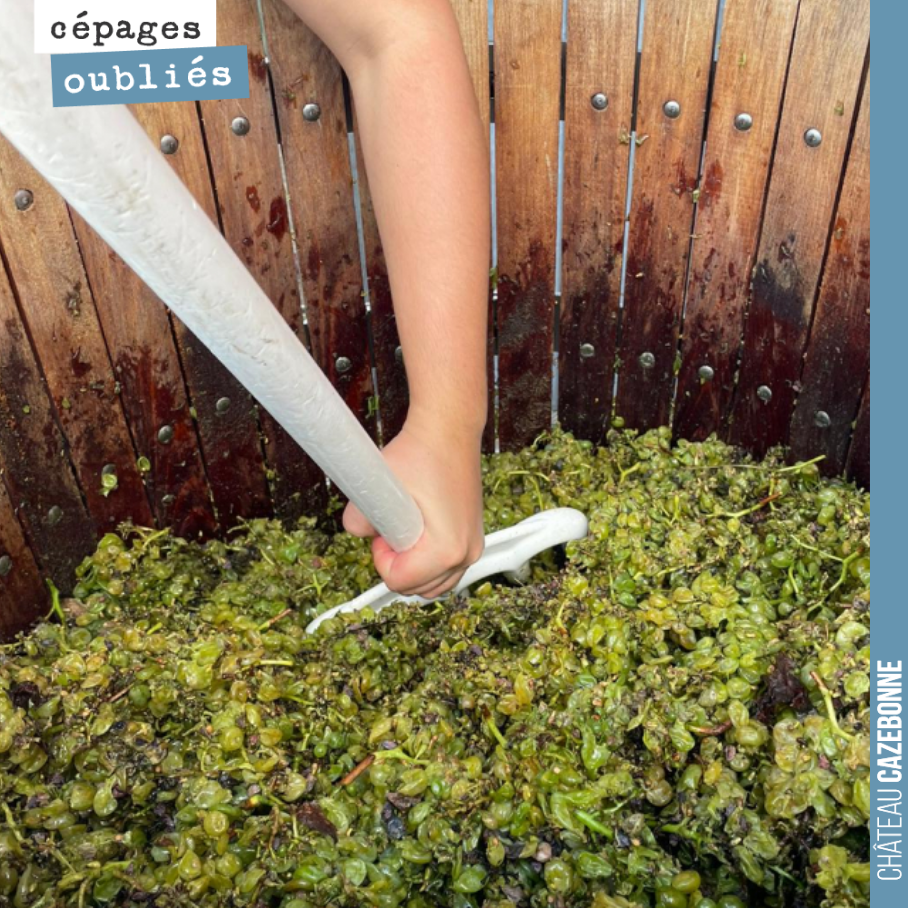
At the heart of our initiative to rehabilitate the forgotten grape varieties of Bordeaux, Prueras holds a special place. Once a pillar of Bordeaux viticulture, this white grape variety crossed the centuries before fading away, a victim of the whims of history and diseases. Ancient writings offer us precious insights into its importance and renown.
As early as 1824, W. Franck, in his observations, mentioned it as a key player in "good white wines", alongside Sémillon, Sauvignon and Verdot. An acknowledgement that testifies to its intrinsic quality. However, a few decades later in 1844, Comte Odart classified it as a secondary grape variety in Gironde, a classification confirmed by Auguste Petit-Lafitte in 1868. These fluctuations in perception illustrate the dynamics of a constantly evolving viticulture.
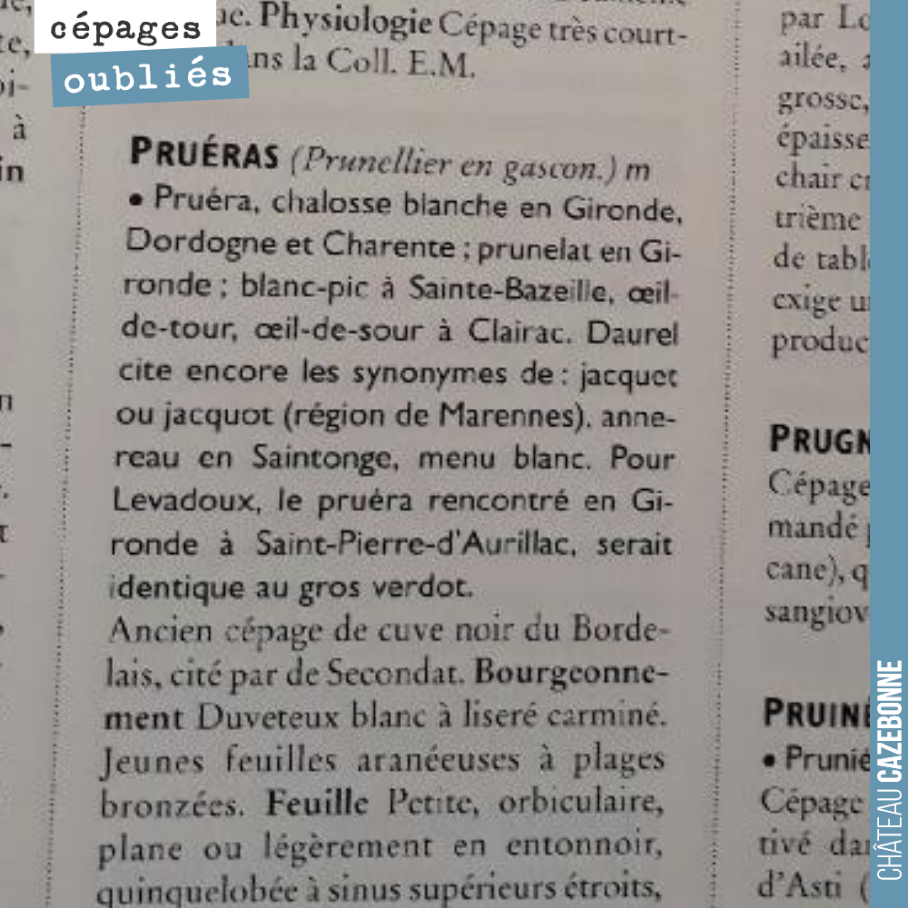
Prueras is also the grape variety behind many historic appellations. The 1978 Féret mentions its relationship with Prunelat, a name already evoked by Jean-Baptiste de Secondat in 1785. The latter, in his writings on the best wines of Guyenne, cites Prunelat among the noble grape varieties of gravelly soils. This multitude of names – Chalosse Blanche, Prunelat, Prunaley, Menu Blanc – bears witness to its wide distribution and the local variations that have marked its history.
| Characteristic | Description |
|---|---|
| Budburst | Early, like Chasselas. |
| Flowering | Early. |
| Veraison | Early. |
| Maturity | Early, first epoch (like Chasselas or Grenache noir). |
| Vigour | Medium to high. |
| Growth habit | Erect or semi-erect. |
| Downy mildew sensitivity | Sensitive. |
| Powdery mildew sensitivity | Very sensitive. |
| Botrytis sensitivity | Fairly resistant to grey rot. |
| Black rot sensitivity | Not very sensitive. |
| Aromatic profile | Very aromatic, with floral notes, yellow fruits (apricot), and refreshing acidity. |
| Winemaking potential | Quality wine with an interesting ageing potential, capable of producing dry or sweet wines with elegance and finesse. |
Prueras enjoyed a period of glory before its slow decline. Its sensitivity to powdery mildew (oïdium), a devastating fungal disease documented during the powdery mildew crisis in Bordeaux, precipitated its abandonment in favour of more resistant grape varieties at the end of the 19th century. Jean-Baptiste Duquesne, in his book "Bordeaux, une histoire de cépages", highlights the impact of phylloxera and diseases that profoundly modified the varietal mix, relegating many qualitative grape varieties to the rank of "secondary grape varieties" or making them disappear, as was the case, for example, with Saint-Macaire or Béquignol. Not classified among the secondary grape varieties authorised by the Bordeaux appellation decree in 1935 (unless it was hiding behind the enigmatic Chalosse Blanche or Prunelas), it disappeared almost entirely from the Bordeaux viticultural landscape.
The work to rehabilitate forgotten grape varieties is a major and exciting focus led by the winegrowers who are replanting forgotten grape varieties in Bordeaux, actively participating in the revival of Bordeaux.
At Château Cazebonne, we have made it our mission to break this cycle of oblivion. By replanting Prueras, we are not just reintroducing a variety: we are reviving a part of the soul of the Bordeaux vineyard, and offering a new interpretation of our terroir. This exciting work is made possible thanks to the invaluable support of the many wine lovers who have adopted our wines and share our passion for the rediscovery of Bordeaux's viticultural heritage. To deepen your knowledge of this fascinating history, the book "Bordeaux, une histoire de cépages" is available to download here. You can also test your knowledge on vineyards and grape varieties through our oenological quizzes, and of course, discover our cuvées made from these rediscovered grape varieties by visiting our online shop.
Sources
Our suggestions
-5%on your 1st order with code BIENVENUE
The essential92/100 RVFVin de France — heritage grapes, 92/100 RVF
The pre-phylloxera Bordeaux blend, revived at the estate.
Castets, Mancin, Pardotte: the Bordeaux before Bordeaux.
I want it Our recommendation
IGP Atlantique — rare grape variety
A forgotten grape brought back: dense colour, wild fruit.
For the curious about lost grape varieties.
I want it Go further
12 bottles — the whole range
12 bottles, the whole range tasted: the best discovery-to-price ratio.
The complete tour of the estate, in a single case.
I want it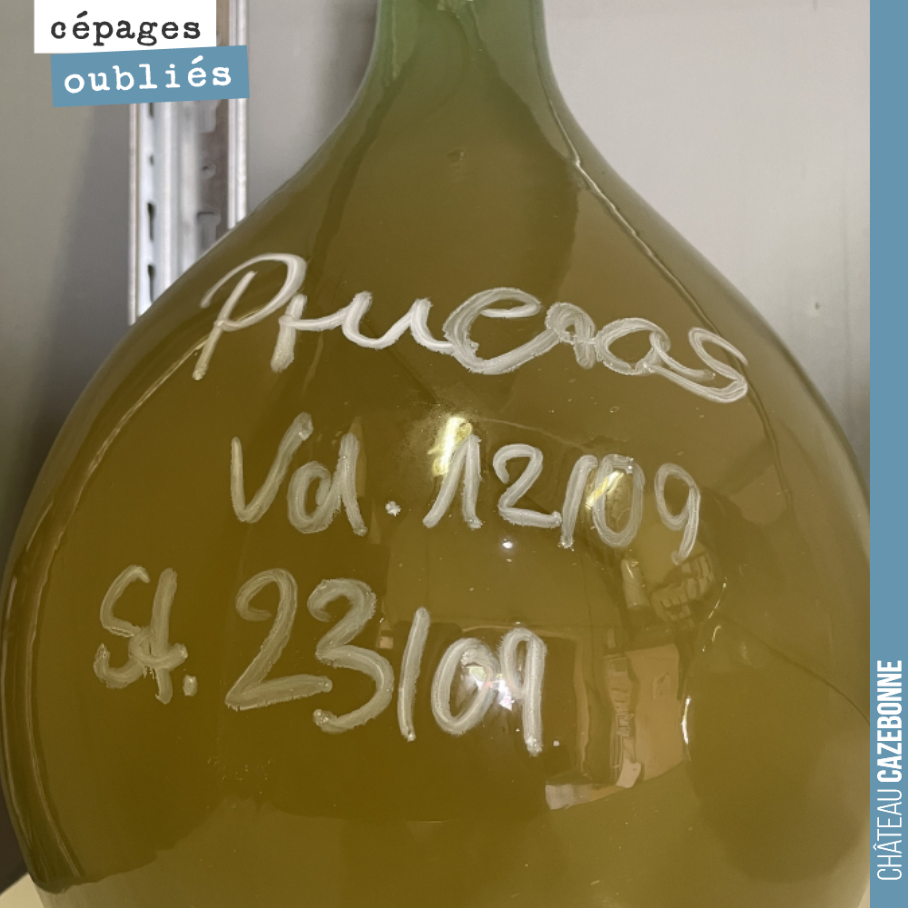
30 September 2024
12 September 2024
22 July 2019
The cellar, forgotten grape varieties and our cuvées, twice a month. 5% off your first order with the code BIENVENUE.