
 The essential
6 × Entre Amis red
6 bottles — Graves red 2022
The best price of the cellar: €12 per bottle delivered.
The everyday red: generous and straight to the point.
I want itBud
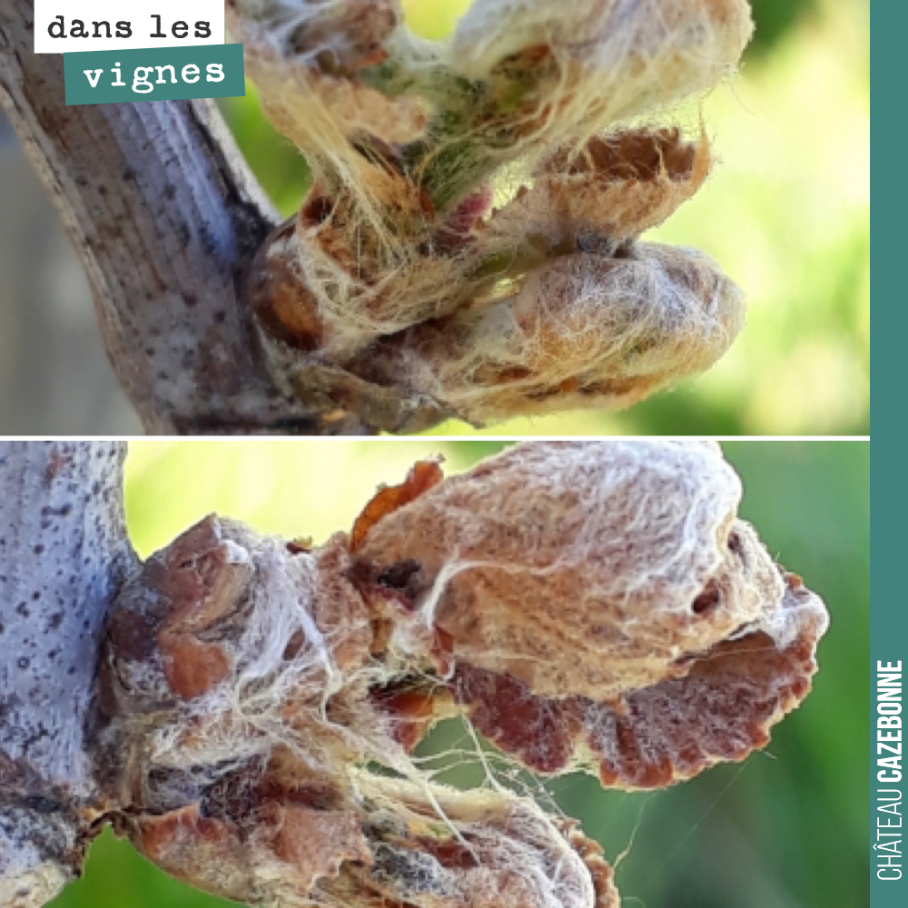
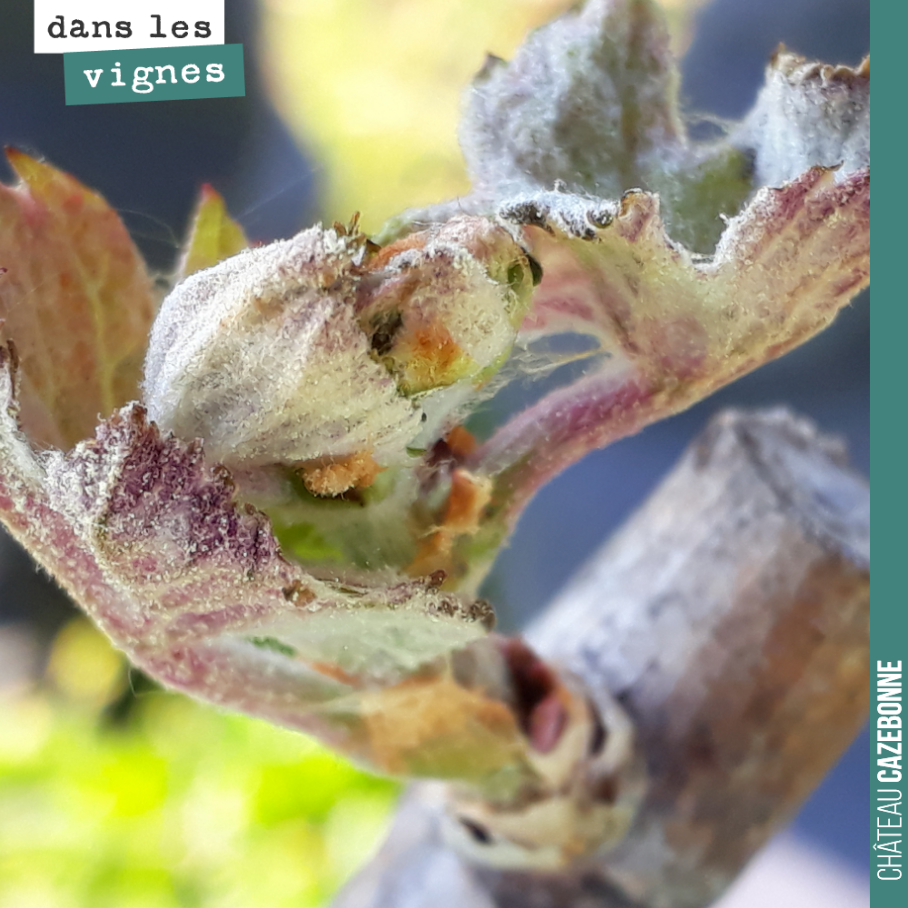
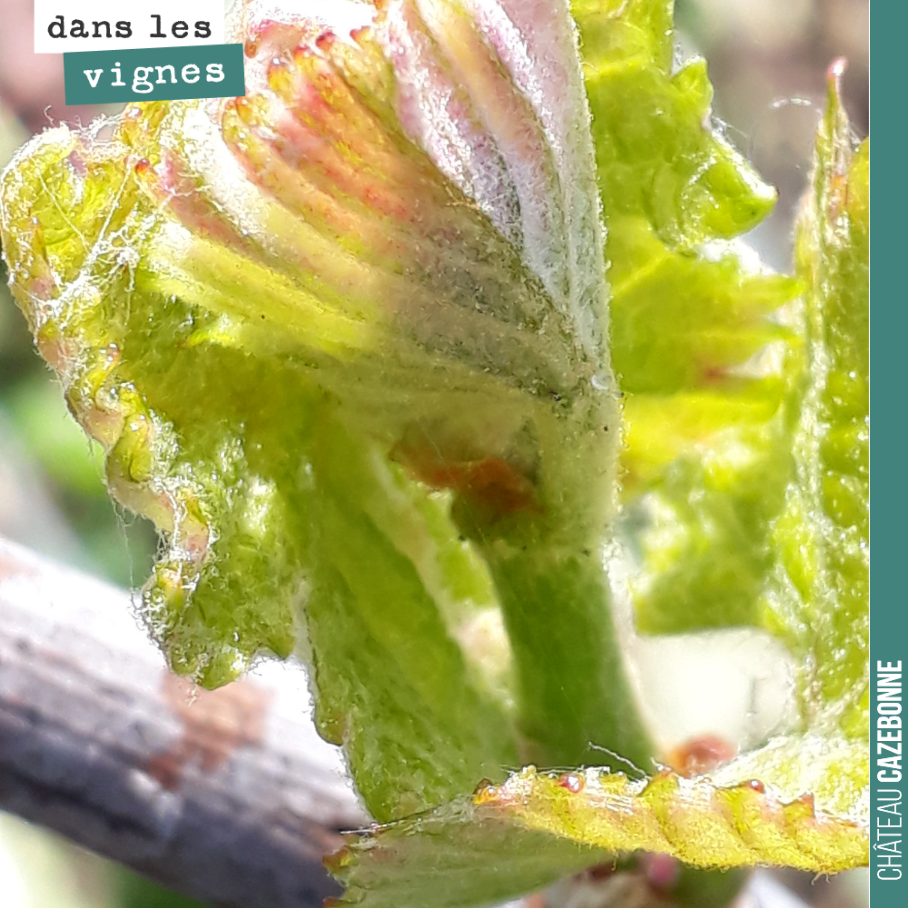
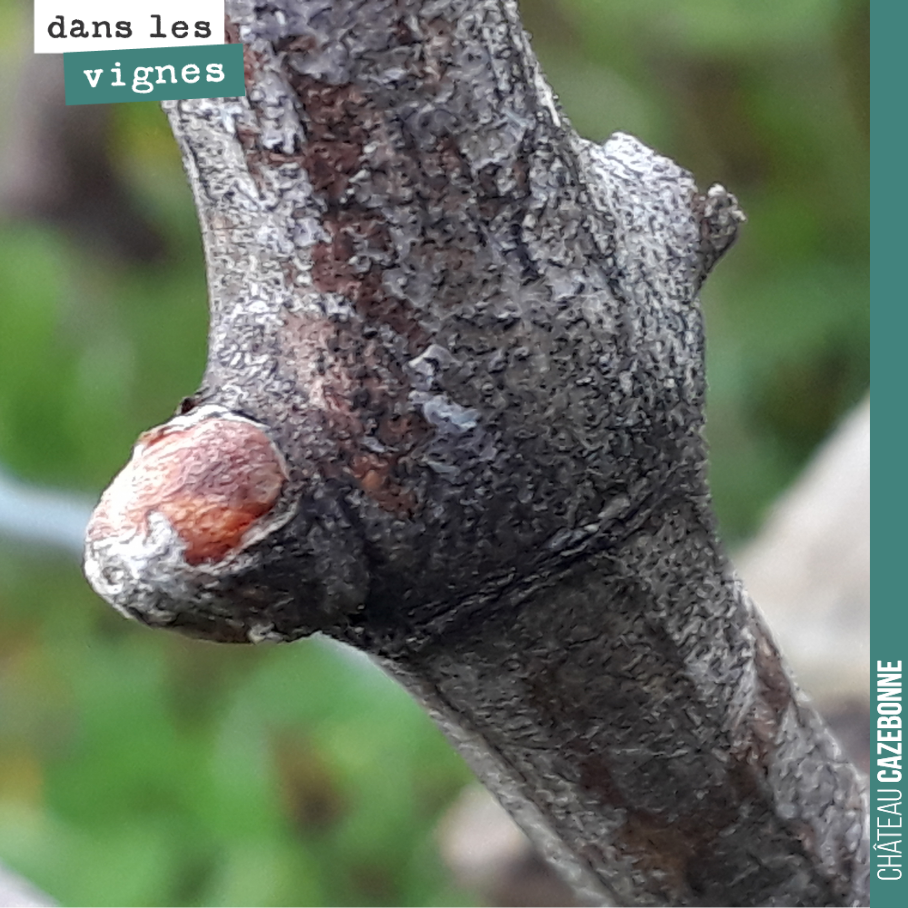
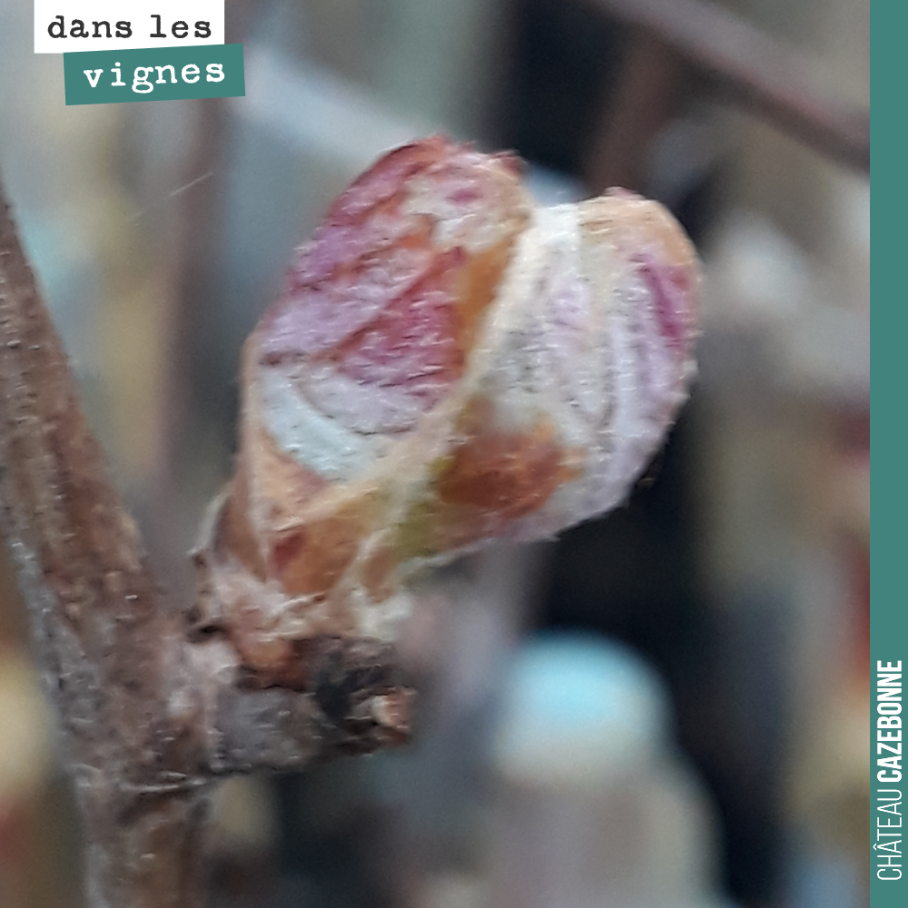
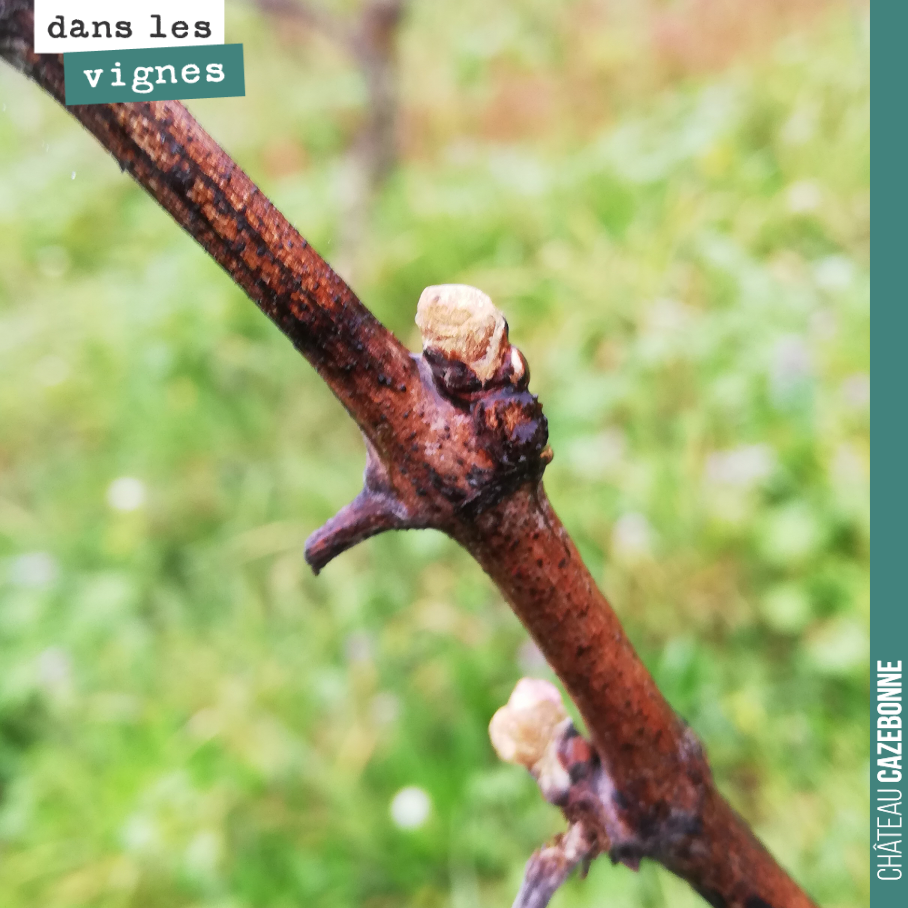
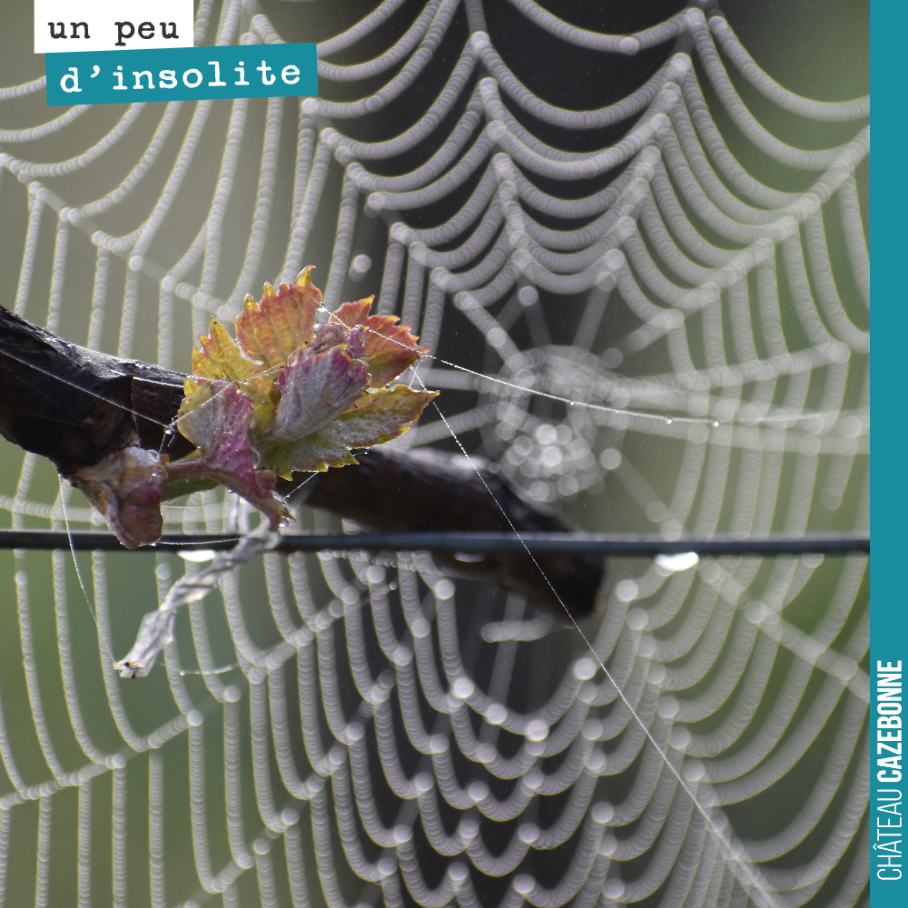
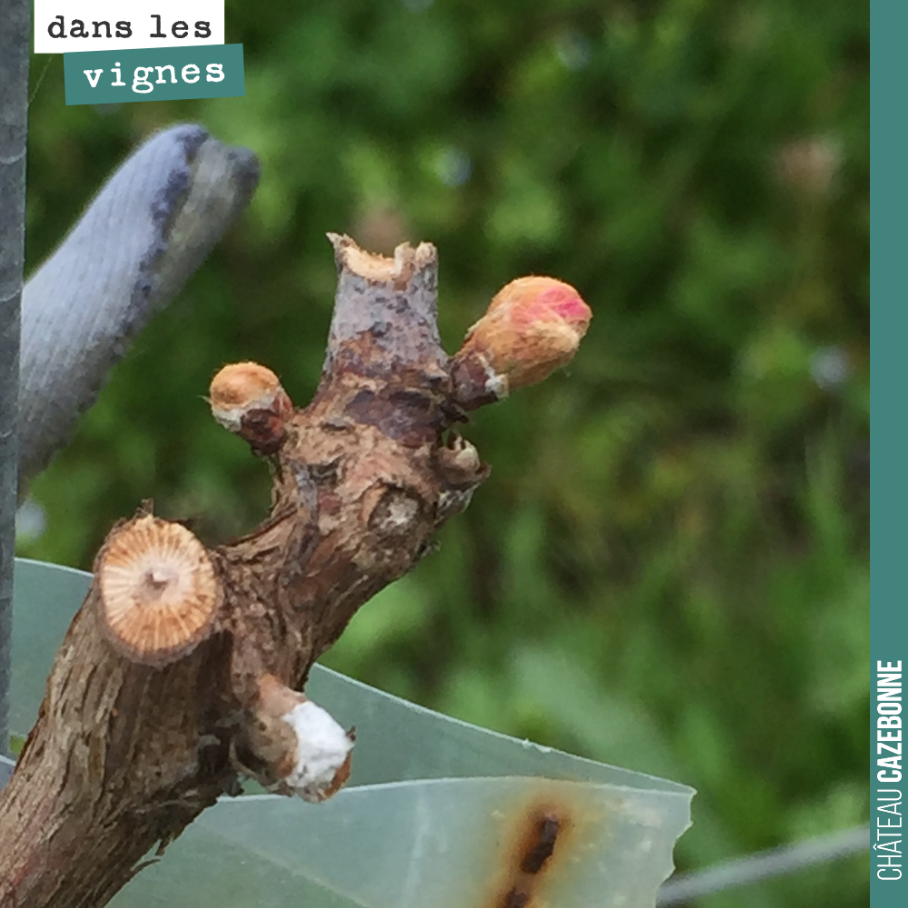
At the heart of the vine's vegetative cycle at Château Cazebonne, the bud is much more than a simple excrescence on the cane. It is the promise of the year ahead, the miniature receptacle of the plant's future life. These small structures, situated along the shoots, contain, in a latent state, the future floral buds that will give rise to the bunches, and the leaf buds, essential for photosynthesis and the vitality of the vine.
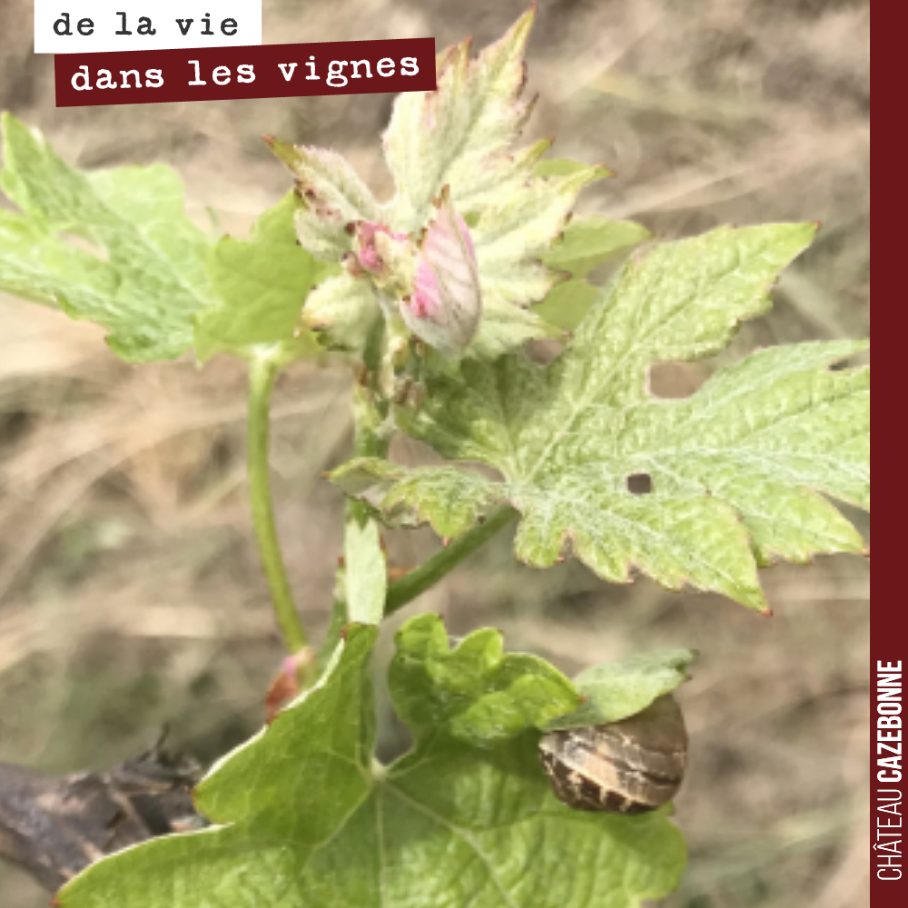
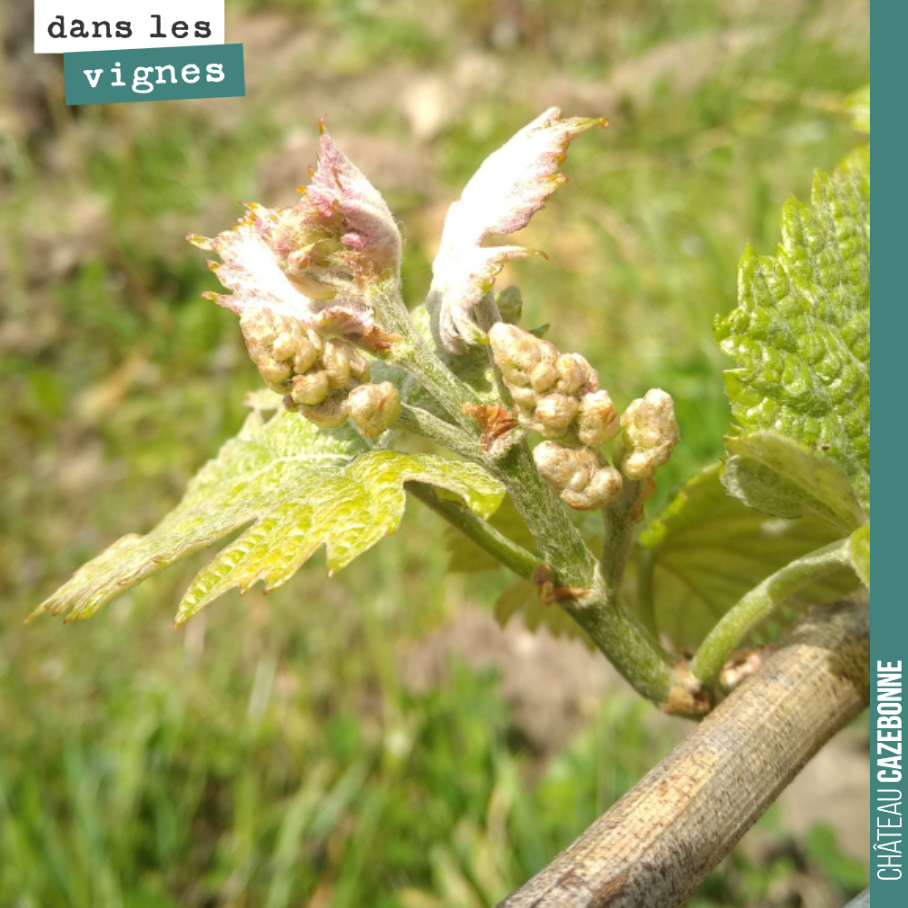
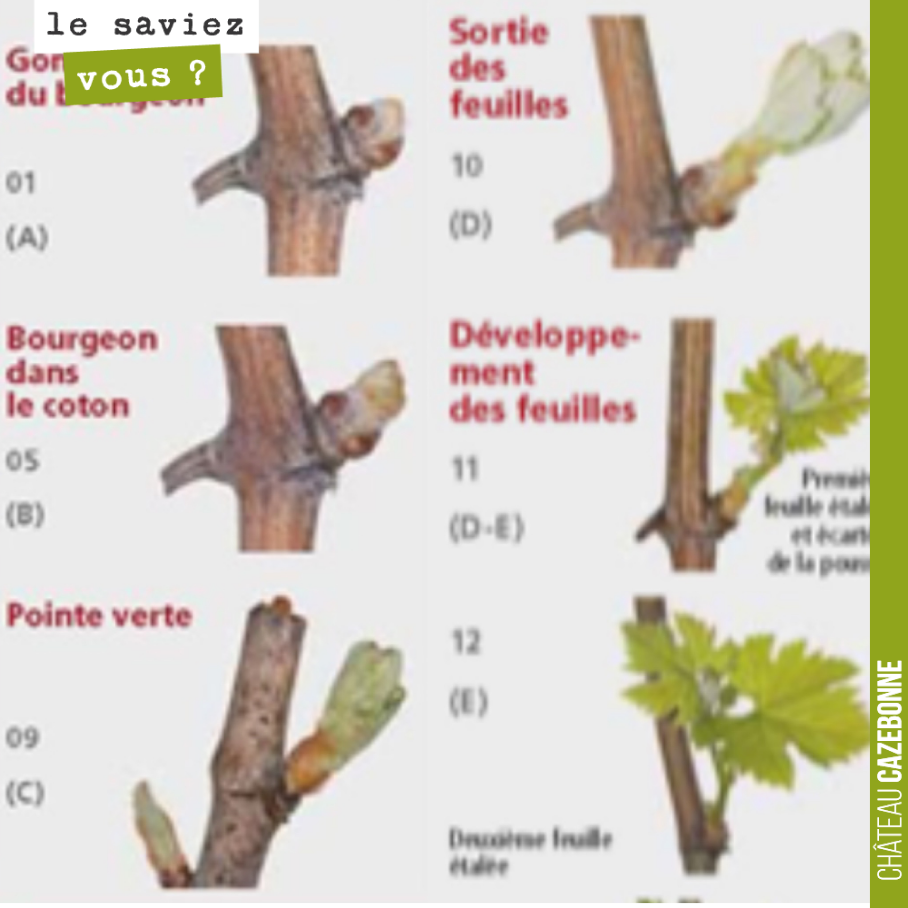
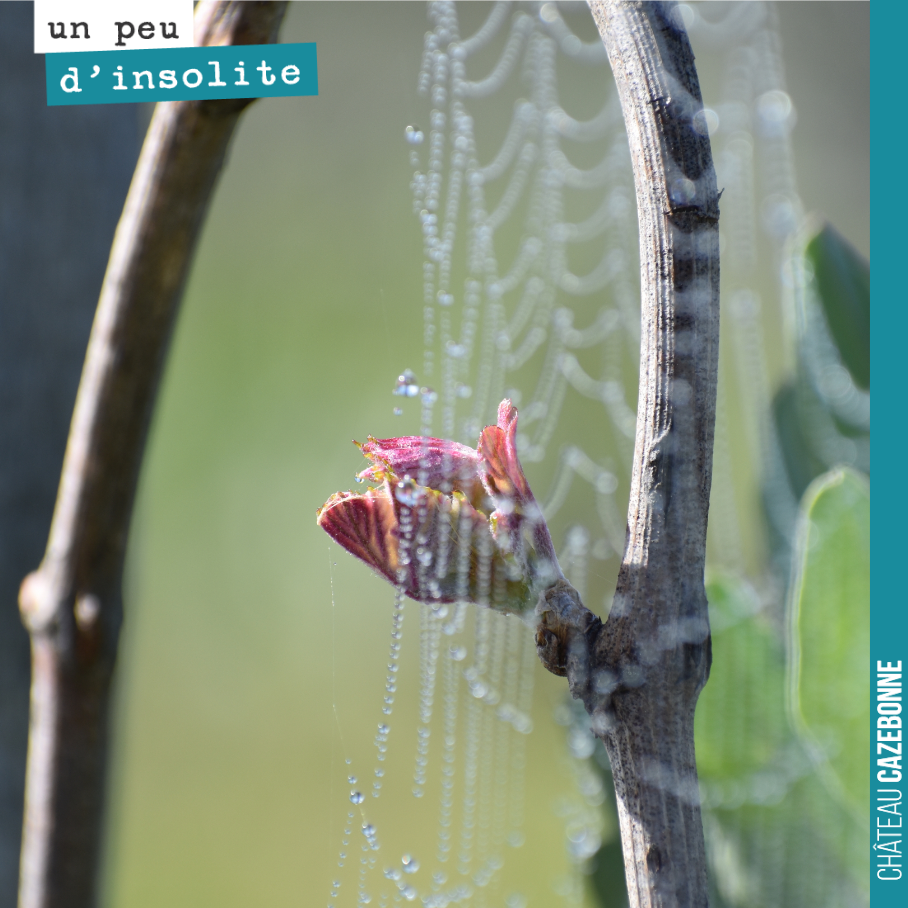
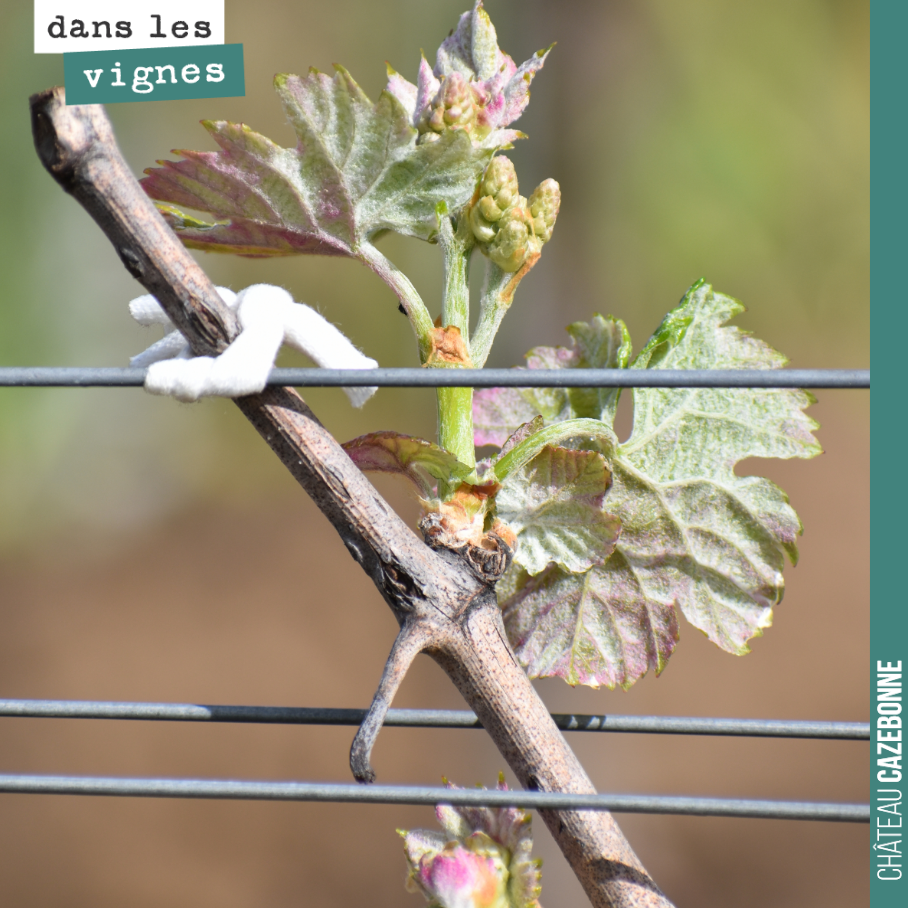
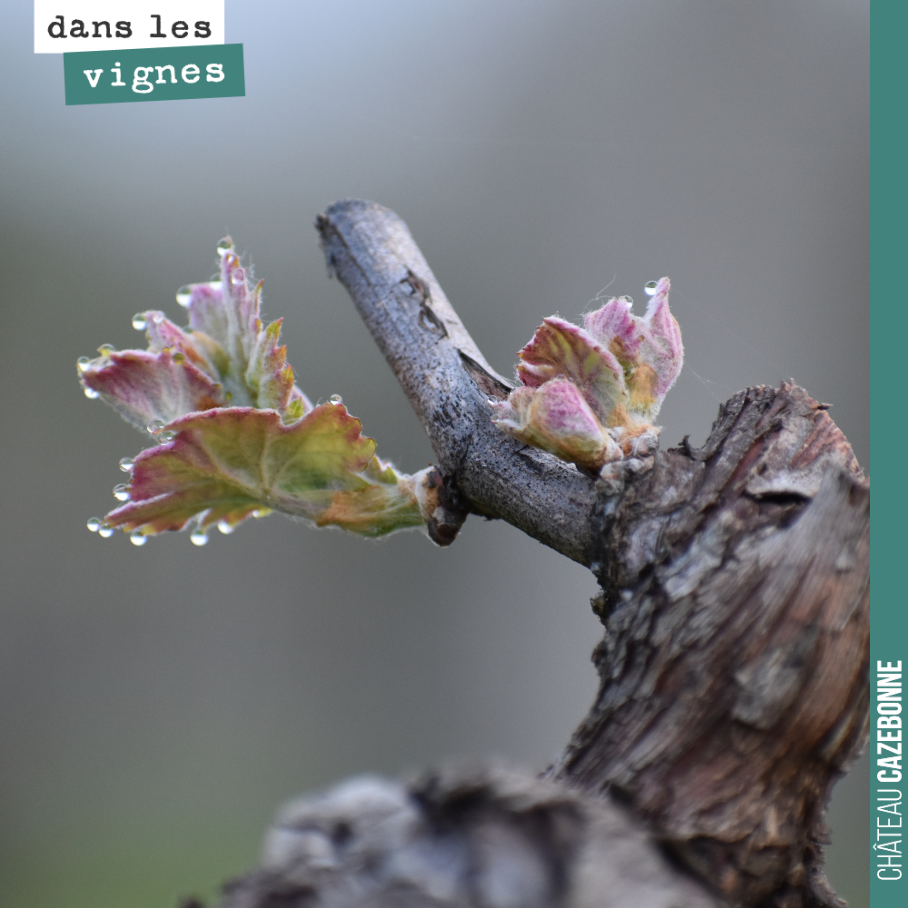
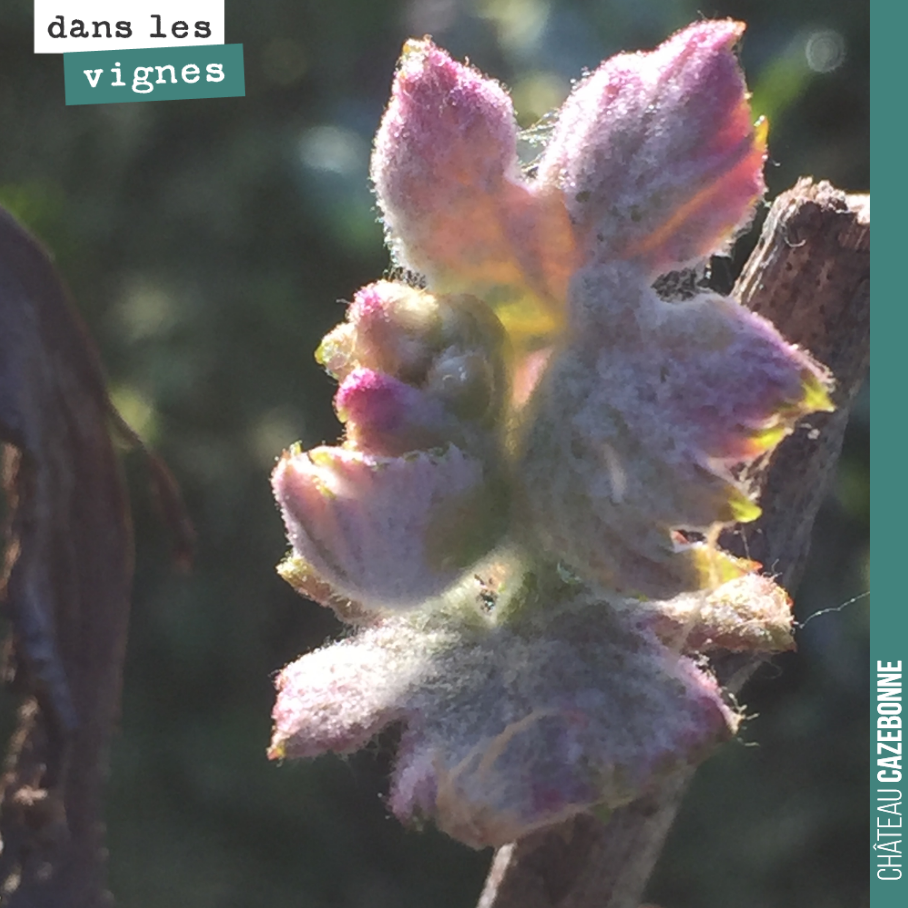
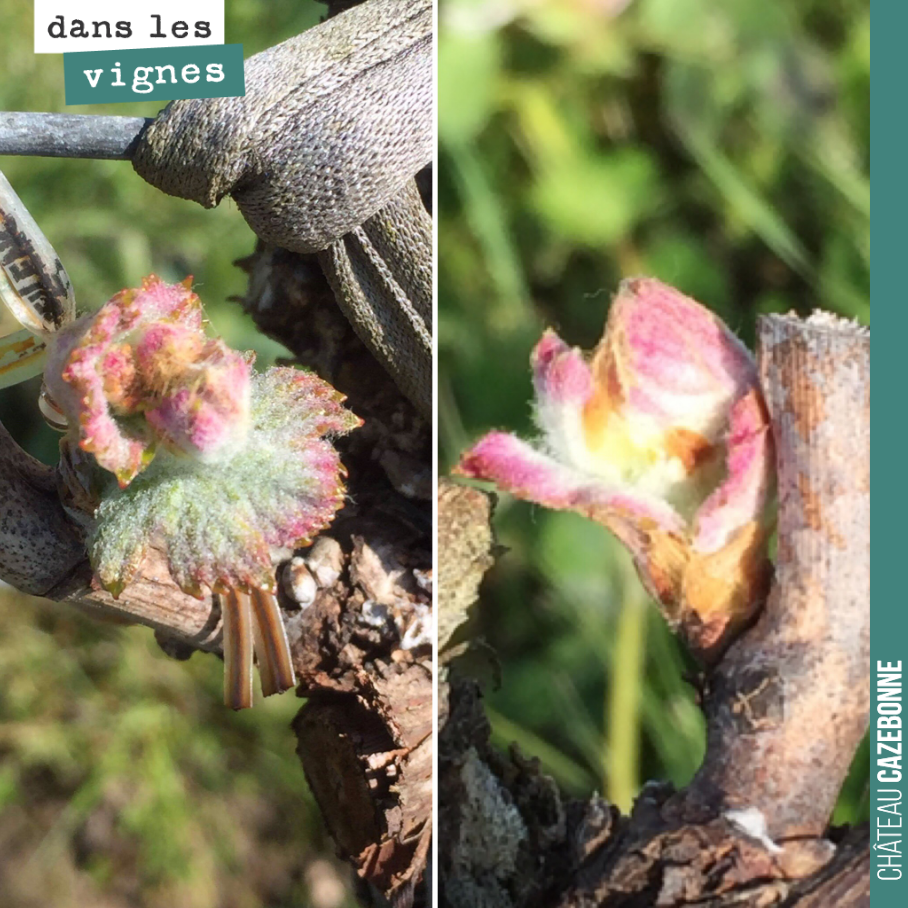
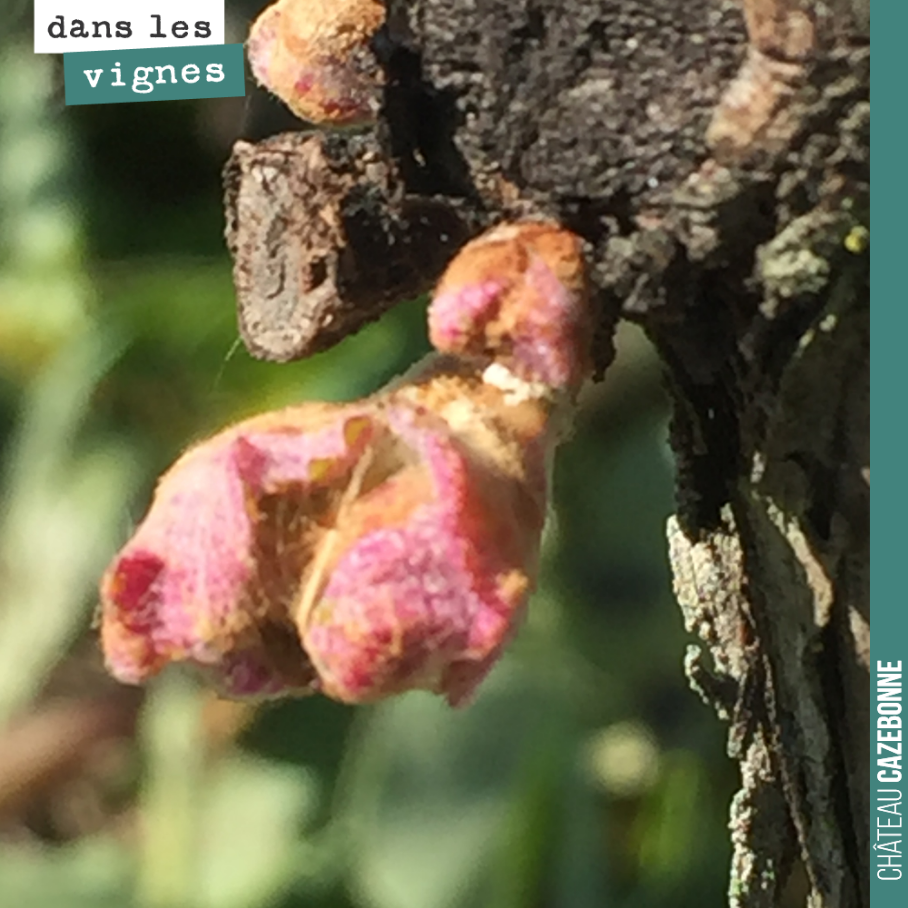
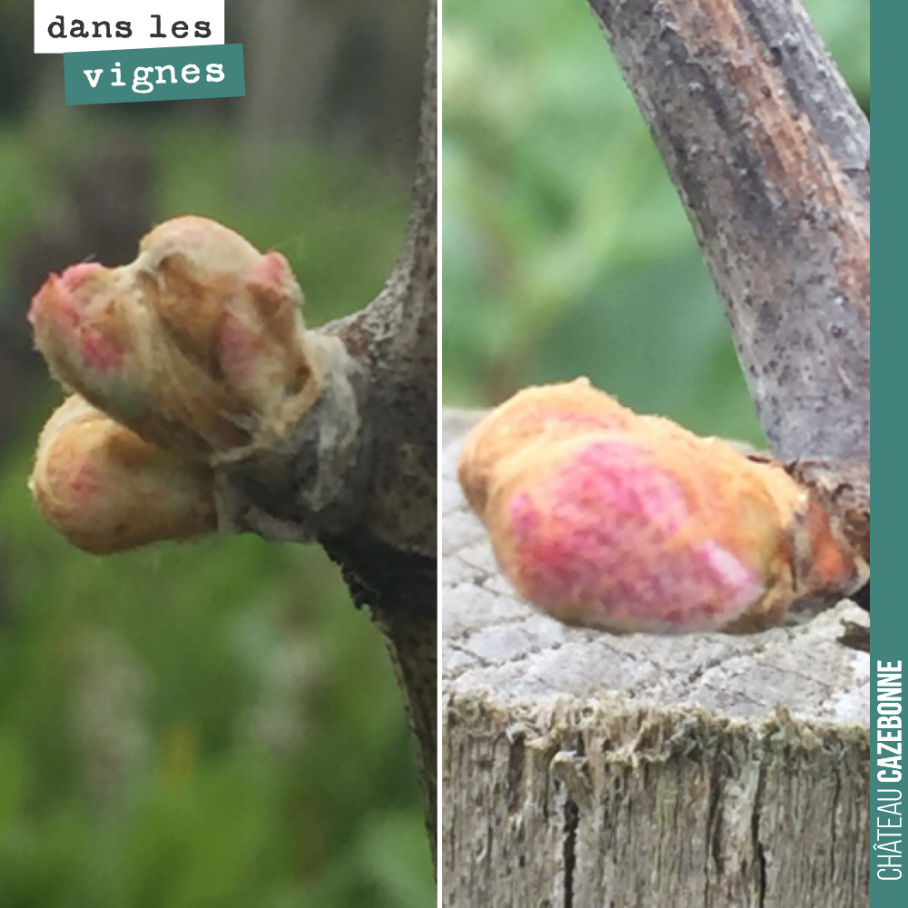
The development of the bud follows crucial stages, a true countdown before the spring awakening. After winter dormancy, the sap begins to circulate in the vine, a phenomenon that our winegrowers call the vine weeping. It is the signal that nature is waking up. Then, under the influence of increasing heat and light, the bud enters the budburst phase. This process is characterised by the swelling, opening, and stretching of the buds, which then reveal tiny leaves and, for the fruiting buds, the beginnings of the future inflorescences. This delicate moment is crucial because the young bud is then vulnerable to late frosts, a risk that our teams monitor carefully, ready to intervene to protect the promises of the upcoming harvest.
Every stage of this bud emergence is meticulously observed, as it gives precious indications about the potential of the upcoming harvest, as well as the overall health of the vine. The density of the buds, their vigour, and their distribution along the cane are all clues for our experienced winegrowers. This delicate stage, as Jean-Baptiste Duquesne explains in his book "Bordeaux, une histoire de cépages", is fundamental. It largely determines the richness and intrinsic quality of the grapes that will be harvested months later. At Château Cazebonne, we pay particular attention to this period, aware that each bud carries within it the DNA of our terroir and the specificity of our grape varieties.
The vine bud is not a static entity; it is the starting point of a complex and fascinating vegetative cycle. It goes through several key phases over the course of the year. After winter dormancy, an essential protection against the cold, the bud reacts to the increasing spring temperatures. Following budburst, it develops into shoots that will carry the future leaves, then the inflorescences, signifying flowering. Understanding and anticipating these stages is essential for optimal vine management, and to guarantee the sustainability of the harvest and the quality of the wines. It is also at the end of spring and during summer that the following year's buds are prepared, during the process we refer to as when the vine lignifies (lignification).
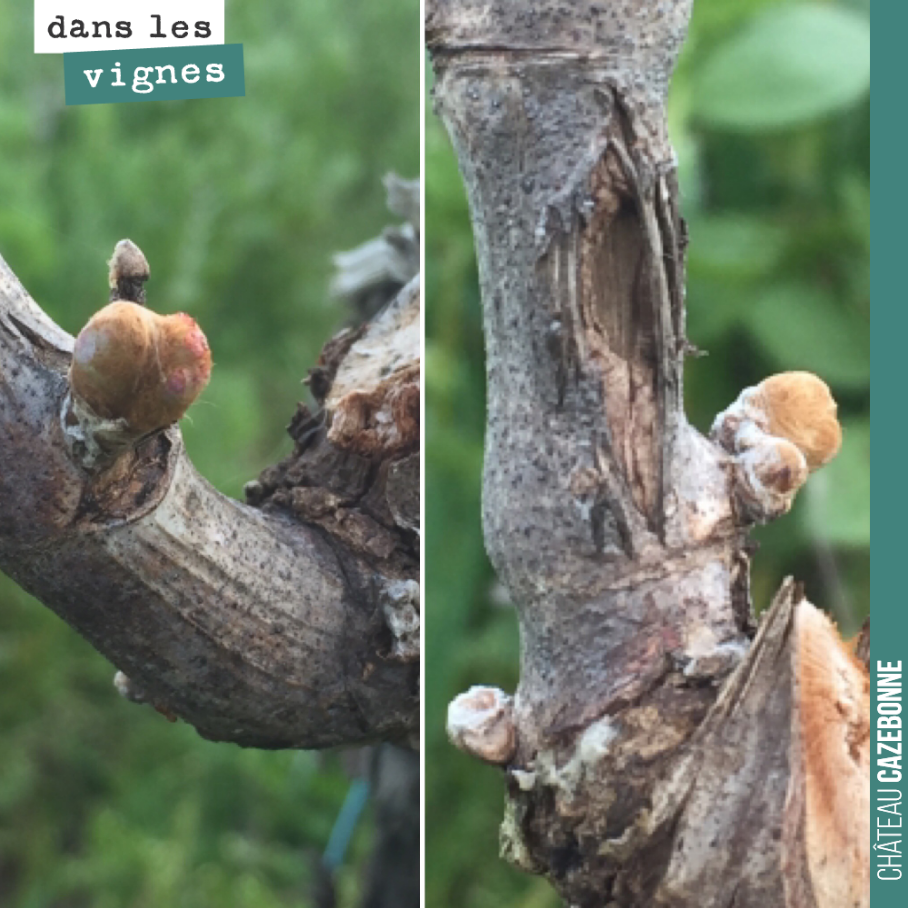
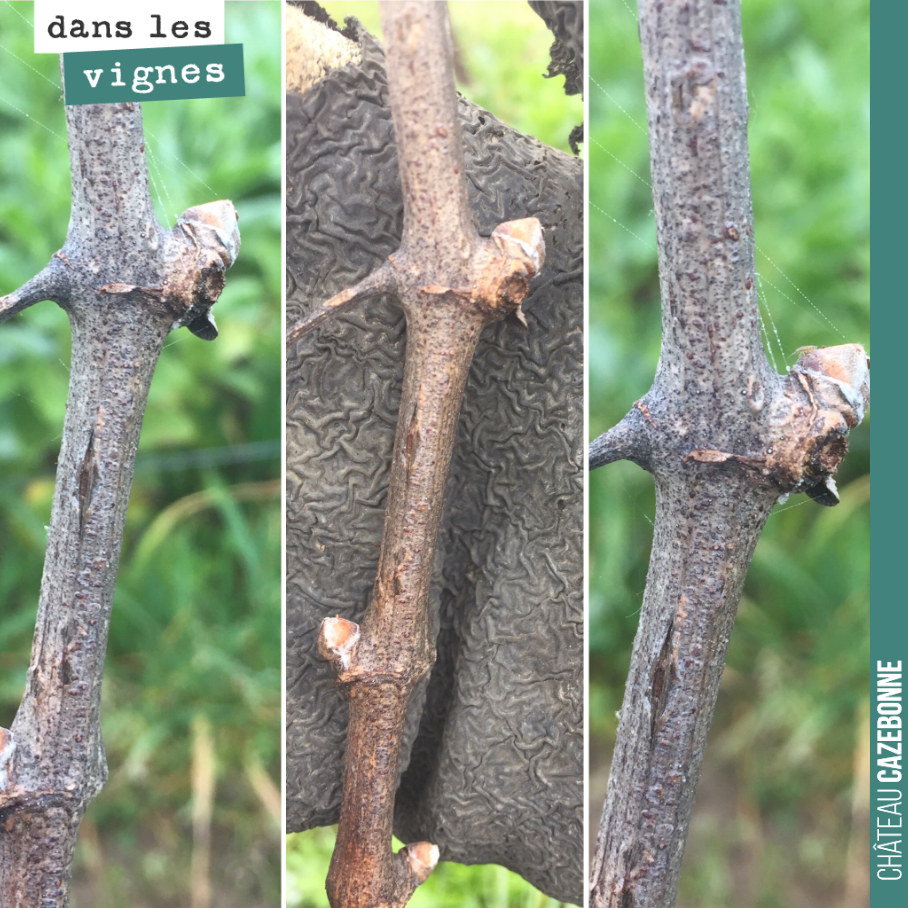
The vine has different types of buds, each with a clearly defined role. The latent bud, located in the axil of the leaves, is the one that primarily interests us: it contains in miniature the shoot of the following year, with its leaves, tendrils, and potentially its bunches. It is protected by waxy scales. In spring, other buds can appear: adventitious buds, often called "watershoots", which develop on the current year's wood, or latent buds that wake up on older wood, sometimes called "dormant internodes", allowing the vine to regenerate in case of damage.
At Château Cazebonne, the study of buds is an ancestral practice combined with a modern scientific approach. The vigour of the budburst, the uniformity of the buds opening, and their state of health are examined with the utmost attention. These observations inform us about the vine's reaction to past and present climatic conditions, and help us adjust our practices. For example, early budburst can increase the risk of frost, requiring specific protection measures. Conversely, late budburst can indicate a need to optimise pruning or a nutritional deficiency.
This attentive observation is all the more important as, pioneers in their rediscovery, we passionately replant the ancient grape varieties that had marked the winemaking history of Bordeaux, but which had gradually been forgotten. Each bud of these ancestral varieties is a recovered part of our heritage, a piece of Bordeaux history that we are striving to revive. The study of their specific vegetative cycle, their resistance or sensitivity to climatic hazards, is crucial for their successful establishment and future flourishing. It is thanks to the unwavering support of the many wine lovers who have adopted our wines, and who share our vision, that this bold undertaking is possible, allowing these forgotten flavours to fully reclaim their place in the Bordeaux vineyard landscape, to the great delight of curious palates.
At Château Cazebonne, we passionately cultivate these rare varieties and the living wine they produce, and this work is made possible thanks to the support of the wine enthusiasts who adopt our wines. To learn more about the history of Bordeaux grape varieties, we invite you to download our book "Bordeaux, une histoire de cépages" or to test your knowledge with our oenological quizzes. And to discover the full expression of our terroir through our wines, please do not hesitate to visit our online shop.
Sources
Our suggestions
-5%on your 1st order with code BIENVENUE
The essential6 bottles — Graves red 2022
The best price of the cellar: €12 per bottle delivered.
The everyday red: generous and straight to the point.
I want it Our recommendation92/100 RVF
6 bottles — Graves red 2022, 92/100 RVF
Rated 92/100 by La Revue du vin de France: a solid 10-year ageing potential.
Our Graves for ageing, the finest gateway to the estate.
I want it Go further
12 bottles — the whole range
12 bottles, the whole range tasted: the best discovery-to-price ratio.
The complete tour of the estate, in a single case.
I want it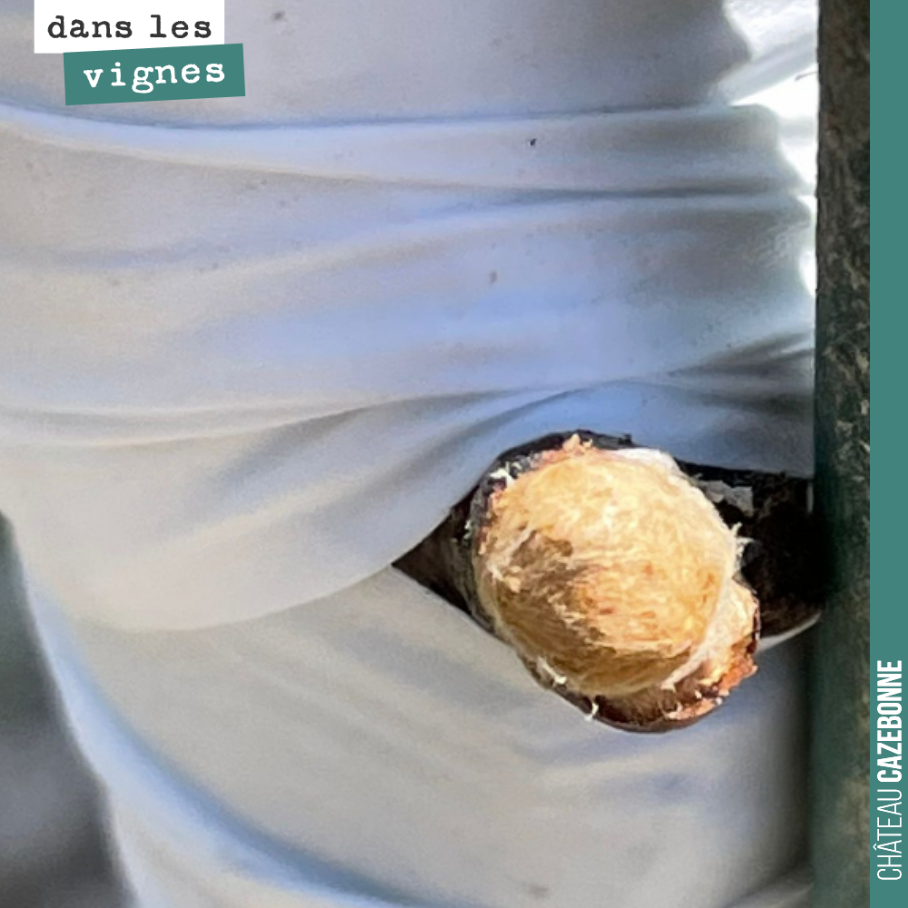
01 June 2022

06 April 2022
30 April 2021

29 April 2021
17 April 2021
16 April 2021

15 April 2021
16 April 2020
05 April 2020
30 March 2020
27 March 2020
25 March 2020
20 March 2020
15 March 2020
14 April 2019
11 April 2019
08 April 2019
02 April 2019
27 March 2019
26 March 2019
24 March 2019
19 March 2019
15 March 2019
07 March 2019
01 March 2019
The cellar, forgotten grape varieties and our cuvées, twice a month. 5% off your first order with the code BIENVENUE.