
 The essential
6 × Entre Amis red
6 bottles — Graves red 2022
The best price of the cellar: €12 per bottle delivered.
The everyday red: generous and straight to the point.
I want itFlowering
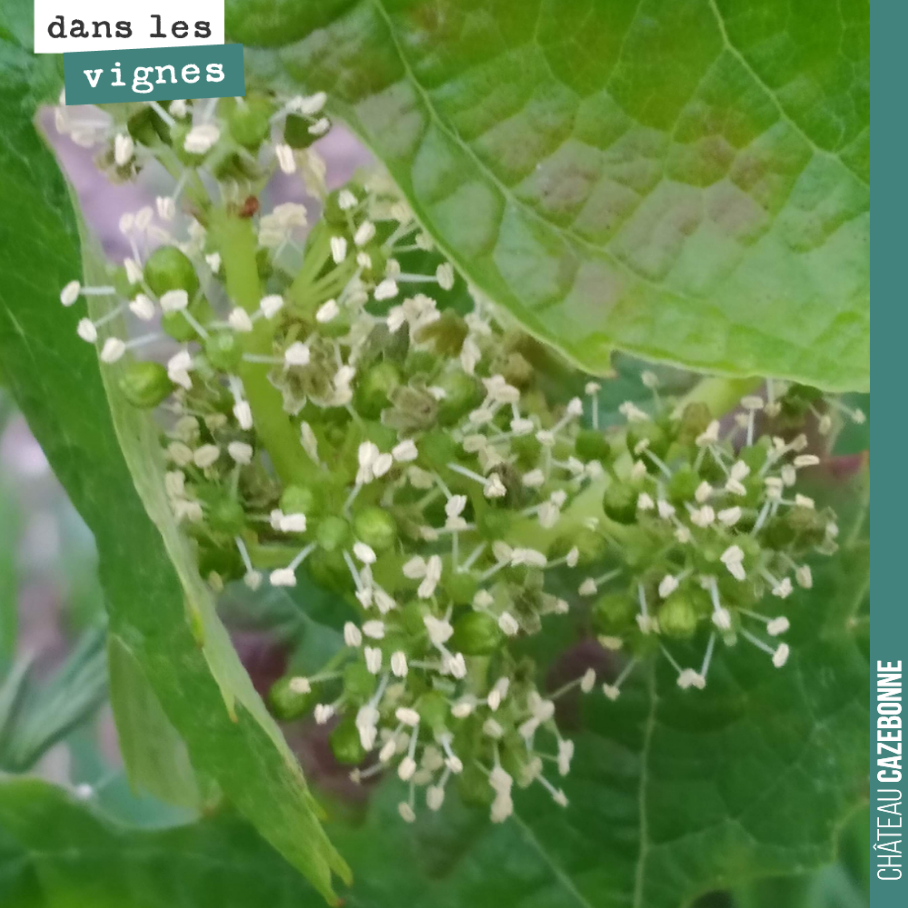
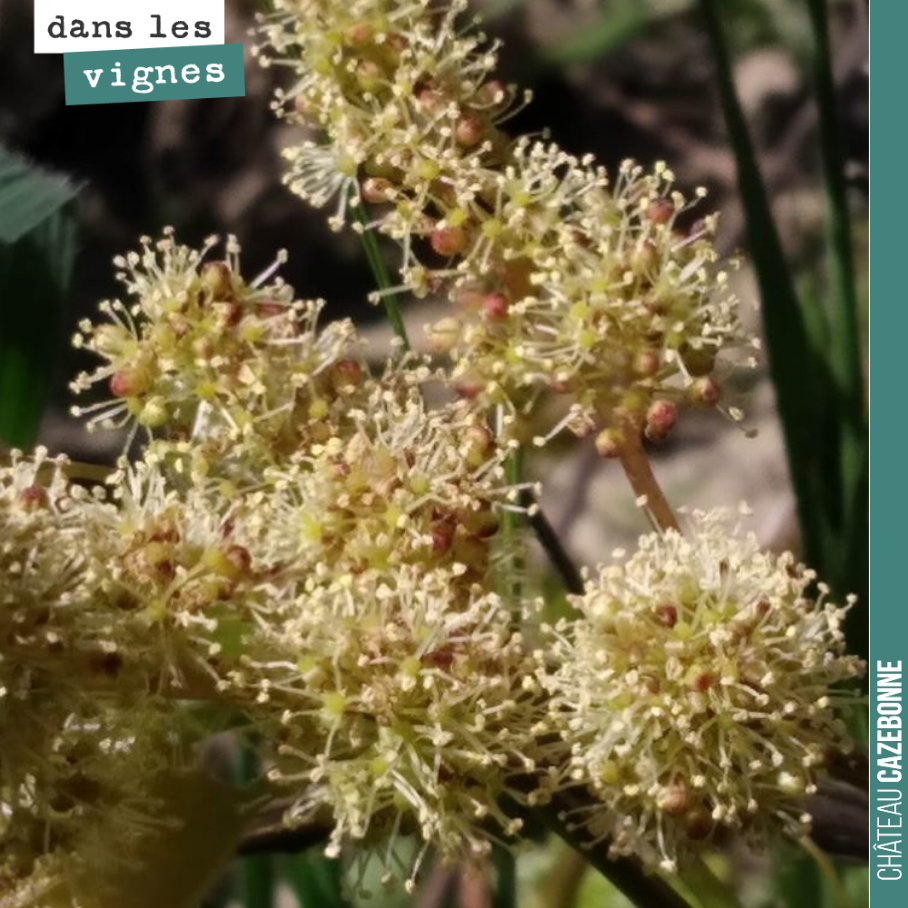
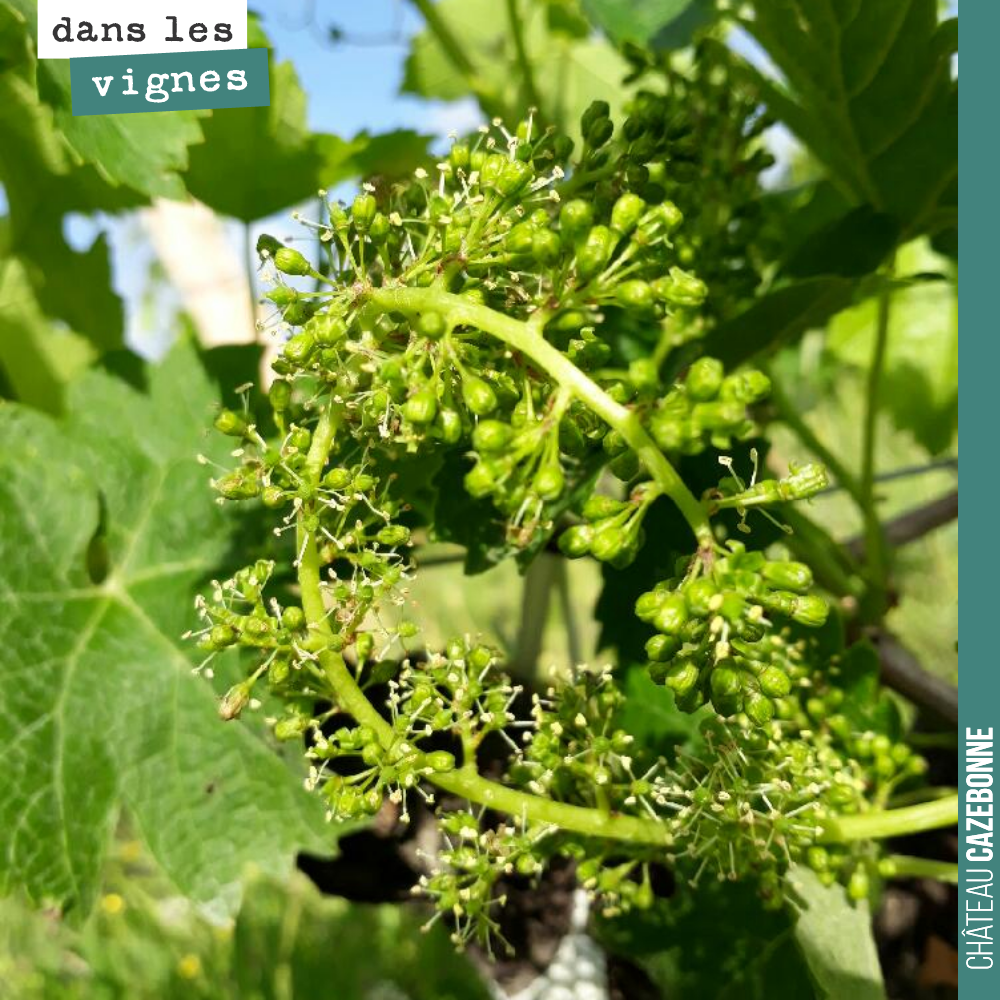
At the heart of the annual vine cycle at Château Cazebonne, flowering is undoubtedly the most delicate and highly anticipated stage. Following budburst and the vigorous growth of the young shoots, the vine reveals its tiny flowers, often greenish and discreet, which group together in inflorescences. Each of these little flowers carries within it the promise of a future grape. It is an ephemeral spectacle, lasting only a few days, yet it largely determines the quantity and quality of the coming harvest.
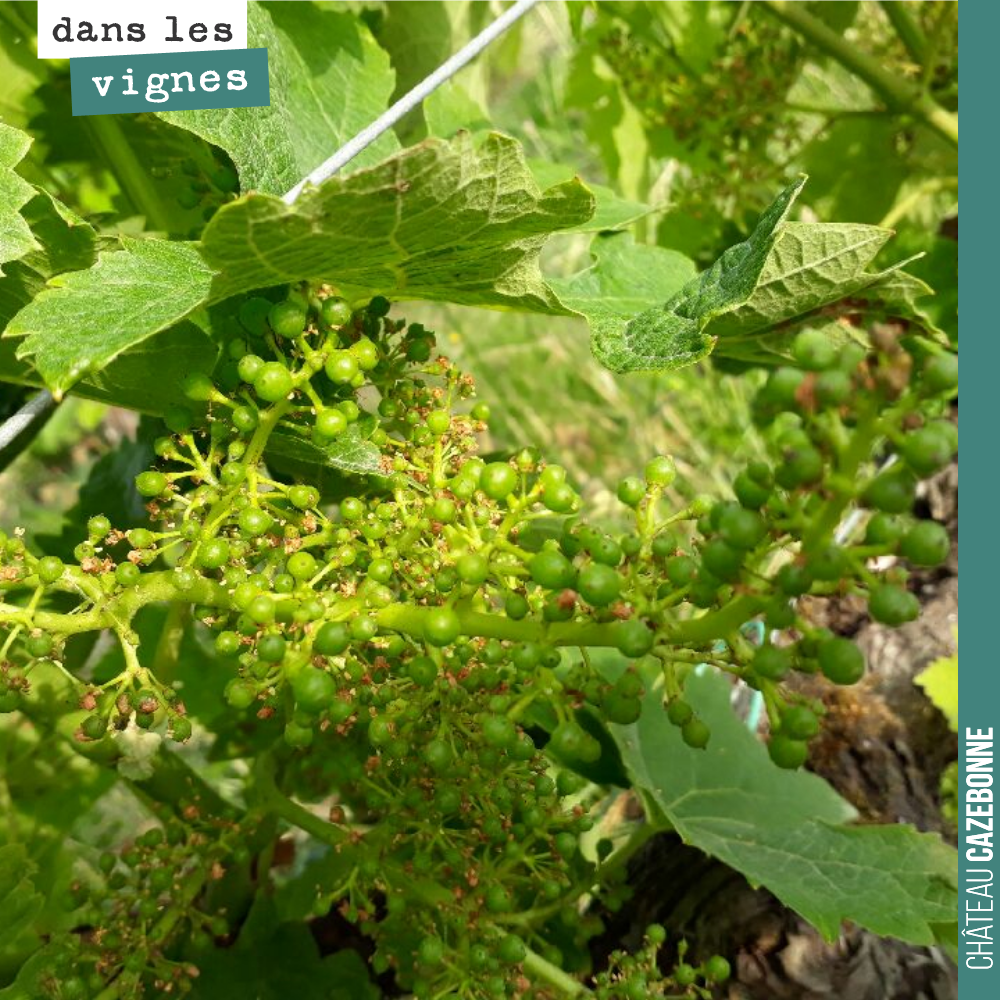
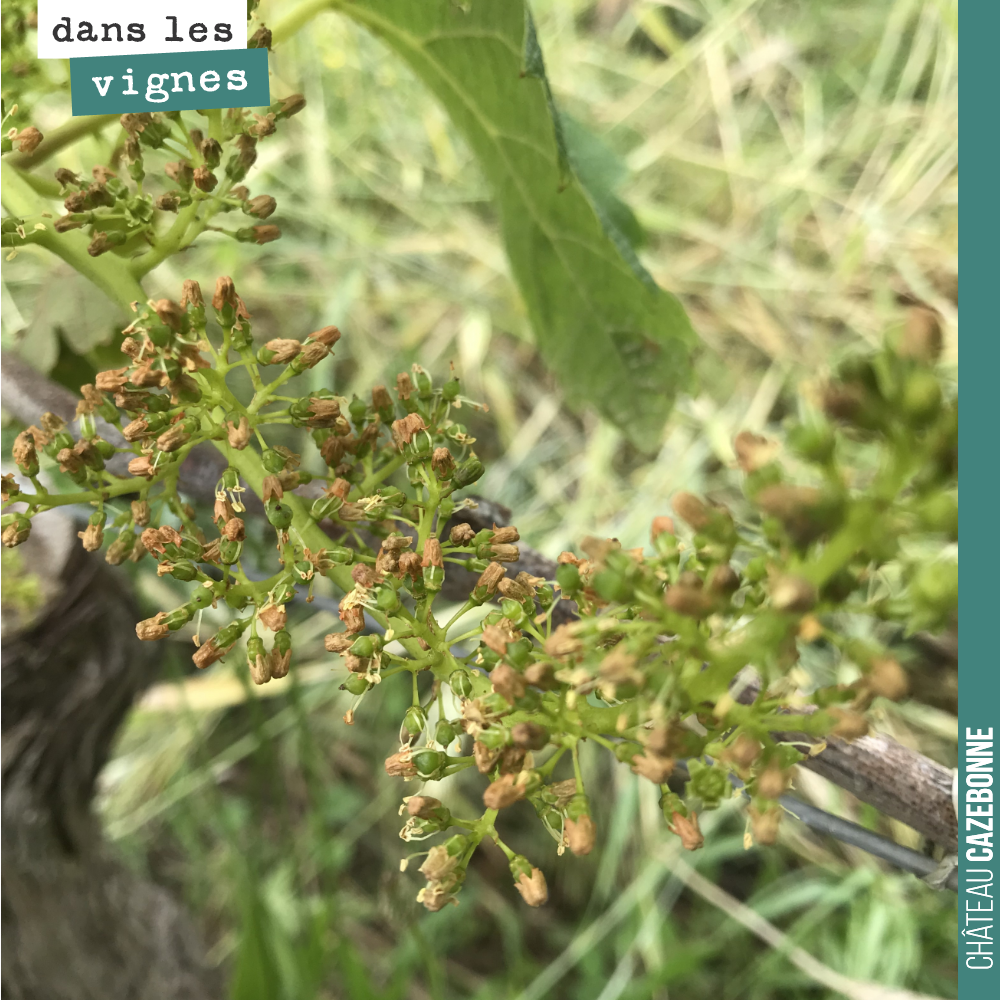
This period is marked by great vulnerability to climatic hazards. Excessively low temperatures, excess humidity, strong winds, or persistent rain can compromise the proper fertilisation of the flowers. This results in what is known as coulure, where the flowers fail to develop into berries, leading to a drastic drop in the number of grapes per bunch. 'Véraison', which signals the change in colour of the berries, is still a long way off. Another phenomenon, millerandage, can also occur, yielding berries of highly unequal sizes and often lacking pips. These two phenomena, although natural, are a constant source of concern for our winegrowers, who watch over each plot with the utmost attention.
Despite this fragility, flowering is also a time of optimism and renewal. It marks the true beginning of the fruiting process. A successful and homogeneous flowering is the sign of a promising year, ensuring a balanced harvest potential and high-quality grapes. It is at this stage that life manifests itself in its purest form, and the winegrower can measure the impact of their work and the weather conditions on the future of the vintage. At Château Cazebonne, we work to support the vine through this crucial phase, ensuring suitable trellising and protecting our plants from vine diseases, in order to optimise the chances of a fruitful flowering.
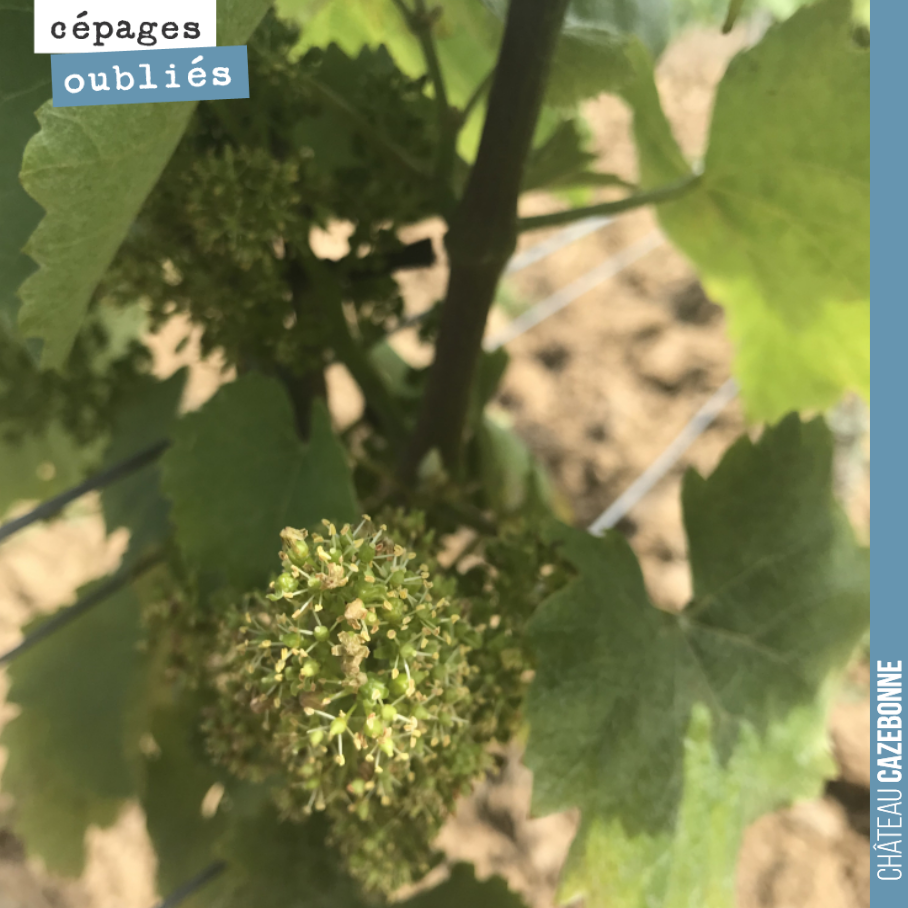
The success of this stage is all the more rewarding as we are committed to replanting forgotten grape varieties in Bordeaux, as highlighted by Jean-Baptiste Duquesne in his book. This work, which aims to revive the historical richness of the Bordeaux vineyard, is made possible thanks to the unwavering support of the many enthusiasts who have adopted our wines and share our passion. To discover our cuvées from this terroir and these resurrected grape varieties, we invite you to visit the Cazebonne shop. And to delve deeper into the fascinating history of Bordeaux grape varieties, the book "Bordeaux, une histoire de cépages" by Jean-Baptiste Duquesne, published by Éditions BBD, offers valuable insight. You can receive the digital version of this book by visiting our website.
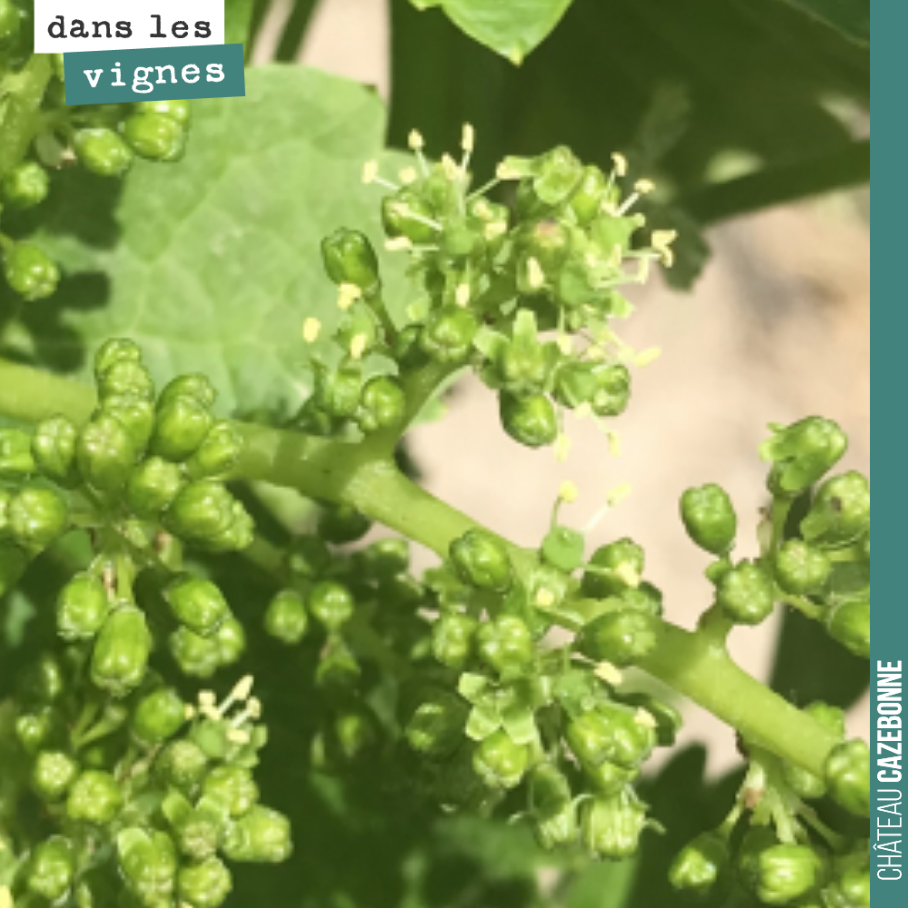
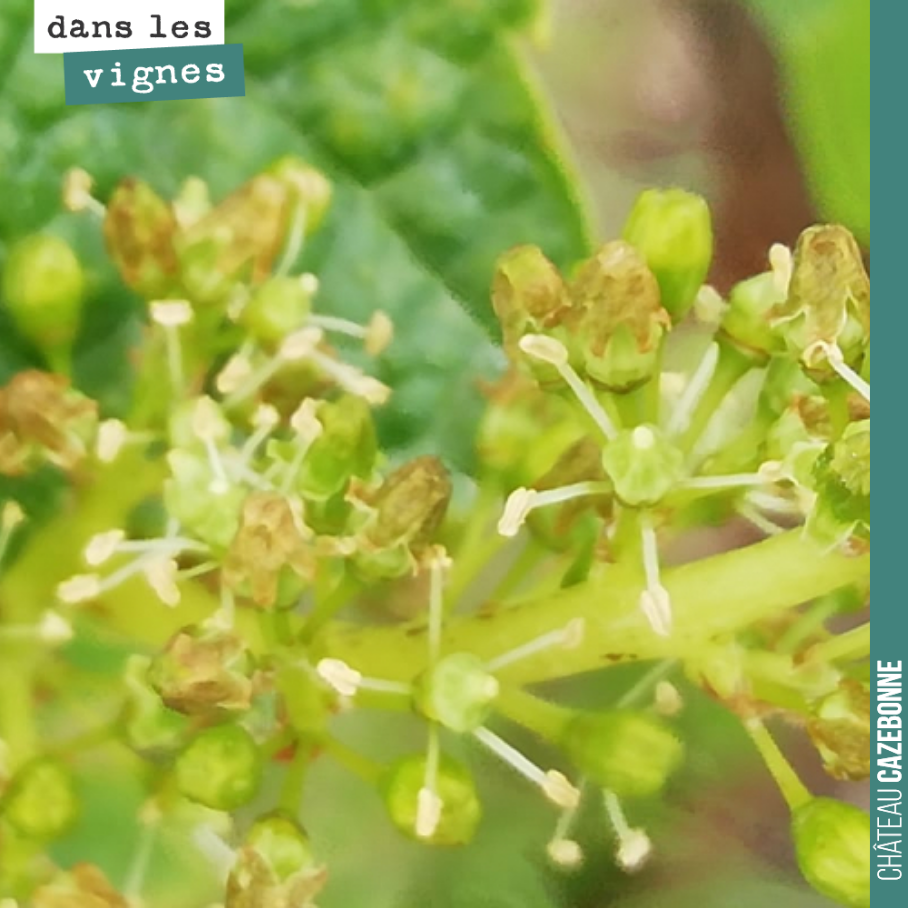
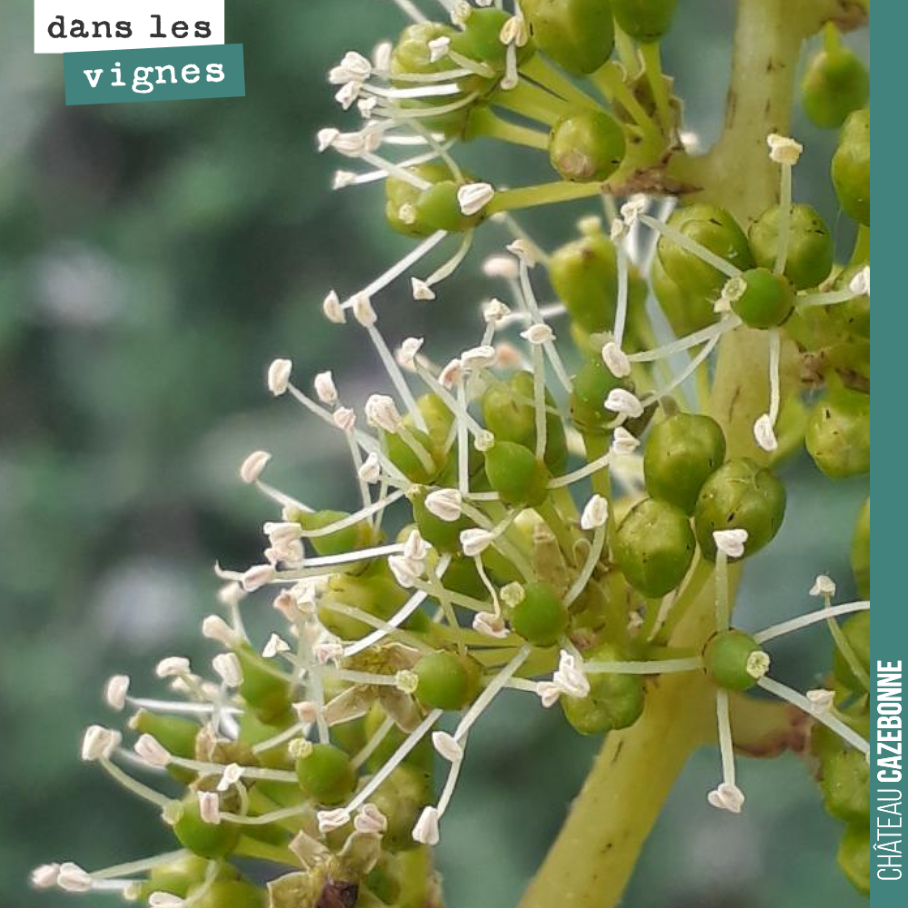
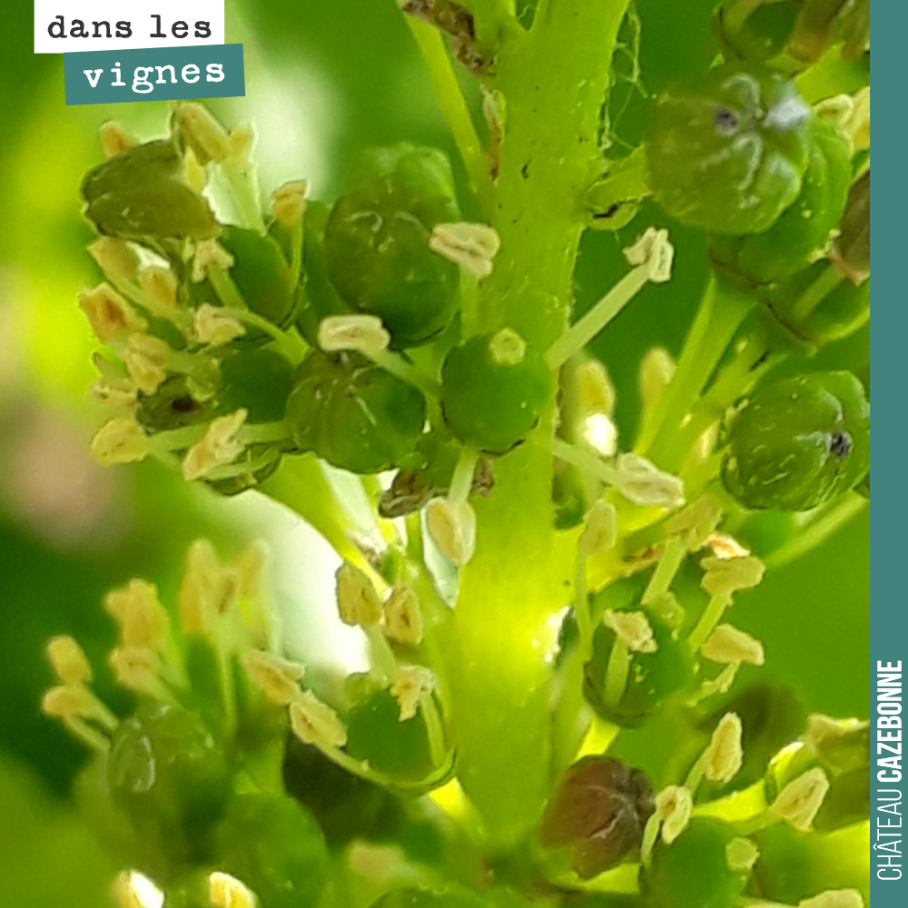
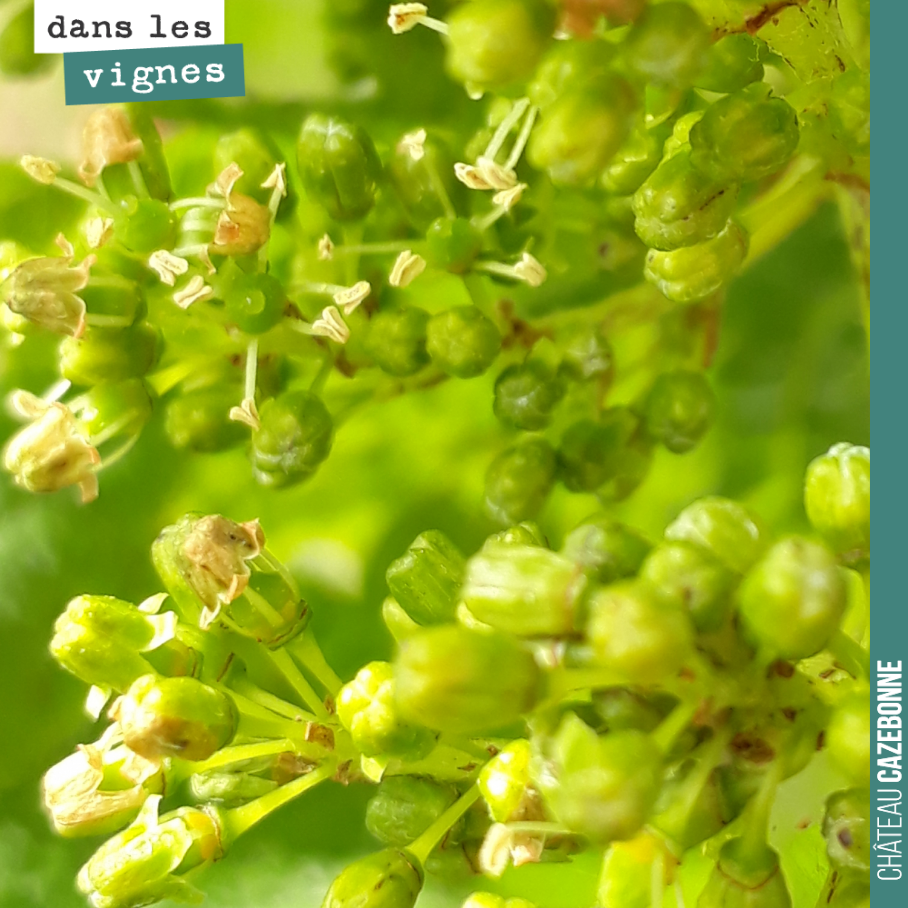
Vine flowering is the phenological stage during which the vine's flowers open, are fertilised, and begin their transformation into grapes. It is an essential biological process that enables plant reproduction and fruit formation. Each vine "flower", known as a glomerule, is a tiny, often greenish structure that contains the male and female organs necessary for reproduction.
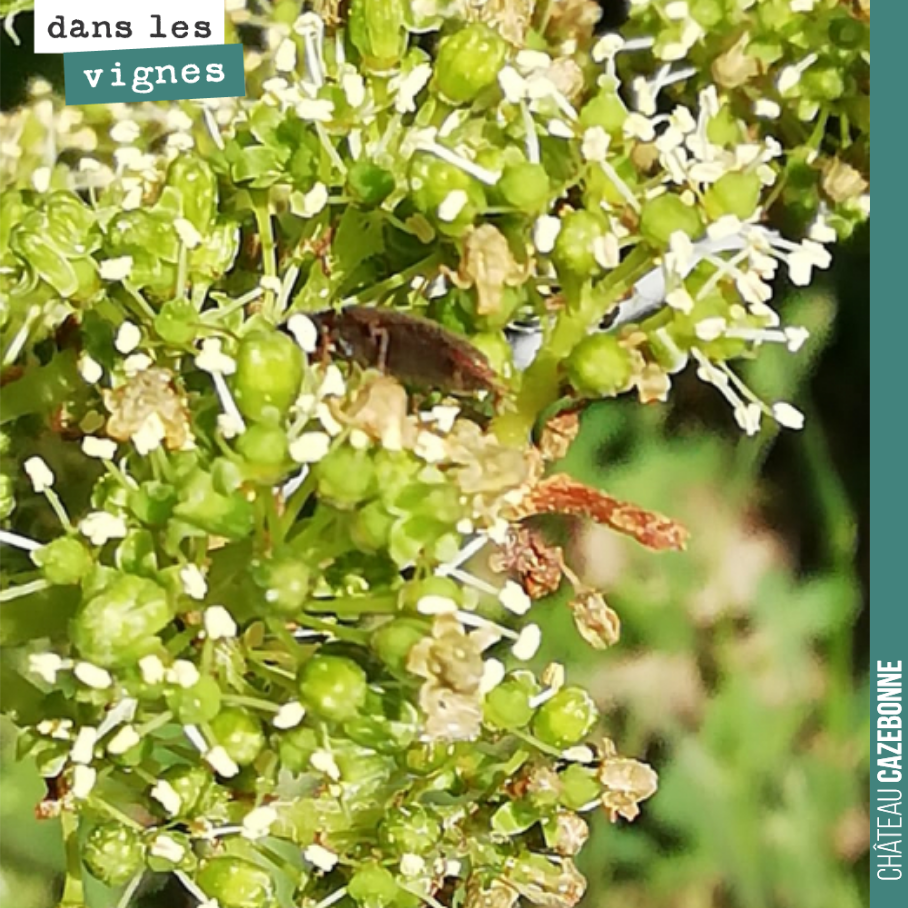
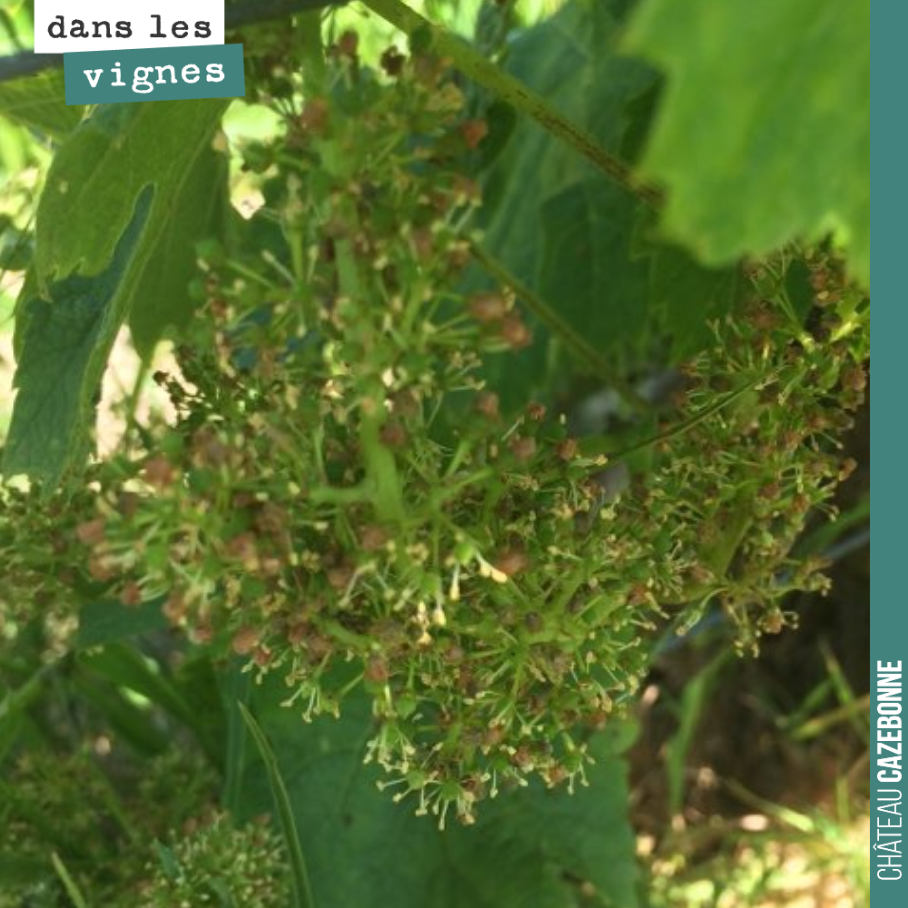
The flowering process generally begins with the separation of the floral cap (the corolla), which protects the anthers and the stigma. Once open, fertilisation can take place. The vine is predominantly a self-fertile plant, meaning that the pollen from one flower can fertilise the pistil of the same flower or another flower on the same vine. Influenced by the wind or insects, the pollen is carried to the stigma. Once fertilisation is successful, the faded flower drops off, leaving an ovary that will develop into a berry. If fertilisation is incomplete or fails, the phenomena of coulure or millerandage occur.
Flowering usually occurs in spring, between late May and mid-June in the Northern Hemisphere, roughly 8 to 10 weeks after budburst. Its duration is short, spanning from a few days to around ten days depending on weather conditions and the grape variety. The ideal temperatures for a successful flowering are between 18°C and 25°C. The seasons in the vineyards strongly influence this calendar.
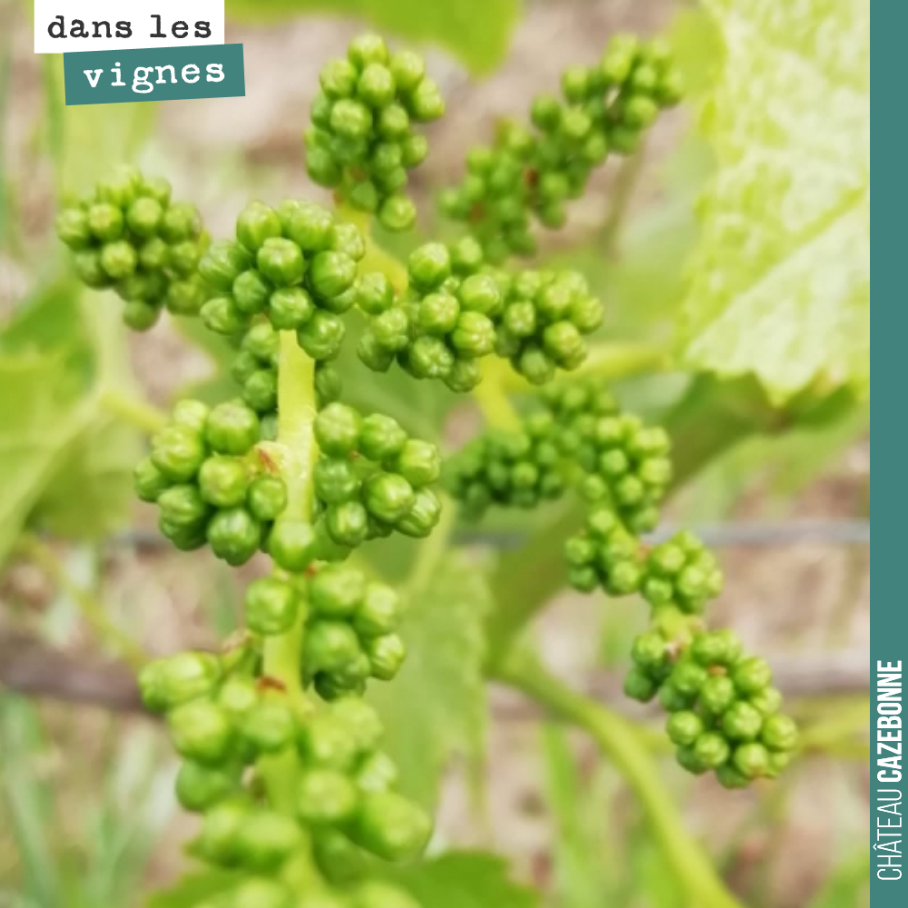
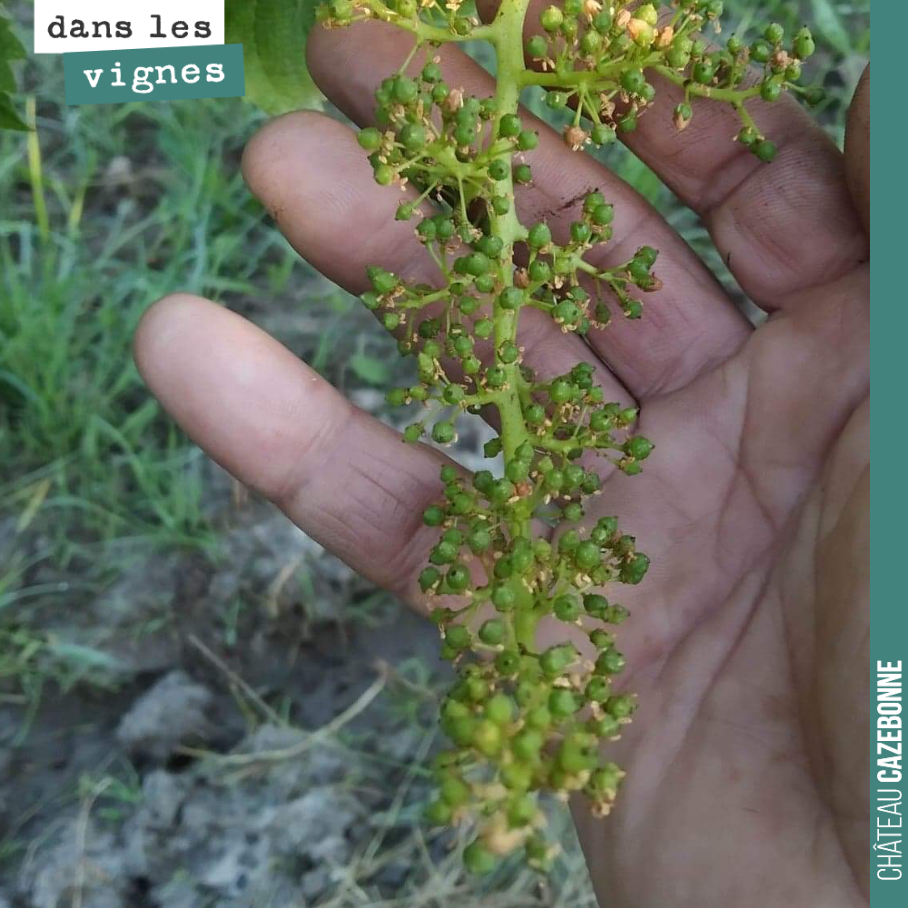
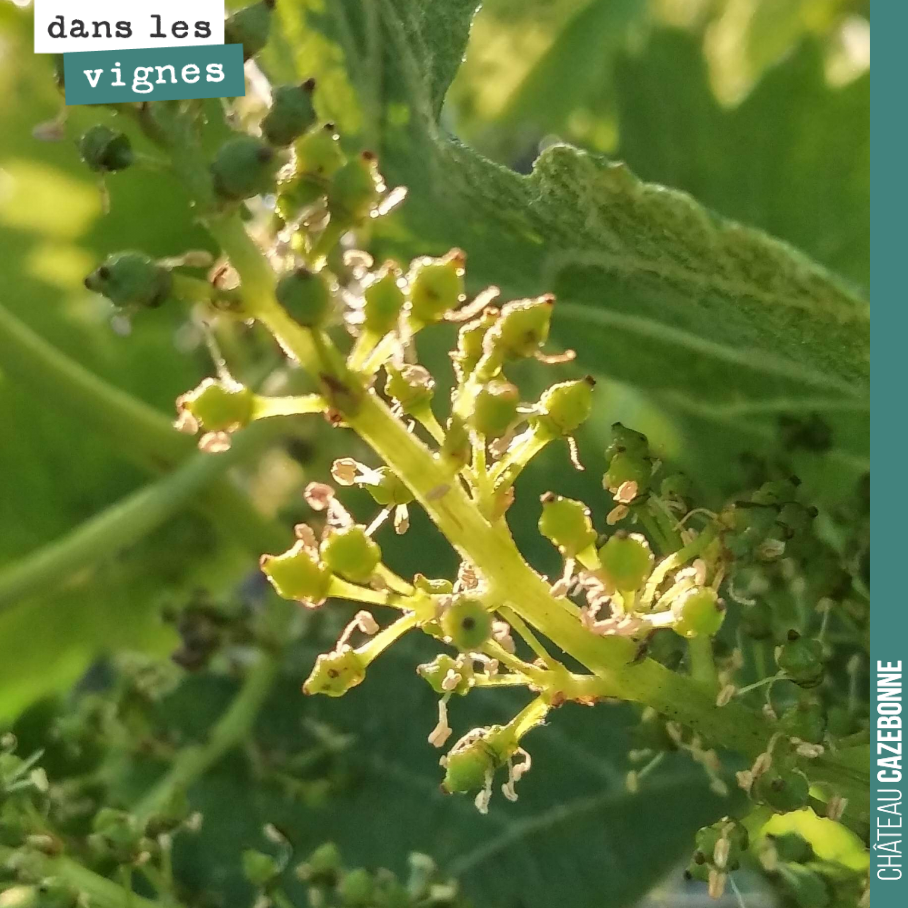
Several signs make it possible to observe the progress of flowering. The first is the appearance of inflorescences, small clusters of floral buds. Then, the gradual opening of the flowers, the falling of the floral caps to the ground, and the appearance of young, green berries signal the success of this stage. A homogeneous flowering across the entire plot is a key indicator of good harvest potential.
At Château Cazebonne, our attention is at its peak during this crucial period. We closely monitor the weather conditions, knowing that rain, wind, or excessively low temperatures can have a negative impact. Our work involves meticulous trellising, allowing for good aeration of the bunches and optimal sun exposure. Healthy soil management, which promotes the biodiversity of flowers and pollinating insects, also helps foster a successful flowering. Careful observation of our old vines and young plants is essential to provide the best possible support during this fragile yet profoundly important moment.
It is common to hear that the wind, particularly certain cold winds, can "burn" vine flowers. While a strong wind can indeed damage young shoots and flowers, it is not the wind itself that is most detrimental, but rather the low temperatures it can carry, or its combination with excessive humidity. The popular belief that an unfavourable "compass rose" (wind direction) is the sole cause is only part of the truth. In reality, the overall climate (temperature, humidity, sunshine) during this short window is the determining factor in the success of the flowering and, consequently, the future harvest. The period that follows is crucial for fruit set, the transformation of fertilised flowers into small berries, and then for bunch closure.
The success of this stage is all the more rewarding as we are committed to replanting forgotten grape varieties in Bordeaux. This work, which aims to revive the historical richness of the Bordeaux vineyard, is made possible thanks to the unwavering support of the many enthusiasts who have adopted our wines and share our passion. To delve deeper into the fascinating history of Bordeaux grape varieties, the book "Bordeaux, une histoire de cépages" by Jean-Baptiste Duquesne, published by Éditions BBD, offers valuable insight. You can test your wine knowledge with our oenological quizzes, and to discover our cuvées from this terroir and these resurrected grape varieties, we invite you to visit our online shop.
Our suggestions
-5%on your 1st order with code BIENVENUE
The essential6 bottles — Graves red 2022
The best price of the cellar: €12 per bottle delivered.
The everyday red: generous and straight to the point.
I want it Our recommendation92/100 RVF
6 bottles — Graves red 2022, 92/100 RVF
Rated 92/100 by La Revue du vin de France: a solid 10-year ageing potential.
Our Graves for ageing, the finest gateway to the estate.
I want it Go further
12 bottles — the whole range
12 bottles, the whole range tasted: the best discovery-to-price ratio.
The complete tour of the estate, in a single case.
I want it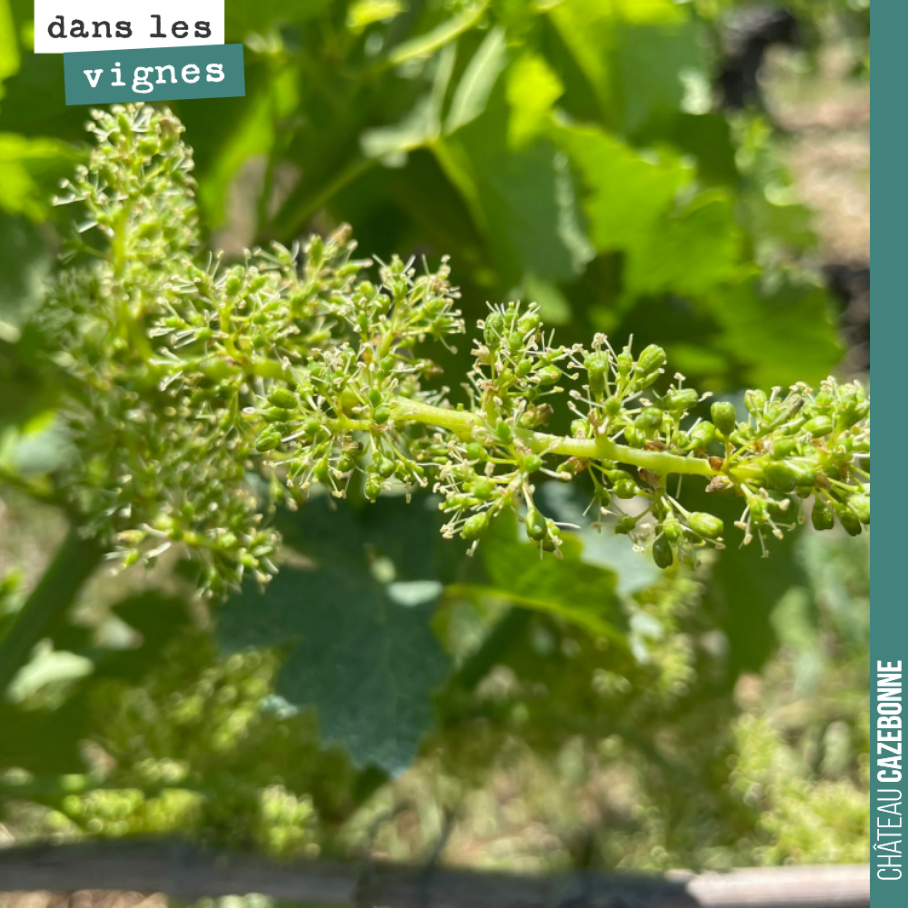
03 June 2022
16 May 2022
10 June 2021
04 June 2021
03 June 2021
21 May 2021
29 May 2020
23 May 2020
21 May 2020
16 May 2020
18 June 2019
08 June 2019
03 June 2019
17 May 2019
14 June 2018
10 June 2018
02 June 2018
The cellar, forgotten grape varieties and our cuvées, twice a month. 5% off your first order with the code BIENVENUE.