
 The essential
6 × Entre Amis red
6 bottles — Graves red 2022
The best price of the cellar: €12 per bottle delivered.
The everyday red: generous and straight to the point.
I want itChocking
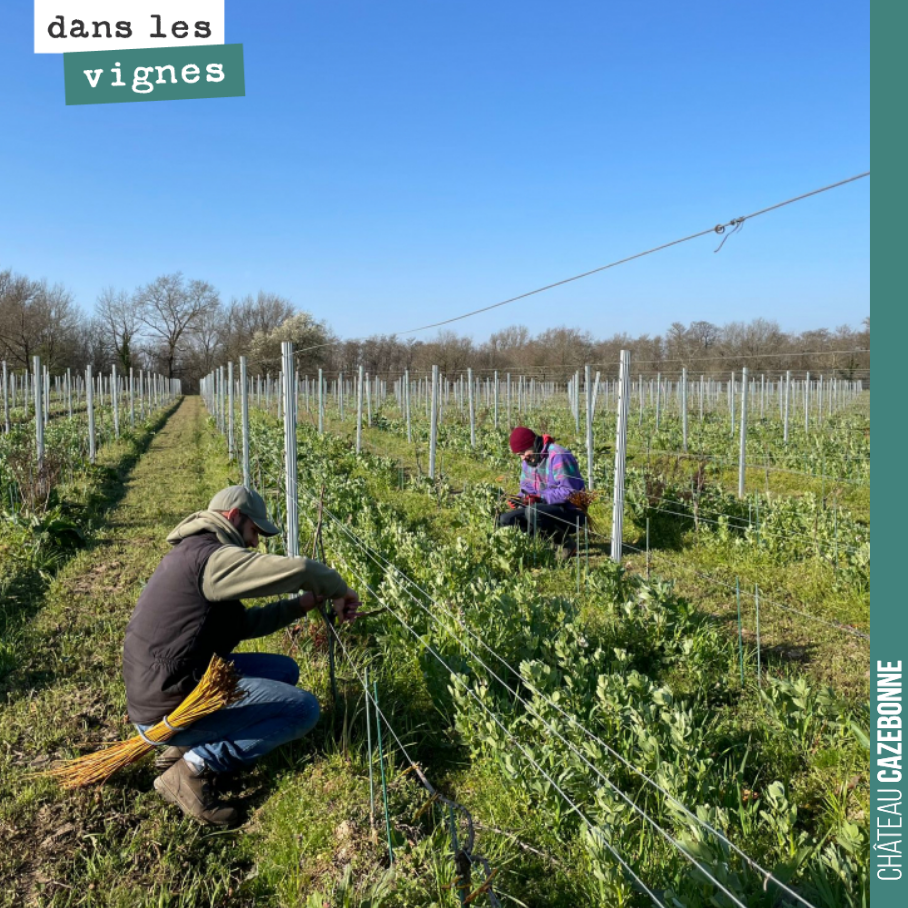
At the heart of the vineyard work, between the winter pruning and the grape harvest, lies a step often unknown to the general public but vital for the good health of the vine and the quality of the future wine: tucking. This meticulous task consists of carefully attaching the shoots to the support wire. Far from being trivial, tucking plays a crucial role in the plant's longevity and the efficiency of viticultural work.
Why this effort? Primarily to preserve the physical integrity of the vine. Indeed, a well-attached vine is a protected vine. The long green shoots, rich in sap, are fragile and vulnerable to the onslaught of the wind, but also and above all to the passage of agricultural machinery. Tucking prevents these shoots from breaking or being torn off during mechanised stages, such as trimming, soil maintenance or even treatments. Each breakage is a wound for the plant, which can lead to sap loss, weaken the vine and potentially make it more susceptible to diseases and pests. It is an essential preventative measure for the long-term vitality of the vineyard.
Beyond this direct protection, tucking actively contributes to the structuring of the vine. By guiding the shoots along the wires, it ensures an even distribution of the vegetation. This optimised arrangement promotes better aeration of the foliage, thus limiting the risks of developing powdery and downy mildew, two formidable fungal diseases. Furthermore, well-organised foliage allows for ideal solar exposure of the bunches, essential for good photosynthesis and the even ripening of the berries. This technical gesture therefore reveals all the science and patience of the winegrower, working for the perfect balance of their terroir. It also helps to facilitate the harvest, whether carried out manually or mechanically, ensuring optimal efficiency.
Tucking, also called tying or vine trellising, is a mechanical operation aimed at maintaining the vine's vegetation along the wires of the training system. It is not just about tying the shoots, but guiding and supporting them to ensure the vine's stability against bad weather and cultural operations. It is a crucial step for the proper development of the plant, allowing it to best direct its resources.
The main agronomic objective of tucking is to optimise the leaf surface exposed to the sun, thus promoting effective photosynthesis for the ripening of the bunches. By structuring the vegetation evenly, it also improves air circulation within the canopy and around the fruit, which significantly reduces humidity and, consequently, the risks of the appearance and development of fungal diseases such as botrytis or downy mildew. Good tucking is therefore directly linked to the health of the vine and the sanitary quality of the harvest.
Tucking generally takes place after the vine has flowered, when the shoots have reached a sufficient length to be tied, but before they become too rigid and brittle. Depending on the regions and grape varieties, this is often between late May and late June. At this stage, the growth of the vine is dynamic, and several passes are sometimes necessary to support the lengthening of the young shoots and keep them in a vertical position.
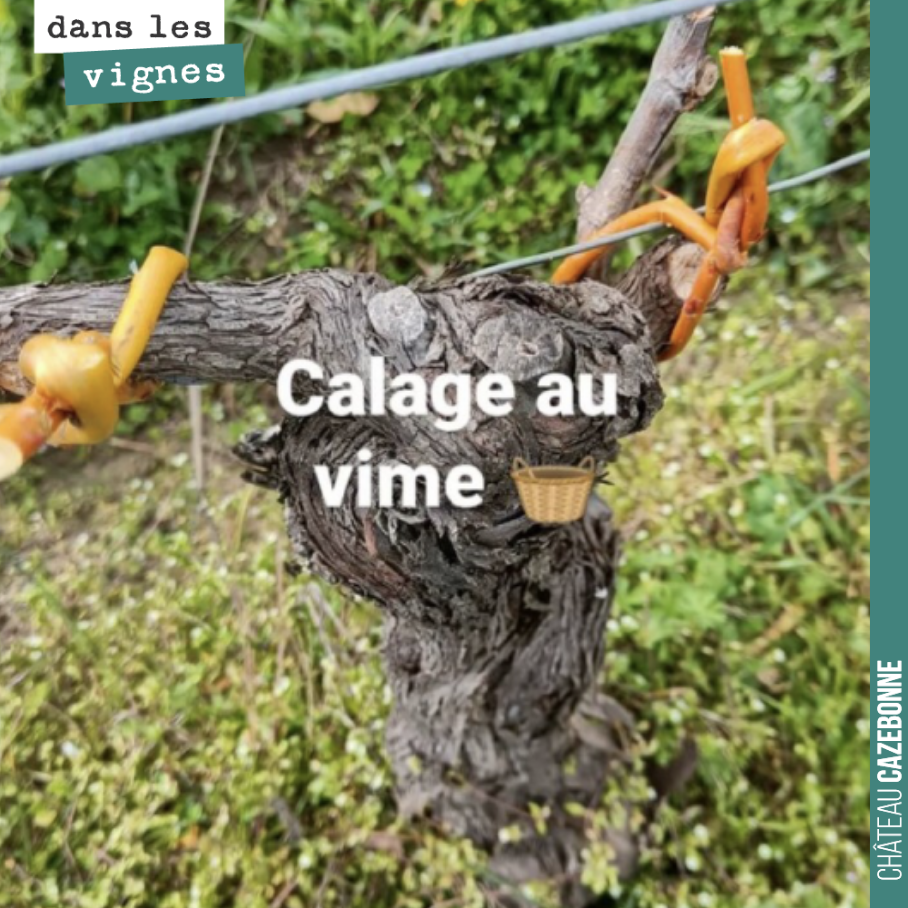
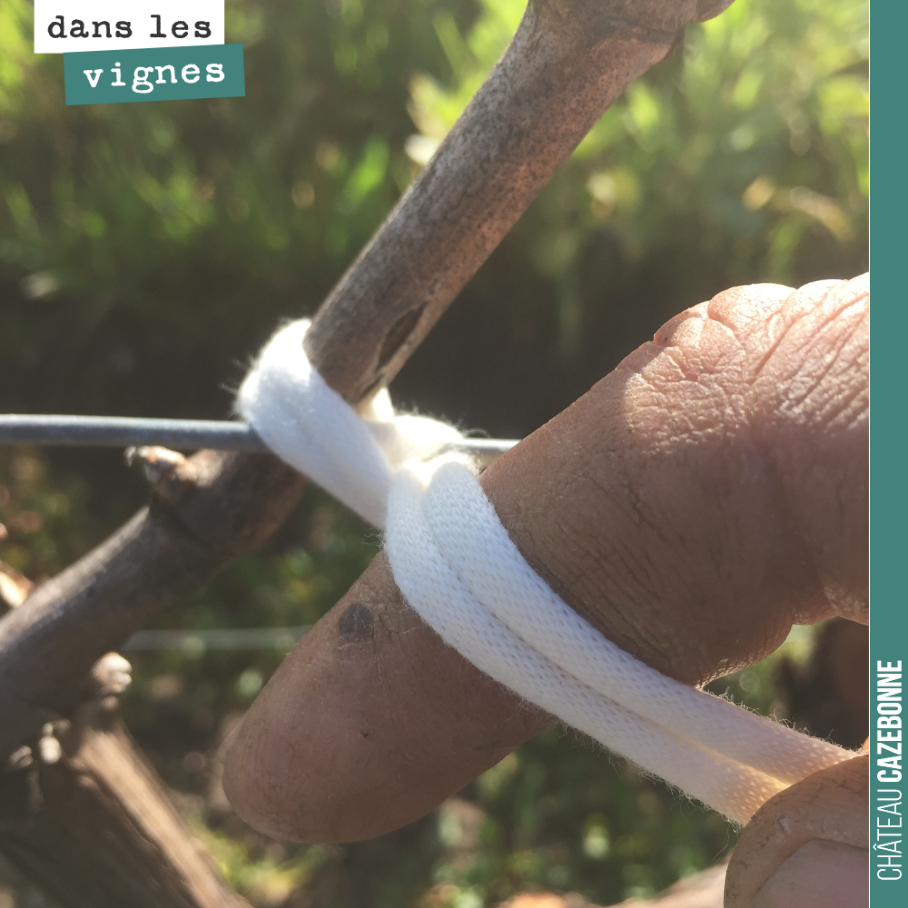
The most common method for tucking involves using ties to attach the shoots to the wires. It is crucial not to over-tighten the ties in order not to strangle the growing shoots and avoid disrupting the circulation of sap. According to the "Manuel-pratique de la culture de la vigne dans la Gironde", stakes can be used to support the young buds until they reach the wires. At the time, as mentioned in "La Vigne dans le Bordelais", "vimes" (wicker strands) of different lengths were used to tie the vine, but these methods have evolved. Care must be taken to ensure that the bunches are not trapped by overly dense foliage, which would deprive them of light and air. Another operation related to tucking is vine lifting, which keeps the shoots in a vertical position as they grow.
Historically, natural materials such as wicker (Source 1) or wet straw (Source 3) were favoured for tying, to avoid strangling the wood and allow for their annual renewal. Today, winegrowers have the choice between different types of ties, ranging from biodegradable threads (starch, cellulose) to mechanical staples, as well as reusable plastic clips. The choice of equipment depends on cultural practices, cost, environmental impact and the required robustness. Wire, meanwhile, has become a standard, replacing stakes in many vineyards, as discussed in "Viticulture", in particular to reduce labour and allow for more rational pruning. Another task is vine braiding.
At Château Cazebonne, we pay close attention to every vineyard task, and tucking is no exception. We favour methods that respect the plant's physiology and the environment, in line with our commitment to biodynamics. The objective is to guarantee a harmonious development of our vines, especially those of our historical grape varieties, which require special attention to fully express their potential. Precise and appropriate tucking is a pillar of our approach to obtaining healthy grapes and high-quality wines, while protecting our living soils.
At Château Cazebonne, this meticulousness in the vineyard work is all the more important as we have embarked on a unique path: that of the rebirth of the historical grape varieties of Bordeaux. This demanding and passionate work of replanting forgotten grape varieties is a strong act of preserving a unique viticultural heritage, a way of rediscovering the soul of the wines of yesteryear and exploring new expressions of our terroir. This mission is made possible thanks to the support of the many enthusiasts who have adopted our wines. To deepen your knowledge of the fascinating history of Bordeaux grape varieties, you can download the digital version of the book "Bordeaux, une histoire de cépages" via our website, perfect your oenological knowledge with our quizzes and discover the fruit of this meticulous labour and our passion for wine by visiting our online boutique. Mandronner the vine is a forgotten task nowadays.
Our suggestions
-5%on your 1st order with code BIENVENUE
The essential6 bottles — Graves red 2022
The best price of the cellar: €12 per bottle delivered.
The everyday red: generous and straight to the point.
I want it Our recommendation92/100 RVF
6 bottles — Graves red 2022, 92/100 RVF
Rated 92/100 by La Revue du vin de France: a solid 10-year ageing potential.
Our Graves for ageing, the finest gateway to the estate.
I want it Go further
12 bottles — the whole range
12 bottles, the whole range tasted: the best discovery-to-price ratio.
The complete tour of the estate, in a single case.
I want it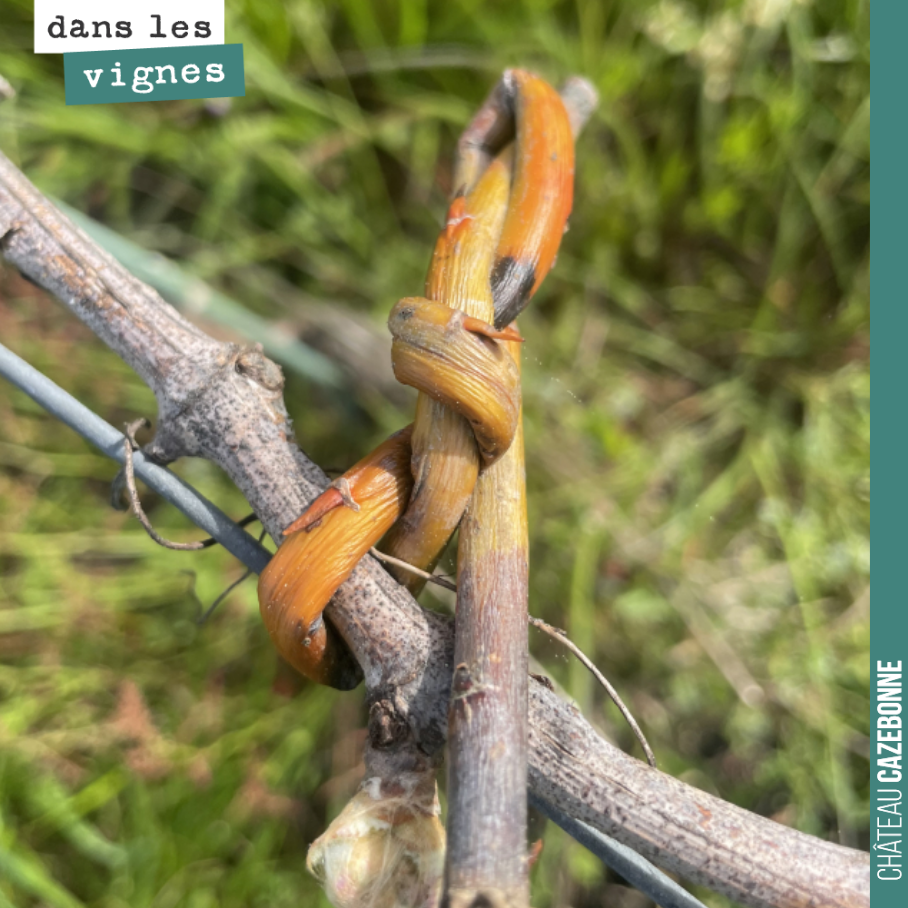
11 April 2024
02 April 2022
09 March 2022
12 March 2019
The cellar, forgotten grape varieties and our cuvées, twice a month. 5% off your first order with the code BIENVENUE.