
 The essential
6 × Entre Amis red
6 bottles — Graves red 2022
The best price of the cellar: €12 per bottle delivered.
The everyday red: generous and straight to the point.
I want itDragonfly
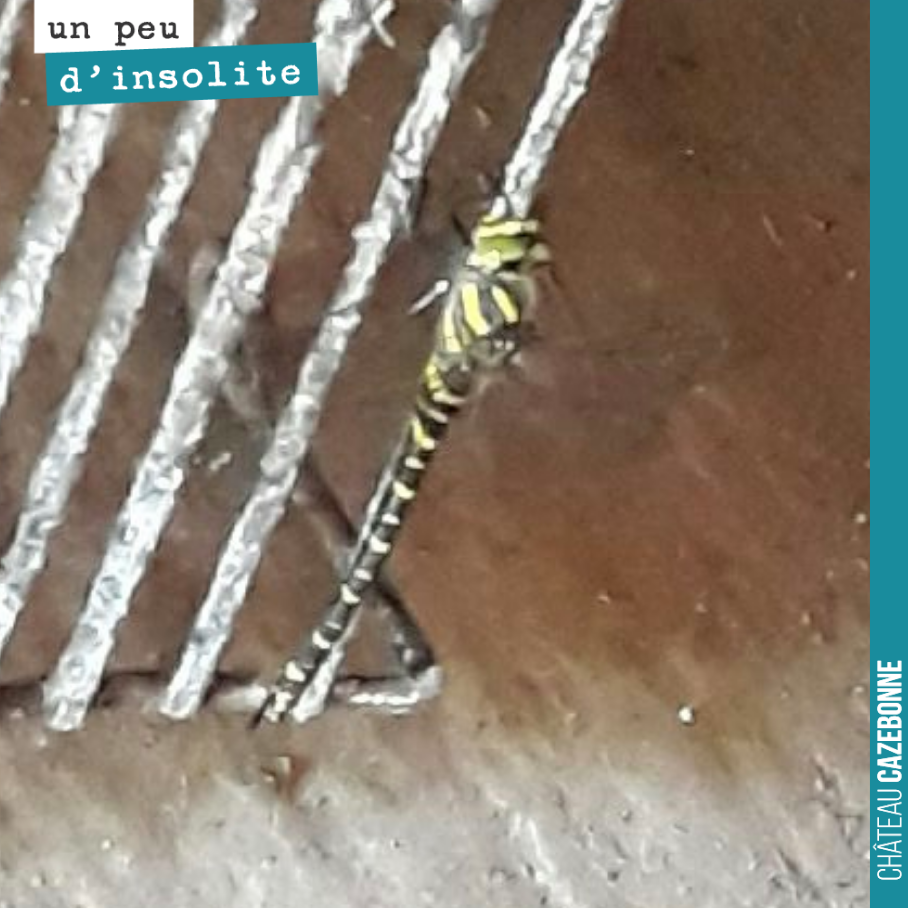
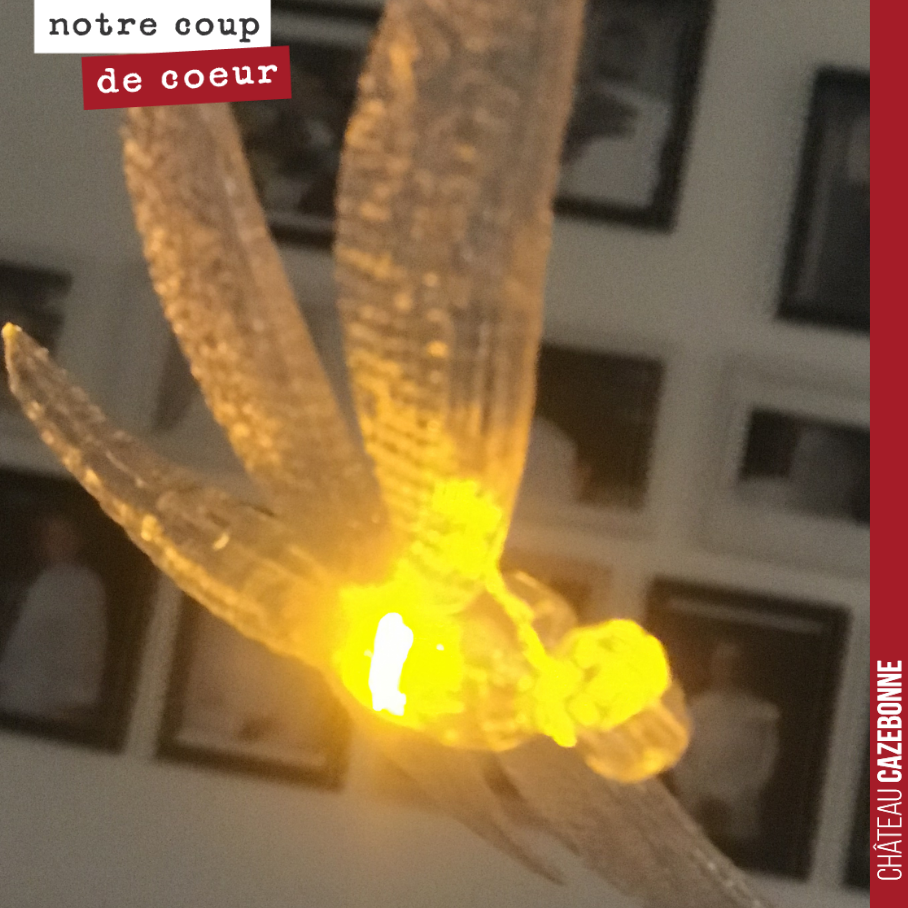
At the heart of our Bordeaux vines, the dragonfly is not just another insect; it is the very symbol of Château Cazebonne, perfectly embodying our commitment to biodiversity and natural balance. Majestic in its graceful flight and shimmering colours, it is a valuable indicator of the good health of our ecosystems. Its presence is tangible proof of a preserved environment, where the water is pure and the food chain is intact – essential conditions for the authentic expression of our terroirs.
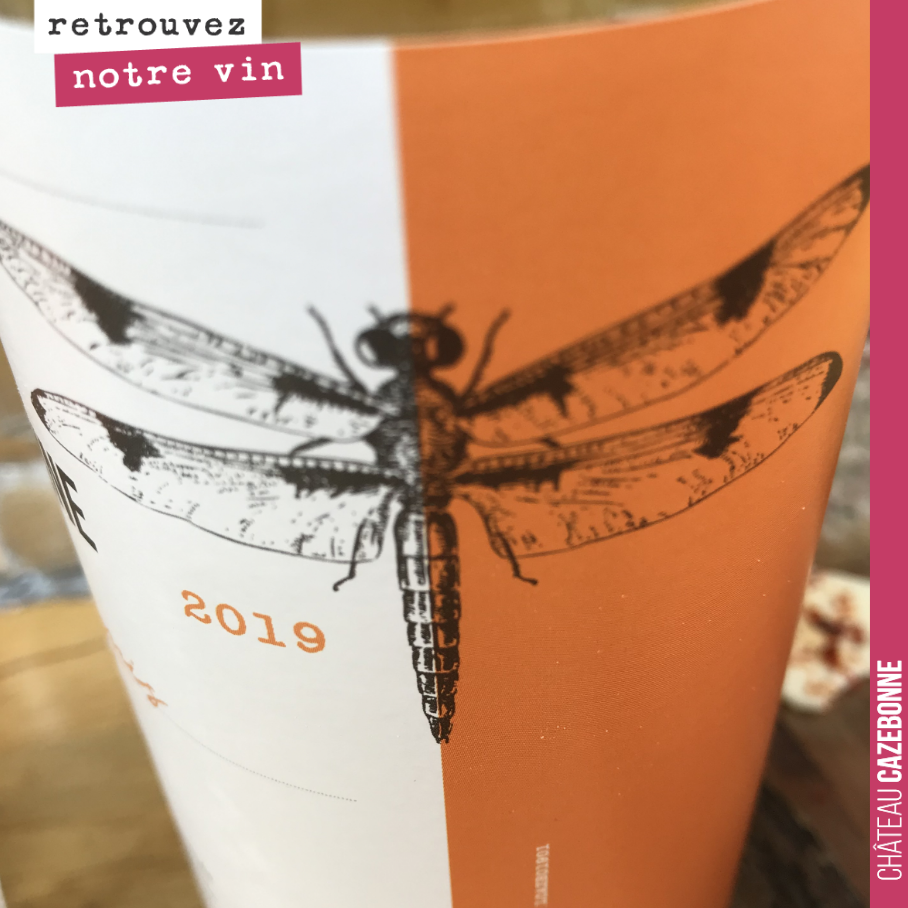
We are proud to display this noble insect on all our labels, a gesture that goes well beyond aesthetics. It is a declaration, a constant reminder of our philosophy: respectful viticulture, in harmony with its environment. The dragonfly, a natural predator of mosquitoes and other small insects, contributes to biological regulation within our plots, further highlighting the importance of preserving these sentinels of nature. It bears witness to the richness and complexity of the ecosystem that we strive to cultivate.
The book "Bordeaux, une histoire de cépages" by Jean-Baptiste Duquesne, published by Éditions BBD, highlights this profound interaction between the vine and its environment. It recalls how, over the centuries, fauna has always influenced viticultural practices and the singularity of the wines. At Château Cazebonne, we are part of this tradition, restoring not only the natural balance of our vines but also a forgotten viticultural heritage.
The dragonfly is the common name for a group of insects belonging to the Odonata order, and more specifically to the Anisoptera suborder. There are many species, but they all share distinctive characteristics that make them fascinating and recognisable creatures.
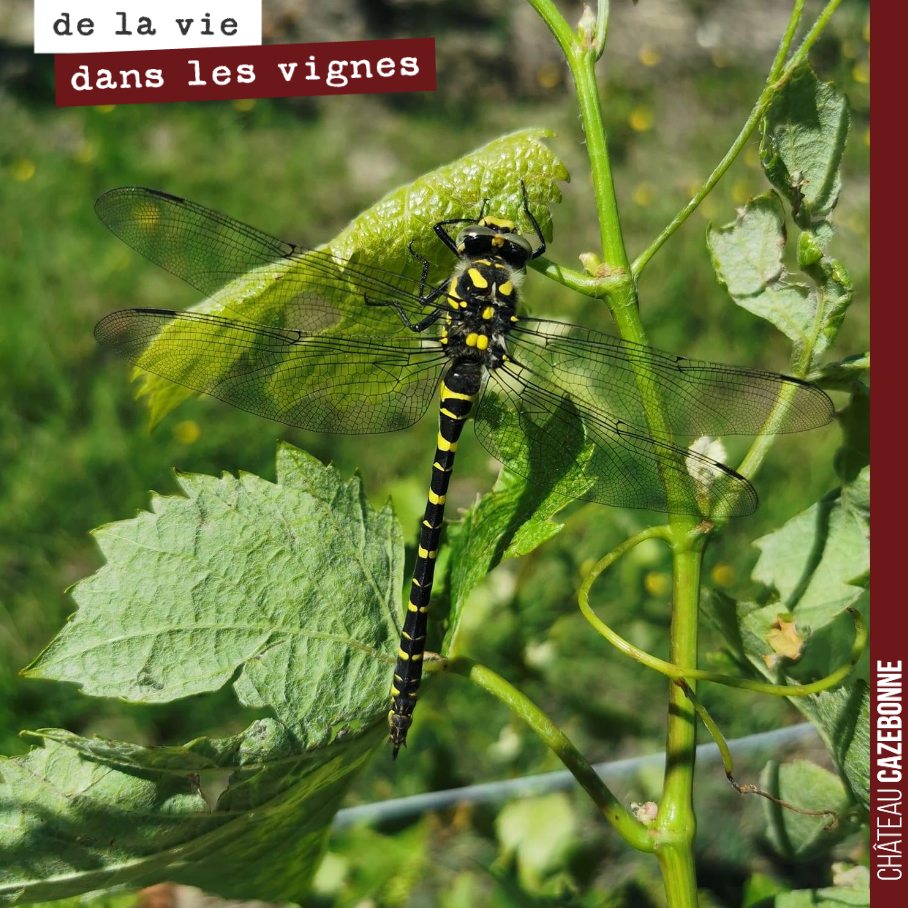
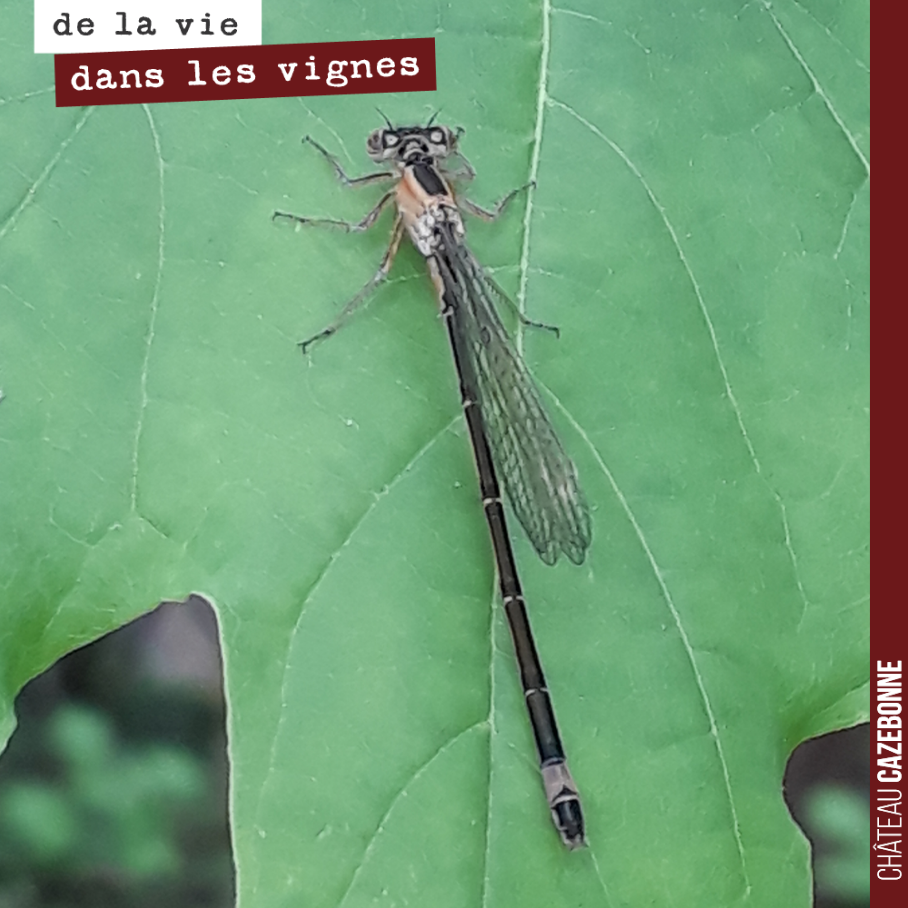
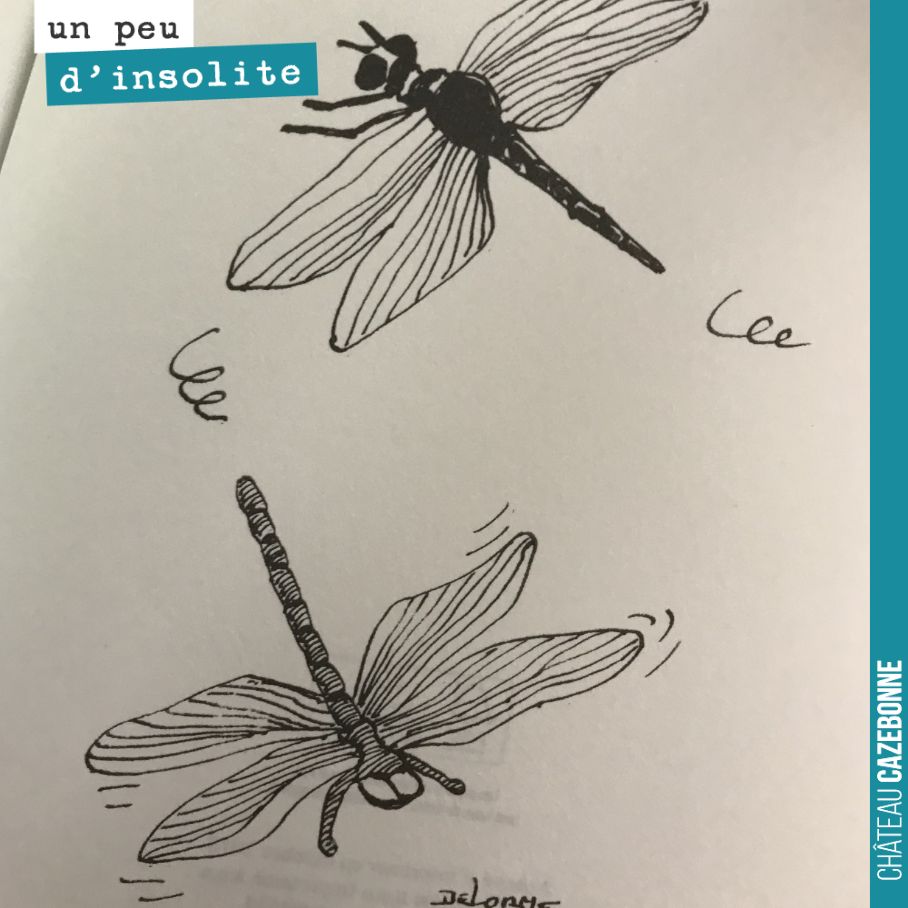
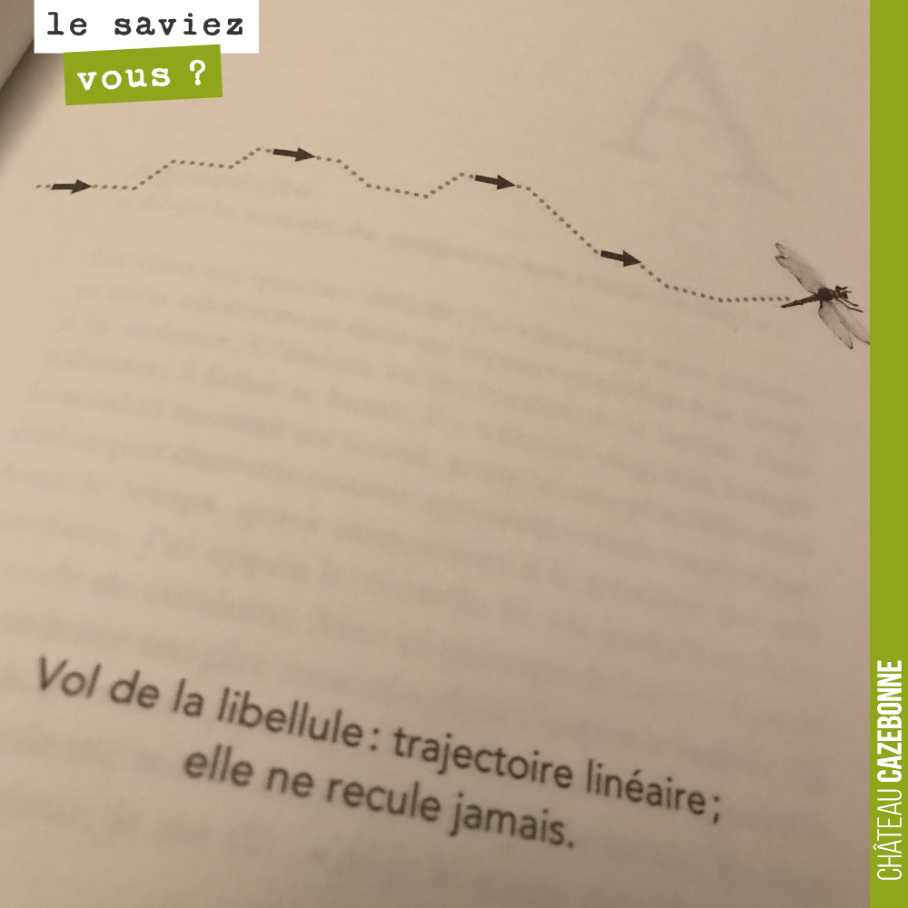
Adult dragonflies are distinguished by their slender bodies, their two pairs of membranous wings that cannot be folded at rest, and their large compound eyes. Their colours vary greatly depending on the species, ranging from metallic blue to bright red, and emerald green. Their flight is agile and powerful, capable of rapid movements and hovering. Their life cycle is predominantly aquatic. After mating, the female lays her eggs in the water or on aquatic plants. The larvae, called naiads, live underwater for several months, or even years, and are voracious predators. They will undergo several moults before emerging from the water for their final moult and transforming into adult dragonflies, which will only live for a few weeks.
At Château Cazebonne, we regularly observe dragonflies near our water sources and wetlands, which are key elements of our biodiversity. Their presence is an excellent indicator of water quality, as their larvae are highly sensitive to pollution. It is therefore crucial for us to preserve these habitats. As predators, adult dragonflies hunt various small insects in flight, notably mosquitoes, flies, and midges. Their larvae feed on other aquatic insect larvae, thus contributing to the balance of the ecosystem. They are therefore true natural allies in regulating populations of insects that are potentially harmful to the vine, actively participating in our approach to agroecology in viticulture.
The interaction of dragonflies with the vine is strictly beneficial. They do not feed on the vine itself and cause no damage to the grapes. On the contrary, by controlling the populations of certain insects, they participate in the protection of our vineyard without the need for chemical treatments. Their presence in the vines bears witness to a healthy, rich, and balanced environment, in line with our biodynamic commitments. This is why we will continue to create and maintain ecosystems favourable to their development, such as ponds and hedges, which offer essential refuges and water sources. Our cultivation practices are part of a global approach aimed at welcoming and protecting these precious natural auxiliaries.
It is thanks to this holistic approach and the invaluable support of wine lovers that we are now able to replant historic Bordeaux grape varieties, which were once threatened with extinction. This rehabilitation work, filled with passion and perseverance, is a real challenge that we take up every day to revive the very essence of the Bordeaux terroir in our cuvées. By choosing our wines, you actively participate in the preservation of this biodiversity and the sustainability of ancestral know-how. To deepen your knowledge of our vision and Bordeaux's viticultural history, we also invite you to receive the digital version of the book "Bordeaux, une histoire de cépages" and to test your knowledge through our oenological quizzes. Discover our cuvées and support our approach by exploring the Cazebonne shop.
Sources
Our suggestions
-5%on your 1st order with code BIENVENUE
The essential6 bottles — Graves red 2022
The best price of the cellar: €12 per bottle delivered.
The everyday red: generous and straight to the point.
I want it Our recommendation92/100 RVF
6 bottles — Graves red 2022, 92/100 RVF
Rated 92/100 by La Revue du vin de France: a solid 10-year ageing potential.
Our Graves for ageing, the finest gateway to the estate.
I want it Go further
12 bottles — the whole range
12 bottles, the whole range tasted: the best discovery-to-price ratio.
The complete tour of the estate, in a single case.
I want it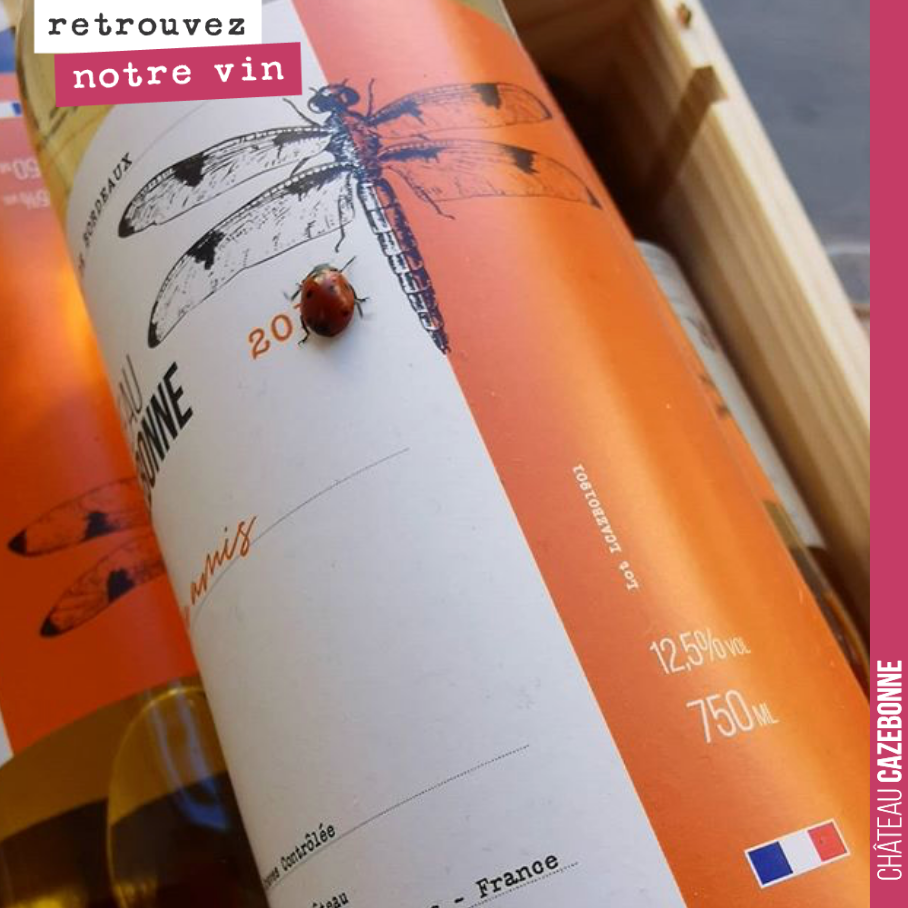
06 August 2020
09 July 2020
19 May 2020
24 April 2020
26 July 2019
25 January 2019
24 January 2019
19 January 2019
13 December 2018
The cellar, forgotten grape varieties and our cuvées, twice a month. 5% off your first order with the code BIENVENUE.