
 The essential
6 × Entre Amis red
6 bottles — Graves red 2022
The best price of the cellar: €12 per bottle delivered.
The everyday red: generous and straight to the point.
I want itHornet
The hornet, a flying insect belonging to the Vespidae family, is a well-known figure in our ecosystems. Characterised by its flattened head, compound eyes, and short antennae, this robust hymenopteran, generally hairy, measures between 15 and 25 mm in length. While numerous species are spread across all continents except Antarctica, their lifestyles vary, with some being solitary and others social. The hornet's diet consists mainly of nectar and small insects, which it captures effectively thanks to its venomous sting.
In a healthy ecosystem, the hornet plays an important role as a predator. It helps to regulate insect populations, including certain crop pests. However, in the context of our Bordeaux vineyards, the hornet, and particularly the Asian hornet (Vespa velutina nigrithorax), represents a growing challenge. Its propensity to attack ripe bunches of grapes can lead to significant losses, especially as its stings can cause secondary damage by promoting the development of moulds. Beyond the direct damage to the vines, hornet predation on bees and other pollinators also weakens the delicate balance of local biodiversity.
The hornet is a genus of social insects in the Vespidae family (Vespa). We mainly encounter the European hornet (Vespa crabro), a native species, and the Asian hornet (Vespa velutina nigrithorax), an invasive species.
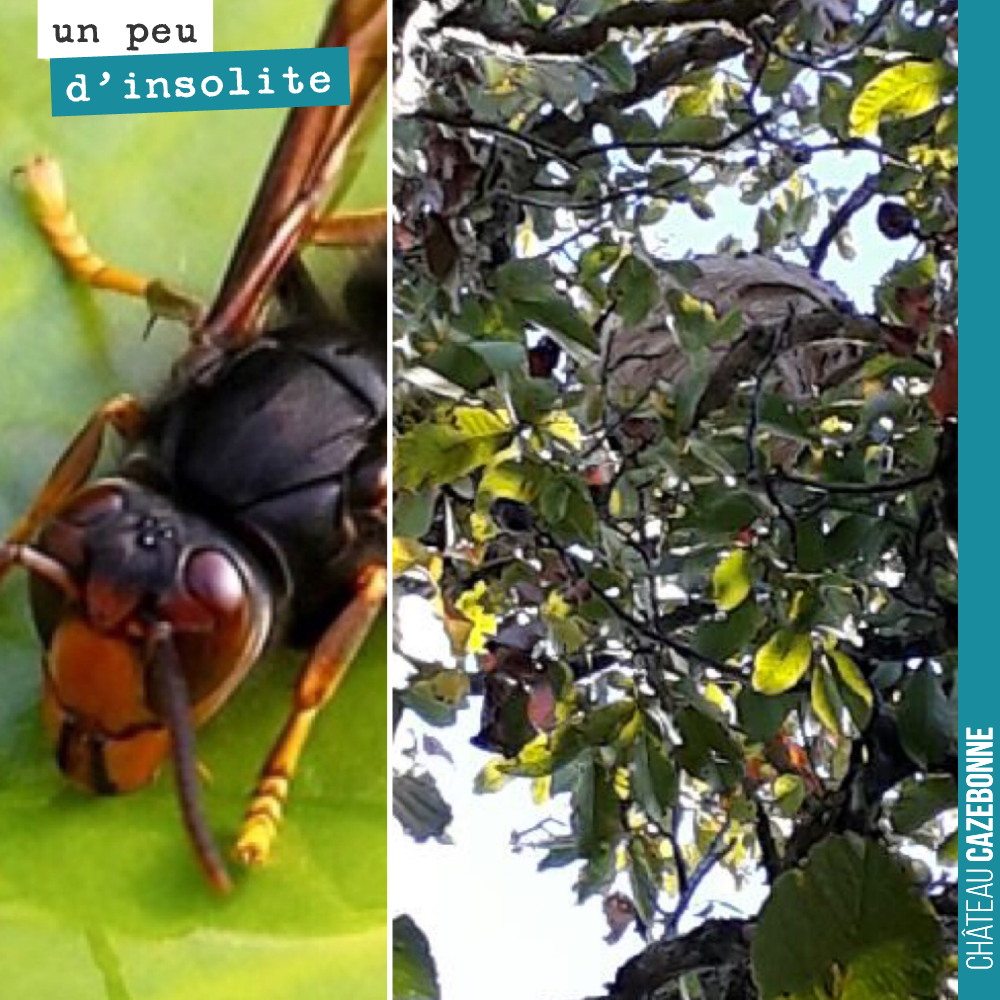
The European hornet is the largest of the European wasps, and queens can reach up to 35 mm in length. It is easily recognisable by its yellow abdomen striped with black and its generally reddish head. The Asian hornet, on the other hand, is smaller (20 to 30 mm for the queen) and is distinguished by its predominantly black colour, with an orange abdominal segment and yellow leg extremities. Contrary to popular belief, the hornet is not particularly aggressive towards humans, unless it feels threatened or its nest is disturbed.
The life cycle of the hornet begins in spring with the queen emerging from hibernation to found a new colony. She builds a small primary nest where she lays her first eggs. The first workers hatch and take over the construction of the nest and foraging for food. The colony develops during the summer, reaching its maximum size in the autumn, with the appearance of new queens and males. The latter mate, and only the young fertilised queens will survive the winter to restart the cycle. In our vineyards, hornets are especially active from summer to autumn, the period when the bunches of grapes ripen.
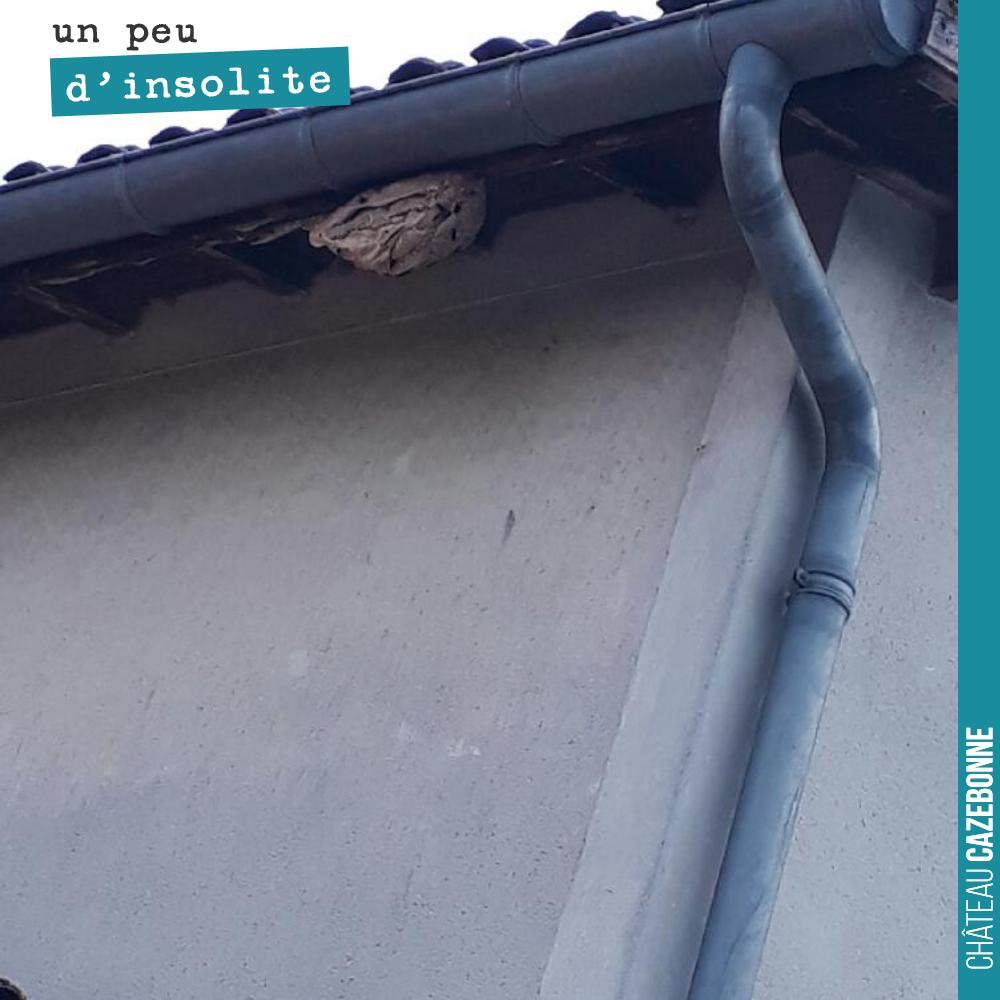
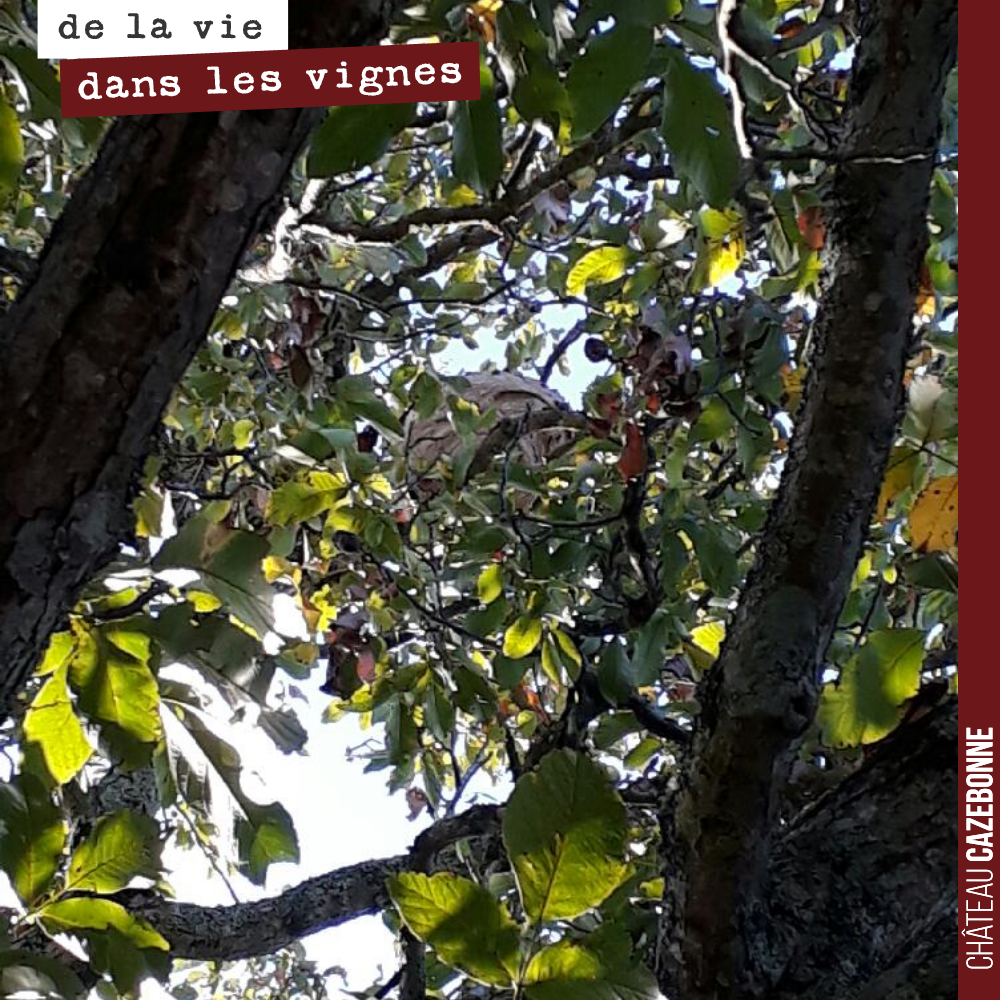
Hornets build their nests in a variety of places. The European hornet prefers dark cavities such as hollow tree trunks, nesting boxes, or the frameworks of buildings. The Asian hornet, by contrast, tends to build large spherical secondary nests, often located high up in trees, making it more visible in the terroir landscape. At Château Cazebonne, we observe these nests mainly on the edges of the vineyard plots or in the trees of the neighbouring forests.
The ecological role of the hornet is complex. It is a generalist insect predator, contributing to the regulation of many populations, including certain insect pests. However, the Asian hornet poses a serious threat to honeybees and bumblebees, of which it is a voracious predator, thereby weakening the colonies of important pollinators. Local biodiversity is therefore impacted by its presence.
The interaction of the hornet with the vines at Château Cazebonne, particularly the Asian hornet, is unfortunately more harmful than beneficial. Attracted by the sugar in the ripe grape berries, they can cause direct damage to the bunches, especially during véraison. Their stings lead to wounds that encourage the onset of botrytis and other moulds, degrading the quality of the harvest. This issue is all the more significant for winegrowers practising sustainable viticulture, as control methods are limited and must be environmentally friendly.
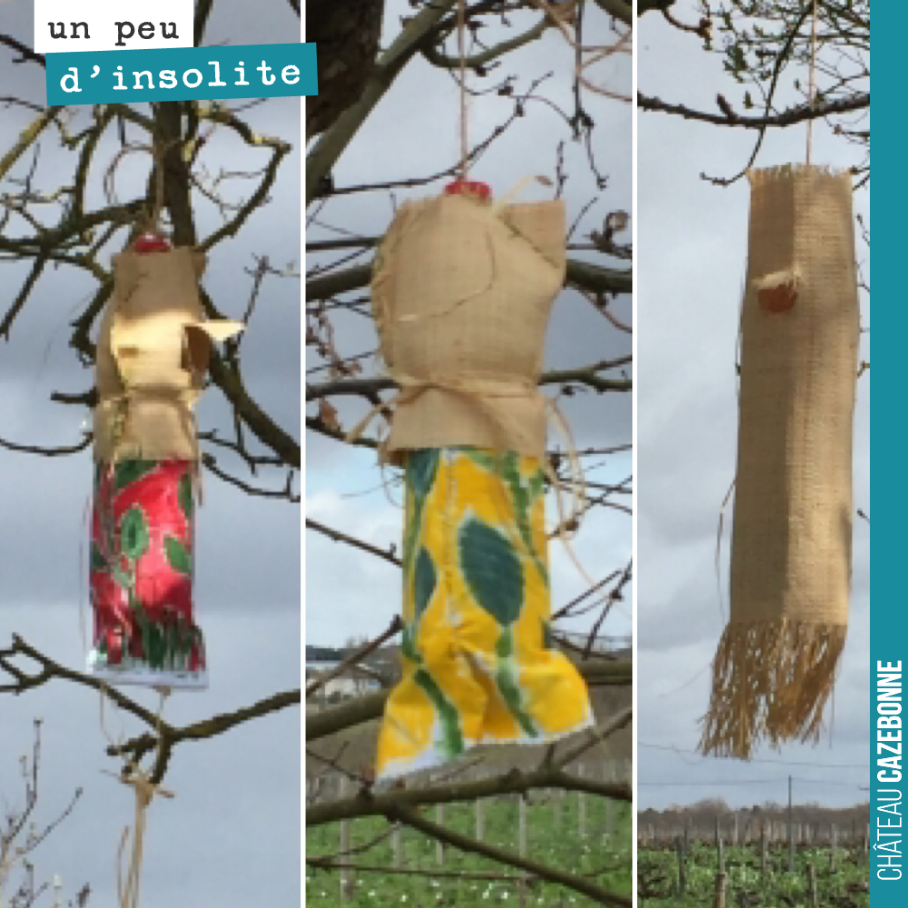
At Château Cazebonne, we vigilantly observe the evolution of hornet populations and seek to implement environmentally friendly regulation strategies. Rather than resorting to radical solutions, we favour understanding their life cycles and identifying their natural predators, in line with our comprehensive approach to sustainable viticulture. This initiative is part of a desire to restore a natural balance, as highlighted in "Bordeaux, une histoire de cépages" by Jean-Baptiste Duquesne, which recounts the complexity of the interactions between the vine and its environment throughout the centuries.
Our commitment to restoring the forgotten grape varieties of Bordeaux and preserving the richness of our terroirs is made possible thanks to the support of the many enthusiasts who have adopted our wines and share our vision. Explore our actions and our history by downloading the digital version of the book "Bordeaux, une histoire de cépages" by clicking here, test your oenological knowledge with our oenology quizzes, and support our approach by discovering the expression of our terroirs in the Cazebonne boutique.
Sources
Our suggestions
-5%on your 1st order with code BIENVENUE
The essential6 bottles — Graves red 2022
The best price of the cellar: €12 per bottle delivered.
The everyday red: generous and straight to the point.
I want it Our recommendation92/100 RVF
6 bottles — Graves red 2022, 92/100 RVF
Rated 92/100 by La Revue du vin de France: a solid 10-year ageing potential.
Our Graves for ageing, the finest gateway to the estate.
I want it Go further
12 bottles — the whole range
12 bottles, the whole range tasted: the best discovery-to-price ratio.
The complete tour of the estate, in a single case.
I want it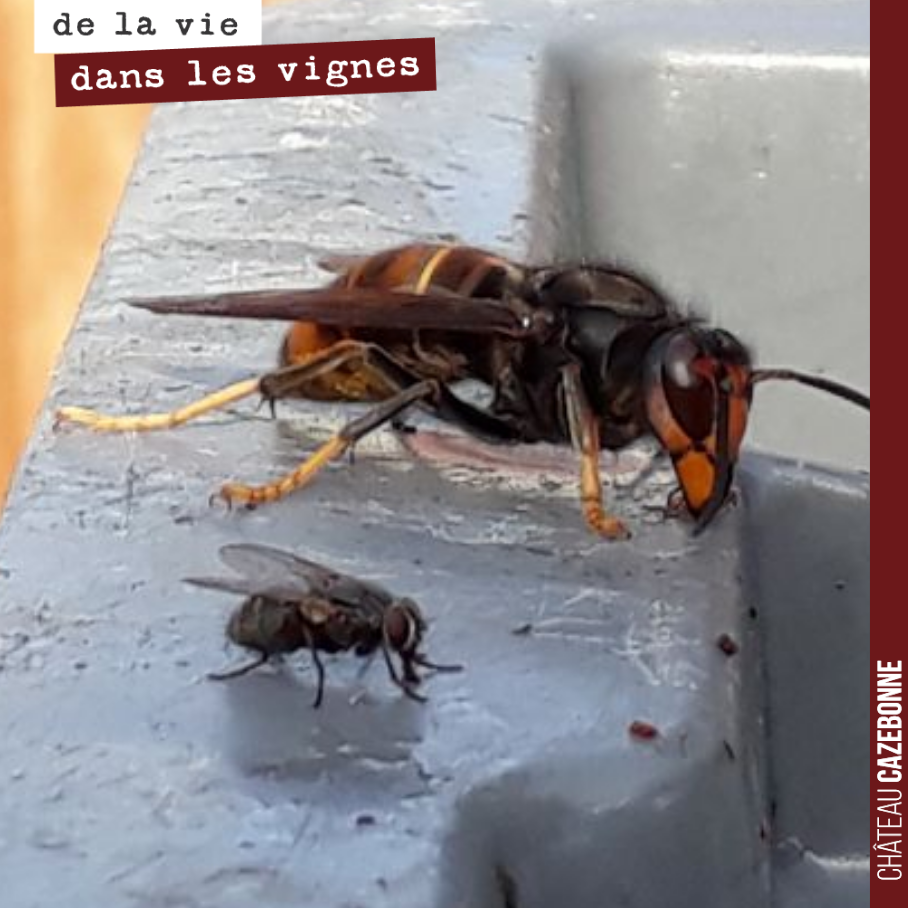
31 October 2019
25 March 2019
12 October 2018
18 September 2018
11 September 2018
The cellar, forgotten grape varieties and our cuvées, twice a month. 5% off your first order with the code BIENVENUE.