08 April 2020
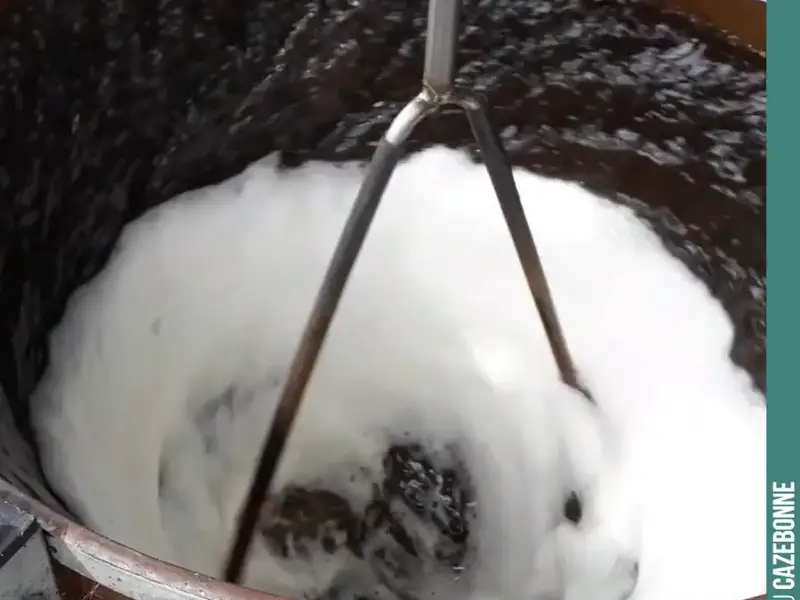
We are dynamising horsetail tea and Maria Thun for spraying on the soils across all our plots……Horsetail tea helps limit the development of downy mildew.
By Jean-Baptiste Duquesne

Maria Thun
At Château Cazebonne, our commitment to biodynamics is demonstrated through the adoption of practices that nourish the earth and respect its rhythms. The Maria Thun Cow Pat Compost, developed by Austrian pioneer Maria Thun, also renowned for her famous Biodynamic Sowing and Planting Calendar, is one of these fundamental contributions to the vitality of our soils.
Biodynamics, based on the teachings of Rudolf Steiner, considers the farm as a living organism and seeks to strengthen its intrinsic vitality. Rather than simply amending the soil, the objective is to revitalise it, improve its structure, and promote a rich and diverse microbial life. This holistic approach, which integrates cosmic and earthly rhythms, aims to create a harmonious balance within the viticultural ecosystem. Biodynamic compost, and particularly that of Maria Thun, is a cornerstone of this philosophy, acting as a catalyst for the soil's vital energy.
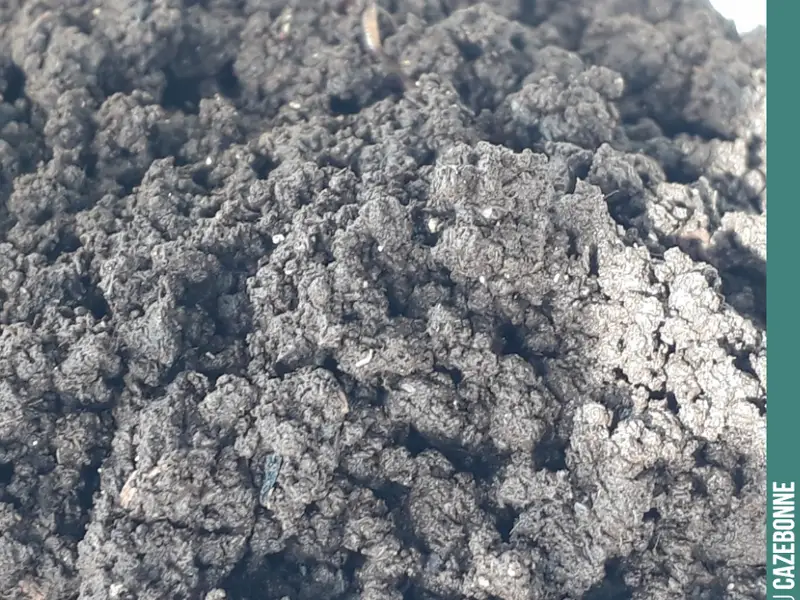
This particular compost is not an amendment like any other. It is a skilfully crafted mixture based on cow dung, enriched with basalt powder, a volcanic rock that provides essential trace elements, and crushed eggshells, sources of natural calcium. This unique composition is designed to optimise the soil's microbial activity and strengthen the vine's natural immunity, thereby contributing to living soils.
The maturation process of this compost is just as specific. We store it for several months in open wooden barrels, half-buried, allowing a constant interaction with telluric energies. Classic biodynamic preparations are applied to these forming composts, acting as catalysts for the transformation and dynamisation of the matter. It is a slow and careful process, guaranteeing a final product of high energetic quality.
The application of the Maria Thun Compost is done with biodynamic precision: a tiny dose of 240 grams per hectare is diluted in rainwater, then dynamised. This dynamisation, which consists of creating vortex and counter-vortex movements, allows the forces contained in the compost to be released and amplified, transmitting them to the soil and the vine.
By enriching our soils with the Maria Thun Compost, we promote intense microbial life, which is essential for soil structuring, nutrient assimilation by the plants, and their natural resistance. This approach, in perfect harmony with biodynamic principles, contributes to the singularity and authenticity of our wines. It strengthens the resilience of our vines, including that of the ancestral grape varieties that we are so passionate about restoring to the Bordeaux viticultural heritage.
This work to preserve the ampelographic heritage, highlighted by Jean-Baptiste Duquesne in "Bordeaux, une histoire de cépages", is made possible thanks to the support of the many enthusiasts who have adopted our wines and share our vision. By choosing our biodynamic cuvées, you are directly participating in the rehabilitation of these ampelographic treasures, ensuring their rebirth and their place in the viticultural landscape of tomorrow. To deepen your knowledge of the history of Bordeaux grape varieties, we invite you to receive the digital version of the book "Bordeaux, une histoire de cépages", published by Éditions BBD and written by Jean-Baptiste Duquesne. You can also test your oenological knowledge with our quizzes and discover our biodynamic cuvées for sale on our online boutique.
Sources
08 April 2020
By Jean-Baptiste Duquesne
08 April 2020
By Jean-Baptiste Duquesne
23 November 2019
By Jean-Baptiste Duquesne
The cellar, forgotten grape varieties and our cuvées, twice a month. 5% off your first order with the code BIENVENUE.