The essential
6 × Entre Amis red
6 bottles — Graves red 2022
The best price of the cellar: €12 per bottle delivered.
The everyday red: generous and straight to the point.
I want itFruit Set
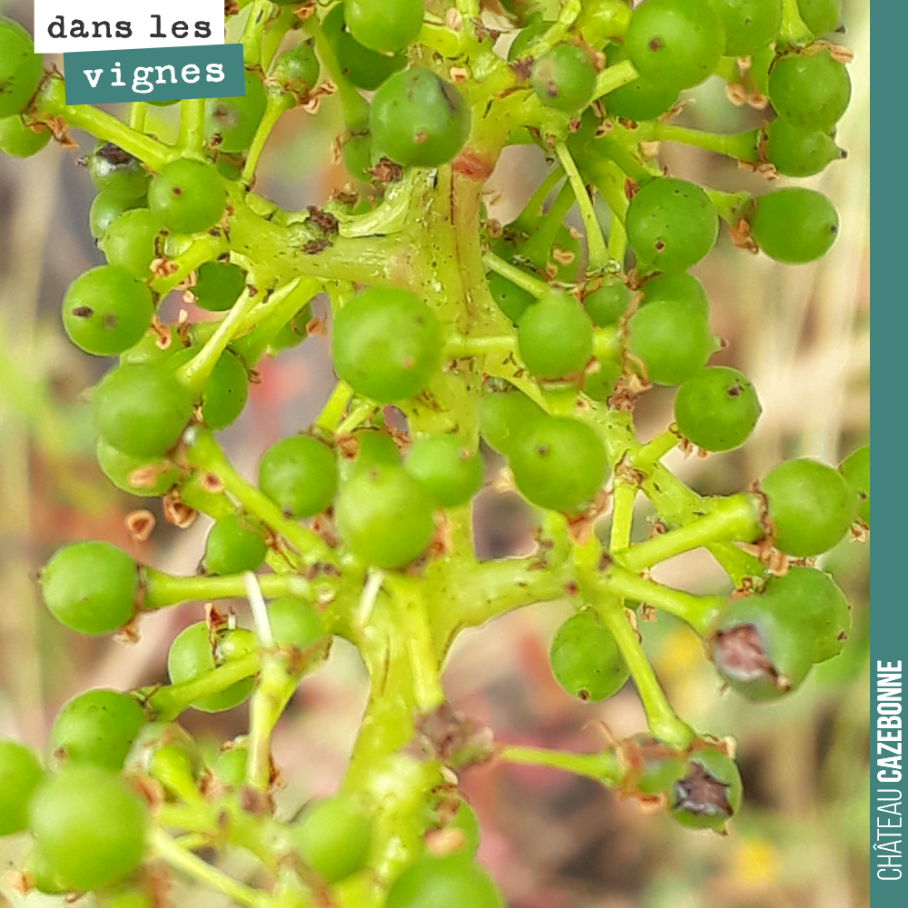
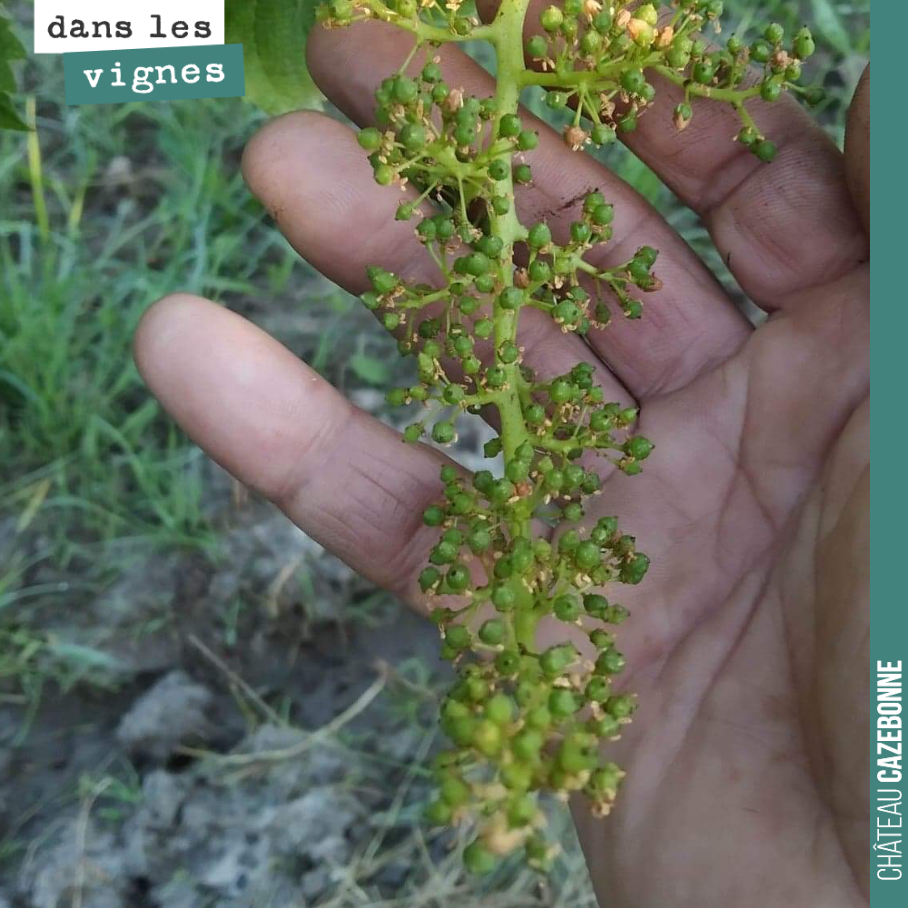
Fruit set represents an essential milestone in the vine's life cycle, taking place after flowering. It is during this delicate phase that each fertilised flower begins its transformation into a tiny berry, heralding the formation of future bunches. At Château Cazebonne, this stage is observed with the utmost attention, as it determines the quantity and quality of the upcoming vintage.
Fruit set begins when the pollen, having fertilised the ovule, triggers the development of the flower's ovary into a small berry. This process is true natural alchemy, where the bunch's embryo takes shape. Climatic conditions play a leading role: good light, mild temperatures and an absence of water stress are favourable for an even and successful fruit set. Conversely, spells of cold, strong wind or excessive rain during this period can disrupt fertilisation and the initial development of the berries, thereby threatening the harvest's potential.
Fruit set falls within the strict timetable of the vine's cycles. It generally occurs a few weeks after flowering, typically between the end of May and the end of June, depending on the wine regions and grape varieties. This period is crucial as it precedes véraison, where the berries begin to change colour. It is a time of great biological activity for the plant, which focuses its energy on fruit formation. We closely monitor this key transition, alongside many other vineyard tasks, such as leaf pulling or desuckering.
In the vineyard, a successful fruit set is shown by the presence of small, uniform green berries, evenly distributed across the bunch, signalling a good fertilisation of the flowers. Conversely, undesirable phenomena such as coulure and millerandage can be observed. Coulure is the premature dropping of unfertilised or poorly developed young berries, reducing bunch size. Millerandage, on the other hand, is characterised by the development of unevenly sized berries, some being seedless, often due to unfavourable weather conditions during flowering and fruit set. These irregularities impact not only the yield but also the consistency of the grapes' future ripening.
At Château Cazebonne, managing fruit set is a fundamental aspect of our sustainable and organic viticulture. We implement practices aimed at preserving the vine's vigour and fostering an environment conducive to optimal fruit set. The diversity of our grape varieties, including heritage varieties like Saint-Macaire or Mancin, rediscovered and replanted, provides increased resilience against climatic hazards. This ampelographic wealth, combined with rigorous observation of each plot, allows us to adapt our interventions to best support this natural process. As Jean-Baptiste Duquesne points out, understanding and promoting these ancient varieties are essential for the future of Bordeaux vineyards.
It is commonly thought that fruit set is purely a matter of meteorological chance. Although climatic conditions are decisive, the influence of vineyard management is equally crucial. A healthy, balanced and well-nourished vine is better equipped to overcome potential weather difficulties during this phase. Careful management of living soils, vigour control and good canopy management contribute to the plant's resilience and a more regular fruit set. Far from being a mere passive event, fruit set is the result of a complex interaction between nature and the winegrower's expertise.
At Château Cazebonne, we are committed to replanting ancient grape varieties in Bordeaux that had disappeared, a task made possible thanks to the support of wine lovers who have embraced our wines. To go further, please feel free to download our book on the history of Bordeaux grape varieties, test your knowledge with our oenological quizzes, or discover our exceptional cuvées directly on our online shop.
Sources
Our suggestions
-5%on your 1st order with code BIENVENUE
The essential6 bottles — Graves red 2022
The best price of the cellar: €12 per bottle delivered.
The everyday red: generous and straight to the point.
I want it Our recommendation92/100 RVF
6 bottles — Graves red 2022, 92/100 RVF
Rated 92/100 by La Revue du vin de France: a solid 10-year ageing potential.
Our Graves for ageing, the finest gateway to the estate.
I want it Go further
12 bottles — the whole range
12 bottles, the whole range tasted: the best discovery-to-price ratio.
The complete tour of the estate, in a single case.
I want itThe cellar, forgotten grape varieties and our cuvées, twice a month. 5% off your first order with the code BIENVENUE.