
 The essential
6 × Entre Amis red
6 bottles — Graves red 2022
The best price of the cellar: €12 per bottle delivered.
The everyday red: generous and straight to the point.
I want itTrellising
Vine trellising is an ancestral viticultural practice that has become essential for modern vineyard management. It involves guiding the vine shoots along supports – traditionally wooden posts and wire – in order to organise the canopy. Far more than a simple aesthetic requirement, trellising is a crucial step that directly influences the health of the plant, the quality of the grapes and, ultimately, the expression of the wine.
The major innovation of wire in the 19th century revolutionised viticultural practices. Before this technological breakthrough, vines were often bush-trained (gobelet), a method where the vines grew freely without support. While this setup was suited to certain terroirs and climates, it severely limited airflow, encouraged the development of diseases, and made uniform sun exposure for the bunches difficult. The introduction of wire made it possible to trellis the vines, providing a structure where the shoots could be neatly arranged. This vertical organisation not only improved air circulation and light penetration, but it also paved the way for the progressive mechanisation of soil work, lightening the load for winegrowers and optimising plot maintenance.
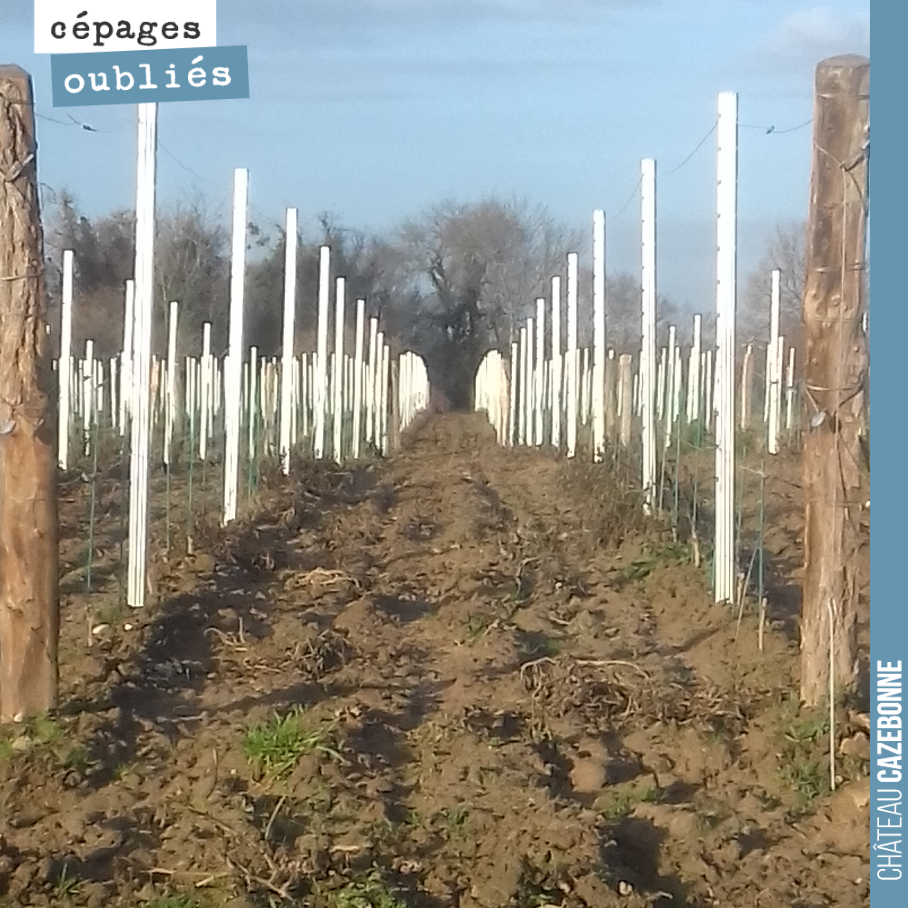
At Château Cazebonne, we attach particular importance to trellising, especially for our historic Bordeaux grape varieties currently being replanted. The trellising work is tailored to each variety, respecting its natural vigour and specific needs in terms of sun exposure and ventilation. This precise action allows us to better control the fruit load, optimise phenological ripeness, and fully express the aromatic potential of every berry. It contributes to this quest for balance that is so dear to the estate's philosophy, which can be found in the complexity of our wines.
Our approach to preserving, studying, and replanting the forgotten grape varieties of Bordeaux, as highlighted in Jean-Baptiste Duquesne's book "Bordeaux, une histoire de cépages", is a daily challenge. This commitment is made possible thanks to the unwavering support of a community of enlightened wine enthusiasts. Your passion for our wines fuels our perseverance and allows us to breathe life back into this unique viticultural heritage.
Discover the fruits of this fascinating work and our commitment by finding our cuvées for sale in the Cazebonne boutique.
To further explore this fascinating history of Bordeaux grape varieties and understand the importance of this return to our roots, we invite you to receive the digital version of the book "Bordeaux, une histoire de cépages" by email.
Trellising is not limited to simply keeping the vine tidy. It is a fundamental agronomic technique aimed at optimising plant growth and grape development. By guiding the shoots and foliage, we ensure better light exposure for the leaves, thereby promoting efficient photosynthesis, which is essential for berry ripening. This also allows for better air circulation within the canopy, reducing the risk of fungal diseases such as downy mildew or dusting (powdery mildew), and minimising stagnant humidity around the bunches.
Beyond physical structuring, trellising pursues several major agronomic objectives. It aims to control the vine's vigour by evenly distributing the canopy, thus avoiding excessive growth that could harm fruit quality. It also facilitates manual tasks (such as leaf pulling or pruning) and mechanisation, making vineyard maintenance more efficient. Proper trellising management is crucial for achieving uniform bunch ripeness, guaranteeing the balance of sugars, acidity, and phenolic compounds, particularly for grape varieties like Malbec or Petit Verdot, which require special attention in Bordeaux.
Trellising mainly takes place in spring and early summer, after budburst and in step with the rapid growth of the vine. As soon as the young shoots reach a sufficient length (around 30 to 40 cm), they are lifted and tied to the trellis wires. This operation, often repeated several times, accompanies the vertical development of the canopy until flowering and véraison, by which time the structure must be sturdy enough to support the weight of the bunches.
Lifting involves directing the shoots upwards and tucking them between the lifting wires, which are then raised and secured. This step is crucial for good aeration and leaf exposure. "Levage de la vigne" (vine lifting) is a term often used synonymously.
Once lifted, the shoots are generally tied to the wires to stabilise the structure and prevent them from falling back down under their own weight or the effect of the wind. Biodegradable ties are favoured as part of an environmentally friendly approach.
Depending on the trellising system, clips or staples can be used to hold the lifting wires together, thus enclosing the canopy. This step ensures the solidity of the entire trellis for the season.
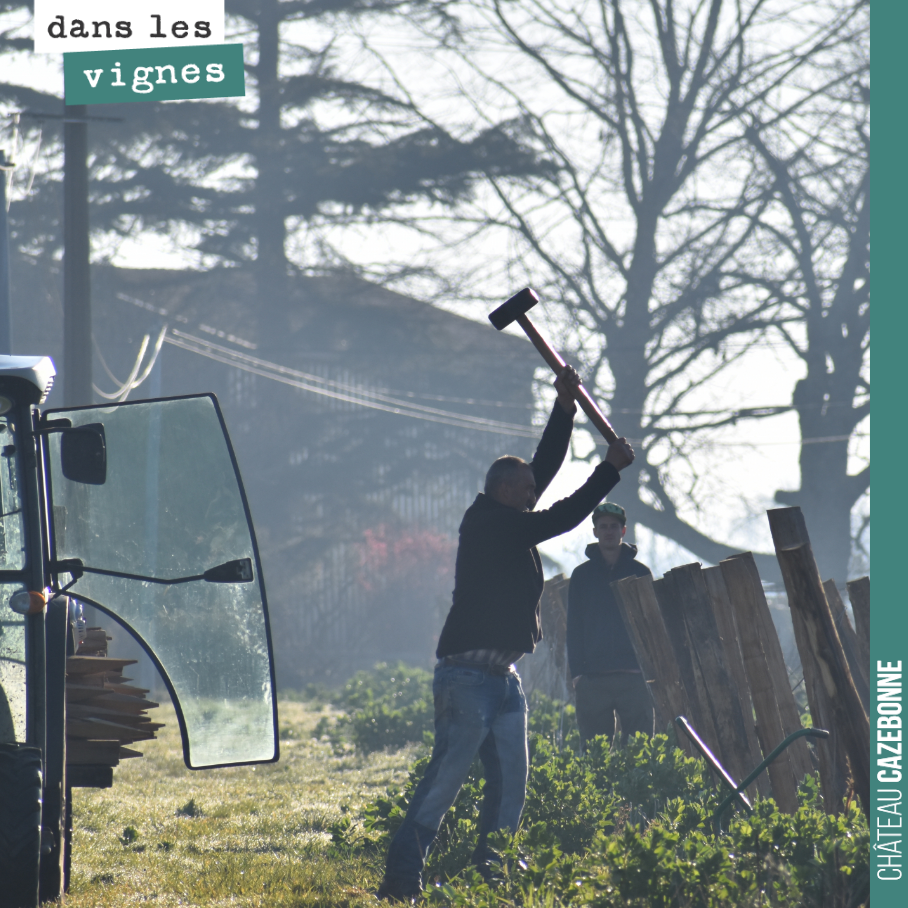
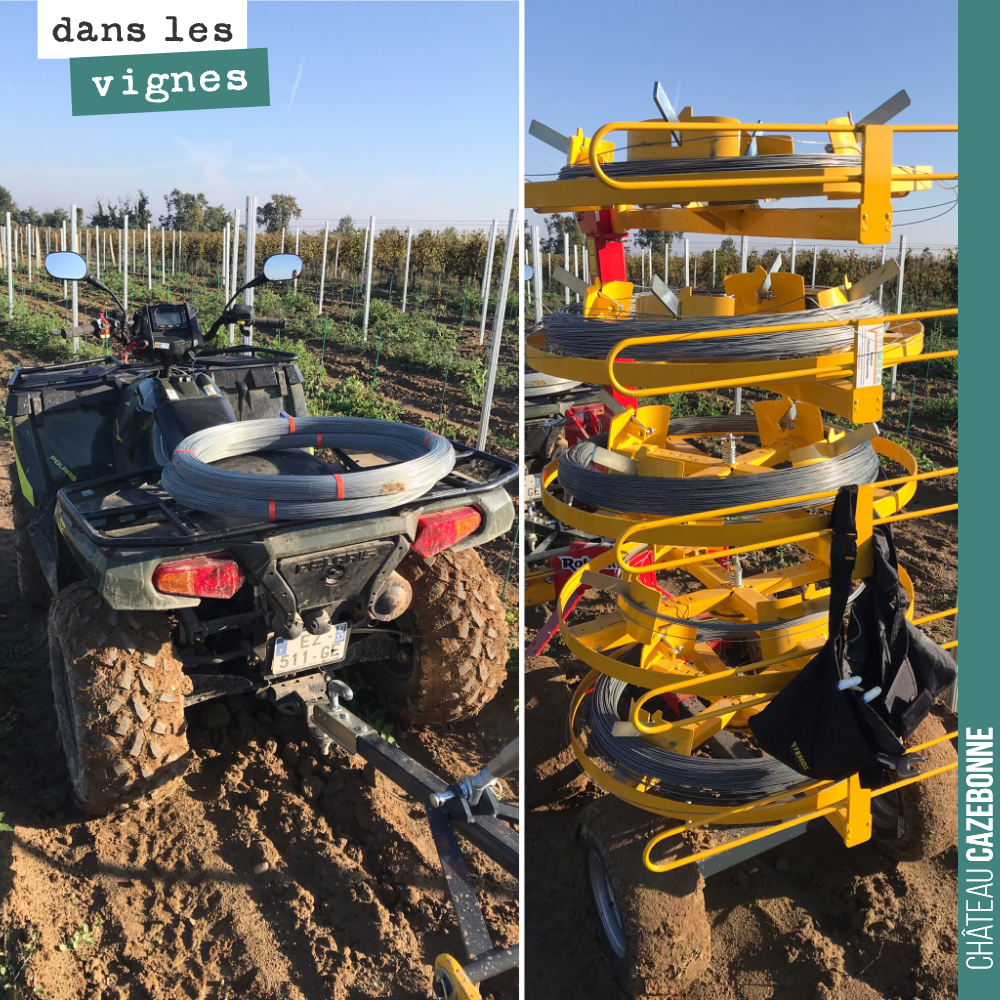
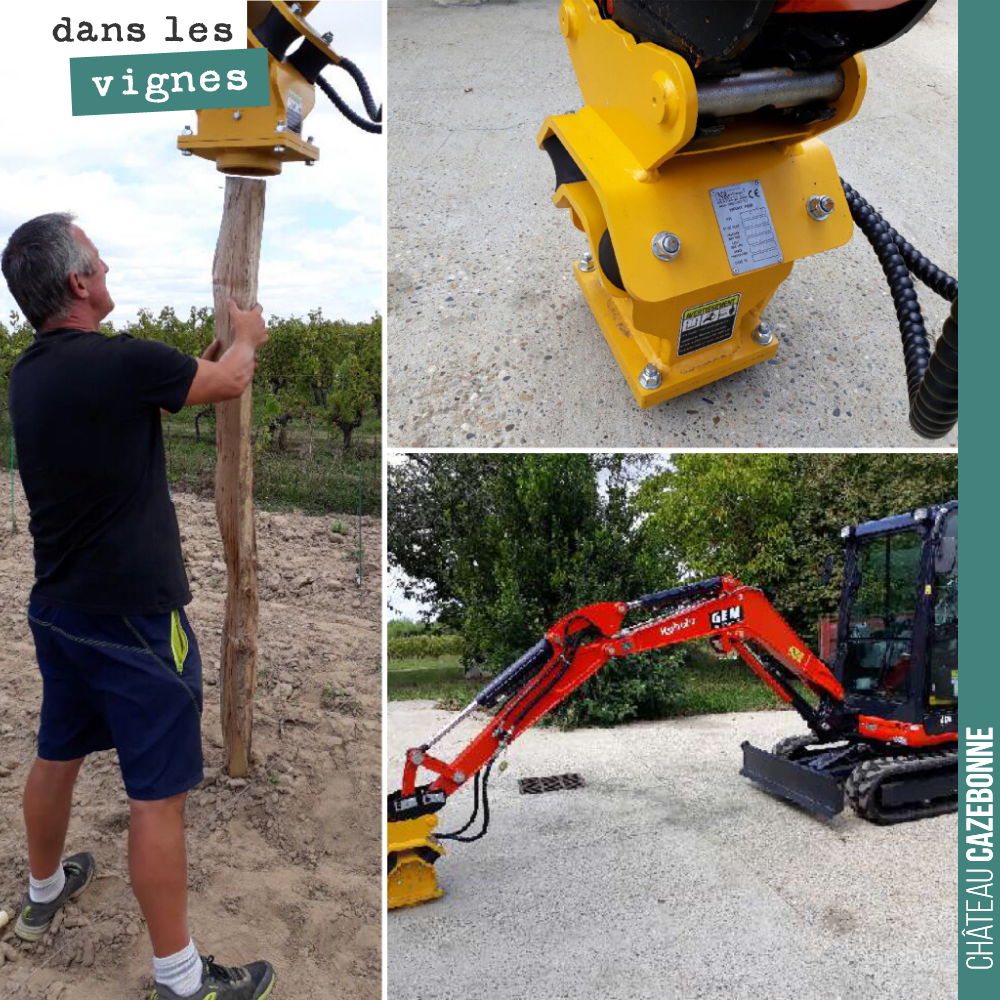
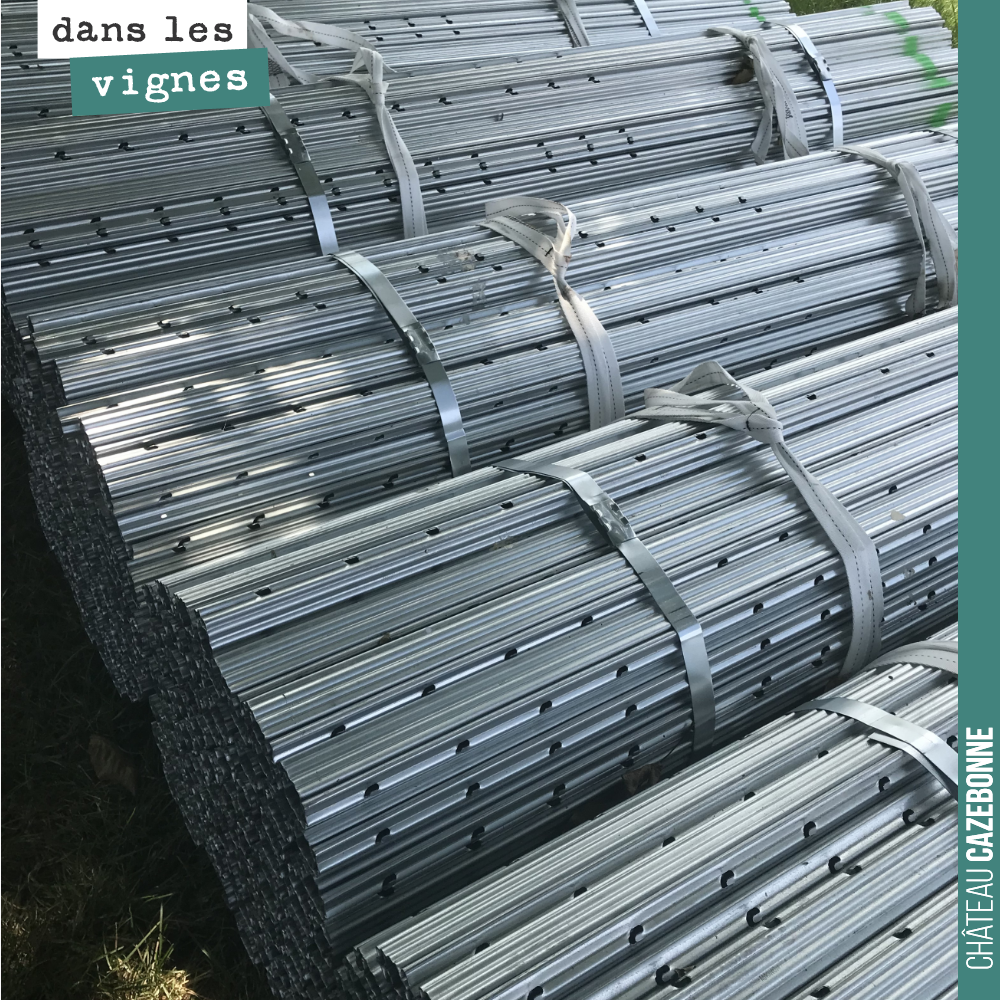
Trellising equipment mainly consists of posts (made of wood, metal, or fibreglass) that form the vertical framework, and permanent or movable wires to which the vine is attached. Accessories such as ties (biodegradable or reusable), wire tensioners, and clips are also essential. The choice of equipment depends on the vine training system, potential mechanisation, and the constraints of the terroir.
In an approach rooted in sustainable viticulture and even biodynamics, such as the one we practice at Château Cazebonne, trellising is adapted to minimise environmental impact. This includes using sustainable or biodegradable materials and carefully considering trellising systems that foster biodiversity and plant well-being. The goal is to strike a balance between maintaining an optimal structure for the vine and respecting its natural environment.
At Château Cazebonne, the trellising philosophy aligns with our commitment to optimal terroir expression. We adapt our methods according to the grape varieties, particularly those currently being replanted, such as Saint-Macaire or Manseng Noir, to meet their specific needs. Special attention is paid to the trellising height in order to maximise solar interception while protecting the bunches from excessive sunlight. This meticulous work is a cornerstone of our quest for balanced and authentic wines.
Château Cazebonne's work to preserve ancient grape varieties and reinvent the Bordeaux vineyard is a long-term endeavour, made possible every day by the support of enthusiasts. To delve deeper into these topics, we invite you to download our book on the history of Bordeaux grape varieties. You can also test your knowledge and enrich your oenological skills with our oenology quizzes, before discovering the fruits of our labour by exploring the cuvées available directly from our online boutique. It is by respecting every stage of the vine's life, including vine braiding, the practice of vine propping, or Mandronner the vine, that we manage to magnify our terroir.
Sources
Our suggestions
-5%on your 1st order with code BIENVENUE
The essential6 bottles — Graves red 2022
The best price of the cellar: €12 per bottle delivered.
The everyday red: generous and straight to the point.
I want it Our recommendation92/100 RVF
6 bottles — Graves red 2022, 92/100 RVF
Rated 92/100 by La Revue du vin de France: a solid 10-year ageing potential.
Our Graves for ageing, the finest gateway to the estate.
I want it Go further
12 bottles — the whole range
12 bottles, the whole range tasted: the best discovery-to-price ratio.
The complete tour of the estate, in a single case.
I want it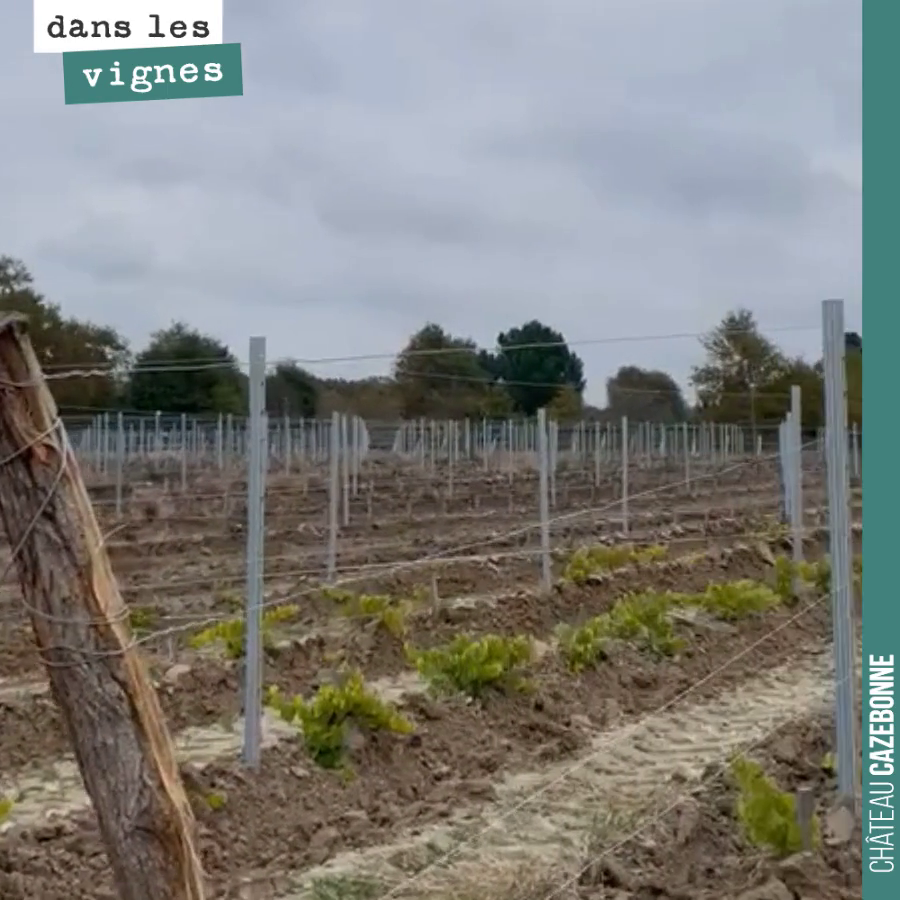
18 November 2021

07 March 2021
05 March 2019
15 December 2018
30 October 2018
01 September 2018
30 July 2018
The cellar, forgotten grape varieties and our cuvées, twice a month. 5% off your first order with the code BIENVENUE.