
 The essential
6 × Entre Amis red
6 bottles — Graves red 2022
The best price of the cellar: €12 per bottle delivered.
The everyday red: generous and straight to the point.
I want itButterflies
In the lush green setting of our Bordeaux vines, the appearance of a butterfly is much more than a simple enchanting spectacle. These fragile winged creatures are true indicators of the good environmental health and precious biodiversity that we cultivate at Château Cazebonne. Their flamboyant colours and aerial dance are signs of an ecosystem in balance, where nature reclaims its rights and life abounds, just like the terroirs we strive to preserve.
Butterflies, tireless foragers, play a discreet yet essential role. By landing from flower to flower, they contribute to the pollination of the wild plants that border our plots and enrich the surrounding flora. This plant diversity is fundamental: it offers refuge and food sources to many other beneficial insects, creating a complex and resilient network around the vines. The commitment to rich biodiversity is indeed a central theme in agroecology approaches within viticulture, and is highlighted in works such as "Bordeaux, une histoire de cépages" by Jean-Baptiste Duquesne, which shines a light on the importance of a holistic approach for the sustainability of the vineyard.
The term "butterfly" encompasses a vast order of insects, Lepidoptera, which are primarily divided into Rhopalocera (butterflies) and Heterocera (moths). Each species has a specific Latin name, such as Vanessa cardui for the Painted Lady or Aglais io for the Peacock butterfly.
Butterflies are distinguished by their two pairs of wings covered in tiny pigmented scales, creating highly diverse patterns and colours. Their size varies considerably, from the small Blue to the large Swallowtail. The antennae of diurnal butterflies are generally slender and end in a swelling (club), while those of moths are often filiform or feathery. Their bodies are frequently hairy and their coiled proboscis allows them to suck nectar from flowers.
The butterfly's life cycle is a true transformation, passing through four distinct stages: egg, larva (caterpillar), chrysalis (pupa) and imago (adult butterfly). In the vineyard, the presence of different species varies with the seasons. In spring, the first species hatch, feeding on young shoots and flowers. Summer sees the peak of activity, with successive generations. Autumn marks the decline, with some species hibernating as eggs, larvae or adults.
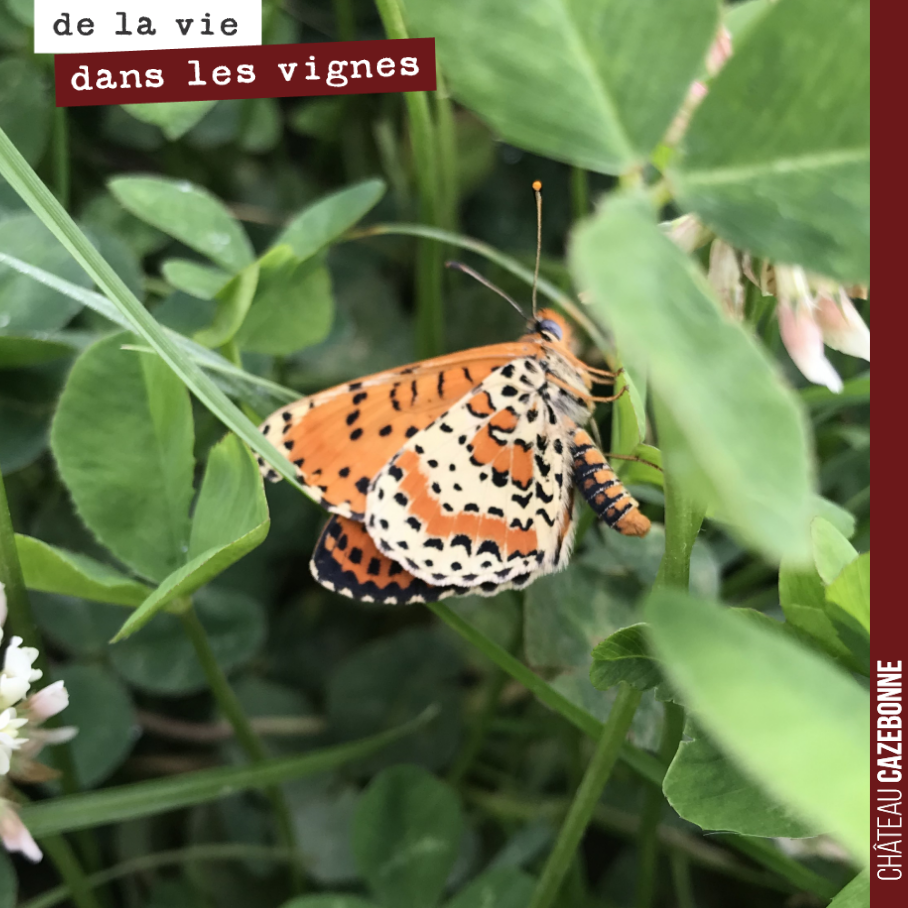
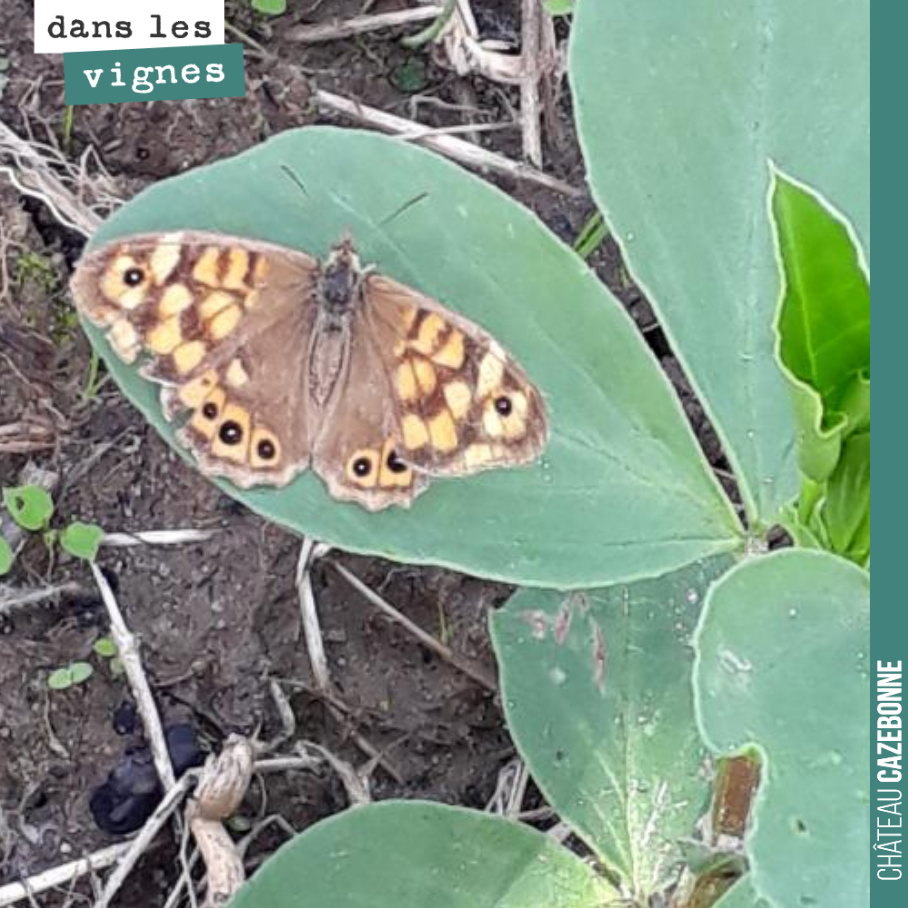
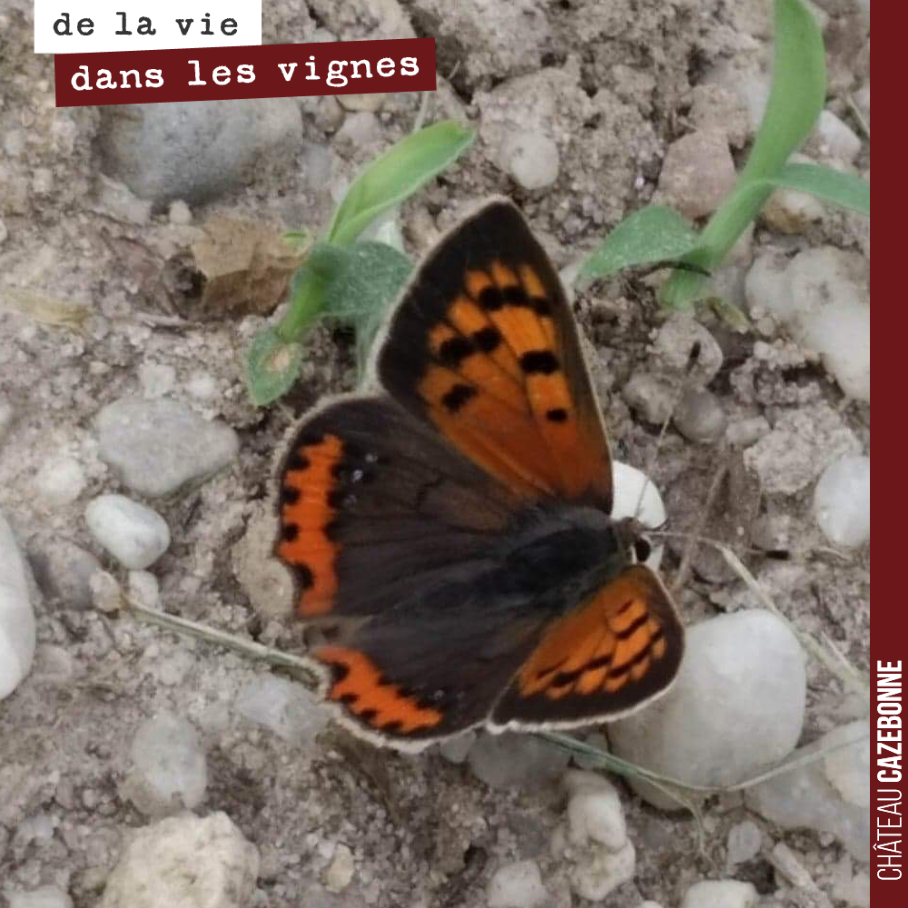
At Château Cazebonne, butterflies find refuge and food in the diversity of our flora. Grassed plot edges, the lively hedges we encourage, and areas of fallow vegetation provide excellent habitats. They can be observed foraging on our broad bean flowers and other cover crops, but also settling on wild grasses. Sunny places sheltered from the wind are particularly appreciated.
Beyond their beauty, butterflies are valuable actors in the ecosystem. As pollinators, they contribute to the reproduction of many plants that are essential to biodiversity. Their larvae, caterpillars, are a food source for numerous birds and other insects. Their presence is an indicator of living soil and a resource-rich environment.
The interaction of butterflies with the vines is mostly neutral or beneficial. Most butterfly species do not feed on the vine as a host plant. Caterpillars, particularly those of moths such as Eudémis (Lobesia botrana), can sometimes cause damage to the bunches. However, in a balanced ecosystem like the one we strive to create, their populations are naturally regulated by their predators and parasites, without requiring human intervention.
Observing a Scarce Swallowtail, a Peacock butterfly or a Painted Lady twirling above our rows is an affirmation of our respectful viticultural practices. Rather than intervening with products that would disrupt this delicate balance, we promote an environment where every species, from the smallest harmless caterpillars in the vines to hidden chrysalises, has its place. Our vines thus become sanctuaries, havens of peace for these emblematic insects, symbols of transformation and renewal.
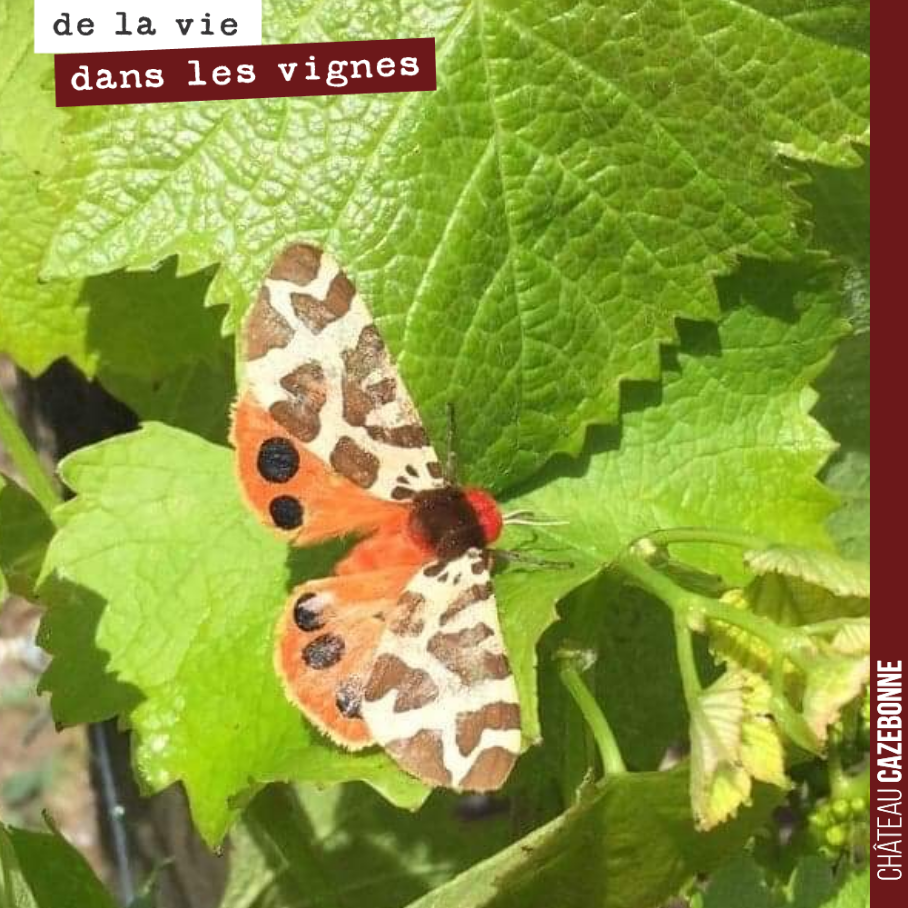
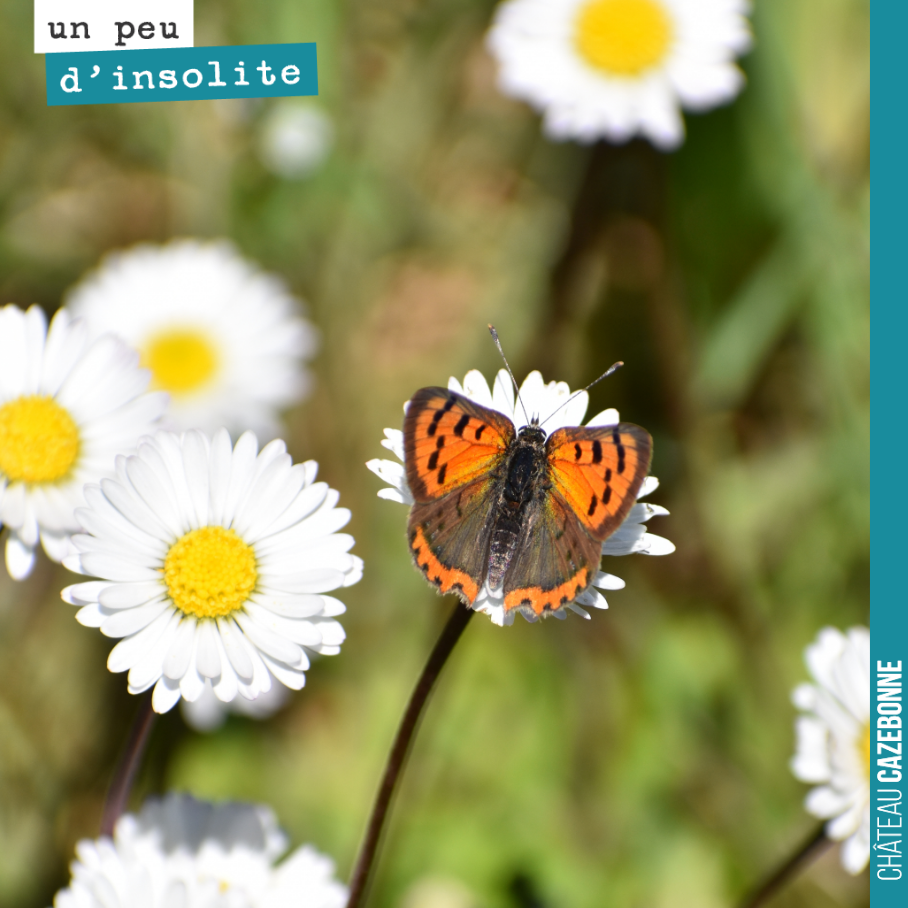
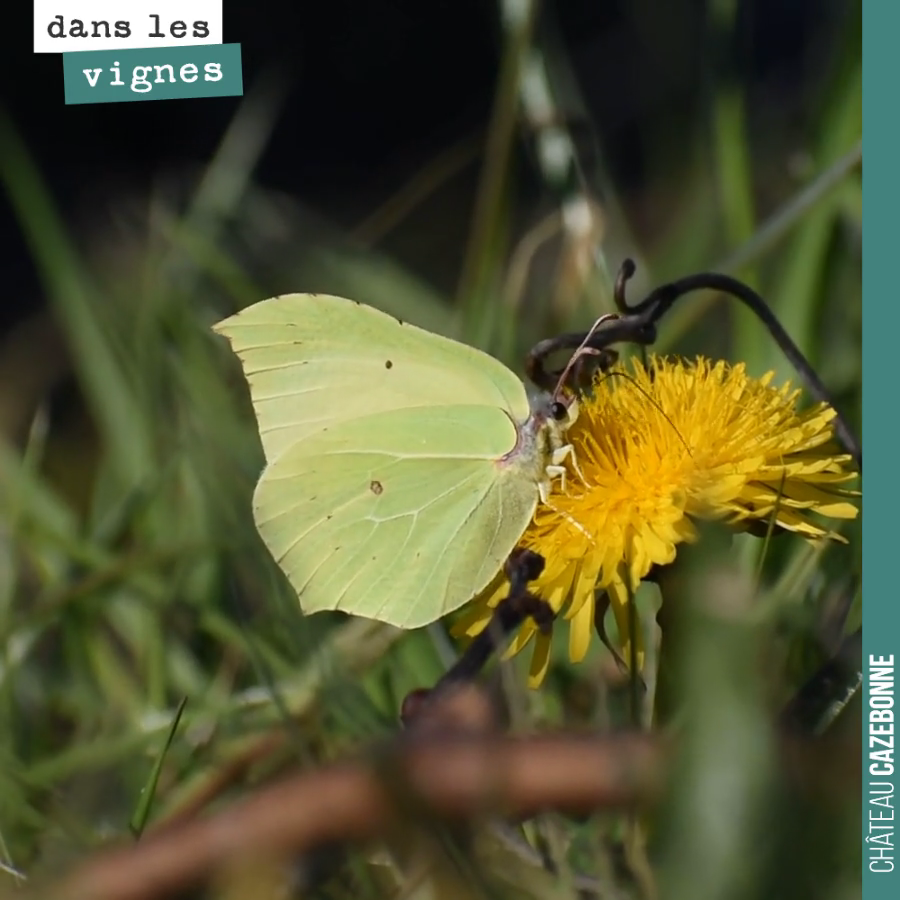
At Château Cazebonne, we are proud to observe a wide variety of butterflies. The Peacock butterfly (Aglais io) with its distinctive eyespots, the travelling Painted Lady (Vanessa cardui), the fast-flying Red Admiral (Vanessa atalanta), or the Scarce Swallowtail (Iphiclides podalirius) with its long tails, are regular guests in our plots. Their presence bears witness to the richness of our flora and fauna, the result of a viticulture that considers its entire environment. We actively encourage this biodiversity by maintaining areas of spontaneous flora and avoiding the use of synthetic phytosanitary products, thereby creating a refuge for these magnificent insects and many other insects in the vines, contributing to the overall health of our ecosystem.
At Château Cazebonne, our commitment goes beyond producing exceptional wines. We seek to restore a living heritage, bringing forgotten Bordeaux grape varieties that had been abandoned back to life. This fascinating work of rehabilitation and conservation is made possible thanks to the unwavering support of the many enthusiasts who have adopted our wines and share our vision of respectful, sustainable viticulture that is intrinsically linked to the richness of its ecosystem. To learn more about our approach and the history of Bordeaux grape varieties, feel free to download the digital version of our book "Bordeaux, une histoire de cépages" or test your knowledge with our oenological quizzes. And to discover the full diversity of our wines born from this committed viticulture, visit our online shop.
Sources
Our suggestions
-5%on your 1st order with code BIENVENUE
The essential6 bottles — Graves red 2022
The best price of the cellar: €12 per bottle delivered.
The everyday red: generous and straight to the point.
I want it Our recommendation92/100 RVF
6 bottles — Graves red 2022, 92/100 RVF
Rated 92/100 by La Revue du vin de France: a solid 10-year ageing potential.
Our Graves for ageing, the finest gateway to the estate.
I want it Go further
12 bottles — the whole range
12 bottles, the whole range tasted: the best discovery-to-price ratio.
The complete tour of the estate, in a single case.
I want it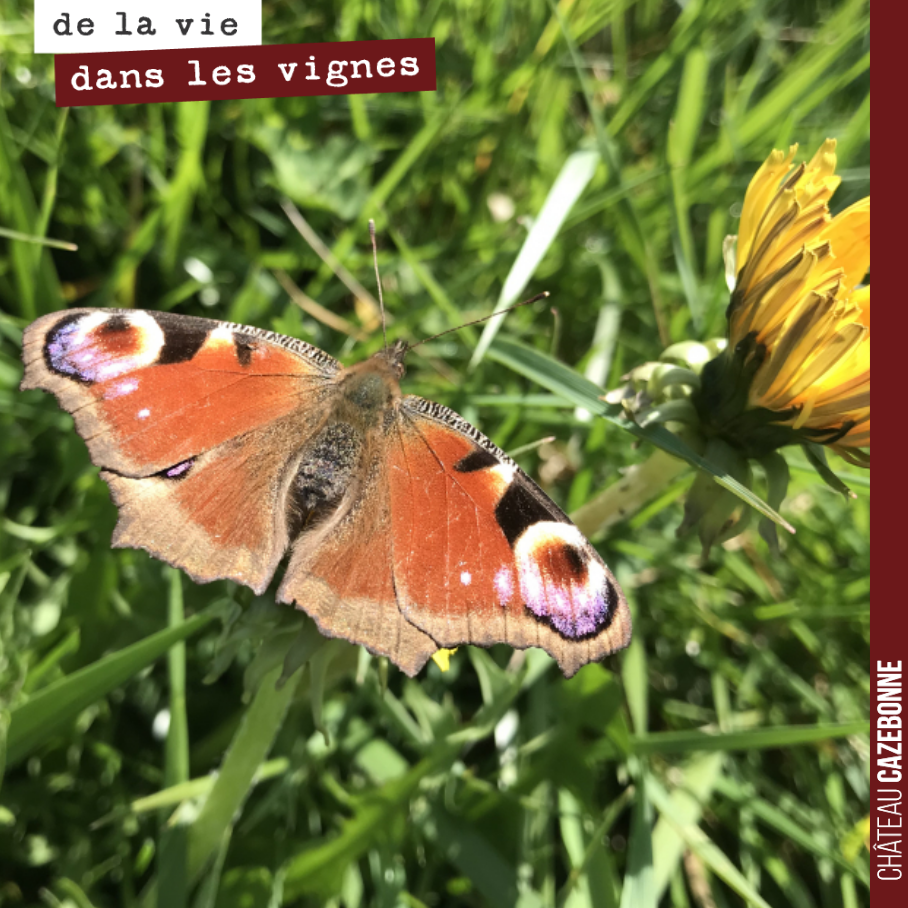
13 March 2022
21 June 2020
02 November 2019
28 June 2019
18 June 2019
04 May 2019
18 February 2019
The cellar, forgotten grape varieties and our cuvées, twice a month. 5% off your first order with the code BIENVENUE.