
 The essential
6 × Entre Amis red
6 bottles — Graves red 2022
The best price of the cellar: €12 per bottle delivered.
The everyday red: generous and straight to the point.
I want itWine Denmark
I have just returned from Denmark. A striking observation stands out in the local supermarkets: the almost total absence of French Appellation d'Origine Contrôlée (AOC) wines on the entry-level shelves. At prices around 70 DKK, or approximately €10 per bottle, there is a clear predominance of wines from South Africa, Italy, and Argentina. For French wines, the trend leans towards neatly packaged bottles highlighting the grape variety rather than the terroir. Another striking example is an Italian wine brand (Why not) that no longer emphasizes its Italian origin. I bought a bottle of "Why not a Zinfandel", believing I was buying a Californian Zinfandel, when it was in fact a Primitivo from Puglia (and therefore made from the same grape variety). As soon as you move upmarket, AOCs reappear at €20, €30, or €50 a bottle.
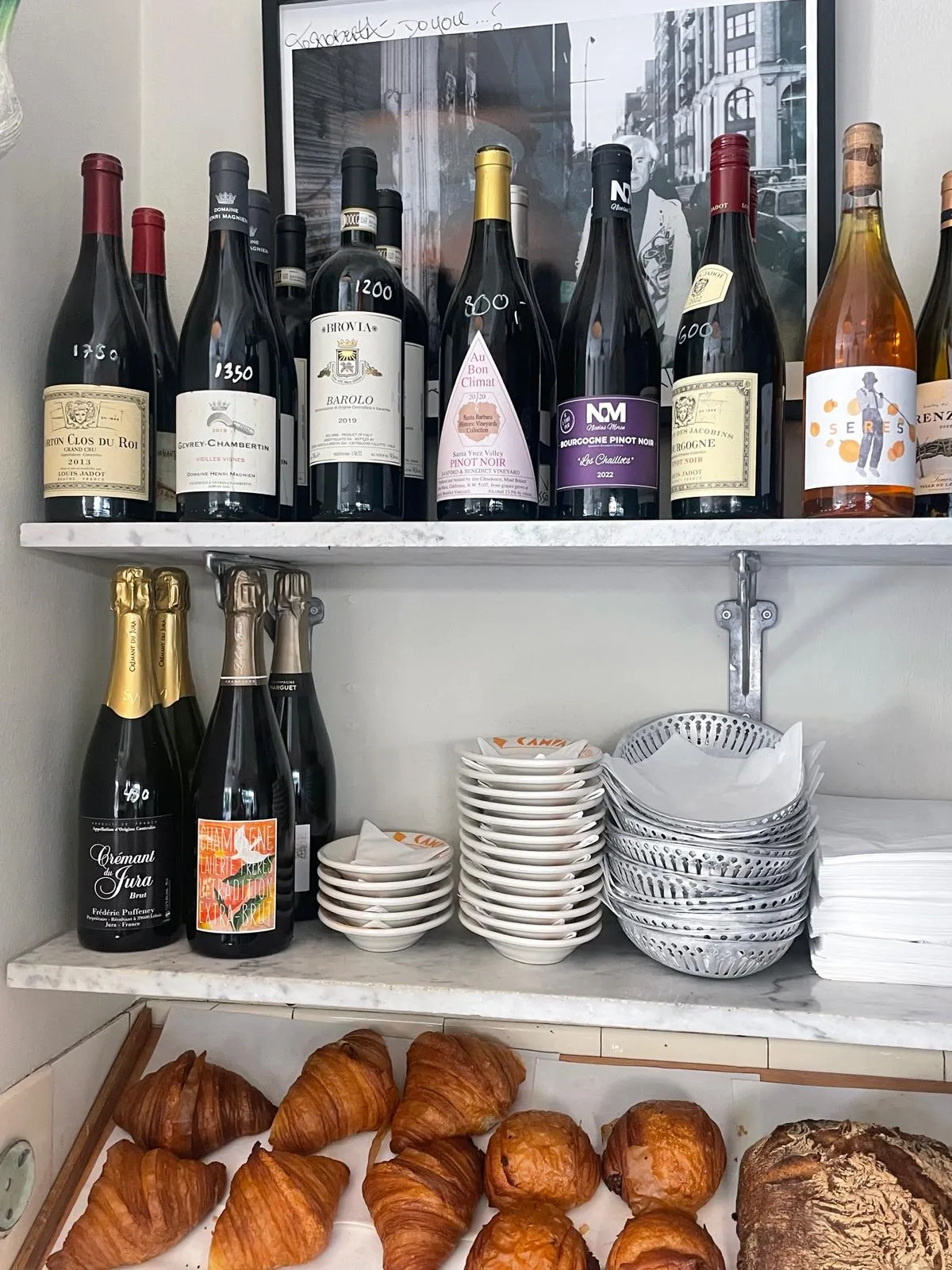
In Copenhagen's fashionable restaurants and wine bars, the picture is different but just as telling. Bordeaux wine has practically vanished from the wine lists of the trendiest establishments. In its place, Bourgogne, Jura, and Sancerre are enjoying surging popularity. Natural wines, with their distinctive approach and authenticity, are also gaining ground. The trendy appeal of Bourgogne or Jura, along with the quirky packaging of natural wines, are a huge hit with customers.
These observations in Denmark offer valuable insights. They confirm that, for an international market such as this, French AOCs are no longer a primary buying criterion, particularly for entry-level wines. Consumers are looking for wines with appealing packaging, faultless quality, and no necessary claim to a strong sense of terroir. It is, in a way, a "WSET" (Wine & Spirit Education Trust) style of wine, meeting an international standard of taste and accessibility. However, prestigious, highly sought-after AOCs maintain a strong position, benefiting from a premiumising market. Appellations such as Meursault, Côte Rôtie, or Sancerre are prime examples.
For an estate like Château Cazebonne, located in a Bordeaux appellation (AOC Graves) with a moderate international reputation, these trends call for deep reflection. Our AOCs, being less "bankable" outside France, lose their appeal because the international consumer simply does not know them. Importers then turn to branded wines that offer reassurance through more direct, friendly, and humorous marketing. Gone is the mention of "Château", or references to tradition and history. In this battle of brands, small estates like ours stand little chance, especially as our yields—frequently impacted by global warming—prevent us from competing on entry-level wines. On the Left Bank of the Garonne, free-draining soils make achieving viable yields increasingly difficult, removing any possibility of being competitive in lower price brackets.
The future therefore lies in stronger local and national roots, where the culture of wine and its appellations remains vibrant. We must strive for excellence in our single-vineyard cuvées, crafting wines that stand out for their intrinsic quality. In a sense, creating a brand that becomes a benchmark for excellence.
For our lower-priced ranges, we may have no choice but to source fruit from winegrowers capable of achieving sufficient yields, whether thanks to their terroirs—notably clay-limestone—or their ability to irrigate...
Reinventing our businesses will be a major challenge in the years to come.
At Cazebonne, we are replanting heritage grape varieties in the hope of finding solutions to climate disruption. This will certainly not be enough on its own; we will need to challenge many more conventions if we want to still be here in 10 years.
Our suggestions
-5%on your 1st order with code BIENVENUE
The essential6 bottles — Graves red 2022
The best price of the cellar: €12 per bottle delivered.
The everyday red: generous and straight to the point.
I want it Our recommendation92/100 RVF
6 bottles — Graves red 2022, 92/100 RVF
Rated 92/100 by La Revue du vin de France: a solid 10-year ageing potential.
Our Graves for ageing, the finest gateway to the estate.
I want it Go further
12 bottles — the whole range
12 bottles, the whole range tasted: the best discovery-to-price ratio.
The complete tour of the estate, in a single case.
I want itThe cellar, forgotten grape varieties and our cuvées, twice a month. 5% off your first order with the code BIENVENUE.