
 The essential
6 × Entre Amis red
6 bottles — Graves red 2022
The best price of the cellar: €12 per bottle delivered.
The everyday red: generous and straight to the point.
I want itButtercup
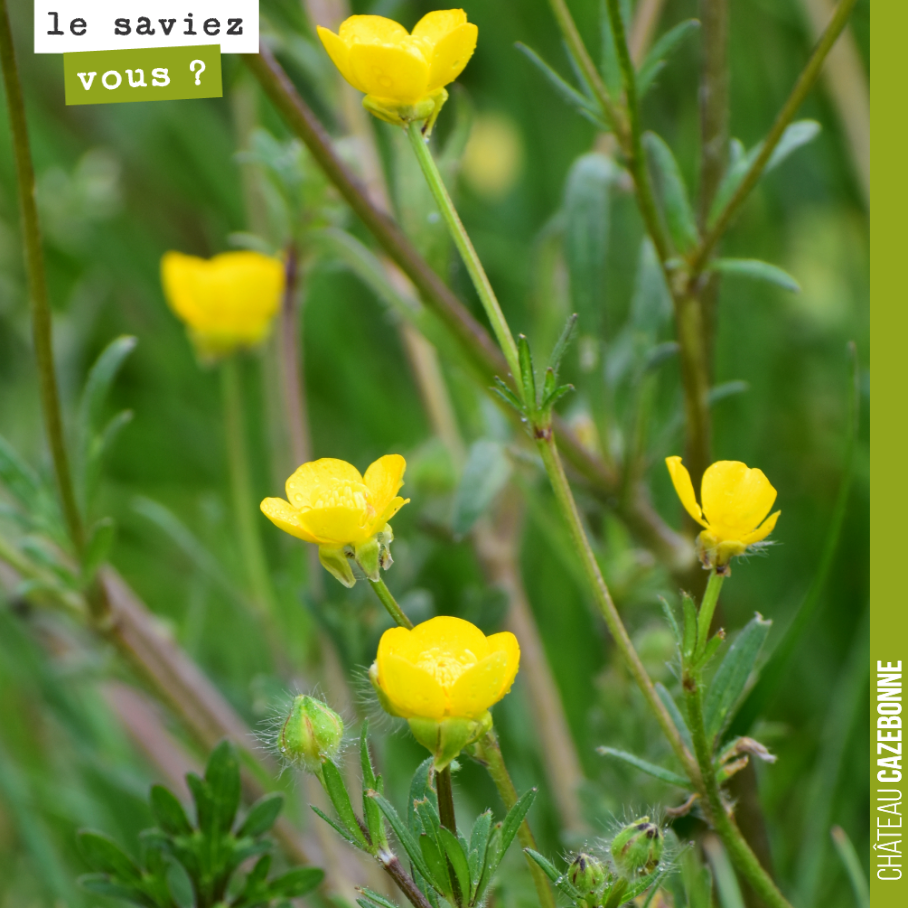
The Buttercup, or by its scientific name Ranunculus repens, is a perennial plant of the Ranunculaceae family, recognisable by its dazzling yellow flowers reminiscent of miniature suns. Contrary to certain botanical confusions, it should not be confused with aconite, another plant of the same order, although their flowering periods can sometimes overlap. This cousin of the buttercup is very common in meadows, along paths and, of course, between the vine rows at Château Cazebonne, where it is a precious indicator of our soils' vitality.
Its presence is not insignificant. The Buttercup is often associated with rather damp and clayey soils, but above all, those rich in organic matter. Its creeping roots help to structure the soil, aerating it deeply and facilitating water penetration. At Château Cazebonne, where we practise organic farming, the flowering of the Buttercup is an encouraging sign, indicating that the underground ecosystem is in balance. It also contributes to above-ground biodiversity by offering nectar and pollen to numerous pollinating insects, which are essential to the good health of our viticultural environment.
Ranunculus repens is characterised by creeping stems that take root at the nodes, quickly forming dense carpets. Its leaves, which are often hairy, are divided into three toothed leaflets. In our vineyards, the Buttercup generally flowers from spring to autumn, its blooming reaching a peak of luminosity during the milder months, integrating perfectly with the vegetative cycle of the vine. Through their intense colour, these flowers attract a multitude of insects, thereby contributing to the biodiversity of the plots.
At Château Cazebonne, it is frequently observed in areas where grass cover is controlled but not entirely removed, particularly between the rows and on the headlands. It prefers places that have benefited from good moisture during the spring, a sign of uncompacted soils well-supplied with humus. As a bio-indicator plant, its presence suggests soils with a clayey tendency, often superficially compacted but rich in nutrients, requiring special attention to maintain balance.
The ecological role of the Buttercup is not limited to simply being an indicator. Its fibrous roots help to maintain soil structure, reducing erosion and improving water infiltration. Furthermore, its flowering actively supports populations of bees and other pollinating insects, which are key elements for the balance of the viticultural ecosystem. This is why its presence is considered beneficial, or at least neutral, for the vine, contributing to a living soil rather than harmful competition.
By observing the Buttercup and all its accompanying flora, we learn to better understand our terroirs and decipher the messages nature sends us. This intelligence of living things, this ability to read the plant landscape, is at the heart of our approach. Much like the dandelion flower or the daffodil, wild plants are silent witnesses to the history and potential of the soils; they are true allies to the winegrower wishing to respect and elevate their terroir.
This biodiversity-friendly approach is inseparable from our desire to revive the heritage grape varieties of Bordeaux, most of which had disappeared from the vineyards. At Château Cazebonne, we work passionately to replant and promote varieties such as Castets, Mancin or Saint-Macaire. This meticulous and engaging work of safeguarding and rehabilitation is only possible thanks to the unwavering support of the many wine lovers who have embraced the unique flavours of our cuvées, thus helping to write a new chapter in Bordeaux's viticultural history. Discover this work and learn more about our method by downloading Jean-Baptiste Duquesne's book on the history of Bordeaux grape varieties. Feel free also to test your oenological knowledge and discover the unique expression of our terroirs and rediscovered grape varieties by visiting the Cazebonne boutique.
Sources
Our suggestions
-5%on your 1st order with code BIENVENUE
The essential6 bottles — Graves red 2022
The best price of the cellar: €12 per bottle delivered.
The everyday red: generous and straight to the point.
I want it Our recommendation92/100 RVF
6 bottles — Graves red 2022, 92/100 RVF
Rated 92/100 by La Revue du vin de France: a solid 10-year ageing potential.
Our Graves for ageing, the finest gateway to the estate.
I want it Go further
12 bottles — the whole range
12 bottles, the whole range tasted: the best discovery-to-price ratio.
The complete tour of the estate, in a single case.
I want it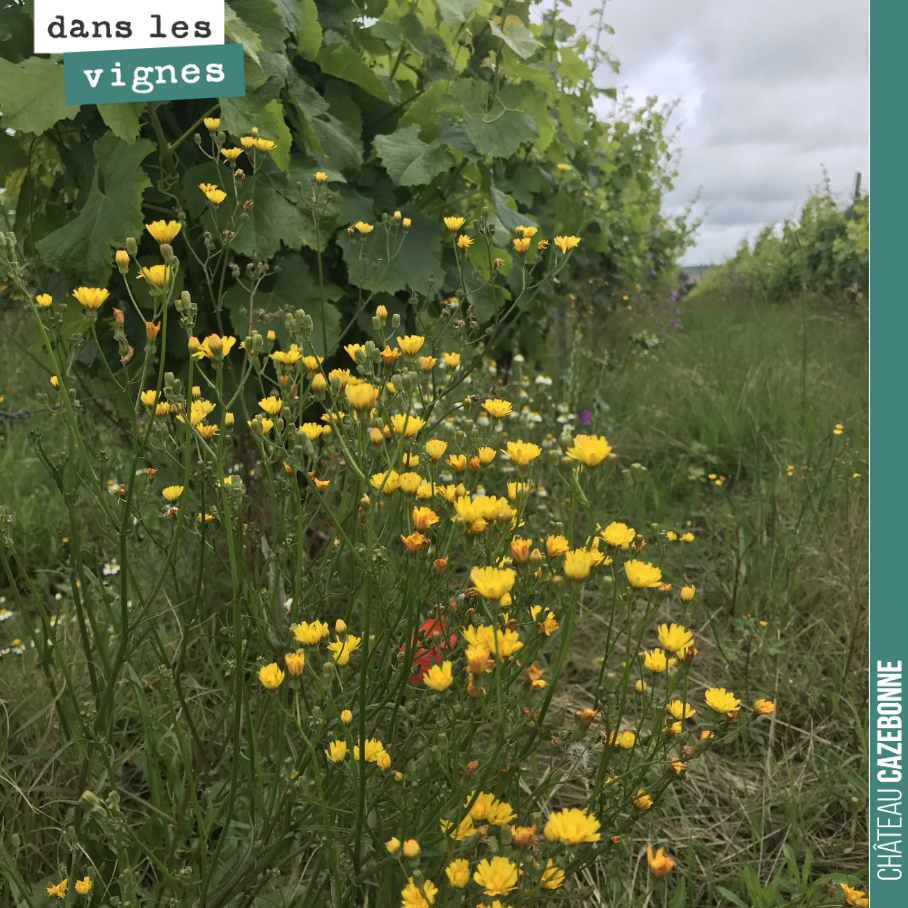
21 June 2020
15 April 2019
17 January 2019
The cellar, forgotten grape varieties and our cuvées, twice a month. 5% off your first order with the code BIENVENUE.