
 The essential92/100 RVF
Comme en 1900 red 2022
Vin de France — heritage grapes, 92/100 RVF
The pre-phylloxera Bordeaux blend, revived at the estate.
Castets, Mancin, Pardotte: the Bordeaux before Bordeaux.
I want itGros cabernet
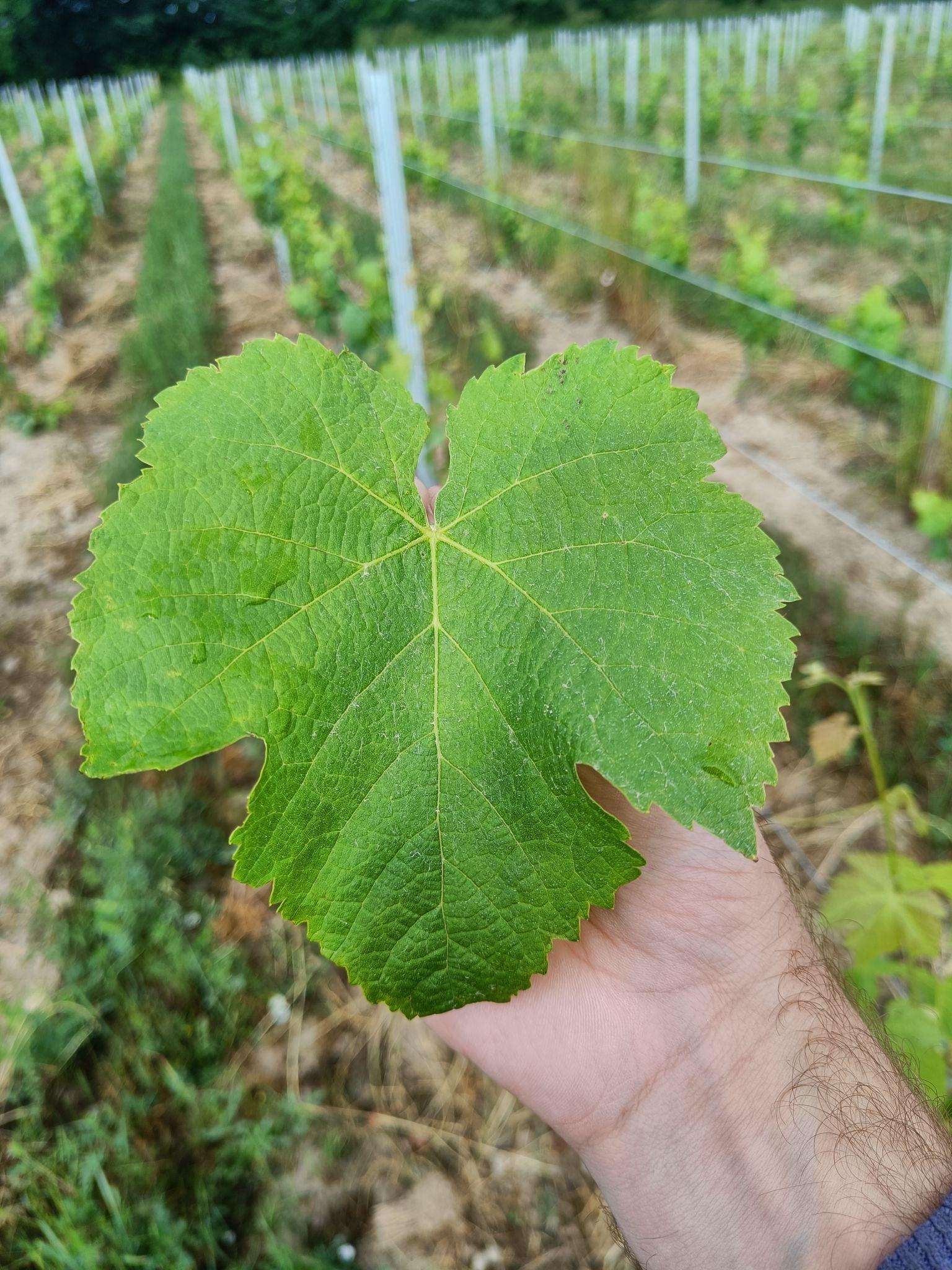
Gros Cabernet embodies a part of Bordeaux's viticultural history, a grape variety whose presence has been documented in the region since ancient times. Distinguishing it from other Cabernet varieties was a slow process, only clarified in the 19th century by ampelographers. This past confusion is further illustrated by the 1935 Bordeaux appellation decree, which still simply mentioned "Cabernets of all varieties".
Modern genetic studies have shed light on its origins, revealing that it is the result of a natural cross between the Fer Servadou grape and the Txakoli Noir grape (or Txakoli). Even more significantly, Gros Cabernet has been identified as one of the parents of the famous Carménère and of Castets, another traditional Bordeaux grape variety. This genealogy underlines its essential role in the ampelographic heritage of our region, bearing witness to a complexity much richer than what we know today.
| Characteristic | Description |
|---|---|
| Budbreak | Moderately early |
| Flowering | Not specified |
| Veraison | Not specified |
| Ripening | Late second epoch |
| Vigour | Not specified |
| Growth habit | Not specified |
| Downy mildew susceptibility | Medium |
| Powdery mildew susceptibility | Medium |
| Botrytis susceptibility | Not specified |
| Black rot susceptibility | Not specified |
| Aromatic profile | Not specified |
| Winemaking potential | Produces colourful, acidic wines with moderate alcohol levels. |
The Gros Cabernet grape variety was once confused with others, and was sometimes referred to as Gros Bouchet or included in the generic term of "Cabernets of all varieties". Its cultivation is now marginal, but it represents an important witness to the diversity of the Bordeaux vineyard before the phylloxera crisis and the generalisation of a few dominant grape varieties. Its rehabilitation is part of an approach to preserve and promote these forgotten grapes. Thus, as with the Gros Verdot grape, the Cabernet Goudable grape, or the Gascon grape, we are working to revive these treasures of the past. To find out more about the Cabernet-malbec grape, please feel free to read our dedicated article.
At Château Cazebonne, we are committed to breathing new life into grape varieties such as Gros Cabernet, thereby contributing to the richness and uniqueness of Bordeaux wines. This work of memory and perseverance is only possible thanks to the invaluable support of wine lovers who embrace our wines and share our passion. To learn more, you can download our book on the history of Bordeaux grape varieties, test your knowledge with our oenological quizzes, or explore our cuvées of wines made from these rediscovered grapes.
Sources
Our suggestions
-5%on your 1st order with code BIENVENUE
The essential92/100 RVFVin de France — heritage grapes, 92/100 RVF
The pre-phylloxera Bordeaux blend, revived at the estate.
Castets, Mancin, Pardotte: the Bordeaux before Bordeaux.
I want it Our recommendation
IGP Atlantique — rare grape variety
A forgotten grape brought back: dense colour, wild fruit.
For the curious about lost grape varieties.
I want it Go further
12 bottles — the whole range
12 bottles, the whole range tasted: the best discovery-to-price ratio.
The complete tour of the estate, in a single case.
I want it
11 August 2019

25 July 2019
23 July 2019
The cellar, forgotten grape varieties and our cuvées, twice a month. 5% off your first order with the code BIENVENUE.