The essential92/100 RVF
Comme en 1900 red 2022
Vin de France — heritage grapes, 92/100 RVF
The pre-phylloxera Bordeaux blend, revived at the estate.
Castets, Mancin, Pardotte: the Bordeaux before Bordeaux.
I want itCabernet-Malbec
At the heart of our initiative to revive Bordeaux’s forgotten grape varieties, Cabernet-Malbec holds a unique place. It is not a rediscovered ancestral variety, but rather a promising late 19th-century creation, born from one man's ingenuity and a desire to innovate. In 1894, Jean Elie, guided by the insightful advice of ampelographer Pierre-Marie Alexis Millardet, trialled an audacious cross between two pillars of the Bordeaux vineyard: Cabernet Sauvignon and Malbec.
From this novel crossing, four clones were born, the most notable of which was No. 4, swiftly adopted and propagated in the Blayais/Bourgeais, Médoc, and Graves regions. Its resilience, particularly its resistance to coulure (poor fruit set) and regular yields, made it a popular variety among winegrowers of the era. It provided an answer to agronomic and economic challenges, promising more reliable harvests and wines of appreciated quality.
The story of its recognition is also emblematic of perseverance. It was Théodore Grenier, Jean Elie's son-in-law, who campaigned to register these "crossings" in the collection of the École de Montpellier. A letter dated 21 December 1955, addressed to Professor J. Branas, endorsed their inclusion in the national vine collection, thus securing their survival for future generations. As early as 1910, the "crossings of Jean Elie" were already sparking interest across the profession.
In 1964, the Gironde Viticultural Cadastre recorded nearly 17 hectares of Cabernet-Malbec, and it is estimated that the Gironde once had several hundred hectares. A progressive decline, but not a total extinction. In September 2020, we had the exceptional opportunity to taste the grapes from a few surviving vines in the Blayais, providing a glimpse of its potential. This grape variety reveals a tannic structure reminiscent of Cabernet Sauvignon through its skins, whilst its pulp and fruit-forward character evoke Malbec. Its ability to achieve optimal ripeness with moderate alcohol levels (12.5–13% ABV) makes it a valuable asset in the current climatic context and for producing well-balanced wines.
| Characteristic | Description |
|---|---|
| Budburst | Medium to late (PlantGrape indicates one week after Malbec) |
| Flowering | Late |
| Véraison | Late |
| Ripening | Third epoch (Period III) |
| Vigour | High |
| Growth habit | Upright |
| Downy mildew susceptibility | Low susceptibility |
| Powdery mildew susceptibility | Low susceptibility |
| Botrytis susceptibility | Low under normal conditions |
| Black rot susceptibility | Moderately susceptible |
| Aromatic profile | Tannic structure (Cabernet Sauvignon) and fruitiness (Malbec) |
| Winemaking potential | Balanced wines with moderate alcohol levels (12.5–13% ABV) |
At Château Cazebonne, we are committed to replanting in Bordeaux these once-lost or forgotten grape varieties, thereby helping to revive the diversity and richness of the regional viticultural heritage. This is a long-term undertaking, made possible by the invaluable support of the many wine lovers who have embraced our wines and share our passion. To explore the culmination of this endeavour and taste our cuvées crafted from these rediscovered varieties, we invite you to visit the Cazebonne shop.
Cabernet-Malbec, a 19th-century cross, offers particularly compelling potential for the future of the Bordeaux vineyard. Created for its resilience, it now responds to contemporary climatic challenges thanks to its ability to yield balanced wines with moderate alcohol levels. This variety is part of the initiatives shaping the future of 21st-century Bordeaux by exploring adapted varieties. Its structure recalls Cabernet Sauvignon and its fruit character evokes Malbec, offering promising oenological qualities for expressive wines.
At Château Cazebonne, we continue to rediscover these Bordeaux ampelographic treasures. Our work is also documented in the book “Bordeaux, une histoire de cépages” by Jean-Baptiste Duquesne, which you can download here for a full immersion. Your curiosity and support are essential; feel free to test your knowledge on grape varieties and wine with our quizzes. And to discover the tangible fruits of our labour, visit our online shop where you will find our unique wines emblematic of this Bordeaux renaissance.
Cabernet x Malbec, often referred to as Cabernet-Malbec, is a grape variety born from a drive for innovation at the end of the 19th century. It was Jean Élie, hillside and palus winegrower (1852–1920) from Berson in the Gironde, who, after losing his vineyards to phylloxera, undertook this bold crossing in 1894 under the guidance of ampelographer Pierre-Marie Alexis Millardet. The aim was to combine the structure of Cabernet Sauvignon with the suppleness of Malbec to create a resilient and high-quality grape variety. This creation was particularly praised by the Syndicate of Wines and Spirits of the Bergerac district, notably in correspondence with Mr Delpérié. The creation of this new variety came out of a period of profound re-evaluation of Bordeaux grape varieties following the phylloxera crisis, when grafting onto American rootstocks and the search for resistant varieties were vital.
Jean Élie, breeder of the Cabernet-Malbec crossings, obtained four distinct types of Cabernet x Malbec from his work. Type No. 1 showed a flawless appearance, with late second-epoch ripening, foliage reminiscent of Colombard, rounded grapes, and berries the size of Merlot Rouge. Type No. 2 was deemed perfect in every way, with foliage similar to Cabernet Franc and berries like Merlot Rouge. Type No. 3 was prone to coulure, resembling Cabernet in its growth habit and leaves. Finally, Type No. 4 was as fine as No. 2, possessing Cabernet Franc foliage but producing smaller, tightly packed bunches, and proved to be very fruitful. The latter enjoyed the widest distribution. In 1930, thanks to the intervention of the breeder's son, a member of the Gironde Chamber of Agriculture, Cabernet x Malbec was approved for the production of Appellation d'Origine wines. Historical records mention Théodore Grenier, estate manager at Île du Nord near Macau and son-in-law of Jean Elie, as the sole person authorised to propagate the variety, highlighting his crucial role in preserving this creation.
Despite its gradual decline in favour of more widespread varieties, Cabernet x Malbec left its mark. In 1964, the Gironde viticultural cadastre still recorded nearly 17 hectares, and it is estimated that the region once cultivated several hundred hectares. Recent tastings of grapes harvested from a few surviving vines in the Blayais in September 2020 confirmed its oenological potential, especially its ability to express a dual aromatic identity. Notably, Malbec is itself a descendant of Magdeleine Noire des Charentes: the forgotten mother of Merlot and Malbec. More broadly, we are also exploring Camaraou: an important Pyrenean relative for Bordeaux.
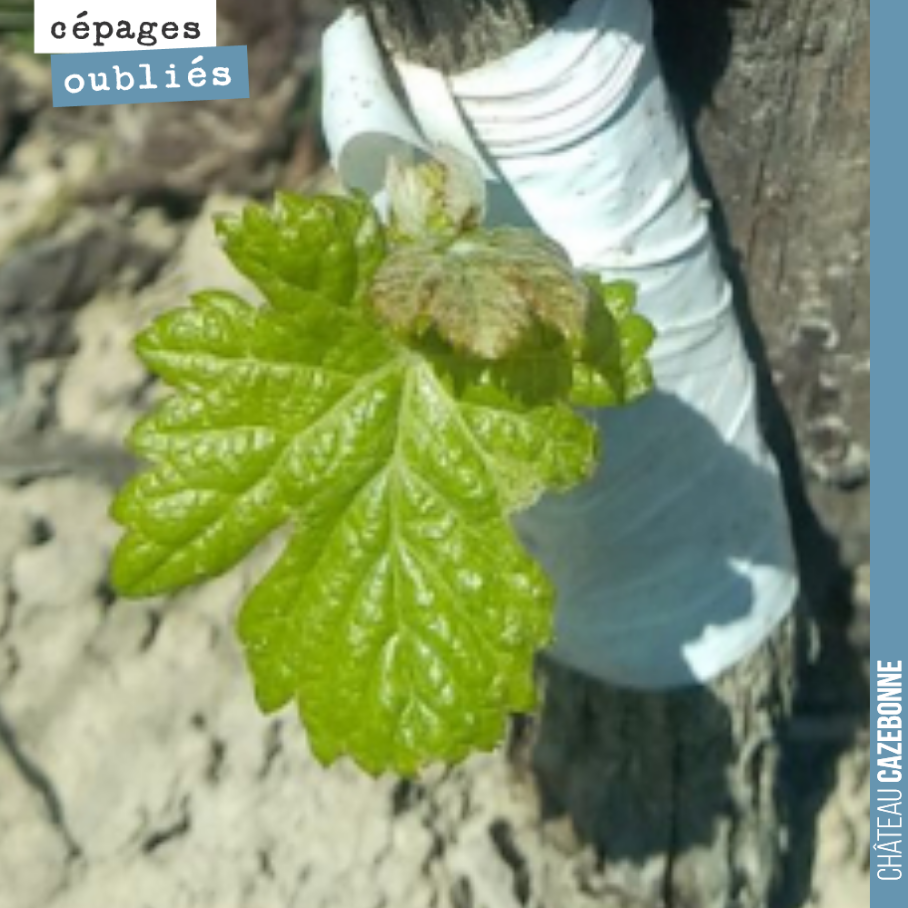
The ampelographic characteristics of the various Cabernet x Malbec selections by Jean Elie present notable distinctions. As described by Jean Elie himself, the foliage of Types No. 1 and No. 4 resembles Colombard for the former, and Cabernet Franc for the latter. Type No. 2 also displays foliage similar to Cabernet Franc, whilst Type No. 3 shares the growth habit and leaves of Cabernet. Regarding bunches and berries, Type No. 1 produces rounded clusters with berries the size of Merlot. Type No. 2 has bunches comparable to Merlot Rouge, and Type No. 4 is characterised by smaller bunches with compact berries. Cabernet x Malbec is generally an upright-growing variety.
The behaviour of Cabernet x Malbec in the vineyard reveals several agronomic advantages. Observations indicate that Jean Elie’s selection adapts well to various rootstocks such as 3309, 420 A, 1616, and Riparia Gloire, depending on soil types. This broad compatibility with rootstocks demonstrates its versatility across diverse terroirs. The vine is considered vigorous, exhibiting late budburst, flowering, and véraison. Its ripening is classified as third epoch, making it a long-cycle variety.
In terms of disease susceptibility, it offers good overall resistance. Its low susceptibility to downy mildew, powdery mildew, and botrytis under normal conditions makes it an invaluable asset for sustainable viticulture requiring fewer vineyard treatments. Type No. 3, however, is described as prone to coulure, indicating potential vulnerability under certain weather conditions. Type No. 4 is noted as highly fruitful.
The oenological potential of Cabernet x Malbec is particularly promising for crafting balanced wines. A grape tasting in 2020 confirmed that this variety combines the traits of both its parents. Its tannic structure recalls Cabernet Sauvignon, notably through the thickness of its skins, whilst its pulp and fruit profile evoke Malbec. This duality yields wines that are both structured and aromatic. Cabernet x Malbec can achieve optimal phenolic ripeness while producing wines with moderate alcohol levels, generally between 12.5% and 13% ABV. This characteristic is especially sought after in the context of climate change, where maintaining balance and freshness is a major priority. It represents a pertinent solution for winegrowers looking to adapt to new challenges and prepare Bordeaux for the 21st century.
Château Cazebonne contributes to the preservation of Cabernet-Malbec, a historic Bordeaux variety. We have undertaken to replant this heritage grape to diversify Bordeaux’s varietal mix and produce wines that authentically express our terroir. This initiative is part of our commitment to reviving the region's forgotten grapes, a project made possible through the support of wine enthusiasts who discover our wines. To deepen your understanding of the subject, you can download our book “Bordeaux, une histoire de cépages”. Furthermore, our wine quizzes allow you to test your knowledge on this topic. This work is complemented by our research into other varieties, notably Arinarnoa: a recent crossing authorised for adaptation in Bordeaux and the Balzac grape variety: an ampelographic enigma far from Bordeaux, to better understand and showcase Bordeaux's viticultural heritage.
Sources
Our suggestions
-5%on your 1st order with code BIENVENUE
The essential92/100 RVFVin de France — heritage grapes, 92/100 RVF
The pre-phylloxera Bordeaux blend, revived at the estate.
Castets, Mancin, Pardotte: the Bordeaux before Bordeaux.
I want it Our recommendation
IGP Atlantique — rare grape variety
A forgotten grape brought back: dense colour, wild fruit.
For the curious about lost grape varieties.
I want it Go further
12 bottles — the whole range
12 bottles, the whole range tasted: the best discovery-to-price ratio.
The complete tour of the estate, in a single case.
I want itThe cellar, forgotten grape varieties and our cuvées, twice a month. 5% off your first order with the code BIENVENUE.