
 The essential92/100 RVF
Comme en 1900 red 2022
Vin de France — heritage grapes, 92/100 RVF
The pre-phylloxera Bordeaux blend, revived at the estate.
Castets, Mancin, Pardotte: the Bordeaux before Bordeaux.
I want itPetit Pejac
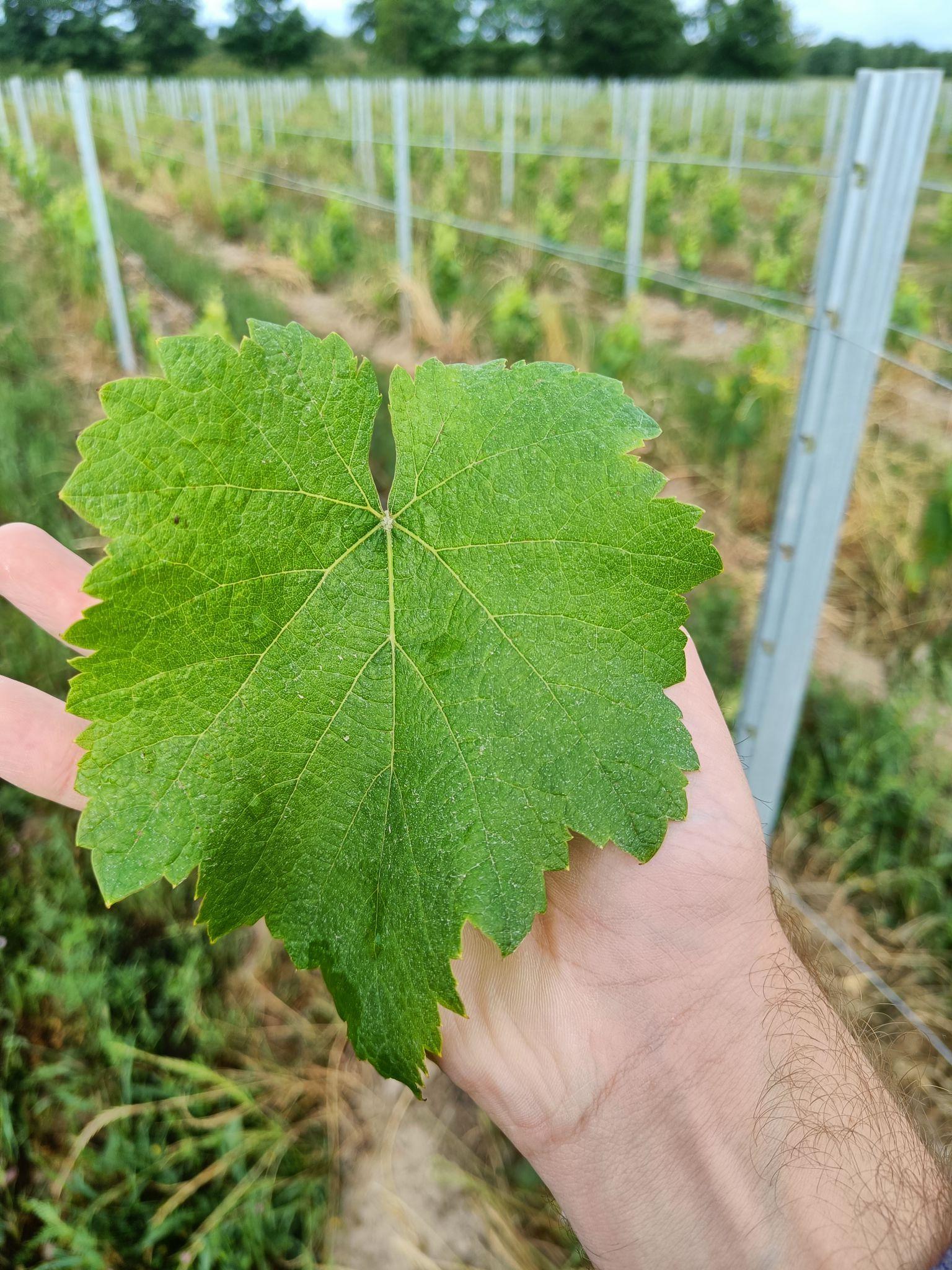
Petit Péjac is a grape variety of which Bordeaux's winemaking history retains rare but precious traces. Although it was long confused with Abouriou, as noted by Guy Lavignac in his reference work, it possesses its own distinct identity that Château Cazebonne is dedicated to rediscovering and championing. Its origins in western Lot-et-Garonne suggest a rustic hardiness, contrasting with the sophistication this grape variety can reveal when cultivated with care.
Historically, Petit Péjac is not completely unknown. Its mention by Cazeaux-Cazalet in Viala and Vermorel's ampelography dating from 1910 provides tangible proof of its existence and past recognition. It thus fits into the lineage of Bordeaux's lost grape varieties that we are striving to revive.
| Characteristic | Description |
|---|---|
| Budburst | Early to medium. |
| Flowering | Early. |
| Véraison | Medium. |
| Ripening | Late, generally in the late third epoch. |
| Vigour | High. |
| Growth habit | Upright, requiring careful trellising. |
| Susceptibility to downy mildew | Moderately susceptible. |
| Susceptibility to powdery mildew | Low susceptibility. |
| Susceptibility to botrytis | Low due to loose to medium bunches. |
| Susceptibility to black rot | Moderately susceptible. |
| Aromatic profile | Notes of red fruit, floral and sometimes spicy. |
| Winemaking potential | Produces deeply coloured wines with good tannic structure and interesting ageing potential. It can bring freshness and complexity to a blend, or express itself with character as a single varietal, like some single-varietal wines in Bordeaux. |
Despite past confusion, Petit Péjac is of definite interest for the vineyard of tomorrow. Its late ripening and good disease resistance make it a relevant candidate for current climate challenges. Its rediscovery is part of Château Cazebonne's approach to replanting forgotten grape varieties and diversifying the Bordeaux vine mix. This meticulous work in Bordeaux ampelography aims to foster an understanding of the nuances and potential of these varieties, such as the Jurançon noir grape variety with which it was long confused, the Penouille grape variety, the Pardotte grape variety, or even the Gascon grape variety. This overall approach can be compared to the one concerning the Txakoli grape variety, rehabilitated in other regions.
At Château Cazebonne, we are proud to revive Petit Péjac and other forgotten grape varieties, thus replanting in Bordeaux varieties that had almost disappeared. This work of memory and perseverance is made possible by the invaluable support of the many wine enthusiasts who share our passion for rediscovering Bordeaux's winemaking heritage, and whom we invite to explore our oenological quizzes to test their knowledge or to download our book "Bordeaux, une histoire de cépages". To explore the culmination of this approach and taste our cuvées made from these rediscovered grape varieties, we invite you to visit the Cazebonne shop.
Sources
Our suggestions
-5%on your 1st order with code BIENVENUE
The essential92/100 RVFVin de France — heritage grapes, 92/100 RVF
The pre-phylloxera Bordeaux blend, revived at the estate.
Castets, Mancin, Pardotte: the Bordeaux before Bordeaux.
I want it Our recommendation
IGP Atlantique — rare grape variety
A forgotten grape brought back: dense colour, wild fruit.
For the curious about lost grape varieties.
I want it Go further
12 bottles — the whole range
12 bottles, the whole range tasted: the best discovery-to-price ratio.
The complete tour of the estate, in a single case.
I want it
28 September 2022
05 September 2022
11 August 2019

25 July 2019
The cellar, forgotten grape varieties and our cuvées, twice a month. 5% off your first order with the code BIENVENUE.