
 The essential
6 × Entre Amis red
6 bottles — Graves red 2022
The best price of the cellar: €12 per bottle delivered.
The everyday red: generous and straight to the point.
I want itFungus
In the complex ecosystem of our vines, fungi occupy a prominent place, symbolising the abundant life of our soils and their fragile balance. Their presence, far from being anecdotal, is a strong marker of the biological diversity that we strive to preserve at Château Cazebonne through our organic farming practices.
While some fungi are true benefactors for the vineyard, essential for the breakdown of organic matter and soil nutrition, others can prove to be formidable adversaries. This duality highlights the importance of constant observation and a deep understanding of these microorganisms in our daily practices.
Among the allies, there is a multitude of saprophytic fungi that transform plant debris into fertile humus, thus nourishing the vines. Mycorrhizae, a fascinating symbiotic association between certain fungi and the roots of the vine, significantly improve the plant's absorption of water and minerals. This subterranean cooperation is a striking example of nature's wisdom, where every element plays its part in a subtle balance, thereby strengthening the vine's resilience to environmental stress. These invisible interactions, which Jean-Baptiste Duquesne discusses in "Bordeaux, une histoire de cépages", are the very foundations of the expression of a great terroir.
However, the fungal world also harbours less desirable species capable of affecting the health of the vine. Mildew, a well-known scourge for winegrowers, manifests itself through characteristic spots on the leaves and bunches, potentially compromising the harvest. Oïdium, on the other hand, forms a powdery white down, altering photosynthesis and the quality of the berries. Pourridié, which is less visible as it attacks the root system and wood, can lead to the dieback of entire vines. The fight against these fungal diseases, without resorting to synthetic products in accordance with our organic commitment, requires great vigilance and the application of preventive methods based on observation and constant adaptation.
At Château Cazebonne, our commitment to organic viticulture drives us to favour prevention and the strengthening of the vine's natural defences. Balanced biodiversity, living soils promoting rich microbial life, and careful management of cover crops are our best allies in this approach. This global vision allows us to coexist with nature, harnessing its benefits and managing its challenges. It is also this philosophy that drives our project to replant ancestral Bordeaux grape varieties that had disappeared from our viticultural landscapes, such as Castets, Mancin, or Saint-Macaire. This meticulous and passionate work of safeguarding and rehabilitation is only possible thanks to the unwavering support of all the wine lovers who have embraced the unique flavours of our cuvées, thus helping to write a new chapter in Bordeaux's viticultural history.
Discover the unique expression of our terroirs and our rediscovered grape varieties by visiting the Cazebonne shop.
To find out more about the ancestral grape varieties of Bordeaux and our commitment, we also invite you to receive the digital version of the book "Bordeaux, une histoire de cépages", published by Éditions BBD and written by Jean-Baptiste Duquesne.
In the vineyards, fungi represent an impressive diversity, ranging from microscopic organisms to macro-fungi visible to the naked eye. They are generally referred to collectively as the "fungal kingdom". Beneficial species such as Trichoderma spp. enrich the soil, while pathogens such as Plasmopara viticola (mildew) or Uncinula necator (oïdium) are constant concerns for the winegrower.
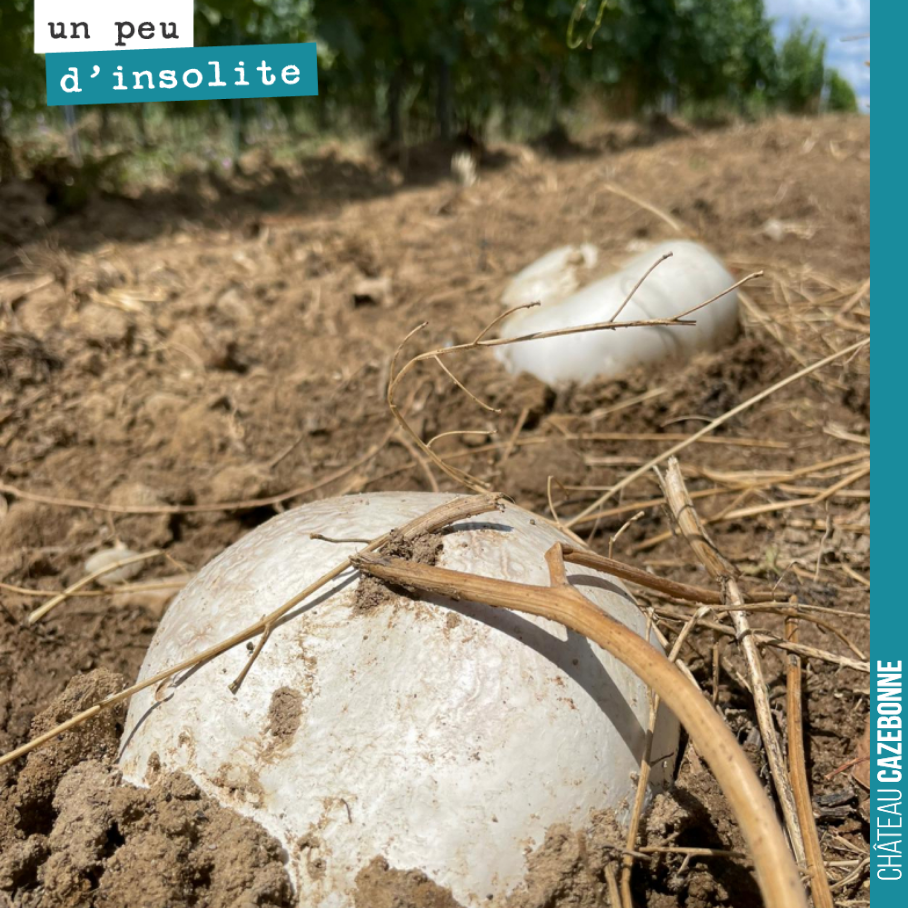
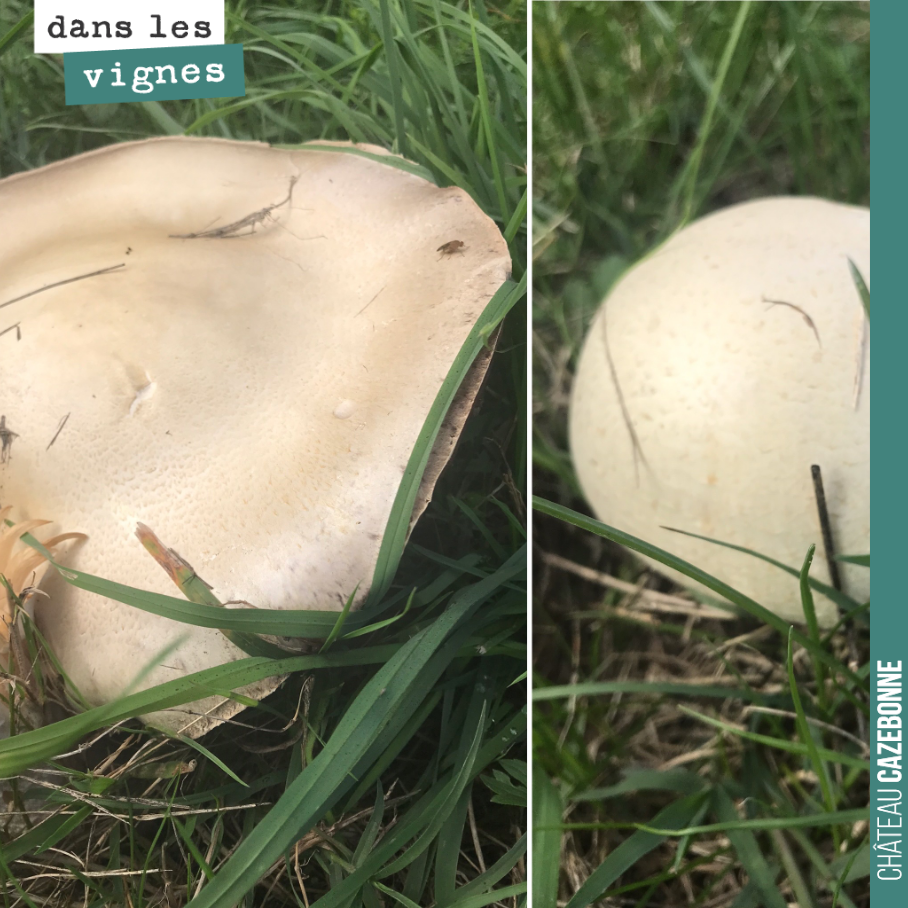
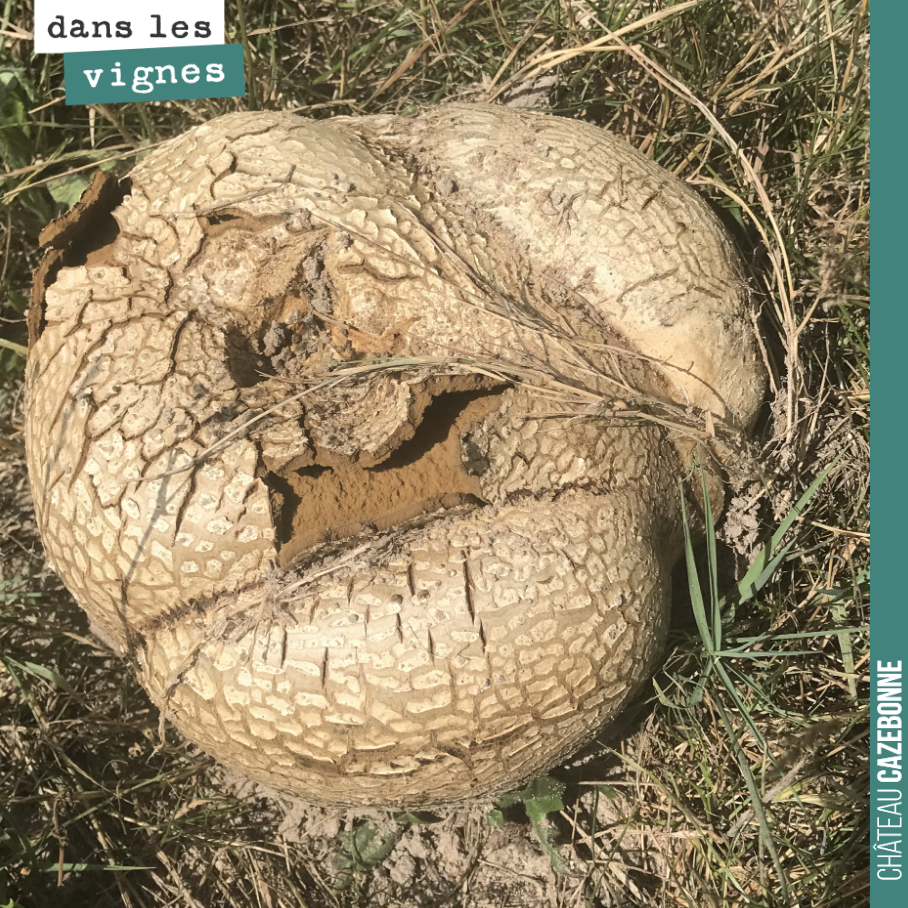
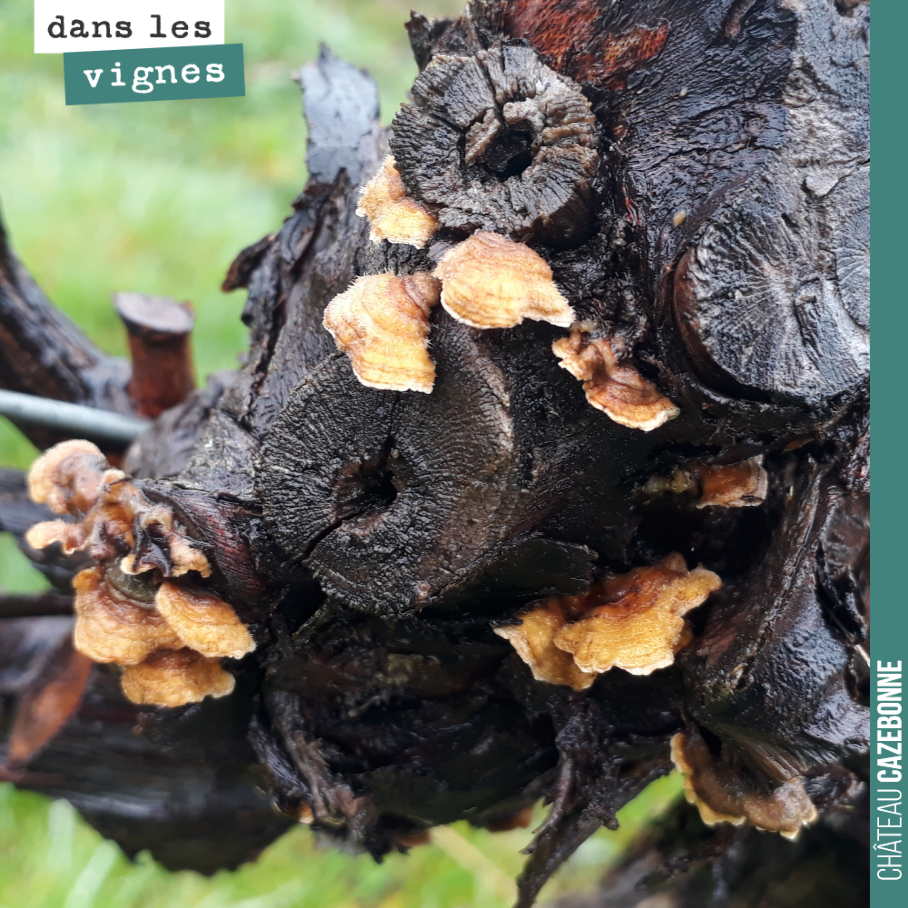
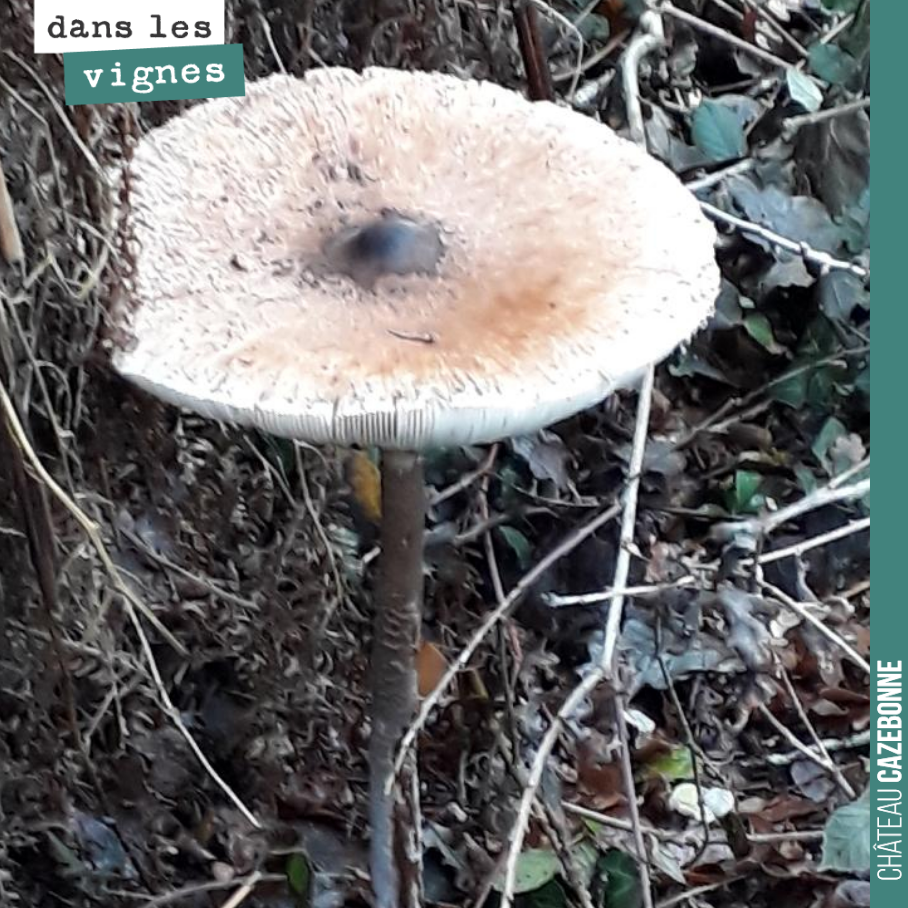
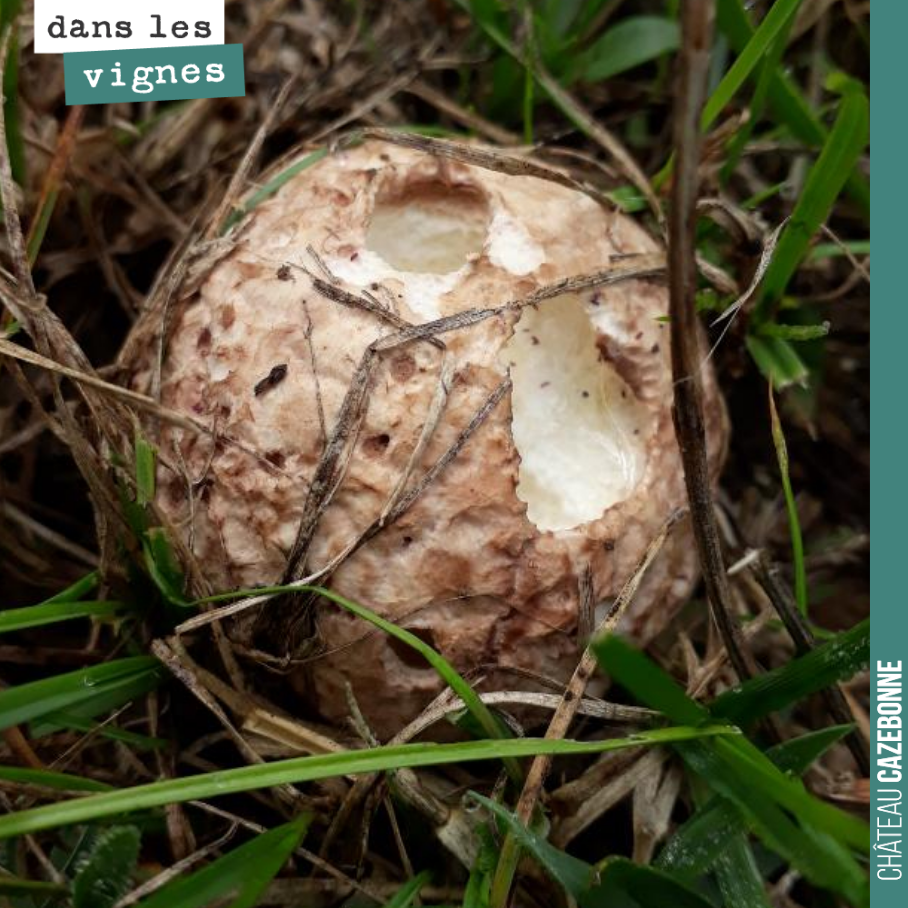
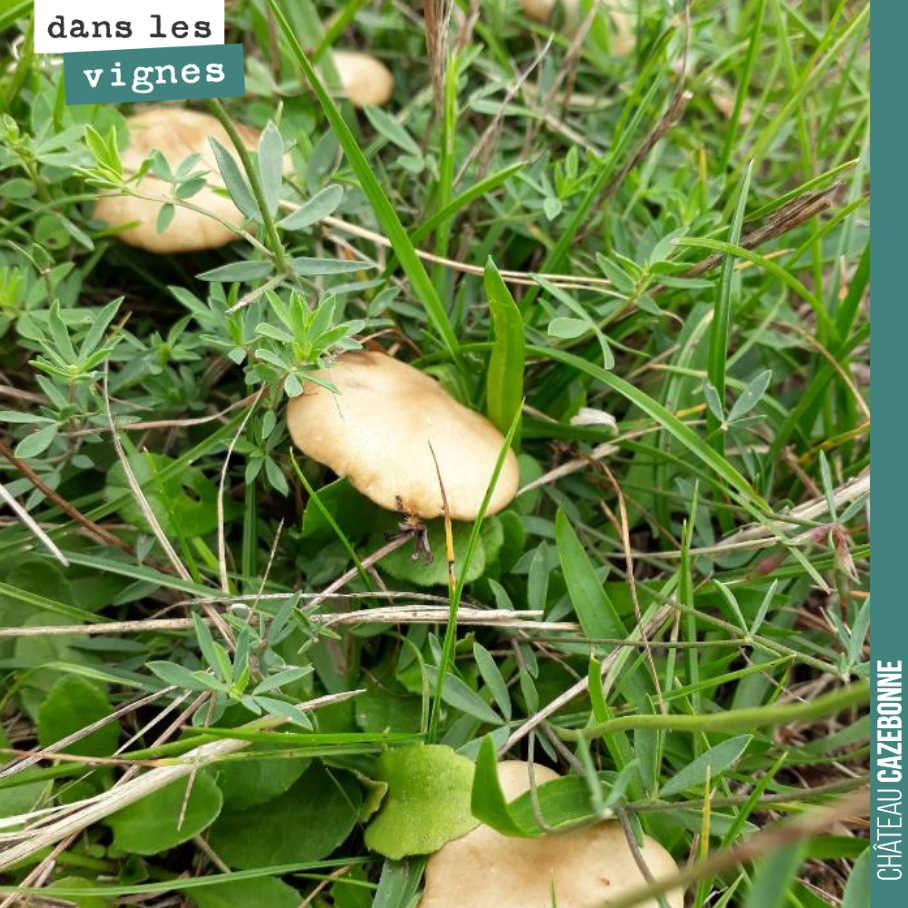
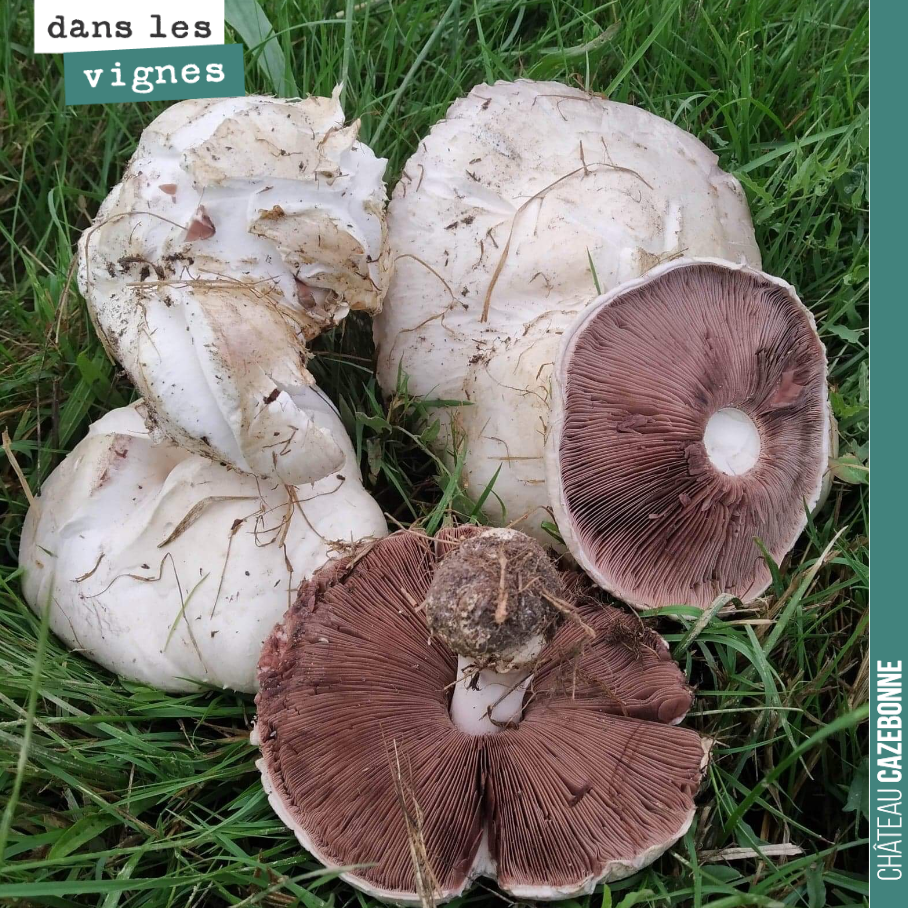
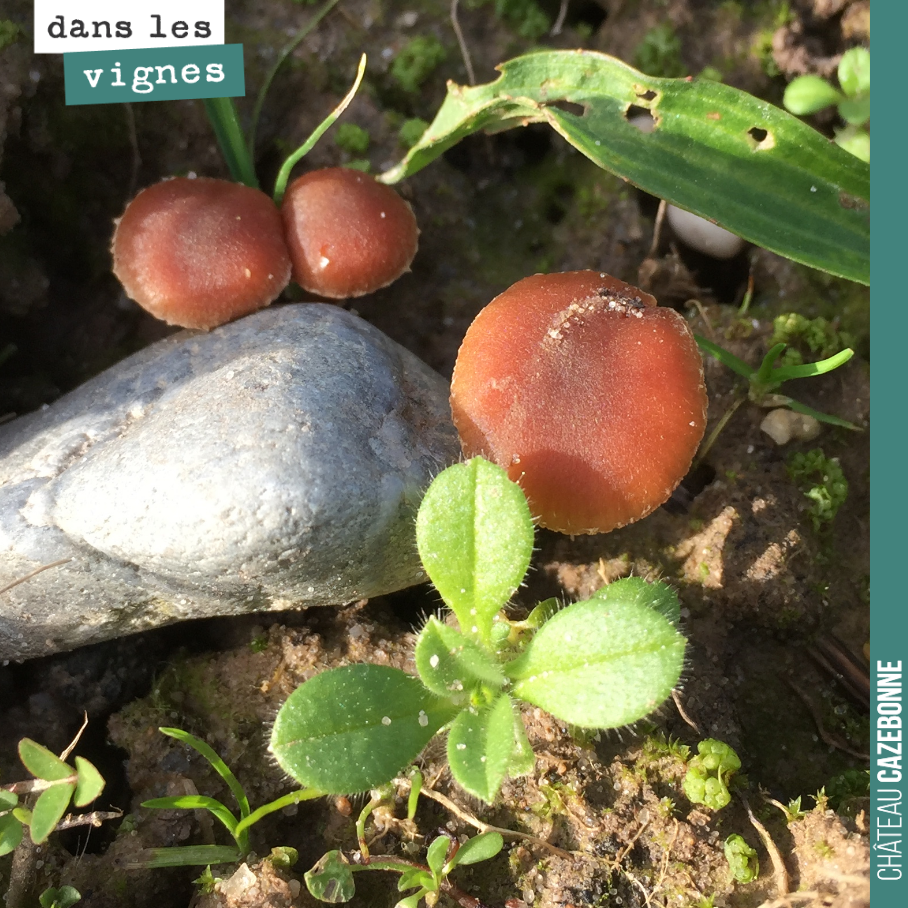
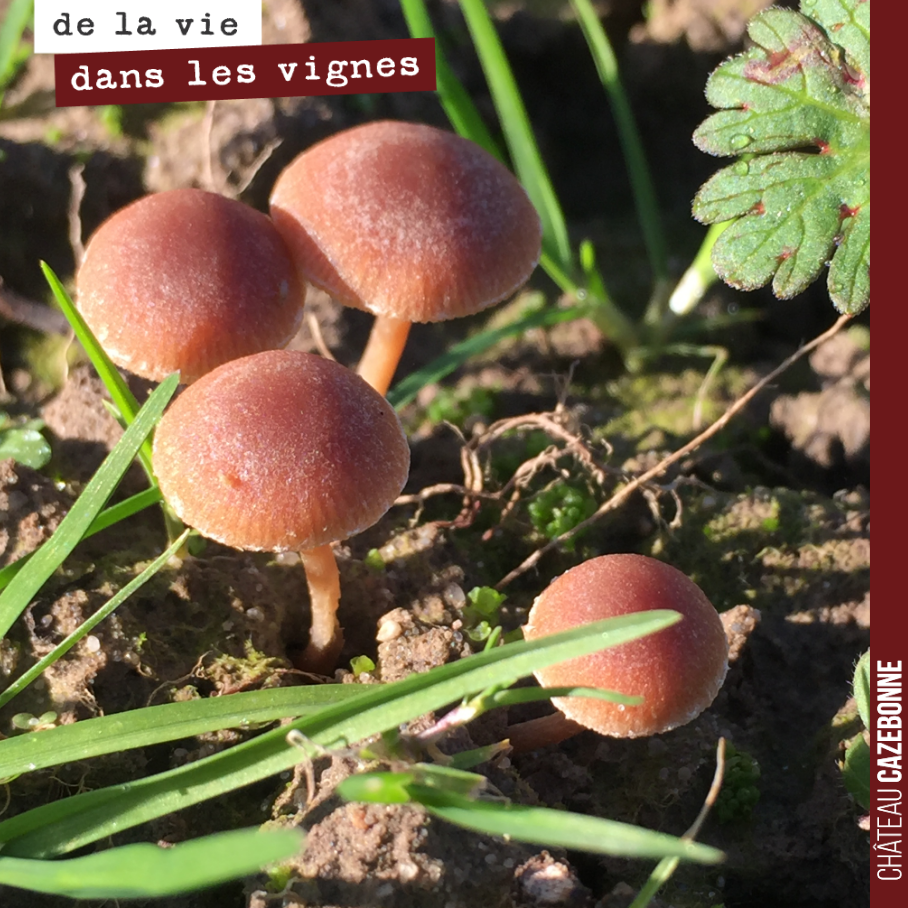
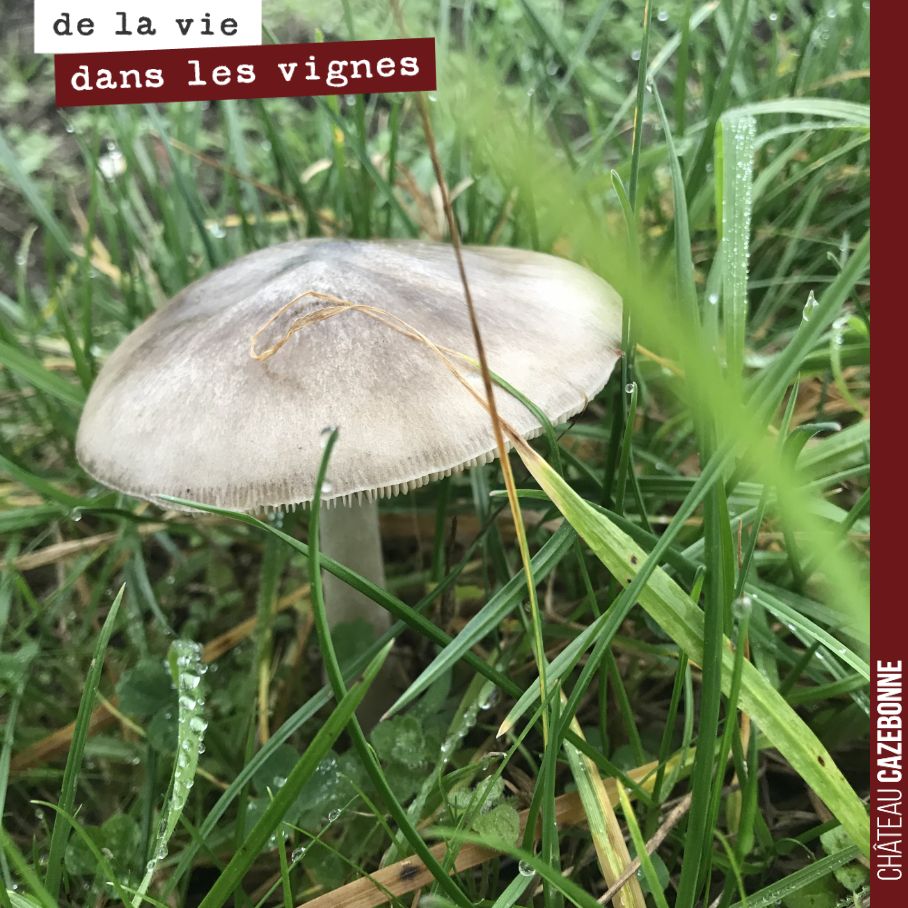
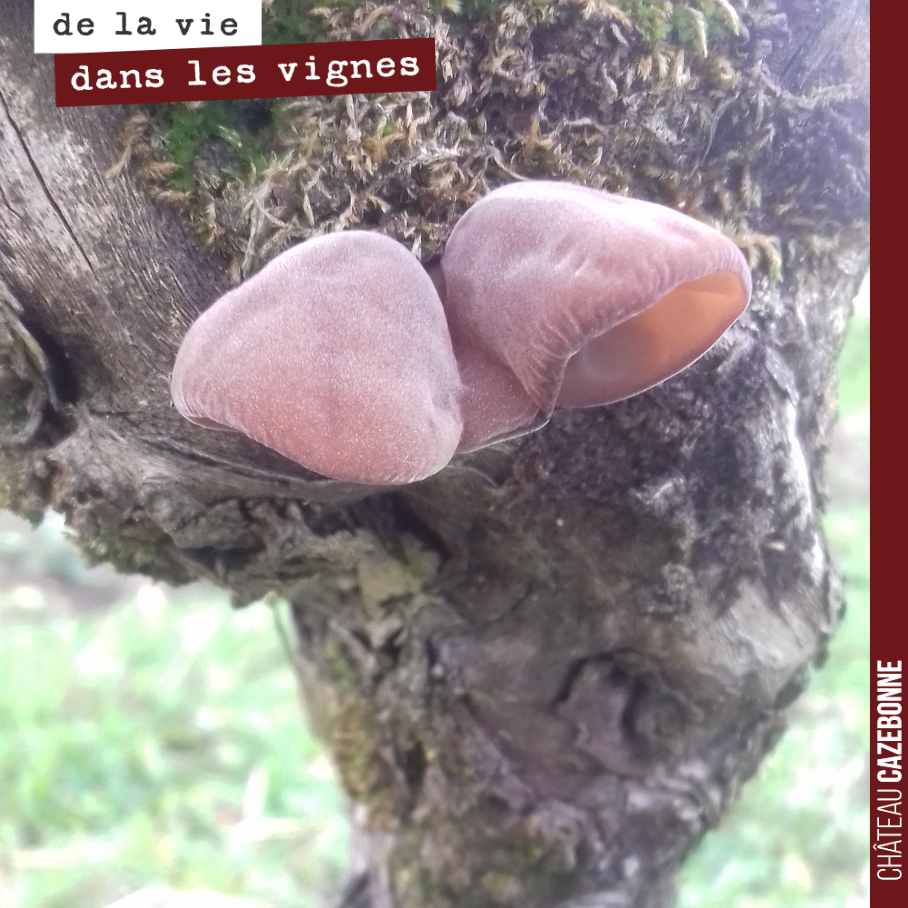
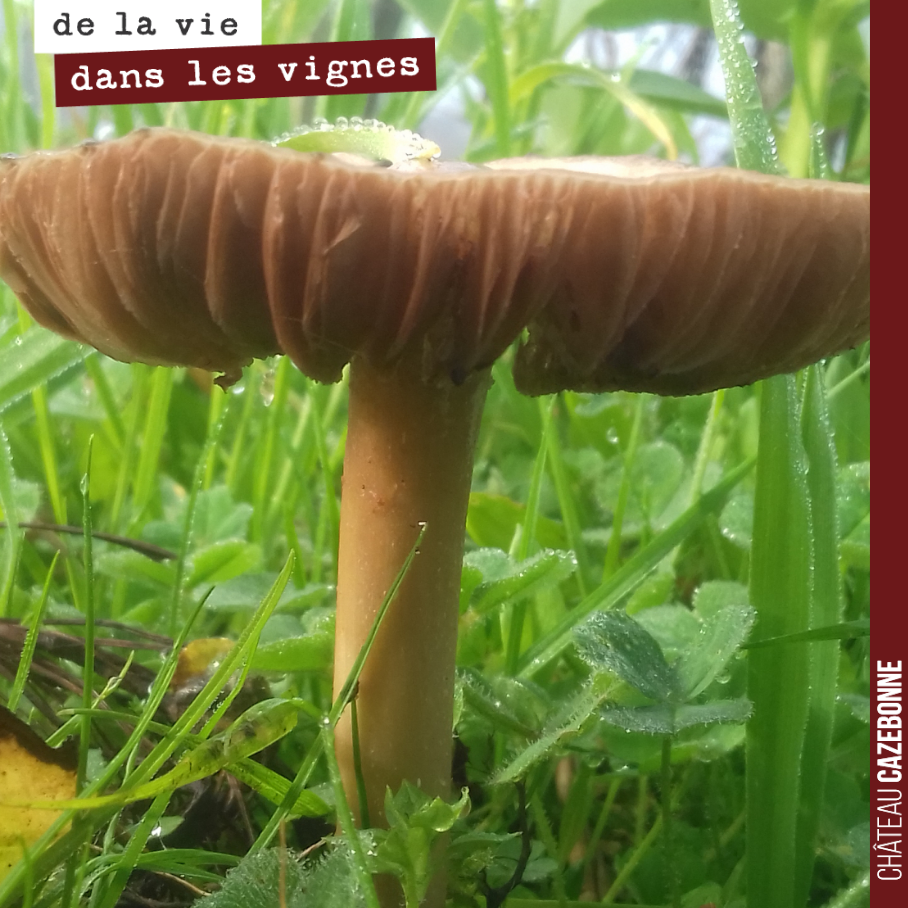
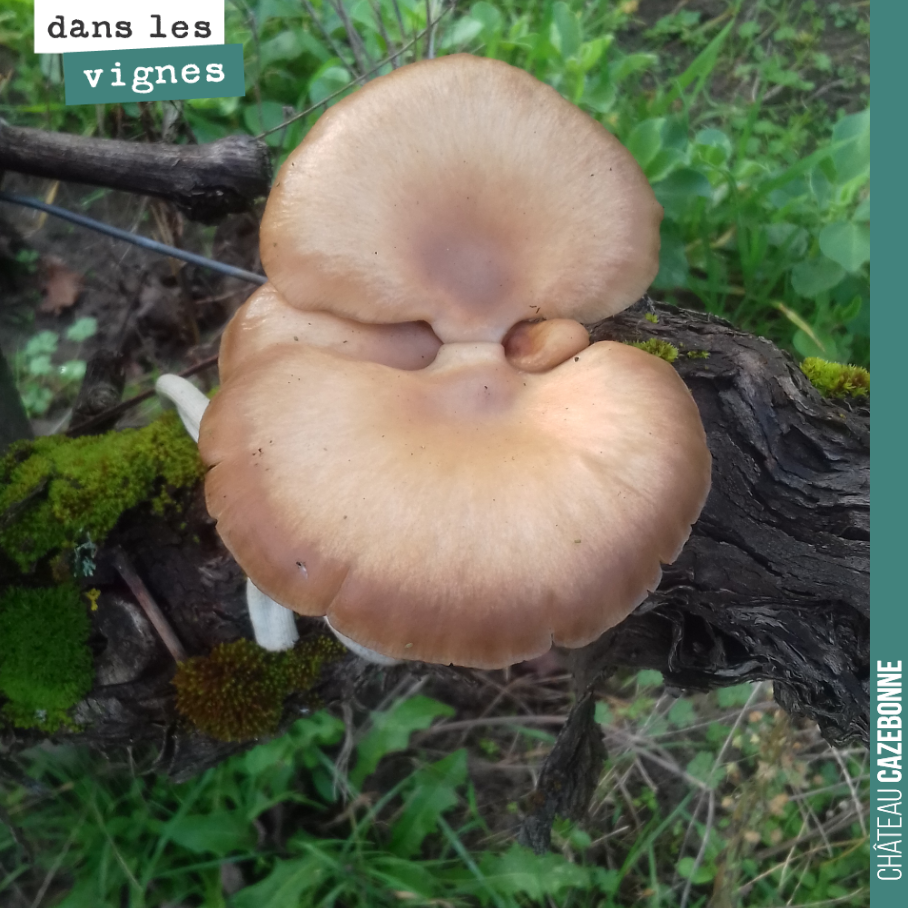
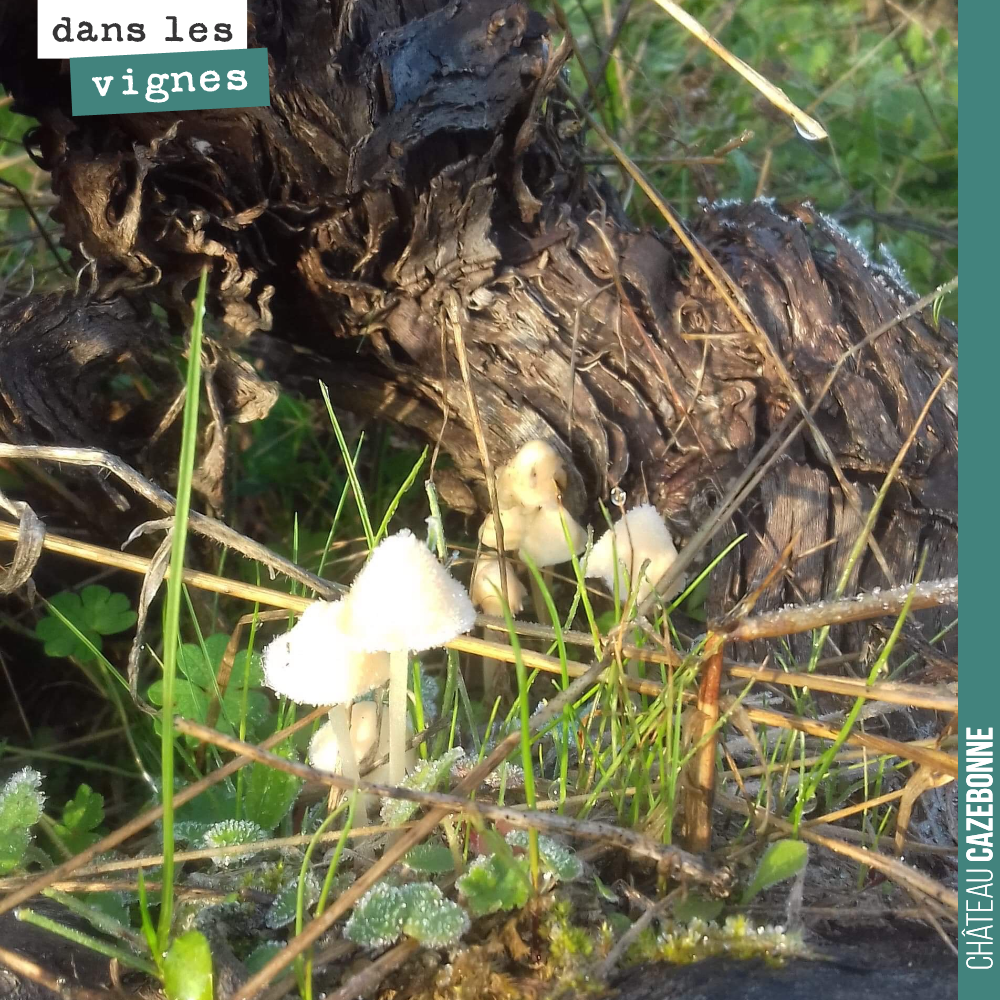
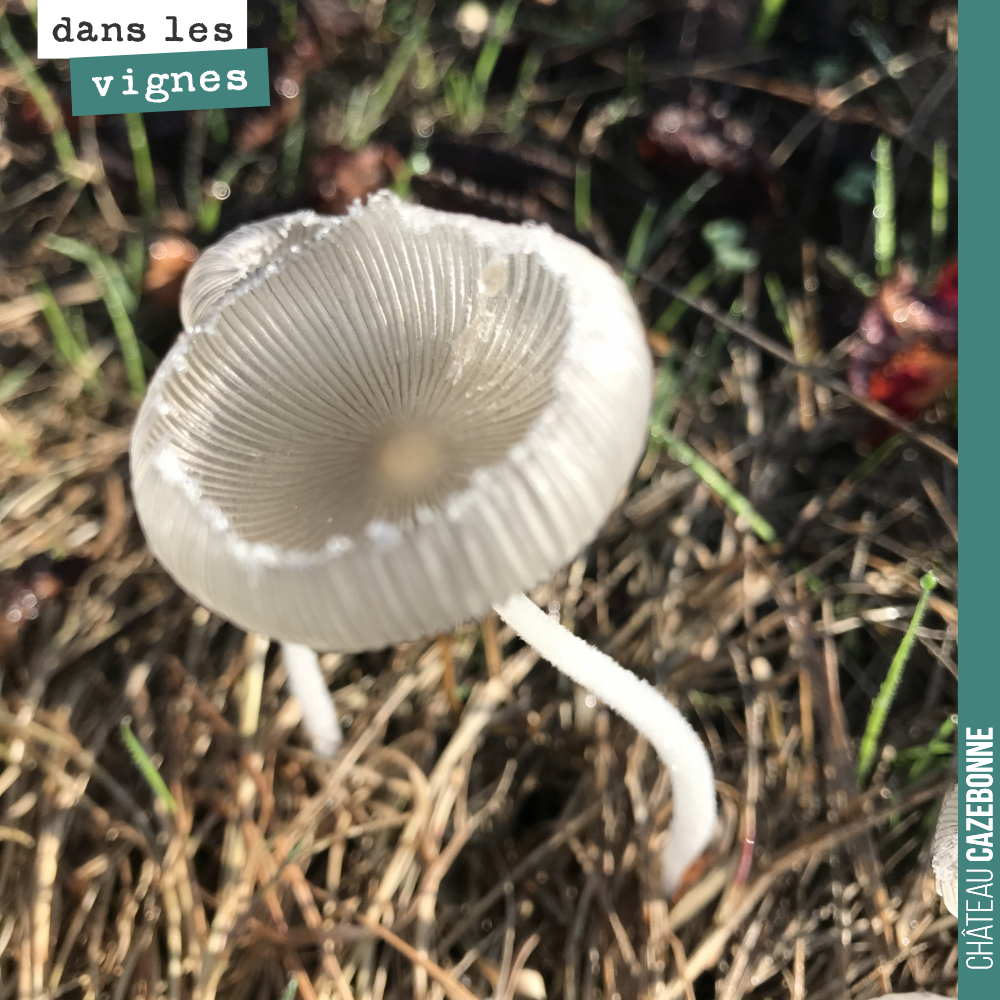
The visual description of fungi in the vines varies enormously depending on the species. Pathogenic moulds often manifest as cottony, diffuse, or powdery spots on the leaves and bunches. Mildew, for example, appears as a "white down" on the underside of the leaves and translucent spots on the upper side. Oïdium forms a sort of sparse ash on all the green organs of the vine. Beneficial fungi are predominantly subterranean or microscopic. Some, such as mycorrhizae, are only visible under a microscope, colonising the roots and creating a complex network structure for the exchange of nutrients. Others, such as saprophytic decomposing fungi, can form various sporophores (fruiting bodies), ranging from small, discreet gills to larger caps, often near the vine stumps or in the grass.
The life cycle of fungi is highly dependent on climatic conditions and seasonality. Cryptogamic diseases like mildew are particularly active in spring and early summer, favoured by mild and humid weather. Their spores overwinter in the soil or plant debris and develop when conditions are optimal (temperature, dew, rain). Others, such as botrytis (grey rot), tend to manifest at the end of the season, when the bunches are ripe and humidity persists. Saprophytic fungi are active all year round, breaking down organic matter, with increased activity in autumn after the leaves fall and in spring with the restart of vegetation. Mycorrhizae establish their symbiotic network with the roots throughout the life of the vine, expanding as the root system develops.
At Château Cazebonne, these microorganisms can be found everywhere. The soils are their main habitat, rich in organic matter and biodiversity, encouraged by our biodynamic practices. They are particularly present under the cover crop, where the decomposition of crop residues enriches the substrate. Fungal diseases can be observed on the leaves, young shoots, and bunches, especially during periods of high humidity or mild temperatures. Our regular observations allow us to detect the first signs and act accordingly, prioritising preventive approaches or natural treatments. Traces of pourridié can appear on the oldest vine stumps, requiring special vigilance.
The ecological role of fungi is fundamental in the vineyard. They are the main players in the decomposition of organic matter, transforming plant residues into nutrients available for the plants. This action is crucial for maintaining soil fertility and the structure of humus. Mycorrhizae improve the vine's water and mineral absorption, making it more resistant to stress and contributing to a better expression of the terroir. They actively participate in the nutrient cycle and the balance of subterranean ecosystems, which are essential to the vitality of our vines.
The interactions of fungi with the vine are complex and varied. Many of these microorganisms are precious allies, such as mycorrhizae which establish a beneficial symbiotic relationship. Others are competitors for resources or pathogens. Mildew and oïdium are direct threats that can weaken the vine and compromise the harvest. Pourridié, which is less visible, can cause slow dieback. However, even certain pathogens, under specific conditions, can have nuanced roles, such as Botrytis cinerea, which is a scourge for most wines but is sought after for the production of sweet wines (noble rot). This is why balanced management and a deep understanding of these interactions are essential.
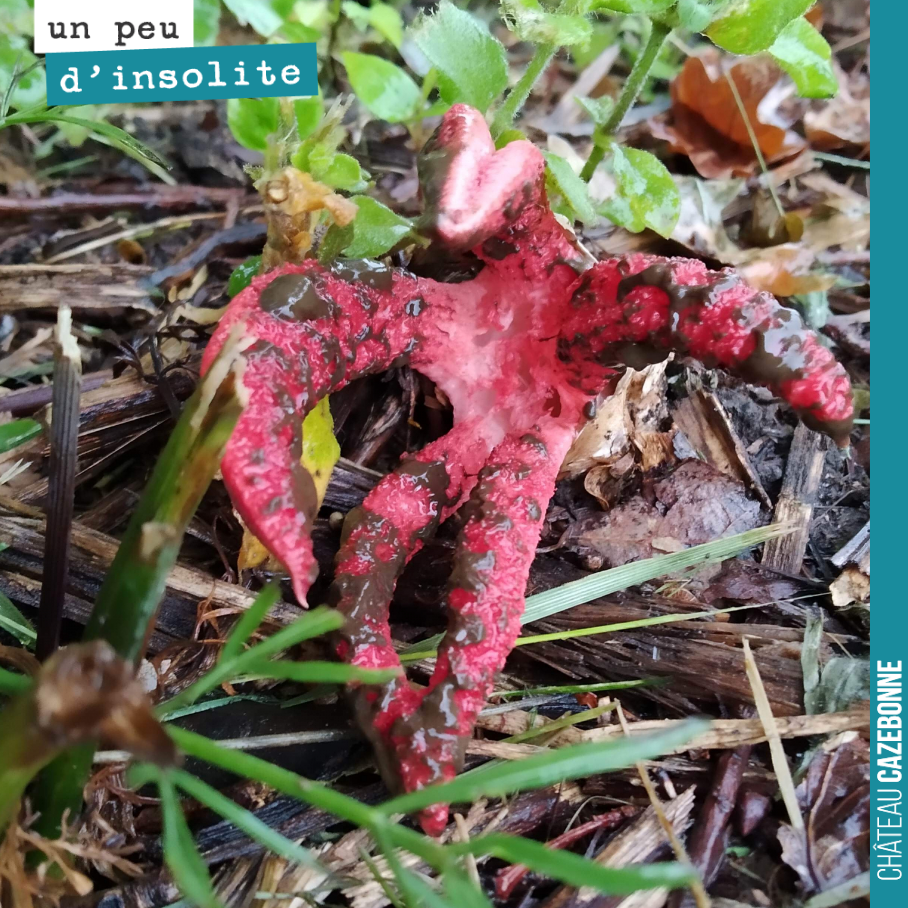
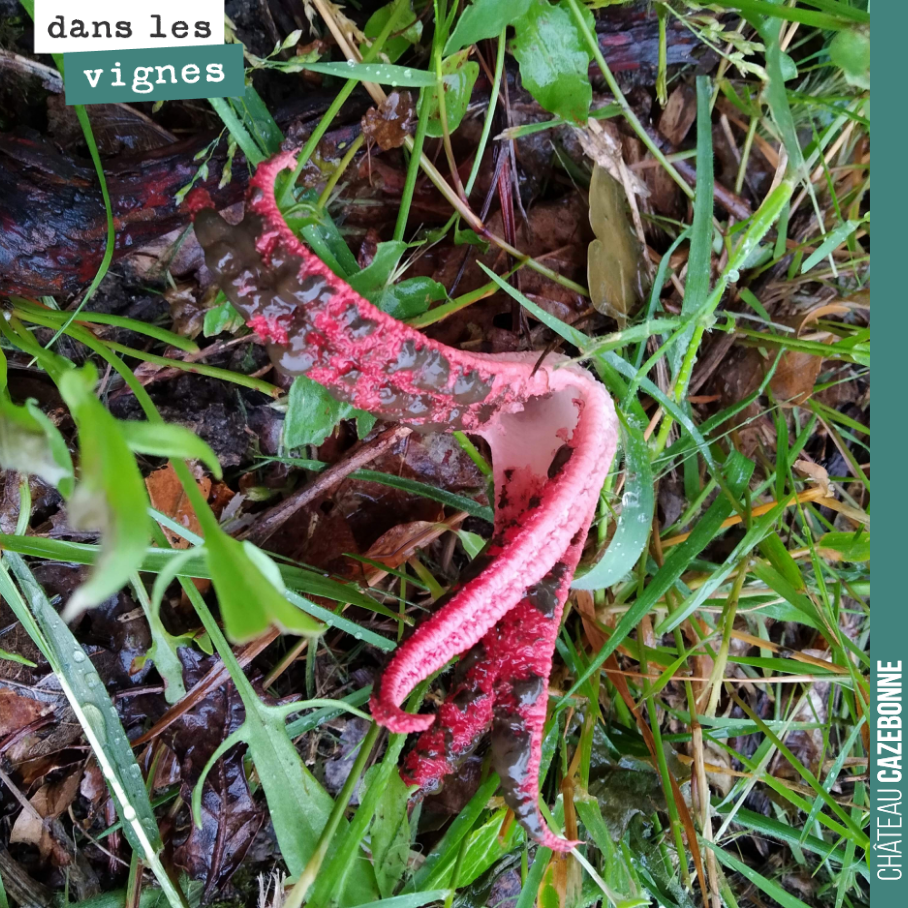
At Château Cazebonne, our organic approach (Bordeaux in biodynamics) aims to promote these natural balances. We observe soils teeming with life, with a notable presence of earthworms and numerous microorganisms, signs of healthy fungal activity. Soil analyses confirm this microbial richness. We use herbal teas (biodynamic preparations) to strengthen the vine's natural defences and limit the development of diseases. The biodiversity present in our vineyards, whether in the form of hedges, green manures, or auxiliary fauna, also helps to create an environment that is less conducive to pathogens and more favourable to beneficial fungi. The presence of decomposing fungi on the vine shoots after pruning is an indicator of the good health of our soils. For a more atypical observation, have you ever come across L'Anthurus d’Archer?
Château Cazebonne is resolutely committed to respectful viticulture by replanting grape varieties in the Bordeaux region that had disappeared, a task made possible thanks to the support of wine lovers. You can find all the information about our actions and our philosophy in our book "Bordeaux, une histoire de cépages", available in digital format here. To test your knowledge and learn more about wine and biodiversity, feel free to discover our oenological quizzes. And of course, to support our approach and taste our wines resulting from these virtuous practices, explore our selection on the online shop.
Sources
Our suggestions
-5%on your 1st order with code BIENVENUE
The essential6 bottles — Graves red 2022
The best price of the cellar: €12 per bottle delivered.
The everyday red: generous and straight to the point.
I want it Our recommendation92/100 RVF
6 bottles — Graves red 2022, 92/100 RVF
Rated 92/100 by La Revue du vin de France: a solid 10-year ageing potential.
Our Graves for ageing, the finest gateway to the estate.
I want it Go further
12 bottles — the whole range
12 bottles, the whole range tasted: the best discovery-to-price ratio.
The complete tour of the estate, in a single case.
I want it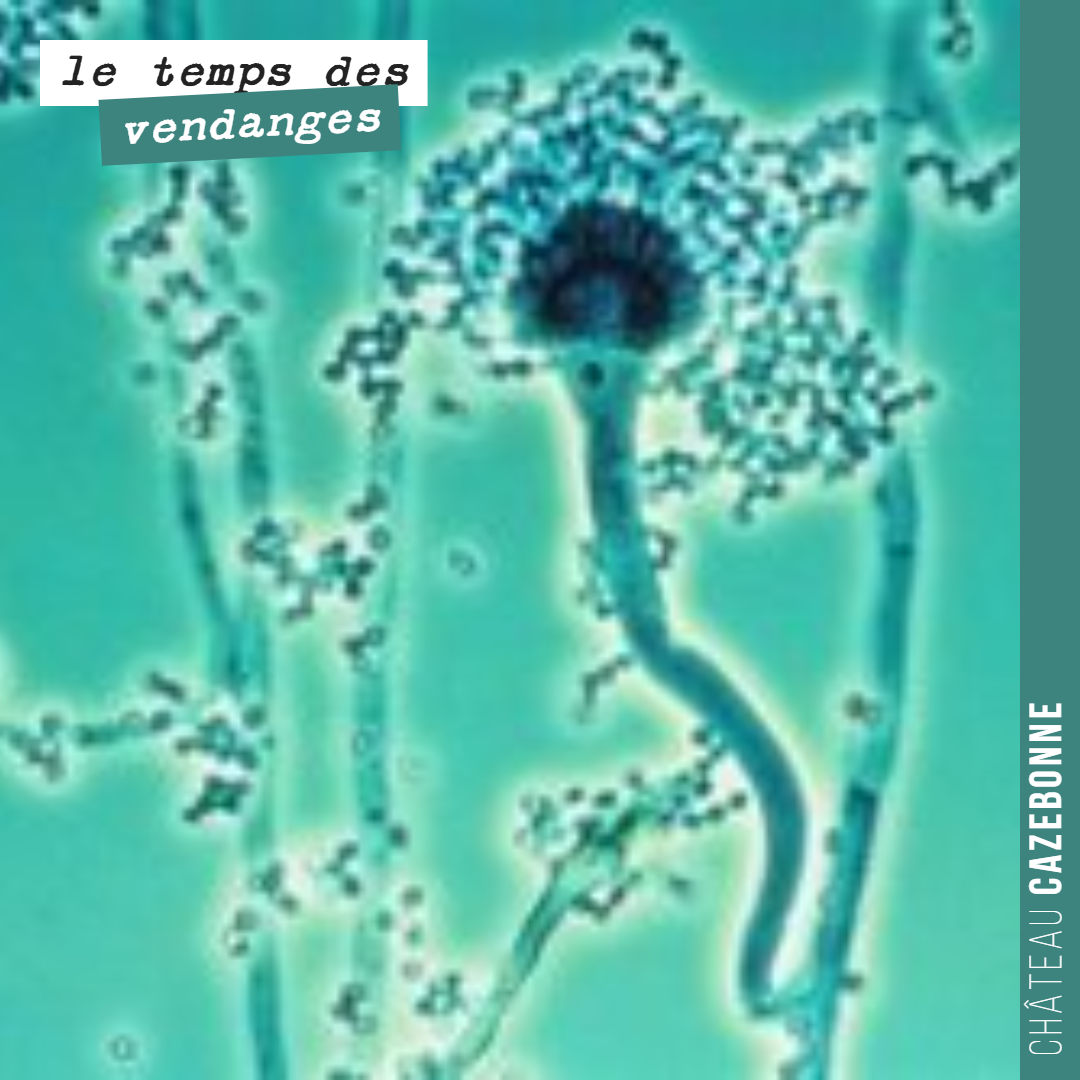
26 August 2026
By Jean-Baptiste
23 June 2022
14 October 2020
16 September 2020
10 July 2020
11 March 2020
30 October 2019
07 October 2019
01 October 2019
28 August 2019
01 July 2019
26 June 2019
31 January 2019
21 January 2019
30 December 2018
23 December 2018
14 December 2018
10 December 2018
22 November 2018
30 October 2018
The cellar, forgotten grape varieties and our cuvées, twice a month. 5% off your first order with the code BIENVENUE.