
 The essential
6 × Entre Amis red
6 bottles — Graves red 2022
The best price of the cellar: €12 per bottle delivered.
The everyday red: generous and straight to the point.
I want itClover
Clover, the generic name for plants in the genus Trifolium within the Fabaceae family, is a valuable indicator of healthy soil. At Château Cazebonne, we welcome it as an essential ally for our organic vines.
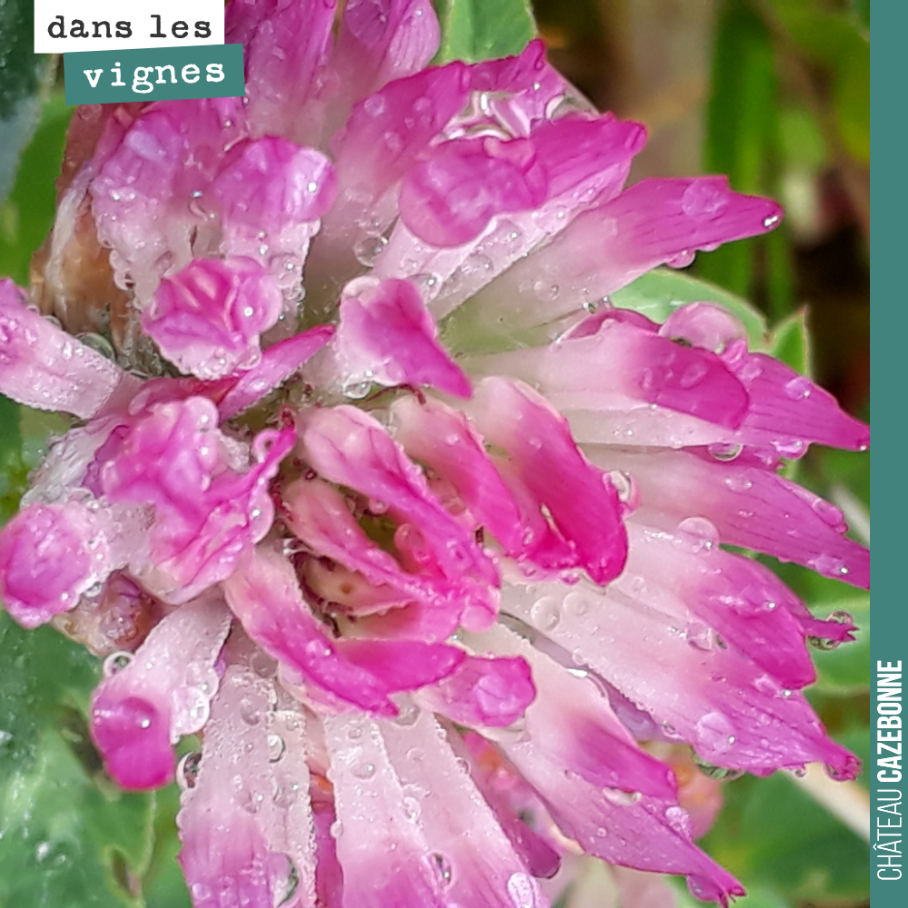
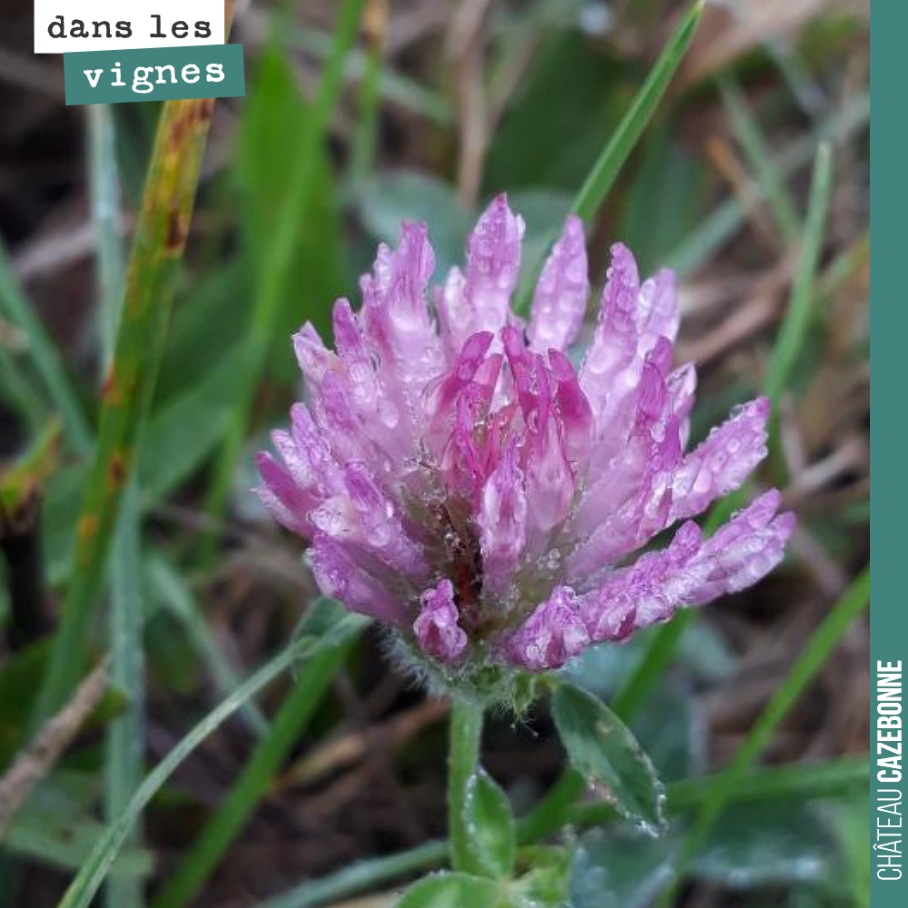
Visually, clover is recognisable by its typically trifoliate leaves, although the “four-leaf clover” is a rare symbol of good luck. Its flowers, often gathered in dense heads, can vary from white to pink, red, or purple depending on the species. Modest in size—generally reaching just a few centimetres in height in the wild—they can form dense carpets in cultivation. As a perennial herbaceous plant, clover follows a distinct seasonal cycle. It emerges predominantly in spring, with flowering extending from May to September depending on the variety. It thrives in well-drained soils that retain some moisture, often in full sun. At Cazebonne, it can naturally be seen between the vine rows, as well as in meadows and plot borders where it contributes to floral diversity.
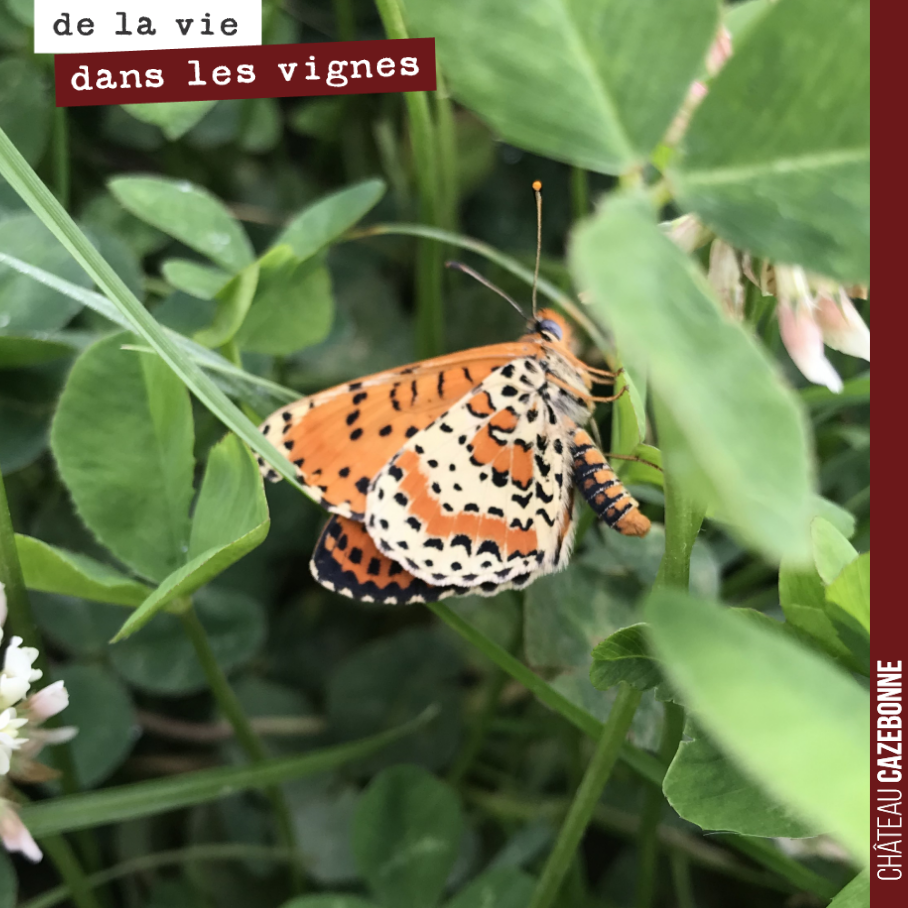
The ecological role of clover is fundamental. Its main asset lies in its ability to enrich the soil naturally with nitrogen. Through a symbiotic relationship with nitrogen-fixing bacteria, it captures atmospheric nitrogen and converts it into a form readily assimilated by plants. This process significantly reduces the need for synthetic nitrogen fertilisers, fostering more environmentally friendly viticulture and preserving biodiversity. This rich supply of nitrogen supports vine growth in a gentle, balanced manner, fostering a living, naturally nourished soil for the authentic expression of the terroir. Clover also assists in cover-crop management by acting as a living mulch. It protects the soil from erosion, retains moisture during hot spells, and improves soil structure thanks to its deep, branched root system. It serves as an excellent cover crop, particularly in organic or biodynamic viticulture. Its presence also attracts beneficial auxiliary fauna, such as pollinating insects and natural predators of vineyard pests, thereby contributing to biological pest control across our vineyard.
The interaction between clover and the vine is beneficial in several respects. As a legume, it enriches the soil with nitrogen, an essential nutrient for vine growth. Furthermore, its ability to structure the soil improves aeration and water infiltration, thereby encouraging better root development for the vines. Its ground cover suppresses unwanted weeds without competing excessively with the vine for water and nutrients, especially when managed with regular mowing. At Cazebonne, observations show that plots grassed with clover display greater resilience during periods of water stress and enhanced vine vitality, translating into higher quality grapes. It is a cornerstone of our living soil philosophy.
By nurturing this botanical wealth with care, Château Cazebonne upholds a winemaking tradition where nature is our foremost ally. This approach is all the more vital as we are committed to replanting and reviving almost forgotten Bordeaux grape varieties, such as Castets, Mancin, or Saint-Macaire. This meticulous, passionate conservation and revival work is only made possible thanks to the unwavering support of wine lovers who have embraced the unique flavours of our cuvées, helping to write a new chapter in Bordeaux's winemaking history. To learn more about our approach and historic Bordeaux grape varieties, you can receive the digital edition of the book “Bordeaux, une histoire de cépages” by Jean-Baptiste Duquesne. Feel free to also test your wine and viticulture knowledge via our wine quizzes, or discover the unique expression of our terroirs and revived varieties by visiting the Cazebonne shop. We make similar efforts to showcase broad bean flowers as part of our agricultural practices.
Sources
Our suggestions
-5%on your 1st order with code BIENVENUE
The essential6 bottles — Graves red 2022
The best price of the cellar: €12 per bottle delivered.
The everyday red: generous and straight to the point.
I want it Our recommendation92/100 RVF
6 bottles — Graves red 2022, 92/100 RVF
Rated 92/100 by La Revue du vin de France: a solid 10-year ageing potential.
Our Graves for ageing, the finest gateway to the estate.
I want it Go further
12 bottles — the whole range
12 bottles, the whole range tasted: the best discovery-to-price ratio.
The complete tour of the estate, in a single case.
I want it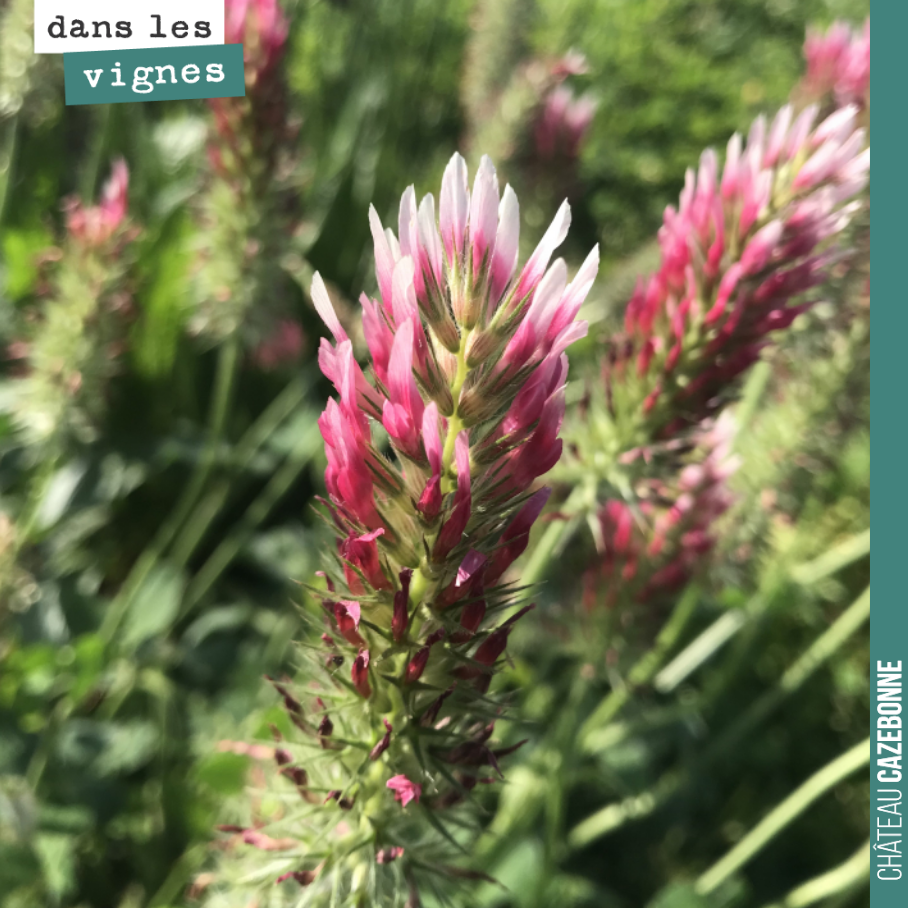
06 May 2023
21 June 2020
20 April 2020
07 October 2019

18 December 2018
The cellar, forgotten grape varieties and our cuvées, twice a month. 5% off your first order with the code BIENVENUE.