
 The essential
6 × Entre Amis red
6 bottles — Graves red 2022
The best price of the cellar: €12 per bottle delivered.
The everyday red: generous and straight to the point.
I want itPheasant
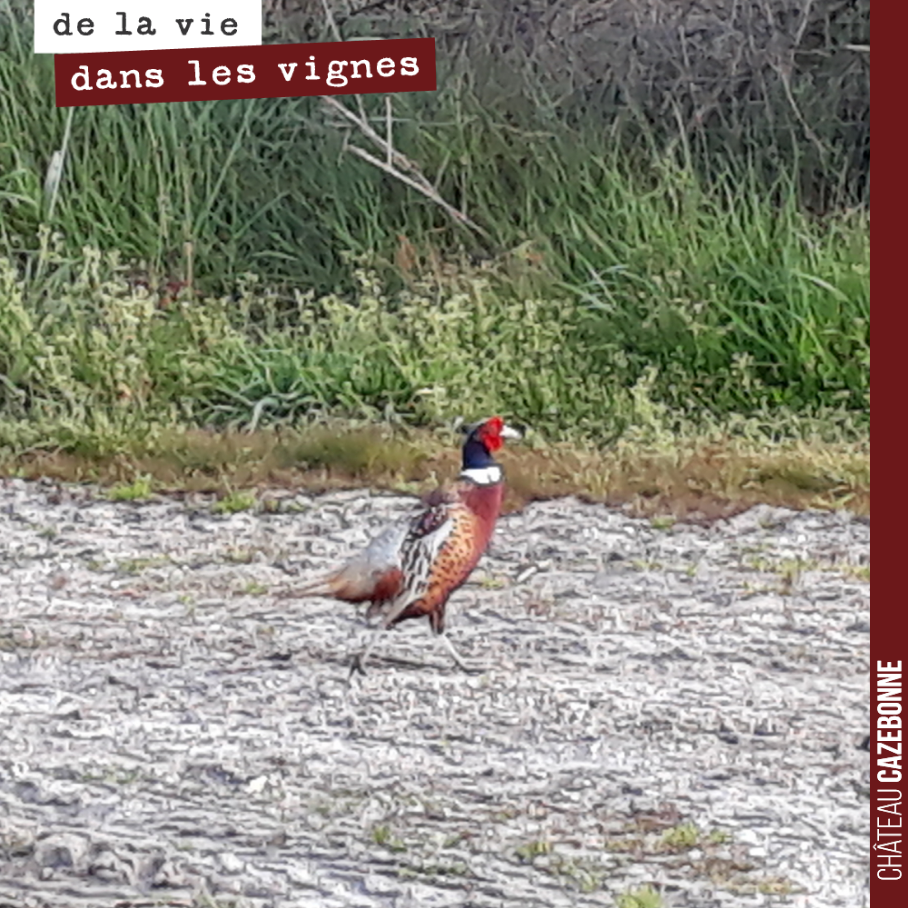
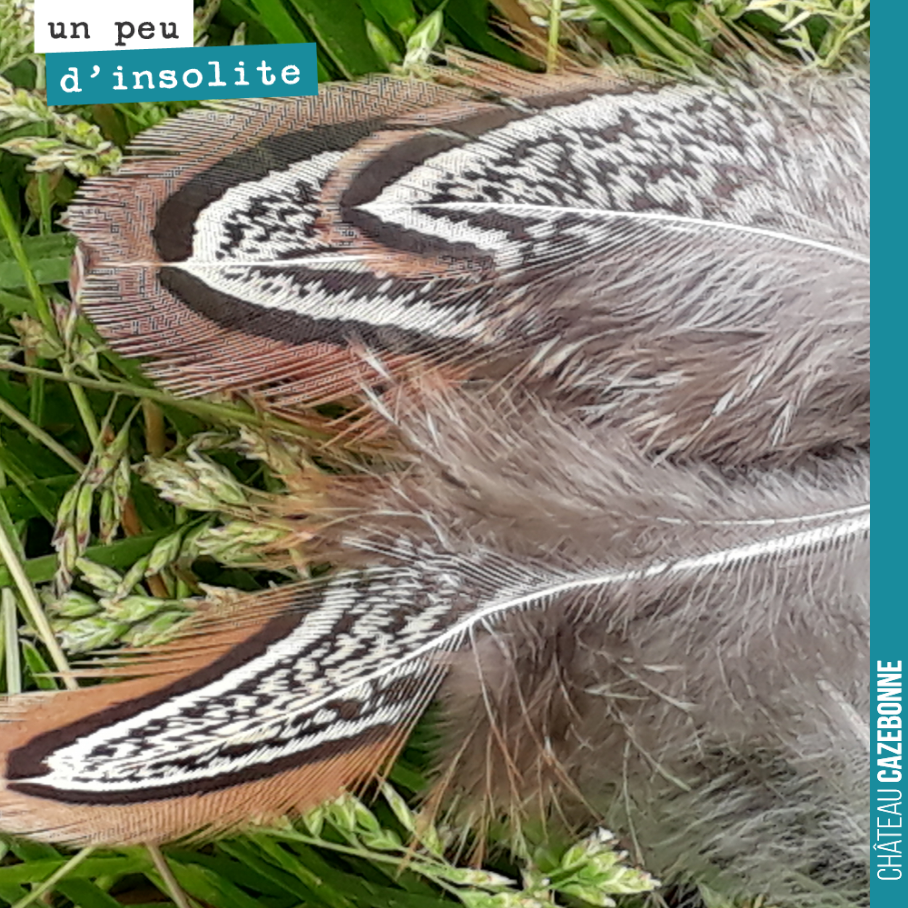
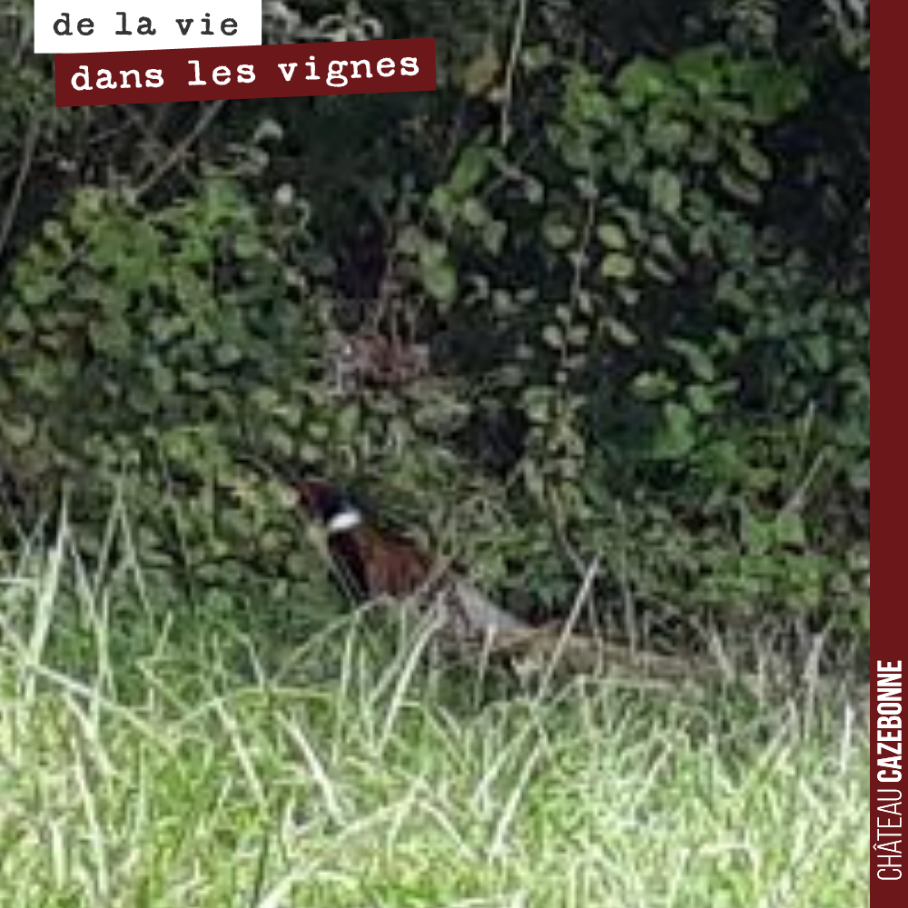
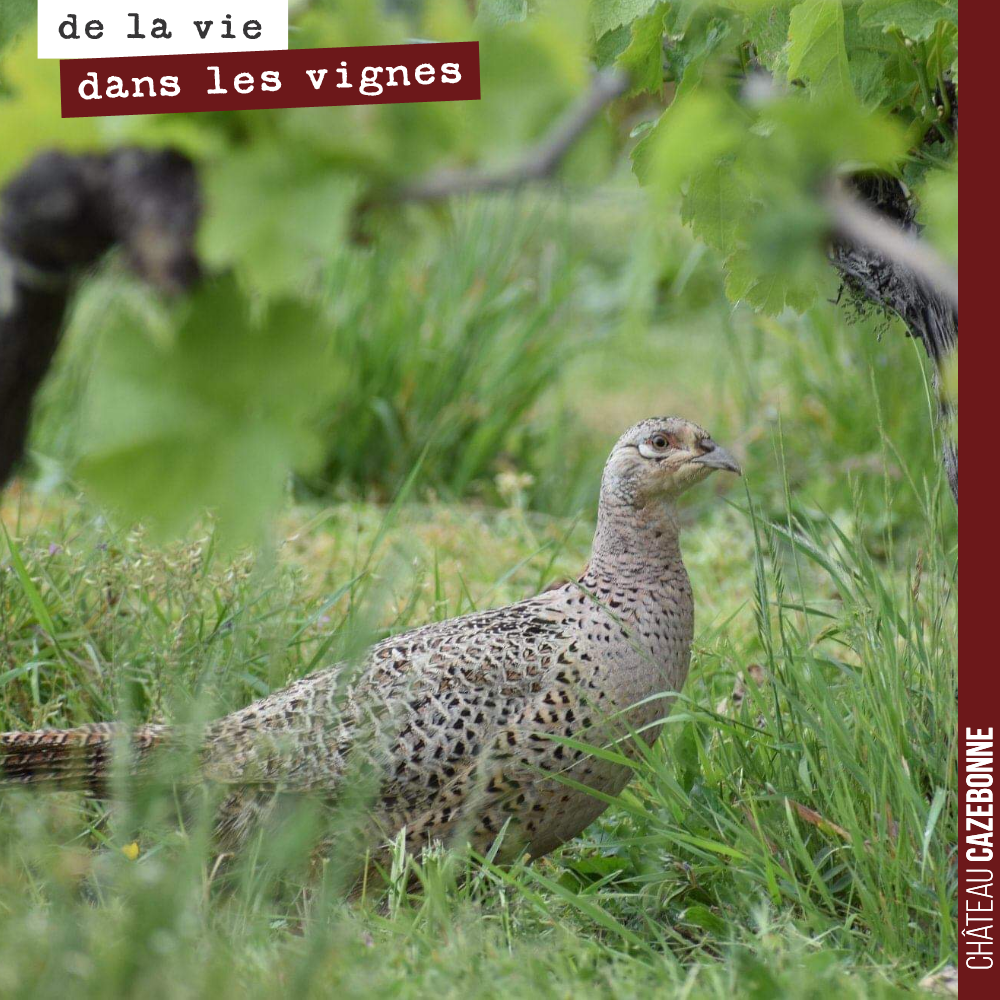
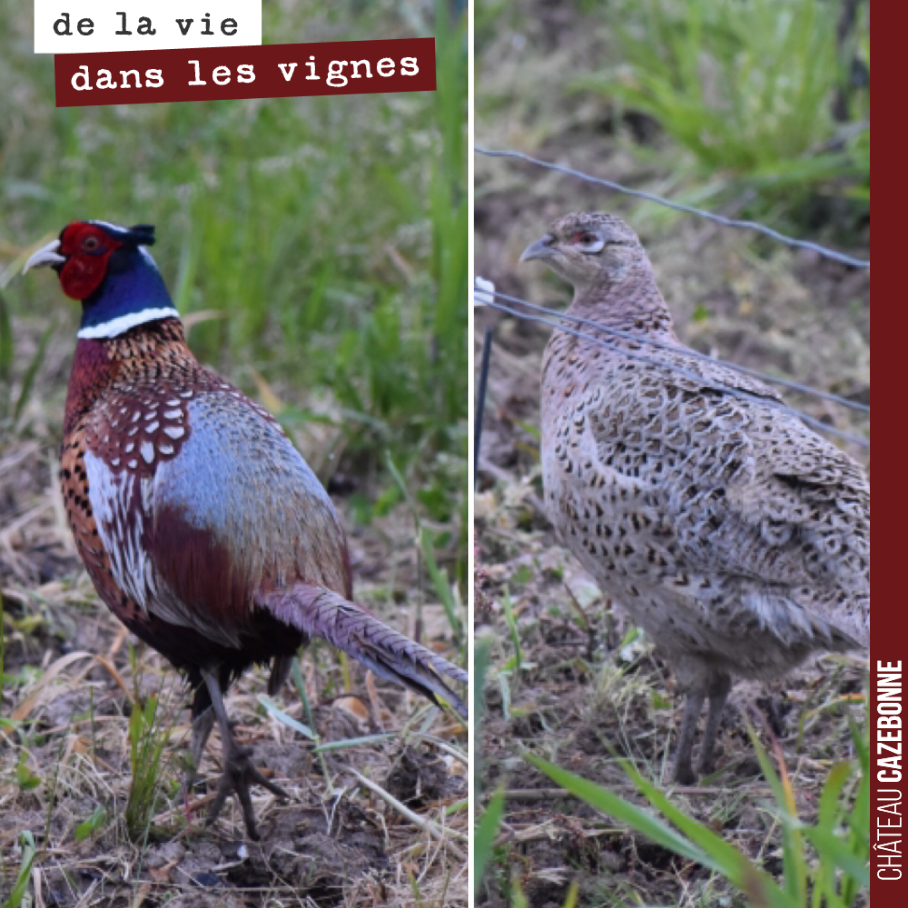
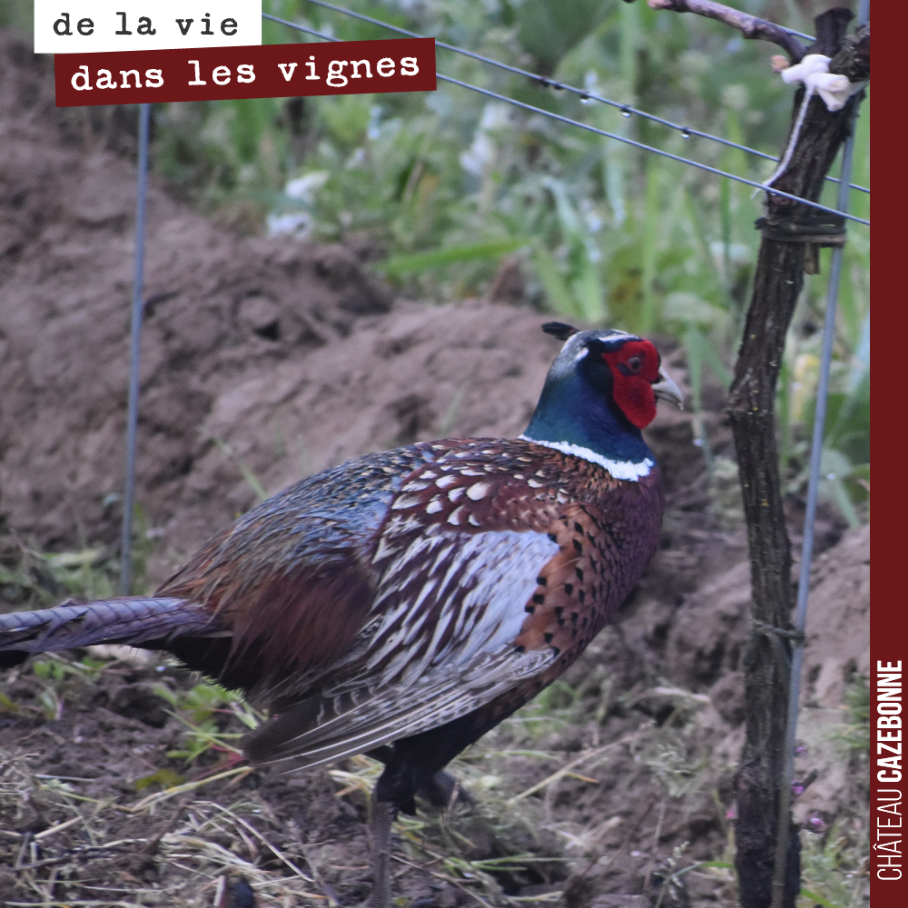
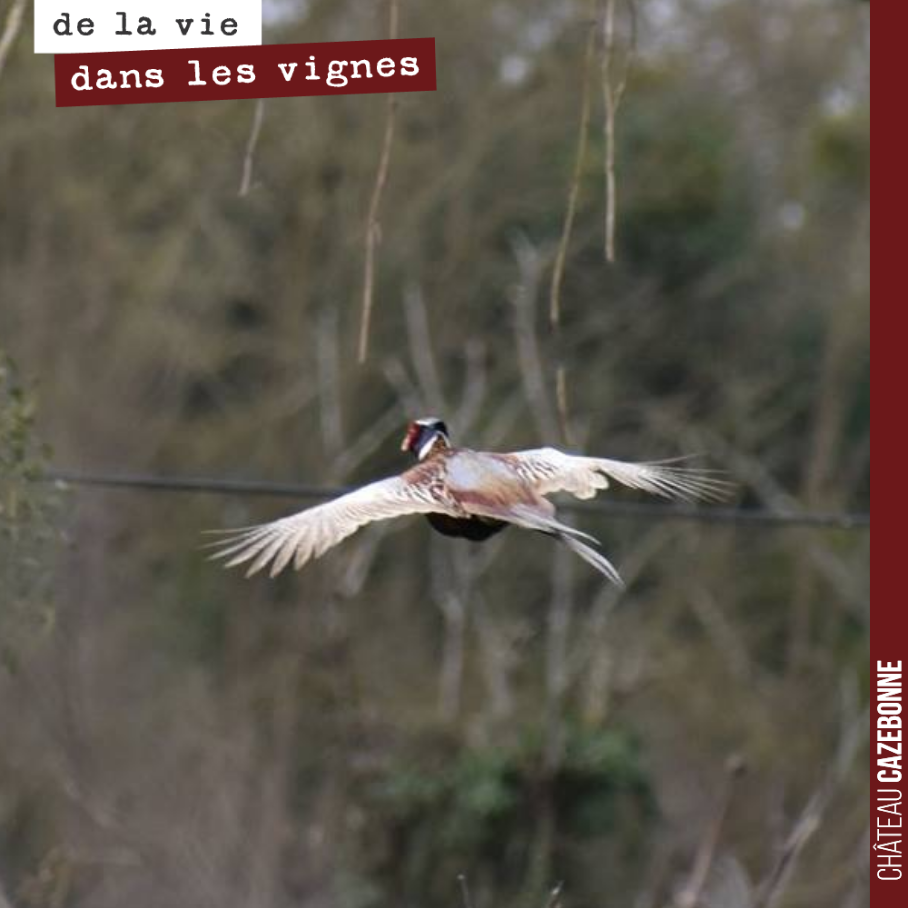
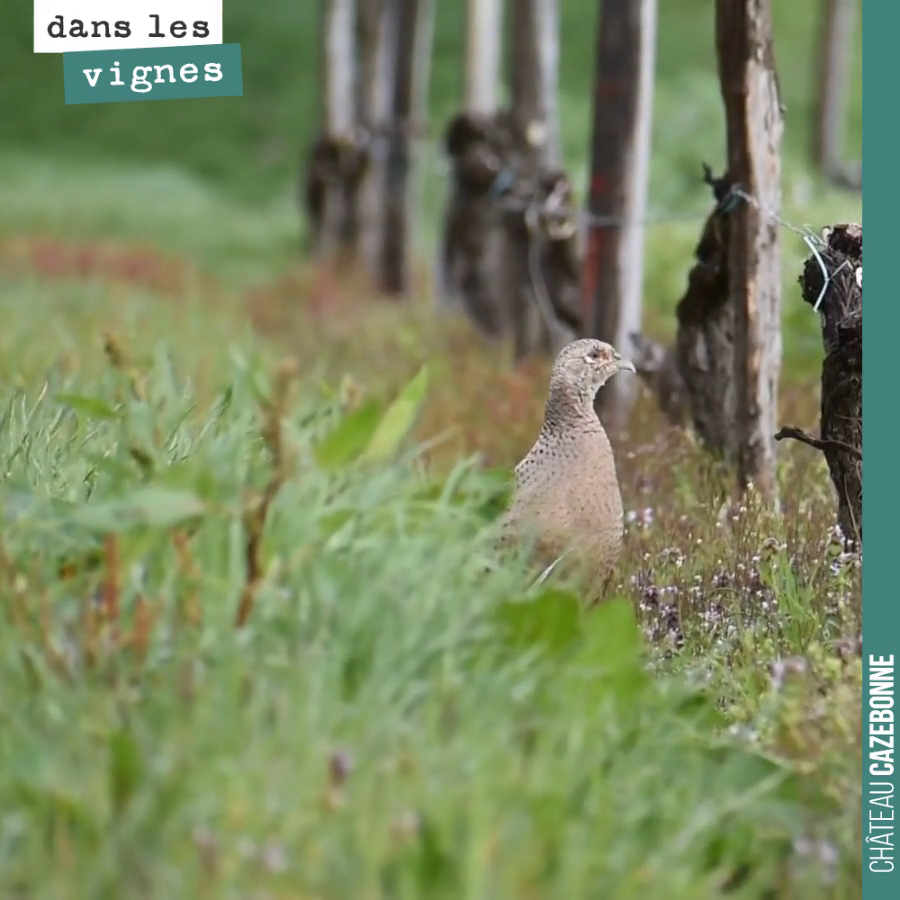
At Château Cazebonne, the rich biodiversity that flourishes in the heart of our plots sometimes reveals unexpected surprises. Among the winged guests that populate our landscapes, the common pheasant (Phasianus colchicus) is undoubtedly one of the most remarkable. Belonging to the Phasianidae family, this bird is instantly recognisable thanks to its striking plumage, particularly in the male, whose shimmering colours – metallic greens, bright reds, golden reflections – and elegantly full, long tail catch the eye. The female, more discreet, sports brown hues offering perfect camouflage within the vegetation.
Although of Asian origin, the common pheasant has adapted remarkably well to European ecosystems since its introduction, particularly in France. It is now a familiar resident among the wildlife in vineyards and agricultural environments. At Château Cazebonne, we specifically observe the Colchis pheasant and the Reeves's pheasant, the latter having an even more sumptuous plumage and a very long tail.
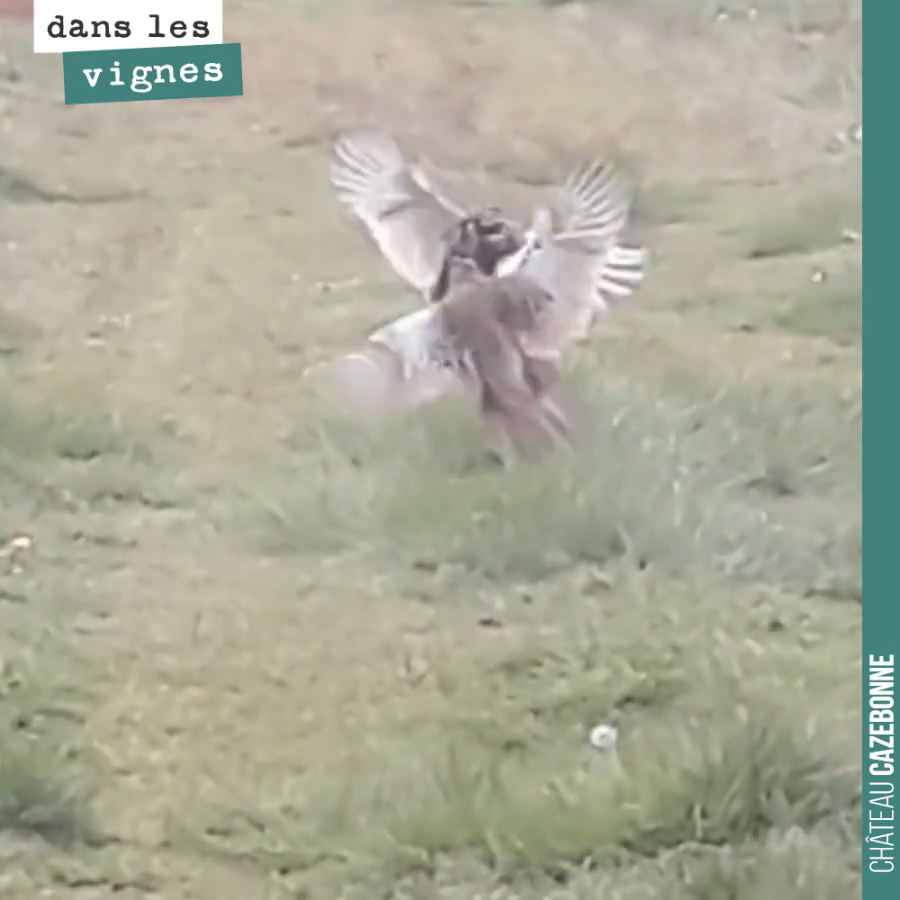
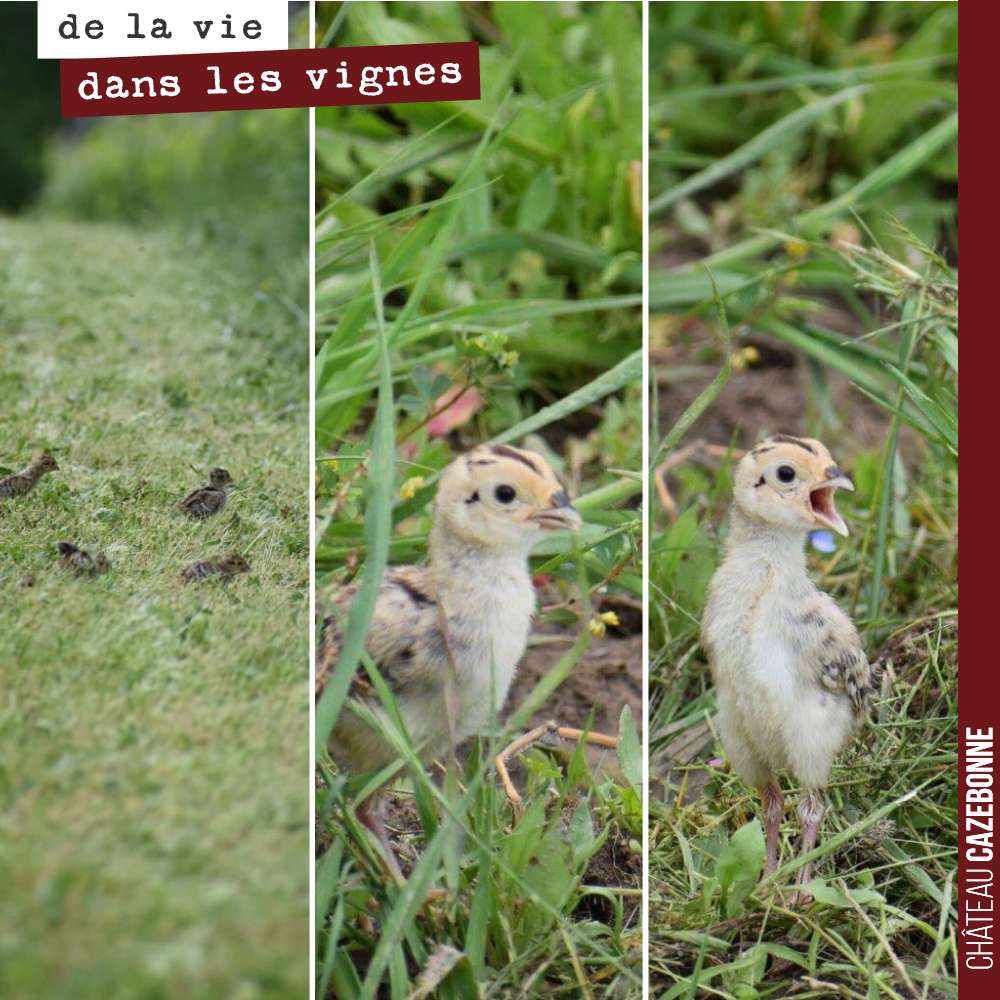
The pheasant is a sedentary bird of forest edges, groves and, of course, the countryside where the mosaic of crops offers it both shelter and food. At Château Cazebonne, our vines, bordered by hedges, grassed areas and woods, provide an ideal habitat for this species. It moves about with astonishing agility, feeding mainly on various seeds and berries, but also on insects and small invertebrates that it flushes out by foraging the soil. Its presence is a further indicator of the good health of our ecosystem, proving that our environmentally friendly practices benefit not only the vines but also local wildlife and rich biodiversity. Its life cycle in the vineyard is tied to the seasons. In spring, the breeding season is marked by the calls of the males and nuptial displays, while in winter, they actively seek the areas of cover and food that our plots provide them.
The pheasant's ecological role is multifaceted. As an omnivore, it contributes to the regulation of insect populations and the dispersion of seeds, thus participating in the natural balance of our vineyard ecosystems. For the attentive observer, it is not uncommon to catch a fleeting glimpse of it at the turn of a vine row, especially at sunrise or sunset, when it leaves the protective cover of the vegetation to venture into more open spaces. Its distinctive, harsh call can also betray its presence, adding a particular resonance to the symphony of birds in the vines that bring our estates to life.
The pheasant's interaction with the vine is mostly neutral, or even beneficial. Its consumption of insects, some of which can be harmful to the vines, is an asset. Its presence does not negatively impact the vines, but rather aligns with our approach to agroecology in viticulture. We thus avoid the use of chemical products that could disrupt its diet and habitat.
The presence of the pheasant at Cazebonne, alongside blackbirds, tits and other birds of prey, is the result of a global approach on our part: that of reviving Bordeaux's wine heritage in all its diversity, whether it concerns wildlife or forgotten grape varieties. We passionately replant varieties such as Castets, Mancin or Saint Macaire, whose history and richness are magnificently described in the book "Bordeaux, une histoire de cépages" by Jean-Baptiste Duquesne, published by Éditions BBD. This long-term work, this quest for authenticity and singularity, would be impossible without the unwavering support of the many enthusiasts who have adopted our wines and share our vision, allowing us to bring these viticultural treasures that had disappeared from the Bordeaux landscape back to life. We invite you to learn more about this fascinating history by downloading the book "Bordeaux, une histoire de cépages" or to test your wine knowledge with our oenological quizzes, and then discover our vintages, imbued with this philosophy, by visiting our online shop.
Our suggestions
-5%on your 1st order with code BIENVENUE
The essential6 bottles — Graves red 2022
The best price of the cellar: €12 per bottle delivered.
The everyday red: generous and straight to the point.
I want it Our recommendation92/100 RVF
6 bottles — Graves red 2022, 92/100 RVF
Rated 92/100 by La Revue du vin de France: a solid 10-year ageing potential.
Our Graves for ageing, the finest gateway to the estate.
I want it Go further
12 bottles — the whole range
12 bottles, the whole range tasted: the best discovery-to-price ratio.
The complete tour of the estate, in a single case.
I want it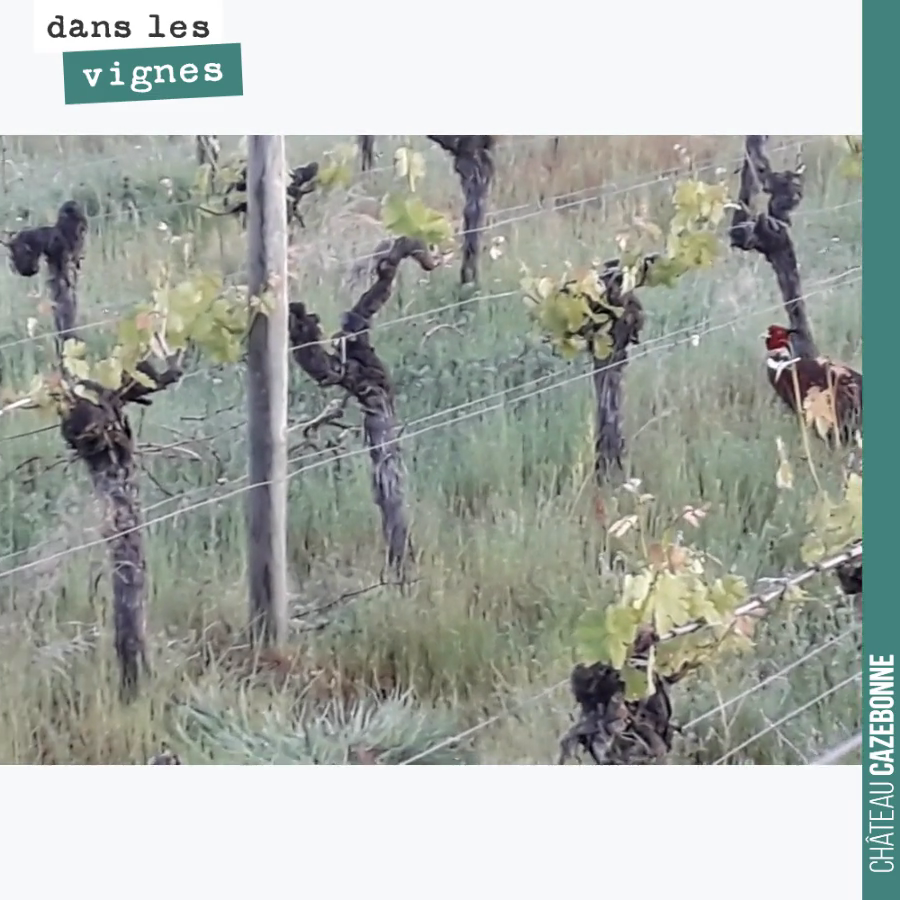
29 April 2020
06 April 2020
01 April 2020
28 March 2020
03 October 2019
31 May 2019
30 May 2019
13 April 2019
05 April 2019

04 April 2019
21 March 2019
20 March 2019
The cellar, forgotten grape varieties and our cuvées, twice a month. 5% off your first order with the code BIENVENUE.