
 The essential
6 × Entre Amis red
6 bottles — Graves red 2022
The best price of the cellar: €12 per bottle delivered.
The everyday red: generous and straight to the point.
I want itStorm
A storm is a complex meteorological event, particularly dreaded by winegrowers. While its violence can be devastating, under certain conditions, it can also prove beneficial for the vine. Understanding this paradox is essential to grasp the challenges and opportunities this natural phenomenon presents for the Bordeaux vineyard and, in particular, for Château Cazebonne.
A thunderstorm is an atmospheric disturbance characterised by lightning and thunder, often accompanied by intense precipitation (rain, hail), violent winds, and sometimes squalls. It results from a clash between air masses of different temperatures and humidity. For the vine, the main fear is linked to the physical damage that hail, strong winds, and torrential rains can cause. However, a moderate storm rain can bring precious relief during periods of drought.
Storms take various forms and their consequences on the vine depend on several factors. The intensity of precipitation is crucial: fine, regular rain is favourable, while torrential downpours can cause soil erosion and harm the flowering or ripening of the grapes. The presence of hail on the vine is the most dreaded factor, as even small hailstones are enough to damage, or even destroy, leaves, buds, and bunches. The strong winds associated with storms can also break shoots or even uproot young vines. Conversely, after a period of intense heat and drought, a storm brings much-needed moisture, rehydrating the plants and the soils.
The vine is particularly sensitive to storms at different key moments of its vegetative cycle. During bud break and flowering, the young shoots and flowers are very fragile against hail and winds. In summer, during véraison and berry ripening, hail can burst the grapes, making them vulnerable to diseases such as botrytis. The month of August, as Jean-Baptiste Duquesne points out in his book Bordeaux, une histoire de cépages, has often been synonymous with water stress and therefore the arrival of lifesaving storms for Bordeaux vines, but also destructive hail as the harvest approaches.
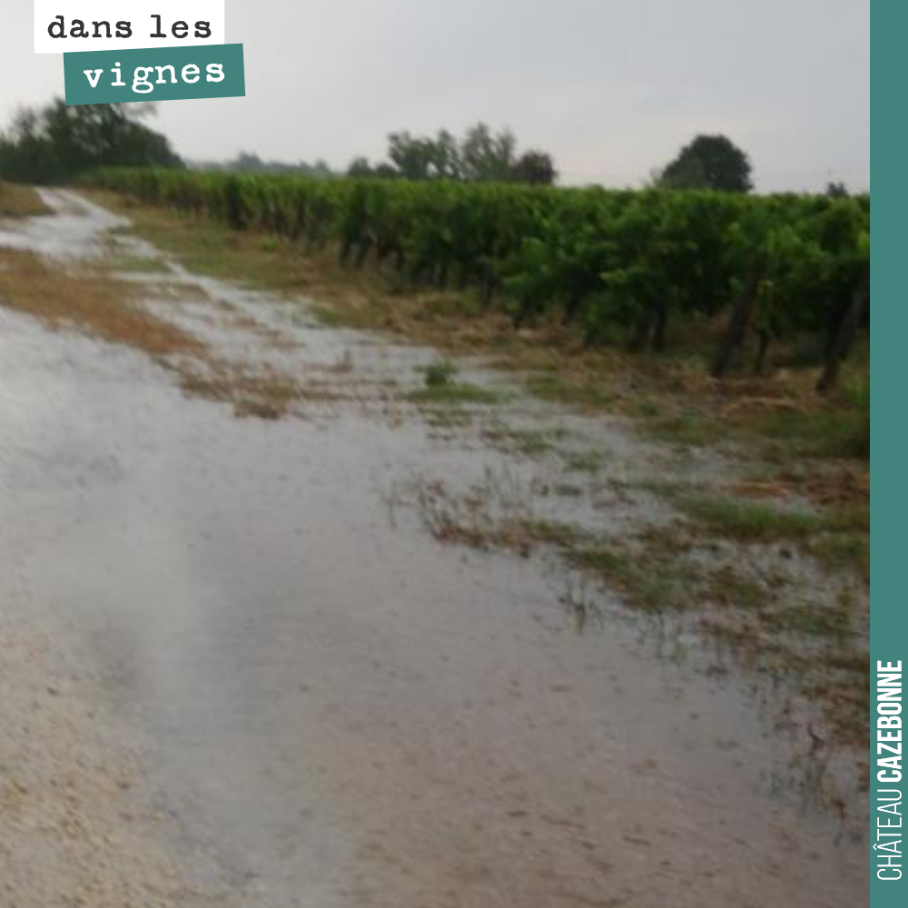
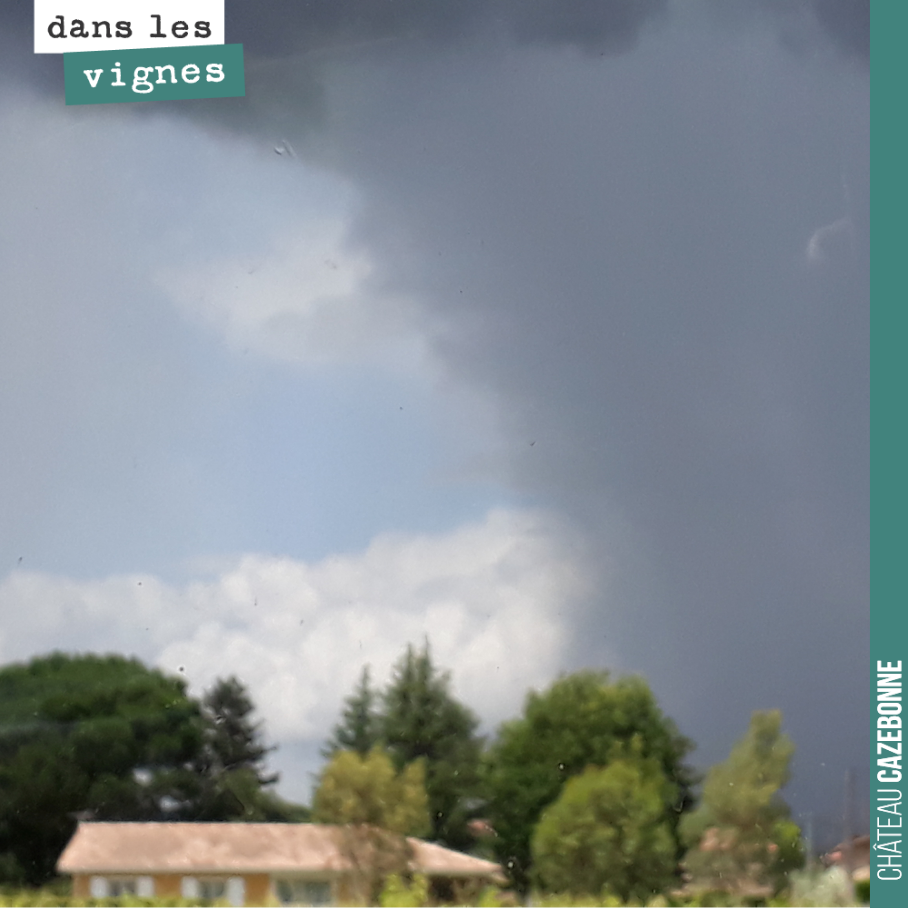
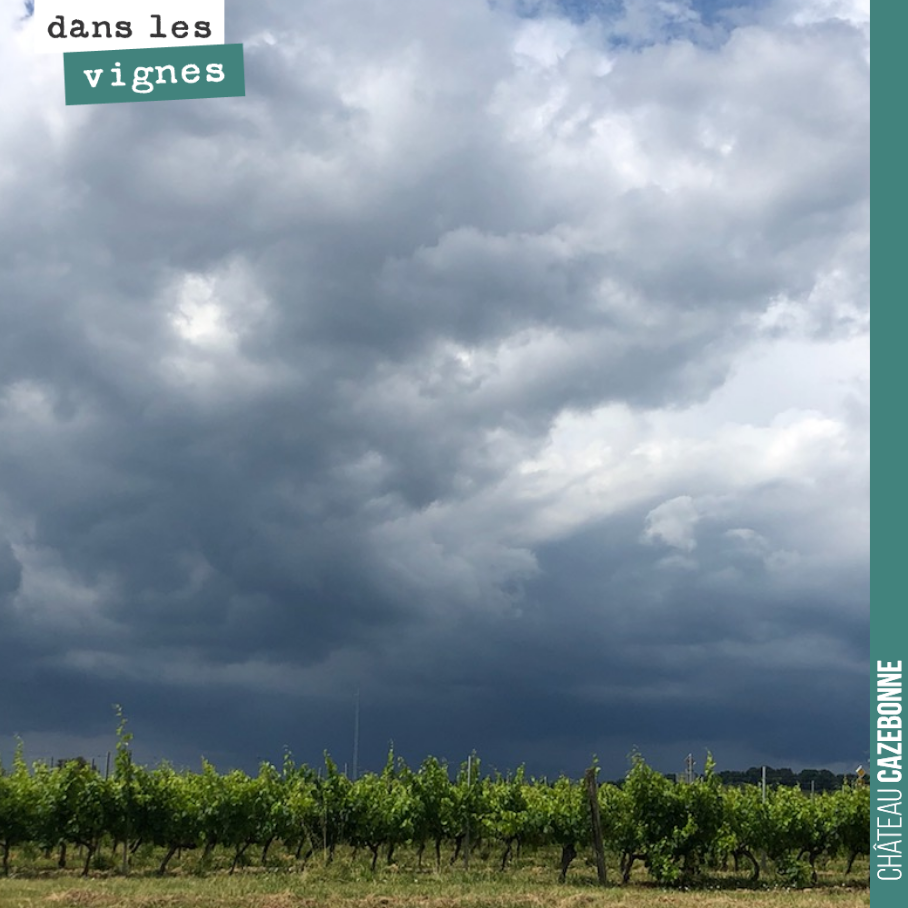
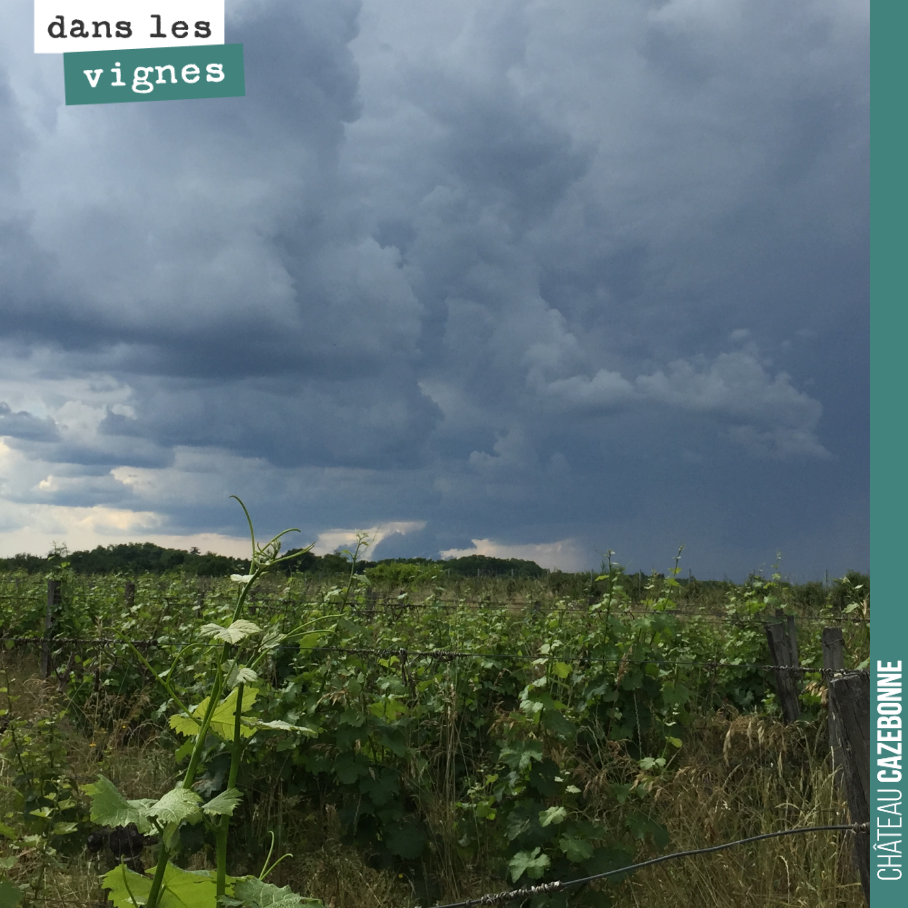
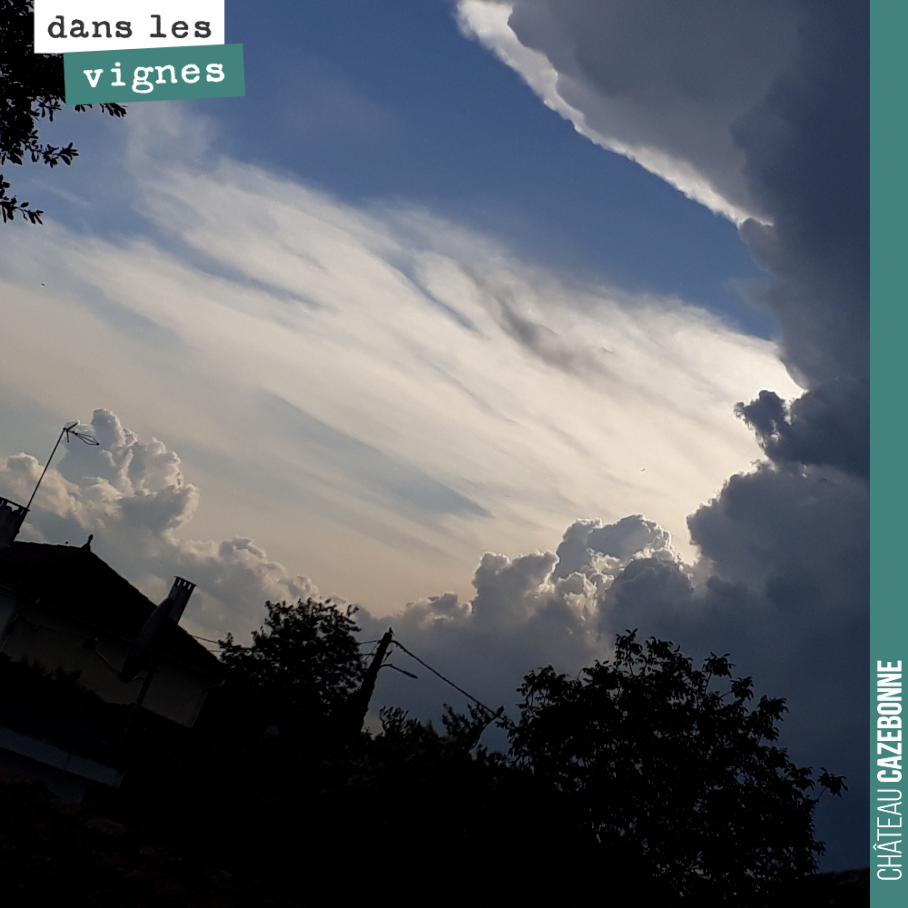
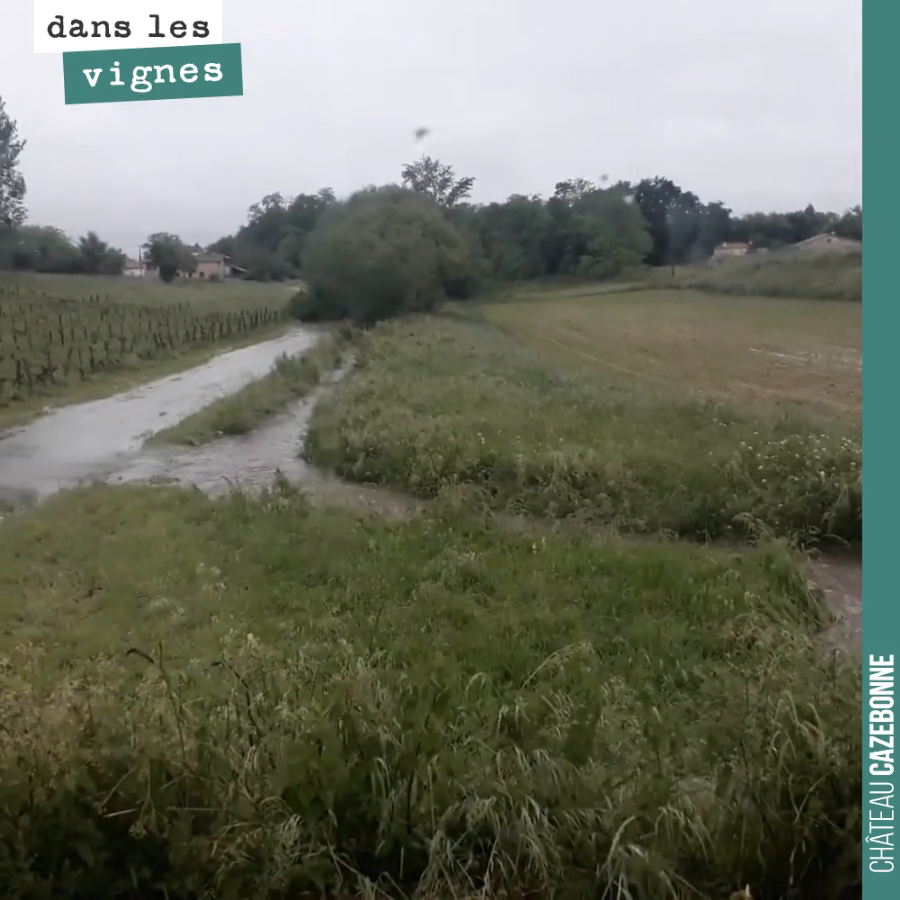
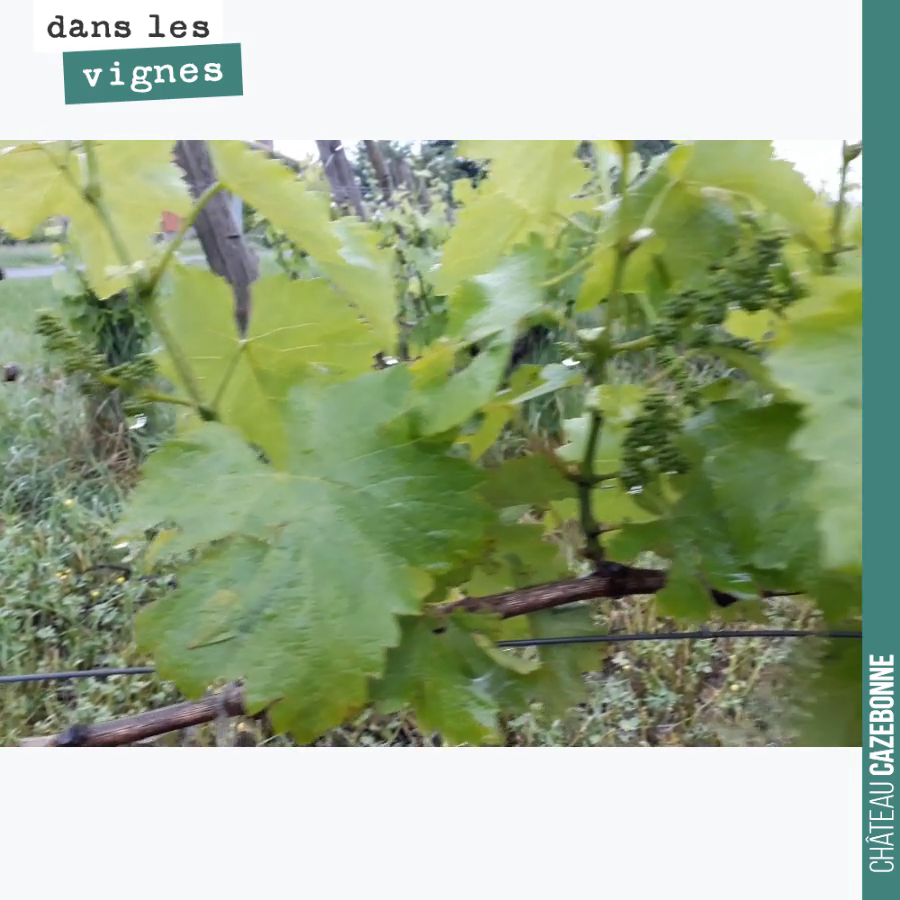
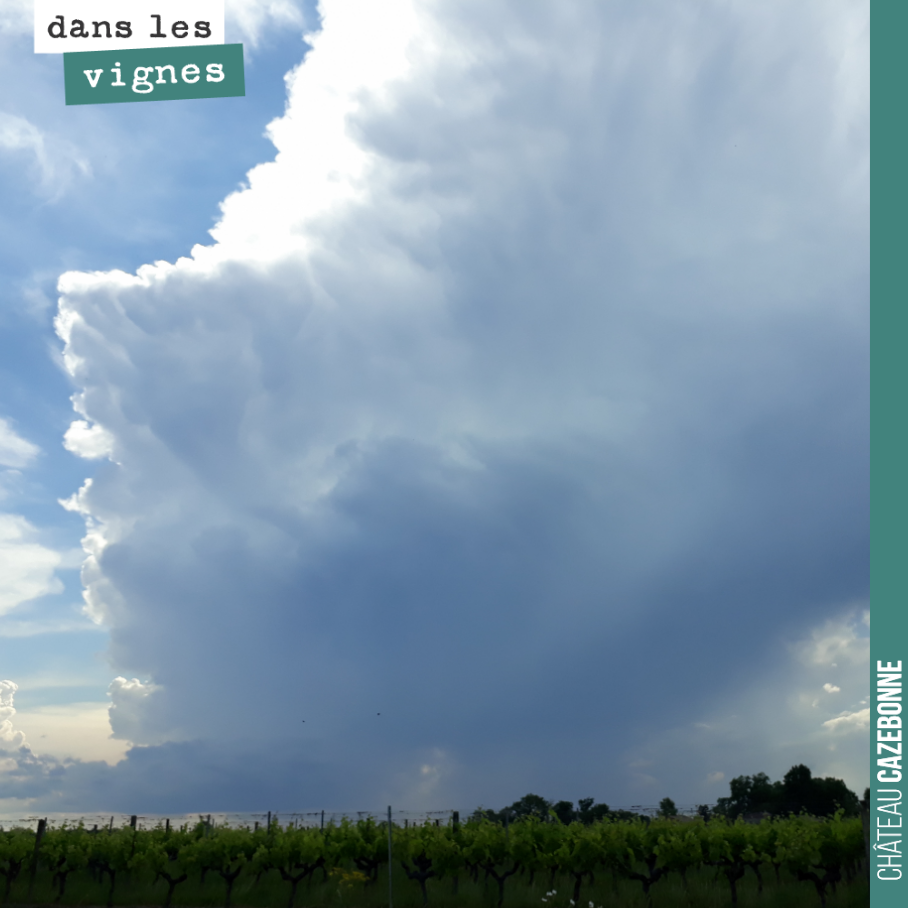
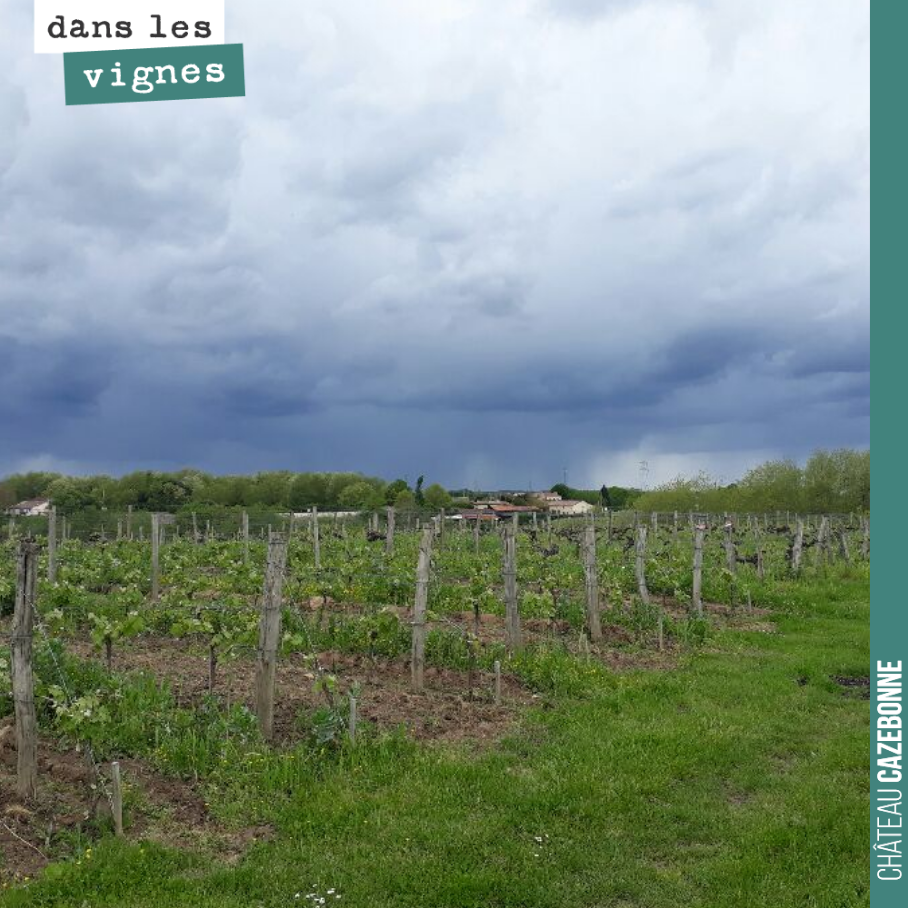
Several signs can alert the winegrower to an approaching storm: the rapid darkening of the sky, the formation of threatening clouds (cumulonimbus), a drop in atmospheric pressure, or a sudden change in temperature. After it passes, the winegrower meticulously inspects their plots. Marks on the leaves or berries are direct indicators of hail impact. Mudslides testify to erosion caused by excessively heavy rain. These observations are crucial for assessing the damage and planning post-storm interventions, whether it involves plant care or soil management.
At Château Cazebonne, our approach to storms is twofold: anticipation and adaptation. Thanks to constant meteorological monitoring, we try to forecast these phenomena. The resistant grape varieties we are reintroducing play a preventive role, due to their natural robustness against climatic hazards. Our work to maintain living soils is also paramount: soils rich in humus, with cover crops and good structure, are more resilient, capable of absorbing water without eroding and releasing moisture in dry weather. These practices help strengthen the vitality of our vines and are key to their survival in the face of climate change.
Long used, anti-hail cannons, which are supposed to break up hailstones using shockwaves, are today considered largely ineffective by the scientific community. Their use is even sometimes controversial due to the noise they generate. There is no miracle solution to stop hail with absolute certainty.
A storm, especially a hailstorm, can leave wounds on the vine, increasing the risk of fungal attacks (mildew, powdery mildew). However, systematic treatments are not always necessary. Careful observation and practices that respect biodiversity, like those we favour at Château Cazebonne, often make it possible to limit the impact by strengthening the vine's natural ability to defend itself.
Château Cazebonne is resolutely committed to the path of resilience in the face of climatic challenges, notably storms, by replanting in the Bordeaux region grape varieties that had disappeared, bearing witness to a forgotten historical wealth. This long-term work is made possible thanks to the support of wine lovers who adopt our wines; discover the diversity of our cuvées by visiting our online shop. To deepen your knowledge of the fascinating history of the grape varieties that forged our region, download the digital version of the book "Bordeaux, une histoire de cépages" and test your knowledge of oenology with our quizzes.
Sources
Our suggestions
-5%on your 1st order with code BIENVENUE
The essential6 bottles — Graves red 2022
The best price of the cellar: €12 per bottle delivered.
The everyday red: generous and straight to the point.
I want it Our recommendation92/100 RVF
6 bottles — Graves red 2022, 92/100 RVF
Rated 92/100 by La Revue du vin de France: a solid 10-year ageing potential.
Our Graves for ageing, the finest gateway to the estate.
I want it Go further
12 bottles — the whole range
12 bottles, the whole range tasted: the best discovery-to-price ratio.
The complete tour of the estate, in a single case.
I want it
05 June 2022
13 August 2020
20 June 2020
09 June 2020
02 June 2020
01 June 2020
12 May 2020
11 May 2020
10 May 2020
09 May 2020
30 April 2019
The cellar, forgotten grape varieties and our cuvées, twice a month. 5% off your first order with the code BIENVENUE.