
 The essential
6 × Entre Amis red
6 bottles — Graves red 2022
The best price of the cellar: €12 per bottle delivered.
The everyday red: generous and straight to the point.
I want itFrost
Among the climatic hazards that can strike the vine, spring frost is undoubtedly one of the most formidable and striking in its consequences. A nocturnal whim of the weather can, in just a few hours, completely destroy the hopes of an entire harvest.
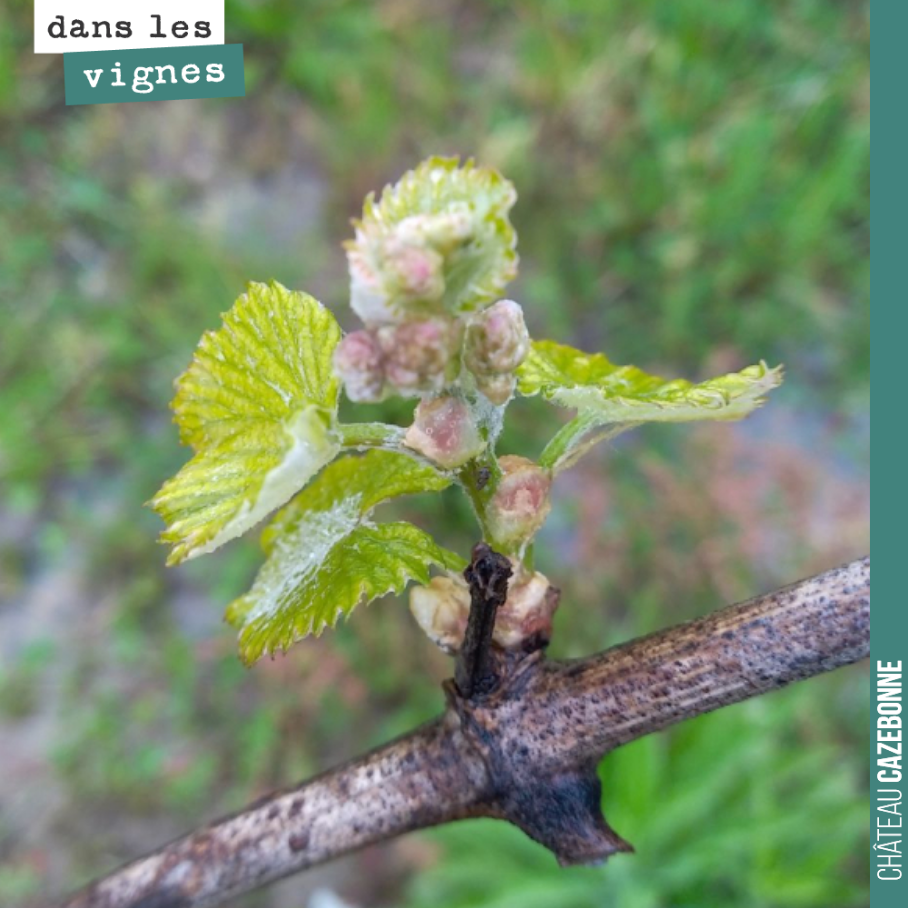
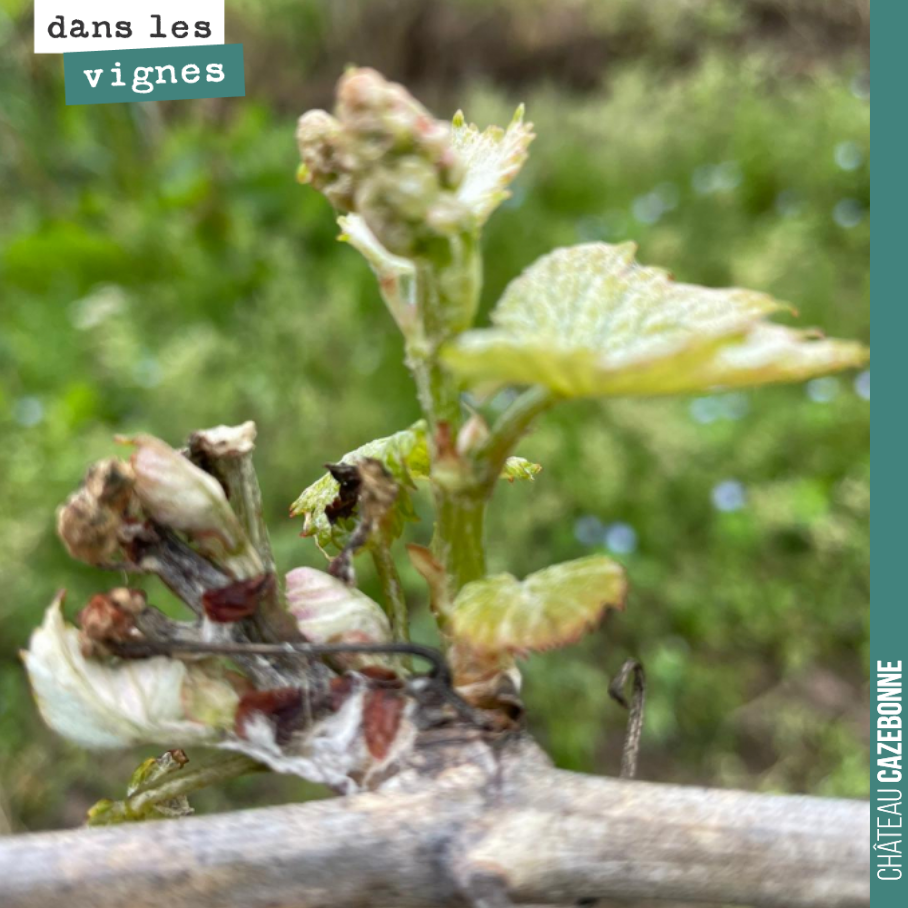
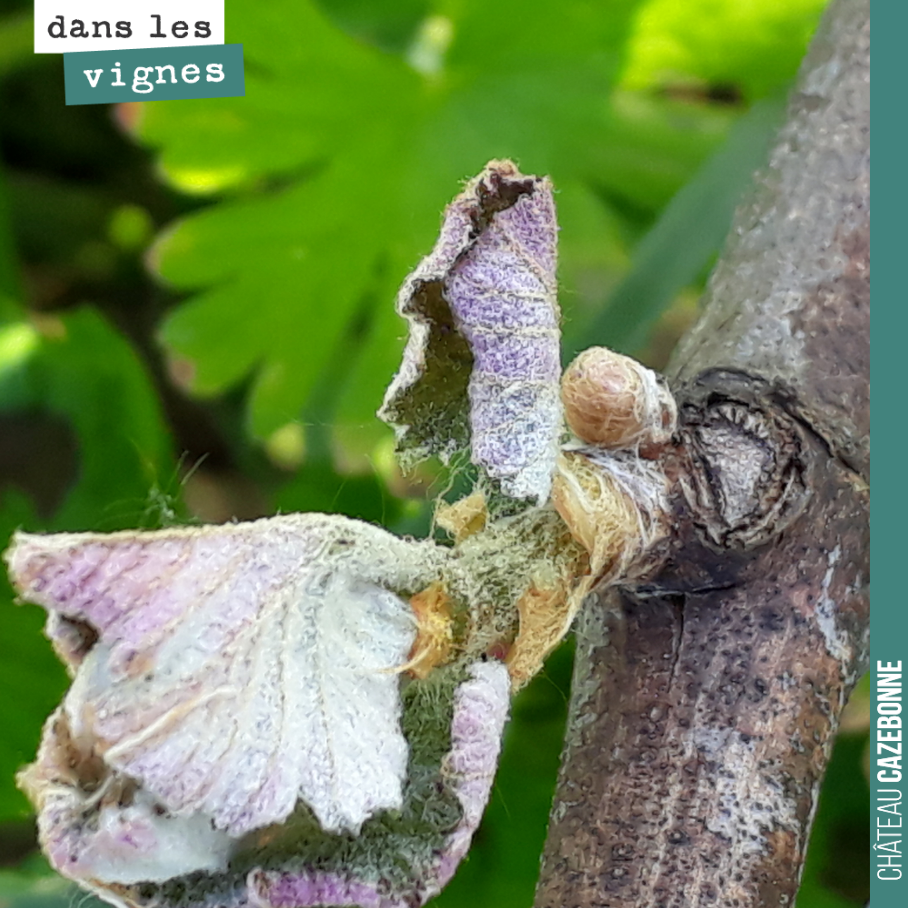
Frost particularly affects newly hatched buds or young shoots. Vulnerable and swollen with water, they freeze and burst under the intense cold. The damage can then be considerable, as evidenced by the terrible year of 2017 when Château Cazebonne, like so many other Bordeaux estates, unfortunately lost nearly 90% of its harvest. This type of event serves as a stark reminder of the fragility of our profession and the winemaker's constant dependence on Mother Nature.
Faced with this recurring threat, winemakers have developed various strategies over the centuries, from smoke that creates a protective screen to water sprinkling that insulates the buds in an icy casing. At Château Cazebonne, we carefully monitor the weather forecasts and prepare to protect our most exposed parcels, favouring methods that respect the environment and biodiversity.
These difficult experiences also remind us of the importance of grape varieties adapted to their terroir, as Jean-Baptiste Duquesne explains so well in his book "Bordeaux, une histoire de cépages". Certain grape varieties prove more resistant to spring frost, or bud later, thus escaping the most critical periods. This is why, at Château Cazebonne, we have committed ourselves to a unique project: the reintroduction of forgotten grape varieties to Bordeaux. These varieties, once present in the Bordeaux vineyard and sometimes more resilient, are a wonderful opportunity to build a more diverse and resilient vineyard in the face of current climatic challenges.
This pioneering work, this quest for a more resilient and diverse Bordeaux, is made possible by the unwavering support of the many wine lovers who have embraced our wines and our approach. You too can discover and support our cuvées by visiting the Cazebonne shop. To deepen your knowledge of our region's winemaking history and the grape varieties that shape it, we invite you to receive the digital version of the book "Bordeaux, une histoire de cépages" published by Éditions BBD, written by Jean-Baptiste Duquesne.
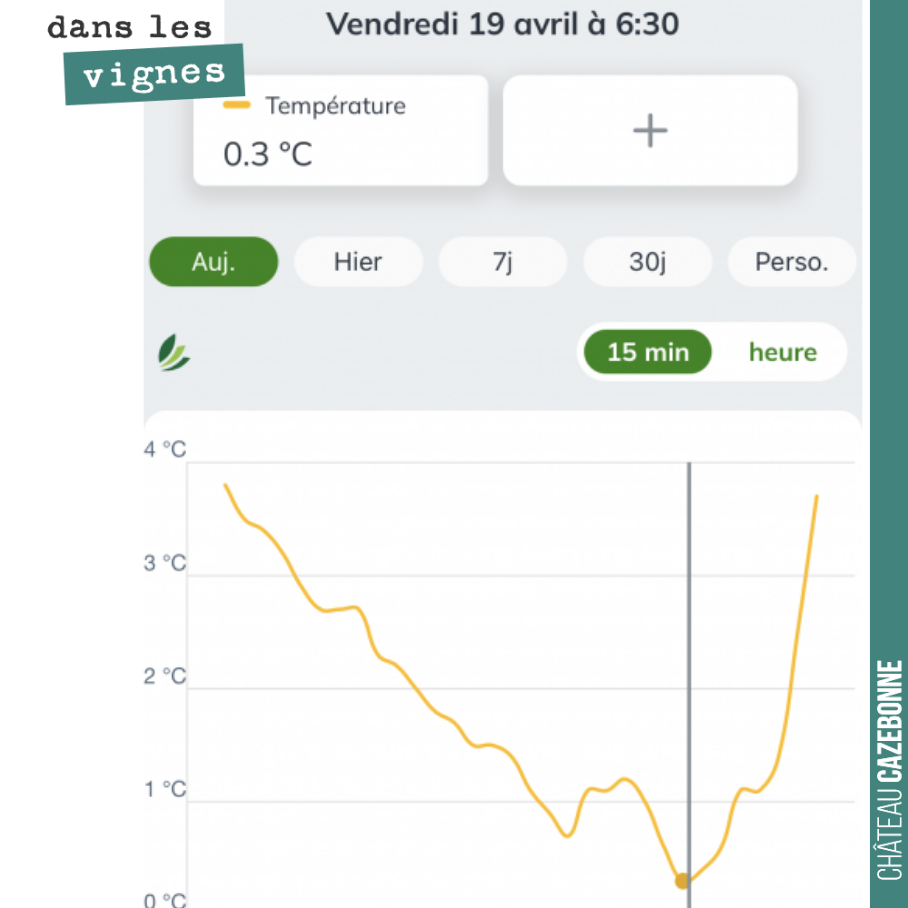
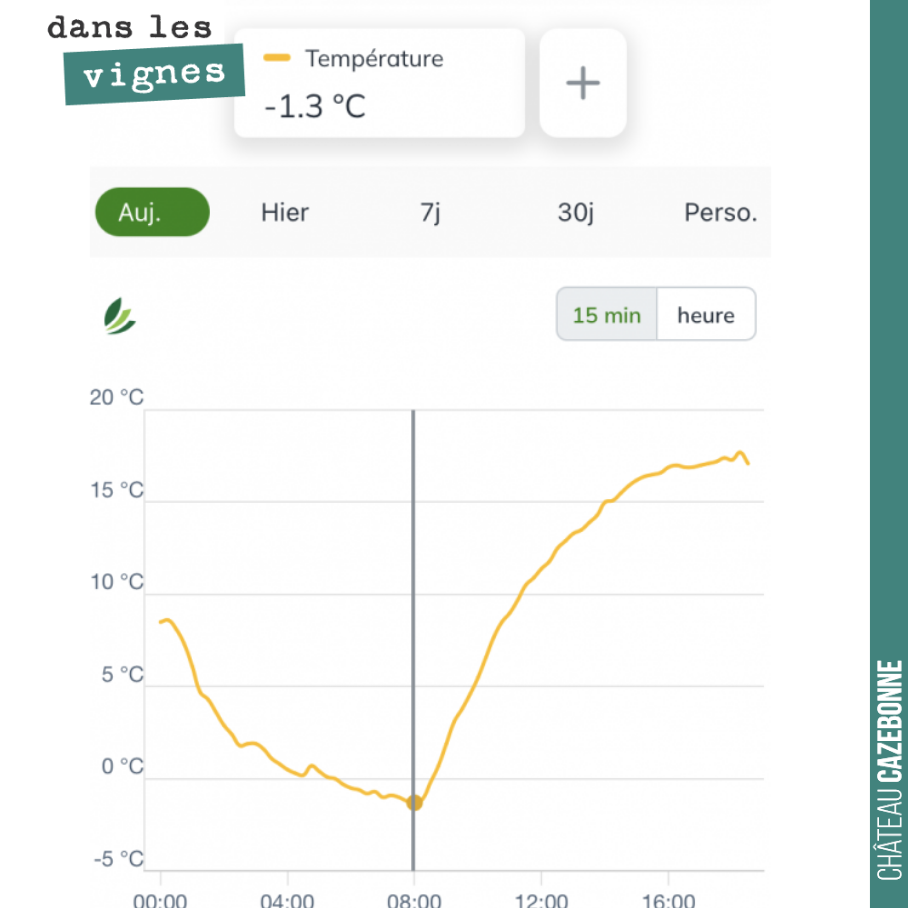
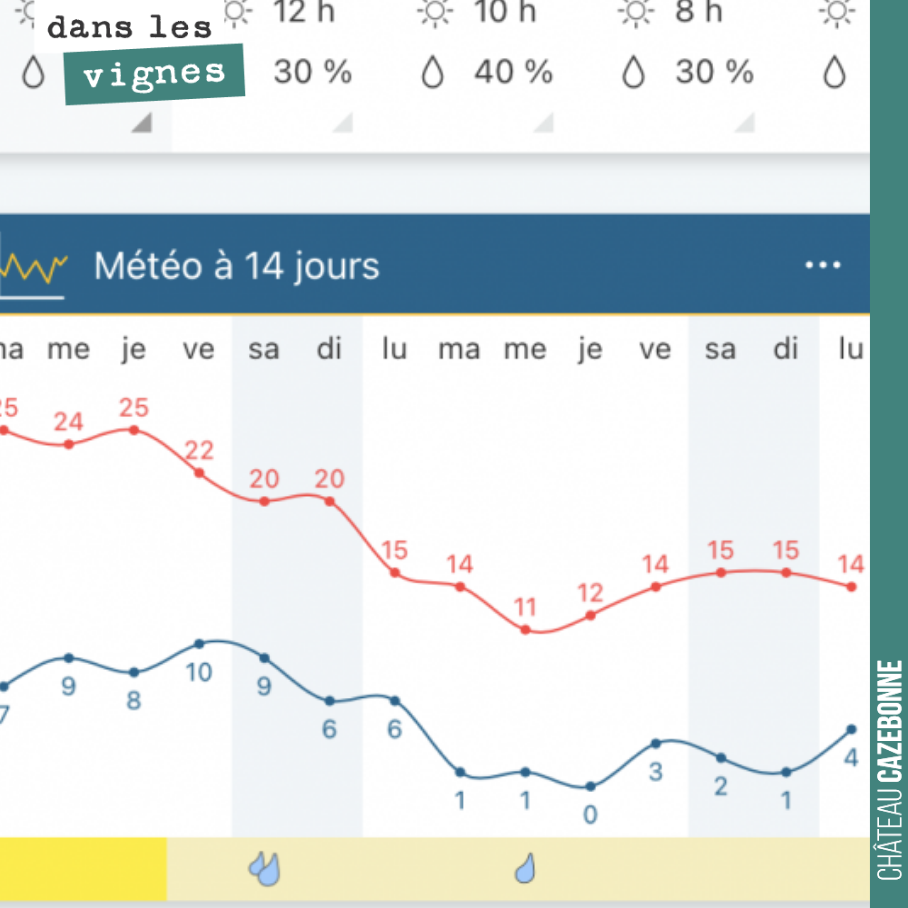
Frost in the vineyards, particularly formidable in spring, is the result of a sudden drop in temperature. It occurs when the water-logged sap in young buds or shoots freezes, causing them to burst and be destroyed. The consequences can be devastating, wiping out a large part, or even the entirety, of the future harvest. This phenomenon is all the more worrying as it can happen even when the thermometer shows temperatures above zero, due to the direct thermal radiation from the shoots into a clear atmosphere.
There are mainly two types of frost. 'Black frosts' occur when the average daily temperature in February and March exceeds 8°C, and a sudden drop to -5°C or -8°C takes place. The buds then blacken from the inside, causing irregular bud break; they are said to be 'échamphlés'.
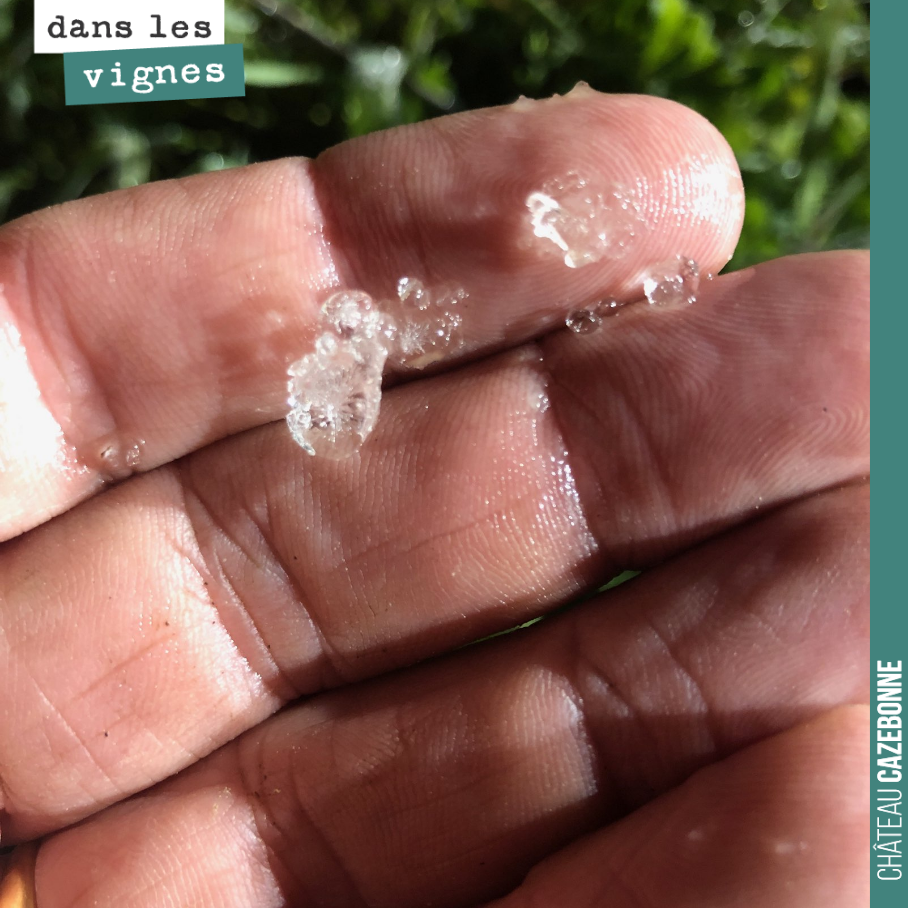
'White frosts' (hoar frosts), which are more frequent, affect budding shoots and young growth. They often appear after periods of rain and humidity, followed by a clear night, mainly between March and May. They can last until mid-May, making these periods particularly critical for the vine. These cold spells are a constant reminder of the vine's vulnerability to these climatic vagaries, as illustrated by the archives of several wine regions mentioning the impact of spring and autumn frosts on the harvest across the seasons in the vineyards.
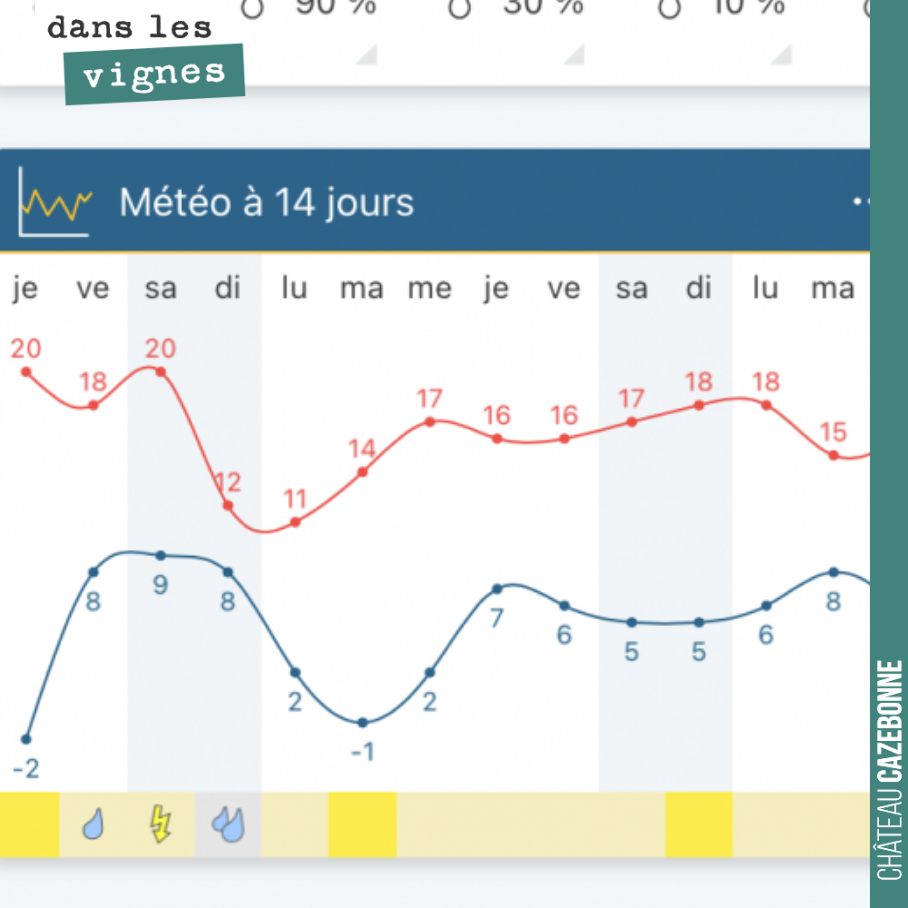
The risk of frost is highest in spring, from March to May, a period when the vine emerges from its winter dormancy and the vine buds begin to flower. Autumn frosts are rarer, but can also catch the grapes by surprise before they reach full maturity, with serious consequences for the quality and quantity of the harvest. Certain conditions encourage frost, such as a long period of clear skies that allows for strong nocturnal radiation, rapidly cooling the surface of the buds. This is why the weather in the vineyards is monitored with the utmost vigilance.
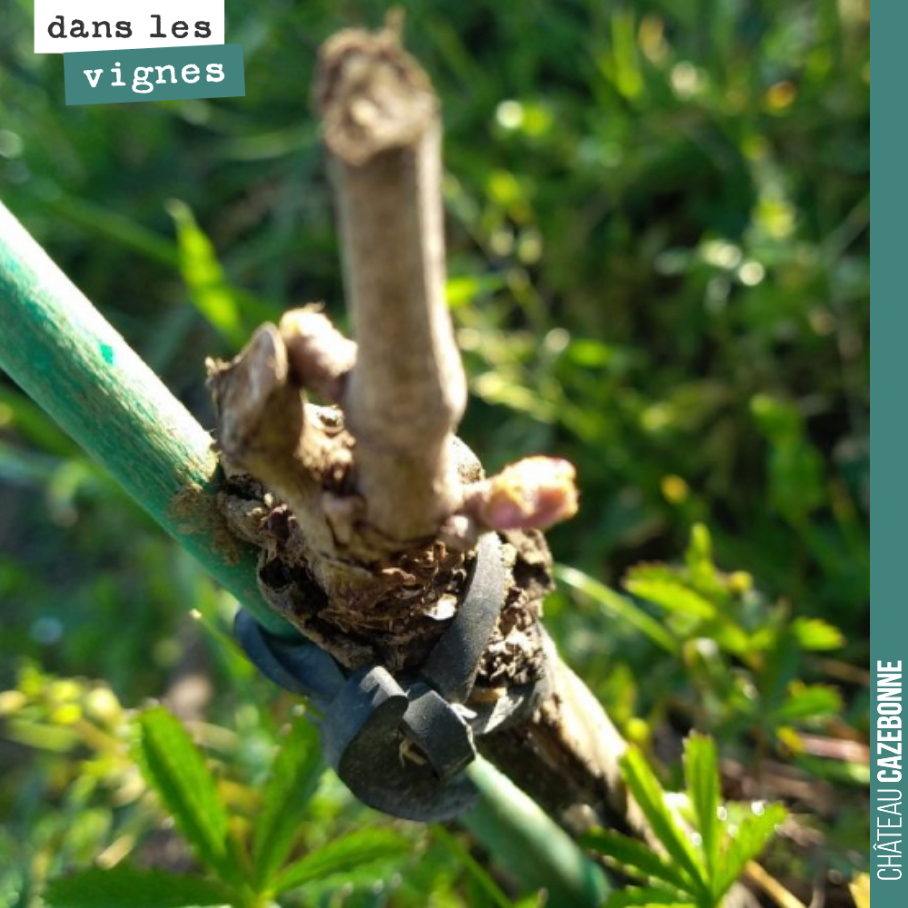
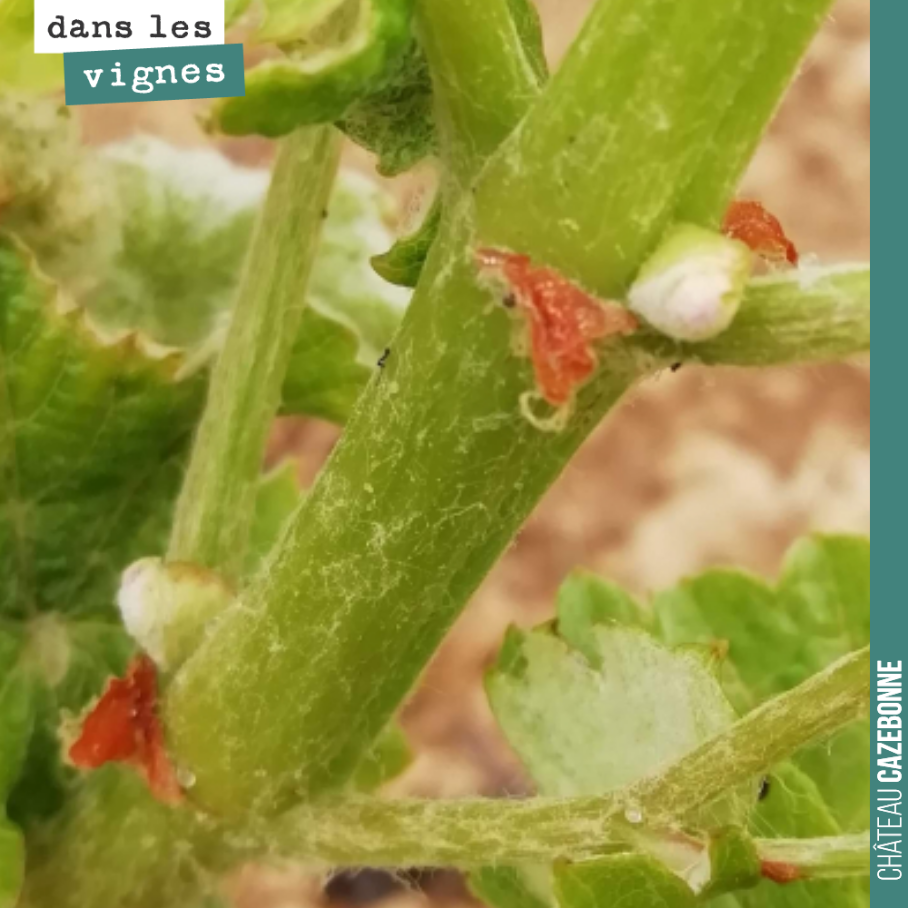
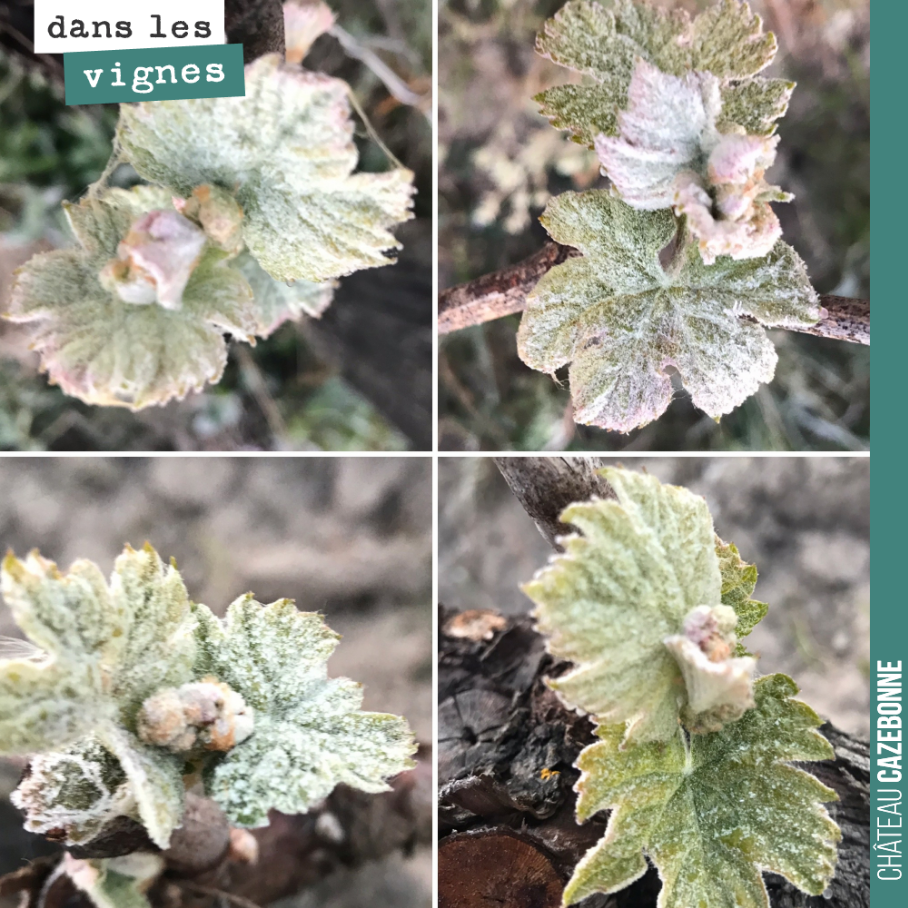
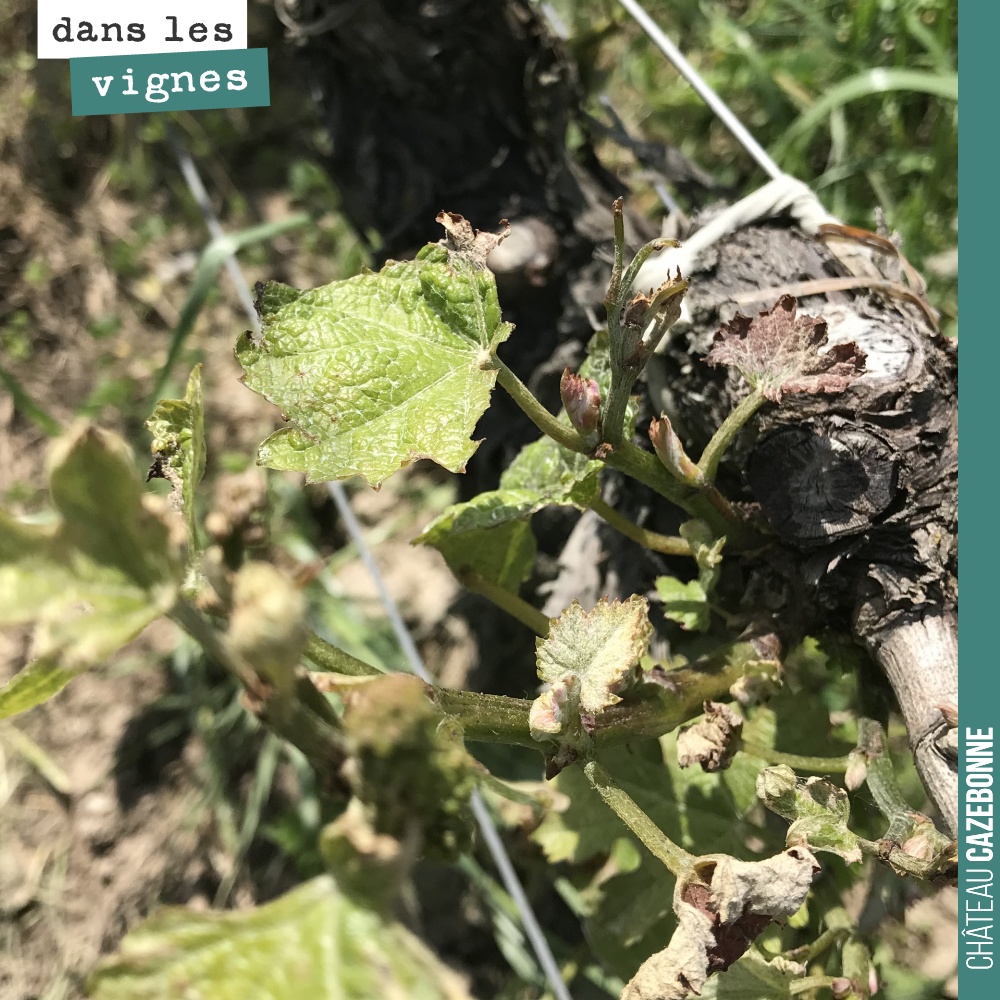
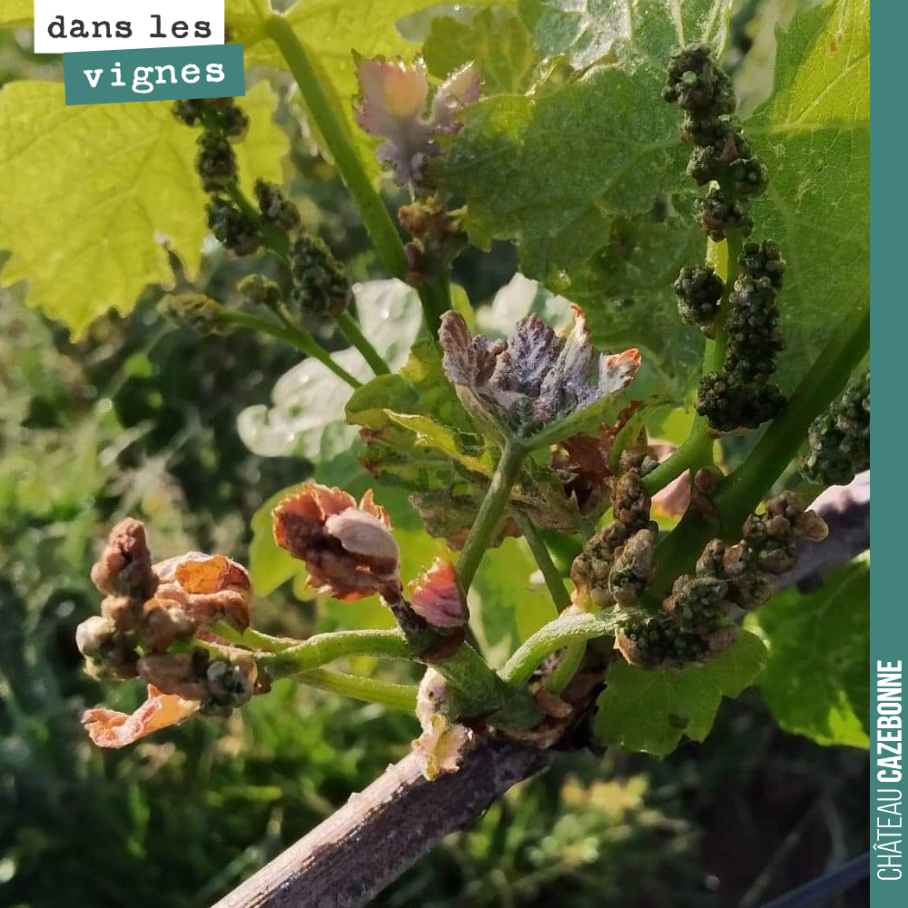
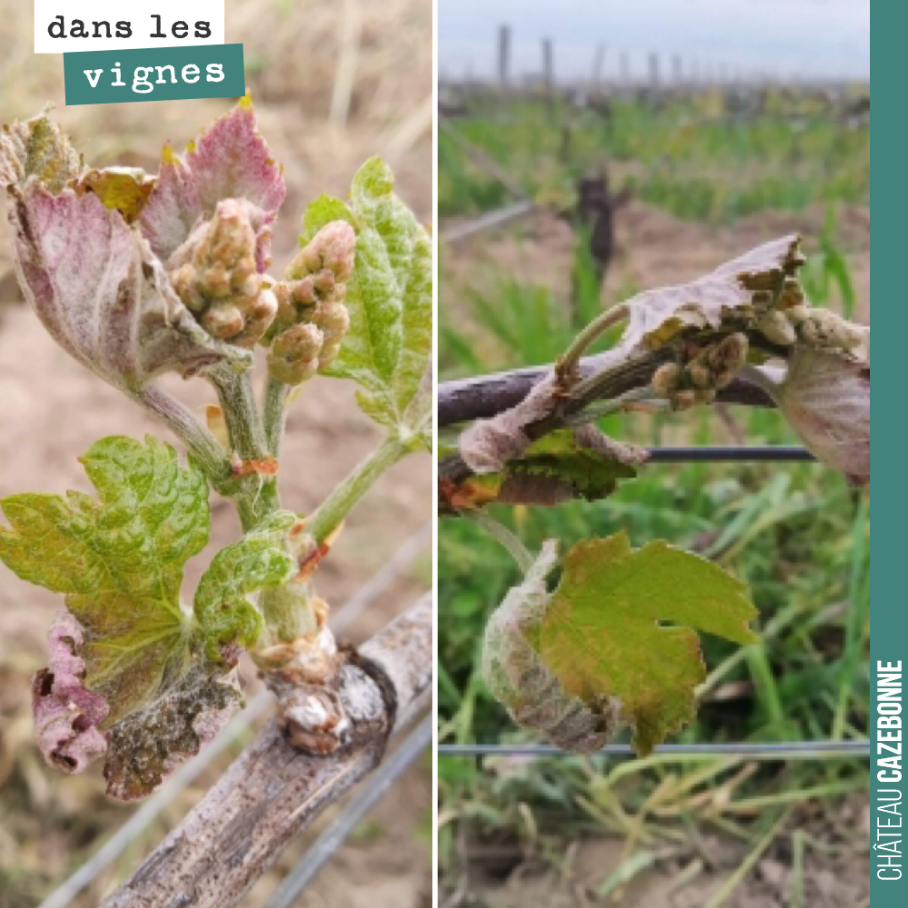
The signs of frost depend on its intensity and the time it strikes. For black frosts, the buds appear blackened and do not develop normally. For white frosts, the young shoots and leaves take on a whitish hue before drying out and turning brown. In some cases, the damage may only manifest partially, affecting certain rows of vines or even specific parts of the same vine stock, leaving other shoots intact. Young vines and early-budding grape varieties are generally more exposed, which confirms the importance of parcel selection and grape variety diversity. Vine diseases can also take hold on weakened tissues.
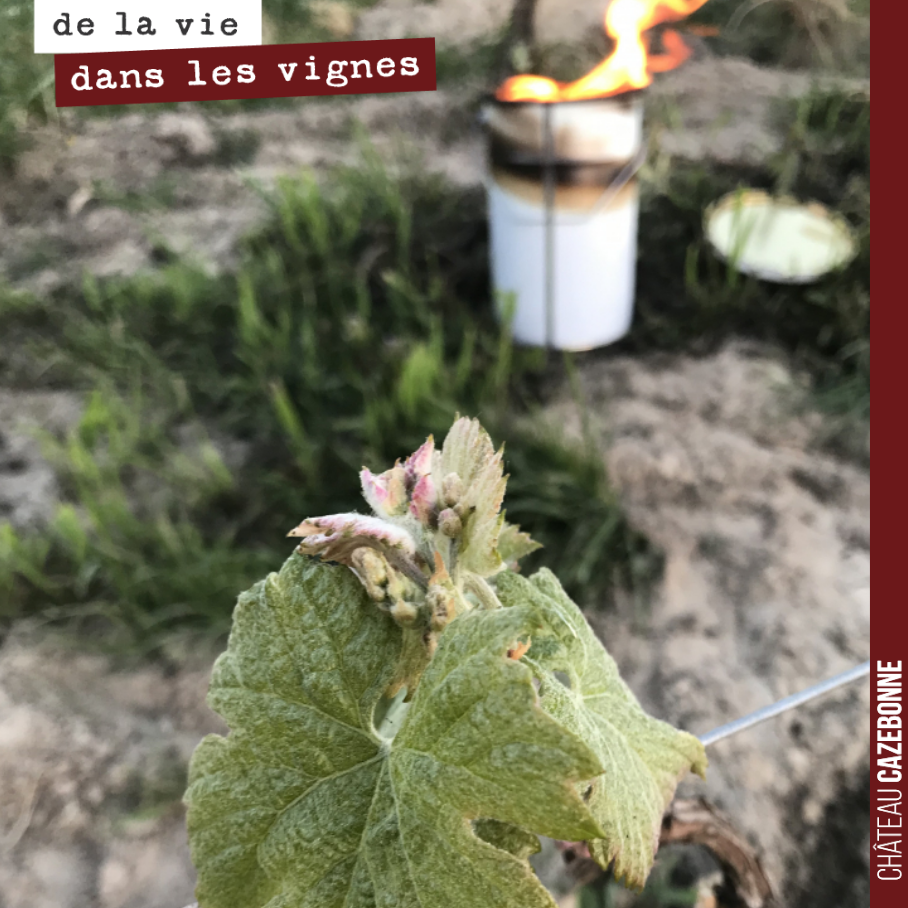
At Château Cazebonne, we tackle the challenge of frost with a combination of traditional methods and environmentally friendly innovations. As soon as weather forecasts predict a risk of frost, heightened surveillance is put in place. We favour gentle techniques to protect the most vulnerable parcels. Smoke, used for centuries, creates a protective screen, limiting nocturnal radiation. Water sprinkling is also an option, forming an insulating film of ice around the buds. Our commitment to biodiversity-friendly and biodynamic practices drives us to seek sustainable solutions. Whenever possible, we also opt for late vine pruning, which can delay bud break and thus minimise the risks. The reintroduction of forgotten Bordeaux grape varieties, some having later bud breaks or better intrinsic resistance, represents a promising path for the future to strengthen the resilience of our vineyard.
Contrary to popular belief, frost does not always wipe out the entire harvest. There can be 'partial frosts' that affect only a fraction of the buds or bunches. But even a 30% or 50% loss can impact the estate's economic balance. Another misconception is that frost requires temperatures below 0°C. In reality, the nocturnal radiation of a clear night can drop the temperature of the buds below freezing point, even if the ambient air remains slightly positive. Finally, while winemakers have always sought to protect themselves from frost, the effectiveness of traditional methods, such as smoke, depends heavily on the layout of the parcels and the scale of the phenomenon. This is why diversifying solutions is essential, just as with those concerning hail on the vine.
Our approach at Château Cazebonne, focused on the reintroduction of ancient Bordeaux grape varieties, is a major lever for building a more resilient vineyard in the face of climatic challenges, of which frost is a part. This work is made possible by the commitment of wine lovers who embrace our wines and our philosophy. To find out more about the sometimes little-known riches of our viticultural heritage, please feel free to download our book "Bordeaux, une histoire de cépages" and to test your knowledge with our oenological quizzes. You can also discover our full range and support our project by visiting our online shop.
Sources
Our suggestions
-5%on your 1st order with code BIENVENUE
The essential6 bottles — Graves red 2022
The best price of the cellar: €12 per bottle delivered.
The everyday red: generous and straight to the point.
I want it Our recommendation92/100 RVF
6 bottles — Graves red 2022, 92/100 RVF
Rated 92/100 by La Revue du vin de France: a solid 10-year ageing potential.
Our Graves for ageing, the finest gateway to the estate.
I want it Go further
12 bottles — the whole range
12 bottles, the whole range tasted: the best discovery-to-price ratio.
The complete tour of the estate, in a single case.
I want it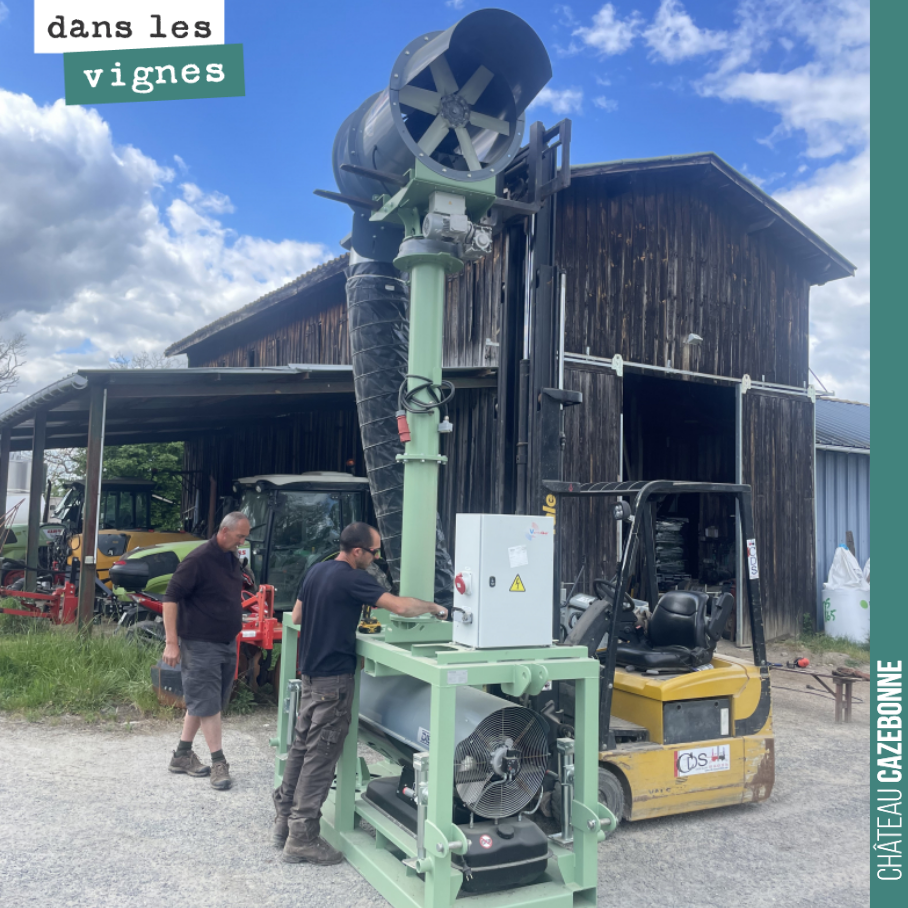
19 April 2024
19 April 2024
26 March 2024
15 March 2024
27 April 2023
05 April 2023
01 April 2022
02 May 2021
29 April 2021

10 April 2021

09 April 2021
09 April 2021
08 April 2021
08 April 2021
30 March 2021
01 April 2020
31 March 2020
29 March 2020
28 March 2020
29 February 2020
28 February 2020

07 February 2020
28 May 2019
09 May 2019
06 May 2019

04 May 2019
15 April 2019
14 April 2019
12 April 2019
07 April 2019
04 February 2019
The cellar, forgotten grape varieties and our cuvées, twice a month. 5% off your first order with the code BIENVENUE.