
 The essential
6 × Entre Amis red
6 bottles — Graves red 2022
The best price of the cellar: €12 per bottle delivered.
The everyday red: generous and straight to the point.
I want itSulfur
Work in the winery is a crucial stage where the grape, fruit of the earth and climate, is transformed into wine under the watchful eye of the winemaker. This phase demands delicate expertise and sharp technical skill. Among the tools available to sculpt the wine and preserve its integrity, sulphur occupies a unique position. Long perceived as a mere preservative, its role is in reality much more nuanced, acting as a protector and an enhancer of aromas.
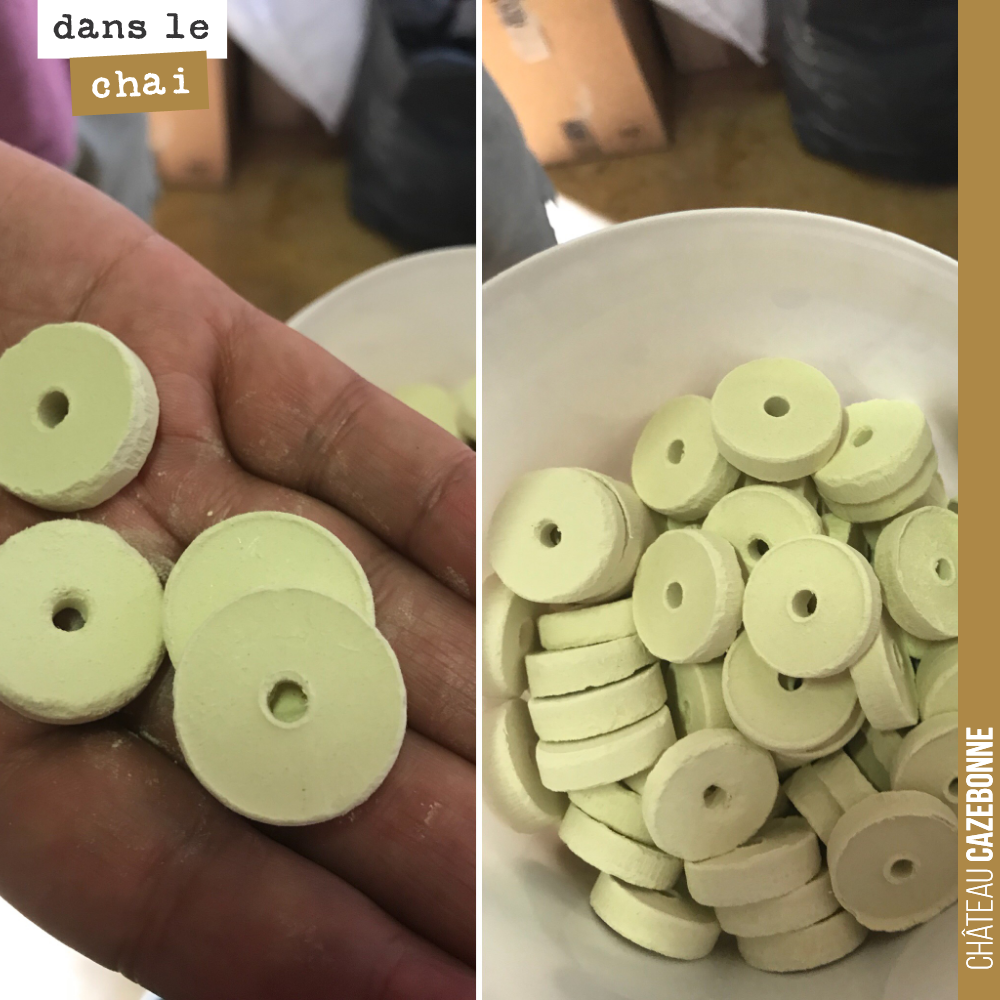
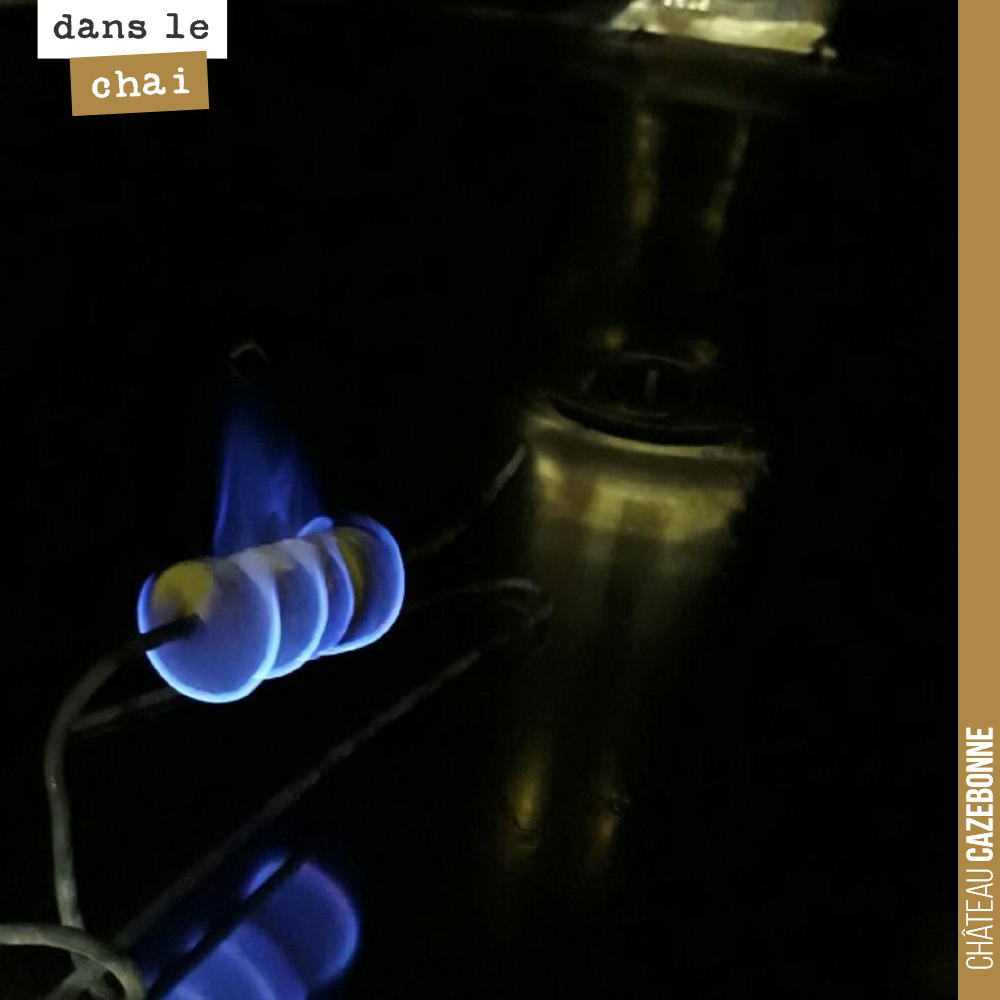
At Château Cazebonne, our approach to sulphur reflects our overall philosophy: respect for living things, the search for purity and the quest for an authentic expression of the terroir. We have chosen to work exclusively with volcanic sulphur, whose intrinsic quality we appreciate. This sulphur, sourced from Italian volcanoes, is exceptionally pure and highly potent. This characteristic allows us to adjust the doses to a minimal level, thus ensuring optimal protection without masking the delicacy of the fruity notes and the aromatic complexity of our wines. It acts as a shield against oxidation, and can also be used to control certain fermentations.
Our membership of the Dynamis association is part of this quality-driven approach. Dynamis is an organisation that promotes respectful cultivation and winemaking methods, and their volcanic sulphur is a benchmark in the field. By selecting such a product, we ensure that we give our wines the best possible support, so that they can express their full potential, vintage after vintage.
The use of sulphur, or sulphur dioxide (SO2), is an age-old oenological practice, documented since Antiquity. It was originally used to disinfect barrels and amphorae. Today, its role has been refined and scientific understanding has allowed for a more precise application, in reduced quantities, to enhance the qualitative potential of musts and wines. It is a key element in guaranteeing the winemaking process and the preservation of the wine.
Sulphur plays several essential roles in the winemaking process. It is a powerful antiseptic, capable of controlling the development of undesirable microbial populations, such as wild yeasts or acetic bacteria. By inhibiting these micro-organisms, it allows the selected yeasts to take over and successfully carry out alcoholic fermentation. It is also a major antioxidant. It protects the wine's aromas and colour from oxidation, thus prolonging its youth and freshness. Finally, it has a solvent action on certain materials, promoting the extraction of phenolic and aromatic compounds during maceration, and can clarify the musts.
The period during which sulphur is used spans several stages in the wine's life cycle. As soon as the grapes are harvested, a light sulphiting of the musts can be carried out to protect the freshly picked fruit from oxidation and undesirable micro-organisms. Subsequently, adjustments are sometimes necessary after alcoholic fermentation or malolactic fermentation, before ageing, or during bottling. The dose is scrupulously adjusted according to the health of the grapes, the pH of the wine, the desired profile and the varietal sensitivity.
Sulphur is applied using a number of tools. Upstream, when the harvest is received, sulphitometers enable precise dosing directly into the musts. In the winery, liquid or gaseous SO2 dosers are used for controlled additions to the vats. Regular analyses, via iodometric tests or specific devices, are essential to check concentrations and adjust doses if necessary, thus ensuring perfect control of the operation.
In organic and biodynamic viticulture, the aim is to minimise, or even eliminate, the use of sulphur without compromising the quality of the wine. Alternatives such as boosting the vine's natural defences, using selected indigenous yeasts or employing inert gases to protect the musts from oxygen are being explored. At Château Cazebonne, we rely on the high purity of our volcanic sulphur to limit its use as much as possible, while guaranteeing the stability and quality of our wines. It is important to note that organic certification specifications authorise the use of sulphur at lower doses than in conventional viticulture because of its primordial role in the preservation and stability of the wine.
At Château Cazebonne, our philosophy is based on a minimalist and reasoned use of sulphur. We favour a preventive approach through meticulous work in the vineyard, in order to obtain grapes of flawless quality. This intrinsic quality of the fruit, combined with the exclusive use of our volcanic sulphur, allows us to reduce input doses. We carry out numerous checks and analyses to adjust our additions as accurately as possible and guarantee the authentic expression of our terroir and the purity of our wines. Our commitment to zero-input Graves and our biodynamic approach are testament to our overarching ethos.
This rigour in the creation of our wines blends harmoniously with our project to replant forgotten Bordeaux grape varieties, those ampelographic treasures that had disappeared from the local viticultural landscape. We carry out this pioneering work with passion, and it is made possible by the trust and support of all the wine lovers who adopt our cuvées. To learn more about the fascinating history of Bordeaux grape varieties, we invite you to download the digital version of the book "Bordeaux, une histoire de cépages" via our website here. Test your knowledge and discover the world of Château Cazebonne with our oenological quizzes, and find all our creations, reflecting our terroir and our commitment, including our range of low-sulphite Bordeaux wine, and explore the subject of no-added-sulphur Bordeaux wine in greater detail in our online shop. For a complementary approach to sulphur in protecting the vines, discover copper and the vine. To find out more about practices aimed at promoting the extraction of phenolic compounds, don't miss our article on pumping over, a key stage in the dynamisation of wines.
Our suggestions
-5%on your 1st order with code BIENVENUE
The essential6 bottles — Graves red 2022
The best price of the cellar: €12 per bottle delivered.
The everyday red: generous and straight to the point.
I want it Our recommendation92/100 RVF
6 bottles — Graves red 2022, 92/100 RVF
Rated 92/100 by La Revue du vin de France: a solid 10-year ageing potential.
Our Graves for ageing, the finest gateway to the estate.
I want it Go further
12 bottles — the whole range
12 bottles, the whole range tasted: the best discovery-to-price ratio.
The complete tour of the estate, in a single case.
I want it
04 January 2020
17 May 2019
02 August 2018
17 June 2018
The cellar, forgotten grape varieties and our cuvées, twice a month. 5% off your first order with the code BIENVENUE.